
2027 Best CEPH Accredited MPH Online Programs

Co-Founder and Chief Data Scientist
Choosing an online Master of Public Health is not just a question of convenience. It is a decision about accreditation, career direction, cost, field experience, and whether the program will give you skills employers actually use in public health work. A CEPH-Accredited online MPH can prepare students and working professionals for roles in community health, epidemiology, health education, policy, nutrition, research, and population health leadership.
This guide explains what CEPH accreditation means, how online MPH programs work, what they cost, how long they take, which careers they may support, and how to compare programs before enrolling. It is designed for prospective graduate students, healthcare workers, public service professionals, and career changers who want a practical way to evaluate online MPH options without relying only on rankings or marketing claims.
Quick answer: Is a CEPH-Accredited online MPH worth considering?
A CEPH-Accredited online MPH is worth considering if you want graduate-level public health training, need the flexibility of online study, and plan to work in population health, health education, community programs, public health research, policy, or healthcare-related leadership. CEPH accreditation matters because it signals that the program has been reviewed against recognized public health education standards.
The degree is not automatically the best choice for every health career. If your goal is direct clinical practice, medical licensure, or a highly technical clinical role, you may need a different credential. For public health careers, however, an accredited MPH can strengthen your qualifications and help you build skills in epidemiology, biostatistics, health policy, environmental health, program planning, and community-based intervention.
What are the main benefits of a CEPH-Accredited online MPH?
- Career flexibility: Graduates may pursue roles such as community health worker, health education specialist, survey researcher, nutrition-related public health professional, social worker in health-focused settings, or public health program staff.
- Recognized program quality: CEPH accreditation helps students identify programs that meet established public health education standards.
- Online access: Online MPH programs allow students to complete coursework from locations with reliable internet access, which can be useful for working adults and students with family responsibilities.
- Salary and career context: In 2023, community health workers in the United States had a median annual wage of $48,200, while physicians and surgeons, some of whom work in public health, had a 2023 median annual wage of $239,200 [US Bureau of Labor Statistics (BLS), 2024]. These occupations require very different education and licensure pathways, so salary comparisons should be interpreted carefully.
What is a CEPH-Accredited online MPH program?
A Master of Public Health is a graduate degree focused on improving health outcomes across communities and populations rather than treating only individual patients. CEPH stands for the Council on Education for Public Health, the accrediting body that evaluates schools and programs of public health.
In a CEPH-Accredited online MPH program, students typically study epidemiology, biostatistics, environmental health, health policy, program planning, public health leadership, and social and behavioral health. Most programs also require applied learning, such as a practicum, field placement, capstone, or applied project.
Online delivery does not mean the program is less rigorous. Students may complete readings, recorded lectures, assignments, exams, group projects, case analyses, and virtual discussions through a learning platform. Some programs are mostly asynchronous, while others include live class meetings, scheduled presentations, or synchronous group work.
Who should consider an online MPH?
An online MPH is often a good fit for students who want public health training but cannot relocate or attend campus classes regularly. It can also work well for professionals already employed in healthcare, nonprofits, government, education, social services, or community organizations.
| Student profile | When an online MPH makes sense | When another path may be better |
| Working healthcare or social service professional | You want to move into population health, program management, health education, or policy-related work. | You need a clinical license or advanced clinical credential instead of public health training. |
| Career changer | You want a structured graduate path into public health and can complete statistics-heavy and research-focused coursework. | You are unsure about public health careers and have not yet explored entry-level roles or volunteer experience. |
| Recent bachelor’s graduate | You have a clear interest in health equity, epidemiology, community health, global health, or health policy. | You need more work experience before deciding on a graduate specialization. |
| Future researcher or analyst | You want training in biostatistics, epidemiology, survey methods, and public health data interpretation. | You want a deeper quantitative research degree, such as biostatistics or data science, rather than a broad MPH. |
Where can graduates of CEPH-Accredited online MPH programs work?
MPH graduates work across public, private, nonprofit, academic, and healthcare settings. The right workplace depends on the student’s concentration, prior experience, field placement, and technical skills.
For community health workers, the largest employers in the US were the following (US BLS, 2024):
- Social Assistance: 21%
- Ambulatory Healthcare Services: 19%
- Local Government (excluding education and hospitals): 17%
- Hospitals (state, local, and private): 10%
- Religious, Grantmaking, Civic, Professional, and Similar Organizations: 10%
For social workers, the largest employers across the country were the following (US BLS, 2024):
- Individual and Family Services: 18%
- Local Government (excluding education and hospitals): 14%
- State government (excluding education and hospitals): 12%
- Educational Services (state, local, and private): 10%
- Community Food and Housing, Emergency and Other Relief Services, and Vocational Rehabilitation Services: 3%
How much can you earn with a CEPH-Accredited online MPH?
Salary outcomes vary by role, location, employer, experience, specialization, and whether the position requires additional credentials. An MPH can improve a candidate’s qualifications for some public health roles, but it does not guarantee a specific salary.
In 2023, community health workers in the US had a median annual wage of $48,200 (US BLS, 2024). Community health worker roles may require only a high school diploma in some cases, but an MPH can help candidates pursue broader public health responsibilities, supervisory work, research support, or program planning roles.
Physicians and surgeons had a 2023 median annual wage of $239,200 (US BLS, 2024). Some physicians work in public health, but becoming a physician requires a medical degree and completion of licensure requirements. This is not the same pathway as earning only an MPH.
- CEPH-Accredited Online MPH Programs for 2027
- How long does a CEPH-Accredited online MPH take?
- Online MPH vs. campus MPH: which format fits your life?
- How much does a CEPH-Accredited online MPH cost?
- How can online MPH students pay for graduate school?
- What admissions requirements should applicants expect?
- What courses are included in a CEPH-Accredited online MPH?
- Which MPH specializations are available online?
- How do virtual tools and simulations support online MPH learning?
- How should students evaluate MPH return on investment?
- How do online MPH programs address diversity, equity, and inclusion?
- Do employers respect CEPH-Accredited online MPH degrees?
- What outcomes should students review before enrolling?
- Why does interdisciplinary public health training matter?
- How do you choose the right CEPH-Accredited online MPH?
- What jobs can online MPH graduates pursue?
- What is the job outlook for public health careers?
- What challenges do online MPH students face?
CEPH-Accredited Online MPH Programs for 2027
The programs below can help you begin comparing accredited online MPH options. The list was developed using Research.com’s research methodology and data reviewed from the IPEDS database, Peterson's database, the College Scorecard database, and the National Center for Education Statistics.
Use this list as a starting point, not as your only decision tool. Before applying, confirm tuition, fees, credit requirements, field placement rules, admissions policies, and accreditation status directly with each school.
1. University of Southern California
The University of Southern California offers a Council on Education for Public Health (CEPH)-accredited online MPH. Students can select from five concentration areas, including biostatistics, epidemiology, and health services. USC also offers an accelerated route that can be completed in four semesters.
- Program Length: At least 2 years
- Concentrations:
- Biostatistics and Epidemiology
- Community Health Promotion
- Global Health
- Health Services and Policy
- Generalist
- Cost per Credit: Contact the university for information on tuition.
- Required Credits to Graduate: Contact the university for information on credit requirements.
- Accreditation: Western Association of Schools and Colleges (WASC); CEPH
2. George Washington University
George Washington University delivers an online MPH through the Milken Institute of School of Public Health. Students may complete the program in 1 year to 5 years. In addition to four listed concentrations, students can explore focus areas such as epidemiology, health communication, health policy, and program planning and evaluation.
- Program Length: 1 year to 5 years
- Concentrations:
- Health Informatics and Analytics
- Climate and Health
- Global Health
- Women, Youth, and Child Health
- Cost per Credit: $1,890
- Required Credits to Graduate: 45 credits
- Accreditation: Middle States Commission on Higher Education (MSCHE); CEPH
3. Grand Canyon University
Grand Canyon University offers an online MPH through the College of Nursing and Health Care Professions. The program includes 150 hours of supervised field experience or practicum and a capstone course. Coursework covers foundational topics such as social and behavioral principles of public health, principles of epidemiology, and public health advocacy and policy.
- Program Length: At least 1 year
- Cost per Credit: $590
- Required Credits to Graduate: 48 credits
- Accreditation: Higher Learning Commission (HLC); CEPH (Applicant for Accreditation)
4. University of North Carolina
The University of North Carolina-Chapel Hill offers an online MPH through the Gillings School of Global Public Health. Students can choose from 3 concentration options and enroll part time or full time. GRE scores are not required. Students may also pursue related certificates, including community preparedness and disaster management, field epidemiology, and global health.
- Program Length: 20 to 36 months
- Specializations:
- Leadership in Practice
- Nutrition
- Applied Epidemiology
- Cost per Credit: $1,735
- Required Credits to Graduate: 42 credits
- Accreditation: Southern Association of Colleges and Schools Commission on Colleges (SACSCOC); CEPH
5. Walden University
Walden University provides an online MPH designed around core public health competencies. The program uses interactive media to present applied public health problems and possible responses. Students complete core courses, a candidacy course, field experience preparation, a practicum, and an applied project.
- Program Length: 24 months
- Specializations: Contact the university for information on specializations.
- Cost per Credit: $535 per quarter hour
- Required Credits to Graduate: 64 quarter credits
- Accreditation: HLC; CEPH
How long does it take to complete a CEPH-Accredited online MPH program?
Most online MPH programs take 1.5 years to 3 years to complete. Full-time students often finish in 1.5 years to 2 years, while part-time students may need up to 3 years. Some schools offer accelerated formats for students who can handle a heavier course load and faster deadlines.
Many programs require 42 to 48 credit hours, including core courses, electives, concentration courses, a practicum, and a capstone or applied project. Students comparing accelerated options may also find it useful to review how fast-paced healthcare programs are structured, such as an accelerated healthcare administration degree online.
| Enrollment option | Typical completion time | Best for | Trade-off |
| Accelerated | Often faster than standard pacing | Students with strong time management and fewer outside obligations | More demanding weekly workload |
| Full time | Commonly 1.5 years to 2 years | Students who want to finish quickly but still follow a structured pace | May be difficult with full-time employment |
| Part time | May take up to 3 years | Working adults, caregivers, and students balancing multiple responsibilities | Longer time before graduation and possible extended costs |
How does a CEPH-Accredited online MPH program compare to an on-campus program?
Online and campus-based MPH programs can cover the same core public health competencies, especially when both are CEPH-accredited. The difference is usually not the subject matter but the learning environment, schedule, networking style, and level of self-direction required.
| Factor | Online MPH | On-campus MPH |
| Schedule | Often includes asynchronous coursework, with some live sessions depending on the program. | Usually follows scheduled class meetings and campus-based activities. |
| Location | Can be completed from anywhere with reliable internet access. | Requires regular access to campus and local resources. |
| Networking | Built through virtual discussions, group projects, online events, and field placements. | Built through in-person classes, campus events, faculty meetings, and local partnerships. |
| Best fit | Working professionals, remote learners, and students who need flexibility. | Students who prefer face-to-face interaction and campus-based collaboration. |
Students who want a shorter format can also compare public health options with an accelerated MPH online, but they should confirm whether the faster schedule is realistic alongside work and personal responsibilities.
What is the average cost of a CEPH-Accredited online MPH program?
Online MPH tuition varies significantly by institution. Based on the featured programs, students may see tuition between $500 and $2,000 per credit hour. George Washington University lists approximately $1,890 per credit, while the University of North Carolina lists around $1,735 per credit. Lower-cost examples in this guide include Grand Canyon University at $590 per credit and Walden University at $535 per credit, which may be relevant for students comparing the cheapest MPH programs.
Because many online MPH programs require 42 to 48 credit hours, total tuition can range from $22,000 to over $90,000. The final cost may also include technology fees, books, graduation fees, practicum-related expenses, and travel if the program requires in-person components.
The chart below shows the average cost per credit for online MPH programs in the US using current tuition data from the featured academic institutions.
Cost factors to compare before applying
| Cost factor | Why it matters | Question to ask |
| Per-credit tuition | This is usually the largest cost driver. | Is the listed tuition the same for online, out-of-state, and part-time students? |
| Total credits | A lower per-credit price can still be expensive if the program requires more credits. | How many credits are required to graduate? |
| Fees | Technology, student services, and graduation fees can increase the total bill. | What fees are mandatory for online students? |
| Field placement costs | Practicum requirements may involve transportation, background checks, or unpaid hours. | Does the school help secure local placements? |
| Time to completion | Taking longer may affect tuition planning and opportunity cost. | Can I study part time without losing financial aid eligibility? |
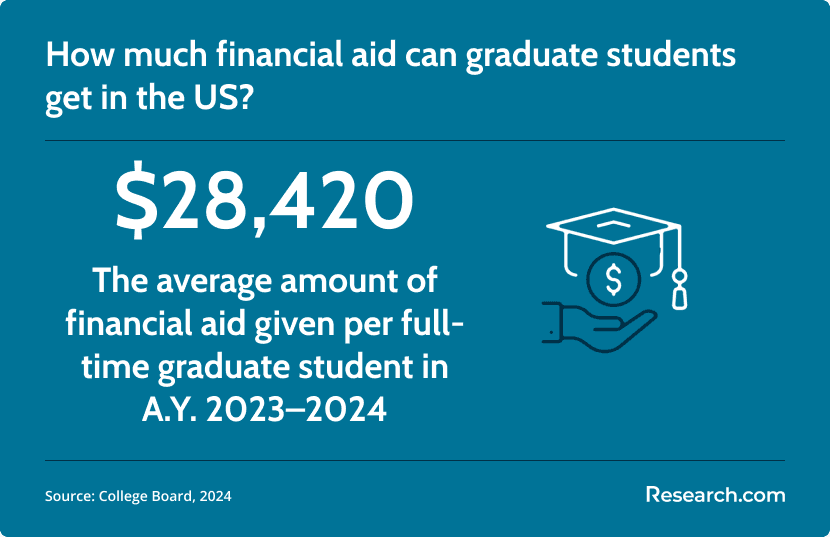
What are the financial aid options for students in CEPH-Accredited online MPH programs?
Online MPH students may use a mix of scholarships, grants, loans, employer support, payment plans, and institutional aid. Availability depends on the school, enrollment status, citizenship or residency requirements, academic standing, and program eligibility.
- The Association of Schools and Programs of Public Health (ASPPH) Financial Aid Options: ASPPH represents over 150 accredited schools and programs of public health and lists several funding opportunities, including citizen-based scholarships, aid for minority and underserved groups, and applicant-specific awards. Graduate public health students may apply for scholarships such as the Bridging the Dream Scholarship Program for Graduate Students from Sallie Mae. The Sallie Mae scholarship provides qualified graduate students with a maximum of $10,000 for educational assistance.
- The Johnson & Johnson Access-Ability Lime Scholarship: This scholarship supports students with disabilities pursuing education in healthcare and STEM fields. Applicants must be current Network Members of Lime Connect, enrolled at a 4-year university in the US, pursuing a healthcare or STEM degree, and active in disability inclusion advocacy.
- Federal Direct PLUS Loans for Graduate or Professional Students: Online MPH students may be eligible for Direct PLUS loans funded by the US Department of Education. The interest rate is 9.08% for students who first disbursed on or after July 1, 2024, and before July 1, 2025. The amount a student may borrow equals the school-calculated cost of attendance minus other financial aid received.
Students comparing public health with adjacent public service fields may also review career guides such as how to become an evidence technician, especially if they are interested in forensic investigations, public safety, or health-related evidence work.
What are the prerequisites for enrolling in a CEPH-Accredited online MPH program?
Admissions requirements vary by school, but online MPH applicants commonly need evidence that they can complete graduate-level public health coursework. Some programs welcome students from many undergraduate majors, while others prefer prior coursework or experience in health, science, statistics, social science, or public service.
- Bachelor’s Degree: Applicants typically need a bachelor’s degree from an accredited institution. A health or science background can help, but many MPH programs admit students from other fields.
- Minimum GPA: Many programs set a minimum undergraduate GPA, often around 3.0. A stronger GPA can help demonstrate readiness for graduate study.
- Letters of Recommendation and Statement of Purpose: Applicants are commonly asked for 2 to 3 recommendation letters and a personal statement explaining career goals, public health interests, and reasons for choosing the program.
If you are comparing public health with education-focused work, reviewing the ESL teacher salary guide can help clarify how different service-oriented careers compare in training requirements and earning potential.
What courses are typically in a CEPH-Accredited online MPH program?
A CEPH-Accredited online MPH usually combines broad public health foundations with concentration courses and applied practice. Students who are still learning the basics can start with a broader explanation of What is a MPH degree and then compare specific curricula across schools.
- Epidemiology: Students learn how diseases, injuries, and health conditions are distributed across populations and how public health professionals investigate causes and patterns.
- Biostatistics: Coursework focuses on statistical tools used to interpret public health data, evaluate research, and support evidence-based decisions.
- Environmental Health: Students examine how factors such as air, water, chemicals, climate, housing, and workplace exposures affect human health.
- Health Policy and Management: This area covers how health policies are developed, analyzed, funded, implemented, and managed across organizations and systems.
- Social and Behavioral Sciences: Students study how culture, behavior, social conditions, communication, and community context shape health outcomes and intervention design.
What types of specializations are available in CEPH-Accredited online MPH programs?
Specializations help students connect the MPH curriculum to a specific career direction. The best concentration depends on whether you want to work with data, communities, policy, global programs, nutrition, environmental risk, healthcare systems, or leadership.
| Specialization | What it emphasizes | Common career direction |
| Epidemiology | Disease patterns, outbreak investigation, surveillance, and research methods. | Public health analyst, epidemiology assistant, research coordinator, surveillance staff. |
| Global Health | International health systems, cross-cultural practice, low-resource settings, and global health initiatives. | NGO program staff, global health project coordinator, international health program support. |
| Health Policy and Management | Policy analysis, healthcare systems, leadership, budgeting, and public health administration. | Program manager, policy analyst, healthcare administration-related roles. |
| Community Health Promotion | Health education, behavior change, outreach, prevention programs, and community partnerships. | Health education specialist, community health program coordinator, outreach manager. |
| Environmental or Climate Health | Environmental exposures, climate-related risks, occupational safety, and population health protection. | Environmental health program staff, climate and health analyst, EHS-related roles. |
Students interested in policy, law, and environmental protection may also explore an environmental lawyer career path, particularly if they want to connect public health concerns with legal advocacy.
How do digital tools and virtual simulations enhance CEPH-Accredited online MPH programs?
Online MPH programs increasingly rely on learning technologies that help students practice public health decision-making without being physically present in a classroom. These tools may include virtual case studies, simulated outbreaks, data dashboards, collaborative software, online statistical tools, and interactive media.
The strongest use of technology is not simply posting lectures online. It is giving students structured practice with public health problems: analyzing data, interpreting risk, planning interventions, communicating findings, and working in teams. Students who want to compare other online health-related technical programs may also review an online ultrasound program to understand how digital delivery differs across healthcare education fields.
Is the ROI of a CEPH-Accredited online MPH program worth the investment?
The return on investment for an online MPH depends on the total program cost, your current income, your career target, whether you receive financial aid, and how quickly the degree helps you qualify for better roles. The degree may be valuable if it gives you access to positions that require or prefer graduate public health training. It may be less financially compelling if you borrow heavily without a clear career plan.
Students should compare tuition against realistic career outcomes rather than assuming the degree will automatically produce a large salary increase. Review alumni outcomes, employment reports, practicum partnerships, employer connections, and career services. You can also compare ROI thinking across other online credentials, such as the best online college for medical billing and coding, to see how program cost, credential value, and career entry differ by field.
Questions to ask before deciding the ROI is worth it
- What public health role am I targeting after graduation?
- Does that role require, prefer, or merely accept an MPH?
- What is the total cost after scholarships, employer support, and fees?
- Can I complete the practicum without leaving my job?
- Does the program publish employment or alumni outcome information?
- Will the concentration build marketable skills, such as data analysis, program evaluation, grant writing, or policy analysis?
How do CEPH-Accredited online MPH programs address diversity, equity, and inclusion?
Diversity, equity, and inclusion are central to public health because health outcomes are shaped by social, economic, geographic, cultural, and environmental conditions. CEPH-Accredited online MPH programs often address these issues through coursework in health disparities, community engagement, cultural competence, social determinants of health, ethics, and equitable program design.
Students should look for programs that do more than include DEI language in mission statements. Stronger programs connect equity concepts to applied assignments, practicum placements, community partnerships, and measurable public health interventions. Students seeking lower-cost public health pathways can also compare public health programs online.
Do employers value CEPH-Accredited online MPH degrees?
Employers generally focus on accreditation, relevant skills, applied experience, and whether a candidate can perform the work. A CEPH-Accredited online MPH can be respected when it includes rigorous coursework, applied practice, and training aligned with public health competencies. The online format is less important than the quality and recognition of the program.
Students should still evaluate how well each program connects to employers. Look for practicum support, career advising, alumni networks, faculty with public health experience, and coursework tied to current public health tools. Students interested in management-oriented pathways may also compare public health roles with highest paying entry-level healthcare administration jobs.
What student outcomes and alumni career trajectories should you review?
Before enrolling, ask the school for concrete outcome information. Useful indicators include graduation rates, practicum placement support, alumni job titles, employer partnerships, career services access, and whether graduates move into public health roles that match the program’s concentrations.
Outcome data should be interpreted carefully. Employment rates and salary information can be affected by local labor markets, prior experience, job level, and whether graduates were already employed while studying. Students with a scientific background or interest in research may also compare MPH options with an accelerated bachelor's degree in biology online when planning a longer academic pathway.
How do interdisciplinary studies strengthen CEPH-Accredited online MPH programs?
Public health problems rarely fit neatly into one discipline. Outbreaks, chronic disease, environmental hazards, food insecurity, workplace safety, maternal health, and health communication all require knowledge from multiple fields. Strong MPH programs help students connect public health with biology, statistics, policy, sociology, environmental science, healthcare administration, education, and communication.
Interdisciplinary learning is especially useful for students who want to work in research, program evaluation, health policy, environmental health, or community intervention design. Students who want a stronger life sciences foundation before or alongside graduate public health work may find a best online biology degree useful for comparison.
How do you choose the best CEPH-Accredited online MPH program?
The best online MPH is the one that fits your career goal, budget, schedule, learning style, and field placement needs. Accreditation is essential, but it should be only the first filter.
- Verify accreditation: Confirm CEPH accreditation and institutional accreditation before applying. Accreditation can affect employer recognition and eligibility for some opportunities.
- Match the concentration to the job: Choose epidemiology for data and disease investigation, health policy for policy work, community health for outreach and education, and management-focused tracks for leadership roles.
- Compare total cost, not just tuition: Add fees, books, technology costs, travel requirements, and lost income if you must reduce work hours.
- Check practicum support: Ask whether the school helps online students find placements near their location.
- Review course delivery: Decide whether you need asynchronous flexibility or prefer live classes and structured interaction.
- Look at career services: Strong advising, alumni connections, resume support, and employer partnerships can matter after graduation.
- Consider pace: If speed is your priority, compare MPH timelines with other short graduate healthcare options, including 1 year MHA programs online.
Common mistakes to avoid when choosing an online MPH
| Mistake | Why it can hurt you | Better approach |
| Choosing based only on ranking | Rankings may not reflect your budget, schedule, or career goal. | Use rankings as one input, then compare accreditation, curriculum, cost, and outcomes. |
| Ignoring CEPH accreditation | Non-accredited programs may not carry the same recognition in public health settings. | Verify CEPH status directly before applying. |
| Looking only at per-credit tuition | Total cost depends on credits, fees, books, and time to completion. | Calculate total program cost and expected borrowing. |
| Assuming online means self-paced | Many programs still have deadlines, live sessions, or group work. | Ask for a sample course schedule before enrolling. |
| Overlooking the practicum | Field placement can affect your schedule and local options. | Ask how online students secure approved practice sites. |
| Expecting guaranteed salary growth | An MPH can improve qualifications but does not guarantee a specific wage. | Research target job titles, local employers, and realistic career steps. |
What career paths are available to graduates of CEPH-Accredited online MPH programs?
Online MPH graduates may pursue public health roles in education, community programs, research, policy, healthcare organizations, nonprofit agencies, and government. The strongest candidates usually combine the degree with relevant field experience, technical skills, and a concentration aligned with the job.
- Community Health Workers: These professionals connect communities with healthcare and social services, provide education, and support access to care. In 2023, community health workers across the US had a median annual wage of $48,200 (US BLS, 2024).
- Dietitians and Nutritionists: Public health nutrition work may involve designing nutrition programs, promoting healthy eating, and addressing diet-related population health concerns. Dietitians and nutritionists in the US had a 2023 median annual wage of $69,680 (US BLS, 2024).
- Social Workers: Public health social work focuses on the overlap between health, social services, and support for vulnerable populations. In 2023, social workers had a median annual wage of $58,380 (US BLS, 2024).
- Survey Researchers: These professionals design and analyze surveys that can inform health policy, program evaluation, and population research. Survey researchers in the US had a 2023 median annual wage of $60,960 (US BLS, 2024).
- Health Education Specialists: These specialists plan, implement, and evaluate programs that promote healthier behaviors and improve public understanding of health issues. In 2023, health education specialists had a median annual wage of $62,860 (US BLS, 2024).
If your main interest is healthcare operations, administration, budgeting, or executive leadership rather than population health, a master's in healthcare administration online may be a better fit.
The chart below shows 2023 median annual wages for selected public health-related professionals in the US, based on 2024 data from the US BLS.
What is the job market like for graduates of CEPH-Accredited online MPH programs?
The job market for MPH graduates depends heavily on the role they target. Some public health-related occupations are projected to grow, while others are expected to remain flat. The following projections cover 2023 to 2033 (US BLS, 2024):
- Community Health Workers: Employment is projected to grow by 13%, equal to an average of about 7,500 job openings annually over the decade.
- Dietitians and Nutritionists: Employment is expected to increase by 7%, with an average of about 6,100 job openings each year.
- Social Workers: Employment is projected to grow by 7% from 2023 to 2033, equal to an average of about 67,300 job openings yearly.
- Survey Researchers: Employment is projected to show 0% growth, with an average of about only 800 job openings over the decade.
- Health Education Specialists: Employment is expected to grow by 7%, with an average of about 6,700 job openings during the period.
Students interested in workplace safety, compliance, environmental risk, and prevention may also explore how to start a career in EHS, which overlaps with public health through environmental and occupational health concerns.
The chart below visualizes job outlook data for public health-related professionals in the US from 2023 to 2033, based on 2024 data from the US BLS.
What challenges do online MPH students face and what support options are available?
Online MPH students often manage graduate coursework while working, caring for family, or living far from campus. Common challenges include time management, limited face-to-face networking, technology problems, group work across time zones, and securing practicum placements.
| Challenge | What to look for in a program |
| Balancing school with work | Part-time pacing, asynchronous classes, predictable deadlines, and advisor support. |
| Finding a practicum site | Placement assistance, local site approval processes, and clear fieldwork requirements. |
| Building professional connections | Virtual networking events, alumni groups, faculty office hours, and cohort-based learning. |
| Handling technical issues | Reliable technical support, accessible learning platforms, and clear technology requirements. |
| Staying motivated online | Regular advising, structured milestones, peer groups, and responsive faculty communication. |
Some students broaden their employability by adding practical healthcare or administrative skills outside the MPH. For example, students exploring administrative healthcare roles may compare public health graduate study with an affordable medical billing and coding certification.
Key Insights
- A CEPH-Accredited online MPH is best for students seeking public health, population health, health education, policy, epidemiology, community health, or program-focused careers.
- CEPH accreditation should be a non-negotiable screening factor because it indicates that the program meets recognized public health education standards.
- Most online MPH programs take 1.5 years to 3 years, with full-time, part-time, and accelerated options available depending on the school.
- Cost varies widely. Featured programs show tuition examples from $535 per quarter hour to $1,890 per credit, and many programs require 42 to 48 credit hours.
- An MPH can strengthen career options, but salary depends on role, location, experience, specialization, and additional credentials. It should not be treated as a guaranteed income boost.
- Before enrolling, compare total cost, practicum support, concentration fit, course format, career services, alumni outcomes, and whether the program’s schedule matches your real life.
- Common mistakes include ignoring accreditation, focusing only on tuition, assuming all online programs are self-paced, and choosing a program without a clear public health career target.
References:
- College Board. (2024). Trends in Student Aid: Highlight. https://research.collegeboard.org/trends/student-aid/highlights
- National Center for Education Statistics. (2024, May). Graduate Degree Fields. https://nces.ed.gov/programs/coe/indicator/ctb/graduate-degree-fields
- US Bureau of Labor Statistics. (2024, August 29). Community Health Workers. Occupational Outlook Handbook. https://www.bls.gov/ooh/community-and-social-service/community-health-workers.htm
- US Bureau of Labor Statistics. (2024, August 29). Dietitians and Nutritionists. Occupational Outlook Handbook. https://www.bls.gov/ooh/healthcare/dietitians-and-nutritionists.htm
- US Bureau of Labor Statistics. (2024, August 29). Health Education Specialists. Occupational Outlook Handbook. https://www.bls.gov/ooh/community-and-social-service/health-educators.htm
- US Bureau of Labor Statistics. (2024, August 29). Pharmacists. Occupational Outlook Handbook. https://www.bls.gov/ooh/healthcare/pharmacists.htm
- US Bureau of Labor Statistics. (2024, August 29). Physicians and Surgeons. Occupational Outlook Handbook. https://www.bls.gov/ooh/healthcare/physicians-and-surgeons.htm
- US Bureau of Labor Statistics. (2024, August 29). Social Workers. Occupational Outlook Handbook. https://www.bls.gov/ooh/community-and-social-service/social-workers.htm
- US Bureau of Labor Statistics. (2024, August 29). Survey Researchers. Occupational Outlook Handbook. https://www.bls.gov/ooh/life-physical-and-social-science/survey-researchers.htm
Other Things You Need to Know about CEPH-Accredited Online MPH Programs
Graduates of these programs often see strong job prospects due to high demand in public health sectors. According to the U.S. Bureau of Labor Statistics, employment for public health professionals is projected to grow by 13% through 2028, significantly faster than average.
Most CEPH-accredited online MPH programs require a supervised practicum or field experience, usually 100 to 200 hours, completed with an approved site and preceptor. CEPH requires practical training, but the exact hour total and placement rules are set by each university.





