2027 What is a Master of Public Health (MPH) Degree?

Co-Founder and Chief Data Scientist
Choosing a Master of Public Health degree is a career and financial decision, not just an academic one. An MPH can prepare you to work on disease prevention, health policy, emergency preparedness, population health, environmental risks, health education, and data-informed public health programs. It can also help professionals in healthcare, research, nonprofit leadership, government, and community health move into broader roles that affect entire populations rather than individual patients alone.
The decision matters now because public health work is becoming more data-driven, interdisciplinary, and visible across healthcare systems, government agencies, employers, and global organizations. The U.S. Bureau of Labor Statistics projects 7% growth for health education specialists from 2023 to 2033, and many MPH graduates use the degree to qualify for roles that require stronger analytical, policy, leadership, and program evaluation skills.
This guide explains what an MPH includes, how long it takes, how much it can cost, what specializations are available, how online and campus programs compare, and how to evaluate whether the degree is worth the investment for your goals.
Quick Answer: Is a Master of Public Health Degree Worth It?
A Master of Public Health degree can be worth it if you want to work in population health, epidemiology, health policy, health education, environmental health, healthcare improvement, or public health leadership. The strongest value usually comes from choosing a CEPH-accredited program, selecting a concentration aligned with your target role, controlling debt, and gaining field experience through internships, research, or applied projects.
MPH graduates may pursue roles in government agencies, nonprofit organizations, hospitals, universities, consulting firms, insurance companies, and global health organizations. Public health salaries vary by role, employer, location, and experience, with many public health professionals and MPH graduates earning about $60,000 to $100,000 annually depending on specialization and position.
What are the benefits of getting a Master of Public Health degree?
- Broader career options: An MPH can support careers in epidemiology, public health education, health policy, environmental health, healthcare improvement, research, consulting, and global health.
- Work across many sectors: Graduates may work for local and federal health agencies, hospitals, nonprofit organizations, academic institutions, international aid groups, insurers, and consulting companies.
- Preparation for leadership: The degree often strengthens skills in program planning, data analysis, communication, policy interpretation, grant writing, and health systems management.
- Flexible study formats: Universities such as UNC Chapel Hill and Harvard offer online MPH programs, giving working adults more options to study without relocating or leaving full-time employment.
- Potential salary growth: Depending on role and specialization, public health professionals and MPH graduates commonly fall within a salary range of about $60,000 to $100,000 annually.
What can I expect from a Master of Public Health Degree?
A Master of Public Health degree is a graduate program focused on improving health outcomes for communities and populations. Unlike clinical degrees that prepare students to treat individual patients, an MPH emphasizes prevention, health systems, policy, research, data interpretation, and public health interventions.
Most MPH programs combine core public health coursework with a concentration, applied practice experience, and a final capstone or integrative project. Students typically study epidemiology, biostatistics, environmental health, health policy, health behavior, program evaluation, and leadership.
| MPH program component | What it usually covers | Why it matters |
| Core public health courses | Epidemiology, biostatistics, environmental health, social and behavioral health, and health policy | Builds the foundation needed for most public health roles |
| Concentration or specialization | Focused study in an area such as global health, epidemiology, health policy, maternal and child health, or health communication | Helps align the degree with a specific career direction |
| Applied practice experience | Internship, practicum, fieldwork, or community-based project | Gives students evidence of hands-on public health experience |
| Capstone or final project | Applied research, program plan, policy analysis, or intervention evaluation | Demonstrates readiness to solve real public health problems |
- Students learn both public health theory and applied methods so they can evaluate problems, design interventions, and measure results.
- Many programs require internships, fieldwork, or capstone projects that place students in real public health settings.
- Concentrations such as global health, maternal and child health, health communication, and epidemiology allow students to shape the degree around their goals.
- Graduates are prepared to contribute in public agencies, healthcare organizations, research settings, nonprofits, and international health programs.
Where can I work with a Master of Public Health degree?
An MPH can lead to work in public health agencies, healthcare systems, universities, nonprofits, research organizations, insurers, consulting firms, and global health groups. The best setting depends on your concentration, technical skills, field experience, and whether you prefer direct community work, policy, analytics, management, or research.
| Work setting | Common MPH responsibilities | Good fit for students interested in |
| Public health organizations | Designing health programs, supporting outbreak response, managing prevention initiatives, and helping implement policy | Government service, disease prevention, emergency response, and community health |
| Healthcare improvement and education | Improving patient education, analyzing population health needs, supporting quality improvement, and coordinating wellness programs | Hospitals, clinics, health insurers, and health systems |
| Public health research and academia | Conducting studies, analyzing data, supporting grant-funded projects, teaching, and evaluating interventions | Research, doctoral study, teaching, and evidence-based practice |
| Global health initiatives | Supporting disaster response, disease prevention, humanitarian programs, and international health projects | Organizations such as Doctors Without Borders, UNICEF, the Red Cross, and global NGOs |
| Health policy and consulting | Analyzing policy, evaluating programs, preparing reports, supporting advocacy, and advising organizations | Think tanks, consulting firms, nonprofits, health management, and data analysis |
- Public health organizations: MPH graduates may work with groups such as the Centers for Disease Control and Prevention, the World Health Organization, or local health departments on policy implementation, outbreak management, and public health programming.
- Healthcare improvement and education: Hospitals, clinics, and insurance companies hire public health professionals to improve systems, patient education, care coordination, and health outcomes.
- Public health research and academia: Graduates may support research studies, teach, or work with institutions focused on prevention, health promotion, and program evaluation.
- Global health initiatives: International organizations may need professionals who can assist with disaster response, disease prevention, vaccination efforts, and health equity projects.
- Health policy and consulting: MPH-trained professionals can work in policy analysis, nonprofit advocacy, healthcare consulting, public health management, and data-informed planning.
How much can I make with a Master of Public Health degree?
MPH salaries vary widely. A graduate working in a local nonprofit may earn much less than a senior analyst, epidemiologist, administrator, or consultant in a high-cost labor market. Location, employer type, concentration, years of experience, quantitative skills, and leadership responsibilities all affect pay.
- Health educators with an MPH earn a median salary of around $60,000 per year, according to the U.S. Bureau of Labor Statistics (BLS, 2023).
- Specialized roles such as epidemiologists or health policy analysts have a salary range from $79,000 to $100,000 annually, according to ZipRecruiter, 2025.
- Senior roles, including public health administrators or global health experts, can earn over $95,000 per year, according to salary data from PayScale.
| Role category | Salary information stated in available sources | What can increase earnings |
| Health education | Median salary of around $60,000 per year | Program management, grant experience, community partnership work, and CHES/MCHES-style credentials where relevant |
| Epidemiology or health policy analysis | $79,000 to $100,000 annually | Advanced statistics, data visualization, surveillance experience, and policy analysis skills |
| Public health administration or global health leadership | Over $95,000 per year | Management experience, budgeting, strategic planning, crisis response, and cross-sector leadership |
Do not assume an MPH automatically leads to a six-figure job. The degree is most valuable when paired with practical experience, a clear concentration, technical tools, and a targeted job search strategy.
- Best Master’s of Public Health Degrees for 2027
- How long does it take to complete a Master of Public Health degree?
- How does an online Master of Public Health degree compare to an on-campus program?
- What is the average cost of a Master of Public Health degree?
- What are the financial aid options for students enrolling in a Master of Public Health degree?
- What are the prerequisites for enrolling in a Master of Public Health degree?
- What courses are typically required for a Master of Public Health degree?
- What types of specializations are available in Master of Public Health degree programs?
- What are the benefits of an accelerated healthcare management degree online?
- What advanced education pathways can complement an MPH degree?
- What are the emerging trends in public health education?
- What challenges do students typically face in MPH programs?
- How can I evaluate the return on investment of a Master of Public Health degree?
- How to choose the best Master of Public Health degree?
- Can additional certifications enhance your career with an MPH degree?
- How can additional online certifications complement an MPH degree?
- How can combining MPH with data science skills advance your career?
- What career paths are available for graduates with a Master of Public Health?
- What is the job market for graduates with a Master of Public Health degree?
- What do employers value most in MPH graduates?
List of the Best Master’s of Public Health Degrees for 2027
How do we rank schools?
Because an MPH can require a major investment of time and money, a ranking should help readers compare programs with transparent, verifiable information rather than reputation alone.
This ranking uses trusted education datasets, including the IPEDS database, Peterson’s database and its Distance Learning Licensed Data Set, College Scorecard, and the National Center for Education Statistics. For more information about how Research.com evaluates schools and programs, see our methodology section.
1. Johns Hopkins University
Johns Hopkins University offers its MPH through the Bloomberg School of Public Health, a program designed for students who want rigorous preparation for domestic and global public health work. The program includes online and in-person study options, making it useful for both early-career students and professionals who want to continue working while completing graduate training.
- Program Length: 1.5 to 3 years
- Tracks/Concentrations:
- Epidemiology
- Environmental Health
- Global Health
- Cost per Credit: $1,130 (subject to change)
- Required Credits to Graduate: 80 credits
- Accreditation: Council on Education for Public Health (CEPH)
2. University of North Carolina at Chapel Hill
The Gillings School of Global Public Health at UNC Chapel Hill provides an MPH with multiple specialization options and an online format built for working professionals. The program can fit students already working in health systems, public health organizations, or leadership roles, as well as those entering the field from related backgrounds.
- Program Length: 2 years (online option available)
- Tracks/Concentrations:
- Leadership
- Nutrition, Applied Epidemiology
- Cost per Credit: $1,000 (subject to change)
- Required Credits to Graduate: 42 credits
- Accreditation: Council on Education for Public Health (CEPH)
3. Emory University
Emory University offers an MPH through the Rollins School of Public Health, with concentrations that include Global Health, Epidemiology, and Environmental Health. Students can choose full-time or part-time study, and the online option supports professionals who want a research-oriented public health education without pausing their careers.
- Program Length: 2 years (with part-time options available)
- Tracks/Concentrations:
- Global Health
- Epidemiology
- Environmental Health
- Cost per Credit: $1,227
- Required Credits to Graduate: 42 credits
- Accreditation: Council on Education for Public Health (CEPH)
4. Columbia University
The Mailman School of Public Health at Columbia University offers an interdisciplinary MPH that combines academic coursework with applied field experience. The program is available in in-person and online formats and is suited to students who want to examine public health problems through policy, research, data, and systems perspectives.
- Program Length: 2 years (online option available)
- Tracks/Concentrations:
- Epidemiology
- Health Policy
- Global Health
- Environmental Health
- Cost per Credit: $2,208
- Required Credits to Graduate: 42 credits
- Accreditation: Council on Education for Public Health (CEPH)
5. Harvard University
Harvard T.H. Chan School of Public Health offers an MPH for students preparing for leadership in public health policy, management, research, and systems change. The program includes full-time and part-time options, and Harvard’s online MPH program, launched in 2014, allows students to access coursework remotely.
- Program Length: 1 to 2 years (online option available)
- Tracks/Concentrations:
- Epidemiology
- Global Health
- Health Management
- Cost per Credit: $2,010
- Required Credits to Graduate: 45 credits
- Accreditation: Council on Education for Public Health (CEPH)
6. University of Washington
The University of Washington School of Public Health offers an MPH with full-time, part-time, and online options. The program emphasizes applied public health skills, health disparities, population health, and global health knowledge, making it a strong fit for students who want practical training for work with diverse communities.
- Program Length: 2 years (online option available)
- Tracks/Concentrations:
- Epidemiology
- Global Health
- Health Systems
- Population Health
- Cost per Credit: $1,168 (subject to change)
- Required Credits to Graduate: 42 credits
- Accreditation: Council on Education for Public Health (CEPH)
7. University of Michigan, Ann Arbor
The University of Michigan offers MPH concentrations such as Health Behavior and Health Equity, Epidemiology, and Health Management and Policy. Students may study online or on campus, and the online route is structured for learners managing professional responsibilities while pursuing graduate-level public health training.
- Program Length: 2 years (online option available)
- Tracks/Concentrations:
- Health Behavior and Health Equity
- Epidemiology
- Health Management
- Cost per Credit: $1,424
- Required Credits to Graduate: 42 credits
- Accreditation: Council on Education for Public Health (CEPH)
8. Boston University
The Boston University School of Public Health offers MPH concentrations in areas such as Epidemiology, Global Health, and Health Policy and Management. With online and on-campus options, the program can serve students who want practical, career-relevant public health training while balancing work and other commitments.
- Program Length: 1.5 to 2 years (online option available)
- Tracks/Concentrations:
- Epidemiology
- Health Policy
- Global Health
- Cost per Credit: $1,560
- Required Credits to Graduate: 48 credits
- Accreditation: Council on Education for Public Health (CEPH)
9. University of California, Los Angeles (UCLA)
The UCLA Fielding School of Public Health offers an MPH for students preparing for leadership in public health practice, policy, and research. Concentrations include Environmental Health Sciences, Epidemiology, Biostatistics, and Health Policy and Management, with an online option designed for working professionals.
- Program Length: 2 years (online option available)
- Tracks/Concentrations:
- Environmental Health
- Epidemiology
- Biostatistics
- Health Policy
- Cost per Credit: $1,200
- Required Credits to Graduate: 48 credits
- Accreditation: Council on Education for Public Health (CEPH)
10. University of California, Berkeley (UCB)
UC Berkeley offers an MPH through its School of Public Health, with study options that can support full-time and part-time learners. The program emphasizes public health leadership, health policy, global health, epidemiology, and environmental health, making it appropriate for students interested in complex population health problems.
- Program Length: 2 years (online option available)
- Tracks/Concentrations:
- Global Health
- Health Policy and Management
- Environmental Health
- Cost per Credit: $1,351
- Required Credits to Graduate: 45 credits
- Accreditation: Council on Education for Public Health (CEPH)
| School | Program length | Required credits | Cost per credit | Accreditation |
| Johns Hopkins University | 1.5 to 3 years | 80 credits | $1,130 (subject to change) | CEPH |
| University of North Carolina at Chapel Hill | 2 years (online option available) | 42 credits | $1,000 (subject to change) | CEPH |
| Emory University | 2 years (with part-time options available) | 42 credits | $1,227 | CEPH |
| Columbia University | 2 years (online option available) | 42 credits | $2,208 | CEPH |
| Harvard University | 1 to 2 years (online option available) | 45 credits | $2,010 | CEPH |
| University of Washington | 2 years (online option available) | 42 credits | $1,168 (subject to change) | CEPH |
| University of Michigan, Ann Arbor | 2 years (online option available) | 42 credits | $1,424 | CEPH |
| Boston University | 1.5 to 2 years (online option available) | 48 credits | $1,560 | CEPH |
| University of California, Los Angeles (UCLA) | 2 years (online option available) | 48 credits | $1,200 | CEPH |
| University of California, Berkeley (UCB) | 2 years (online option available) | 45 credits | $1,351 | CEPH |
How long does it take to complete a Master of Public Health degree?
Most MPH programs take 1.5 to 3 years to complete. Full-time students commonly finish in about two years, while part-time students may need more time because they take fewer courses each term. Accelerated options can shorten the timeline, but they usually require a heavier course load and stronger time management.
Online MPH programs can be especially useful for working adults because they often allow more scheduling flexibility. Students comparing flexible and lower-barrier options may also want to review affordable master of public health programs no GRE, especially if standardized testing is a concern.
Health professions, including public health, are among the top five fastest-growing fields of study in master's degree programs. National Center for Education Statistics data shows that 147,000 students have been awarded a master's degree in health-related programs. The field can be academically demanding, but the number of students completing health-related graduate programs shows sustained interest in this area.
| Study pace | Typical completion time | Best for | Trade-off |
| Accelerated or intensive | 1.5 to 2 years | Students who can handle a demanding schedule | Less flexibility for work, caregiving, or internships |
| Traditional full-time | About 2 years | Students who want steady progress and structured fieldwork | May require reduced work hours |
| Part-time | Often longer than 2 years | Working professionals and caregivers | Longer timeline before career benefits are realized |
| Flexible online | Varies by program and course load | Students who need location independence | Requires self-direction and proactive networking |
How does an online Master of Public Health degree compare to an on-campus program?
An online MPH can offer the same core curriculum and accreditation as an on-campus program, but the learning experience is different. The best choice depends on how you learn, how much flexibility you need, whether you can relocate, and how important in-person networking is for your career path.
Online MPH programs, similar in flexibility to online Master in Healthcare Administration degree programs, allow students to complete coursework from a distance and often continue working while enrolled. Some schools also use hybrid models that combine online classes with campus visits, residencies, or in-person field experiences.
| Factor | Online MPH | On-campus MPH |
| Flexibility | Usually stronger for working adults and students who cannot relocate | More structured schedule with set class meetings |
| Networking | Often virtual, with discussion boards, online teams, and remote events | More frequent face-to-face interaction with faculty, peers, and local employers |
| Fieldwork | May be completed locally or remotely, depending on program approval | Often connected to campus partnerships and nearby public health organizations |
| Cost considerations | May reduce relocation and commuting costs, though tuition may be similar | May require housing, transportation, and campus-based fees |
| Best fit | Self-motivated students balancing work, family, or location constraints | Students who want campus resources, in-person mentorship, and local networking |
Online programs can be convenient and accessible, but students should not overlook what they may miss: spontaneous faculty interaction, campus research roles, local networking, and in-person cohort relationships. For careers in epidemiology, health policy, and hospital administration, these connections can matter.
Online students can still build strong networks by attending virtual events, joining professional associations, asking faculty about research opportunities, and choosing practicum sites strategically. Remote learning can also strengthen digital collaboration skills, which are increasingly useful in public health workplaces.
What is the average cost of a Master of Public Health degree?
The average cost of an MPH degree varies substantially by school type, residency status, delivery format, program length, and fees. Tuition for the full program commonly ranges from $10,000 to $50,000, but some private or highly selective programs can cost more when fees and living expenses are included.
Students looking for the cheapest online public health degree should compare total cost, not just advertised tuition. Online programs may reduce commuting or relocation expenses, but they are not automatically cheaper than campus programs.
| Cost factor | Why it matters | Question to ask |
| Tuition per credit | Programs charge differently by school, format, and residency status | Is the rate different for online, out-of-state, or part-time students? |
| Required credits | A lower per-credit price may still be expensive if the program requires many credits | How many credits are required to graduate? |
| Fees | Technology, student services, health, graduation, and practicum fees can add up | What mandatory fees are charged each term? |
| Living and travel costs | Campus programs may require relocation; online programs may still require visits | Are there campus residencies or in-person requirements? |
| Lost income | Full-time study may reduce work hours | Can I keep working while enrolled? |
Public universities often charge less than private institutions, but out-of-state tuition can reduce or eliminate that advantage. Always request a full cost-of-attendance estimate and compare it with realistic salary outcomes for your intended role.
What are the financial aid options for students enrolling in a Master of Public Health degree?
The average debt among master’s degree holders in 2020 exceeds $60,000, according to Hanson, M. 2024. Because graduate school debt can affect career flexibility, MPH applicants should build a funding plan before enrolling.
- Scholarships and grants: Public health organizations, schools, foundations, and government-related programs may offer funding. In 2022, the Health Resources & Services Administration awarded $40,724,000 to 29 organizations through the Public Health Scholarship Program.
- Federal aid through FAFSA: Graduate students may use Federal Direct Unsubsidized Loans of up to $20,500/year and Graduate PLUS Loans, according to Federal Student Aid.
- Graduate assistantships: Universities such as UCLA and Harvard may offer teaching or research assistantships that help cover tuition and provide stipends.
- Private loans and state grants: Some students use private lenders or state-based programs, especially for public health work in high-need areas. Students entering healthcare through nontraditional routes may also find practical career context in guides such as how to become a medical assistant with no experience.
Because 71% of postgraduate degree holders owed at least $25,000 in student loan debt as of 2023, according to Fry & Cillufo, 2024, applicants should prioritize scholarships, assistantships, employer tuition support, and lower-cost accredited programs before relying heavily on loans.
| Funding option | Best use | What to verify |
| Scholarships | Reducing tuition without repayment | Eligibility, renewal rules, deadlines, and service requirements |
| Assistantships | Combining funding with teaching or research experience | Weekly work hours, stipend amount, tuition coverage, and availability for MPH students |
| Federal loans | Covering remaining costs after gift aid | Borrowing limits, interest, repayment options, and total projected debt |
| Employer tuition support | Working professionals in healthcare, government, or nonprofits | Grade requirements, reimbursement timing, and required employment commitment |
| State grants or workforce programs | Students planning to work in underserved or high-need areas | Location restrictions, service obligations, and approved programs |
What are the prerequisites for enrolling in a Master of Public Health degree?
MPH admissions requirements differ by school, but most programs look for evidence that applicants can handle graduate-level reading, writing, quantitative work, and applied public health projects. A clinical background is not always required, although healthcare experience can strengthen an application.
- Bachelor’s degree: Applicants generally need a completed bachelor’s degree from an accredited institution, often with a GPA of 3.0 or higher.
- Prerequisite coursework: Some programs require or recommend undergraduate coursework in biology, chemistry, statistics, or related subjects. Students from nursing, psychology, pharmacy, and related fields, including those exploring online Doctor of Pharmacy programs, may use an MPH to broaden their population health expertise.
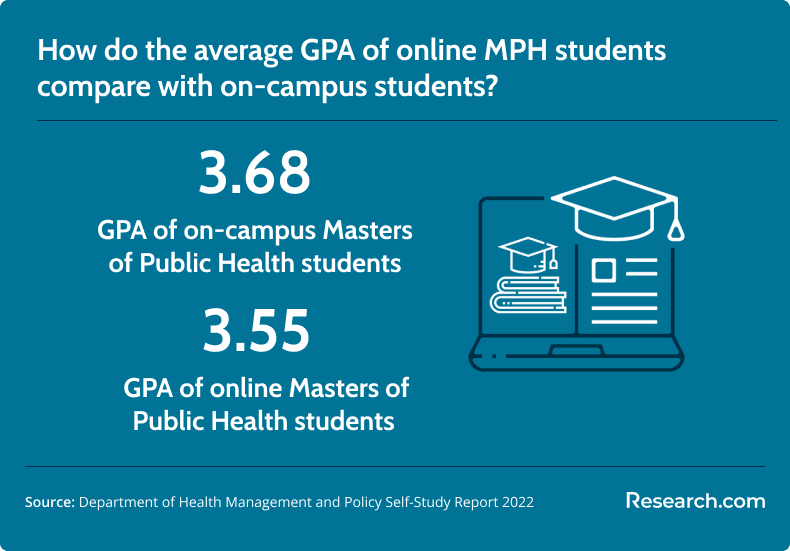
- GPA expectations: Many programs list a minimum GPA of 3.0, though some may consider applicants with lower GPAs when they bring strong work experience or other qualifications. A 2022 self-study report from the Department of Health Management and Policy of the University of Kentucky reported an average GPA of 3.68 for on-campus MPH students enrolled in Fall of 2021 and 3.55 for online students.
- Relevant experience: Competitive programs may prefer applicants with public health, healthcare, research, community service, or nonprofit experience. Doctors, fast-track nurse practitioners, and other healthcare professionals may be well positioned for MPH study.
- Application materials: Schools commonly request recommendation letters, a personal statement, a resume, transcripts, and GRE scores at some institutions.
| Applicant background | How to strengthen the application |
| Recent graduate | Highlight research projects, statistics coursework, volunteer work, internships, and community health exposure |
| Healthcare professional | Connect clinical experience to population-level problems, quality improvement, prevention, or policy goals |
| Career changer | Show transferable skills in data, communication, project management, education, advocacy, or nonprofit work |
| Applicant with lower GPA | Use work achievements, strong recommendations, recent coursework, and a focused personal statement to demonstrate readiness |
What courses are typically required for a Master of Public Health degree?
MPH coursework is designed to help students understand how health problems develop across populations, how to measure them, and how to design interventions that work in real communities. Most programs include a core curriculum plus electives in the student’s specialization.
- Epidemiology: Covers how diseases and health outcomes are distributed in populations and how researchers identify causes, risk factors, and prevention strategies.
- Biostatistics: Teaches statistical methods used to analyze public health data and interpret research findings.
- Environmental Health: Examines how air, water, chemicals, housing, climate, and workplace exposures affect health.
- Health Policy and Management: Explores healthcare systems, policy development, public health leadership, budgeting, and organizational decision-making.
- Social and Behavioral Sciences in Public Health: Looks at how culture, behavior, social conditions, and community context influence health outcomes.
- Toxicology: Studies harmful substances and their effects on people, communities, and ecosystems.
- Program Evaluation in Public Health: Teaches students how to determine whether public health programs are effective, equitable, and worth continued investment.
- Healthcare Administration: Focuses on the operation, organization, and management of healthcare and public health systems.
- Diversity and Health Equity: Examines disparities in access, outcomes, and treatment while exploring strategies to reduce inequities.
- Maternal and Child Health: Addresses public health issues affecting mothers, infants, children, and families.
- Public Health Education: Covers planning, communication, and implementation of health education initiatives.
- Infectious Disease Control: Focuses on transmission, surveillance, outbreak response, and prevention.
- Disaster Management and Emergency Preparedness: Prepares students to support public health responses to emergencies, outbreaks, and natural disasters.
Students comparing public health with hands-on healthcare support roles may also find it useful to review the differences between medical assistant vs certified nursing assistant pathways.
What types of specializations are available in Master of Public Health degree programs?
MPH specializations help determine the kinds of jobs you will be most competitive for after graduation. Before choosing a concentration, review job postings for your target roles and note the required skills, software, field experience, and credentials.
| Specialization | Best for students who want to | Possible career direction |
| Epidemiology and Infectious Diseases | Study disease patterns, outbreak control, surveillance, and prevention | Epidemiology, disease investigation, emergency response, research |
| Biostatistics | Use statistical methods to analyze public health and clinical data | Data analysis, research, clinical trials, program evaluation |
| Environmental Health | Examine how pollution, toxic exposures, climate change, and workplaces affect health | Environmental policy, occupational health, regulatory agencies |
| Health Education | Create campaigns and programs that improve health literacy and behavior | Community health education, nonprofit programming, school and community wellness |
| Public Health Policy and Writing | Influence public health policy, communicate evidence, and advocate for systems change | Policy analysis, advocacy, public health communications, legislative support |
- Epidemiology and Infectious Diseases: A strong option for students interested in disease patterns, prevention, outbreak control, surveillance, and public health emergencies.
- Biostatistics: Best for analytically oriented students who want to apply statistical methods to health data, clinical research, and program evaluation.
- Environmental Health: Focuses on public health risks tied to pollution, toxic exposures, occupational settings, and climate-related hazards.
- Health Education: Prepares students to design community programs and health campaigns that promote prevention and wellness. Health educator roles can also align with chemistry, environmental science, psychology, and biology major jobs.
- Public Health Policy and Writing: Suits students who want to influence policy, develop clear public health communications, and advocate for better systems.
What are the benefits of an accelerated healthcare management degree online?
An accelerated healthcare management program can be useful for MPH students or graduates who want stronger leadership, operations, budgeting, and administrative skills. Public health professionals often work with healthcare systems, insurers, clinics, and public agencies, so management training can help them move from program support into supervisory or strategic roles.
The main advantage is speed. A condensed format can help professionals gain management knowledge more quickly, but it also requires a heavier workload. Before enrolling, compare program intensity, accreditation, field requirements, and whether the curriculum overlaps too much with your MPH. Students interested in this route can explore an accelerated healthcare management degree online.
What advanced education pathways can complement an MPH degree?
An MPH can stand alone for many public health careers, but some professionals add another credential to deepen clinical, administrative, research, or technical expertise. The right next step depends on whether you want to lead organizations, conduct advanced research, teach, influence policy, or bring clinical knowledge into population health work.
Possible pathways include doctoral public health study, healthcare administration, health informatics, pharmacy, nursing, medicine, or data-focused graduate programs. For students interested in combining clinical medication knowledge with public health strategy, a pharmacist degree online may provide a complementary perspective.
What are the emerging trends in public health education?
Public health education is increasingly shaped by data analytics, digital health platforms, health equity, climate-related risks, emergency preparedness, and real-time disease surveillance. Employers often expect graduates to understand both traditional public health methods and the technology used to monitor, communicate, and evaluate population health interventions.
Interdisciplinary training is also becoming more important. Students may benefit from learning how public health connects with healthcare administration, informatics, finance, billing systems, and policy compliance. For example, medical billing and coding online courses with financial aid may help some learners understand healthcare documentation, reimbursement, and administrative workflows that intersect with public health systems.
What challenges do students typically face in MPH programs?
MPH programs can be demanding because they combine graduate-level reading, writing, data analysis, applied projects, and fieldwork. Students who are also working full time may struggle most with time management, practicum scheduling, group projects, and quantitative coursework.
| Common challenge | Why it happens | Better approach |
| Underestimating statistics | Biostatistics and epidemiology require comfort with data and methods | Review basic statistics before the first term and use tutoring early |
| Choosing a weak practicum | Some students select the easiest placement rather than the most strategic one | Choose fieldwork that builds evidence for your target role |
| Trying to work full time without planning | Course deadlines, group work, and internship hours can conflict with job demands | Map the entire term schedule and speak with your employer early |
| Ignoring networking | Online and part-time students may have fewer informal connections | Attend events, join associations, request informational interviews, and build faculty relationships |
| Waiting too long to specialize | General coursework alone may not make a candidate stand out | Use electives, projects, and internships to build a clear professional profile |
Students who want additional context on healthcare administrative work may compare related training options through colleges that offer medical billing and coding.
How can I evaluate the return on investment of a Master of Public Health degree?
To evaluate MPH return on investment, compare the full cost of attendance with the realistic career outcomes for your chosen concentration. ROI is not only about salary. It also includes career mobility, access to leadership roles, job stability, mission alignment, and whether the degree helps you enter the specific public health role you want.
Start with total cost: tuition, fees, books, technology costs, travel, lost income, and loan interest. Then compare that cost with salary expectations, internship access, alumni outcomes, employer partnerships, and whether the program has a strong record in your target area. If you are comparing public health with shorter healthcare training routes, this guide on How much is a medical assistant program? can provide a useful cost benchmark for a different type of healthcare credential.
| ROI question | Why it matters |
| What role am I trying to qualify for? | An MPH has better value when it is tied to a defined career outcome. |
| Is the program CEPH-accredited? | Accreditation can affect employer confidence and eligibility for some public health roles. |
| How much debt will I take on? | High loan balances can limit job choices after graduation. |
| Does the program offer strong practicum placements? | Applied experience often matters as much as coursework. |
| Do alumni work in the roles I want? | Graduate outcomes show whether the program has relevant employer connections. |
How to choose the best Master of Public Health degree?
The best MPH program is the one that fits your career target, budget, schedule, and learning needs. Prestige can help in some cases, but it should not outweigh accreditation, cost, fieldwork quality, faculty expertise, and specialization fit.
First, confirm accreditation. Look for programs accredited by the Council on Education for Public Health (CEPH), which currently has 259 schools and programs. Then compare specializations, program format, faculty interests, practicum sites, graduate outcomes, and total cost.
Students who need flexible healthcare education pathways may also find useful comparisons in top online CNA to LPN bridge programs, especially when considering how to balance work, credentials, and long-term career growth.
| Selection factor | What to look for | Red flag |
| Accreditation | CEPH accreditation and clear institutional accreditation | Vague accreditation claims or unclear program status |
| Specialization fit | Courses, faculty, and projects aligned with your target role | Only broad electives with little depth in your area |
| Applied experience | Practicum support, employer partnerships, and capstone guidance | Students must find placements with little help |
| Total cost | Transparent tuition, fees, and financial aid information | Only tuition is advertised, with fees hard to find |
| Format | Online, hybrid, or campus schedule that matches your life | Required residencies or synchronous classes you cannot attend |
| Career support | Public health job advising, alumni network, and employer connections | Generic career services with little public health specialization |
Common mistakes to avoid when choosing an MPH program
- Choosing by ranking alone: A highly ranked school may not be the best fit if it lacks your specialization or is too expensive.
- Ignoring accreditation: Always verify CEPH accreditation and institutional accreditation before applying.
- Comparing tuition only: Fees, travel, residencies, lost income, and loan interest can change the real cost.
- Assuming online means easier: Online MPH programs can be just as rigorous as campus programs and require strong self-management.
- Waiting to plan fieldwork: Practicum experience can shape your resume, references, and first post-MPH job.
- Choosing a concentration too casually: Specialization affects course choices, projects, internship options, and career competitiveness.
- Assuming salary outcomes are guaranteed: Pay depends on role, employer, location, experience, and skills.
Can additional certifications enhance your career with an MPH degree?
Certifications can help when they add skills that your MPH does not fully cover. Useful credentials may strengthen areas such as data analysis, emergency preparedness, health education, project management, healthcare administration, informatics, or clinical operations.
For some public health professionals, practical clinical exposure can also be helpful, especially in community health, care coordination, or healthcare outreach. A short medical assisting program in 6 weeks may offer hands-on context for students who want a closer understanding of patient-facing healthcare environments.
How can additional online certifications complement an MPH degree?
An MPH provides broad graduate training, while targeted online certifications can fill specific skill gaps. For example, students interested in healthcare data, records, compliance, and information systems may benefit from health information management coursework.
Credentials in digital health management, data analytics, health information systems, program evaluation, and emergency preparedness can help MPH graduates show employers that they can apply knowledge in technical settings. Students exploring health data and administrative systems may want to review the quickest HIM bachelor's degree online as one example of a related pathway.
How can combining MPH with data science skills advance your career?
Public health increasingly depends on data: surveillance systems, predictive modeling, dashboards, electronic health records, geographic analysis, and program evaluation. MPH graduates who can interpret data and communicate findings clearly may be more competitive for epidemiology, research, policy analysis, health analytics, and consulting roles.
Strong data skills can help public health professionals identify risk patterns, evaluate interventions, allocate resources, and support evidence-based decisions. Students who want deeper technical training may explore related graduate options such as online masters bioinformatics, particularly if they are interested in the intersection of biological data and population health.
What career paths are available for graduates with a Master of Public Health?
Students asking whether a public health degree is worth it should begin by identifying the role they want after graduation. An MPH can support many career directions, but the degree is most effective when paired with a relevant concentration, fieldwork, and practical skills.
- Public Health Educator: Develops programs and communication strategies that help communities understand health risks, prevention, and wellness behaviors.
- Public Health Administrator: Oversees programs, teams, budgets, policies, and public health initiatives at local, state, federal, or organizational levels.
- Health Information Technician: Manages health data systems and supports accurate collection, organization, and use of health information.
- Clinical Research Coordinator: Helps manage clinical trials, regulatory compliance, participant coordination, documentation, and research logistics.
- Nutritionist or Dietician: Advises individuals and communities on nutrition strategies that support health promotion and disease prevention.
- Substance Abuse and Mental Health Counselor: Provides counseling and support services for people experiencing addiction or mental health challenges.
Some locations report especially high salary figures for MPH jobs. Highest-paying cities cited include Nome, AK ($149,713), Cupertino, CA ($148,898), and Berkeley, CA ($147,775). These figures should be interpreted carefully because location, role mix, cost of living, employer type, and sample size can affect local salary estimates.
| Career path | MPH skills that matter most | How to prepare while enrolled |
| Epidemiology | Biostatistics, surveillance, research methods, data analysis | Choose quantitative electives and practicum sites involving health data |
| Health policy | Policy analysis, writing, systems thinking, communication | Build a portfolio of policy briefs, memos, and program evaluations |
| Community health education | Program planning, communication, cultural competence, evaluation | Work with community organizations and document campaign outcomes |
| Healthcare improvement | Quality improvement, population health, data reporting, administration | Select fieldwork in hospitals, insurers, clinics, or health systems |
| Global health | Cross-cultural communication, infectious disease, program implementation | Seek international or globally focused projects, language skills, and NGO exposure |
What is the job market for graduates with a Master of Public Health degree?
The job market for MPH graduates is influenced by healthcare demand, public health funding, emerging diseases, aging populations, data needs, environmental risks, and policy priorities. Graduates may find opportunities in government agencies, healthcare institutions, nonprofits, research organizations, consulting firms, and global health groups.
The Bureau of Labor Statistics projects an average of 1.9 million openings yearly across healthcare occupations. While that figure covers healthcare broadly and not MPH jobs alone, it reflects the size and ongoing demand of the healthcare labor market that many public health roles support.
MPH graduates specializing in epidemiology, global health, health analytics, or policy may be positioned for roles addressing disease surveillance, prevention planning, program evaluation, health equity, and emergency preparedness. Competition can still be strong for high-profile federal, global health, and research positions, so internships, technical skills, and professional networks matter.
Here’s what graduates have to say about their Master of Public Health degree
- "Completing my Master of Public Health degree online helped me keep working while managing personal responsibilities. I valued being able to study from anywhere, and the flexible format made the program feel accessible without limiting the scope of what I could learn." – Sarah
- "My MPH changed the direction of my public health career. I learned how to evaluate health policy, manage community programs, and design interventions. After graduation, I moved into a leadership role with a nonprofit focused on improving outcomes for underserved communities." – Alex
- "The MPH helped me move into epidemiology with more confidence. The coursework strengthened my data analysis, disease prevention, and public health planning skills, which supported my transition into a role with a state health department." – Emily
What do employers value most in MPH graduates?
Employers tend to value MPH graduates who can turn public health knowledge into practical results. That means analyzing data accurately, communicating findings clearly, managing projects, working with diverse communities, and making decisions based on evidence.
- Analytical ability: Employers often look for comfort with data, epidemiology, statistics, program evaluation, and evidence-based recommendations.
- Applied experience: Internships, research projects, practicum work, community engagement, and capstone projects show that a graduate can work beyond the classroom.
- Communication skills: Public health professionals must write reports, explain data, create public-facing materials, brief leaders, and collaborate across disciplines.
- Equity and cultural competence: Many roles require working with diverse populations and understanding the social factors that shape health outcomes.
- Leadership and project management: Graduates who can organize teams, manage timelines, coordinate stakeholders, and evaluate results may be stronger candidates for advancement.
Students aiming for management-focused roles may strengthen their profile through complementary training from healthcare management online schools.
Key Insights
- An MPH is strongest when it is tied to a clear career goal, such as epidemiology, health policy, public health education, environmental health, global health, or healthcare improvement.
- Most MPH programs require 42 to 48 credits, though some programs require more; Johns Hopkins University lists 80 credits for the MPH included in this ranking.
- Most online MPH programs take 1.5 to 2 years to complete, with full-time and part-time options available at many schools.
- The average cost per credit for an online MPH program in the listed examples ranges from $1,000 to $2,200, depending on the university.
- Tuition is only one part of cost. Fees, living expenses, travel, lost income, and loan interest can significantly affect ROI.
- CEPH accreditation is one of the most important quality checks when comparing MPH programs. CEPH currently has 259 schools and programs listed as accredited.
- The Bureau of Labor Statistics projects an average of 1.9 million healthcare openings yearly, but applicants should remember that this reflects healthcare broadly, not only MPH-specific jobs.
- The average GPA for University of Kentucky on-campus MPH students was 3.68, compared with 3.55 for online students, according to the University of Kentucky Self-Study Report, 2022.
- Online MPH programs can be a strong option for working adults, but students must be intentional about networking, fieldwork, and faculty engagement.
- The best MPH decision balances accreditation, specialization, cost, practicum quality, career services, employer connections, and realistic salary outcomes.
References:
- Bureau of Labor Statistics. (n.d.). Health educators and community health workers. U.S. Department of Labor. Retrieved February 25, 2025, from https://www.bls.gov/ooh/community-and-social-service/health-educators.htm
- Council on Education for Public Health. (n.d.). Who we accredit.
- Center for Workforce Research in Public Health. (2024, August). Enumeration study of the U.S. public health workforce. University of Minnesota. https://cworph.umn.edu/sites/cworph.umn.edu/files/2024-08/enumeration-2024.pdf
- Federal Student Aid. (n.d.). How much can I borrow through a Direct Unsubsidized Loan? U.S. Department of Education. https://studentaid.gov/help-center/answers/article/how-much-can-i-borrow-through-direct-unsubsidized-loan
- Hanson, M. (2024, September). Average graduate student loan debt. Education Data Initiative. https://educationdata.org/average-graduate-student-loan-debt
- Health Resources & Services Administration. (2022). Public health scholarship program: FY 2022 awards. U.S. Department of Health and Human Services. https://bhw.hrsa.gov/funding/public-health-scholarship-fy2022-awards
- Payscale. (n.d.). Certified public health administrator (CPHA) salary. Retrieved February 25, 2025, from https://www.payscale.com/research/US/Certification=Certified_Public_Health_Administrator_(CPHA)/Salary
- Fry, R. & Cillufo, A. (2024). 5 facts about student loans. Pew Research Center. https://www.pewresearch.org/short-reads/2024/09/18/facts-about-student-loans/
- University of Kentucky, College of Public Health. (2022). ADPR self-study: Department of Health Management & Policy. https://cph.uky.edu/sites/default/files/2023-08/ADPR%20Self%20Study_Department%20of%20Health%20Management%20%26%20Policy_2022.pdf
- ZipRecruiter. (n.d.). Master of public health salary. Retrieved February 25, 2025, from https://www.ziprecruiter.com/Salaries/Master-Of-Public-Health-Salary
- ZipRecruiter. (n.d.). Public health epidemiologist salary. Retrieved February 25, 2025, from https://www.ziprecruiter.com/Salaries/Public-Health-Epidemiologist-Salary
- ZipRecruiter. (n.d). Public health analyst salary. Retrieved February 25, 2025, https://www.ziprecruiter.com/Salaries/Public-Health-Analyst-Salary
Other Things You Should Know About Master of Public Health (MPH) Degrees
In 2027, MPH programs increasingly emphasize practical skills to address real-world public health challenges. While theoretical knowledge remains important, curricula are adapting to include experiential learning opportunities such as internships, fieldwork, and community projects, better preparing graduates for impactful public health practice.
Yes, an MPH is considered a STEM degree in the USA, particularly when specializing in areas like epidemiology and biostatistics, allowing international students to benefit from extended work visas.
In 2027, MPH programs incorporate both theoretical knowledge and practical skills to prepare students for careers in public health. They focus on areas such as epidemiology, biostatistics, and health policy, coupled with real-world experiences such as internships and fieldwork, enabling graduates to address public health challenges effectively.