
2027 How to Become a Substance Abuse Counselor in Reno, NV: Requirements & Certification

Co-Founder and Chief Data Scientist
If you want to become a substance abuse counselor in Reno, NV, the main decision is not just which degree to earn. You also need to understand Nevada’s credentialing rules, supervised experience expectations, local internship options, likely pay, and where addiction counseling jobs are concentrated. The need is real: 23% of US adults, or about 60 million, experienced a mental illness between 2023 and 2024, and 18% had a substance use disorder during the same period. Yet 77% of US adults with a substance abuse disorder did not receive treatment (Reinert, Fritze, & Nguyen, 2024).
This guide explains how the pathway works in Reno, what education and licensing steps to expect, how salaries compare with national figures, where counselors work, and how to decide whether this career is a good fit for your goals. It is designed for students, career changers, human services workers, and counseling professionals who want a practical roadmap rather than a vague overview.
Quick answer: How do you become a substance abuse counselor in Reno, NV?
To become a substance abuse counselor in Reno, NV, you generally need relevant education in counseling, psychology, social work, or a related behavioral health field; supervised clinical experience; successful completion of a state-approved licensing exam; and approval through the Nevada Board of Examiners for Alcohol, Drug and Gambling Counselors. A bachelor’s degree can support entry-level preparation, while a master’s degree may strengthen eligibility for advanced roles, broader clinical responsibilities, and future career mobility.
| Decision point | What it means for Reno candidates | Why it matters |
| Education | Start with a counseling, psychology, social work, or related human services background. | Your coursework should match Nevada credentialing expectations and prepare you for supervised practice. |
| Supervised experience | Plan for documented client-facing work under qualified supervision. | Licensure is not based on classroom learning alone; applied counseling competence is essential. |
| Licensing exam | Expect to pass an approved exam covering addiction counseling, ethics, and professional practice. | The exam verifies readiness to work with clients affected by substance use and related behavioral health conditions. |
| Career setting | Reno counselors may work in hospitals, public health agencies, nonprofits, outpatient programs, or telehealth roles. | Your workplace can affect salary, caseload, schedule, supervision, and advancement options. |
Key Points about Becoming a Substance Abuse Counselor in Reno, NV
- Reno’s healthcare and behavioral health sectors create meaningful opportunities for counselors trained in addiction treatment, co-occurring disorders, crisis response, and community-based care.
- In May 2024, substance abuse, behavioral disorder, and mental health counselors had a median hourly wage of $28.59, slightly above the $28.46 national median hourly wage in the same year (US BLS, 2025).
- Telehealth, integrated care, and community outreach are changing how addiction counseling is delivered in Reno, which makes adaptability and ongoing professional development especially important.
- Education requirements for substance abuse counselors in Reno
- Nevada licensing requirements for addiction counselors
- Practicing outside Nevada with a Reno-based credential
- Internship and supervised training options in Reno
- Substance abuse counselor salary in Reno
- Local demand for substance abuse counselors
- Ways to strengthen your counseling credentials
- Continuing education and professional development
- Collaboration with nurse practitioners
- Using BCBA certification to expand practice
- Core competencies for Reno addiction counselors
- Common workplaces for substance abuse counselors
- Related career paths in Reno
- Is Reno a good location for this career?
- Challenges substance abuse counselors should expect
What are the academic requirements to become a substance abuse counselor in Reno, NV?
The academic pathway for a substance abuse counselor in Reno depends on the level of practice you want and the Nevada credential you plan to pursue. Most candidates begin with coursework in counseling, psychology, social work, addiction studies, or another behavioral health field. A bachelor’s degree can provide the foundation for entry-level human services roles, while graduate education is often more useful for candidates who want advanced clinical responsibilities, leadership positions, or stronger long-term mobility.
Programs should not be evaluated by degree title alone. Look closely at whether the curriculum includes addiction assessment, counseling theories, ethics, group counseling, crisis intervention, trauma-informed care, co-occurring disorders, cultural responsiveness, and supervised field experience. In Reno, practical training matters because employers and licensing bodies expect counselors to work with clients facing complex substance use, mental health, family, housing, legal, and medical issues.
| Academic component | What to look for | Best fit |
| Bachelor’s degree in counseling, psychology, social work, or related field | Foundational coursework in human behavior, helping skills, addiction theory, ethics, and case management. | Students seeking entry-level preparation or a stepping stone toward graduate counseling study. |
| Master’s degree preferred for advanced roles | Advanced clinical training, supervised practice preparation, assessment skills, and deeper counseling specialization. | Candidates who want stronger clinical options, leadership roles, or broader professional flexibility. |
| Practicum or internship with supervised client contact | Direct experience in counseling, documentation, treatment planning, group work, and supervision. | Anyone preparing for licensure or employer-required clinical competence. |
| Capstone project or thesis often required for graduation | A structured research or applied project tied to addiction treatment, behavioral health, or community needs. | Students who want to strengthen analytical, research, and evidence-based practice skills. |
| Technology integration and cultural competence | Training in telehealth, digital documentation, ethical technology use, and culturally responsive care. | Counselors preparing to serve diverse clients across in-person, hybrid, and remote settings. |
Before choosing a program, ask whether its courses align with Nevada credentialing expectations and whether the school helps students secure supervised field placements. If you are still comparing counseling paths, reviewing the best rated in-demand therapy specialization can help you understand how addiction counseling compares with other therapy-focused careers.
What are the licensing requirements for substance abuse counselors in Reno, NV?
Substance abuse counselors in Reno must follow the licensing and certification standards set by the Nevada Board of Examiners for Alcohol, Drug and Gambling Counselors. The process is designed to confirm that counselors have the education, supervised experience, ethical grounding, and examination readiness needed to serve clients safely.
Exact requirements can vary by credential level, so candidates should verify current rules directly with the Nevada board before enrolling in a program or counting supervised hours. In general, the substance abuse counselor licensing Reno NV pathway includes the following elements:
- Application with verified supervised experience: Candidates must document supervised client work under qualified professionals. This is where classroom knowledge is translated into assessment, treatment planning, counseling, and ethical decision-making.
- State-approved licensing exam: Applicants are expected to pass an approved exam that evaluates addiction counseling knowledge, professional ethics, treatment concepts, and applicable laws.
- Compliance with Nevada standards: Counselors must follow state rules, scope-of-practice limits, confidentiality requirements, documentation standards, and ethical obligations.
- Continuing education for biennial renewal: Licensed professionals must keep learning after initial approval. Relevant topics include telehealth counseling, trauma-informed care, cultural responsiveness, co-occurring disorders, and emerging treatment practices.
Licensure planning should begin early. Keep copies of syllabi, field placement records, supervisor credentials, hour logs, and exam documentation. If you already hold a counseling-related degree but need focused addiction or clinical training, a list of the best online graduate counseling certificate programs can help you compare post-degree options.
Can Reno, NV substance abuse counselors practice in other states?
Reno-based substance abuse counselors cannot assume their Nevada credential automatically authorizes practice in another state. Counseling and addiction credentials are regulated state by state, and each jurisdiction can set its own rules for education, supervised experience, examinations, background checks, titles, and scope of practice.
If you plan to move, offer telehealth across state lines, or serve clients outside Nevada, contact the licensing board in the state where the client is located or where you want to practice. Some states may offer licensure by endorsement or reciprocity, but that does not always mean the process is quick or automatic. You may be asked to submit transcripts, supervision records, exam results, license verification, ethics documentation, or proof of additional training.
| Scenario | What to check before practicing | Practical takeaway |
| You move from Reno to another state | Whether the new state recognizes Nevada education, supervision, and exam history. | Start the endorsement or reciprocity review before relocating if possible. |
| You provide telehealth to a client outside Nevada | Rules in the state where the client is physically located during sessions. | Telehealth does not remove state licensing requirements. |
| You want a more portable career path | Whether graduate education or broader counseling licensure would improve future mobility. | Choose education and supervision carefully if relocation is likely. |
Credential portability may improve over time as telehealth and interstate workforce discussions continue, but counselors should avoid assuming future policy changes will apply to their situation. The safest approach is to document every step of training and verify state-specific rules before practicing elsewhere.
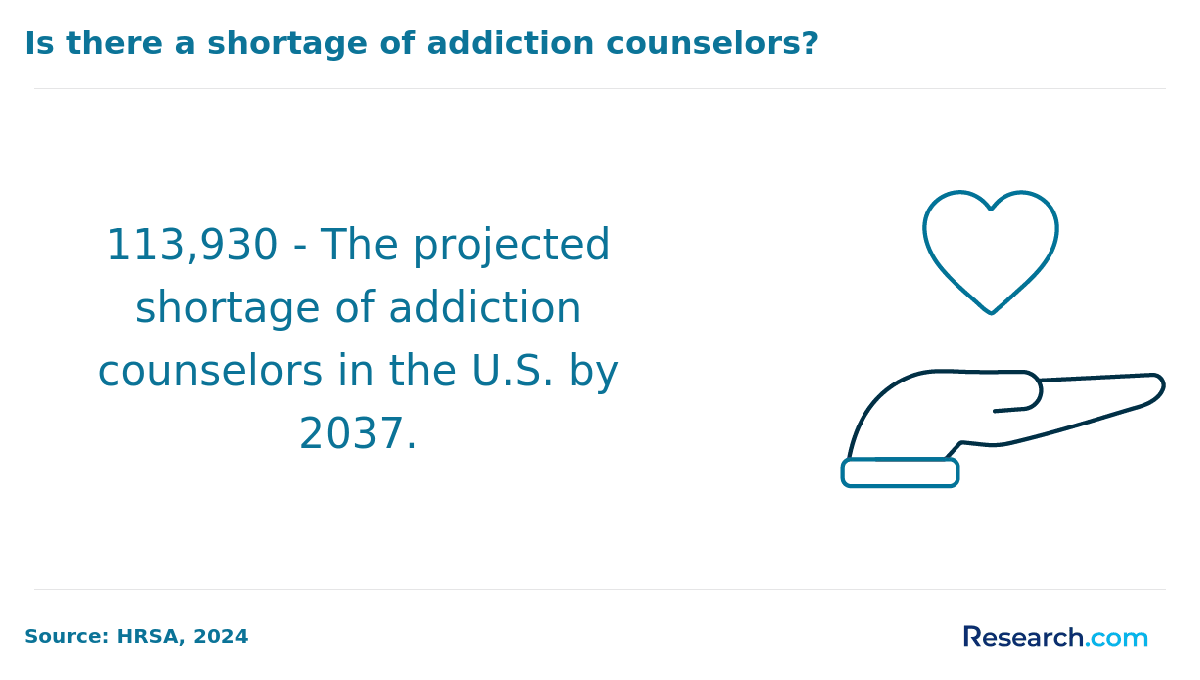
The chart below provides a visualization of the states with the highest projected demand for addiction counselors by 2037, according to 2025 data released by the Health Resources and Services Administration (HRSA) through the National Center for Health Workforce Analysis (NCHWA).
Are there internship opportunities for substance abuse counselors in Reno, NV?
Yes. Internships and supervised field placements are important for students and pre-licensed professionals in Reno because addiction counseling requires skills that cannot be mastered through lectures alone. Interns learn how to conduct intake interviews, support treatment groups, document client progress, coordinate referrals, respond to crisis situations, and receive feedback from experienced clinicians.
| Reno internship site | Length described | Training focus | What students should ask |
| Renown Behavioral Health Center | 3 to 6 months | Clinical experience with licensed counselors in a healthcare setting. | Ask whether hours can count toward Nevada credentialing and who provides supervision. |
| Step 2 Recovery Center | 4-month internship | Community outreach, group counseling, communication, and case management. | Ask how interns are trained before working with clients and what documentation is required. |
| Washoe County Health District | 6-month internship | Public health initiatives, prevention strategies, and policy-related work. | Ask how prevention-focused experience fits your intended counseling credential. |
When comparing internship programs, do not focus only on the organization’s name. Confirm the supervisor’s qualifications, the type of clients served, whether you will receive individual and group supervision, how client contact is documented, and whether the placement includes exposure to co-occurring mental health concerns. Future internships may also include telehealth workflows, virtual supervision, and technology-supported assessment tools.
If you are deciding between counseling-related academic routes, understanding clinical psychology vs counseling psychology degree which is better may clarify whether addiction counseling, counseling psychology, or clinical psychology better matches your long-term goals.
How much do substance abuse counselors in Reno, NV earn?
Substance abuse counselors in Reno, NV currently earn an average annual salary ranging from approximately $45,000 to $52,000. Mental health counselors in the area typically earn between $50,000 and $58,000. Entry-level counselors might start closer to $38,000, while professionals with substantial experience or specialized credentials can earn upwards of $60,000 annually.
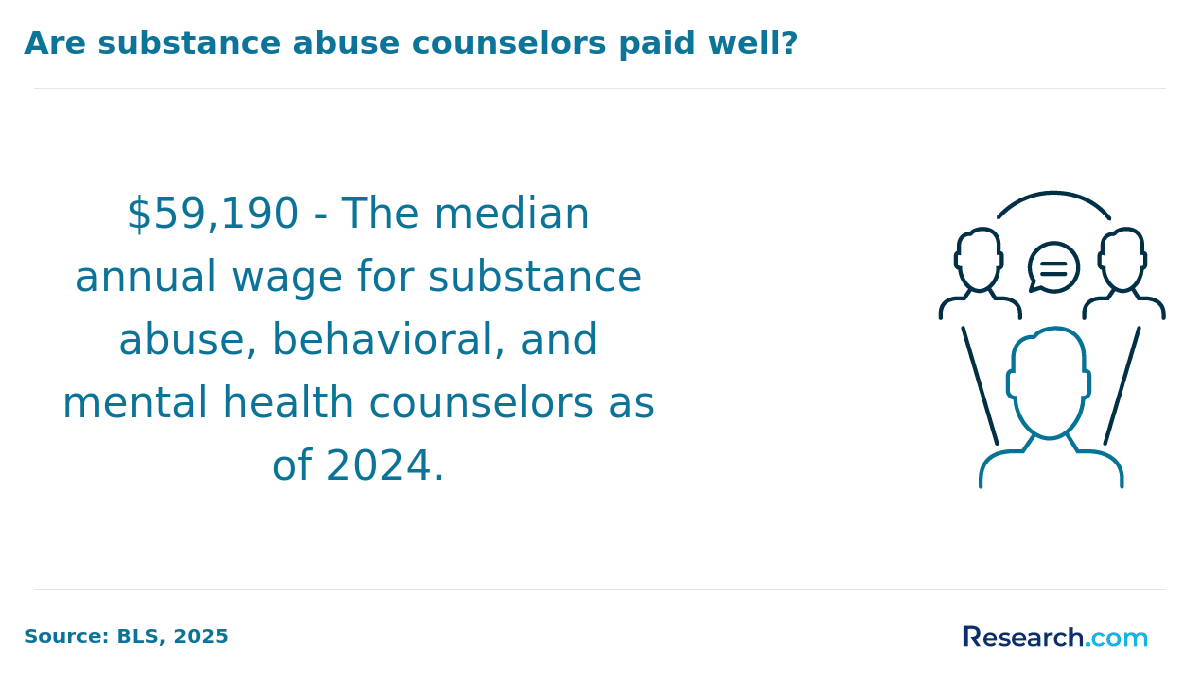
In May 2024, substance abuse, behavioral disorder, and mental health counselors had a median hourly wage of $28.59, compared with the $28.46 national median hourly wage in the same year (US BLS, 2025). These figures are useful benchmarks, but they should not be treated as guarantees. Actual pay depends on employer type, license level, caseload, shift schedule, funding source, specialization, and whether the role is clinical, administrative, nonprofit, public health, or private practice-based.
| Factor | How it can affect earnings in Reno | What to consider |
| Credential level | Advanced credentials may support broader duties and stronger compensation potential. | Compare the cost and time of additional education with the roles it may unlock. |
| Experience | Entry-level pay may be lower, while experienced counselors may qualify for higher-paying roles. | Ask employers how raises, supervision, and advancement are structured. |
| Specialization | Training in co-occurring disorders, trauma-informed care, or telehealth may improve competitiveness. | Choose specializations that match local employer needs, not just personal interest. |
| Work setting | Hospitals, public agencies, nonprofits, and telehealth providers may use different pay models. | Look beyond salary and compare benefits, supervision, workload, and schedule stability. |
Professionals planning for long-term growth should also understand how counseling credentials compare. For example, reviewing lcpc vs lcsw degree program differences can help you decide whether to remain focused on addiction counseling or pursue a broader clinical license.
Are substance abuse counselors in demand in Reno, NV?
Demand for substance abuse counselors in Reno, NV is expected to remain meaningful as the region responds to addiction, mental health needs, and access-to-care gaps. The local job market currently offers roughly 200 to 300 positions, with an anticipated growth rate of about 15% over the next ten years. Demand is shaped by public awareness of addiction, expanded treatment access, healthcare reforms that prioritize behavioral health, and regional efforts to reduce substance misuse.
Reno’s counseling workforce is also being influenced by service delivery changes. Telehealth can help programs reach clients who face transportation, scheduling, or geographic barriers. Integrated care models are bringing behavioral health providers into closer collaboration with medical teams. Community prevention programs and recovery support services also create roles outside traditional one-on-one counseling.
- Behavioral health policy attention continues to support addiction treatment access.
- Telehealth is expanding how counseling services can be delivered.
- Integrated care connects substance use treatment with physical and mental healthcare.
- Regional substance misuse initiatives sustain the need for trained counselors.
How can substance abuse counselors enhance their credentials in Reno, NV?
Credential-building is one of the clearest ways for Reno counselors to increase career flexibility. The best option depends on your current education, license status, and target role. Some professionals add addiction-focused certifications, while others pursue graduate study, trauma training, co-occurring disorder specialization, supervisory preparation, or broader mental health licensure.
| Credential-building option | When it makes sense | Possible benefit |
| Graduate counseling coursework | You want deeper clinical preparation or future eligibility for advanced roles. | Can strengthen assessment, treatment planning, ethics, and diagnosis-related knowledge. |
| Specialized addiction training | You already work with substance use clients and want sharper clinical tools. | May improve confidence with relapse prevention, motivational interviewing, and recovery planning. |
| Trauma-informed care education | Your clients often present with trauma histories or co-occurring symptoms. | Helps reduce harmful practice patterns and supports safer client engagement. |
| Broader counseling licensure planning | You want to expand beyond addiction-specific roles. | May create more employment options in behavioral health systems. |
If your long-term goal is independent or broader clinical counseling practice, learning how to become an LPC in Reno can help you compare the addiction counseling pathway with professional counselor licensure.
What are the continuing education and professional development options available for substance abuse counselors in Reno, NV?
Continuing education is not just a renewal task. For substance abuse counselors, it is how professionals keep pace with changing drug trends, ethical expectations, treatment models, technology use, and client needs. Reno counselors can use workshops, accredited courses, professional seminars, employer trainings, local conferences, and online programs to stay current.
High-value professional development topics include telehealth ethics, privacy and documentation, cultural competence, crisis intervention, suicide risk response, group facilitation, family systems, co-occurring disorders, trauma-informed care, and recovery-oriented practice. Counselors who want to broaden their understanding of family dynamics may also review marriage and family therapist education requirements in Reno.
How can substance abuse counselors collaborate with nurse practitioners in Reno, NV?
Substance abuse counselors often serve clients whose needs extend beyond counseling alone. Collaboration with nurse practitioners can improve care coordination when clients have withdrawal concerns, medication needs, chronic health conditions, pain management issues, pregnancy-related concerns, or co-occurring mental health symptoms. Counselors do not replace medical providers, but they can help ensure that behavioral, social, and recovery needs are included in the care plan.
Effective collaboration may include case conferences, shared referral networks, coordinated treatment goals, informed consent procedures, crisis planning, and clear documentation practices. Counselors interested in medical-behavioral health collaboration can review how the nursing side of care develops by reading about how to become a nurse practitioner in Reno.
How can pursuing a BCBA certification elevate your practice in Reno, NV?
A BCBA credential can be useful for professionals who want to integrate behavior analysis into work with clients who have complex behavioral patterns, developmental needs, or structured behavior-change goals. It is not a substitute for addiction counseling licensure, but it may add a complementary framework for assessment, intervention planning, data-informed decision-making, and interdisciplinary collaboration.
This pathway is most relevant for counselors who want to work across behavioral health, developmental services, education, or behavior-focused treatment teams. Before pursuing it, compare the education, supervision, and exam requirements with your current counseling goals. For a focused overview, see how to become a BCBA in Reno.
What core competencies are essential for success as a substance abuse counselor in Reno, NV?
Strong substance abuse counselors combine clinical knowledge with steady interpersonal judgment. Reno professionals may work with clients affected by relapse, trauma, housing instability, legal involvement, family conflict, medical concerns, and co-occurring mental health symptoms. That makes technical skill important, but not enough on its own.
| Competency | Why it matters in addiction counseling | How to build it |
| Assessment and treatment planning | Counselors must understand client needs, risks, strengths, and readiness for change. | Seek supervised practice, case consultation, and training in evidence-based assessment tools. |
| Motivational communication | Clients may feel ambivalent about treatment, abstinence, harm reduction, or recovery steps. | Practice active listening, reflective responses, and client-centered goal setting. |
| Crisis response | Substance use work may involve safety concerns, relapse risk, withdrawal issues, or suicidal ideation. | Complete crisis intervention training and learn your organization’s emergency protocols. |
| Cultural responsiveness | Effective treatment must account for identity, community, stigma, language, and access barriers. | Choose continuing education that goes beyond awareness and addresses practical care adaptation. |
| Ethics and boundaries | Confidentiality, mandated reporting, dual relationships, and scope of practice are central to client safety. | Review Nevada rules, employer policies, supervision feedback, and professional codes. |
| Technology-assisted care | Telehealth and digital records are increasingly common in behavioral health settings. | Learn privacy practices, telehealth engagement skills, and secure documentation workflows. |
Many of these competencies overlap with broader mental health counseling. If you are comparing addiction counseling with a wider behavioral health role, the guide to mental health counselor requirements in Reno can help you map shared skills and different credentialing expectations.
Where do substance abuse counselors work in Reno, NV?
Substance abuse counselors in Reno work in settings that range from intensive clinical care to prevention, outreach, and recovery support. The right setting depends on your preferred client population, tolerance for crisis work, schedule needs, supervision requirements, and interest in medical, public health, nonprofit, or community-based practice.
| Work setting or employer type | What counselors may do | Who may prefer this environment |
| Reno Behavioral Health Hospital | Provide individual counseling, group therapy, treatment planning, discharge support, and team-based care in inpatient or outpatient services. | Counselors who want structured clinical work and collaboration with multidisciplinary teams. |
| Washoe County Health District | Support outreach, prevention, education, case management, public health planning, and community initiatives. | Professionals interested in population health, prevention, and systems-level work. |
| Foundation for Recovery | Assist with addiction treatment, recovery support, peer initiatives, relapse prevention, and community resources. | Counselors who value nonprofit work and recovery-centered support models. |
| Telehealth and hybrid providers | Deliver counseling remotely, coordinate referrals, document care, and maintain client engagement online. | Counselors who are comfortable with technology and remote therapeutic relationships. |
When applying, ask about caseload size, supervision quality, crisis expectations, documentation systems, on-call duties, benefits, clinical training, and opportunities for advancement. These factors can matter as much as salary.
What other careers can substance abuse counselors pursue in Reno, NV?
Substance abuse counseling can lead to several adjacent careers in behavioral health, public health, social services, research, and program administration. These options may appeal to professionals who want less direct counseling, more leadership, remote work, policy involvement, or a different client-service balance.
| Related career path | Typical responsibilities | Salary information stated | Good fit for |
| Behavioral health program coordinator | Manage treatment programs, support staff operations, monitor compliance, and improve service delivery. | Salaries typically range from $50,000 to $70,000 annually. | Counselors interested in administration and program leadership. |
| Mental health case manager | Coordinate care plans, connect clients with services, communicate with providers, and track resource needs. | Median earnings for this role are around $45,000 per year. | Professionals who enjoy advocacy, organization, and resource navigation. |
| Teletherapy provider | Offer remote counseling through private practice, agencies, or telehealth companies. | Incomes vary widely, typically between $40,000 and $80,000. | Counselors seeking schedule flexibility and remote service delivery. |
| Addiction research assistant | Support clinical trials, organize data, assist with studies, and contribute to addiction science projects. | Earnings generally fall between $35,000 and $50,000 annually. | Counselors interested in research, data, and evidence-based treatment development. |
| Community outreach specialist | Develop education, prevention, and awareness programs through schools, agencies, or public health departments. | These specialists earn between $40,000 and $55,000. | Professionals who prefer prevention, public speaking, and community engagement. |
If advancement requires graduate study, compare tuition, accreditation, schedule, field placement support, and transfer policies carefully. The ranking of most affordable masters in counseling online degrees can be a starting point for identifying programs that may fit working adults.
The chart below provides a visualization of the annual mean wage of substance abuse counselors and other behavioral health professions, according to 2024 data by the US BLS.
Is Reno, NV a good place to work as a substance abuse counselor?
Reno can be a strong location for substance abuse counselors who want to work in a growing behavioral health environment, especially if they are comfortable with interdisciplinary care, community needs, and evolving service models. The city’s healthcare and public health systems create opportunities in hospitals, outpatient programs, nonprofit recovery organizations, county programs, and telehealth-connected care.
- Growing demand: Population change, mental health awareness, and substance use concerns support continued need for trained addiction counselors.
- Collaborative care: Counselors may work with mental health clinicians, nurse practitioners, physicians, case managers, peer specialists, and public health teams.
- Affordable living: Compared with many western U.S. cities, Reno may offer a more manageable cost-of-living environment for some professionals.
- Telehealth expansion: Remote counseling can help providers reach clients who face access barriers, transportation challenges, or scheduling constraints.
Reno is not the right fit for every counselor. Some roles involve high caseloads, crisis situations, complex client needs, administrative pressure, and emotional strain. The strongest candidates are usually those who value supervision, keep learning, manage boundaries well, and can work across medical, social, and behavioral health systems.
-
: "
A Reno substance abuse counselor described the work as meaningful but demanding: the most difficult cases often involve addiction, trauma, family stress, and limited resources at the same time. He said the city’s collaborative treatment community and increasing use of telehealth help, but he also emphasized that ongoing training and emotional resilience are essential for staying effective in the role.
"
What challenges do substance abuse counselors face in Reno, NV?
Substance abuse counseling in Reno can be deeply rewarding, but candidates should understand the pressures before entering the field. Addiction rarely appears in isolation. Counselors may work with clients who also face anxiety, depression, trauma, homelessness, chronic illness, unemployment, legal involvement, family breakdown, or limited access to care.
Reno counselors must also respond to changing substance use patterns, demographic diversity, telehealth expectations, documentation demands, and workforce stress. These challenges do not make the career a poor choice, but they do mean preparation and support systems matter.
- Technology integration: Telehealth and digital records can improve access, but counselors must protect privacy, maintain engagement, and follow ethical documentation practices.
- Co-occurring disorders: Addiction and mental health symptoms often interact, requiring integrated treatment planning and appropriate referrals.
- Evidence-based practice expectations: Counselors need to keep current with research-supported methods rather than relying only on habit or outdated models.
- Workforce sustainability: Emotional fatigue, secondary trauma, and burnout can affect retention if supervision and workload support are weak.
- Policy and regulation changes: Insurance rules, funding models, healthcare policy, and licensure standards can influence how services are delivered.
Common mistakes to avoid when preparing for this career
| Mistake | Why it can hurt your career plan | Better approach |
| Choosing a program without checking Nevada requirements | A degree may be useful academically but not aligned with the credential you want. | Verify licensing standards before enrolling and keep written records of program guidance. |
| Focusing only on tuition | A cheaper program may lack strong field placement support, supervision connections, or relevant coursework. | Compare total value, not just price. |
| Assuming online programs automatically meet licensure rules | Licensing boards may have specific expectations for coursework and supervised experience. | Ask the school how it supports Nevada students and field placements. |
| Waiting too long to plan supervised hours | Licensure timelines can be delayed if your experience is not properly approved or documented. | Confirm supervision rules early and maintain detailed logs. |
| Expecting salary outcomes to be guaranteed | Pay varies by employer, credential, experience, funding source, and work setting. | Use salary data as a planning benchmark, then research actual Reno job postings. |
| Ignoring burnout risk | Addiction counseling can involve trauma exposure, relapse, crisis, and heavy documentation. | Prioritize supervision, peer consultation, boundaries, and professional support. |
What Substance Abuse Counselors in Reno, NV Say About Their Careers
- “My work in Reno feels stable and purposeful because the need for substance abuse counseling is visible across the community. The salary supports a reasonable lifestyle for me, but the bigger reward is seeing clients move from crisis toward recovery.” —Nico
- “Reno’s client population has taught me to be flexible, patient, and culturally aware. The work is demanding because addiction often overlaps with trauma, family stress, and mental health concerns, but those challenges have made me a stronger counselor.” —Danielle
- “The professional development options here have helped me grow beyond entry-level counseling. Workshops, certifications, and networking have opened leadership possibilities and helped me stay current with changing treatment practices.” —Christopher
Related Articles for Nearby Cities
- 2027 How to Become a Substance Abuse Counselor in Sacramento, CA: Requirements & Certification
- 2027 How to Become a Substance Abuse Counselor in Stockton, CA: Requirements & Certification
- 2027 How to Become a Substance Abuse Counselor in Oakland, CA: Requirements & Certification
- 2027 How to Become a Substance Abuse Counselor in Fremont, CA: Requirements & Certification
- 2027 How to Become a Substance Abuse Counselor in San Francisco, CA: Requirements & Certification
- 2027 How to Become a Substance Abuse Counselor in San Jose, CA: Requirements & Certification
- 2027 How to Become a Substance Abuse Counselor in Fresno, CA: Requirements & Certification
- 2027 How to Become a Subtance Abuse Counselor in Bakersfield, CA: Requirements & Certification
- 2027 How to Become a Substance Abuse Couselor in Boise, ID: Requirements & Certification
- 2027 How to Become a Substance Abuse Counselor in North Las Vegas, NV: Requirements & Certification
References:
- Avery Lane. (n.d.). Women’s Addiction Treatment Center in Reno, NV. https://averylanewomensrehab.com/locations/womens-addiction-treatment-center-reno-nv
- BHG. (n.d.). BHG Reno Treatment Center. https://www.bhgrecovery.com/locations/reno
- Everett, D. (2023, September 20). Substance Abuse. https://thedifferentsrehab.com/what-we-treat/substance-abuse
- Join Together Northern Nevada. (n.d.). Home. https://jtnn.org
- Mind and Body Counseling. (n.d.). Addiction Therapy in Reno. https://mindbodycounselingreno.com/conditions-treated/addiction
- Reno Behavioral Healthcare Hospital. (n.d.). Substance Addiction & Chemical Dependency Treatment In Reno, NV. https://www.renobehavioral.com/admissions/chemical-dependency
- Reinert, M., Fritze, D. & Nguyen, T. (July 2024). The State of Mental Health in America 2024. Mental Health America. https://mhanational.org/wp-content/uploads/2024/12/2024-State-of-Mental-Health-in-America-Report.pdf
- University of Nevada, Reno. (n.d.). Alternative Careers for Social Workers Outside the Traditional Work Setting. https://onlinedegrees.unr.edu/blog/alternative-careers-for-social-workers-outside-the-traditional-work-setting
- University of Nevada, Reno. (n.d.). Mental Health and Wellness. https://www.unr.edu/grad/current-students/mental-health
- US Bureau of Labor Statistics. (2023, April 25). Occupational Employment and Wages, May 2022, 21-1018. Substance Abuse, Behavioral Disorder, and Mental Health Counselors. Occupational Employment and Wage Statistics. https://www.bls.gov/oes/2022/may/oes211018.htm
- US Bureau of Labor Statistics. (2025). Occupational Employment and Wage Statistics, Area: Nevada. Occupational Employment and Wage Statistics Query System. https://data.bls.gov/oes/#/area/3200000
- US Bureau of Labor Statistics. (2025, April 18). Substance Abuse, Behavioral Disorder, and Mental Health Counselors. Occupational Outlook Handbook. https://www.bls.gov/ooh/community-and-social-service/substance-abuse-behavioral-disorder-and-mental-health-counselors.htm
Key Insights
- Becoming a substance abuse counselor in Reno requires more than interest in helping people; you need aligned education, supervised experience, exam readiness, ethical practice, and Nevada board approval.
- A bachelor’s degree can support entry-level preparation, but a master’s degree and specialized training may improve access to advanced roles, broader clinical work, and long-term career flexibility.
- Reno counselors can work in hospitals, public health agencies, nonprofits, recovery organizations, community outreach programs, and telehealth settings, each with different salary, supervision, and workload trade-offs.
- Salary planning should be realistic: Reno substance abuse counselors currently earn an average annual salary ranging from approximately $45,000 to $52,000, while experience, credentials, specialization, and employer type can shift earnings.
- Demand is supported by behavioral health needs, treatment access efforts, telehealth growth, and integrated care models, but the work can involve burnout risk, complex cases, and heavy documentation.
- The best next step is to verify Nevada licensing rules, compare programs carefully, secure quality supervision, and choose internships that match the setting where you eventually want to work.
Other Things You Should Know About Pursuing Substance Abuse Counseling in Reno, NV
The Nevada Board of Examiners for Alcohol, Drug and Gambling Counselors oversees certification and licensure for this field in Nevada. Applicants must follow its education, supervision, and exam rules, then apply through the board for the credential needed to practice in Reno.
To become a substance abuse counselor in Reno, NV in 2027, you need a minimum of a bachelor's degree in counseling, psychology, or a related field. Additionally, coursework must include specific training in substance abuse treatment as per state guidelines.
In 2027, maintaining licensure as a substance abuse counselor in Reno, NV requires completing 20 hours of continuing education every two years. These hours must include 3 hours in ethics and other relevant subjects to stay updated with best practices.




