2027 Online Exercise Science Degree Programs Costs: Tuition & Fees

Co-Founder and Chief Data Scientist
Choosing an online Exercise Science degree is partly an academic decision and partly a financial one. Tuition can vary widely by school, credential level, residency policy, and fees, with annual costs potentially ranging from $5,000 to over $30,000. That gap matters because the same degree field can lead to very different debt levels depending on where and how you enroll.
This guide breaks down what students should expect to pay, what tuition usually covers, which costs are easy to overlook, and how online pricing compares with campus-based programs. It also explains how financial aid, transfer credits, employer support, and program length can affect the true cost of earning an Exercise Science degree online.
Key Points About Online Exercise Science Degree Costs
- Average tuition for online Exercise Science degrees ranges from $15,000 to $40,000, varying by institution type and program length.
- Costs depend on credit hours, technology fees, residency status, and whether the school is public or private.
- Investing in this degree can lead to higher earning potential and credentials valuable in growing health and fitness industries.
What Is the Average Cost of an Online Exercise Science Degree?
The average cost of an online Exercise Science degree depends most on the degree level and the institution. In broad terms, online bachelor's programs often total about $40,000 to $120,000, while online master's programs commonly range from $6,000 to $20,000. Those figures can change substantially once fees, books, transfer credits, and financial aid are included.
At the bachelor's level, students should expect a program of about 120 credits. Public universities are usually less expensive, often charging between $10,000 and $15,000 annually. Private institutions typically charge more, from $15,000 up to $30,000 per year.
Graduate programs are often easier to compare because many schools price them by the credit hour. Online master's tuition commonly ranges from $200 to $600 per credit. With most master's programs requiring 30 to 36 credits, total tuition usually falls within the $6,000 to $20,000 range. Public university programs often provide the lowest published rates.
| Degree Level | Typical Credit Requirement | Common Cost Range | Cost Notes |
| Bachelor's degree | About 120 credits | About $40,000 to $120,000 total | Public universities are often lower-cost than private institutions. |
| Master's degree | 30 to 36 credits | $6,000 to $20,000 total | Programs often charge $200 to $600 per credit. |
Exercise Science programs can be more affordable than some other health-related degrees, especially at the graduate level, because they may not require the same level of clinical placement infrastructure as nursing, physical therapy, or physician assistant programs. Still, applicants should verify whether a listed price is per credit, per term, per year, or for the full program before comparing schools.
What Is Typically Included in the Tuition for an Online Exercise Science Degree?
Tuition for an online Exercise Science degree usually pays for access to instruction, course delivery systems, academic services, and core learning resources. It does not always cover every expense a student will face, so the published tuition rate should be treated as the starting point rather than the full cost of attendance.
Most online programs include some or all of the following in tuition or required institutional fees:
- Online courses and lectures: Students receive access to required course modules, recorded or live lectures, assignments, exams, and instructor feedback.
- Learning management systems and digital tools: Tuition helps support the online platform used for submitting work, participating in discussions, accessing grades, and communicating with faculty.
- Academic advising and student support: Many schools include advising, tutoring, library help, disability services, and career counseling as part of the student experience.
- Digital library access: Students often receive access to research databases, journals, ebooks, and discipline-specific resources in kinesiology, exercise physiology, biomechanics, and health promotion.
- Some course materials: Certain programs include digital textbooks, lab simulations, assessment tools, or software, although this varies by school and course.
Students should also budget for costs that may not be included. Common extra expenses include printed textbooks, a reliable computer, internet access, webcam or testing equipment, exam proctoring, optional certifications, background checks, CPR or first aid training, and travel for any required internship, practicum, or in-person lab experience.
Before enrolling, ask the school for a full cost-of-attendance estimate. A program with slightly higher tuition but fewer required fees may be cheaper than a lower-tuition program with recurring technology, course, or assessment charges.
What Factors Influence the Cost of Pursuing an Online Exercise Science Degree?
The total cost of an online Exercise Science degree is shaped by more than the advertised tuition rate. The most important cost drivers are the type of school, the number of credits required, the student's transfer credits, online fees, and eligibility for financial aid.
- Public vs. private pricing: School type is one of the largest cost differences. Exercise science degree costs at public vs private colleges show a major gap, with public universities averaging $10,940 annually and private schools charging around $39,400 per year.
- Credit requirements and program length: Most online Exercise Science bachelor's programs require about 120 credit hours and are typically completed in four years. Students who transfer previous credits may lower both time and tuition, while students who take lighter course loads may pay more over time through repeated fees or delayed earnings.
- Transfer credit policies: A generous transfer policy can reduce the number of credits a student must pay for. This is especially important for adult learners, students with prior college coursework, and those moving from a community college into a bachelor's program.
- Online-specific fees: Online learners often avoid campus housing and commuting, but they may still pay technology, platform, software, lab, proctoring, or library fees. These charges can make two programs with similar tuition look very different in total cost.
- Books and supplies: Books and supplies usually cost between $1,240 and $1,300 annually. Exercise Science courses may also require lab manuals, assessment tools, or discipline-specific software.
- Practicum, internship, or fieldwork requirements: Some programs require hands-on experiences that may involve travel, scheduling limitations, background checks, health documentation, or unpaid hours.
- Financial aid eligibility: Online students may qualify for federal loans, grants, military benefits, scholarships, and employer tuition assistance when enrolled in an eligible accredited program.
Students comparing online options should calculate net cost, not just sticker price. Net cost is what remains after grants, scholarships, transfer credits, employer aid, and military benefits are applied. Applicants can also compare curriculum quality and flexibility through resources such as the best online exercise science degree rankings while keeping total cost in view.
For students considering shorter pathways before a bachelor's program, an online associate degree in 6 months accredited option may help reduce time and cost if credits transfer into a later Exercise Science program.
Are Online Exercise Science Programs Cheaper Than Traditional Programs?
Online Exercise Science programs are often cheaper in total cost than traditional campus programs, even when tuition rates are similar. The savings usually come from avoiding or reducing housing, commuting, meal plans, parking, relocation, and some campus-based fees.
Average tuition for online Exercise Science programs in the US usually ranges from $38,000 to $54,000 at public universities, while private institutions can reach up to $60,000. By contrast, traditional on-campus students may face additional costs for housing, transportation, and campus fees. At public universities, annual costs can rise above $19,000 per year when room and board are included.
| Cost Category | Online Exercise Science Program | Traditional Campus Program |
| Tuition | May be similar to campus tuition, or charged as a separate online rate | Often based on residency and campus enrollment status |
| Housing and meals | Usually avoidable if the student studies from home | Often a major added expense for residential students |
| Transportation | Usually lower, except for required fieldwork or labs | Can include commuting, parking, or relocation costs |
| Technology fees | Common for online platforms and digital services | May be lower or bundled into campus fees |
| Work flexibility | Often easier to combine with employment | May require more fixed daytime attendance |
The lower total cost of online study is not automatic. Some online programs charge premium tuition or recurring technology fees. Others require internships, labs, or supervised experiences that create travel and scheduling costs. The best comparison is a full cost-of-attendance estimate for each program, not tuition alone.
Students comparing graduate options may also review the easiest master degree to get, but ease should not be the only factor. Accreditation, curriculum fit, certification preparation, faculty expertise, and career goals are more important than convenience alone.
Are There In-state and Out-of-state Tuition for Online Exercise Science Programs?
Some online Exercise Science programs charge different rates for in-state and out-of-state students, while others use one flat online tuition rate regardless of residency. Because policies vary by institution, residency pricing is one of the first items applicants should confirm.
Traditional public universities commonly charge lower tuition to in-state students and higher tuition to out-of-state students. Online programs may follow that model, but many public universities now offer a separate online rate that applies to all distance learners. Eastern Oregon University and Methodist University both apply uniform online tuition rates without differentiating between in-state and out-of-state learners.
Regional tuition agreements can also affect pricing. In some areas, neighboring states may honor reduced or in-state tuition rates for eligible online students. These agreements are not universal, and eligibility rules can be specific, so students should verify details directly with the admissions or bursar's office.
Private colleges generally maintain a single tuition rate for online students because they do not usually base tuition on state residency. However, private school tuition may still be higher than public options, so a flat rate is not always the lowest-cost rate.
When comparing programs, ask these questions:
- Is online tuition charged by residency, or is it the same for all online students?
- Are there separate online program fees in addition to tuition?
- Can transfer credits reduce the number of credits billed at the higher rate?
- Does the school participate in any regional tuition agreement?
- Will residency status affect scholarships or institutional aid?
Which Schools Offer the Most Affordable Exercise Science Degree Programs?
The most affordable online Exercise Science programs usually combine reasonable tuition, transfer-friendly policies, regional accreditation, and limited fees. Price should not be the only selection factor, but keeping costs manageable is important in a field where career paths can vary widely in salary and may require additional certifications or graduate study.
Examples of affordable online Exercise Science degree options include:
- Methodist University: Methodist University offers a 100% online Bachelor of Science in Exercise & Sport Science at $435 per credit hour. The program allows transfer of up to 93 credits and charges no application fee, which can benefit transfer students and adult learners trying to reduce total cost.
- Eastern Oregon University: Eastern Oregon University provides a Bachelor of Science/Arts in Health and Human Performance with an Exercise Science concentration at an annual tuition of $9,480, making it one of the cheapest exercise science degrees in the United States.
- Concordia University - St. Paul: Concordia University - St. Paul offers an online B.A. in Exercise Science priced at $420 per credit hour, totaling approximately $50,400 for the full program. The program includes industry-aligned certification preparation and flexible payment plans.
Graduate students can also find lower-cost options. The University of North Georgia offers an MS in Kinesiology at $311 per credit hour, while the University of the Cumberlands offers an MS in Health and Human Performance at $355 per credit hour. These regionally accredited programs offer financial aid and are noted among cheap online masters degrees.
Affordability is not just the lowest listed tuition. Students should compare total credits required, accepted transfer credits, technology fees, textbook costs, practicum requirements, and whether the program supports the certifications or graduate pathways they may need after graduation.
Which Schools Offer the Most Expensive Exercise Science Degree Programs?
Higher-cost online Exercise Science programs may appeal to students who want specialized coursework, strong certification alignment, smaller class sizes, or more structured career support. However, a higher price does not automatically mean a stronger return. Students should compare the added cost with measurable benefits such as transfer acceptance, graduation support, certification preparation, and employer recognition.
Examples of higher-priced online Exercise Science programs include:
- Franklin University: Franklin University offers a fully online Bachelor's in Exercise Science with an ACSM-aligned curriculum. The program allows ample credit transfer while maintaining a low student-to-faculty ratio. Its net price is approximately $29,773, making it one of the most expensive programs nationwide.
- California University of Pennsylvania: California University of Pennsylvania is known for partnerships with NASM and NASE. Its online Bachelor's in Exercise Science costs around $20,317 and emphasizes industry alignment for students preparing for fitness certifications.
- Concordia University - Chicago: Concordia University - Chicago offers an online Master of Science in Applied Exercise Science at about $15,150 per year. The program includes courses in exercise testing and patient education and is geared toward ACSM-EP certification, with tuition stability as a noted feature.
Other expensive options include Maryville University's bachelor's program at $16,200 per year and Cameron University's program costing $14,835 annually. These schools may justify higher tuition through advanced resources, program design, or professional preparation, but students should request outcome data and confirm whether those benefits match their goals.
For students who are weighing cost against future earning potential, it may also help to explore what is a quick degree that pays well?
How Long Does It Take to See a Return on an Online Exercise Science Degree?
The return on an online Exercise Science degree depends on how much a student pays, how much debt they take on, whether they keep working while enrolled, and the career path they pursue after graduation. For many graduates, the payback period is not immediate, so cost control during enrollment is important.
Graduates typically begin to recoup their expenses within 5 to 7 years after completing their studies. That timeline can shorten when students use scholarships, transfer credits, employer assistance, or military benefits. It can lengthen when students borrow heavily, attend higher-cost private programs, or enter lower-paying roles first.
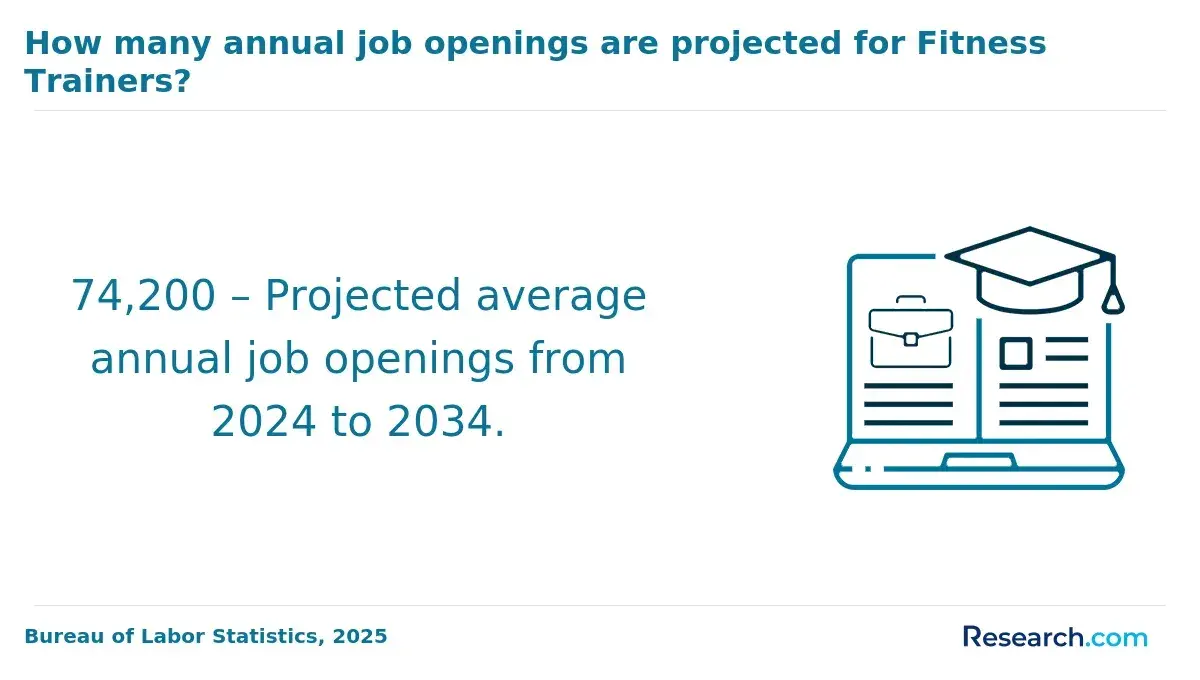
Exercise science professionals generally earn a median salary near $54,000 annually. Some roles, such as fitness trainers, may pay less, while specialized positions can pay more. Job growth can also affect return on investment. Fitness trainers are expected to see up to 14% employment growth by 2032, which may improve opportunities for graduates in some markets.
Program cost also matters by degree level. Online master's degrees range from about $5,325 to $20,700 in tuition, while bachelor's degrees often cost less. Graduate study can delay short-term ROI because of added tuition and time, but it may support advancement into specialized, supervisory, clinical, or academic pathways depending on the role.
To estimate ROI before enrolling, students should compare projected total cost with realistic entry-level roles in their region. They should also consider whether their target job requires certification, licensure, supervised experience, or a graduate degree beyond the online Exercise Science credential.
Are Online Exercise Science Students Eligible for Financial Aid?
Online Exercise Science students are generally eligible for the same major types of financial aid as campus students if they attend an eligible accredited institution and meet aid requirements. The key step is completing the Free Application for Federal Student Aid (FAFSA) and confirming that the specific program participates in federal student aid.
Federal aid may include Pell Grants and federal student loans for eligible students. Eligibility can depend on factors such as enrollment status, citizenship or eligible noncitizen status, satisfactory academic progress, and the school's aid participation rules.
- Federal Pell Grants: These grants can cover up to several thousand dollars per year and are awarded based on financial need. They do not have to be repaid if eligibility rules are met.
- Federal student loans: Eligible students may use federal loans to pay tuition, fees, and approved education-related costs. Borrow only what is necessary because repayment affects long-term ROI.
- Institutional scholarships and grants: Many schools offer scholarships for online Exercise Science students, transfer students, adult learners, or students with financial need. Some awards may reduce eligibility for other aid.
- Military education benefits: Tuition Assistance, the GI Bill®, and MyCAA for military spouses may help military-affiliated students pay for online Exercise Science programs.
- Employer tuition reimbursement: Students already working in fitness, wellness, healthcare, education, or public safety may be able to use employer benefits to lower out-of-pocket costs.
- Private scholarships: Fitness, health, wellness, and community organizations may offer scholarships that can be applied to accredited degree programs.
Students should compare financial aid offers by net cost, not just award size. A larger scholarship at a higher-priced school may still leave a student paying more than a smaller award at a lower-cost public university.
For students still exploring related career routes, reviewing what are three careers that trade school can prepare you for? may provide perspective on alternative training paths in health, fitness, and technical fields.
Are Online Exercise Science Programs Expected to Increase in the Coming Years?
Online Exercise Science program availability is expected to remain strong as students look for flexible pathways into health, fitness, wellness, rehabilitation support, and performance-related fields. Cost trends are more mixed: tuition may rise modestly, but increased online competition can help some schools keep pricing more stable.
Tuition rates vary by institution type, location, and program format. Public universities typically charge lower tuition for in-state students, often ranging between $300 to $600 per credit hour. Private colleges can have higher fees, sometimes exceeding $800 per credit. Many programs also include technology fees, course materials, and other online learning costs.
Students should not assume that online programs will always become cheaper. Higher education costs can increase because of faculty expenses, technology platforms, student support services, and inflation in operating costs. At the same time, more online options can create pressure for schools to offer flat-rate tuition, transfer-friendly pathways, and scholarships for distance learners.
The practical takeaway is to apply early, compare multiple accredited programs, and request a written cost estimate. Students who lock in tuition rates, transfer credits efficiently, and use aid strategically are better positioned to manage future cost increases.
What Students Say About The Cost of Pursuing Online Exercise Science Programs
- Major : "Pursuing an online Exercise Science degree was one of the best investments I've made in my future. Although the average cost can range around $15,000 to $25,000, the flexible format allowed me to work while studying, which balanced the financial commitment. Now, I am excited about the career opportunities this degree has opened up in sports rehabilitation and fitness coaching."
- Douglas: "Reflecting on the cost of my online Exercise Science program, I can confidently say the return on investment has been worth it. The tuition was reasonable compared to traditional programs, and gaining this degree has significantly boosted my credentials and salary potential in wellness management. The financial strain was real, but manageable with the support and resources provided."
- Ezra: "The professional benefits of earning an online Exercise Science degree have surpassed my expectations, especially considering the program's cost-effectiveness. With tuition fees generally lower than on-campus alternatives, I was able to earn my qualification without incurring excessive debt. This degree has fully prepared me for a career in clinical exercise physiology, which makes the cost feel like a smart financial choice."
Other Things You Should Know About Exercise Science Degree Program Costs
Yes. Many online exercise science programs add technology, distance-learning, or online course fees on top of tuition. These charges are often assessed per credit hour or per term, and they can range from a few dollars to more than $100 per class, depending on the institution.
Tuition costs for online Exercise Science degrees in 2027 can be influenced by factors like the institution's prestige, state residency status, course materials, and technology fees. Out-of-state students may face higher charges, affecting overall program affordability and budget planning.
References
- The Most Popular College Degrees Ranked by Return on Investment (ROI) After 5 Years in the Workforce - StudentChoice.org https://www.studentchoice.org/news/the-most-popular-college-degrees-ranked-by-return-on-investment-roi-after-5-years-in-the-workforce/
- 2025 Most Affordable Online Master's Degrees in Exercise Science https://www.onlineu.com/most-affordable-colleges/exercise-science-masters-degrees
- Tuition & Financial Aid | Master of Science in APK | UF https://apkmastersonline.hhp.ufl.edu/admissions-requirements/tuition-financial-aid/
- Is an Exercise Science Degree Really Worth It? - Part 1 - EricCressey.com https://ericcressey.com/is-an-exercise-science-degree-1/
- Hundreds of online grad programs yield no ROI for their students, new study says | Fortune Education https://fortune.com/education/articles/roi-of-online-graduate-programs-new-report/
- Master’s in Applied Exercise Science| Cost, Salary & ROI in 2025 https://exsci.cuchicago.edu/ms-applied-exercise-science-cost-roi/
- Online Exercise Science Program https://stmary.edu/online-programs/exercise-science.html
- Frequently Asked Questions | Lionel University https://www.lionel.edu/financial-aid-process
- Online Exercise Science Degrees: Top School Review https://www.edumed.org/online-schools/exercise-science-degrees/