2027 Most Popular Concentrations in Exercise Science Degrees

Co-Founder and Chief Data Scientist
Exercise science is no longer a single, general pathway into fitness work. Students now choose from concentrations that can point toward clinical rehabilitation, strength and conditioning, wellness coaching, athletic performance, research, or graduate study in fields such as physical therapy. That choice matters because the concentration you select affects your coursework, field experiences, certification options, and the jobs you will be prepared to pursue after graduation.
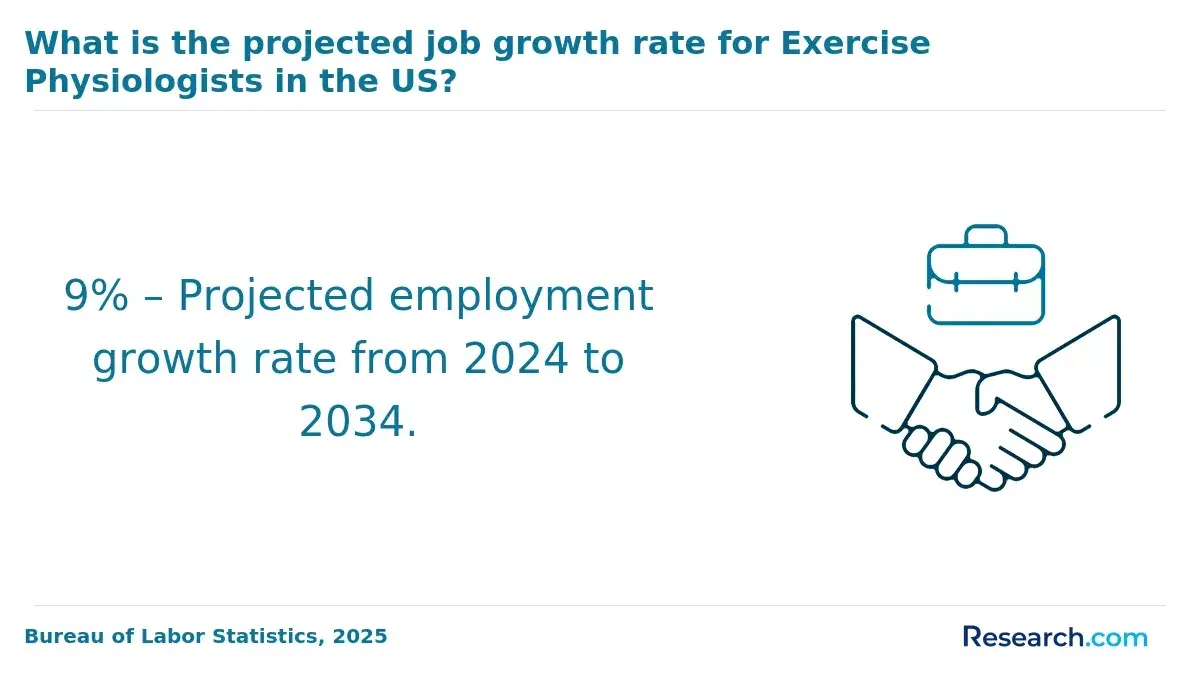
The decision is especially important as healthcare systems, employers, athletic organizations, and wellness programs place more value on specialized movement, prevention, and performance expertise. Employment in related roles is projected to grow over 15% in the next decade, but the strongest opportunities usually go to graduates whose training matches a clear professional direction.
This guide explains the most popular exercise science concentrations, the skills they require, how admission and accreditation can differ, how online tracks compare with on-campus study, which paths tend to be most demanding, and what careers and salary ranges are commonly associated with each specialization.
Key Benefits of Popular Concentrations in Exercise Science Degrees
- Concentrations like biomechanics enhance employability by preparing students for specialized roles in sports science and rehabilitation, fields growing at 12% annually per U.S. labor data.
- Focused training in exercise physiology develops advanced skills in assessing physical conditions, crucial for clinical and fitness career paths requiring evidence-based expertise.
- Specializing in sports nutrition meets rising industry demand, with precision nutritionists increasingly valued for improving athletic performance and managing health outcomes.
What Are the Most Popular Exercise Science Concentrations in 2027?
The most popular exercise science concentrations in 2027 are those that connect classroom science to clear career outcomes: clinical exercise physiology, strength and conditioning, wellness coaching, sports psychology and athletic administration, applied exercise physiology, and pre-physical therapy. These tracks appeal to students because they support different goals, from working with patients in rehabilitation settings to coaching athletes or managing wellness programs.
- Clinical Exercise Physiology and Cardiac Rehabilitation: This concentration focuses on using exercise as part of prevention, treatment, and recovery for people with chronic conditions. Students typically study cardiovascular physiology, exercise testing, risk assessment, and supervised program design. It is a strong fit for students interested in hospitals, rehabilitation centers, cardiopulmonary programs, and medically supervised fitness environments.
- Strength and Conditioning: This track prepares students to improve athletic performance, strength, speed, mobility, and injury resilience. It remains popular because athletics, private performance facilities, fitness companies, and corporate wellness programs continue to value evidence-based programming. Students should expect practical coaching work, exercise technique analysis, and training plan development.
- Exercise for Mental Health and Wellness Coaching: This growing concentration reflects broader recognition that physical activity can support mental health, stress management, behavior change, and long-term wellness. It is a good option for students who want to work in health promotion, coaching, community wellness, or lifestyle intervention programs rather than only in athletic or clinical settings.
- Sports Psychology and Athletic Administration: This area combines performance behavior, motivation, team dynamics, and organizational leadership. It can support roles in collegiate athletics, professional sports organizations, recreation departments, and athletic program management. Students who enjoy both people-focused work and operations may find this concentration especially practical.
- Applied Exercise Physiology Concentration Programs: Applied exercise physiology emphasizes how the body responds and adapts to exercise under different conditions. Students often engage with laboratory testing, research methods, metabolic responses, and program evaluation. This path can lead toward clinical, research, fitness testing, or graduate education options.
Pre-physical therapy exercise science tracks are also popular because they help students complete foundational science coursework for graduate study in rehabilitation sciences. These tracks are not the same as a physical therapy degree, but they can be useful for students who want a structured undergraduate path toward patient mobility, recovery, and movement assessment.
Technology is also shaping concentration demand. Wearable devices, personalized fitness platforms, movement analysis tools, and functional training models are pushing programs to teach students how to interpret data, adjust exercise plans, and communicate results to clients or patients. Institutions such as Concordia University Chicago now offer specialized doctoral tracks in advanced exercise physiology and applied strength and conditioning, showing how advanced specialization is becoming more common.
Students comparing shorter career-focused credentials can also review Research.com’s guide to certificate programs linked to higher-paying career paths.
What Skills Are Required for the Top Exercise Science Concentrations?
The top exercise science concentrations require a blend of science knowledge, hands-on assessment ability, communication skills, and professional judgment. The exact skill mix depends on the concentration: clinical tracks require stronger patient assessment and risk-awareness skills, while performance tracks require deeper coaching, movement analysis, and programming expertise.
Students should expect to build the following competencies across most high-value exercise science pathways:
- Fitness Assessment and Exercise Program Design Skills: Graduates need to evaluate baseline fitness, mobility, strength, endurance, health history, and goals before designing exercise plans. This skill is central to personal training, cardiac rehabilitation, athletic performance, wellness coaching, and clinical exercise programming.
- Physiological Data Analysis: Many concentrations require students to interpret heart rate, blood pressure, oxygen use, body composition, workload, recovery, and performance data. Strong data skills help professionals make evidence-based decisions rather than relying on generic workouts or assumptions.
- Musculoskeletal and Cardiovascular Knowledge: Exercise science professionals must understand how muscles, joints, bones, the cardiovascular system, and energy systems respond to movement. This foundation supports safe programming for athletes, older adults, patients, and general fitness clients.
- Professional Communication: A strong practitioner can translate technical information into clear instructions. This matters when explaining exercise risks to patients, teaching proper technique to athletes, motivating clients, or presenting results to healthcare and fitness teams.
- Mental Performance Strategies: Concentrations connected to sports performance, coaching, and wellness often include attention control, goal-setting, motivation, adherence, and confidence-building strategies. These skills help clients and athletes sustain behavior change and perform under pressure.
Students should also learn to document progress, recognize when a client or patient needs referral to another professional, and follow ethical boundaries. Exercise science graduates are often trusted with sensitive health and performance information, so professionalism is not optional.
Those comparing flexible undergraduate options may find Research.com’s overview of accessible online degree paths with career value useful when evaluating program format and workload.
Do Different Exercise Science Concentrations Have Different Admission Requirements?
Yes. Exercise science concentrations can have different admission requirements, especially when a track is clinically focused, research-heavy, or designed as preparation for graduate study. Most undergraduate exercise science programs require a high school diploma or equivalent, but specific GPA expectations, prerequisite courses, and internal progression standards can vary by concentration.
Clinical and pre-professional tracks often place more weight on science readiness. Students may need stronger preparation in biology, chemistry, anatomy, physiology, math, or statistics because the coursework can include exercise testing, disease risk, rehabilitation principles, and evidence-based assessment. Programs may also require students to meet minimum grades before entering upper-division clinical or lab courses.
Sports performance and strength and conditioning tracks may not always require the same science prerequisites, but they can value coaching experience, athletic experience, CPR training, or demonstrated interest in performance settings. Some students also pursue certifications such as the NSCA Certified Strength and Conditioning Specialist (CSCS), although certification eligibility can depend on education level and certifying-body rules.
Graduate exercise science research programs may add GRE scores, portfolios, writing samples, faculty interviews, research statements, or letters of recommendation. These requirements help programs assess whether applicants are ready for advanced methods, independent study, and specialized laboratory or applied work.
Before choosing a concentration, students should check three levels of requirements: admission to the university, admission to the exercise science major, and admission or progression rules for the concentration itself. A student can be admitted to a college but still need to meet additional standards before entering a clinical, internship, or research track.
Students considering graduate-level study can compare flexible options through Research.com’s guide to affordable online master’s programs.
Do Specific Exercise Science Concentrations Require Accredited Programs?
Some exercise science concentrations make accreditation especially important. Accreditation can affect whether a program’s curriculum is recognized by employers, whether graduates qualify for certain certifications, and whether students are adequately prepared for clinical or professional practice expectations.
- Clinical Exercise Physiology Certification: Students who plan to pursue the ACSM Certified Clinical Exercise Physiologist (ACSM-CEP) credential should pay close attention to CAAHEP accreditation. The American College of Sports Medicine has required CAAHEP-accredited program completion for this credential since 2020.
- Employer Preferences: More than 70% of exercise science jobs require at least a bachelor's degree, and employers often prefer graduates from accredited programs because accreditation signals that the curriculum includes expected competencies in assessment, exercise prescription, and professional practice.
- Curriculum Standards: Accredited programs must meet 363 defined competencies related to fitness assessment, exercise prescription, and behavioral change. These competencies help ensure that students are not only studying theory but also learning practical skills aligned with field expectations.
- Personal Training Focus: Personal trainer roles often depend more on professional certifications such as ACSM or NASM than on institutional accreditation or state licensure. Even so, an accredited degree can strengthen a candidate’s credibility, especially for roles that involve special populations, wellness leadership, or advancement into clinical settings.
The safest approach is to start with the career outcome and work backward. If the role or credential you want requires a specific accreditation pathway, do not assume any exercise science degree will qualify. Ask admissions offices and program directors to confirm accreditation status, certification alignment, practicum expectations, and graduate outcomes in writing.
Is the Quality of Online Exercise Science Concentration Tracks the Same as On-Campus Programs?
Online exercise science concentration tracks can match on-campus programs in academic quality when they use the same curriculum standards, qualified faculty, recognized accreditation, and meaningful field experiences. The main difference is not usually the lecture content; it is how students complete labs, assessments, internships, and hands-on skill practice.
- Curriculum Standards: Strong online and on-campus programs cover the same core areas, including anatomy, physiology, biomechanics, nutrition, exercise testing, and program design.
- Accreditation: Reputable programs maintain appropriate accreditation regardless of delivery format. Students should verify accreditation directly rather than relying only on marketing language.
- Faculty Expertise: Quality programs use instructors with relevant academic training, professional certifications, and applied experience in clinical, fitness, wellness, or athletic settings.
- Hands-On Training: On-campus students may have easier access to laboratories, equipment, supervised testing, and peer practice. Online students often need hybrid intensives, local internships, approved clinical sites, or employer-based field experiences to build the same applied skills.
- Technology and Engagement: Online courses can use video demonstrations, virtual case studies, recorded lectures, discussion platforms, and remote feedback. These tools can teach concepts well, but they do not fully replace tactile practice with equipment and real clients or patients.
- Student Support: Both formats may offer advising, tutoring, library access, and career resources. Online learners should be especially proactive about securing practicum placements, networking locally, and confirming that fieldwork requirements are realistic for their location.
Students comparing distance-learning options should look closely at whether online exercise science programs include in-person labs, internship coordination, certification preparation, and clear expectations for supervised practice.
A graduate from a hybrid exercise science concentration described the trade-off clearly: the online lectures gave her flexibility and strong theoretical preparation, but the most valuable learning happened during hands-on labs and internships. Her experience reflects a broader point: online coursework can be rigorous, but applied exercise science still requires practice, feedback, and real-world assessment opportunities.
Which Exercise Science Concentration Is the Hardest to Complete?
There is no single hardest exercise science concentration for every student, but clinical exercise physiology, pre-physical therapy, advanced biomechanics, and research-heavy applied physiology tracks are often among the most demanding. They require strong science preparation, careful data interpretation, technical skill development, and sustained study outside class.
The difficulty usually comes from several sources:
- Advanced Biomechanics and Physics: Biomechanics-focused tracks can require students to understand force vectors, movement mechanics, energy systems, and quantitative analysis. Students who are less comfortable with calculus, physics, or technical measurement may find this concentration especially challenging.
- Challenging Certification Criteria: Concentrations aligned with credentials such as NSCA-related pathways can require broad exam preparation across anatomy, exercise physiology, testing, program design, nutrition, and professional standards.
- Technical Skill Development: Students may need to become proficient in motion analysis, exercise technique correction, graded exercise testing, functional assessment, and systematic training plans. These skills take repeated practice, not just reading.
- Research Application: Research-oriented and applied physiology tracks require students to evaluate scientific literature, understand methodology, interpret data, and apply findings to real training or health questions.
Students should not choose a concentration only because it appears easier. A demanding track can be worthwhile if it aligns with the career you want. The better question is whether you are prepared for the type of difficulty involved: clinical judgment, coaching practice, laboratory analysis, graduate-school prerequisites, or research writing.
What Careers Can You Get with Each Exercise Science Specialization?
Exercise science specializations lead to different career clusters. Some prepare students for immediate roles in fitness and wellness, while others are better viewed as preparation for certification, graduate study, licensure, or clinical training. Students should confirm whether their target job requires only a bachelor’s degree or additional credentials.
- Clinical Exercise Physiology: This specialization can prepare graduates for work in hospitals, cardiac rehabilitation programs, pulmonary rehabilitation settings, medical fitness centers, and chronic disease prevention programs. Common duties may include exercise testing support, monitored exercise sessions, progress tracking, and therapeutic exercise planning under appropriate supervision.
- Fitness and Wellness Management: Graduates may pursue roles such as personal trainer, group fitness instructor, wellness coordinator, health club manager, or corporate wellness specialist. This path is often more business- and client-facing, with responsibilities that can include program design, staff coordination, member engagement, and wellness education.
- Kinesiology and Athletic Performance: This specialization can support careers in strength and conditioning, sports performance, athletic development, movement screening, and related sports medicine environments. Students interested in working with competitive athletes should look for programs with coaching practice, internships, and preparation for recognized performance credentials.
- Health Education and Promotion: This concentration can lead to roles in community health, public wellness initiatives, workplace health programs, nonprofit organizations, and preventive education. It is a good fit for students who want to influence health behaviors at the group or population level rather than only through one-on-one training.
- Biomechanics and Research: Graduates may work in research labs, movement analysis settings, product testing, ergonomics, or graduate research programs. These roles often require stronger analytical skills and may benefit from advanced study.
- Pre-Physical Therapy: This track is typically designed for students who plan to apply to doctor of physical therapy programs. It can also support related rehabilitation, mobility, and patient-care interests, but becoming a physical therapist requires further graduate education and licensure.
One fitness and wellness management graduate described the early decision as overwhelming because the field includes personal training, corporate wellness, group fitness, and community programs. After gaining hands-on experience, he found that group-based client work best matched his strengths. His experience shows why internships, part-time fitness roles, and informational interviews are valuable before committing to one career direction.
What Market Trends Are Shaping the Top Exercise Science Concentrations in 2027?
The strongest exercise science concentrations in 2027 are being shaped by healthcare needs, technology adoption, performance data, preventive wellness, and demand for specialized coaching. Students who understand these trends can choose concentrations that align with where employers and clients are placing value.
- Clinical and Applied Exercise Physiology: Exercise is increasingly viewed as both preventive and therapeutic, which supports demand for graduates who understand cardiac rehab, metabolic disorder management, clinical fitness, and safe exercise prescription for special populations.
- Strength and Conditioning: Collegiate, professional, youth, and private-sector athletic development continue to support interest in performance-focused concentrations. Employers often look for graduates who can combine coaching ability with testing, monitoring, and evidence-based programming.
- Biomechanics and Injury Prevention: Movement analysis, wearable sensors, force plates, video tools, and performance technology are increasing demand for professionals who can interpret movement data and apply it to injury prevention and performance improvement.
- Wellness Coaching and Behavior Change: Employers, healthcare organizations, and community programs continue to invest in prevention, adherence, stress management, and lifestyle support. This trend favors students who can combine exercise knowledge with communication and coaching skills.
- Personalized Fitness and Data-Informed Programming: Consumers and organizations increasingly expect exercise plans to be tailored to goals, health status, recovery, and measurable progress. Concentrations that teach assessment and adaptation are better positioned than programs focused only on general fitness knowledge.
The practical takeaway is simple: choose a concentration that teaches both the science and the application. Employers value graduates who can assess, explain, adapt, and document—not just demonstrate exercises.
What Are the Average Salaries for Popular Exercise Science Concentrations?
Average salaries for exercise science concentrations vary widely because some paths lead directly to fitness roles, while others require graduate education, licensure, clinical credentials, or management responsibility. Location, employer type, experience, certification, and work setting can all affect earnings.
- Physical Therapy: Physical therapists earn a median salary of $91,010 per year. This is one of the higher-paying exercise science-related paths, but it requires a doctorate in physical therapy and licensure. Students considering this route should treat an exercise science concentration as preparation for graduate study, not as the final credential.
- Exercise Physiology: Exercise physiologists make a median annual wage of $58,160. Entry-level roles start around $35,000, while experienced professionals earn above $77,000. Sector matters: those in government positions average $88,000 annually versus $56,000 in hospitals.
- Athletic Training: Athletic trainers have a median salary of $49,860. Students should verify current certification and state requirements because athletic training is a regulated professional pathway and may require more than an exercise science concentration alone.
- Fitness Training and Instruction: Personal trainers and group fitness instructors typically earn between $40,150 and $40,510 annually. This field has the fastest projected job growth of 14.0% through 2033, but salaries are often lower than clinical or management-oriented roles.
- Recreation and Sports Management: Recreation and sports directors earn on average $89,573 per year. This concentration can be among the higher-paying nonclinical options because it involves management-level responsibilities within fitness, recreation, and sports organizations.
Students comparing salaries should avoid looking only at the highest number. A higher-paying path may require more schooling, licensure, clinical hours, or debt. A lower-paying path may offer faster entry, flexible self-employment options, or opportunities to grow into management. The best financial choice depends on both earnings and the education required to reach them.
Students seeking flexible pathways for further specialization can review Research.com’s list of accredited nonprofit online colleges.
How Do You Choose the Best Concentration in a Exercise Science Program?
To choose the best concentration in an exercise science program, start with the job you want, then work backward to the coursework, field experience, certification, accreditation, and graduate education required for that role. The right concentration should match your career goal, learning strengths, preferred work environment, and tolerance for additional schooling.
- Career Aspirations and Job Market Demand: Identify whether you want to work in healthcare, athletics, fitness, wellness, research, or management. Fitness trainers are projected to grow 12% from 2024 to 2034, making that path attractive for students who want accessible entry-level roles. Clinical and rehabilitation-oriented paths may offer different long-term opportunities but often require more credentials.
- Skill Development and Educational Requirements: All exercise science students need foundations in biomechanics, exercise physiology, and anatomy-physiology. Concentrations then diverge. Clinical tracks emphasize assessment and patient safety, performance tracks emphasize coaching and programming, and research tracks emphasize data and methods.
- Personal Interests and Work Environment Preferences: Picture your daily work. Hospitals, gyms, athletic facilities, corporate offices, labs, schools, and community programs all feel different. A student who enjoys structured clinical protocols may not enjoy sales-driven fitness work, while a student who thrives on coaching energy may not prefer research analysis.
- Program Selection and Resources: Compare accreditation, faculty expertise, lab access, internship placements, certification alignment, graduate-school placement, and advising quality. Flexible options can be helpful, but students should verify that online or hybrid programs include enough practical training for their goals. Research.com’s guide to an online school for trade skills may also help students compare career-focused education models.
A useful decision rule is to choose the concentration that keeps the most relevant doors open without adding unnecessary coursework. If you are unsure, choose a track with strong science foundations, supervised field experience, and advising that supports both employment and graduate-school planning.
What Graduates Say About Their Popular Concentrations in Exercise Science Degrees
- Nora: "Choosing a sports performance concentration gave me the mix of coaching practice and exercise science I needed. The coursework was challenging because I had to understand the science behind training decisions, not just run workouts. With the average cost of attendance around $15,000 annually, I viewed the degree as worthwhile because it helped me move toward work as a strength and conditioning coach."
- Althea: "Clinical exercise physiology showed me how exercise can function as part of patient care, especially in cardiac rehab. The program was demanding, and tuition averaged $12,500 per year, but the preparation helped me feel confident working with patients who needed careful monitoring and individualized exercise plans."
- Mitchell: "Biomechanics was the right concentration for me because it pushed me to think analytically about movement, data, and performance. The program cost around $14,000 per year, which felt significant at first, but the training helped me build the skills that led to a biomechanist position in a research lab."
Other Things You Should Know About Exercise Science Degrees
In 2027, the most popular concentrations in Exercise Science degrees include Sports Nutrition, Biomechanics, Exercise Physiology, and Strength and Conditioning. These programs focus on specialized knowledge and skills applicable to fitness assessment, performance enhancement, and rehabilitation science.
When choosing an exercise science concentration in 2026, consider your career goals, the skills required for each specialization, and the average salaries associated with them. Investigate the quality and format of available programs, whether online or on-campus, and assess market trends shaping each field.
References
- Average Salary After a Kinesiology Degree https://exsci.cuchicago.edu/average-salary-after-kinesiology-degree/
- Top 10 Health & Fitness Industry Trends | StartUs Insights https://www.startus-insights.com/innovators-guide/health-and-fitness-industry-trends/
- Building Trust in Qualified Exercise Professionals: The Power of Alignment, Professional Competencies and Academic Accreditation https://acsm.org/building-trust-certified-pros/
- Exercise Science Standards and Course Development https://essa.secure-platform.com/course-accreditation/
- Sports and Exercise Science Opportunities https://www.ucenmanchester.ac.uk/news/career-opportunities-sports-exercise-science/
- Exercise Science Degree Programs & Career Guide 2025 https://www.nutritioned.org/exercise-science-degree/
- What can you do with an exercise science degree? https://www.cmich.edu/blog/all-things-higher-ed/what-can-you-do-with-an-exercise-science-degree
- Sports Science Subject League Table 2026 https://www.thecompleteuniversityguide.co.uk/league-tables/rankings/sports-science