2027 Credit Requirements for an Exercise Science Degree Explained

Co-Founder and Chief Data Scientist
Choosing an exercise science degree is not only a question of school fit or career interest. It is also a credit-planning decision that affects graduation timing, tuition costs, transfer options, and eligibility for internships, certifications, or graduate study. Nearly 35% of exercise science undergraduates take longer than four years to graduate, often because they misunderstand degree maps, miss prerequisite sequences, or discover too late that some credits do not transfer.
The stakes are practical. Employment in related health and fitness fields is growing at an average rate of 10% annually, so delaying graduation can also delay entry into coaching, wellness, rehabilitation support, fitness, and allied health pathways. This guide explains how many credits exercise science programs typically require, how core and elective credits work, what changes in online and accelerated formats, how transfer and work-experience credits are evaluated, and how credit choices can affect graduation timelines and career outcomes.
Key Things to Know About Credit Requirements for Exercise Science Degrees
- Exercise science degree programs typically require a substantial total of credits, often spanning three to four years, influencing both the duration and depth of study.
- Transfer credits and recognition of prior learning can significantly reduce coursework, offering accelerated paths and flexibility in completing degree requirements.
- The credit structure directly affects academic progression, impacting overall costs and how quickly students can graduate and enter the workforce in growing health and fitness sectors.
How Many Credits Are Required for a Exercise Science Degree?
Most exercise science degrees follow the same broad credit pattern as other health- and science-focused programs: a bachelor’s degree usually requires approximately 120-130 credits, while a master’s degree usually requires 30-60 credits. The exact number depends on the institution, whether the program includes labs or internships, and whether the curriculum is designed for fitness, clinical exercise physiology, coaching, rehabilitation support, or graduate-school preparation.
Students should look beyond the total credit count. A 120-credit program can still take longer than expected if key courses are offered only once per year, require prerequisites, or include labs that limit scheduling flexibility.
- Bachelor's degree: Typically requires approximately 120-130 credits. A common structure includes around 30-40 credits in general education, 40-50 credits in core major courses such as anatomy, physiology, biomechanics, kinesiology, and exercise testing, and 30-40 credits in electives, internships, research, or related professional preparation.
- Master's degree: Graduate exercise science programs usually require 30-60 credits. These credits are more specialized and may include advanced exercise physiology, clinical exercise testing, research methods, rehabilitation, strength and conditioning, thesis work, or supervised practice.
Before enrolling, compare the program’s published degree audit with your goals. A student preparing for graduate school in physical therapy may need different electives than a student aiming for corporate wellness, coaching, or fitness management. Students considering adjacent health pathways may also compare requirements with options such as an RN to BSN with least prerequisites, especially when evaluating prerequisite-heavy programs.
How Many Core and Elective Credits Are Required for a Exercise Science Degree?
Exercise science programs usually reserve most credits for required major coursework because the field depends on a structured understanding of human movement, physiology, anatomy, and applied assessment. Research indicates that most exercise science curricula allocate between 60% and 70% of total credits to core courses.
For students, the core-versus-elective split matters because core courses are often sequenced. Missing one prerequisite can delay the next semester’s schedule, while electives usually offer more flexibility.
- Core Courses: Usually comprising about 36 to 50 credits in a 120-credit program, core courses cover subjects such as anatomy, physiology, kinesiology, biomechanics, nutrition, exercise physiology, motor learning, exercise testing, and program design. These courses build the academic foundation needed for certifications, internships, graduate study, and entry-level roles in fitness, wellness, and related health settings.
- Electives: Electives often make up roughly 20 to 40 credits or 30% to 40% of the program. They let students focus on areas such as sports psychology, injury prevention, wellness coaching, strength and conditioning, aging and exercise, nutrition, or rehabilitation-related topics.
The best elective strategy is career-driven. Students interested in clinical settings should prioritize courses with assessment, anatomy, physiology, and rehabilitation relevance. Students interested in sports performance may benefit more from biomechanics, strength and conditioning, nutrition, and coaching-related electives. Those comparing advanced healthcare credentials may also review options such as easy DNP programs to understand how credit planning changes at higher degree levels.

Do Online Exercise Science Programs Require the Same Number of Credits?
Yes, online exercise science programs generally require the same number of credits as comparable on-campus programs. Most online and in-person bachelor’s degrees in exercise science require roughly 120 to 130 semester credits because credit totals must still reflect institutional, accreditation, and academic standards.
The main difference is not usually the number of credits. It is how the work is delivered. Online programs may use recorded lectures, virtual discussions, digital labs, local field experiences, and asynchronous assignments. Students comparing sports science online options should confirm how each program handles labs, internships, and hands-on assessment skills before assuming the format is fully remote.
- Credit range alignment: Most online and on-campus exercise science bachelor's degrees require roughly 120 to 130 semester credits, maintaining consistency with academic and industry expectations.
- Course structure differences: Online programs often rely more heavily on digital engagement, self-paced modules, recorded instruction, and structured weekly deadlines. The credit total may be the same, but the student experience can feel different.
- Workload perception: Credit hours measure academic effort equivalently, but online students often need stronger time-management habits because there may be fewer scheduled class meetings.
- Graduation timeline consistency: Full-time online students usually follow graduation schedules comparable to in-person students if they take the required courses in the correct sequence and complete any required field experiences on time.
When I spoke with a recent graduate of an online exercise science degree about whether the credit requirements felt equivalent, he said that “the credits were definitely the same, which reassured me about the program's value.” He also said the format allowed him “to juggle work and family commitments without sacrificing academic quality.”
He emphasized that flexibility did not make the degree easier: “staying disciplined was key since the pace was mostly self-directed and demands didn't lessen.” His experience reflects a common pattern: online programs can improve access, but students still need to plan carefully around labs, prerequisites, internships, and weekly workload.
Accelerated exercise science programs compress the path to graduation, but they do not remove the need to meet major requirements. Students should read the credit policy carefully because “accelerated” can mean several things: a degree-completion program for transfer students, a shorter-term course calendar, a combined bachelor’s-to-master’s pathway, or an intensive graduate track.
- Credit ranges vary by level: Accelerated undergraduate exercise science degrees typically require between 60 and 90 credits, significantly fewer than the usual 120 credits for traditional programs. Graduate accelerated tracks often range from 30 to 45 credits, depending on whether students complete a thesis, practicum, capstone, or research requirement.
- Core courses dominate credits: Most credits—about 70 to 80%—come from foundational and major-specific subjects such as anatomy, physiology, kinesiology, and exercise physiology. Electives make up the remainder and are often limited because accelerated programs leave less room for exploration.
- Intensive pacing impacts workload: Shorter terms, heavier weekly reading, compressed labs, and fewer breaks can make the same credit load feel more demanding. Students working full time should be cautious about taking too many credits in each accelerated term.
- Transfer credits can reduce requirements: Many accelerated programs are designed for students who already have college credits. Accepted transfer credit can reduce the number of credits completed at the new institution, but students should confirm which credits apply to general education, electives, and major requirements.
The biggest mistake is assuming an accelerated format automatically lowers academic effort. It usually changes the timeline, not the learning outcomes. Before enrolling, ask whether courses are offered year-round, whether labs require in-person attendance, and whether internship placement support is available.
Transfer credit can shorten an exercise science degree and reduce tuition, but acceptance depends on course equivalency, grades earned, accreditation status, age of coursework, and whether the credits match the receiving program’s requirements. Nearly two-thirds of exercise science programs now accept at least some credits from previous degrees or certifications.
The key distinction is between credits that transfer as general credit and credits that apply directly to the degree plan. A course may transfer to the university but still count only as an elective if it does not match a required exercise science course.
- Associate Degrees: Up to 30 transfer credits from community colleges often fulfill general education and foundational requirements, helping students avoid repeating basic coursework.
- Bachelor's Degrees: Programs typically accept 60 to 90 credits, including some core exercise science classes. However, specialized courses may need to be retaken if the prior course does not match lab hours, learning outcomes, or prerequisite standards.
- Master's and Professional Programs: These programs usually allow 6 to 12 transfer credits, most often for electives rather than essential core coursework.
- Doctoral Degrees: Doctoral programs rarely accept transfer credits because of their specialized content, research expectations, and faculty-supervised progression.
- Accelerated Programs: Accelerated formats may have flexible transfer policies, but they often require students to complete a substantial portion of major coursework within the program to preserve academic consistency.
When I spoke with a graduate of an exercise science degree about her transfer-credit experience, she described the process as both “exciting and overwhelming.” Some credits transferred smoothly, but others required syllabi, course descriptions, and additional documentation.
“It wasn't just a checkbox,” she said. “It meant advocating for my prior work and showing its relevance to the new program.” The review ultimately saved her time and tuition, but she stressed the value of contacting advisors early, before registering for classes.
Students planning to transfer should request an official credit evaluation, keep copies of old syllabi, and ask specifically how each accepted course applies to the major. This prevents surprises where a student has enough total credits but still lacks required anatomy, physiology, lab, or internship credits.
In some programs, relevant work experience can count toward an exercise science degree through prior learning assessment (PLA). PLA does not usually award credit simply for time spent in a job. Instead, schools evaluate whether the student can document college-level learning that matches specific course outcomes.
Policies vary widely, so students should ask about credit limits, fees, documentation requirements, eligible certifications, and whether PLA credits apply to major requirements or only electives.
- Fitness Trainer Experience: Universities may require portfolios, certification records, client-program examples, supervisor letters, or reflective essays showing how the experience aligns with exercise science coursework. Credit limits usually cap at about one-third of total degree requirements.
- Physical Therapy Aide Roles: Programs may use interviews, documentation, supervisor verification, or standardized exams to assess whether the experience aligns with anatomy, physiology, rehabilitation, or patient-care-related learning outcomes.
- Athletic Trainer Positions: Faculty review is common because athletic training experience may overlap with injury prevention, movement assessment, conditioning, and applied anatomy. Credit may help students bypass introductory material, but it rarely replaces advanced major requirements without strong evidence.
- Health Coach Work: Experience in health promotion, behavior change, wellness planning, and kinesiology-related practice may qualify after review of job descriptions, certifications, and documented competencies.
Students should treat PLA as a formal academic process, not an informal favor. Strong documentation improves the chance of receiving credit, but approval is never guaranteed. Prospective students comparing related pathways may also review options such as a healthcare administration degree online or a physical therapy degree to understand how applied experience is evaluated across health-related programs.
Licensure can affect credit hours when an exercise science program is designed to prepare students for a regulated role or a specific professional pathway. Exercise science itself is not licensed in the same way in every setting, but state rules, employer expectations, certification bodies, and graduate-program prerequisites can influence which courses and practical experiences students need.
Some programs may require additional coursework, clinical hours, internships, or hands-on practicums to satisfy professional or state-specific expectations. These requirements can increase the credit load beyond a basic exercise science curriculum, especially when the program includes anatomy, kinesiology, rehabilitation, assessment, or supervised fieldwork tied to professional preparation.
Students should not assume that completing any exercise science degree automatically meets licensure or certification requirements. Requirements vary by state and career path, and some licensing boards or employers may require in-person clinical or practicum experiences even when the academic coursework is online.
To avoid delays, students should identify their target career before choosing electives. Someone planning for rehabilitation-related graduate study may need different prerequisites than someone pursuing fitness, wellness, coaching, or strength and conditioning. Comparing affordability is useful, but it should not come at the expense of required coursework; students reviewing related options such as the cheapest online healthcare administration degree should still verify whether the curriculum aligns with their professional goals.
The safest approach is to ask the program for a written explanation of how its credit plan supports certification, licensure, internship, or graduate-school requirements in the student’s intended state or field.
Universities typically calculate credits using the credit-hour system. A credit hour generally represents one hour of classroom or direct faculty instruction plus two hours of outside study per week throughout a semester. In exercise science, however, the calculation can vary by course type because labs, practicums, and fieldwork often require more contact time than lecture courses.
- Lecture courses: These usually award one credit hour for each hour of scheduled weekly class time. They often cover foundational topics such as anatomy, physiology, nutrition, biomechanics, research methods, and exercise programming.
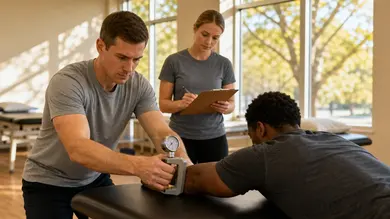
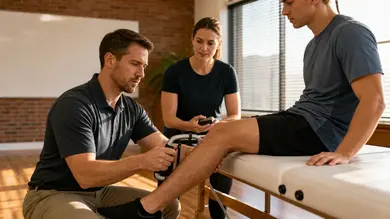
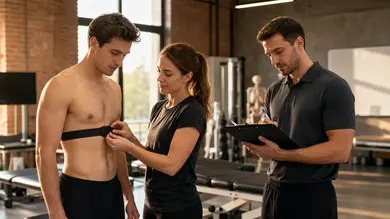
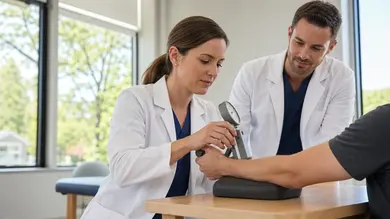
- Lab courses: Labs may require more scheduled time than the credits suggest. For example, a two-credit lab might require three hours weekly because students are practicing assessments, measurements, movement analysis, or equipment-based techniques.
- Clinicals and practicums: These credits are based on supervised hours, site requirements, faculty oversight, and the intensity of the applied experience. They are especially important for students preparing for clinical, rehabilitation, or performance settings.
- Capstone and project-based courses: These combine instruction, independent work, research, presentation, and applied problem-solving. Credit reflects both faculty-guided learning and substantial student work outside formal meetings.
Graduate and undergraduate credits may look similar on a transcript, but expectations differ. Graduate courses often carry fewer total credits across the program while requiring deeper reading, research, analysis, and independent work. Online courses also use the same credit framework, but instructional time may include asynchronous modules, discussion boards, recorded lectures, virtual labs, and scheduled synchronous sessions.
Students comparing advanced pathways in other health fields, including the cheapest DNP program online, should use the same principle: evaluate not only the number of credits, but also how those credits are delivered, sequenced, and applied to degree completion.
Credit requirements directly shape how long it takes to earn an exercise science degree. A program requiring between 120 and 130 total credits is often designed for four years of full-time undergraduate study, but the actual timeline depends on course sequencing, prerequisite completion, transfer credit, internship availability, and whether the student attends full time or part time.
- Core credits: Required major courses often follow a sequence. Students may need anatomy before physiology, physiology before exercise testing, and introductory courses before advanced biomechanics or exercise prescription. Missing one course can delay several others.
- Electives: Electives can add flexibility, but not all electives are offered every term. Students should choose electives that satisfy degree requirements and support career goals instead of simply filling open credit slots.
- Transfer credits: Accepted transfer credits can shorten the timeline, but only if they apply to the degree plan. General elective credit may increase the total number of earned credits without reducing remaining major requirements.
- Accelerated formats: Summer sessions, shorter terms, and year-round course schedules can help students earn credits faster. The trade-off is a heavier weekly workload and less recovery time between courses.
- Prior learning assessment: Relevant certifications or work experience may help students bypass certain courses if the school awards PLA credit. Students should start this process early because evaluations can take time.
To stay on schedule, students should build a term-by-term plan during the first semester, confirm when required courses are offered, and revisit the plan before every registration period. The goal is not just to accumulate credits, but to complete the right credits in the right order.
More credits can improve career preparation when they add relevant skills, prerequisites, certifications, or specialization. However, extra credits do not automatically lead to better salary outcomes. Employers usually care more about the degree, practical experience, certifications, internship quality, and job-specific competencies than the raw number of credits on a transcript.
- Advanced Specializations: Additional credits can help students focus on areas such as biomechanics, sports nutrition, strength and conditioning, rehabilitation, or wellness programming. This can be useful when applying for specialized roles.
- Licensure and Certification Preparation: Extra coursework may help students prepare for professional exams, meet prerequisite requirements, or qualify for roles that prefer specific academic preparation.
- Technical Skill Development: Courses in data analysis, exercise physiology, assessment, programming, and rehabilitation techniques can strengthen a graduate’s ability to work in clinical, fitness, performance, or wellness settings.
- Emphasis on Practical Experience: In many fitness and wellness roles, internships, coaching hours, client-facing experience, and certifications may matter more than additional academic credits.
- Limited Return on Extra Credits: After required major and prerequisite courses are complete, taking extra undergraduate credits may not produce a meaningful salary advantage, especially in entry-level roles.
- Professional Degree Priority: Higher-paying or leadership roles often depend more on earning a master’s or doctoral degree, gaining experience, or earning respected credentials than on accumulating extra undergraduate credits.
The best approach is strategic credit selection. Students should take additional credits when they fill a clear gap: graduate-school prerequisites, certification preparation, internship eligibility, technical skills, or a marketable specialization. Taking extra courses without a career purpose can increase cost without improving outcomes.
What Graduates Say About The Credit Requirements for Their Exercise Science Degree
- Chelsea: "Enrolling in the online exercise science degree program gave me the flexibility to complete credits at my own pace, which was crucial while balancing full-time work. The cost per credit was much more affordable than traditional programs, making it accessible without overwhelming debt. Earning those extra credits not only deepened my knowledge but also opened doors to advanced career opportunities in sports therapy."
- Dean: "Reflecting on my time in the online exercise science degree program, I appreciated how easily I could tailor the credit requirements around my schedule, unlike a rigid campus setup. The cost savings per credit were significant, allowing me to invest in additional courses that enhanced my expertise. These extra credits proved invaluable when I transitioned into a leadership role within a fitness organization."
- Perry: "Completing my exercise science degree online provided a professional path with cost-effective credit options while offering remarkable scheduling flexibility. The ability to earn additional credits without financial strain elevated my credentials and made me a stronger candidate for specialized roles in wellness and rehabilitation. This strategic investment in further education truly advanced my career."
Other Things You Should Know About Exercise Science Degrees
In 2027, most exercise science degree programs require internships or practicum experiences as part of their credit requirements. These experiences provide practical training and account for a significant portion of the total credits needed for graduation, ensuring students gain hands-on skills alongside theoretical knowledge.
Yes, general education and elective credits outside the exercise science major typically count toward total degree requirements. Subjects like psychology, nutrition, and statistics frequently complement exercise science studies and fulfill essential credit hours. However, students should verify with their academic advisor which outside courses are accepted toward their degree to avoid excess credits and delayed graduation.
Lab credits usually count as separate required hours in anatomy, physiology, biomechanics, and kinesiology courses. Many 2027 exercise science programs require at least 6 to 12 lab credits within the major, and some departments make certain labs mandatory before students can enroll in upper-level classes.
- Health, Exercise, and Sport Sciences https://www.meredith.edu/exercise-sports-science/
- Exercise Science Studies - CSCU Transfer Degree, AA (EXSC-AA-TAP) https://catalog.ctstate.edu/preview_program.php
- Exercise Science Degree Programs & Career Guide 2025 https://www.nutritioned.org/exercise-science-degree/
- Exercise Science Degree - Florida Gulf Coast University https://www.fgcu.edu/mariebcollege/rehabilitationsciences/exercisescience/exercisescience-bs
- Exercise Science Degree Careers: The complete list https://traineracademy.org/blog/exercise-science-careers/
- 2025-2026 Undergraduate Catalog Major in Exercise Science, Athletic Training Accelerated Sequence Degree offered: B.S. https://illinoisstate.edu/catalog/undergraduate/kinesiology-recreation/exercise-science-athletic-training-accelerated-course-requirements/
- Bachelor of Science (B.S.) Major in Exercise and Sports Science (Pre-Rehabilitation Sciences Concentration) https://mycatalog.txstate.edu/undergraduate/education/health-human-performance/exercise-sports-science-prerehab-sciences/
- Exercise Science and Kinesiology B.S., with Exercise and Wellness Concentration https://catalog.usf.edu/preview_program.php
- Exercise Science Transfer Pathway AS https://www.nhcc.edu/academics/degree-pathways/biological-and-health-sciences/exercise-science-transfer-pathway
- Online Exercise Science Program https://stmary.edu/online-programs/exercise-science.html