2027 Online Esports Business Bachelor's Degree Programs With 8-Week Classes

Co-Founder and Chief Data Scientist
Choosing an accelerated online esports business bachelor’s degree is really a question of fit: can you handle a faster academic pace, will employers respect the credential, and does the program give you enough practical experience for a competitive industry? For working adults, military learners, transfer students, and career changers, 8-week classes can make a degree feel more manageable because students focus on fewer courses at a time and move through requirements more quickly than in a traditional semester calendar.
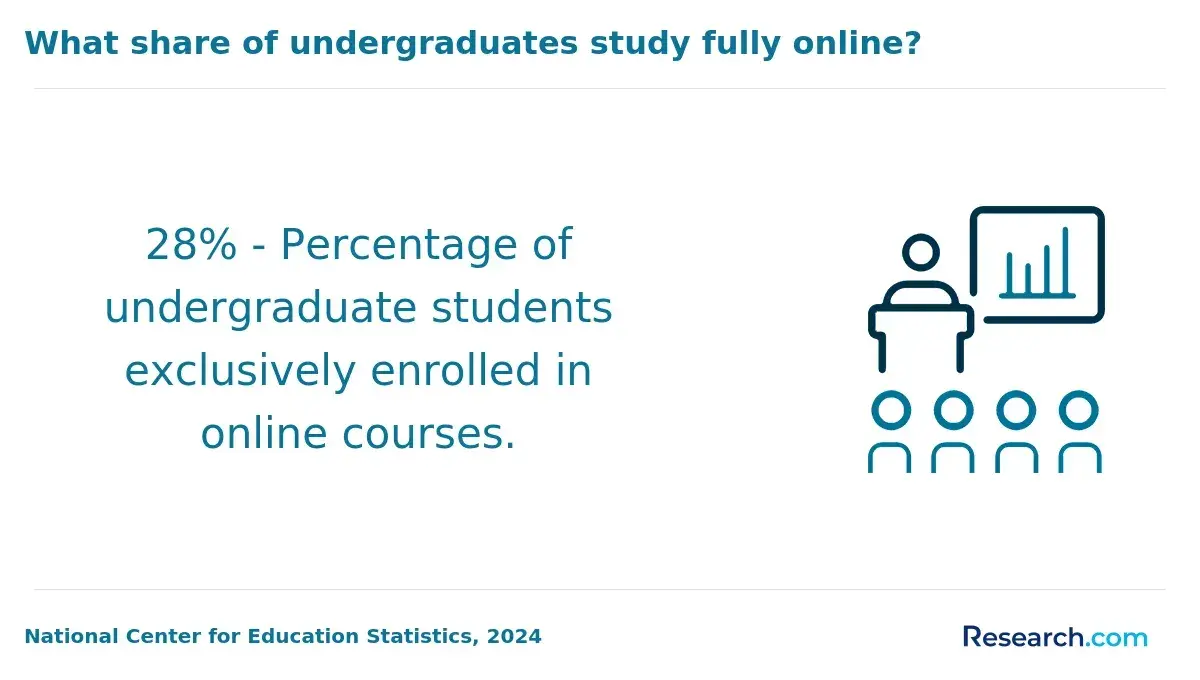
The format is not automatically easier. A compressed course usually requires steady weekly work, quick turnaround on assignments, and strong planning. National statistics indicate that 65% of online esports business bachelor's degree students prefer accelerated 8-week courses for flexibility and faster completion, but the best choice still depends on accreditation, institutional reputation, transfer policies, cost, employer expectations, and access to internships or portfolio-building projects.
This guide explains how 8-week online esports business bachelor’s programs work, where they are most likely to be respected, what to check before enrolling, and how to judge whether the accelerated format supports your career goals without weakening the value of the degree.
Key Things to Know About Online Esports Business Bachelor's Degree Programs With 8-Week Classes
- Accreditation from recognized agencies ensures program quality-students should verify regional accreditation as it impacts credit transfer and employer recognition in esports business.
- School reputation strongly influences hiring prospects; programs associated with established esports organizations often provide networking advantages despite geographic labor market variations.
- Licensure is typically not required, but supplementing online esports business degrees with industry certifications-such as project management or digital marketing-enhances employability in competitive markets.
What Are Online Esports Business Bachelor's Degree Programs With 8-Week Classes, and How Do They Work?
Online esports business bachelor’s degree programs with 8-week classes use a compressed academic calendar. Instead of taking several courses across a traditional 15- to 16-week semester, students usually take one or two courses at a time in shorter sessions. The goal is not to reduce the curriculum but to concentrate it, allowing students to complete degree requirements in a more flexible sequence.
These programs typically combine business fundamentals with esports-specific coursework in areas such as marketing, event operations, sponsorship, audience engagement, digital media, gaming culture, and organizational management. The accelerated format can work well for students who want steady progress without waiting for a long semester cycle to end.
- Accelerated pacing: Eight-week courses move quickly. Students should expect more weekly reading, discussion, projects, and assessments than they would see in a standard-length course.
- Focused course load: Many students take one or two courses per session rather than four or five courses at once. This can reduce subject-switching but increases the intensity of each class.
- Credit structure: Students usually enroll in 6 to 9 credit hours during each 8-week term, equating to two or three courses. The right load depends on work hours, family responsibilities, military obligations, and prior college experience.
- Continuous enrollment options: Programs may offer multiple start dates across the year, helping students avoid long gaps between courses and potentially finish faster.
- Best-fit learners: The format often appeals to working adults, military personnel, transfer students, and career changers who need flexibility but can commit to a disciplined weekly schedule.
- Quality checks: Students should evaluate accreditation, school reputation, transfer rules, tuition, labor market alignment, and whether the program includes career-relevant projects or internship options.
Enrollment in accelerated online programs has grown significantly, according to data from the National Center for Education Statistics (NCES) and the Online Learning Consortium, reflecting rising demand for flexible and time-efficient education. Still, speed should not be the only factor. Students comparing accelerated undergraduate pathways with later graduate options, such as an easiest masters degree, should first make sure the bachelor’s program is credible, transferable, and aligned with employer expectations.
How Have 8-Week Online Esports Business Programs Evolved and Gained Employer Acceptance Over the Past Decade?
Over the past decade, 8-week online esports business bachelor’s programs have moved from a niche option associated mainly with nontraditional education to a more common format offered by accredited institutions. Employer acceptance has improved as online learning has become more familiar, universities have strengthened course design, and hiring managers have become more focused on skills, projects, accreditation, and institutional reputation than on whether a course lasted eight weeks or a full semester.
Longitudinal data from Gallup, the Society for Human Resource Management (SHRM), and the Babson Survey Research Group reveal that employer acceptance of accelerated online esports business degrees in the United States has grown significantly, with focus placed on competency and readiness rather than the mode or speed of delivery. This shift matters in esports because many related roles already operate in digital, remote, hybrid, and project-based environments.
The COVID-19 pandemic also normalized remote instruction and asynchronous learning. Employers that once questioned online degrees became more familiar with virtual collaboration, learning management systems, video meetings, and remote project work. That does not mean every online degree is treated equally. Hiring teams still look closely at accreditation, the school’s name, the student’s portfolio, internships, and evidence of business judgment.
Students weighing affordability alongside credibility may compare tuition, fees, and transfer policies carefully; those focused on cost can also review options for the cheapest business administration degree online when considering related business pathways.
- Institutional evolution: More regionally accredited universities now offer accelerated online options, which has helped improve confidence in the format.
- Employer perception shift: Surveys from Gallup, SHRM, and Babson show that employers increasingly value online and accelerated credentials when graduates can demonstrate job-ready skills.
- COVID-19 impact: The pandemic made online work and learning more familiar, reducing some of the stigma attached to remote education.
- Industry fit: Esports, gaming, streaming, digital marketing, and online community roles often reward digital fluency, remote collaboration, and rapid adaptation.
- What still matters: Accreditation, institutional reputation, relevant experience, internships, certifications, and portfolio evidence remain important for employer acceptance.
Which Industries and Employers Are Most Likely to Respect an Online Esports Business Bachelor's Degree Earned Through 8-Week Courses?
The employers most likely to respect an online esports business bachelor’s degree earned through 8-week courses are those that already value digital business skills, gaming knowledge, audience growth, brand partnerships, events, and online communities. In these settings, the degree format usually matters less than whether the school is accredited and whether the graduate can show relevant work.
Industries where the degree may carry the strongest value
| Industry | Why the degree may be relevant | Examples of aligned roles |
| Technology | Gaming, software, and digital platform companies often need employees who understand product audiences, communities, and project coordination. | Project coordinator, product marketing assistant, community management associate |
| Marketing and advertising | Agencies and brand teams may value knowledge of influencer partnerships, sponsorship activation, and esports audiences. | Brand partnership assistant, campaign coordinator, influencer marketing associate |
| Entertainment and media | Streaming platforms, event promoters, esports organizations, and content teams often need business staff who understand digital fan engagement. | Sponsorship support specialist, audience engagement coordinator, content operations assistant |
| Business and management services | Consulting groups, startups, and business development teams working with gaming markets may value specialized industry knowledge. | Business development assistant, operations coordinator, market research associate |
| Public administration and nonprofits | Some programs in digital literacy, youth engagement, recreation, and community technology may use esports as an outreach or education tool. | Program coordinator, youth digital media assistant, community engagement associate |
Geographic labor markets influence employer acceptance. Esports hubs like Los Angeles, Seattle, and Atlanta may show greater recognition because local employers are more familiar with gaming, live events, streaming, and related business models. In less concentrated markets, students may need to explain the business side of the degree more clearly and support it with internships, freelance projects, certifications, or a portfolio.
A professional who completed an online esports business bachelor’s degree in accelerated 8-week sessions shared that balancing intensive coursework with a full-time job was challenging but rewarding. He noted that the program’s pace required strong time management but allowed him to quickly apply new skills on the job. Despite initial doubts about employer recognition, he found that tech and media contacts were “open to the credential once they saw my portfolio and related experience.” His experience shows why students should treat the degree as one part of a broader career package, not as a stand-alone guarantee of employment.
Does Accreditation Status Determine the Quality and Employer Value of an Online Esports Business Program With 8-Week Classes?
Accreditation is one of the most important quality signals for an online esports business program with 8-week classes. It does not guarantee that a program is the best fit for every student, but it helps confirm that the institution has been reviewed for academic standards, faculty qualifications, student support, financial stability, and institutional practices.
Employers and HR systems often emphasize regional accreditation when assessing degrees, regardless of whether the coursework was online, accelerated, or delivered in a traditional semester. Regional accrediting bodies such as the Higher Learning Commission (HLC): oversee institutions in the central U.S.; Southern Association of Colleges and Schools Commission on Colleges (SACSCOC): covers southern states; and New England Commission of Higher Education (NECHE): serves New England schools. These organizations help ensure that academic standards, faculty qualifications, and institutional resources meet recognized criteria.
National accreditation often applies to vocational, career-focused, or faith-based institutions. Some nationally accredited schools may be legitimate, but credits and degrees from these institutions may face more limitations in transfer, graduate admissions, and employer recognition. Programmatic accreditation can be useful when it applies to a specific discipline, but it does not replace institutional accreditation.
Students should be especially cautious of unaccredited providers that advertise unusually fast, low-effort credentials. Over 70% of employers now utilize credential verification services that detect unaccredited qualifications, signaling increased scrutiny in hiring. A degree from a diploma mill can damage a resume instead of strengthening it.
Accreditation checklist before enrolling
- Verify the institution in the U.S. Department of Education's Database of Accredited Postsecondary Institutions and Programs.
- Confirm whether the accreditor is recognized and whether the institution is currently in good standing.
- Ask whether credits transfer to other accredited colleges or universities.
- Check whether graduates are eligible for graduate programs, employer tuition reimbursement, or relevant professional credentials.
- Review student outcomes, faculty experience, career services, and internship support instead of relying only on marketing claims.
Students comparing gaming-related degrees may also review affordable and reputable alternatives, including online game development degree programs, but accreditation should remain a nonnegotiable part of the evaluation.
How Does the Reputation of the Awarding Institution Affect the Career Value of an 8-Week Online Esports Business Degree?
The reputation of the awarding institution can strongly affect how employers interpret an 8-week online esports business degree. Accreditation answers the question, “Is this a legitimate institution?” Reputation often answers a different question: “How much confidence does this school’s name create during a quick resume review?”
Research indicates that recruiters often lean on the institutional prestige of a candidate’s university as a shorthand for quality, sometimes even more than accreditation status. Graduates from established programs like Penn State World Campus or Arizona State Online typically encounter fewer hurdles during the hiring process because their degrees benefit from a positive reputational association known as the “halo effect.” This effect can reduce skepticism about accelerated pacing or fully online delivery.
Reputation, however, should be weighed against cost. A well-known institution may offer stronger employer recognition, alumni reach, and career services, but a higher price is not automatically justified for every student. A lesser-known accredited school may still be a good choice if it offers strong faculty, relevant coursework, transfer credit, career support, and manageable tuition. In that case, students may need to build a stronger portfolio to make the credential more competitive.
- Institutional prestige: A recognized university name can create immediate credibility during resume screening.
- Halo effect: Employers may be more comfortable with accelerated online coursework when the school has an established academic reputation.
- Employer preferences: Hiring managers may favor candidates from known institutions when other qualifications are similar.
- Cost versus reputation: Students should compare tuition, aid, debt risk, career services, and likely return before choosing a higher-cost option.
- Supplemental credentials: Graduates from less-known institutions can improve competitiveness through internships, certifications, capstone projects, and measurable work experience.
When I spoke with a professional who completed an 8-week online esports business bachelor's degree, she reflected that the university's name opened doors that might have otherwise remained closed. Despite some initial apprehension about the fast-paced format, employers recognized the well-regarded institution behind her degree, which reassured them of her capabilities. She described the job search as "challenging but doable," emphasizing that the school's reputation made interviewers more willing to look beyond the compressed course length. Ultimately, she credits the institution's standing with giving her an early edge in a crowded market, noting, "It definitely helped me stand out before I even had a chance to prove my skills on the job."
What Are the Academic Demands and Workload Expectations of 8-Week Online Esports Business Courses?
Eight-week online esports business courses are academically demanding because they compress a full course into a shorter time frame. According to the Online Learning Consortium, these accelerated formats cover the same comprehensive curriculum as traditional 15-week courses but require learners to absorb this content in half the time. Typically, students spend 15 to 20 hours weekly to stay on track and fully understand the material.
The most common mistake is assuming that a shorter course means a lighter course. In reality, students may complete readings, discussion posts, quizzes, case analyses, presentations, group projects, and exams in rapid succession. Missing one week can feel like missing multiple weeks in a traditional course.
What the weekly workload may include
- Reading textbook chapters, case studies, industry reports, or instructor materials
- Watching recorded lectures or attending live virtual sessions
- Posting and replying in discussion boards
- Completing quizzes, written assignments, business plans, or campaign analyses
- Working on team projects, presentations, or esports event simulations
- Meeting deadlines that may occur several times each week
Peer-reviewed research shows that completion rates and grade outcomes in accelerated online courses often mirror those of standard-term classes when students are prepared for the increased workload. However, failure to anticipate these demands can lead to higher dropout rates.
Students with full-time jobs, caregiving responsibilities, deployments, or irregular schedules should plan carefully before taking multiple courses in the same 8-week session. A realistic study calendar, early communication with instructors, and use of tutoring or writing support can make the difference between steady progress and burnout.
Notably, enrollment in 8-week online business-related programs, including Esports Business, rose by 40% in 2023, signaling growing acceptance of accelerated education paths focused on career advancement.
- Intensive schedule: Students face a rigorous weekly agenda requiring 15-20 hours to complete extensive readings, assignments, discussions, and assessments in a compressed period.
- Curriculum consistency: Content covered matches traditional semester-length courses, preserving academic standards despite a shorter timeline.
- Time management essential: Success depends on disciplined planning, especially for students balancing work, family, or military commitments.
- Comparable outcomes: Evidence indicates that well-prepared learners in accelerated formats can achieve similar completion and grade results as students in standard courses.
- Rising popularity: A 40% surge in enrollment during 2023 reflects increasing demand for accelerated online Esports Business education.
How Are 8-Week Online Esports Business Courses Structured and Delivered Compared to Traditional Semester-Based Programs?
Eight-week online esports business courses usually use the same credit value and learning outcomes as traditional semester-based courses, but the schedule is condensed. Instead of spreading assignments across 15 to 16 weeks, instructors organize the course into faster modules with more frequent deadlines.
Courses are commonly delivered through learning management systems such as Canvas, Blackboard, or D2L. These platforms centralize lectures, readings, assignments, grades, discussions, announcements, and instructor feedback.
| Feature | 8-week online format | Traditional semester format |
| Pace | Fast, with compressed weekly modules and frequent deadlines | Slower, with more time between major assignments |
| Course load | Often one or two courses per session | Often several courses at the same time |
| Assignments | May be due weekly or multiple times per week | Usually spread across a longer calendar |
| Interaction | Discussion boards, video meetings, group tools, virtual office hours | In-person or online interaction depending on delivery model |
| Best for | Self-directed students who can work consistently | Students who prefer more time to absorb material |
- Delivery formats: Programs may be asynchronous, synchronous, or hybrid-synchronous. Asynchronous courses allow students to complete lessons independently within weekly deadlines. Synchronous formats require live attendance at scheduled times. Hybrid-synchronous courses combine live sessions with flexible, self-paced activities.
- Pacing and structure: Compared to traditional 15- to 16-week semesters, 8-week courses compress the same credit hours and learning outcomes into a shorter timespan. Assignments and exams may occur weekly or biweekly.
- Faculty engagement: Instructors may offer virtual office hours, discussion feedback, announcements, and faster grading to help students keep pace.
- Participation expectations: Discussion boards often require several shorter posts during the week rather than one large weekly submission. Group projects may be tightly scheduled.
- Typical student week: Students may watch lectures, complete readings, participate in discussions, submit assignments, coordinate with peers, and prepare for assessments within the same module.
The structure can be efficient, but it rewards consistency. Students who prefer long stretches between deadlines may find the format stressful, while students who like momentum may find it easier to stay engaged.
What Financial Aid, Scholarships, and Tuition Models Are Available for 8-Week Online Esports Business Bachelor's Programs?
Students in 8-week online esports business bachelor’s programs may qualify for many of the same financial aid options available to students in traditional programs, as long as the institution and program meet eligibility requirements. Common options include federal Pell Grants, subsidized and unsubsidized Direct Loans, institutional scholarships, employer tuition assistance, military education benefits, and scholarships for online learners or working adults.
Because 8-week programs use shorter sessions, financial aid timing can be different from a standard semester calendar. Instead of two large disbursements per academic year, aid may be distributed multiple times in alignment with each 8-week session. Students should ask the financial aid office exactly when funds disburse, when tuition is due, and how dropping or withdrawing from a course could affect aid eligibility.
Enrollment status is especially important. Federal guidelines measure full-time status by credit hours per term. In 8-week formats, one course per session generally counts as part-time enrollment, whereas two courses usually qualify for full-time status depending on total credits. This distinction can affect aid amounts, loan eligibility, and satisfactory academic progress.
- One 8-week course per session typically counts as part-time enrollment.
- Two 8-week courses per session usually qualify for full-time status, depending on total credits.
Cost questions to ask before enrolling
- Is tuition charged per credit hour, per course, per term, or through a flat-rate model?
- Are online students charged technology, platform, proctoring, graduation, or student service fees?
- How many credits are required to finish the degree after transfer credits are applied?
- Does the school offer scholarships for online, adult, transfer, military, or accelerated students?
- What happens to aid if a student takes one session off?
- Does the program require paid software, event travel, equipment, or internship expenses?
Tuition for 8-week programs is commonly charged per credit hour. A shorter term may feel less expensive because students pay for fewer courses at a time, but the real comparison is total program cost, including required credits, fees, books, and remaining time to completion.
Students should also explore scholarships targeting working adults, career changers, and online learners in esports business fields. Resources such as FAFSA.gov, the College Scorecard, and professional Esports Business associations provide valuable information about awards designed for these groups.
Prospective students comparing degree pathways may also consider related accelerated opportunities, such as an online mba in operations management, which similarly emphasizes flexible scheduling and financial aid options tailored for busy professionals.
Are There Specific Esports Business Career Paths or Licensure Requirements That May Not Be Compatible With 8-Week Online Programs?
Most esports business roles do not require state licensure, so an 8-week online bachelor’s program is generally compatible with careers in esports management, marketing, event coordination, sponsorship, community management, and business operations. However, some career goals may still require in-person experience, supervised projects, travel, networking, or technical skill development that a fully online accelerated program may not provide on its own.
- Licensure and certification: Unlike fields such as healthcare or education, esports business does not have standardized state licensure boards requiring clinical hours. However, some esports-related certifications provided by professional associations may require attendance at on-site workshops or practical experience, which a fully online 8-week program could challenge.
- State-specific regulations: Analyzing licensing boards across California, Texas, Florida, New York, and Illinois reveals no formal state licensure for esports business managers or event coordinators. Still, labor markets often prefer candidates with internship or hands-on exposure, which can be harder to acquire in accelerated online-only formats.
- Hybrid program options: Some universities offer blended esports business degrees that deliver most theoretical coursework online in 8-week terms, supplemented by optional in-person labs, mentoring, internships, or event-based experiences.
- Employer preferences: Industry leaders increasingly prioritize demonstrable skills, project experience, client communication, and portfolio evidence over formal licensure. Programs with capstone projects, cooperative education, or applied consulting projects can strengthen employability.
The key limitation is not licensure; it is experience. Students who want roles in live event production, team operations, sponsorship activation, venue coordination, or tournament management should look for programs that include practicums, internships, employer projects, or partnerships with esports organizations. A fully online 8-week format can teach the business concepts, but students may still need to create opportunities to apply them.
Overall, no formal esports business career licensure requirements in the United States currently bar enrollment in 8-week online esports business degrees. Candidates seeking roles demanding practical expertise should explore hybrid options that integrate hands-on components alongside accelerated curricula. For those weighing graduate paths, consulting lists of masters degrees that are worth it can further clarify credential value.
How Do Employers Verify the Legitimacy of an Online Esports Business Bachelor's Degree Completed Through 8-Week Classes?
Employers verify an online esports business bachelor’s degree completed through 8-week classes in the same way they verify most college degrees: they check whether the institution exists, whether it is accredited, whether the student graduated, and whether the credential matches what appears on the resume or application.
The National Student Clearinghouse is commonly used to validate enrollment and degree completion for the majority of accredited institutions. Employers may also contact the registrar’s office at the awarding school to request official transcripts, enrollment confirmation, or degree verification letters. Some background screening companies perform these checks on behalf of employers.
A legitimate accelerated online degree should pass these checks if it comes from an accredited institution and the student completed the program as claimed. The 8-week format itself is not usually the issue. Problems arise when applicants list unaccredited schools, diploma mills, misleading institution names, incomplete degrees, or credentials that cannot be verified through official channels.
- Accreditation essential: Degrees from accredited schools are more likely to be accepted by employers and third-party screening services.
- Trusted verification channels: The National Student Clearinghouse and registrar offices are common resources for confirming enrollment and graduation.
- Common red flags: Employers may reject degrees from diploma mills, non-accredited institutions, unverifiable schools, or programs with misleading claims.
- Legitimacy of accelerated programs: Properly accredited 8-week online degrees can hold equal standing with traditional formats for verification purposes.
- Document readiness: Students should keep official transcripts, degree conferral records, and verification instructions available for background checks.
Before applying for jobs, graduates should make sure their resume accurately lists the institution, degree title, graduation date, and any concentration. If the transcript does not say “online” or “8-week,” students do not need to add those details unless asked directly.
How Do Transfer Credits and Prior Learning Assessment Work in 8-Week Online Esports Business Programs?
Transfer credits and prior learning assessment can shorten an 8-week online esports business bachelor’s program, lower total tuition, and help students avoid repeating coursework they have already completed. The rules vary widely by institution, so students should request a formal credit evaluation before enrolling.
Many programs allow students to transfer credits from accredited community colleges, prior bachelor’s coursework, and other universities. Typically, institutions accept between 30 and 90 transferred credits, but often cap how many can apply to esports business major requirements. This ensures that students complete enough upper-division and major-specific coursework through the degree-granting institution.
Prior Learning Assessment (PLA) can also help students earn credit for learning gained outside traditional classrooms. Common PLA options include CLEP exams, portfolio submissions showcasing professional or extracurricular experience, military training credits validated through the American Council on Education (ACE), and other certifications endorsed by ACE.
- Transfer credit limits: Institutions typically approve 30 to 90 credits from previous schools but may require key esports business courses to be completed through the awarding institution.
- Prior learning assessment: CLEP exams, professional portfolios, military training credits, and ACE-certified credentials can convert eligible prior learning into college credits.
- Major versus general education: Transfer credits often satisfy general education requirements more easily than specialized esports business core courses.
- Cost and time reduction: Using transfer and PLA credits effectively can reduce tuition and shorten the number of 8-week sessions needed.
- Formal evaluations: Students should obtain official credit reviews before enrollment to understand exactly which requirements remain.
- ACE resources: The ACE Credit Recommendation Service can help students identify whether military training, workplace learning, or certifications may be recommended for credit.
Questions to ask about transfer and PLA
- How many total transfer credits can be applied to the bachelor’s degree?
- How many credits must be completed at the institution to graduate?
- Can transfer credits apply to the esports business major, or only to electives and general education?
- Are older business, technology, or marketing courses still accepted?
- Is there a fee for portfolio review or PLA credit transcription?
- Will accepted credits change financial aid status or expected graduation timing?
A careful transfer review is especially valuable in an accelerated program because every accepted course may remove an entire 8-week session from the student’s remaining plan.
What Graduates Say About Their Online Esports Business Bachelor's Degree Programs With 8-Week Classes
- Vance: "The online Esports Business bachelor's degree program's institutional accreditation really stood out to me-knowing employers recognize and respect this credential gave me confidence every step of the way. The 8-week class structure kept the momentum high without feeling overwhelming, allowing me to dive deep into topics effectively. Since graduating, I've leveraged the practical skills and industry connections from the course to jumpstart a rewarding career in esports marketing."
- Marvin: "Reflecting on my time in the Esports Business program, the curriculum's blend of theory and real-world application was invaluable. The concise 8-week courses encouraged me to stay focused and retain knowledge better than longer semesters might have. I appreciate how the accreditation opened doors-securing interviews with top-tier esports organizations has been a real game changer for my professional journey."
- Parker: "What impressed me most was the program's design-accelerated 8-week classes paired with a comprehensive curriculum that never sacrificed depth. I found that the institutional accreditation gave my resume a significant edge when applying for positions in this competitive field. Graduating from this online Esports Business degree equipped me with versatile skills, helping me transition seamlessly into roles that blend business savvy with gaming culture."
Other Things You Should Know About Esports Business Degrees
Most U.S. programs accept up to 90 transfer credits toward a 120-credit bachelor’s degree, but at least 30 credits usually must be completed at the degree-granting school. Many schools require an official evaluation from a regional accreditor-recognized agency before awarding transfer credit.
Effective 8-week esports business programs must offer a reliable learning management system optimized for fast-paced course delivery. They should provide real-time technical support and accessible academic advising to assist students balancing intensive schedules. Additional resources like career services, virtual libraries, and tutoring enhance student success and retention in accelerated formats.
Credit hours in 2027 online esports business bachelor's programs are structured to fit within 8-week terms, allowing students to complete courses rapidly. Each course typically requires 3–4 credit hours, with a focus on concise modules that provide effective learning within shorter timeframes.
References
- Esports Business Management https://www.keele.ac.uk/study/undergraduate/undergraduatecourses/esportsbusinessmanagement/
- Esports Business Management https://uninedu.com/index.php/courses/5319
- How Do Organizations Verify Education Before Making a Hire? - Verification Screening Solutions https://www.verificationscreening.com/blog/how-do-organizations-verify-education-before-making-a-hire/
- Game Business & Esports Bachelor's Degree https://www.fullsail.edu/degrees/game-business-esports-bachelor
- eSports Business https://www.liverpool.ac.uk/courses/esports-business-msc
- 4 Ways Transfer Students Can Maximize College Credits for Prior Experience https://www.umassglobal.edu/blog-news/4-ways-transfer-students-can-maximize-college-credits-prior-experience
- New 'esports' university degree opens up career paths for players and fans. - Page 3 https://www.mmo-champion.com/threads/2334422-New-esports-university-degree-opens-up-career-paths-for-players-and-fans/page3
- Time Management for an 8 Week Course - Anna Maria College Online https://online.annamaria.edu/mpa/blog/time-management-for-8-week-course
- Analysis of Growth in the Esports Industry: Trends, Revenue, and Opportunities https://www.ethletelabacademy.com/post/analysis-of-growth-in-the-esports-industry-trends-revenue-and-opportunities
- join the action diverse careers in the booming esports industry https://careersportal.ie/news/join-the-action-diverse-careers-in-the-booming-esports-industry