2027 Online Exercise Science Degree Programs With No Personal Statement or Admissions Essay Required

Co-Founder and Chief Data Scientist
An online exercise science degree may offer a faster application when a school does not require a personal statement or admissions essay, but transcripts, GPA thresholds, prerequisite coursework, and program-specific reviews can still matter. This guide is for students who want a less writing-intensive route into fitness, wellness, rehabilitation support, or graduate study. With the U.S. Bureau of Labor Statistics projecting 12% growth for fitness trainers and instructors from 2024 to 2034, it explains how to identify legitimate no-essay options, compare quality and cost, and apply without overlooking requirements that affect admission or career preparation.
Key Things You Should Know
- A true no-essay online exercise science program does not request a personal statement in its standard admission application, but it may still require official transcripts, minimum GPA, science prerequisites, placement testing, immunization records, or background checks for experiential components.
- No-essay, essay-optional, and essay-waived policies are different: an optional essay can strengthen a borderline file, while a waiver may apply only to certain applicants; honors programs, scholarships, and competitive internships may still require writing.
- Application simplicity is not a measure of academic quality or automatic admission. Compare institutional accreditation, curriculum, lab and practicum access, transfer-credit rules, total price, and career alignment; BLS projects 12% employment growth for fitness trainers and instructors from 2024 to 2034.
What Does No Personal Statement or Admissions Essay Required Mean for Online Exercise Science Degree Programs?
For an online exercise science degree, "no personal statement or admissions essay required" usually means the standard undergraduate application has no required long-form prompt asking applicants to explain their goals, experiences, or academic history. The admissions office instead makes an initial decision using objective records, such as prior coursework and academic performance.
This policy applies to admission into the institution or degree program only when the published requirements say so. It does not necessarily cover separate applications for scholarships, honors tracks, clinical placements, internships, accelerated graduate pathways, or appeals after an academic denial.
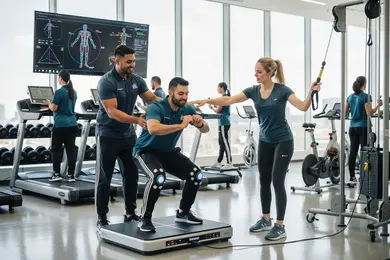
Exercise science is a broad academic field that commonly combines anatomy, physiology, biomechanics, kinesiology, nutrition, exercise testing, and program design. Online degrees may be fully online for lecture courses, while laboratory skills, field experiences, or practical assessments may require scheduled campus visits, approved local sites, or virtual simulations. Students should verify the delivery format before assuming every requirement can be completed remotely.
A no-essay policy can reduce time and writing pressure, especially for applicants returning to school or applying to multiple institutions. It does not remove the school's responsibility to assess academic readiness, nor does it mean that an applicant can skip carefully reviewing the program's prerequisites and progression standards.
What Admissions Requirements Do Online Exercise Science Degree Programs Use Instead of an Essay?
Schools that do not use an admissions essay typically rely more heavily on verifiable academic and administrative materials. Requirements vary by institution, degree level, residency status, and whether a student is applying as a first-year, transfer, readmission, or nondegree student.
The following comparison shows common substitutes for an essay and what each item tells an admissions team. It is a planning guide, not a universal checklist.
| Requirement | What the school evaluates | Why it matters for exercise science |
| Official high school or college transcripts | Course completion, grades, cumulative GPA, and academic trend | Programs may look closely at biology, chemistry, algebra, statistics, and English preparation. |
| Minimum GPA | Baseline academic eligibility | A minimum for university admission may differ from the GPA needed to enter upper-division exercise science courses. |
| Prerequisite courses | Completion of required foundational classes | Anatomy and physiology, biology, chemistry, or math may be required before advanced coursework or practicum placement. |
| Test scores or placement results | College readiness when applicable | Many schools are test-optional, but placement processes can still determine math or writing course placement. |
| Recommendations or résumé | Preparation and relevant experience, if requested | These are more common for selective tracks, graduate programs, or internships than broad-access bachelor's admission. |
| Technical and participation requirements | Ability to complete online and experiential work | Students may need reliable technology, CPR certification, health clearances, or access to an approved field site. |
Ask whether the listed GPA is for admission to the university, admission to the major, or permission to enroll in a practicum. Those stages may have separate standards. A student can be admitted to a college without being immediately eligible for every upper-level exercise science course.
Do not confuse test-optional with no-essay. Test-optional means a school may not require SAT or ACT scores; it says nothing about whether an applicant must submit a written statement.
Who Is a Good Fit for Online Exercise Science Degree Programs With No Admissions Essay?
A no-essay application can fit applicants with solid academic records who prefer to be evaluated through transcripts and prerequisite completion rather than a personal narrative. It can be particularly practical for working adults, community-college transfers, military-connected learners, and students applying close to a rolling-admission deadline.
The pathway is most useful when the program's academic structure also fits the student's schedule and goals. Learners who need flexible course sequencing may also compare online college classes at your own pace, while confirming that self-paced delivery is compatible with any scheduled labs or field experiences.
Students often benefit from no-essay admissions when they can document the following clearly through their records:
- Completed or nearly completed prerequisite science and math courses.
- A GPA that meets the institution's and major's stated threshold.
- Transfer credits that map cleanly to general education and foundational exercise science requirements.
- A realistic plan for hands-on requirements, including local practicum hours when applicable.
- A career goal that matches the degree, such as fitness programming, wellness coordination, health promotion, or preparation for graduate study.
A required essay may be preferable for applicants whose transcripts do not fully represent their readiness. For example, an applicant with a lower early GPA but strong recent science grades, substantial coaching experience, military training, or a documented interruption in education may benefit from a school that invites contextual information. Essay-free admission removes one opportunity to explain a nontraditional record.
Exercise science can lead toward roles in fitness, wellness, recreation, health promotion, and research support. It is not automatically a route to state licensure as a physical therapist, athletic trainer, dietitian, or physician. Those careers commonly require additional accredited education, supervised clinical training, examinations, or state-specific credentials.
Admissions labels can sound similar but create different choices for applicants. Read the requirement in the context of your applicant type and term because a policy for first-year students may not apply to transfers, international applicants, or applicants to a selective concentration.
This table distinguishes the policies so applicants can decide whether writing a statement is unnecessary, useful, or still required under certain circumstances.
| Policy | Meaning | Best applicant response |
| No essay required | The standard application does not request an essay or personal statement. | Submit complete records promptly and confirm whether separate scholarship or program applications have writing requirements. |
| Essay-optional | An essay is not required, but the school will review one if submitted. | Consider submitting a concise, relevant statement if it adds context, demonstrates readiness, or addresses an academic irregularity. |
| Essay-waived | An essay requirement has been removed for a defined group, term, pathway, or applicant category. | Verify that you qualify for the waiver and save the policy confirmation in case requirements change. |
| Essay required | A written response is part of the application review. | Follow the prompt, word limit, and deadline exactly; do not submit a generic statement. |
A common mistake is treating an optional essay as irrelevant. Optional materials may help an admissions reviewer understand academic improvement, explain a prerequisite taken elsewhere, or see why an online format supports your goals. Conversely, a weak, generic optional essay can add little value, so submit one only when it is accurate, polished, and genuinely informative.
Another common mistake is assuming a waiver is permanent. Institutions can change term-specific admissions practices, and a waiver may not extend to scholarship competitions or direct entry into an accelerated or honors pathway.
Not necessarily. A no-essay policy reduces one application component; it does not reveal an institution's acceptance rate, major capacity, prerequisite standards, or academic progression rules. Some schools use broad-access admission, while others make decisions primarily from GPA, course rigor, and available space.
For exercise science, the more useful question is whether you meet the criteria used in place of an essay. A program may admit students to the university but require a higher GPA in anatomy and physiology before allowing enrollment in advanced assessment, biomechanics, or internship courses. Review both the initial admission page and the major's student handbook or catalog requirements.
The U.S. Bureau of Labor Statistics projects 12% growth in employment for fitness trainers and instructors from 2024 to 2034, faster than the average for all occupations. That outlook can make exercise and wellness training attractive, but it does not make admission easier or ensure a particular job outcome. Use labor-market information to assess career interest, then choose a program that provides relevant coursework, practical experience, and preparation for the certifications employers commonly request.
Be cautious with marketing language such as "easy admission," "guaranteed acceptance," or "no requirements." Legitimate colleges should be able to state their admissions criteria, tuition, accreditation, faculty credentials, and graduation requirements clearly. Conditional admission may be available at some schools, but it can require specified grades or support coursework before full standing.

Start with institutional accreditation. In the United States, institutional accreditation helps establish that the college meets recognized standards and is generally important for federal student aid, credit transfer, and employer or graduate-school recognition. Confirm the accreditor and current status through the institution's official disclosures and the U.S. Department of Education database rather than relying only on promotional claims.
Next, examine program quality. Exercise science does not have one universal programmatic accreditation requirement for every career goal, but specialized recognition, curriculum alignment, and practical training can be important. If you want a certification after graduation, check the certification organization's current education, CPR/AED, and examination rules before enrolling.
Use the following review points to look beyond a simplified application:
- Confirm institutional accreditation and whether the school is authorized to enroll online students in your state.
- Read the degree plan for anatomy, physiology, biomechanics, exercise physiology, nutrition, statistics, assessment, and behavior-change content.
- Determine whether labs, skill checks, internships, or practicums are required and how online students complete them.
- Ask for faculty qualifications, student-support services, tutoring, career advising, and accessibility support.
- Review graduation, retention, licensure-disclosure, and career-outcome information where the institution publishes it.
- Check whether your intended credential or graduate program accepts an online bachelor's degree and any required courses.
Quality checks are especially important if your interest extends beyond exercise science into administration. A health administration degree can be a better match for students targeting operations, policy, or healthcare management rather than exercise assessment and training.
Do not assume that an online program's institutional accreditation automatically satisfies every professional pathway. Physical therapy, athletic training, dietetics, and other regulated fields have distinct educational and clinical requirements that can vary by profession and state.
The exact portal and documents differ by school, but a no-personal-statement process is usually document-driven. Apply early enough to resolve transcript evaluations, prerequisite questions, and financial-aid tasks before registration closes.
These steps help applicants confirm that the program truly has no essay requirement and avoid delays:
- Choose the correct application type: first-year, transfer, adult learner, readmission, or nondegree status.
- Read the current online exercise science admission page and the program catalog for separate major-entry requirements.
- Create the application account and complete identity, residency, education, and program-choice fields accurately.
- Request official transcripts from every previously attended high school, college, or university when required.
- Submit any prerequisite documentation, placement information, résumé, recommendation, or technical-readiness form the school specifically requests.
- Check the applicant portal until all items show as received, then respond promptly if the school requests clarification or additional records.
- After admission, review transfer-credit evaluation, orientation, advising, course sequencing, and financial-aid deadlines before enrolling.
Keep screenshots or saved copies of the term-specific admissions checklist. A school can request further written information when records conflict, residency must be established, an academic history needs explanation, or an applicant seeks an exception. That request does not necessarily mean the advertised standard application included an essay.
Online delivery should also be evaluated separately from admissions simplicity. Students considering adjacent healthcare pathways can compare online radiology programs, but should recognize that radiologic technology typically has distinct clinical, accreditation, and credentialing requirements.
Yes, many transfer and adult applicants can apply without an essay when the school's transfer application does not list one. However, transfer admission is often more document-intensive than first-year admission because the institution must evaluate prior college work, calculate transferable credit, and determine whether science prerequisites meet course-equivalency standards.
Adult students should ask whether the school has a separate adult, continuing education, or degree-completion pathway. These options may recognize prior learning or offer flexible schedules, but prior-learning credit is not automatic and may require exams, portfolios, certifications, or faculty review.
Before applying, transfer students should confirm these issues with an admissions or transfer-credit representative:
- Whether all previously attended institutions must send official transcripts, including schools where no credit was completed.
- The minimum transferable grade and maximum number of credits accepted.
- Whether anatomy, physiology, chemistry, statistics, and nutrition courses have time limits or lab requirements.
- Whether admission to the university differs from admission to the exercise science major.
- How transferred credits affect time to degree, financial aid eligibility, and required residency credits.
- Whether internships can be completed near the student's home and who approves the site.
Students changing from nursing may find that some general education or health-science credits transfer, but each program decides equivalencies individually. An easiest online RN to BSN program serves a different goal: it is designed for licensed registered nurses seeking bachelor's completion, not for students preparing for exercise science roles.
A transfer student with a complicated academic record may prefer an essay-optional institution even if a no-essay option is available. The ability to explain a gap, grade trend, or repeated course can be useful when it adds meaningful context beyond a transcript.
No-essay admission does not inherently make a program cheaper, more expensive, or ineligible for aid. Tuition is usually determined by the institution, residency policy, credit load, course format, and fees - not by whether the application contains an essay. Compare the total estimated cost to complete the degree, including technology, lab, proctoring, travel, and practicum expenses.
Federal financial aid eligibility depends on factors such as enrollment, satisfactory academic progress, eligible-program status, and the information submitted through the Free Application for Federal Student Aid. Students should complete aid tasks by the school's deadline even if the admission application itself is short.
The following cost categories make a more useful comparison than an advertised per-credit figure alone.
| Cost factor | What to verify | Decision impact |
| Tuition rate | Per-credit price, in-state or out-of-state treatment, and rate-lock policies | Shows the baseline instructional charge but not the full degree cost. |
| Mandatory fees | Online learning, technology, student service, lab, and graduation fees | Can materially change the term total. |
| Practicum expenses | Travel, background checks, drug screening, liability coverage, uniforms, or CPR/AED training | May be substantial for students completing experiences away from campus. |
| Transfer credit | Accepted credits and remaining credits required at the institution | Usually has a larger effect on total cost than application format. |
| Scholarships | Separate deadlines, essays, recommendations, and renewal GPA | A no-essay admission policy may not apply to merit or departmental awards. |
Scholarships frequently have separate selection criteria because donors and committees may ask students to describe goals, leadership, service, or financial circumstances. Do not skip an award opportunity simply because you want an essay-free admission process; decide whether the potential funding justifies the additional writing.
Students considering a longer clinical education pathway should calculate the full sequence of degrees rather than only the first application. For example, cheapest online DNP programs concern advanced nursing education and should be evaluated against nursing licensure and clinical requirements, not as substitutes for an exercise science degree.
How Should You Compare Online Exercise Science Degree Programs With No Admissions Essay?
Compare programs in the order of your career goal, academic fit, and total cost - not simply by the shortest application. A streamlined application is valuable only if the resulting degree supplies the coursework, practical experience, and recognition needed for your next step.
Use this comparison framework after narrowing your list to institutions that clearly state no essay is required for your applicant category.
| Comparison area | Question to ask | Why it matters |
| Career alignment | Does the curriculum support fitness, wellness, clinical graduate study, research, or another intended path? | Exercise science degrees can lead to different outcomes depending on electives and experiential learning. |
| Admissions fit | What GPA, prerequisites, transcript rules, and progression standards apply to me? | Prevents confusion between university admission and major admission. |
| Online format | Are courses asynchronous, synchronous, hybrid, or campus-based for labs? | Determines whether the program fits work, caregiving, and location constraints. |
| Experiential learning | Is an internship required, and can I use an approved local site? | Practical exposure may matter for skill development and future applications. |
| Academic quality | Is the institution accredited, and are faculty and student outcomes transparent? | Supports transferability, aid eligibility, and informed program evaluation. |
| Total cost | What will I pay after transfer credit, fees, aid, and required travel? | Allows an apples-to-apples affordability comparison. |
| Support services | What advising, tutoring, career help, and technical support are available online? | Support can affect persistence in science-heavy and online coursework. |
Contact each finalist program with a short, specific set of questions: "Is a personal statement required for my applicant type and start term?" "What separate requirements apply to the major?" "Can I complete required fieldwork in my area?" "Which courses must be taken at your institution?" "Do scholarships require essays?" Request answers in writing or save the relevant catalog pages.
Red flags include unclear accreditation claims, vague tuition disclosures, promises of automatic acceptance, an inability to explain hands-on requirements, and pressure to enroll before you receive a transfer evaluation. A school that is transparent about its requirements is more useful than one that merely advertises a fast application.
Other Things You Should Know About Exercise Science
Not always. A policy may apply only to first-year, transfer, domestic, or degree-seeking applicants. International applicants, applicants seeking an exception, and students applying to honors or accelerated pathways may have additional requirements. Check the requirements for your exact applicant category and term.
Yes. Schools may request clarification about academic records, residency, disciplinary history, prior enrollment, or an appeal. This is different from requiring a standard personal statement from every applicant.
They may. Scholarship applications are often separate from admission and can require essays, recommendations, proof of activities, or a higher GPA. Review scholarship deadlines and renewal conditions independently.
It can provide relevant academic preparation, but certification requirements are set by each credentialing organization. Confirm the current exam eligibility, CPR/AED requirements, and any education rules with the certification provider before choosing a program.
- Requirements for Exercise Science and Personal Training Programs https://catalog.bryanuniversity.edu/requirements-for-exercise-science-and-personal-training-programs
- 2026 Best Online Exercise Science Degrees https://www.onlineu.com/degrees/exercise-science
- Exercise Sciences https://www.caahep.org/committees-on-accreditation/exercise-science
- How an Online Degree in Exercise Science Can Propel Your Career | Campaign Chronicle https://campaignmanagement.copcap.com/journal/how-an-online-degree-in-exercise-science-can-propel-your-career-gkglw
- Online Exercise Science Degrees: Top School Review https://www.edumed.org/online-schools/exercise-science-degrees/
- Online Exercise Science Program https://stmary.edu/online-programs/exercise-science.html
- Principles of Child Development and Learning and Implications That Inform Practice https://www.naeyc.org/resources/position-statements/dap/principles