2027 Online vs On-Campus Exercise Science Degree Programs: Pros & Cons

Co-Founder and Chief Data Scientist
The central question for an exercise science student is not whether online learning is “better” than campus learning. It is whether a program’s format will give you the structure, lab access, field experience, advising, affordability, and credential value you need for your next step. Exercise science is a practical field tied to human movement, fitness, performance, rehabilitation support, wellness, and preparation for graduate or professional study, so the delivery format matters more than it might in a purely lecture-based major.
Online exercise science degree programs have become more common as colleges expand flexible learning options. According to the National Center for Education Statistics, over 40% of undergraduate students enrolled in at least one online course during recent years. That growth gives working adults, transfer students, military learners, parents, and students far from campus more access to exercise science programs. It also makes program quality harder to judge at first glance.
This guide compares online and on-campus exercise science programs by structure, admissions, academic support, completion time, cost, financial aid, credibility, employer perception, salary factors, and fit. The goal is to help you choose a program based on evidence and practical trade-offs rather than assumptions about the format.
Key Benefits of Online vs On-Campus Exercise Science Degrees
- Online exercise science programs offer greater flexibility, allowing 68% of students to balance work and study more effectively than traditional formats.
- Students in online programs often save on average 40% in commuting and housing expenses, making degree completion more affordable.
- On-campus exercise science degrees provide direct access to hands-on labs and equipment, enhancing practical skills essential for careers in physical therapy and sports medicine.
Are Online vs. On-Campus Exercise Science Programs Structured the Same Way?
Online and on-campus exercise science programs usually cover similar academic foundations, but they are not structured the same way in daily experience. Both formats may include anatomy, physiology, biomechanics, kinesiology, nutrition, exercise testing, program design, research methods, and field-based learning. The main differences are how students attend class, complete labs, interact with instructors, and arrange practical experience.
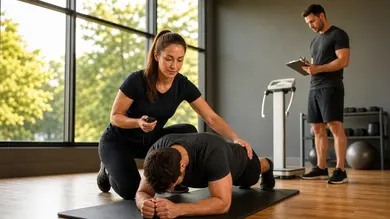
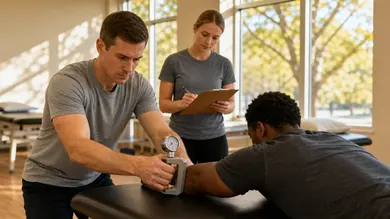
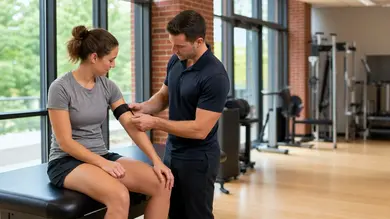
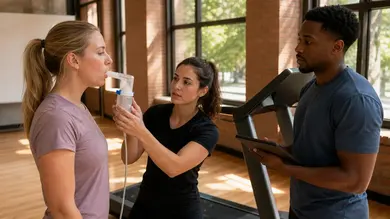
For most students, the best format depends on how much structure they need and how easily they can access hands-on learning. Exercise science is not only a reading-and-writing major. You may need to practice assessment techniques, use equipment, observe movement, complete labs, or participate in internships. Strong online programs plan for these requirements instead of treating them as afterthoughts.
| Program element | Online exercise science programs | On-campus exercise science programs |
| Course delivery | Courses may be asynchronous, synchronous, or a mix of both. Students access lectures, assignments, discussions, and exams through a learning platform. | Courses are typically delivered in classrooms, labs, and campus facilities with scheduled face-to-face meetings. |
| Schedule | Often more flexible, which helps students who work, care for family, or live far from campus. Some courses still require deadlines or live sessions. | Usually follows set class times, lab times, and academic calendars. This can help students who perform better with routine. |
| Faculty interaction | Occurs through email, video meetings, discussion boards, recorded feedback, and virtual office hours. The quality depends heavily on instructor responsiveness. | Occurs before and after class, during office hours, in labs, and through campus advising. Immediate questions can be easier to resolve. |
| Peer collaboration | Uses discussion boards, group projects, video meetings, and online study groups. Students must be intentional about networking. | Happens naturally in class, labs, clubs, study groups, and campus events. Informal contact is often easier. |
| Hands-on learning | May use virtual simulations, home lab activities, recorded demonstrations, local site placements, or short in-person requirements. | Usually provides direct access to labs, exercise testing equipment, athletic facilities, research opportunities, and supervised practice. |
| Completion pace | May allow full-time, part-time, accelerated, or transfer-friendly paths depending on the school. | Often follows a traditional full-time sequence, though part-time options may exist. |
The curriculum can be equivalent, but the student experience is different. Online students should ask how labs, internships, practicums, and assessments are completed. On-campus students should ask how much flexibility exists if they need to work or manage personal obligations while enrolled.
Are Admission Requirements the Same for Online vs On-Campus Exercise Science Degree Programs?
Admission requirements are often similar because colleges usually apply the same academic standards to online and on-campus versions of the same degree. The differences tend to appear in how programs evaluate readiness. Online programs may pay closer attention to independent learning skills, technology access, transfer credits, and prior experience, while on-campus programs may rely more heavily on traditional first-year admission measures.
Students should not assume an online program is easier to enter. Selective universities can apply the same GPA, prerequisite, and documentation requirements across both formats. At the same time, some online programs are built for adult learners and may provide more flexible pathways for applicants with college credits, work experience, or time away from school.
- Academic qualifications: Both formats typically require a high school diploma or GED for undergraduate admission. Graduate-level programs generally require a related bachelor's degree. Minimum GPA standards usually range between 2.5 and 3.0 for both formats, though individual schools can set different thresholds.
- Standardized test scores: On-campus programs commonly request SAT, ACT, or comparable scores. Many online programs are adopting test-optional policies or waiving tests for applicants with prior college credits or relevant work experience.
- Work or volunteer experience: Undergraduate programs usually do not require professional experience, but experience in fitness, coaching, wellness, athletics, rehabilitation support, or healthcare settings can strengthen an application. Some online programs may value this experience because it signals maturity and readiness for self-directed study.
- Application materials: Both formats commonly require an application, transcripts, letters of recommendation, and a personal statement or essay. Online programs may ask applicants to explain why distance learning fits their circumstances and how they will manage the workload.
- Interview process: Interviews may be used in either format, especially for competitive programs or graduate pathways. Online programs usually conduct interviews virtually and may use them to assess communication skills and fit for remote learning.
- Technical readiness: Online programs often require reliable internet access, a computer, basic software skills, and comfort using a learning management system. This is less likely to be a formal admission issue for campus-based students.
- International requirements: Both formats may require English proficiency tests such as TOEFL for international applicants. Online programs may provide remote testing or virtual document submission options.
Cost can also affect where students apply. Online degrees often provide more scheduling flexibility and can be cost-effective, with tuition rates around $420-$500 per credit at several leading universities. Students comparing majors and long-term career options may also find it useful to review the best college majors for the future before committing to a path.
Do Online Exercise Science Students Receive the Same Academic Support as On-Campus Students?
Online exercise science students can receive academic support comparable to on-campus students, but the delivery is different and the quality varies by institution. A well-designed online program should provide advising, tutoring, library access, faculty access, career support, and help arranging field experiences. The key question is not whether support exists on a website, but whether students can actually use it when they need it.
Before enrolling, ask how quickly faculty respond, whether tutoring is available outside standard business hours, how internships are approved, and whether online students have the same career services access as campus students. These details matter more than broad promises about “student support.”
- Tutoring services: Both online and on-campus students may receive tutoring in difficult subjects such as anatomy, physiology, statistics, biomechanics, and research methods. Online students usually use video tutoring, chat, shared documents, or recorded help sessions, while campus students may attend in-person tutoring centers.
- Academic advising: Online advising is commonly handled through virtual appointments, email, degree-planning tools, and phone calls. On-campus advising may be easier for students who prefer face-to-face planning. In both formats, advising is especially important because exercise science programs can include sequenced prerequisites.
- Career counseling: Online students may use virtual appointments, webinars, job boards, resume reviews, and digital career libraries. On-campus students may have easier access to employer events, local internship fairs, and in-person networking.
- Library access: Online students typically use journals, e-books, databases, and research consultations remotely. On-campus students may use both physical and digital collections. For research-heavy courses, digital library access should be robust.
- Faculty interaction: Online interaction happens through video calls, email, feedback tools, discussion boards, and virtual office hours. On-campus students can ask questions in class, visit offices, or talk during labs. Strong online programs set clear response-time expectations.
- Peer networking: Online learners may connect through forums, group projects, messaging tools, and virtual study groups. Campus students often build relationships through labs, student organizations, athletic departments, wellness programs, and informal study sessions.
- Field placement support: This is one of the most important support areas for online exercise science students. Programs should clearly explain whether students must find their own local sites or whether the school helps arrange internships and practicums.
Support can be excellent in either format, but students should verify access before enrolling. If a program cannot clearly explain how online students complete labs, fieldwork, advising, and career preparation, that is a warning sign.
How Long Does It Take to Complete an Online vs an On-Campus Exercise Science Degree?
Online and on-campus exercise science degrees often require a similar number of credits, so the standard full-time timeline is usually similar. The difference is flexibility. Online programs may give students more control over pace, while campus programs usually follow a more fixed course sequence.
Most online programs require between 120 and 128 semester credit hours and generally take four to five years to complete for full-time students. Traditional on-campus programs also require about 120 to 128 credits and are structured for completion in four years of full-time study. A student’s actual timeline may change based on transfer credits, prerequisites, course availability, part-time enrollment, internships, and whether the program offers accelerated terms.
- Online exercise science degree: Online programs may work well for students who need to study part time, continue working, or use transfer credits. Some students can move faster through accelerated courses or prior learning assessments. Students with previous experience may graduate in as few as two years when transfer credits and program policies allow it. The trade-off is that part-time study can extend completion time.
- On-campus exercise science degree: Campus programs are often easier to map across a traditional academic calendar. This structure can help students stay on track, especially when labs and prerequisites must be completed in sequence. However, fixed class times, semester breaks, and limited part-time scheduling can make it harder for working students to accelerate or customize their pace.
Students comparing timelines should request a degree plan, not just a credit total. A program may list the same number of credits as another school but still take longer if key courses are offered only once per year or if internships require separate approval periods.
Are Online Exercise Science Programs Cheaper Than On-Campus Ones?
Online exercise science programs can be cheaper than on-campus programs, but the answer depends on tuition policy, fees, residency rules, technology requirements, and whether you would otherwise pay for housing or commuting. The largest savings often come from avoiding relocation, campus housing, meal plans, and transportation rather than from tuition alone.
For example, the average tuition for an online bachelor's program is about $12,216 annually, compared to $18,981 for on-campus, saving approximately $6,765 each year. That difference can be meaningful, but students should still compare the full cost of attendance for each school. Some online programs charge separate distance-learning fees, proctored exam fees, lab kit costs, or placement-related expenses.
- Tuition and fees: Online exercise science programs generally charge less per credit hour than on-campus programs, but this is not universal. Public universities may also charge different rates for in-state, out-of-state, and online students.
- Living expenses: Online students often save by staying in their current homes. Typical room and board costs for on-campus students exceed those of online learners by around $744 per academic year.
- Commuting and relocation: Online students can avoid transportation, parking, and moving costs. This matters most for students who do not live near a campus with an exercise science program.
- Technology costs: Online learners need a reliable computer, internet access, and sometimes software, webcams, or lab-related materials. These costs are usually smaller than housing or relocation expenses but should still be included in the budget.
- Hands-on requirements: Some online programs require students to complete local internships, practicums, or occasional in-person sessions. Students should ask whether travel, background checks, uniforms, CPR certification, or site fees are required.
- Financial aid availability: Both online and on-campus students typically qualify for federal financial aid, scholarships, and payment plans if the institution and program meet eligibility rules. However, some institutional scholarships may prioritize campus-based students.
- Opportunity cost: Online programs are often designed for working students. Being able to keep a job while studying can reduce lost income and improve the overall return on investment.
Students trying to lower costs should compare net price, not just tuition. Net price includes grants, scholarships, fees, living costs, and income you may give up while enrolled. Those considering a lower-cost starting point may also compare transfer pathways and the easiest associate degree to obtain before choosing a bachelor’s program.
What Are the Financial Aid Options for Online vs On-Campus Exercise Science Programs?
Online and on-campus exercise science students may qualify for many of the same financial aid options, especially when they enroll at accredited institutions that participate in federal aid programs. The main differences involve enrollment intensity, residency rules, housing allowances, scholarship eligibility, and whether a student is fully online or taking some courses in person.
The most important first step is to confirm that the institution is accredited and eligible for federal financial aid. Then review the program’s cost of attendance, credit requirements, and aid rules for online students specifically. A school may advertise financial aid broadly while limiting certain awards to full-time or campus-based students.
- Federal aid: Federal financial aid, including Pell Grants, Direct Loans, and Federal Work-Study, is generally available to both online and on-campus students at accredited institutions. Online students enrolled part-time, meaning fewer than six credits per term, may be ineligible for some direct loans. Pell Grants adjust for part-time enrollment.
- State aid: State grants and scholarships may apply to eligible in-state institutions. Some state programs limit aid to residents or full-time enrollment, which can affect fully online or part-time students.
- Scholarships and grants: Institutional scholarships and private grants can support both formats, but campus students often receive a larger share. Many scholarships require full-time enrollment or fall-term admission. Less than 5% of campus-wide scholarships at some universities go to online students despite their financial need.
- Employer tuition reimbursement: Working students in either format may use employer tuition benefits. Online programs can be especially compatible with employer reimbursement because students may continue working while enrolled.
- Private student loans: Private loans are available to many students but typically require strong credit. They often have higher interest rates and fewer borrower protections than federal aid, so they should be considered carefully.
- Veteran benefits: Veteran benefits can differ by format. On-campus students receive full housing allowances, while exclusively online veterans get only about half. Students using military or veteran education benefits should confirm the rules before choosing a fully online format.
Online programs may reduce commuting and housing costs, but tuition is frequently comparable to on-campus rates. Students should compare total out-of-pocket cost after grants and scholarships, not only the advertised tuition. For broader career planning and graduate-level earning considerations, students can also review what type of master's degree makes the most money.
Are Online Exercise Science Programs as Credible as On-Campus Ones?
Online exercise science programs can be as credible as on-campus programs when they are properly accredited, academically rigorous, and designed to include meaningful practical experience. Credibility does not come from the delivery format alone. It comes from institutional accreditation, program quality, faculty expertise, curriculum depth, student outcomes, and whether the program prepares students for relevant certifications, employment, or further study.
Accreditation is the first issue to verify. Reputable organizations such as the Commission on Accreditation of Allied Health Education Programs (CAAHEP) and the Committee on Accreditation for the Exercise Sciences (CoAES) enforce criteria related to curriculum quality, faculty credentials, and student outcomes. Students should confirm the exact accreditation status of the institution and program before applying, especially if they plan to pursue certification, graduate school, or a regulated healthcare pathway later.
High-quality online programs may align coursework with certification organizations such as ACSM, NSCA, and ASEP. They may also include practicum experiences, local field placements, virtual labs, interactive simulations, or other supervised activities intended to build applied skills. These elements matter because exercise science employers and graduate programs often want evidence that students can apply theory to assessment, training, wellness, or performance settings.
Students should be cautious about assuming that any online degree will carry the same value. A credible online program should be transparent about accreditation, faculty qualifications, course requirements, fieldwork expectations, certification preparation, graduate school outcomes, and student support. If the program avoids specific answers about labs or practicum requirements, that is a concern.
Licensing and certification requirements can vary by occupation and location. An exercise science degree may support career paths in fitness, wellness, coaching, performance, research assistance, or preparation for graduate study, but it does not automatically qualify a graduate for every clinical or licensed role. Students interested in physical therapy, occupational therapy, athletic training, or other regulated fields should check prerequisite and admission requirements early.
Do Employers Prefer Online vs On-Campus Exercise Science Degrees?
Many employers care less about whether an exercise science degree was completed online or on campus and more about whether the program is accredited, the institution is reputable, and the applicant can demonstrate relevant skills. In exercise science, practical competence is especially important. Employers may look for internships, certifications, coaching experience, lab skills, communication ability, and familiarity with exercise testing or program design.
Recent surveys reveal that over 70% of organizations have hired candidates holding online degrees in the past year, while 61% of human resource leaders now view online education as equal to or even superior compared to traditional formats. These findings reflect broader acceptance of digital learning, especially as remote and hybrid work models become more familiar. However, acceptance does not mean every online program is viewed the same. Program reputation and accreditation remain key signals.
According to surveys, 55% of HR leaders rate online programs as equally effective as traditional ones, with an additional 39% considering them superior. Employers may see online graduates as self-directed, organized, and comfortable with technology. Those strengths can help, but they do not replace field experience. An online student who completes strong internships and earns relevant certifications may be more competitive than a campus student with limited applied experience.
For students balancing work or family commitments, online exercise science degrees can offer advantages in affordability, scheduling flexibility, and access to academic support. These factors may help students build experience while enrolled. Employment outcomes can be comparable to campus-based programs; indeed, 96% of online alumni report positive career results.
The practical takeaway is straightforward: choose the format that lets you build the strongest portfolio. A hiring manager is likely to care about what you can do, where you trained, whether the program is credible, and whether you have evidence of readiness for the role.
Do Online vs On-Campus Exercise Science Program Graduates Earn the Same Salaries?
Online and on-campus exercise science graduates can earn similar salaries when their programs are accredited and their experience, certifications, location, and job roles are comparable. Salary differences are rarely caused by delivery format alone. They are more often shaped by the employer, region, occupation, graduate education, certification status, and the graduate’s ability to show practical competence.
Students should be careful with broad salary comparisons. “Exercise science graduate” can refer to many different outcomes, including personal training, wellness coordination, strength and conditioning support, corporate fitness, coaching, research assistance, or preparation for graduate health programs. These paths do not all pay the same.
- Accreditation and program reputation: Employers generally prioritize accredited programs and recognized institutions over the online-or-campus distinction. A rigorous curriculum from a credible school can help graduates from either format compete for similar roles.
- Work experience: Internships, coaching experience, fitness instruction, wellness programming, lab work, or clinical observation can influence hiring and pay. Campus students may have easier access to local facilities, while online students may gain experience through jobs or local placements while studying.
- Professional certifications: Certifications can affect eligibility and earning potential in fitness, wellness, and performance roles. Online students may have flexibility to pursue certification while enrolled, while campus students may benefit from faculty-guided preparation or campus testing resources.
- Geographic location: Regional demand and cost of living influence salaries. Major markets such as California and New York offer 15-25% higher pay than rural regions, and this applies to graduates from both formats.
- Employer perception: Bias against accredited online degrees has declined as online education has become more common. Employers now often focus on skills, experience, and accreditation rather than format.
- Cost and debt: Even when salaries are similar, the return on investment can differ. Online programs may reduce debt by lowering housing, commuting, and opportunity costs. Students comparing aid-eligible programs may also research an online school that accepts FAFSA.
The strongest salary strategy is to choose a credible program, complete meaningful field experience, earn relevant credentials, and target roles that match your long-term goals. The diploma format matters less than the total preparation behind it.
How Do You Decide Whether an Online vs On-Campus Exercise Science Program Is Right for You?
The right choice depends on how you learn, how much flexibility you need, what hands-on resources you can access, and what career path you plan to pursue. Online programs are often better for students who need schedule control and can manage independent learning. On-campus programs are often better for students who want in-person labs, stronger daily structure, and easier access to facilities and faculty.
Use the following factors to make a practical decision rather than relying on assumptions about either format.
- Learning style: Choose on-campus study if you learn best through face-to-face instruction, immediate feedback, in-person labs, and direct faculty contact. Choose online study if you are comfortable learning independently, managing deadlines, and asking for help through virtual channels.
- Hands-on access: Exercise science often requires applied learning. On-campus students may have direct access to gyms, labs, equipment, and supervised research. Online students should confirm how they will complete labs, practicums, internships, and demonstrations from a distance or through local sites.
- Schedule flexibility: Online programs can fit students with jobs, caregiving responsibilities, military service, or long commutes. On-campus programs are more structured, which can help students who need routine and accountability.
- Budget: Online study may reduce commuting, housing, relocation, and campus-related costs. On-campus study may offer more direct access to facilities and scholarships. Compare total cost after aid, not just tuition.
- Networking: On-campus programs often provide stronger day-to-day networking through classmates, faculty, labs, clubs, and local employers. Online programs can still offer networking through virtual events, alumni groups, and local internships, but students usually need to be more proactive.
- Career goals: If you plan to enter fitness, wellness, coaching, or corporate health roles, either format can work if the program is credible and includes applied experience. If you plan to pursue graduate or professional study, check prerequisite courses, lab expectations, and admissions preferences before enrolling.
- Program transparency: A strong program should clearly explain accreditation, curriculum, faculty credentials, internship requirements, student support, and outcomes. If you are comparing flexible health and fitness pathways, reviewing an online exercise physiology degree option can also help you evaluate how distance programs organize coursework and applied training.
Students considering other flexible education routes may also compare the most popular trade schools online to understand how online career-focused programs differ across fields.
Here's What Graduates of Online vs On-Campus Exercise Science Programs Have to Say About Their Degree
- : "Completing my exercise science degree entirely online was a game changer for me. The flexibility allowed me to balance work and family while still diving deep into topics like biomechanics and exercise physiology. Starting my career as a fitness coach, I've noticed how the online program's practical, evidence-based curriculum prepared me well for real-world challenges. The sense of community created through virtual study groups was surprisingly strong and inspiring. I'm proud to contribute to my local community's health with confidence and up-to-date knowledge. —Nolan"
- : "Attending an on-campus exercise science program immersed me not only in rigorous coursework but also in a vibrant campus culture that fueled my passion for health and wellness. The face-to-face interaction with professors and hands-on labs gave me the confidence to excel in clinical settings early in my career. Reflecting on my time there, the camaraderie and mentorship truly shaped my professional growth and helped me build a robust network in the field. Today, as a physical therapist, I appreciate how those in-person experiences helped me develop communication skills essential for patient care. —Zynara"
- : "Pursuing a hybrid exercise science degree combined the best of both worlds for me-flexible online learning complemented by valuable in-person sessions. This format challenged me to be disciplined yet also allowed meaningful face-to-face collaboration that deepened my understanding. The hybrid approach prepared me to adapt quickly in dynamic work environments, which was vital when transitioning into my role as a wellness coordinator. I'm grateful for the balance it offered, enabling me to grow professionally while positively impacting community fitness programs. —Maerick"
Other Things You Should Know About Online & On-Campus Exercise Science Degree Programs
Most programs require a high school diploma or GED, a minimum GPA of 2.5 to 3.0, and transcripts. Some bachelor’s programs also ask for SAT or ACT scores, while graduate programs often require prerequisite courses in anatomy, physiology, or statistics.
In 2027, on-campus programs generally offer more hands-on practical training with access to state-of-the-art labs and equipment, while online programs often rely on virtual simulations and remote projects. This can impact the depth of experiential learning for students, depending on the program's resources.
References
- Admissions Information https://exss.unc.edu/exercise-physiology/admissions-information/
- How to Compare Online Colleges: 7 Key Factors to Know https://exsci.cuchicago.edu/compare-online-colleges-guide/
- Most Popular Online Exercise Science Degrees https://www.onlineu.com/most-popular/exercise-science
- Reasons for choosing an exercise and sport science degree: Attractors to exercise and sport science - ScienceDirect https://www.sciencedirect.com/science/article/abs/pii/S1473837621000319
- Exercise Science Master's Degree | Cleveland State University https://health.csuohio.edu/health-sci/exercise-science-masters-degree-cleveland-state-university
- Degrees https://www.griffith.edu.au/study/degrees/bachelor-of-exercise-science-1171
- Online Exercise Science Program https://stmary.edu/online-programs/exercise-science.html
- Online degree costs vs traditional degrees: which is more affordable? https://collegeonline.io/blogs/online-degree-costs-vs-traditional-degrees
- How Employers View Online Degrees and Distance Learning Programs https://londongatecollege.com/how-employers-view-online-degrees-and-distance-learning-programs/
- On-Campus vs. Online Graduate Programs: Picking the Best Fit https://www.baker.edu/about/get-to-know-us/blog/on-campus-vs-online-graduate-programs/