2027 Are Online Exercise Science Degrees Respected by Employers?

Co-Founder and Chief Data Scientist
Choosing an online exercise science degree is not just a question of convenience. It is a career decision that affects how employers read your resume, whether you qualify for certifications, and how easily you can move into fitness, wellness, rehabilitation support, coaching, or graduate study. Online programs have become more common as over 40% of college students now enroll in at least one online course, but employer trust still depends on the quality of the school, the accreditation behind the degree, and the hands-on experience graduates can document.
This guide explains how employers evaluate online exercise science degrees in 2026. It covers accreditation, school reputation, salary expectations, certifications, AI-powered learning, career advancement, and the types of organizations that hire graduates. The goal is to help you tell the difference between an online degree that can support your career and one that may create avoidable barriers.
Key Benefits of Online Exercise Science Degrees Respected by Employers
- Graduates of accredited online exercise science programs are viewed positively by 78% of employers who value the flexibility and rigor these degrees demonstrate.
- Students develop essential skills such as biomechanics analysis, client assessment, and program design, which are highly sought after in health and fitness industries.
- Completing an online exercise science degree has been linked to a 20% higher employment rate within six months compared to non-degree holders in similar fields.
Which Accrediting Bodies Make an Online Exercise Science Degree Legitimate?
Accreditation is the first thing students should verify before enrolling in an online exercise science program. Employers may not always ask whether a degree was earned online, but they often care whether the institution is recognized, whether credits can transfer, and whether the curriculum supports certification or graduate-school eligibility.
A legitimate online exercise science degree usually depends on two layers of quality review: institutional accreditation and, when available, programmatic accreditation. Institutional accreditation evaluates the school as a whole. Programmatic accreditation evaluates a specific academic program or discipline.
| Accreditation type | What it evaluates | Why it matters to employers and students |
| Regional Accreditation | The entire college or university | Often viewed as the strongest form of institutional accreditation in the United States. It can support credit transfer, graduate admission, employer recognition, and eligibility for many certifications. |
| National Accreditation | The entire institution, often career-focused or distance education schools | Can be legitimate, but credits may not transfer as easily to regionally accredited institutions. Some employers and graduate programs may prefer regional accreditation. |
| Programmatic Accreditation | A specific exercise science or allied health program | Shows that the program has been reviewed against field-specific standards and may strengthen preparation for professional certifications. |
Regional Accreditation: Regional accreditation is widely considered the most established form of institutional accreditation in the United States. Agencies such as the Higher Learning Commission and the Middle States Commission on Higher Education review colleges and universities for academic quality, governance, student support, and institutional stability. For exercise science students, regional accreditation can affect transfer credits, financial aid eligibility, graduate-school options, and employer confidence.
National Accreditation: National accreditation is commonly associated with career-focused, technical, or distance education institutions. Organizations such as the Distance Education Accrediting Commission (DEAC) may accredit online-focused schools. This can still provide recognized quality assurance, but students should be cautious if they plan to transfer credits or apply to graduate programs, because regionally accredited schools may not accept all nationally accredited coursework.
Programmatic Accreditation: Programmatic accreditation reviews the quality of a specific academic program. In exercise science and allied health education, the Commission on Accreditation of Allied Health Education Programs (CAAHEP) is a major name to know. Programmatic accreditation can matter for students pursuing credentials through organizations such as the American College of Sports Medicine or the National Strength and Conditioning Association because it signals that the curriculum aligns with professional expectations.
Before applying, students should confirm accreditation directly through the school, the accreditor, and recognized accreditation databases. This step is especially important for online programs because a polished website does not prove legitimacy. Students comparing flexible options can also review the best exercise science degree online to understand how accredited programs are commonly structured. Those considering a shorter first credential may also compare the best online associate degrees in 6 months, but they should verify that any fast program still meets transfer, certification, and career requirements.
Does University Reputation Affect Employer Views of Online Exercise Science Degrees?
Yes. University reputation can influence how employers initially interpret an online exercise science degree, especially when they are screening many applicants quickly. A familiar institution, a strong health sciences department, or a known record of graduate success can make an online credential easier for employers to trust.
However, reputation is not the only factor. In exercise science, employers also look for applied skills, certification readiness, internship experience, and the ability to work safely with clients, athletes, patients, or community populations. A well-known university can help open the door, but it does not replace practical competence.
- Institutional prestige: A degree from a school recognized for health sciences, kinesiology, sports performance, or research may carry more weight, whether the coursework was online or on campus.
- Alumni outcomes: Employers may be reassured when a program can show that graduates move into relevant roles, earn certifications, or continue into graduate study.
- Accreditation status: Accreditation remains more important than brand recognition alone. A recognizable name without proper accreditation should raise concerns.
- Industry partnerships: Programs connected to clinics, fitness organizations, athletic departments, community health agencies, or research centers can offer applied learning that strengthens employability.
- Local employer familiarity: Some regional employers know nearby universities well and may trust their graduates because they have hired them before.
Students should avoid choosing a program based only on name recognition. A practical evaluation should ask: Is the school accredited? Does the curriculum match the job I want? Are there supervised field experiences? Does the program prepare students for ACSM, NASM, NSCA, or related credentials? Is career support available for online learners?
For professionals who later want to strengthen their credentials, the easiest master degree options may be worth exploring, but “easy” should never be the main criterion. Accreditation, relevance, faculty expertise, and career fit matter more than convenience alone.
Do Employers Treat Online and On-campus Exercise Science Degrees Equally?
Many employers now treat online and on-campus exercise science degrees similarly when the online program is accredited, academically rigorous, and includes practical learning. The delivery format matters less than whether graduates can demonstrate knowledge of human movement, exercise programming, safety, assessment, communication, and ethical practice.
Recent surveys show that most employers are willing to hire graduates with online degrees and offer them starting salaries equal to those of peers from on-campus programs. This reflects a broader shift: employers increasingly evaluate degree quality, school credibility, experience, and demonstrated skills rather than assuming that online education is weaker.
That said, equal treatment is not automatic. Exercise science is an applied field. A graduate who completed lectures online but has no practicum, internship, lab exposure, client-facing experience, or certification preparation may face more skepticism than a graduate who can show supervised practice and measurable competencies.
| Employer concern | What reassures employers |
| Was the program credible? | Regional accreditation, recognized institutional status, transparent curriculum, and qualified faculty |
| Did the student get hands-on training? | Internships, practicums, local site placements, virtual labs, supervised assessments, or documented fieldwork |
| Can the graduate work with clients safely? | Training in screening, exercise prescription, injury prevention, ethics, and referral boundaries |
| Is the graduate job-ready? | Certifications, portfolio projects, coaching experience, data analysis skills, and strong references |
Graduates can reduce doubts by making the online format an advantage rather than a liability. A resume should highlight accreditation, practicum hours, certification eligibility, relevant technologies, client work, research projects, and measurable results. In interviews, candidates should be ready to explain how they completed labs, assessments, group projects, and supervised learning in an online or hybrid environment.
Employers may trust online exercise science degrees that use AI-powered virtual classrooms when the technology supports rigorous instruction instead of replacing real assessment. AI tools can improve learning, but they do not automatically make a program credible. Accreditation, faculty oversight, academic integrity, and hands-on skill verification still matter most.
AI technologies such as adaptive learning systems, virtual simulations, and AI tutors can strengthen online exercise science education. Adaptive learning can help students review anatomy, physiology, biomechanics, and programming concepts at the right pace. Virtual simulations, including 3D anatomical models and virtual labs, can make complex movement and body systems easier to understand. AI tutors can provide immediate feedback, helping students identify weak areas before exams or practical assessments.
Some programs also incorporate wearable fitness devices, biometric data analysis, and performance-tracking tools. These experiences can help students learn data-driven decision-making, individualized training design, and progress monitoring, which are useful in clinical exercise physiology, wellness coaching, and sports performance settings. Generative AI may also support data visualization and analysis, allowing students to focus on interpretation, evidence, and professional judgment.
Employer trust depends on whether AI-supported learning is backed by transparent assessment. For example, a program should be able to show how it confirms that students can conduct assessments, interpret results, design safe exercise plans, and communicate recommendations. Employers are more likely to respect AI-enhanced programs when students complete supervised projects, practical demonstrations, proctored assessments, internships, or local field placements.
A 2024 SHRM survey found that 61% of employers consider reputable online degrees comparable to traditional ones in tech-driven fields requiring strong data literacy. Still, some employers remain cautious about academic integrity and the consistency of practical training in virtual environments. Students should therefore ask programs how AI is used, how skills are evaluated, and how the school prevents overreliance on automated tools.
Employers value online exercise science graduates who can connect scientific knowledge to safe, practical decisions. A degree may get attention, but hiring decisions often turn on whether the graduate can assess needs, design appropriate programs, communicate clearly, use technology, and adapt to different populations.
The strongest candidates usually combine technical competencies with workplace habits developed through online learning, such as independence, written communication, digital collaboration, and time management.
- Exercise Prescription & Human Movement: Employers look for graduates who understand biomechanics, anatomy, physiology, motor learning, and program design. The ability to create safe, goal-specific exercise plans for diverse populations is central to roles in fitness, wellness, rehabilitation support, and performance training.
- Assessment and Safety: Graduates should know how to screen clients, identify risk factors, select appropriate tests, document findings, and recognize when a client should be referred to a licensed healthcare professional.
- Data Analysis & Technology Integration: Wearables, apps, heart-rate monitors, force platforms, and health dashboards are increasingly common. Employers value graduates who can interpret data responsibly instead of simply collecting it.
- Communication & Collaboration: Exercise science professionals must explain technical information in plain language. They also work with clients, coaches, wellness teams, physical therapists, athletic trainers, physicians, administrators, and families.
- Adaptability & Self-Motivation: Completing an online degree can signal discipline and independence. These traits matter in hybrid roles, mobile coaching, telehealth-adjacent wellness services, and jobs with variable schedules.
- Problem-Solving & Critical Thinking: Employers want graduates who can adjust plans when clients plateau, experience discomfort, have changing goals, or need modifications due to age, condition, schedule, or environment.
- Professional Ethics: Graduates should understand scope of practice, informed consent, confidentiality, documentation, and the limits of their role, especially when working near clinical or rehabilitation settings.
Students should not rely on course titles alone. To prove these skills, they should build a portfolio with sample programs, assessment writeups, case studies, internship evaluations, certification results, and examples of data interpretation. Students interested in a faster entry point into related fields may compare accelerated associate degrees, but should confirm that the credential matches their intended job requirements.
Yes. Professional certifications can strongly validate an online exercise science degree because they provide third-party evidence of job-specific knowledge. For employers who are unsure about an online program, a respected certification can show that the graduate meets industry standards beyond the college transcript.
Certifications are especially valuable in fitness, strength and conditioning, wellness coaching, and exercise physiology roles. They may be preferred or required by employers, insurers, facilities, or professional organizations. However, not all certifications carry the same weight. Students should choose credentials aligned with their target role, not simply the fastest or cheapest option.
- ACSM (American College of Sports Medicine) Certification: ACSM credentials, including Certified Exercise Physiologist, are widely recognized in clinical, wellness, and fitness settings. They can support roles that require strong knowledge of exercise testing, prescription, and health-related programming.
- NASM (National Academy of Sports Medicine) Certification: NASM certifications are common among personal trainers and performance-focused fitness professionals. They can help graduates demonstrate practical training knowledge and may sometimes be applied as academic credit, depending on the institution.
- NSCA (National Strength and Conditioning Association) Certification: NSCA’s Certified Strength and Conditioning Specialist is highly respected for strength and conditioning careers. It can be particularly relevant for graduates aiming to work with athletes, tactical populations, or performance-oriented clients.
- Industry Validation and Employer Trust: Certifications reassure employers that a candidate has passed an external evaluation. This can be useful for online graduates because it separates verified competence from assumptions about degree format.
- Career Advancement and Specialization: Certifications can help graduates qualify for specialized roles, supervisory responsibilities, or higher-level client populations. They can also support continuing education and long-term professional credibility.
One professional who completed an online exercise science degree described certification as the turning point in his job search. He initially encountered skepticism from some employers about whether his online training included enough practical preparation. After earning a NASM certification, he had a clearer way to demonstrate his knowledge, commitment, and readiness to work with clients.
He described the certification process as intense but useful because it forced him to apply concepts rather than simply recall them. His takeaway was direct: “Without that certification, I might have remained just another online graduate on paper, but it opened doors and gave me confidence that I'm truly qualified.” For many online graduates, certification does not replace the degree; it strengthens the degree by making skills easier for employers to verify.
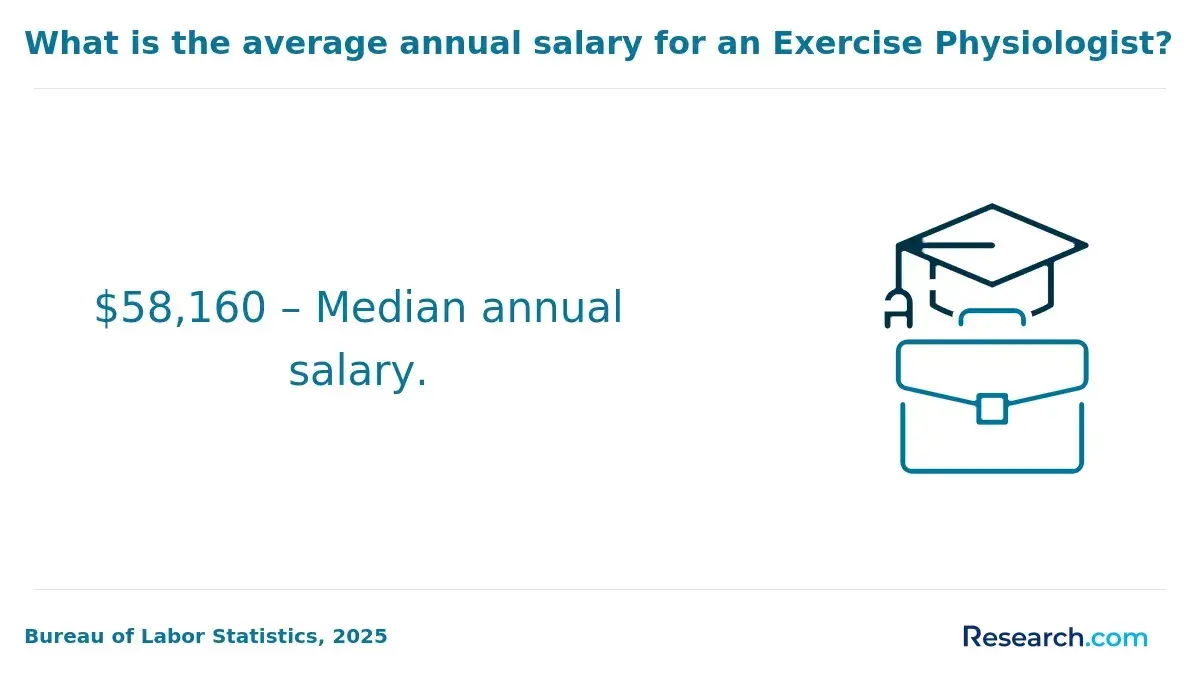
There is no significant industry-wide salary difference between online and on-campus Exercise Science graduates in the United States, according to recent national data and employer perception trends. Salary outcomes are influenced more by role, location, experience, certification, employer type, and specialization than by whether the coursework was completed online.
This does not mean every graduate earns the same amount. Exercise science includes a wide range of jobs, from entry-level fitness roles to specialized clinical, wellness, performance, and management positions. A graduate’s salary depends heavily on the career path they choose and the credentials they build after the degree.
- Accreditation and Program Quality: Employers are more likely to value degrees from regionally accredited programs, regardless of format. A weak or unrecognized program can limit salary potential if employers question the credential.
- Job Role and Specialization: Salary differences often reflect the job itself. Exercise physiologists, fitness trainers, recreational therapists, wellness coordinators, and strength coaches may have different compensation patterns even when they hold similar degrees.
- Professional Certification and Experience: ACSM, NSCA, and ACE certifications, along with internships and supervised experience, can improve competitiveness. Employers usually pay for demonstrated capability, not the learning format alone.
- Employer Perception: Acceptance of online exercise science degrees has grown, especially when programs include hands-on components. This has helped salary outcomes remain consistent across degree formats.
- Geographic Location: Salaries vary by state and market. Regions such as California, New York, and Massachusetts may offer compensation up to 25% above the national average. Online and on-campus graduates can both benefit from high-demand locations.
Students who want to protect salary potential should choose accredited programs, complete relevant internships, pursue respected certifications, and document measurable experience. Reviewing accredited non profit online colleges can also help students focus on institutions that meet baseline credibility expectations.
An online exercise science degree can support career growth when it helps a professional qualify for better roles, add certifications, move into leadership, or shift from general fitness work into wellness, performance, education, or clinical-adjacent settings. The online format can be especially useful for working adults because it allows them to keep earning experience while completing coursework.
Promotion value depends on how the degree is used. A credential alone may not lead to advancement, but a credential combined with stronger skills, documented results, and relevant certifications can make a candidate more competitive for higher-responsibility positions.
- Broader Career Access: Graduates may qualify for roles such as fitness trainer, strength and conditioning coach, wellness consultant, health promotion specialist, or clinical exercise physiologist, depending on degree level, certification, and employer requirements.
- Credentialing and Certification: Programs that prepare students for credentials such as Certified Personal Trainer (CPT) and Certified Strength and Conditioning Specialist (CSCS) can help graduates meet requirements for specialized or supervisory roles.
- Leadership and Advanced Skills: Bachelor’s and graduate-level coursework can build skills in program management, research interpretation, staff training, health behavior change, and evidence-based planning.
- Flexibility for Working Professionals: Online study allows students to apply new methods immediately at work. This can make learning more visible to supervisors and may support internal promotion.
- Positive Employer Perception: Employers increasingly accept accredited online degrees, especially when the graduate also has certifications, field experience, and strong performance records.
- Pathway to Further Education: An online bachelor’s or master’s degree can support future doctoral or professional study, depending on prerequisites, accreditation, grades, and program requirements.
A professional who completed an online exercise science program explained that the format helped her advance because she could study while working full time. She applied coursework immediately to her role, built confidence, and earned key certifications through her program.
Over two years, she moved from a general fitness instructor role into a lead wellness coordinator position managing a multidisciplinary team. Her reflection captures the practical value of the degree: “The ability to integrate theory with practice in real time made all the difference. Getting that online degree not only boosted my confidence but also gave my supervisors tangible proof of my commitment and expertise.”
Graduates of online exercise science programs can be hired across fitness, healthcare, wellness, education, sports, community health, and remote coaching environments. Employers generally care less about the online label when the candidate has an accredited degree, relevant experience, and the ability to work safely and professionally with clients or populations.
The best opportunities depend on the graduate’s degree level and credentials. Some roles may require only a bachelor’s degree and certification, while others may require graduate education, licensure in a related field, or supervised clinical experience.
- Healthcare Organizations and Telehealth Providers: Hospitals, clinics, rehabilitation networks, and telehealth companies may hire exercise science graduates for roles such as exercise physiologist, health coach, wellness specialist, or patient enrollment specialist. These employers value evidence-based practice and comfort with digital care platforms.
- Fitness and Wellness Companies: Gyms, fitness studios, boutique training facilities, corporate wellness vendors, and health clubs hire graduates as personal trainers, group exercise instructors, wellness coordinators, and program developers.
- Sports and Performance Organizations: Athletic programs, sports performance centers, and strength facilities may hire graduates for conditioning, testing, data tracking, and coaching support roles, especially when candidates hold NSCA or related credentials.
- Education and Academic Institutions: Colleges, universities, schools, and continuing education providers may employ exercise science graduates in instructional support, curriculum development, lab coordination, or adjunct teaching roles, depending on degree level.
- Health Coaching and Remote Care Services: Companies offering virtual nutrition, fitness, weight management, and behavioral health coaching often seek candidates who can communicate clearly online and maintain client accountability.
- Corporate and Community Health Initiatives: Employers, nonprofits, public health programs, and community organizations hire exercise science professionals to design wellness initiatives, fitness challenges, prevention programs, and employee health campaigns.
Local markets can also shape hiring. For example, companies hiring exercise science graduates in Atlanta may include healthcare systems, fitness brands, universities, community health organizations, and corporate wellness providers. Students comparing career alternatives outside this field may also review best trade school jobs for broader workforce planning.
The credibility of online exercise science degrees will continue to depend on proof: proof of accreditation, proof of hands-on skill, proof of assessment integrity, and proof that graduates can meet employer expectations. Technology will play a larger role, but it will only strengthen trust when programs use it to verify competence rather than market convenience.
- AI-Driven Learning Validation: Artificial intelligence can support personalized feedback, simulation-based exams, and data-driven progress tracking. These tools may help programs show that online students meet the same competency expectations as on-campus students.
- Global Accreditation Collaboration: Accrediting agencies are increasingly focused on consistent standards for online and hybrid education. Recognition from bodies such as SACSCOC can support certification pathways, graduate study, and employer confidence.
- Increased Employer Partnerships: Stronger partnerships with fitness centers, clinics, healthcare providers, schools, and community organizations can give online students access to supervised internships and practicums.
- Skill-Based and Certification-Focused Hiring: Employers are likely to keep emphasizing practical skills and credentials such as NASM, NSCA, and ACSM. Programs aligned with certification requirements will be easier for graduates to explain in job interviews.
- Integration of Wearable Tech and Data Analytics: Coursework involving wearable devices, performance dashboards, biometric data, and movement analysis can prepare graduates for technology-driven roles in sports, wellness, and rehabilitation support.
- More Transparent Outcomes: Programs that publish clear information about internships, certification pass rates, graduate employment, faculty qualifications, and assessment methods will have an advantage over programs that rely on broad claims.
For students, the key trend is accountability. The strongest online exercise science programs will be those that can show not only what students study, but how they practice, how they are evaluated, and how graduates perform after completion.
Here's What Graduates of Respected Online Exercise Science Programs Have to Say About Their Degree
- : "Completing my online exercise science degree opened doors I never expected, especially in a competitive job market. The flexibility allowed me to balance work and study, which was crucial as a single parent. Since graduating, I secured a position at a top physical therapy clinic where I've quickly advanced due to the hands-on skills emphasized throughout the program. It's empowering to know that my degree supports not just job stability but continuous professional growth. — Tariq"
- : "Starting my career with an online exercise science degree gave me a unique edge; employers appreciated my self-motivation and time management skills taught by the program's remote format. Reflecting on my growth, I've become a passionate advocate for community health initiatives, using my knowledge to design programs that improve youth fitness and well-being. The online setting also fostered a diverse network that continues to inspire my professional development. — Marisol"
- : "From a professional standpoint, earning my exercise science degree online was a strategic decision that accelerated my advancement within my company. The curriculum was rigorous and current, equipping me with evidence-based approaches that boosted my credibility as a wellness coach. I feel proud contributing to holistic wellness in my community, and this degree proved to be a valuable credential that employers recognize and respect. — Jameson"
Other Things You Should Know About Respectable Online Exercise Science Degree Programs
Employers usually look for 120 semester credit hours with core study in anatomy, physiology, biomechanics, and exercise testing. Programs should also include a supervised internship or practicum, often 300 to 600 hours, plus accreditation from a recognized agency such as regional accreditation or CAAHEP.
In 2027, online exercise science degrees are increasingly recognized by employers, especially those accredited by reputable institutions. Graduates gain access to diverse careers in health and fitness industries, but it's crucial that prospective students verify program accreditation and industry alignment to maximize job prospects.
As of 2027, many employers view online exercise science degrees as comparable to traditional degrees, provided they are from accredited institutions. With the growing legitimacy of online education, the focus is on the quality of education and the skills graduates bring to the workplace.
- Online Sports Science Undergraduate Tutors Spires™ | Is A Degree In Sports Science Worth It? https://spires.co/online-sports-science-tutors/undergraduate/is-a-degree-in-sports-science-worth-it
- The Impact of AI and Machine Learning on Elearning Platforms for HR Training https://blogs.psico-smart.com/blog-the-impact-of-ai-and-machine-learning-on-elearning-platforms-for-hr-training-168501
- Certifications You Can Earn with a Master’s in AES https://exsci.cuchicago.edu/certifications-with-masters-in-applied-exercise-science/
- Building Trust in Qualified Exercise Professionals: The Power of Alignment, Professional Competencies and Academic Accreditation https://acsm.org/building-trust-certified-pros/
- What does a career in Exercise Science look like? https://www.lmc.edu/about/news-center/articles/2025/what-does-a-career-in-exercise-science-look-like.htm
- Top 15 Affordable Exercise Science Degree Online Programs https://www.sports-management-degrees.com/affordable-online-bachelors-sports-science/
- What can you do with an exercise science degree? https://www.cmich.edu/blog/all-things-higher-ed/what-can-you-do-with-an-exercise-science-degree
- AI study: Over 60 per cent use Artificial Intelligence at work – almost half of all employees are worried about losing their jobs | Deloitte Switzerland https://www.deloitte.com/ch/en/about/press-room/ai-study-almost-half-of-all-employees-are-worried-about-losing-their-jobs.html
- Reasons for choosing an exercise and sport science degree: Attractors to exercise and sport science - ScienceDirect https://www.sciencedirect.com/science/article/abs/pii/S1473837621000319