2027 Can a BS in Business Administration Prepare You for a Business Development Specialist Role? Skills and Entry Requirements
Audited and Verified:
Our Editorial and Data Verification Process
Research.com uses government datasets, official education statistics and primary institutional information to support its career and degree guides. Our review process checks factual accuracy, occupational definitions, source dates and the requirements associated with the credentials discussed.
How This Article Was Fact-Checked
Our editorial team verifies salary estimates, employment projections, education requirements and program information against original data providers and official organizations. Salary figures are checked against the relevant occupational definitions and reporting periods. Information about licensure, accreditation and required in-person training is reviewed separately.
Fact-checked and verified on:

Co-Founder and Chief Data Scientist
A business development specialist identifies potential customers or partners and helps turn promising relationships into growth opportunities. If you are considering a BS in Business Administration, the decision is whether its broad business training will help you do that work—and what you will still need to learn on the job.
This guide is for students, recent graduates, and career changers comparing degree programs with more direct routes into the field. It connects coursework to actual responsibilities, explains hiring expectations, and puts salary and outlook figures in context so you can choose a practical next step.
Key Things You Should Know
- A BS in Business Administration can build useful marketing, financial, analytical, and communication skills, but a degree alone does not demonstrate prospecting or relationship-building ability.
- Entry requirements vary by employer: some development roles accept relevant sales or customer-facing experience without a specific major, while others prefer a bachelor's degree and industry knowledge.
- There is no single BLS occupation for "business development specialist." The related market research analyst occupation had a $78,760 median annual wage in May 2025, not an expected starting salary for this job title.
Can a BS in Business Administration Prepare You for Business Development Work?
Yes—particularly if you pair the degree with customer-facing work, an internship, or a supervised project. Business development generally involves finding potential customers or partners, researching their needs, making initial contact, qualifying opportunities, and coordinating with sales, marketing, or leadership teams. At some companies, the specialist primarily books sales meetings; at others, the role includes proposals, partnerships, or account expansion.
A BS in Business Administration gives you a framework for understanding customers, costs, competition, and organizational goals. It is less likely to teach the specific sales process, customer relationship management (CRM) system, or industry terminology used by your target employer. Compare job postings by tasks, not title alone: a position built around outbound calling requires different evidence of readiness from one built around partnership research.
If you already work in customer service, retail, fundraising, or another relationship-focused role, ask whether a degree will remove a hiring barrier or support advancement before committing to one. Business administration degree planning for employed applicants is most useful when you can connect coursework to responsibilities you already handle or want to take on.
What Education and Skills Do Business Development Specialists Need?
There is no universal degree requirement. Employers may seek a bachelor's degree in business, marketing, or a related field, but some entry-level openings place greater weight on sales results, customer service, communication, and familiarity with their industry. More strategic partnership roles may expect prior experience negotiating agreements or managing substantial accounts.
The most useful skills are researching a potential customer, explaining a relevant offer clearly, asking questions without overselling, documenting follow-up, and interpreting basic pipeline measures. Spreadsheet literacy and CRM experience help, but responsible handling of customer information matters just as much. A career changer should translate existing experience into evidence: for example, resolving client concerns or coordinating a proposal is more persuasive than merely describing themselves as a strong communicator.
Do not assume every people-focused business role is interchangeable. If you prefer recruiting, employee relations, or workforce policy over customer acquisition, choosing a degree in human resources may align more closely with your goal.
What Business Administration Courses Build Business Development Skills?
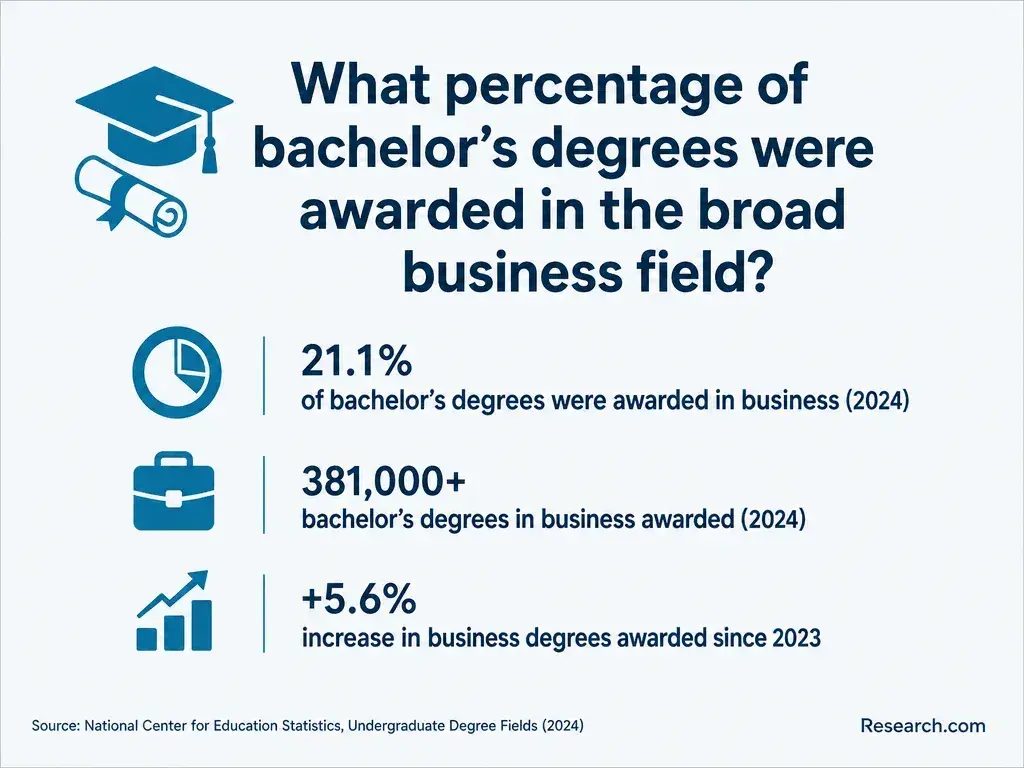
Marketing and consumer behavior courses can help you identify customer segments and evaluate demand. Accounting and finance provide the cost and revenue vocabulary needed to discuss a proposal responsibly. Statistics, business analytics, and information systems support research and pipeline reporting, while professional communication and organizational behavior help with presentations and cross-team work.
Course titles are not enough to judge a program. Look for assignments that require a researched customer profile, a defensible value proposition, a presentation, and an explanation of assumptions. A simulation or case study can produce a work sample, but it is not evidence of actual sales results. If an internship or employer-based project is available, confirm its supervision, credit rules, and permissions before relying on it as part of your plan.
A marketing or sales-related concentration may add relevant depth, but verify that it is formally offered, fits your remaining credits, and includes applied work. If your real goal is supervising teams rather than developing customers or partnerships, leadership bachelor's degrees with accelerated pacing offer a different curriculum comparison—not a substitute for sales experience.
A business development specialist is not, by itself, a licensed occupation. An employer may value voluntary sales, CRM, or industry training, but a certificate does not replace evidence that you can research prospects and communicate effectively. Requirements can change when the work involves regulated products or activities, such as selling certain financial or real estate services; check the specific position and state rules.
Be especially careful with credentials from adjacent fields. A project management course or certificate may help you coordinate proposals, but it does not automatically qualify you for a project management designation. If project delivery interests you more than customer development, comparing affordable project management schools can help you assess a distinct degree pathway rather than buying an unnecessary sales credential.
Both formats can teach the relevant business fundamentals. Their practical difference is how easily you can gain feedback, collaborate, and fit an internship or customer-facing job around classes. Online does not necessarily mean self-paced: presentations, group assignments, live meetings, and fixed deadlines may still apply.
The comparison below identifies what each format may offer. Individual program policies—not the delivery label—determine your actual schedule and opportunities.
| Consideration | Online study | Campus-based study |
| Scheduling | May reduce travel but can include scheduled meetings and deadlines | Usually requires travel and set class times |
| Practice and feedback | May use virtual presentations and remote team projects | May offer more in-person presentations and networking |
| Work experience | May be easier to combine with an existing job | May offer nearby employer events or internships |
Ask whether internships, capstones, or required visits can be completed where you live. If speed is important, compare the actual course sequence—not just the advertised finish time—among online business bachelor's degrees with shorter timelines.
Requirements vary by school and by whether you apply as a first-time or transfer student. Programs commonly request prior academic transcripts and may set GPA or prerequisite rules; admission to the university does not always mean immediate admission to its business major. Some schools require mathematics, accounting, economics, or other foundation courses before upper-level business study.
Before applying, check the current catalog for both university and major requirements. If you have prior college work, request an evaluation showing which credits satisfy general education, business core, and electives—accepted credits do not necessarily replace required courses. A non-business background is not automatically disqualifying. Use the school's written policies to check prerequisites before applying to business administration programs, then ask an adviser about any unresolved equivalencies.
A full-time student commonly plans on about four academic years for a bachelor's degree; transferred coursework or part-time enrollment can change the remaining timeline substantially. The useful estimate is not an advertised completion date but a degree audit paired with a schedule showing when required courses are actually offered.
Calculate the total cost from remaining tuition and required fees, books and software, travel or technology needs, and potential lost work hours. Then compare financial aid and employer benefits against that total. No single national tuition figure accurately represents your likely bill, and an accelerated calendar does not necessarily reduce the number of credits or total cost.
Application expenses are a smaller consideration than tuition, but they matter if you are comparing several schools. No-application-fee online college choices may help narrow that expense; verify the current fee policy and degree availability directly with each institution.
A business administration graduate might pursue business development representative, sales coordinator, marketing coordinator, customer success associate, or project coordinator openings. These are not interchangeable: some emphasize prospecting, others existing customers, campaign support, or internal delivery. Manager titles generally call for responsibility and results beyond completing a degree.
For a business development target, prioritize openings whose duties match your demonstrated experience. An internship, relevant part-time job, or approved project can help you discuss how you researched a market, communicated an offer, and handled feedback. Present simulated work honestly as coursework, not as a completed employer campaign.
If coordinating delivery appeals to you more than finding opportunities, examine the curriculum and costs of that alternative. Federal aid for undergraduate project management study is one consideration when comparing a specialized project pathway with a broader business degree; aid eligibility depends on the student and program.
There is no single reliable national wage figure for the title "business development specialist." Job duties, industry, location, experience, and whether compensation includes commission can produce very different offers. The U.S. Bureau of Labor Statistics reported a $78,760 median annual wage in May 2025 for market research analysts, an occupation relevant to some research-heavy development work. That figure covers an entire occupation, however; it is neither the median for all business development specialists nor a starting salary for BS graduates.
For a realistic comparison, examine local postings with similar duties and separate guaranteed base pay from commissions or bonuses. Weigh an offer against the cost of obtaining the degree, not an unrelated management salary. If your interests point toward purchasing or supply-chain relationships instead of sales prospecting, tuition and time comparisons for supply chain students can inform a separate education-cost decision.
What Job Outlook and Industry Demand Exist for Business Development Specialists?
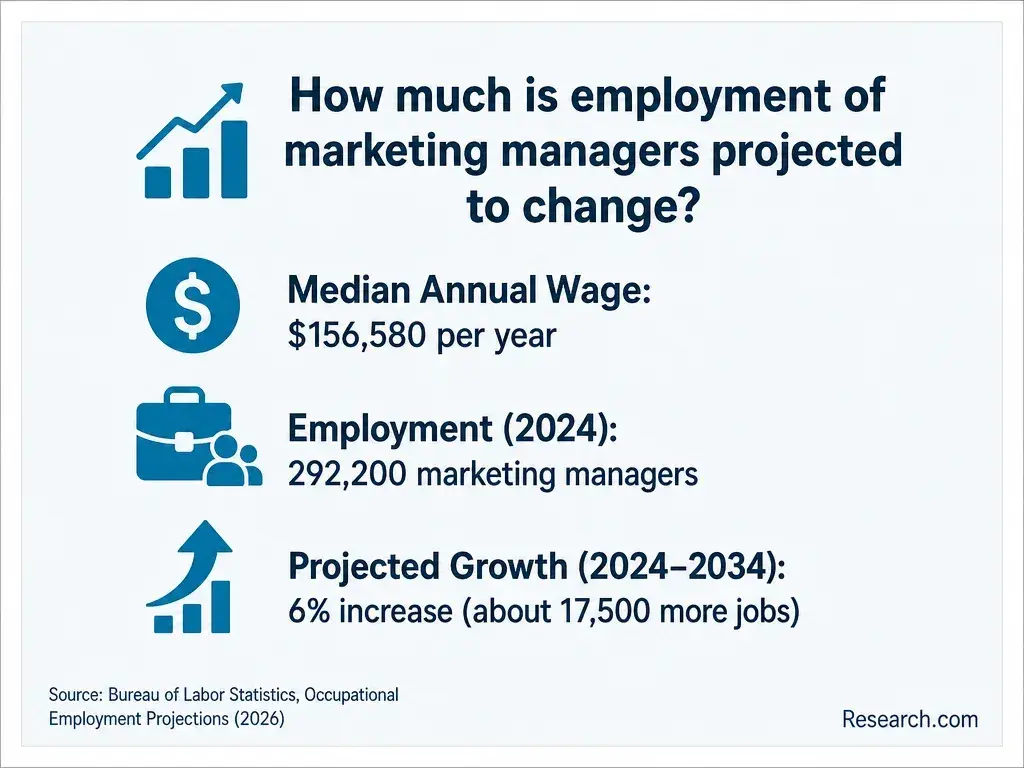
BLS does not publish a single employment projection for business development specialists because the title spans several kinds of work. For one related occupation, BLS projects 7% employment growth for market research analysts from 2025 to 2035. That indicates demand for research and analysis skills, not a forecast for every prospecting, sales, or partnership position.
Industry choice can matter as much as the title. A specialist pursuing technology partnerships may need different product knowledge from one working with manufacturers or distributors. Read local postings for recurring requirements, then seek experience or coursework that closes a specific gap. If your interest is primarily in supply-chain operations rather than customer acquisition, accelerated undergraduate supply chain programs represent a more specialized route to evaluate.
Bottom line: choose a BS in Business Administration when you want broad business preparation and can build credible customer-facing experience alongside it. If you already meet the education expectations in your target postings, a relevant job, mentorship, and focused skills training may be a more direct first move.
Other Things You Should Know About Business Administration
Yes. Describe specific experience identifying needs, following up, resolving concerns, or maintaining relationships. Be clear about what you did; do not present service work as sales performance you did not achieve.
Yes, if it is relevant. State the degree program, institution, and an accurate expected completion date if you have one. Do not imply that the degree has been awarded.
A clearly labeled class project or independently prepared prospect analysis can show your reasoning. Explain your sources, assumptions, proposed outreach, and limitations without claiming real customer responses.
Ask for the guaranteed base pay, commission formula, payment timing, qualification rules, and any repayment or adjustment provisions in writing. Clarify whether you would source opportunities or close sales before comparing offers.
- Business Development vs. Sales: Comparing the Career Options | MACU https://www.macu.edu/blog/business-development-vs-sales/
- 10 Key Subjects Taught in a Bachelor of Business Administration Program | Carson-Newman University https://www.cn.edu/cps-blog/10-key-subjects-taught-in-a-bachelor-of-business-administration-program/
- 6 BS in Business Skills Employers Seek | University of Bridgeport https://www.bridgeport.edu/news/bs-in-business-administration-skills-employers-seek/
- Business Development Specialist - NC State Online https://online-distance.ncsu.edu/career/business-development-specialist/
- What is a business administration degree? | Northwest Media Center https://www.nwmissouri.edu/media/news/2025/07/what-is-a-business-administration-degree.htm
- Business School Internships: Gaining Practical Experience | Pepperdine Graziadio Business School https://bschool.pepperdine.edu/personal-growth/article/business-school-internships-gaining-practical-experience.htm
- Case Competitions | CSU College of Business https://biz.colostate.edu/student-experience/case-competitions
- 21 Jobs You Can Get With a Business Management Degree | indeed.com https://www.indeed.com/career-advice/career-development/business-management-degree-jobs