
2027 Fastest Online Fashion Merchandising Degree Programs

Co-Founder and Chief Data Scientist
Choosing an online fashion merchandising degree is a business decision as much as an education decision. The field sits between fashion, retail, marketing, supply chain, consumer analytics, and e-commerce, so the right program should prepare you to make product, pricing, buying, branding, and sales decisions—not just understand fashion trends.
This guide is for students comparing online fashion merchandising programs for 2027, working adults who want a flexible path into fashion retail or e-commerce, and transfer students trying to finish a degree faster. You will learn what these programs teach, how long they take, what they may cost, which careers they can support, how to compare accredited schools, and when a different degree path may be a better fit.
Quick answer: Is an online fashion merchandising degree worth it?
An online fashion merchandising degree can be worth it if you want a career in fashion buying, retail management, visual merchandising, brand marketing, e-commerce, product development, or fashion-related business operations. It is strongest for students who enjoy fashion but also want to work with sales data, consumer behavior, inventory, digital marketing, and retail strategy.
The online fashion retail market in the U.S. is projected to grow by $303.9 billion from 2024 to 2029 (Research and Markets, 2024), which makes digital retail skills increasingly important. However, the degree is not the same as a fashion design degree. If your primary goal is garment construction, patternmaking, or runway collection design, a fashion design program may be a better match.
What are the benefits of getting an Online Fashion Merchandising Degree?
- It connects fashion interests with business careers. Students study retail buying, marketing, inventory planning, e-commerce, and consumer behavior, which can lead to roles beyond traditional store-based retail.
- It can support several fashion-related career paths. Graduates may pursue fashion merchandising roles and adjacent paths such as fashion design. Fashion design is listed among careers with a projected job outlook of 5% from 2023 to 2033 (BLS, 2023).
- The field includes roles with meaningful earning potential. The number of jobs for fashion designers is projected to reach 21,900 by 2033 (BLS, 2023), and the median annual pay for fashion designers is $80,690 in 2024 (BLS, 2024).
- Online delivery can make completion more realistic. Many programs offer flexible scheduling, accelerated terms, transfer-credit options, and part-time pathways for students balancing school with work or family responsibilities.
What can I expect from an Online Fashion Merchandising Degree?
An online fashion merchandising degree teaches the commercial side of fashion. Instead of focusing mainly on sketching garments or sewing samples, students learn how products are selected, priced, marketed, displayed, distributed, and sold through physical and digital channels.
Fashion merchandising is often confused with fashion design, but the two prepare students for different responsibilities. Fashion design emphasizes creative development, illustration, patternmaking, construction, and collection design. Fashion merchandising emphasizes customer demand, trend forecasting, retail planning, buying, product assortment, visual presentation, and revenue strategy.
| Program focus | Best fit for students who want to... | Common coursework | Typical career direction |
| Fashion merchandising | Work on the business, buying, retail, marketing, or e-commerce side of fashion | Retail buying, fashion marketing, visual merchandising, consumer behavior, inventory, digital retailing | Buyer, retail manager, visual merchandiser, e-commerce manager, marketing coordinator |
| Fashion design | Create garments, collections, patterns, and original design concepts | Drawing, patternmaking, draping, garment construction, textiles, portfolio development | Fashion designer, assistant designer, technical designer, design studio role |
| Fashion business or retail management | Lead store operations, sales teams, brand strategy, or merchandising analytics | Management, accounting, marketing, retail operations, supply chain, sales forecasting | Retail manager, product development manager, merchandising manager, brand operations role |
Where can I work with an Online Fashion Merchandising Degree?
Graduates can work anywhere fashion products are planned, purchased, promoted, displayed, shipped, or sold. This includes department stores, specialty retailers, boutiques, apparel brands, luxury brands, off-price retailers, e-commerce marketplaces, wholesale showrooms, styling companies, marketing agencies, and product development teams.
Common work settings include corporate retail offices, online brand teams, distribution or product planning departments, storefront operations, visual merchandising teams, fashion marketing departments, and buying offices. Some graduates also move into public relations, event planning, styling, consulting, or entrepreneurship.
| Work setting | What you may do there | Best-fit skills |
| Retail brand or department store | Plan product assortments, support buying decisions, manage inventory, analyze sales | Retail math, trend awareness, Excel or analytics tools, negotiation |
| E-commerce company | Manage product listings, merchandising calendars, digital campaigns, customer experience | Digital marketing, SEO awareness, platform management, conversion analysis |
| Fashion brand or wholesaler | Support product development, coordinate seasonal lines, work with vendors or accounts | Communication, sourcing knowledge, production timelines, product knowledge |
| Store operations | Lead teams, manage sales goals, train staff, oversee displays and customer service | Leadership, scheduling, sales strategy, customer service |
| Marketing or PR agency | Create campaigns, manage social content, support launches, track audience response | Brand storytelling, social media, campaign planning, writing |
How much can I make with an Online Fashion Merchandising Degree?
Salaries vary by role, employer, location, experience, performance, and whether the position is store-based, corporate, wholesale, or digital. An online fashion merchandising degree does not guarantee a specific salary, but it can help students qualify for roles that combine fashion knowledge with business, marketing, retail, and product skills.
According to ZipRecruiter (2025), average annual salaries for selected fashion merchandising-related roles include:
- Fashion Buyer: $68,384
- Retail Manager: $47,574
- Visual Merchandiser: $44,900
- E-commerce Manager: $77,129
- Fashion Marketing Manager: $83,488
- Product Development Manager: $126,987
| Role | Average annual salary | What affects earning potential |
| Fashion Buyer | $68,384 | Retail category, buying volume, analytical skill, vendor relationships |
| Retail Manager | $47,574 | Store size, sales volume, leadership experience, region |
| Visual Merchandiser | $44,900 | Brand level, portfolio quality, store footprint, display complexity |
| E-commerce Manager | $77,129 | Digital sales responsibility, platform knowledge, marketing analytics |
| Fashion Marketing Manager | $83,488 | Campaign scope, brand size, digital strategy experience |
| Product Development Manager | $126,987 | Product category, sourcing responsibility, management level, technical knowledge |
- Fastest Online Fashion Merchandising Degree Programs for 2027
- How long does it take to complete an Online Fashion Merchandising Degree program?
- What is the average cost of an Online Fashion Merchandising Degree program?
- What are the financial aid options for students enrolling in an Online Fashion Merchandising Degree program?
- What are the prerequisites for enrolling in an Online Fashion Merchandising Degree program?
- What are the essential skills needed for an Online Fashion Merchandising Degree program?
- What courses are typically in an Online Fashion Merchandising Degree program?
- What accreditation standards and quality assurance measures should I look for in an Online Fashion Merchandising Degree program?
- What are the types of Online Fashion Merchandising Degree programs?
- Is an Online Fashion Merchandising Degree as Effective as an On-Campus Program?
- How can I accelerate my completion of an Online Fashion Merchandising Degree program?
- What job roles can graduates expect to pursue after completing an Online Fashion Merchandising Degree?
- What is the job market for graduates with an Online Fashion Merchandising Degree?
- Can supplemental advanced degrees enhance my career prospects?
Fastest Online Fashion Merchandising Degree Programs for 2027
How do we rank schools?
Research.com rankings are designed to help students compare online fashion merchandising programs using transparent, education-focused criteria. Because tuition, transfer policies, academic support, and program format can affect both cost and completion time, students should use rankings as a starting point—not as the only factor in choosing a school.
Our ranking process uses trusted education data sources, including the Research.com methodology, the IPEDS database, Peterson's database, the College Scorecard database, and the National Center for Education Statistics (NCES). These sources help evaluate factors such as institutional information, costs, outcomes, and student support.
1. Berkeley College: Fashion Merchandising and Management – Associate in Applied Science
Berkeley College offers an Associate in Applied Science in Fashion Merchandising and Management for students who want a shorter, career-focused introduction to fashion retail, merchandising, marketing, and management. The curriculum is built around practical knowledge of the fashion supply chain, consumer behavior, product presentation, and retail operations.
- Program Length: 2 years
- Tracks/Concentrations: Fashion Merchandising, Retail Management
- Program Cost: Contact Berkeley College for current tuition rates
- Required Credits to Graduate: 60 credits
- Accreditation: Middle States Commission on Higher Education
2. Academy of Art University – Bachelor of Fine Arts (BFA) in Fashion Merchandising
The Academy of Art University offers a Bachelor of Fine Arts in Fashion Merchandising that combines fashion creativity with merchandising, marketing, and industry-facing experience. This option may appeal to students who want a program with a stronger creative identity while still preparing for business-side fashion roles.
- Program Length: 8 semesters
- Tracks/Concentrations: Fashion Merchandising, Fashion Marketing
- Program Cost: Contact Academy of Art University for current tuition rates
- Required Credits to Graduate: 120 credits
- Accreditation: WASC Senior College and University Commission
3. The North Coast College – Associate of Applied Business Degree in Fashion Merchandising
The North Coast College offers an Associate of Applied Business Degree in Fashion Merchandising that emphasizes retail management, visual merchandising, consumer behavior, marketing, and product sourcing. The 24-month format is designed for students who want to prepare for entry-level roles without committing first to a full bachelor’s degree.
- Program Length: 24 months
- Tracks/Concentrations: Fashion Merchandising, Retail Management
- Program Cost: Contact The North Coast College for current tuition rates
- Required Credits to Graduate: 60 credits
- Accreditation: Higher Learning Commission
4. Liberty University – B.S. in Fashion Merchandising
Liberty University offers an online Bachelor of Science in Fashion Merchandising with 8-week courses and a business-oriented curriculum. The program covers fashion marketing, digital merchandising, retail operations, brand management, and product-related decision-making for students seeking flexible online study.
- Program Length: Approximately 2.5 years (8-week courses)
- Tracks/Concentrations: Fashion Merchandising
- Program Cost: $390 per credit
- Required Credits to Graduate: 120 credits
- Accreditation: Southern Association of Colleges and Schools Commission on Colleges
5. LIM College – BBA in Fashion Merchandising
LIM College offers an online Bachelor of Business Administration in Fashion Merchandising for students who want a fashion-specific business degree. Coursework emphasizes retail operations, merchandising strategy, fashion marketing, and e-commerce, making it a potential fit for students targeting brand, buying, or retail leadership roles.
- Program Length: 2.5 years
- Tracks/Concentrations: Fashion Merchandising, Retail Management
- Program Cost: $450 per credit
- Required Credits to Graduate: 120 credits
- Accreditation: Middle States Commission on Higher Education
6. Arkansas State University – B.S. in Fashion Merchandising and Marketing
Arkansas State University offers a Bachelor of Science in Fashion Merchandising and Marketing that blends fashion retail knowledge with marketing and business fundamentals. Students study consumer behavior, retail operations, trend forecasting, and fashion product strategy.
- Program Length: 2.5 years
- Tracks/Concentrations: Fashion Merchandising, Fashion Marketing
- Program Cost: $282 per credit hour
- Required Credits to Graduate: 120 credits
- Accreditation: Higher Learning Commission
7. Sam Houston State University – B.S. in Fashion Merchandising
Sam Houston State University offers an online Bachelor of Science in Fashion Merchandising focused on merchandising management, marketing, product sourcing, trend analysis, and visual merchandising. The online format can support students who need flexibility while pursuing a bachelor’s-level fashion business credential.
- Program Length: 2.5 years
- Tracks/Concentrations: Fashion Merchandising
- Program Cost: $244 per credit
- Required Credits to Graduate: 120 credits
- Accreditation: Southern Association of Colleges and Schools Commission on Colleges
8. Arizona State University – B.A. in Fashion with Merchandising Concentration
Arizona State University offers an online Bachelor of Arts in Fashion with a Merchandising Concentration. The program combines fashion knowledge, merchandising strategy, consumer behavior, trend forecasting, and fashion business concepts for students interested in marketing, retail, or product development.
- Program Length: 3 years
- Tracks/Concentrations: Merchandising, Fashion Business
- Program Cost: Contact Arizona State University for current tuition rates
- Required Credits to Graduate: 120 credits
- Accreditation: Higher Learning Commission
9. Central Michigan University – Fashion Merchandising and Design
Central Michigan University offers an online Fashion Merchandising and Design program that pairs design concepts with merchandising and business applications. This may suit students who want exposure to both fashion creation and fashion retail strategy.
- Program Length: 3 years
- Tracks/Concentrations: Fashion Design, Fashion Merchandising
- Program Cost: Contact Central Michigan University for current tuition rates
- Required Credits to Graduate: 120 credits
- Accreditation: Higher Learning Commission
10. Bay State College – Bachelor of Science in Fashion Merchandising with a Concentration in Fashion Design
Bay State College offers a Bachelor of Science in Fashion Merchandising with a concentration in Fashion Design. The program combines retail management, marketing, fashion business, and design-focused coursework for students who want a broader fashion background.
- Program Length: 4 years
- Tracks/Concentrations: Fashion Merchandising, Fashion Design
- Program Cost: Contact Bay State College for current tuition rates
- Required Credits to Graduate: 120 credits
- Accreditation: New England Commission of Higher Education
How long does it take to complete an Online Fashion Merchandising Degree program?
The timeline depends on the credential, course load, transfer credits, and whether the school uses standard semesters or accelerated terms. Similar to accelerated psychology programs, online fashion merchandising programs may offer shorter sessions or year-round enrollment to help students move faster.
| Degree level | Typical full-time length | Best for | Important consideration |
| Associate degree | 2 years | Students seeking entry-level retail, merchandising, or transfer preparation | May not qualify for roles that prefer a bachelor’s degree |
| Bachelor’s degree | 3 to 4 years | Students targeting buying, marketing, e-commerce, or management paths | Accelerated formats may allow completion in 2.5 to 3 years |
| Master’s degree | 1.5 to 2 years | Professionals seeking advanced business, analytics, or leadership roles | Usually most useful after relevant work experience |
Part-time students usually need more time. Students with transferable credits, prior college experience, summer enrollment, or an associate degree may finish sooner. Internships, portfolio requirements, and capstone projects can also affect the timeline.
Education expectations vary by employer. Based on the data below, 51% of employers expect new hires in the fashion industry to have at least a Bachelor’s degree, 44% require an Associate’s degree, and 4% require only a high school diploma or equivalent. The chart highlights why students should compare program length against the roles they want after graduation.
What is the average cost of an Online Fashion Merchandising Degree program?
The total price of an online fashion merchandising degree depends on tuition, required credits, school type, residency status, fees, textbooks, technology requirements, and how many credits you transfer. In general, tuition for these programs ranges from $11,157 to $30,297 for the entire degree.
Students looking for affordable online fashion merchandising programs should compare total program cost rather than tuition alone. A low per-credit rate can become less affordable if the school charges high online fees, limits transfer credits, or requires expensive materials.
At Sam Houston State University, the Bachelor of Science in Fashion Merchandising is available entirely online. Tuition for Texas residents is approximately $50 per credit hour, totaling around $6,000 per year for a full-time student. Additional fees include a $101 per credit hour distance learning fee and optional costs such as the Bearkat Bundle for textbooks.
Liberty University lists tuition for its Bachelor of Science in Fashion Merchandising at $390 per credit hour for undergraduate students. That equals approximately $15,600 per year for a full-time student. Liberty also provides electronic textbooks at no additional cost, which may save students between $800 and $2,000 annually.
| Cost factor | Why it matters | Question to ask before enrolling |
| Tuition per credit | Determines the base cost of the degree | Is the listed rate different for online, out-of-state, or part-time students? |
| Online and technology fees | Can substantially increase the real cost | Are distance learning fees charged per credit or per term? |
| Transfer credits | Can reduce both time and tuition | How many credits can I transfer, and which courses will they replace? |
| Textbooks and materials | Fashion courses may require software, supplies, or digital resources | Are textbooks included, rented, bundled, or billed separately? |
| Internship or travel requirements | Some online programs still include in-person experiences | Will I need to travel, relocate, or complete local fieldwork? |
What are the financial aid options for students enrolling in an Online Fashion Merchandising Degree program?
Online fashion merchandising students may be eligible for federal aid, state aid, institutional scholarships, private scholarships, employer tuition benefits, and payment plans. Eligibility depends on the school, enrollment status, financial need, academic record, citizenship or residency requirements, and program accreditation.
- Free Application for Federal Student Aid (FAFSA). Completing the FAFSA is the main step for accessing federal grants, work-study, and loans. Many state and school-based awards also require it. Pell Grants, which are based on financial need, can provide up to $7,395 annually for the 2023–2024 academic year.
- The Fashion Scholarship Fund (FSF). FSF awards over 160 scholarships ranging from $10,000 to $25,000 annually to students pursuing fashion merchandising, marketing, and related careers. Awards are connected to major brands such as LVMH, Nordstrom, and Ralph Lauren.
- The Joe Goldstein Memorial Scholarship in Fashion and Retailing. This $1,200 scholarship supports third- and fourth-year undergraduate students majoring in fashion merchandising or retailing. Financial need and academic merit are considered, with preference for students in Texas.
- Institutional Scholarships. Some colleges offer program-specific awards. Johnson County Community College (JCCC), for example, offers scholarships for Fashion Merchandising students who meet requirements such as a minimum 2.5 GPA, enrollment in a professional certification or associate degree, and participation in extracurricular program activities.
How to reduce the cost of an online fashion merchandising degree
- Submit the FAFSA as early as possible and renew it each academic year.
- Ask each school for a full cost-of-attendance estimate, not just tuition.
- Compare transfer-credit policies before choosing a program.
- Look for schools that include digital textbooks or reduce materials costs.
- Apply for fashion-specific scholarships and general business or retail scholarships.
- Ask your employer whether tuition reimbursement applies to fashion, retail, marketing, or business programs.
What are the prerequisites for enrolling in an Online Fashion Merchandising Degree program?
Most online fashion merchandising programs have accessible admission requirements, especially at the associate and bachelor’s levels. Requirements vary, but applicants commonly need the following:
- High School Diploma or Equivalent. A high school diploma or GED is usually required. Some programs may request a minimum GPA, often around 2.5 or higher, though policies differ by school. This accessible admissions model is similar to career-oriented programs such as affordable online welding trade school programs.
- Application Form. Applicants usually complete an online application and may need to submit a short essay or statement about their interest in fashion, retail, business, or merchandising.
- Transcripts. Schools typically request official high school transcripts, GED documentation, or previous college transcripts for transfer evaluation.
- Standardized Test Scores. Many online programs no longer require SAT or ACT scores, but some institutions may still request or accept them.
- Technology Requirements. Online students need reliable internet access, a computer, and any required software for coursework, presentations, research, analytics, or digital design assignments.
- Portfolio or Interview. Some programs may ask for examples of creative work, fashion-related projects, retail experience, or an interview, especially when the curriculum includes design or portfolio development.
What are the essential skills needed for an Online Fashion Merchandising Degree program?
Fashion merchandising rewards students who can combine taste, data, and business judgment. The strongest candidates are not only trend-aware; they can explain why a product will sell, how it should be priced, where it should be placed, and how it should be marketed.
- Inventory and Supply Chain Management. Merchandisers help balance stock levels, ordering cycles, vendor timelines, and product availability. Students who want deeper logistics knowledge may compare a fast-track bachelor's in supply chain management online.
- Trend Analysis. Students learn to identify emerging styles, track consumer preferences, and connect cultural shifts with product demand.
- Communication and Negotiation. Merchandising work often involves suppliers, buyers, store teams, marketing teams, designers, and executives. Clear communication and negotiation matter when discussing pricing, delivery, product quality, and assortment decisions.
- Digital Marketing. Fashion increasingly depends on online visibility. What does a digital marketing specialist do? These professionals plan and execute online campaigns, including social media strategies, SEO, content, paid ads, and email marketing.
- Technology Proficiency. Students should become comfortable with spreadsheets, retail analytics, e-commerce platforms, inventory systems, social scheduling tools, and analytics platforms such as Google Analytics.
- Business Acumen. Pricing, budgeting, sales forecasting, margin analysis, and brand positioning are central to fashion merchandising. Students interested in launching a brand or strengthening business skills may explore the fastest online bachelor's degree in entrepreneurship programs.
Some professionals later add graduate business training. What is MBA in Finance? It is a graduate business degree focused on areas such as financial statement analysis, risk management, and strategic investment decisions, which can be useful for scaling fashion businesses or moving into leadership.
According to the chart below, 16% of fashion merchandisers majored in business while 23% majored in sales and merchandising (Zippia, 2025). That mix reflects the hybrid nature of the field: students need enough fashion knowledge to understand products and enough business knowledge to make profitable decisions.
What courses are typically in an Online Fashion Merchandising Degree program?
Online fashion merchandising programs usually combine fashion industry content with business, marketing, retail, technology, and consumer behavior coursework. The curriculum can overlap with sales representative education requirements because both fields depend on product knowledge, customer insight, persuasion, and market strategy.
| Course | What students learn | Why it matters in fashion merchandising |
| Introduction to Fashion Merchandising | Fashion industry structure, product categories, merchandising roles, and the path from concept to consumer | Builds the foundation for understanding how fashion products are planned and sold |
| Fashion Marketing | Traditional and digital strategies for promoting fashion products to target customers | Helps students connect brand identity, campaigns, and consumer demand |
| Retail Buying and Planning | Forecasting, merchandise selection, pricing, assortment planning, and inventory balance | Prepares students for buying and planning decisions tied directly to revenue |
| Visual Merchandising | Store layouts, displays, product presentation, and shopper experience | Shows how visual strategy can influence attention, traffic, and sales |
| E-commerce and Digital Retailing | Online merchandising, website presentation, digital marketing, and customer engagement | Supports careers in online fashion sales and marketplace management |
| Supply Chain Management in Fashion | Sourcing, production, distribution, logistics, and supplier coordination | Helps students understand how fashion products move from vendors to customers |
| Textile and Fabric Knowledge | Fabric types, material properties, quality, uses, and product applications | Improves product evaluation and communication with design or sourcing teams |
| Fashion Sustainability | Ethical sourcing, sustainable production, and responsible merchandising decisions | Responds to consumer and industry interest in more responsible fashion practices |
| Consumer Behavior | Buying motives, preferences, shopping patterns, and demographic or cultural influences | Helps merchandisers match product decisions to real customer behavior |
Students who want deeper operational expertise may later consider an accelerated online master's degree in supply chain management, especially if they want to manage sourcing, logistics, analytics, or vendor strategy. Students who are interested in culture, identity, and buying behavior may also find broader perspective in affordable anthropology programs online.
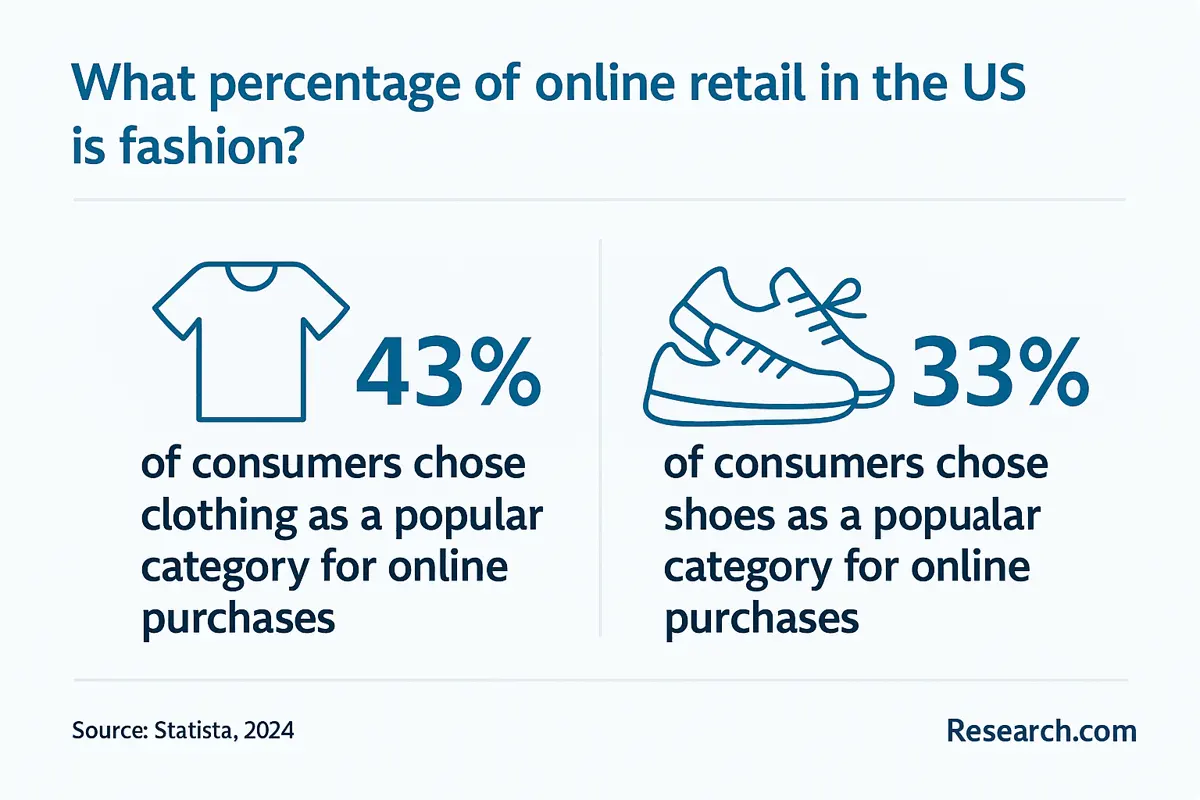
These courses matter because fashion is a major online shopping category. Among U.S. consumers, Clothing and Shoes are the top two most popular online purchase categories, with 43% and 33% of consumers selecting them, respectively. As online buying remains central to fashion retail, courses in e-commerce, fashion marketing, consumer behavior, and retail buying become especially relevant.
What accreditation standards and quality assurance measures should I look for in an Online Fashion Merchandising Degree program?
Accreditation is one of the first things to verify before enrolling. It can affect financial aid eligibility, credit transfer, graduate school admission, and employer confidence. At minimum, confirm that the institution holds recognized institutional accreditation from an appropriate accrediting body.
Quality also depends on more than accreditation. Look for current coursework, qualified faculty, career services, internship support, transfer-credit transparency, online student support, technology resources, and clear outcome information. Students comparing creative or career-focused online programs may also find useful evaluation ideas in our guide to an affordable online creative writing degree.
| Quality factor | Why it matters | What to verify |
| Institutional accreditation | Supports aid eligibility and transferability | Is the school accredited by a recognized agency? |
| Curriculum relevance | Fashion retail changes quickly | Does the program include e-commerce, analytics, digital marketing, and consumer behavior? |
| Career support | Fashion hiring often depends on experience and networking | Are internships, portfolio projects, employer connections, or job-search services available online? |
| Faculty experience | Industry context improves practical learning | Do instructors have fashion, retail, merchandising, marketing, or business experience? |
| Transfer policy | Transfer credits can lower cost and completion time | Will the school evaluate prior credits before you commit? |
What are the types of Online Fashion Merchandising Degree programs?
Online fashion merchandising programs appear under several degree titles. The best choice depends on whether you want a faster credential, a business-heavy degree, a creative program, or a broader retail management path.
- Bachelor of Science in Fashion Merchandising. Usually emphasizes the business functions of fashion, including sourcing, inventory, marketing, retail operations, and sales planning.
- Bachelor of Arts in Fashion Merchandising and Marketing. Often blends creative fashion study with marketing, branding, consumer communication, and retail strategy.
- Bachelor of Science in Apparel Merchandising and Management. Focuses more on apparel production, distribution, operations, and management across the product lifecycle.
- Bachelor of Science in Retail Management with a concentration in Fashion Merchandising. Combines broader retail leadership training with fashion-specific merchandising, trend, and product coursework.
- Associate Degree in Fashion Merchandising. Provides a shorter introduction to fashion retail, trends, visual presentation, and marketing, often for entry-level work or transfer into a bachelor’s program.
Students who want to strengthen finance and compliance knowledge alongside merchandising may compare the shortest online taxation management programs. Creative students comparing other visually oriented digital fields may also explore accelerated online animation degree programs.
| If your goal is... | Consider this degree type | Why |
| Enter fashion retail quickly | Associate degree | Shorter timeline and practical entry-level coursework |
| Become a buyer, planner, or merchandising analyst | B.S. in Fashion Merchandising | Stronger fit for business, inventory, and retail decision-making |
| Work in fashion marketing or brand promotion | B.A. in Fashion Merchandising and Marketing | More emphasis on audience, campaigns, branding, and communication |
| Move into leadership or entrepreneurship | BBA or business-focused fashion degree | Builds management, finance, marketing, and strategy skills |
| Keep design and merchandising options open | BFA or design concentration | Includes more creative and portfolio-oriented work |
Is an Online Fashion Merchandising Degree as Effective as an On-Campus Program?
An online fashion merchandising degree can be as effective as an on-campus program when the school is properly accredited, the curriculum is current, and the program includes practical assignments that reflect real retail and e-commerce work. Online programs are especially useful for students who need flexibility, already work in retail, or want to build experience while studying.
The main trade-off is access to in-person networking, campus studios, local fashion events, and on-site retail labs. Strong online programs address this by offering virtual collaboration, digital simulations, portfolio projects, internship guidance, career coaching, and industry-connected assignments. Students evaluating online quality in another design-related field may compare similar issues in our guide to an architecture degree online.
| Format | Advantages | Possible drawbacks | Best for |
| Online | Flexible schedule, no relocation, easier to combine with work, potential accelerated options | Less face-to-face networking, requires self-discipline, may need to arrange local internships | Working adults, transfer students, students outside fashion hubs |
| On-campus | In-person collaboration, campus resources, local events, easier access to hands-on labs | Less flexible schedule, commuting or relocation costs, fewer work-friendly options | Students who want campus immersion and frequent in-person networking |
| Hybrid | Mixes online convenience with selected in-person experiences | May require travel or scheduled attendance | Students who want flexibility but still value hands-on events or labs |
How can I accelerate my completion of an Online Fashion Merchandising Degree program?
Finishing faster usually requires a combination of transfer credits, condensed terms, year-round enrollment, and careful course planning. Speed should not come at the expense of accreditation, career support, or curriculum quality.
- Choose an accelerated program. Some schools use 5-week or 8-week terms that allow students to complete more courses per year. This intensive structure is similar in concept to the shortest audio and music programs online, where students move through skill-based coursework quickly.
- Transfer credits from previous education. Prior college credits can reduce the number of required courses if they match general education, business, or fashion-related requirements.
- Maximize your course load carefully. Taking summer or winter courses can shorten the timeline, but only if you can maintain performance and avoid burnout.
- Use a bachelor’s degree completion program. Students with an associate degree or substantial college credit should look for programs built for upper-division completion.
- Ask about self-paced options. Some online programs allow students to move faster through material they already understand.
- Request credit for prior learning or work experience. Relevant retail, merchandising, management, or fashion experience may qualify for credit at some schools.
- Meet with advisors early and often. Academic advisors can help sequence courses correctly, prevent registration mistakes, and identify transfer or acceleration opportunities.
Common mistakes to avoid when choosing an online fashion merchandising program
| Mistake | Why it can hurt you | Better approach |
| Choosing only by speed | The fastest program may not offer the best career support or curriculum fit | Compare acceleration with accreditation, courses, internships, and outcomes |
| Looking only at tuition | Fees, materials, and lost transfer credits can raise total cost | Request a full cost estimate and transfer evaluation |
| Assuming online means easier | Online programs require strong time management and independent learning | Review weekly workload and support services before enrolling |
| Ignoring e-commerce coursework | Fashion retail increasingly depends on digital channels | Prioritize programs with digital retailing, analytics, and online marketing |
| Relying only on rankings | A ranked school may not match your budget, schedule, or career goal | Use rankings as one input alongside personal fit and ROI |
What job roles can graduates expect to pursue after completing an Online Fashion Merchandising Degree?
Graduates can pursue entry-level and advancement roles across fashion retail, merchandising, e-commerce, marketing, and product development. The exact role depends on experience, internships, portfolio work, software skills, and the employer’s needs.
- Fashion Buyer. Selects and purchases merchandise based on customer demand, trend analysis, sales data, pricing, and vendor relationships.
- Retail Manager. Oversees store operations, staff, customer service, inventory, sales goals, and local merchandising execution.
- Visual Merchandiser. Designs product displays, store layouts, window presentations, and visual stories that encourage customer interest and sales.
- E-commerce Manager. Manages online product presentation, listings, promotions, user experience, traffic, and digital sales performance.
- Fashion Marketing Manager. Plans campaigns, studies customer segments, coordinates promotional content, and works with creative and product teams to build brand demand.
- Product Development Manager. Works with design, sourcing, production, and merchandising teams to bring fashion products from idea to market. Product manager salary is often higher than many other fashion merchandising roles because product management can involve complex coordination, financial accountability, and specialized product knowledge.
Graduates may focus their job search on major fashion and retail brands. According to the data below, top companies include Nike (37.1%) Levi’s (35.0%), Skechers (33.3%), Old Navy (32.3%), and Adidas (31.5%), which hold significant market shares. These employers can offer opportunities in merchandising, retail operations, product, marketing, e-commerce, and brand support.
What is the job market for graduates with an Online Fashion Merchandising Degree?
The job market is shaped by e-commerce growth, social commerce, digital marketing, fast-changing consumer preferences, and competition among fashion brands. Graduates who understand both fashion products and online selling channels may have stronger positioning than candidates with only general retail experience.
In 2024, more than half of Generation Z consumers bought something through social media platforms, demonstrating how important social commerce has become for fashion brands (Statista, 2024). Graduates who can connect merchandising with influencer campaigns, social platforms, product content, and conversion data may be especially relevant for digital roles.
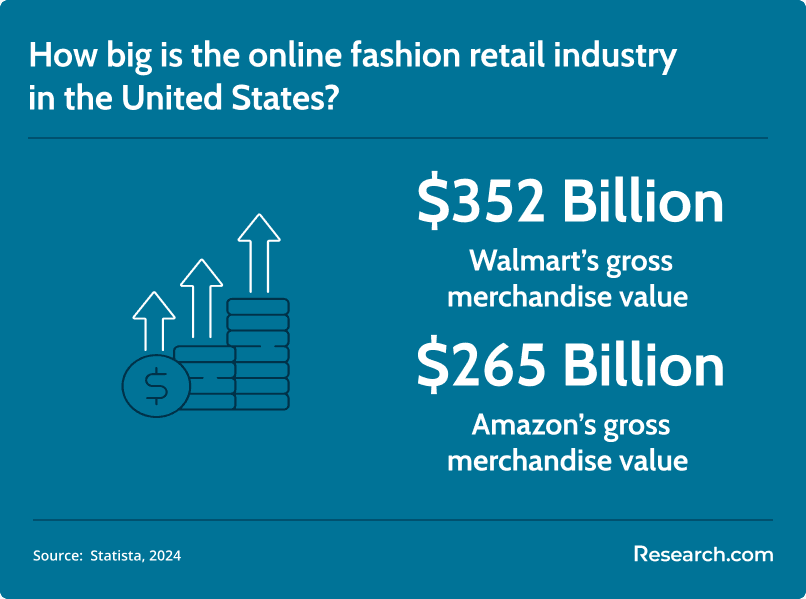
Large online marketplaces also continue to shape fashion retail. Walmart reached a gross merchandise value (GMV) of approximately $352 billion in 2024, followed by Amazon at $265 billion (Statista, 2024). These figures show why fashion merchandising programs increasingly need to cover online retailing, marketplace strategy, digital product presentation, and consumer analytics.
Current trends affecting fashion merchandising students
- Social commerce is changing discovery. Fashion shoppers increasingly encounter products through social platforms, short-form video, creators, and targeted ads.
- E-commerce skills are no longer optional. Merchandisers need to understand product pages, online assortments, conversion rates, digital campaigns, and customer reviews.
- Data-informed merchandising is expanding. Employers value candidates who can interpret sales reports, customer behavior, inventory performance, and trend data.
- Sustainability and sourcing remain important topics. Students should understand ethical sourcing, supply chain transparency, and consumer expectations around responsible fashion.
- AI tools are influencing retail workflows. AI may support trend research, demand forecasting, product recommendations, content testing, and customer segmentation, but human judgment is still needed for brand fit, customer insight, and merchandising strategy.
Can supplemental advanced degrees enhance my career prospects?
Advanced degrees can help if they align with a specific career goal. A graduate degree may be useful for professionals moving into leadership, analytics, product strategy, entrepreneurship, finance, supply chain, or brand management. It is less useful if you have not yet built foundational industry experience or if the added cost does not clearly support your target role.
Some students broaden their creative and strategic thinking through adjacent graduate study. For example, affordable masters in architecture online programs may interest students who want to explore design thinking, spatial strategy, project planning, or creative problem-solving from another discipline. Still, most fashion merchandising students should first consider whether business, marketing, analytics, supply chain, or fashion management graduate programs align more directly with their goals.
Questions to ask before choosing an online fashion merchandising degree
- Is the institution accredited by a recognized accrediting agency?
- Does the program teach e-commerce, digital merchandising, analytics, and social media marketing?
- How many transfer credits will the school accept before I enroll?
- What is the total cost after tuition, fees, textbooks, software, and materials?
- Are internships, portfolio projects, or industry-connected assignments available to online students?
- Does the program fit my target role: buying, marketing, retail management, e-commerce, product development, or design-adjacent work?
- What career services are available specifically for online students?
- Can I complete the program part time, full time, or in accelerated terms?
- Will the school help me build a portfolio, resume, LinkedIn profile, or merchandising project samples?
- What outcomes or employment information does the school publish for graduates?
Key Insights
- An online fashion merchandising degree is best for students who want the business side of fashion: buying, retail strategy, marketing, e-commerce, product planning, visual merchandising, and consumer analytics.
- Fashion merchandising is different from fashion design. Choose merchandising if you want to sell, plan, promote, and manage fashion products; choose design if you want to create garments and collections.
- Program length varies widely. Associate degrees typically take 2 years, bachelor’s degrees usually take 3 to 4 years, accelerated bachelor’s options may take 2.5 to 3 years, and master’s programs often take 1.5 to 2 years full time.
- Cost comparison should include tuition, online fees, transfer credits, books, technology, and required experiences. The stated tuition rate alone does not show the real price.
- Accreditation matters. It can affect financial aid, transfer credits, graduate school options, and employer confidence.
- The strongest programs include e-commerce, digital marketing, consumer behavior, retail buying, supply chain, and analytics because fashion retail is increasingly digital.
- Salary outcomes depend on role, experience, location, employer, and responsibility level. The degree can open doors, but internships, work experience, software skills, and portfolio projects often make the difference.
- Use rankings as a starting point, then compare each program against your budget, timeline, career goal, transfer situation, and need for flexibility.
References:
- Bureau of Labor Statistics. (n.d.). Fashion designers. U.S. Department of Labor. https://www.bls.gov/ooh/arts-and-design/fashion-designers.htm
- Bureau of Labor Statistics. (2023, May). Occupational employment statistics (NAICS 3: 458000). U.S. Department of Labor. https://www.bls.gov/oes/2023/may/naics3_458000.htm
- Research and Markets. (2024, March). United States fashion e-commerce market. https://www.researchandmarkets.com/report/united-states-fashion-ecommerce-market?srsltid=AfmBOophG93OpeKMH4xft9lCrBB3m5aj1_tzbqwHQcFNyTTxYSFji4q_
- Statista. (2024, March). Leading online fashion marketplaces in the U.S. 2024, by GMV. https://www.statista.com/statistics/1560434/top-us-online-fashion-marketplaces-by-gmv/
- Statista. (2024, March). Most popular categories for online purchases in the U.S. https://www.statista.com/forecasts/997093/most-popular-categories-for-online-purchases-in-the-us
- YouGov. (2024, March). U.S. fashion rankings 2024. https://business.yougov.com/content/50999-us-fashion-rankings-2024#top-10-fashion-retail-brands-among-the-general-population-in-the-us
- ZipRecruiter. (n.d.). Fashion buyer salary. https://www.ziprecruiter.com/Salaries/Fashion-Buyer-Salary
- ZipRecruiter. (n.d.). Ecommerce manager salary. https://www.ziprecruiter.com/Salaries/Ecommerce-Manager-Salary
- ZipRecruiter. (n.d.). Fashion marketing manager salary. https://www.ziprecruiter.com/Salaries/Fashion-Marketing-Manager-Salary
- ZipRecruiter. (n.d.). Full-time visual merchandiser salary. https://www.ziprecruiter.com/Salaries/Full-Time-Visual-Merchandiser-Salary
- ZipRecruiter. (n.d.). Product development manager salary. https://www.ziprecruiter.com/Salaries/Product-Development-Manager-Salary
- ZipRecruiter. (n.d.). Retail store manager salary. https://www.ziprecruiter.com/Salaries/Retail-Store-Manager-Salary
- Zippia. (n.d.). Fashion merchandiser education. https://www.zippia.com/fashion-merchandiser-jobs/education/
Other Things You Need to Know About an Online Fashion Merchandising Degree
Prerequisites typically include a high school diploma or equivalent, with some programs requiring a minimum GPA. Applicants may need to submit transcripts and letters of recommendation. Specific course prerequisites, such as basic design or marketing, can vary by institution.
No. Most accelerated online fashion merchandising degrees require a high school diploma or GED, official transcripts, and a minimum GPA, often 2.0 to 2.5. Portfolios are usually optional unless the program includes a design track or requires prior creative work for transfer credit review.
Students in 2027 online Fashion Merchandising degree programs must master digital marketing tools, online retail platforms, and data analytics software. Familiarity with virtual design software and e-commerce management systems is also crucial to meet the industry's technological demands.


