2027 Most Affordable Online Liberal Arts Associate Degree Programs

Co-Founder and Chief Data Scientist
Choosing an affordable online liberal arts associate degree is usually a transfer and cost decision, not just a major decision. Many students want a flexible program that helps them finish general education requirements, build college-level writing and reasoning skills, and move toward a bachelor’s degree without taking on unnecessary debt.
An online liberal arts associate degree can be a practical starting point if you are undecided about a major, returning to college as an adult learner, trying to save money before transferring, or looking for a broad credential for entry-level roles in administration, communications, education support, public service, social services, and related fields. This guide explains what these programs include, how much they may cost, how to compare online and campus options, what career paths are realistic, and how to choose a program that protects your transfer credits and long-term return on investment.
Quick answer: Is an online liberal arts associate degree worth it?
An online liberal arts associate degree can be worth it if you want a low-cost, flexible first college credential that can transfer into a bachelor’s program. It is best for students who value broad academic preparation, writing and communication skills, and career flexibility. It may not be the right choice if you need a direct path into a licensed or highly technical occupation unless you pair it with the required certification, bachelor’s degree, or specialized training.
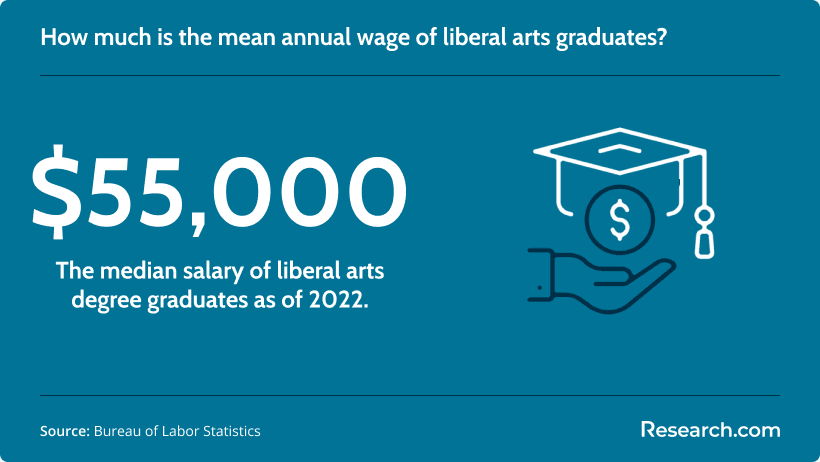
Full-time students usually complete the degree in about 2 years. Depending on the industry, the annual salary of online liberal arts associate degree graduates range from $35,000 to $50,000, while the median salary of liberal arts degree graduates was $55,000 as of 2022. Long-term outcomes often depend on whether graduates transfer, complete a bachelor’s degree, gain work experience, or add job-specific credentials.
What are the benefits of getting an online liberal arts associate degree?
- It keeps your options open. Liberal arts programs cover humanities, social sciences, communication, math, and natural sciences, making them useful for students who have not yet chosen a bachelor’s major.
- It can reduce the cost of a bachelor’s degree. Many students complete lower-division coursework at a community college or state college, then transfer into a four-year program.
- It builds transferable workplace skills. Employers often value clear writing, critical thinking, problem-solving, research ability, adaptability, and collaboration.
- It offers scheduling flexibility. Online courses can help working adults, parents, military-affiliated students, and caregivers continue school without relocating or commuting.
- It supports multiple career directions. Graduates may pursue entry-level roles in education support, office administration, communications, nonprofit work, government support, customer service, and social services.
What can I expect from an online liberal arts associate degree program?
An online liberal arts associate degree is usually a 60-credit undergraduate program focused on general education and lower-division college coursework. Most programs lead to an Associate of Arts (A.A.), Associate in Arts (A.A.), Associate of Science (A.S.), or general studies credential, depending on the school and transfer pathway.
The curriculum is intentionally broad. Instead of preparing students for one narrow occupation, it helps them build the academic foundation needed for bachelor’s programs in fields such as business, education, communications, psychology, history, political science, social science, public administration, and humanities-related disciplines.
What you will usually study
- College writing and research
- Public speaking or communication
- College-level math or statistics
- Natural science courses such as biology, chemistry, or environmental science
- Social science courses such as psychology, sociology, history, or political science
- Humanities courses such as literature, philosophy, art history, or music
- Electives that may align with your intended bachelor’s major
Where can I work with an online liberal arts associate degree?
Graduates can look for entry-level roles in fields that require strong communication, organization, customer interaction, research, and basic administrative skills. Common settings include schools, colleges, nonprofit organizations, local government agencies, business offices, healthcare administration departments, community programs, and media or communications teams.
The degree alone is less likely to qualify you for specialized jobs that require licensure, advanced technical skills, or a bachelor’s degree. For example, teaching, social work, counseling, paralegal work, and management roles often require additional education, certification, supervised experience, or state-specific requirements.
How much can I make with an online liberal arts associate degree?
Pay varies by location, employer, industry, experience, and whether you continue your education. Starting earnings for associate-level liberal arts graduates are often lower than earnings for bachelor’s or graduate degree holders. Depending on the industry, the annual salary of online liberal arts associate degree graduates range from $35,000 to $50,000.
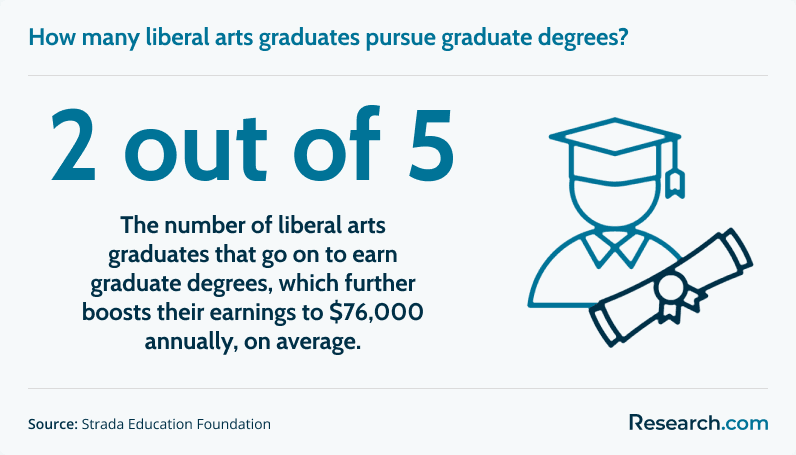
As of 2022, the median salary of liberal arts degree graduates was $55,000. Two out of five liberal arts graduates go on to earn graduate degrees, which further boosts their earnings to $76,000 annually, on average.
- Most Affordable Online Liberal Arts Associate Degree Programs for 2027
- How to choose the cheapest online associate degree
- How long does it take to complete an online liberal arts associate degree?
- Online vs. on-campus liberal arts associate degrees
- Average cost of an online liberal arts associate degree
- Financial aid options for online liberal arts associate degree students
- Admission requirements and prerequisites
- Common courses in an online liberal arts associate degree
- Available specializations and academic tracks
- Certifications that can strengthen a liberal arts associate degree
- Return on investment for an online liberal arts associate degree
- Career paths for online liberal arts associate degree graduates
- Networking and professional development opportunities
- Job market for graduates with an online liberal arts associate degree
- Why soft skills matter in liberal arts programs
- Online liberal arts associate degrees for adult learners and seniors
- Challenges students may face in online liberal arts programs
- How to verify program quality
- How online programs maintain academic rigor
- Academic progression after an online liberal arts associate degree
- Using the degree as a bridge to advanced study
- Alignment with future labor market trends
- Employer perceptions of online liberal arts associate degrees
- Industry certifications and faster career advancement
Most Affordable Online Liberal Arts Associate Degree Programs for 2027
How do we rank schools?
Choosing an associate degree program is a financial and academic commitment, especially if you plan to transfer later. Research.com evaluates online liberal arts associate degree programs with an emphasis on affordability, institutional quality, transfer value, and decision-relevant data.
This ranking is based on a transparent methodology that draws from established education data sources, including the Integrated Postsecondary Education Data System (IPEDS), Peterson's databases and Distance Learning Licensed Data Set, and the College Scorecard from the National Center for Education Statistics. These sources help students compare programs using factors such as cost, credits, accreditation, and online availability.
1. Broward College
Broward College offers an Associate of Arts (A.A.) degree built for students who want a transferable academic foundation before entering a bachelor’s program or moving into the workforce. The program emphasizes critical and creative thinking, communication, technology use, and the ability to evaluate real-world problems. Students who complete Broward College’s A.A. program are guaranteed junior-level transfer admission to a Florida public university and may also continue into bachelor’s study at Broward College.
- Program Length: 2 years
- Tracks/concentrations: Liberal Arts
- Cost per Credit: $245
- Required Credits to Graduate: 60 credits
- Accreditation: Southern Association of Colleges and Schools Commission on Colleges (SACSCOC)
2. Eastern Florida State College
Eastern Florida State College’s Associate in Arts (A.A.) degree is designed as a transfer pathway into bachelor’s study at EFSC or another four-year institution. The program mirrors the freshman and sophomore years of a university curriculum and requires 60 college-level credit hours. Students may also use the DirectConnect to UCF option for guaranteed transfer, making this program especially relevant for learners planning a structured move into a bachelor’s degree.
- Program Length: 2 years
- Tracks/concentrations: Liberal Arts
- Cost per Credit: $104 - $405
- Required Credits to Graduate: 60 credits
- Accreditation: Southern Association of Colleges and Schools Commission on Colleges (SACSCOC)
3. Great Basin College
Great Basin College offers an Associate of Arts (AA) degree for students who expect to transfer into a four-year college or university. The program provides two years of general education coursework while allowing students to begin exploring fields such as Art, English, Business, and History. Students develop reading, writing, analysis, evaluation, and critical thinking skills while preparing for the next stage of bachelor’s-level study.
- Program Length: 2 years
- Tracks/concentrations: Liberal Arts
- Cost per Credit: $115 - $190
- Required Credits to Graduate: 60 credits
- Accreditation: Northwest Commission on Colleges and Universities (NWCCU)
4. Florida SouthWestern State College
Florida SouthWestern State College’s General Education Program focuses on interdisciplinary learning, ethical citizenship, collaboration, communication, and problem-solving. The curriculum is intended to help students connect ideas across academic fields, understand people and their environments, and prepare for professional and academic work in varied real-world settings.
- Program Length: 2 years
- Tracks/concentrations: Liberal Arts
- Cost per Credit: $81 - $243
- Required Credits to Graduate: 60 credits
- Accreditation: Southern Association of Colleges and Schools Commission on Colleges (SACSCOC)
5. Polk State College
Polk State College’s Associate in Arts (AA) degree is intended for students who plan to continue into a four-year bachelor’s program. The curriculum includes 36 credit hours of general education and 24 credit hours of college-transfer electives, for a total of 60 credits. Polk State also participates in FUSE, a partnership with the University of South Florida (USF) that guarantees eligible students admission to a USF System institution after successful completion of the AA degree.
- Program Length: 2 years
- Tracks/concentrations: Liberal Arts
- Cost per Credit: $124 - $470
- Required Credits to Graduate: 60 credits
- Accreditation: Southern Association of Colleges and Schools Commission on Colleges (SACSCOC)
| School | Cost per Credit | Credits | Best Fit |
| Broward College | $245 | 60 credits | Students seeking a Florida transfer pathway with junior-level transfer admission options |
| Eastern Florida State College | $104 - $405 | 60 credits | Students interested in EFSC bachelor’s options or DirectConnect to UCF |
| Great Basin College | $115 - $190 | 60 credits | Students planning a traditional liberal arts transfer route |
| Florida SouthWestern State College | $81 - $243 | 60 credits | Students looking for a broad general education foundation at a low listed per-credit rate |
| Polk State College | $124 - $470 | 60 credits | Students who may benefit from the FUSE partnership with USF |
How to choose the cheapest online associate degree
The cheapest program is not always the best value. A low tuition rate can become expensive if credits do not transfer, fees are high, online support is weak, or the school lacks recognized accreditation. When comparing the cheapest online associate degree options, focus on total cost, transferability, and completion support.
1. Compare the full cost, not just tuition
- Check in-state and out-of-state pricing. Public colleges often charge lower tuition to residents, while nonresident online students may pay more.
- Review per-credit rates. Most associate degrees require 60 credits, so even a small difference per credit can affect the final price.
- Ask about fees. Technology fees, online learning fees, books, course materials, graduation fees, and proctoring fees can change the real cost.
2. Confirm accreditation before applying
- Institutional accreditation matters. Recognized accreditation affects federal aid eligibility, credit transfer, employer acceptance, and future bachelor’s admissions.
- Do not rely only on marketing language. Verify accreditation directly through the college and recognized accreditor information.
3. Use aid and scholarships strategically
- Submit the FAFSA. Federal grants, loans, and work-study eligibility usually begin with the FAFSA.
- Ask about online student scholarships. Some colleges offer institutional aid for distance learners, adult learners, transfer students, or first-generation students.
- Check employer tuition assistance. If you work, tuition reimbursement can reduce your out-of-pocket cost.
4. Maximize transfer credits
- Send all previous transcripts. Prior college credits can shorten your time to graduation if accepted.
- Review articulation agreements. Transfer partnerships can make it easier to move from an associate degree into a bachelor’s program without losing credits.
- Match electives to your bachelor’s goal. Random electives may graduate you faster, but carefully chosen electives can save money later.
5. Choose a format you can actually finish
- Accelerated courses may help motivated students finish faster, but they require strong time management.
- Part-time enrollment may work better for students with jobs, caregiving responsibilities, or unpredictable schedules.
- Asynchronous courses offer flexibility, while scheduled live classes provide more structure.
| Cost Factor | What to Ask | Why It Matters |
| Tuition rate | Is the rate different for residents and nonresidents? | Residency rules can change the total cost significantly. |
| Fees | Are there online, technology, textbook, or proctoring fees? | Fees can make a low-tuition program less affordable. |
| Transfer credits | How many prior credits can I apply? | Accepted transfer credits can reduce both time and cost. |
| Accreditation | Is the institution accredited by a recognized accreditor? | Accreditation affects financial aid, transfer, and degree recognition. |
| Student support | Are tutoring, advising, library access, and career services available online? | Support services can improve completion odds. |
A strong cheapest online associate degree choice should be affordable, accredited, transferable, and realistic for your schedule.
How long does it take to complete an online liberal arts associate degree?
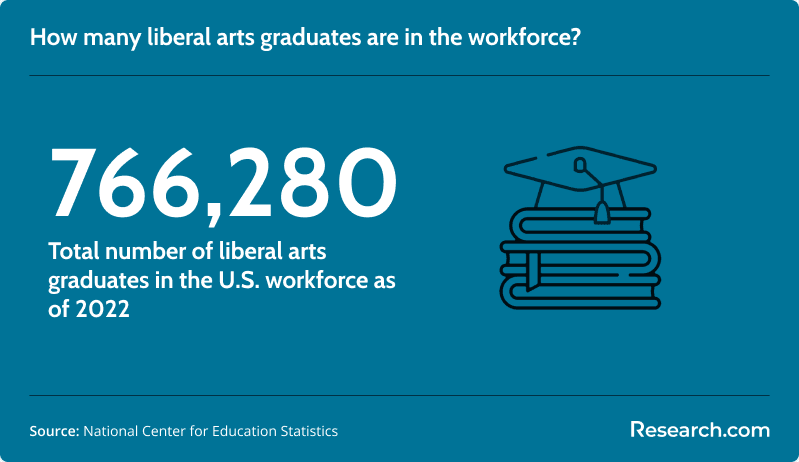
As of 2022, there were 766,280 liberal arts graduates in the U.S. workforce. For most full-time students, an online liberal arts associate degree takes about 2 years to complete. The standard curriculum is often 60 credits, which usually means taking about 15 credits per semester across four semesters.
Part-time students may need three to four years, depending on how many courses they take each term. Some schools offer accelerated options that can be completed in as little as 12 to18 months through heavier course loads, shorter terms, or year-round enrollment.
Students with previous college coursework may finish faster if the school accepts transfer credits. Self-paced formats can also shorten or lengthen the timeline, depending on how quickly the student completes assignments and meets course requirements.
| Enrollment Type | Typical Timeline | Best For |
| Full-time | About 2 years | Students who can take a traditional full course load |
| Part-time | Three to four years | Working adults, parents, and students with limited weekly study time |
| Accelerated | As little as 12 to18 months | Students with strong time management and fewer outside obligations |
| Transfer-credit pathway | Varies | Students with prior college coursework or eligible credits |
How does an online liberal arts associate degree compare to an on-campus program?
Online and campus-based liberal arts associate degree programs often cover similar general education requirements, but the learning experience is different. The better option depends on your schedule, learning style, support needs, and budget.
| Factor | Online Program | On-Campus Program |
| Flexibility | Often allows students to study from home and, in some cases, complete coursework asynchronously. | Requires attendance at specific times and locations, which may provide structure but less flexibility. |
| Learning environment | Uses learning platforms, recorded lectures, discussion boards, digital assignments, and virtual meetings. | Provides face-to-face classes, immediate classroom discussion, and in-person campus activities. |
| Cost considerations | May reduce commuting, housing, and campus-related expenses, though fees still apply. | May involve transportation, parking, housing, meal plans, and campus fees. |
| Student support | Can include online tutoring, virtual advising, digital libraries, and technical support. | Offers physical libraries, labs, study groups, advising offices, and in-person career services. |
| Faculty and peer interaction | Usually occurs through email, forums, chat, video calls, and online group projects. | Allows direct in-person communication with instructors and classmates. |
Choose online if:
- You need to work while studying.
- You live far from campus or cannot relocate.
- You are comfortable using digital tools and managing your time independently.
- You prefer flexible scheduling over daily campus routines.
Choose on campus if:
- You learn best through in-person discussion and immediate feedback.
- You want a traditional college environment.
- You need access to physical campus resources.
- You prefer a fixed schedule to stay accountable.
What is the average cost of an online liberal arts associate degree program?
The cost of an online liberal arts associate degree depends on the school type, residency status, fee structure, and whether you receive financial aid. Tuition is only one part of the budget, so students should calculate the total cost before enrolling.
Typical tuition ranges
- Public Community Colleges (In-State): Around $3,500 to $6,000 per year. This makes the total cost for two years approximately $7,000 to $12,000.
- Public Community Colleges (Out-of-State): Typically higher, ranging from $6,000 to $10,000 per year, bringing the total to $12,000 to $20,000.
- Private Colleges/Universities: Online programs at private institutions can cost $12,000 to $20,000 per year, with total costs ranging from $24,000 to $40,000.
Additional costs to budget for
Some online programs charge a technology or online learning fee, ranging from $100 to $500 per semester. Students may also need to spend around $500 to $1,000 per year for books, digital materials, access codes, or other course resources.
What financial aid options are available for online liberal arts associate degree students?
Online students at eligible accredited institutions may qualify for the same major categories of financial aid as campus students. Always confirm whether the school and program participate in federal aid programs before applying.
Federal financial aid
- Pell Grants: Need-based federal grants for undergraduate students. Pell Grants do not need to be repaid. The maximum award for the 2024-2025 academic year is $7,395.
- Federal Supplemental Educational Opportunity Grants (FSEOG): Additional support for students with exceptional financial need, with awards ranging from $100 to $4,000 per year.
- Direct Subsidized and Unsubsidized Loans: Federal student loans. Subsidized loans are need-based and the government pays the interest while you are in school; unsubsidized loans begin accruing interest right away. Annual loan limits range from $5,500 to $12,500.
- Work-Study Programs: Part-time employment opportunities for students with financial need to help cover education-related expenses.
State aid
- State Grants and Scholarships: Some states support residents attending community colleges or earning associate degrees online. Examples include the Cal Grant in California and the Tennessee Promise Scholarship for community college students.
- Tuition Assistance Programs: Certain states offer aid to eligible students enrolled in online programs at public institutions, often based on financial need.
Institutional and private aid
- Merit-Based Scholarships: Awards for students with strong academic performance.
- Need-Based Scholarships: Institutional grants or scholarships for students with financial need.
- Program-Specific Scholarships: Awards tied to liberal arts, general studies, transfer programs, or associate degree enrollment.
- Third-Party Scholarships: Private scholarships based on academic achievement, service, identity, career goals, or community involvement. Examples include the Jack Kent Cooke Foundation and Phi Theta Kappa Scholarships for community college students.
- Employer Scholarships: Tuition support or reimbursement offered by some employers to workers pursuing degrees.
What are the prerequisites for enrolling in an online liberal arts associate degree program?
Admission requirements for online liberal arts associate programs are usually accessible, especially at community colleges and open-admission institutions. Requirements still vary by school, so review the application checklist carefully.
- High School Diploma or Equivalent: Most programs require a high school diploma, GED, or equivalent credential. Some colleges also allow high school students to take courses through dual enrollment.
- Minimum GPA: Some schools ask for a high school GPA around 2.0 to 2.5, while others may use open admission. Conditional admission may be available if your academic record is below the standard threshold.
- Standardized Test Scores (Optional): SAT or ACT scores are often not required for associate degree admission, but some institutions may request them in certain cases.
- Placement Tests: Math and English placement assessments may be used to determine your starting course level. These tests are typically for placement rather than admission denial.
- Transcripts: Applicants usually submit official high school transcripts and transcripts from any previous college coursework. Transfer students should ask how credits are evaluated before enrolling.
What courses are typically in an online liberal arts associate degree program?
An online liberal arts associate degree usually gives students a strong foundation in various academic disciplines. Course titles vary, but most programs include general education requirements, liberal arts core courses, and electives.
Core liberal arts courses
- English Composition: Builds academic writing, grammar, argumentation, and research skills.
- Mathematics: May include algebra, quantitative reasoning, geometry, or statistics.
- History: Examines historical events, societies, institutions, and turning points.
- Philosophy: Introduces questions about ethics, knowledge, existence, reasoning, and human values.
- Social Sciences: May include sociology, psychology, or political science online degrees as future bachelor’s pathways.
- Natural Sciences: Common options include biology, chemistry, physics, or environmental science.
- Foreign Language: Introduces language skills and cultural study.
- Humanities: May include literature, art history, music, religion, or cultural studies.
General education courses
- Public Speaking: Develops presentation and audience communication skills, which can be useful for students who later explore affordable online public relations programs.
- Critical Thinking: Focuses on reasoning, evidence evaluation, argument analysis, and problem-solving.
- Cultural Studies: Helps students understand diverse communities, identities, and global perspectives.
Elective courses
- Writing for the Humanities: Teaches students how to analyze and write about literature, art, philosophy, or cultural topics.
- Introduction to Psychology: Provides a basic overview of human behavior and mental processes.
- Environmental Science: Explores human relationships with natural systems and may overlap with interests found in forestry courses online or campus programs.
- Business Fundamentals: Covers basic business concepts, organizations, and workplace practices.
- Computer Applications: Builds practical digital skills for academic and workplace tasks.
What types of specializations are available in online liberal arts associate degree programs?
Some liberal arts associate programs are highly flexible, while others offer concentrations or recommended electives tied to transfer goals. Students may also use a general studies pathway as a foundation before entering a more focused bachelor’s program, including a cheap project management degree online.
- English: Focuses on literature, writing, rhetoric, creative writing, or technical communication.
- History: Allows students to study specific eras, regions, societies, or themes and may lead toward traditional or online colleges history degree options.
- Philosophy: Explores ethics, logic, metaphysics, political philosophy, and major philosophical traditions.
- Art History: Examines visual culture, artistic movements, and the social context of art.
- Psychology: Introduces theories of behavior, development, cognition, and research methods.
- Sociology: Studies social relationships, institutions, inequality, family, culture, and communities.
- Political Science: Covers government, policy, political behavior, international relations, and civic institutions.
- Liberal Studies: Provides an interdisciplinary curriculum and can support future pathways such as the easiest online criminal justice degree.
- General Studies: Offers broad elective flexibility for students still choosing a long-term academic direction.
What additional certifications can enhance your career with an online liberal arts associate degree?
A liberal arts associate degree can show that you have completed college-level coursework, but many employers also look for job-specific skills. Certifications can help translate your broad education into a more targeted employment profile.
| Certification Area | Best For | How It Complements Liberal Arts Skills |
| Project Management Certification | Business, administration, operations, and nonprofit roles | Adds planning, scheduling, team coordination, and resource management skills. |
| Digital Marketing Certification | Communications, media, small business, and marketing support roles | Builds practical knowledge of online campaigns, analytics, content, and marketing tools. |
| Human Resources Certification | HR assistant and people operations pathways | Connects communication and interpersonal skills with employment practices and workplace policies. |
| Social Work Assistant Certification | Community service, outreach, and support roles | Strengthens preparation for helping professions and client-facing service work. |
| Data Analytics Certification | Business support, operations, research, and administrative roles | Adds technical evidence-analysis skills to critical thinking and problem-solving abilities. |
- Project Management Certification: Useful for students interested in business, administration, operations, or nonprofit coordination. A credential such as PMP can signal project planning and management ability.
- Digital Marketing Certification: Helpful for graduates pursuing communications, media, marketing, or business support roles.
- Human Resources Certification: Options such as PHR (Professional in Human Resources) may support HR-related career goals.
- Social Work Assistant Certification: Can be useful for students interested in social services, outreach, case support, or community programs.
- Data Analytics Certification: Adds a technical skill set that can help liberal arts graduates move toward data-informed business, operations, or research roles.
- Online certification programs: Students can also compare flexible online certification programs that align with their intended career field.
Certifications do not guarantee a job or salary increase, but they can make your resume more specific and help employers understand how your liberal arts background applies to the role.
How do you choose the best online liberal arts associate degree program?
The best program is the one that fits your budget, transfer plan, schedule, and career direction. Before applying, compare programs using evidence rather than advertising claims.
- Accreditation: Confirm that the institution is accredited by a recognized accrediting agency.
- Transfer Pathways: Ask which bachelor’s programs accept the degree and whether the school has formal transfer agreements.
- Faculty: Review instructor qualifications and whether faculty have experience teaching online.
- Program Structure: Check whether courses are asynchronous, synchronous, self-paced, accelerated, or term-based.
- Scheduling: Choose a format that matches your work hours, family obligations, and study habits.
- Tuition and Fees: Compare total program cost, not just the listed tuition rate.
- Career Services: Look for online access to career coaching, resume help, internship resources, and transfer advising.
- Student Support: Confirm online tutoring, library access, writing support, disability services, and technical help.
Common mistakes to avoid when choosing an online liberal arts associate degree
| Mistake | Why It Can Hurt You | Better Approach |
| Choosing only by the lowest tuition | Fees, poor transfer policies, or weak support can raise the real cost. | Compare total cost, graduation requirements, and transfer outcomes. |
| Ignoring accreditation | Credits may not transfer, and financial aid eligibility may be affected. | Verify recognized institutional accreditation before enrolling. |
| Taking random electives | Credits may not apply to your future bachelor’s major. | Use transfer advising to select electives strategically. |
| Assuming online means easier | Online courses require discipline, planning, and regular participation. | Choose a course load you can realistically manage. |
| Waiting to plan transfer | Late planning can lead to lost credits or extra semesters. | Identify target bachelor’s programs early and follow their requirements. |
| Assuming salary outcomes are guaranteed | Pay depends on role, location, experience, industry, and further education. | Research job requirements and pair the degree with relevant experience or credentials. |
What is the return on investment for an online liberal arts associate degree?
The ROI of an online liberal arts associate degree depends on how much you pay, whether credits transfer, how quickly you graduate, and what you do after completion. The degree can be a strong value if it helps you complete general education requirements at a lower cost before earning a bachelor’s degree. It can be a weaker value if credits do not transfer or if you enroll without a clear academic or career plan.
Students who want to reduce both time and cost may compare accelerated options such as 1 year associate degree programs online. However, faster programs are not automatically better. Make sure the pace is realistic and the credits still support your transfer or employment goals.
Questions to ask before enrolling
- What is the total cost for all 60 credits?
- How many credits can I transfer in?
- Does this degree transfer to my intended bachelor’s program?
- Will I need additional prerequisites after transfer?
- What online student support is available?
- What jobs do graduates commonly pursue after completion?
- Does the school publish completion, retention, or transfer information?
What career paths are available for graduates of online liberal arts associate degree programs?
Online liberal arts associate degree graduates can pursue many entry-level positions and may have higher career mobility. Among liberal arts graduates, 70% change careers from their first to their second job, compared to 53% for IT majors, 54% of allied health majors, and 59% of education majors.
The degree is broad, so career outcomes depend heavily on work experience, internships, electives, certifications, location, and whether the graduate continues into a bachelor’s program.
Education
- Teaching Assistant: Supports classroom instruction, tutoring, grading, and student activities. Students who want to advance in education may later consider an affordable online teaching degree.
- Educational Administrator: Handles administrative tasks in schools, colleges, or training organizations.
- Curriculum Developer: Assists with educational materials, training resources, or instructional content, typically with additional experience or education.
Business and administration
- Administrative Assistant: Provides scheduling, records, communication, and office support.
- Office Manager: Coordinates daily operations, supplies, staff support, and administrative systems.
- Human Resources Assistant: Helps with hiring paperwork, onboarding, records, and employee communication.
Writing and communications
- Technical Writer: Prepares manuals, instructions, procedures, or technical documentation, often with added subject knowledge.
- Copywriter: Writes marketing, advertising, web, or promotional content.
- Content Writer: Creates articles, website copy, social media posts, blogs, and digital materials.
Social services
- Social Work Assistant: Supports social workers and community service teams.
- Case Manager: Coordinates services for individuals or families, depending on employer requirements.
- Community Outreach Worker: Promotes programs, connects residents to resources, and supports local initiatives.
Government and public service
- Paralegal: Assists with legal research, documents, and case organization; some students may pursue the cheapest online paralegal certificate to build role-specific preparation.
- Government Assistant: Provides administrative and constituent support for public agencies.
How can graduates leverage networking and professional development opportunities?
Graduates can improve their career prospects by building relationships and adding practical experience. Liberal arts programs develop broad skills, but networking helps students connect those skills to actual roles and employers.
- Join alumni groups, online student communities, and professional associations related to your target field.
- Attend local career fairs, virtual employer events, and transfer information sessions.
- Ask instructors, advisors, and classmates for informational interview leads.
- Complete internships, volunteer work, service learning, or part-time jobs tied to your career goal.
- Use college career services for resume reviews, mock interviews, and job search planning.
- Review resources from the best affordable online colleges if you need broader cost and career-planning support.
What is the job market for graduates with an online liberal arts associate degree?
The job market for liberal arts associate degree graduates is broad but competitive. Graduates often qualify for general entry-level roles rather than highly specialized positions. Strong applications usually combine the degree with relevant work experience, a portfolio, internships, certifications, or transfer into a bachelor’s program.
Liberal arts graduates often possess strong soft skills such as communication, critical thinking, problem-solving, and adaptability. These strengths are useful in administrative support, customer service, sales, communications, nonprofit work, and service-oriented roles.
Two out of five liberal arts graduates go on to earn graduate degrees, which further boosts their earnings to $76,000 annually, on average.
Remote work and digital tools have also created opportunities in areas such as content support, digital marketing assistance, customer success, virtual administration, and online community coordination. However, many of these roles require demonstrable digital skills in addition to the degree.
For many students, the associate degree is a stepping stone. Transferring into a bachelor’s program can open more specialized opportunities in education, social work, business, public administration, communications, or management. Students comparing next-step options can also review cheap online degrees.
How do soft skills play a role in an online liberal arts associate degree?
Soft skills are not a side benefit of liberal arts education; they are a central outcome. Courses in writing, speech, humanities, social science, and research require students to evaluate information, explain ideas, work with others, and adapt to new viewpoints.
- Communication: Writing, public speaking, and discussion-based courses help students explain ideas clearly in academic and workplace settings.
- Critical thinking: Students learn to assess evidence, compare perspectives, identify assumptions, and make reasoned judgments.
- Collaboration: Group assignments and online discussions help students practice teamwork in digital environments.
- Adaptability: Because the curriculum spans many fields, students practice learning new concepts and applying them across different contexts.
- Information literacy: Research assignments help students find, evaluate, and use credible information.
Students who want a broad, manageable starting point may compare options such as the easiest associate degree to get, but they should still choose a program that supports their transfer and career goals.
Are online liberal arts associate degree programs suitable for adult learners and seniors?
Online liberal arts associate programs can work well for adult learners and seniors because they often offer flexible scheduling, remote coursework, self-paced or asynchronous options, and digital support services. These features can help students balance education with work, caregiving, retirement goals, or personal enrichment.
Adult learners should look for programs with clear advising, transfer planning, technical support, accessible course materials, and tutoring. Students exploring later-life learning can also review online college courses for seniors.
What challenges might students face in online liberal arts associate degree programs?
Online learning is flexible, but it is not effortless. Students often struggle most when they underestimate the weekly time commitment or delay asking for help.
- Time management: Asynchronous courses require students to track deadlines independently.
- Self-discipline: Without regular campus meetings, students need a consistent study routine.
- Technology barriers: Reliable internet, updated devices, and comfort with learning platforms are important.
- Limited real-time interaction: Some students miss immediate classroom discussion and in-person support.
- Transfer confusion: Students may take credits that do not apply to their intended bachelor’s program.
Students can reduce these risks by using tutoring, advising, calendar tools, instructor office hours, and peer discussion spaces. Those who want a more career-specific companion pathway may explore options such as a public relation degree.
How can you verify the quality of online liberal arts associate degree programs?
Program quality should be checked before you apply, not after you enroll. Start with accreditation, then evaluate transfer outcomes, support services, faculty qualifications, and transparency around costs.
- Verify institutional accreditation through recognized sources.
- Ask whether credits transfer to specific bachelor’s programs.
- Review faculty credentials and online teaching experience.
- Check whether online students receive the same advising, tutoring, library, and career services as campus students.
- Look for clear tuition, fee, refund, and withdrawal policies.
- Compare graduation, retention, and transfer information when available.
Students comparing institution quality may also review resources on accredited online universities.
How do online liberal arts associate degree programs maintain academic rigor and engagement?
Strong online programs maintain rigor through structured course design, clear learning outcomes, regular instructor feedback, discussion-based assignments, research projects, exams, writing requirements, and academic integrity policies. Online does not mean less demanding; it means the classroom is delivered through a digital platform.
Engagement may come through discussion boards, group projects, video meetings, peer review, instructor announcements, online office hours, quizzes, and writing-intensive assignments. Students who need financial support should also consider whether the institution is among online colleges that accept FAFSA.
What are the academic progression opportunities after completing an online liberal arts associate degree?
The most common next step is transfer into a bachelor’s degree. A liberal arts associate degree can satisfy many lower-division general education requirements, but transfer rules differ by institution and major. Students should identify their intended bachelor’s program early so they can choose electives that apply to future requirements.
Some graduates also add certificates in business, technology, communications, healthcare administration, human resources, data analytics, or public service. Longer-term academic paths may eventually include graduate study, and students researching future advanced credentials may compare options such as a low-cost doctorate degree online.
How can an online liberal arts associate degree facilitate progression to advanced studies?
An online liberal arts associate degree can help students build the writing, research, analysis, and general education foundation needed for bachelor’s study. From there, graduates may continue toward master’s or professional programs, depending on their chosen field.
The key is planning. Students should work with advisors to select transfer-friendly courses, confirm prerequisites, and avoid repeating credits. Accelerated or specialized pathways may later support graduate-level goals, including programs such as one year masters degrees.
Are online liberal arts associate degrees aligned with future job market trends?
Online liberal arts associate degrees align with several broad workforce needs: communication, digital collaboration, adaptability, ethical reasoning, cultural understanding, and problem-solving. These skills matter as workplaces use more technology and employees shift across roles more often.
However, broad skills are most powerful when paired with job-specific preparation. Students should consider adding digital literacy, data tools, business software, writing samples, internships, or certifications to make their qualifications more concrete. For broader planning, students may review the best degrees for the future 2030.
Do employers value an online liberal arts associate degree?
Employers may value an online liberal arts associate degree when it comes from an accredited institution and the applicant can demonstrate relevant skills. The online format itself is less important than whether the graduate can communicate, solve problems, use technology, meet deadlines, and contribute to the role.
For competitive advancement, many graduates use the associate degree as a foundation for a bachelor’s degree. An online accelerated bachelor's degree may be an option for students who want to continue faster after completing lower-division coursework.
Can industry-specific certification programs accelerate career advancement?
Industry certifications can help liberal arts graduates move from broad academic preparation to role-specific readiness. For example, a student interested in administration might pursue project management; a communications-focused student might add digital marketing; and a student interested in operations or research might study data analytics.
Students comparing fast skill-building options can review shortest training for highest paying jobs. The strongest strategy is to match the certification to a specific job target rather than collecting unrelated credentials.
Here’s what graduates have to say about their affordable online liberal arts associate degree programs
Completing my liberal arts associate degree online made it possible to keep working full time while taking care of family responsibilities. I could plan coursework around my schedule, and the online support helped me feel connected instead of isolated. -Austin
The online format pushed me to become a more independent learner, but I still had meaningful discussions with classmates and instructors. The program helped me build the confidence and skills I needed for my next academic and career step. -Brigitte
I valued being able to study from wherever I was while still taking courses that challenged me. My professors were accessible, and the flexibility helped me grow academically and personally. -Sophie
Key Insights
- An online liberal arts associate degree is best used as a flexible, affordable foundation for transfer, career exploration, or entry-level work.
- As of 2022, there were 766,280 liberal arts graduates in the U.S. workforce.
- Most full-time students finish in about 2 years, while accelerated options may take as little as 12 to18 months and part-time study may take three to four years.
- Depending on the industry, the annual salary of online liberal arts associate degree graduates range from $35,000 to $50,000, and the median salary of liberal arts degree graduates was $55,000 as of 2022.
- Liberal arts graduates often benefit from career flexibility: 70% change careers from their first to their second job, compared to 53% for IT majors, 54% of allied health majors, and 59% of education majors.
- Two out of five liberal arts graduates go on to earn graduate degrees, which further boosts their earnings to $76,000 annually, on average.
- The best-value program is not always the one with the lowest tuition. Accreditation, transfer agreements, accepted credits, fees, advising, and online support all affect ROI.
- Students should choose electives with a future bachelor’s major or career path in mind to avoid losing credits after transfer.
- Certifications in areas such as project management, digital marketing, human resources, social services, or data analytics can make a broad liberal arts degree more job-specific.
- Liberal arts graduates often progress from their first to third job by transitioning into high-skill, high-demand careers in fields such as marketing, advertising, public relations, management, and human resources.
References:
- Barber, B. R. (2023). Liberal education in name only. Inside Higher Ed.
- Strada Education Network. (2022). The real long-term outcomes of liberal arts graduates.
- U.S. Bureau of Labor Statistics. (n.d.). Liberal arts majors: Employment, earnings, and outlook.
Other Things You Should Know About Online Liberal Arts Associate Degree
Most online liberal arts associate degrees require 60 semester credits, usually completed in about two years of full-time study. Schools often divide the program into general education, humanities, and social science courses, with some programs allowing part-time pacing over a longer period.
Yes, you can transfer credits from an online liberal arts associate degree to a four-year university. However, the specific transferability of credits can vary depending on several factors, including:
- Accreditations: Both the community college and the university must be accredited by recognized accrediting agencies.
- Course Equivalencies: The courses you completed at the community college must be equivalent to courses offered at the university.
- Transfer Policies: Each university has its own transfer policies, which may include minimum grade requirements or restrictions on the number of transferable credits.
It's important to contact the admissions office of the university you're interested in to determine their specific transfer policies. They can provide you with information on the transferability of credits from your online associate degree program.
Additionally, some universities may have articulation agreements with specific community colleges. These agreements can streamline the transfer process and guarantee the transferability of certain credits.
Yes, many online liberal arts associate degree programs in 2027 are eligible for federal financial aid. Students must fill out the Free Application for Federal Student Aid (FAFSA) to determine their eligibility and potential award amounts, subject to specific program requirements.