
2027 What Can You Do With a Master’s in Information Systems?

Co-Founder and Chief Data Scientist
A Master’s in Information Systems is designed for professionals who want to move beyond hands-on technology work and into roles that connect IT strategy, business operations, data systems, cybersecurity, and digital transformation. For many students, the decision is not simply whether the degree sounds useful; it is whether the cost, time commitment, online format, and career outcomes make sense compared with alternatives such as an MBA, a computer science graduate degree, or targeted certifications.
This guide explains what a Master’s in Information Systems covers, how admissions and costs typically work, whether employers value online programs, which careers and industries may fit the degree, and how to evaluate return on investment before enrolling. It is written for working IT professionals, career changers with technical backgrounds, business professionals moving into technology leadership, and students comparing graduate-level technology management options.
Quick Answer: What are the benefits of getting a Master’s in Information Systems?
- A Master’s in Information Systems can help qualify graduates for leadership-oriented technology roles such as Information Technology Director, Systems Manager, Information Systems Director, and related IT management positions.
- The salary range for roles discussed in this guide runs from $106,760 to $169,510 annually, depending on job title, experience, industry, location, and scope of responsibility.
- Online MIS programs can be a practical option for working adults because many use the same academic curriculum as campus-based programs and may allow students to continue working while completing the degree.
Table of Content
- What does a Master’s in Information Systems cover?
- What are the usual admission requirements for MIS master’s programs?
- How much does a Master’s in Information Systems cost?
- Do employers respect online Master’s in Information Systems degrees?
- Best careers for Master’s in Information Systems graduates
- What salary can you earn with a Master’s in Information Systems?
- Which industries hire MIS master’s graduates?
- How do cybersecurity skills strengthen an MIS degree?
- Which states offer strong opportunities for MIS graduates?
- What is the job outlook for Master’s in Information Systems graduates?
- How should you compare Master’s in Information Systems programs?
- What financial aid and scholarship options are available?
- Can creative technology electives support an MIS career?
- How can interdisciplinary study improve MIS career options?
- Is a Master’s in Information Systems worth it?
- Can a fast-track computer science degree complement MIS training?
- What challenges do MIS graduates face?
- Can you find an MIS program that is both affordable and high quality?
- How is AI changing Information Systems careers?
- Should health informatics be paired with Information Systems expertise?
What is a Master’s in Information Systems?
A Master’s in Information Systems, often abbreviated as MIS, is a graduate degree focused on planning, managing, improving, and protecting technology systems used by organizations. Unlike a purely technical computer science program, an MIS degree usually emphasizes both technology and business decision-making. Students learn how information systems support operations, analytics, customer service, cybersecurity, compliance, and long-term organizational strategy.
Typical coursework may include database management, systems analysis, software development concepts, IT project management, enterprise architecture, data analytics, cybersecurity policy, business process improvement, and technology leadership. The goal is not only to understand how systems work, but also how to choose, implement, govern, and improve them in real business settings.
An MIS degree is often compared with an MBA because both can lead to management positions. The difference is focus. An MBA usually covers broader business topics such as finance, marketing, operations, and leadership, while an MIS master’s program concentrates on technology-enabled business systems. If your goal is general business leadership, you may want to ask whether an MBA is hard to get and whether that path better fits your background. If your goal is technology strategy, systems leadership, analytics, or IT operations, MIS may be the more targeted option.
| Option | Best fit | Main strength | Possible limitation |
| Master’s in Information Systems | Professionals who want to manage technology, systems, data, and IT-enabled business processes | Combines business strategy with applied technology management | May be less programming-intensive than computer science programs |
| MBA | Professionals seeking broader business leadership roles, including non-technical management | Provides wider exposure to business administration and executive decision-making | May not go deeply into systems architecture, cybersecurity, databases, or technical operations |
| Computer science graduate study | Students who want advanced technical depth in computing, algorithms, software, or research | Builds stronger technical specialization | May provide less preparation for IT governance, business process design, or organizational leadership |
| GIS-focused technology programs | Professionals interested in spatial data, mapping systems, and geographic analysis | Applies technology to location-based decision-making | More specialized than a general MIS degree; compare options such as the best online GIS degree if spatial systems are your goal |
What are the requirements for admission to a Master’s in Information Systems?
Admission standards differ by university, but most Master’s in Information Systems programs look for evidence that applicants can handle graduate-level technology, analytics, and management coursework. Some programs are built for students with IT, computer science, business analytics, or engineering backgrounds, while others provide bridge courses for applicants from less technical fields.
Common admission requirements include:
- A bachelor’s degree from an accredited institution, often in information systems, computer science, business, engineering, mathematics, or a related field.
- A competitive undergraduate GPA, commonly 3.0 or higher.
- GRE or GMAT scores, although some schools waive test scores for applicants with strong academic records or relevant professional experience.
- Letters of recommendation from professors, supervisors, or professional mentors who can speak to your technical ability, leadership potential, and readiness for graduate work.
- A statement of purpose explaining your career goals, interest in information systems, and reasons for choosing the program.
- Professional experience in IT, analytics, operations, cybersecurity, software, or business systems, which may strengthen an application even when it is not required.
MIS admissions can feel different from MBA admissions. Many MBA programs welcome applicants from a wide range of undergraduate majors and professional sectors, which is one reason students often compare MBA programs acceptance rates when evaluating business school options. MIS programs may place greater weight on quantitative readiness, technical exposure, or prior work with information technology.
If your target is IT leadership, admissions planning should also connect to career requirements. Students who want to know what are the requirements for IT manager roles should look beyond admission checklists and consider whether the program builds leadership, budgeting, vendor management, cybersecurity awareness, systems planning, and communication skills.
| Applicant background | What to check before applying | Best next step |
| Current IT professional | Whether the curriculum goes beyond skills you already use at work | Prioritize leadership, architecture, analytics, cybersecurity, and strategy coursework |
| Business professional moving into technology | Whether prerequisite programming, database, or systems courses are required | Ask admissions staff about bridge courses and technical preparation |
| Recent graduate | Whether work experience is expected for internships, projects, or cohort fit | Look for programs with applied projects, career services, and employer partnerships |
| Career changer | Whether the program supports students without a deep computing background | Compare foundation courses, tutoring, advising, and job placement support |
How much does it cost to complete a Master’s in Information Systems?
The cost of a Master’s in Information Systems varies by school, residency status, delivery format, program length, fees, and living situation. According to College Tuition Compare, graduate schools offering Management Information Systems and Services programs report average tuition of about $13,599 for in-state students and $26,262 for out-of-state students per year. Tuition is only one part of the budget, however.
Students should also plan for books, software, technology fees, transportation, housing, meals, and daily living costs. Education Data reports that the average cost of college, including added expenses, is about $27,146 per year for in-state students at public universities. For working adults, the hidden cost may also include reduced work hours, delayed promotions, or the time required to complete group projects and applied assignments.
Cost comparisons should be based on total price, not tuition alone. Even the most affordable MBA programs in the USA can become more expensive after fees, books, residency requirements, or travel are included. The same is true across other graduate and online programs; students reviewing the most affordable online biology programs will see similar differences based on format, accreditation, aid, and program structure.
| Cost category | Why it matters | Question to ask the school |
| Tuition | Usually the largest direct academic cost | Is tuition charged per credit, per course, per term, or as a flat program rate? |
| Fees | Technology, graduation, online learning, and student service fees can add up | Are all required fees included in the published tuition estimate? |
| Books and software | MIS coursework may require specialized platforms or analytics tools | Which software licenses are included, and which must students purchase? |
| Residency or campus visits | Some online programs include required in-person sessions | Are there mandatory campus intensives, and who pays travel costs? |
| Time away from work | Part-time study can protect income, while full-time study may shorten completion time | Can working students realistically complete the program at the advertised pace? |
Will employers recognize an online Master’s in Information Systems degree?
Employers generally evaluate an online Master’s in Information Systems based on the institution, accreditation, curriculum, reputation, and the graduate’s demonstrated skills. The online label alone is usually less important than whether the degree comes from a credible school and prepares students for real workplace responsibilities.
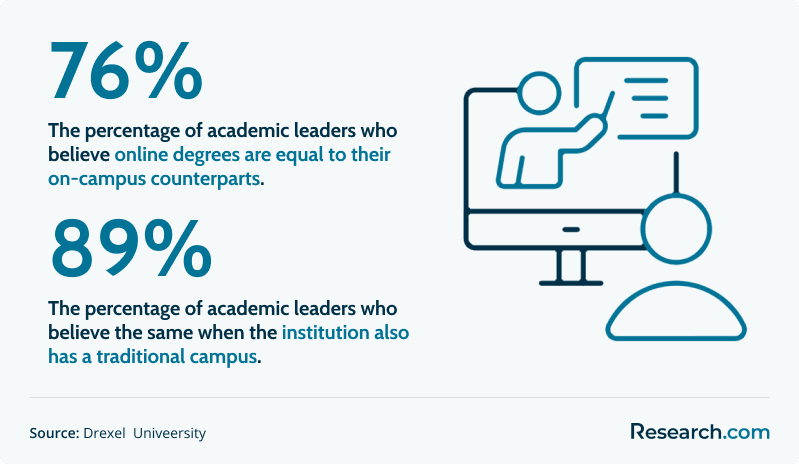
Drexel University notes that when an online degree program is provided by a school with a traditional campus, it is often viewed as comparable to an on-campus program. Drexel also reports that academic leaders’ approval ratings for online degrees rise from 76% to 89% when the institution has a physical campus presence.
This does not mean every online program has equal value. Hiring managers may respond more favorably to programs from recognized, accredited institutions with strong faculty, practical coursework, employer connections, and transparent student outcomes. This pattern is also visible in business education, where online MBA programs (no GMAT) can be respected when they come from reputable schools. Students comparing the best master’s in educational leadership degree programs online will encounter the same core issue: credibility depends heavily on accreditation, institutional reputation, and program quality.
| Employer concern | What strengthens an online MIS degree | Warning sign |
| Academic credibility | Accredited institution with transparent program details | Unclear accreditation or vague degree requirements |
| Skill development | Applied projects, systems analysis work, analytics labs, cybersecurity content, and capstone experience | Mostly theory-based coursework with little evidence of practical work |
| Career relevance | Curriculum aligned with IT management, data systems, cloud, security, governance, and business strategy | Outdated course descriptions or limited technology focus |
| Student support | Career coaching, alumni network, internship access, and employer engagement | No clear career services for online students |
Top Careers for Master’s in Information Systems Graduates for 2027
A Master’s in Information Systems can support advancement into management, technical leadership, analytics, operations, and research-focused technology roles. It is especially relevant for professionals who already have technical experience and want to move into planning, budgeting, team leadership, systems design, risk management, or enterprise technology strategy. Students exploring a broader career path for computer science may find that MIS roles sit at the intersection of technical execution and organizational leadership.
| Career | Average annual salary | Minimum education | Growth rate | Primary responsibility |
| Technical Support Manager | $106,760 | Bachelor's Degree | 10% | Leads support teams that maintain, troubleshoot, and improve technology services for users and departments. |
| Information Technology Operations Manager | $114,752 | Bachelor's Degree | 16% | Oversees daily IT operations, infrastructure reliability, service delivery, and cross-team coordination. |
| Information Services Manager | $119,800 | Bachelor's Degree | 16% | Manages teams and systems that support customer data, service platforms, and business operations. |
| Information Technology Manager | $119,589 | Bachelor's Degree | 16% | Plans and directs computer-related activities so technology supports organizational goals. |
| Director of Information | $129,888 | Master's Degree | 16% | Guides the strategic use, storage, governance, and processing of information across the organization. |
| Information Systems Director | $130,822 | Master's Degree | 16% | Sets technology direction, manages IT staff, and aligns systems initiatives with business priorities. |
| Information Technology Director | $138,906 | Master's Degree | 16% | Directs IT strategy, security, software, networks, telecommunications, and major technology decisions. |
| Senior Manager-Systems | $144,756 | Master's Degree | 16% | Oversees large systems projects and ensures technical frameworks perform efficiently and reliably. |
| Computer and Information Research Scientists | $145,080 | Master's Degree | 26% | Develops new computing methods, models, algorithms, and uses for existing technologies. |
| Computer and Information Systems Managers | $169,510 | Bachelor's Degree | 17% | Manages computer-related activities, technology implementation, software, security, and systems planning. |
Technical Support Manager
Technical Support Managers supervise teams responsible for resolving technology problems, maintaining IT systems, training support staff, and improving service response. This role fits professionals who understand both user needs and the operational impact of downtime.
- Average Annual Salary: $106,760
- Minimum Education: Bachelor's Degree
- Growth Rate: 10%
Information Technology Operations Manager
Information Technology Operations Managers keep an organization’s IT environment running day to day. They coordinate infrastructure, monitor service reliability, manage projects, and help ensure that technology resources support business needs.
- Average Annual Salary: $114,752
- Minimum Education: Bachelor's Degree
- Growth Rate: 16%
Information Services Manager
Information Services Managers lead the development and use of systems that support data access, customer service, and internal operations. The role requires technical judgment, process awareness, and the ability to work across departments.
- Average Annual Salary: $119,800
- Minimum Education: Bachelor's Degree
- Growth Rate: 16%
Information Technology Manager
Information Technology Managers plan, coordinate, and direct computer-related functions. They help define IT goals, select systems, manage staff, and ensure technology investments are aligned with organizational priorities.
- Average Annual Salary: $119,589
- Minimum Education: Bachelor's Degree
- Growth Rate: 16%
Director of Information
Directors of Information are responsible for the strategic management of organizational information. They may oversee IT teams, data infrastructure, governance practices, and systems that support decision-making.
- Average Annual Salary: $129,888
- Minimum Education: Master's Degree
- Growth Rate: 16%
Information Systems Director
Information Systems Directors shape an organization’s technology roadmap. They oversee systems initiatives, lead IT departments, manage budgets, and ensure technology plans support business objectives.
- Average Annual Salary: $130,822
- Minimum Education: Master's Degree
- Growth Rate: 16%
Information Technology Director
Information Technology Directors handle high-level responsibility for IT strategy, security, software, network operations, telecommunications, and technology governance. They often participate in executive-level planning.
- Average Annual Salary: $138,906
- Minimum Education: Master's Degree
- Growth Rate: 16%
Senior Manager-Systems
Senior Managers-Systems supervise complex systems initiatives, coordinate with technical leaders, resolve advanced operational issues, and improve the performance of enterprise technology environments.
- Average Annual Salary: $144,756
- Minimum Education: Master's Degree
- Growth Rate: 16%
Computer and Information Research Scientists
Computer and Information Research Scientists investigate advanced computing problems, create models and algorithms, and design new approaches for using computing technologies. This path usually suits students with strong technical and analytical interests.
- Average Annual Salary: $145,080
- Minimum Education: Master's Degree
- Growth Rate: 26%
Computer and Information Systems Managers
Computer and Information Systems Managers direct technology activities across an organization. Their work may include software systems, cybersecurity, networks, technology implementation, vendor management, and long-term IT planning.
- Average Annual Salary: $169,510
- Minimum Education: Bachelor's Degree
- Growth Rate: 17%
How much can I make with a Master’s in Information Systems?
The careers covered in this guide show annual salaries from $106,760 for Technical Support Managers to $169,510 for Computer and Information Systems Managers. Midrange management roles include Information Technology Operations Manager at $114,752, Information Technology Manager at $119,589, and Information Services Manager at $119,800. Director-level roles such as Information Systems Director and Information Technology Director list salaries of $130,822 and $138,906, respectively.
These figures suggest that a Master’s in Information Systems can be most financially useful when it helps a professional move from individual contributor work into management, strategy, systems leadership, or specialized technical decision-making. However, the degree does not guarantee a specific salary. Pay depends on experience, employer size, geography, industry, technical depth, leadership scope, and how directly the degree connects to the role.
Students comparing outcomes should look at both degree-level data and role-specific benchmarks such as management information systems salary information. The strongest salary outcomes usually come from combining graduate education with practical experience, measurable project results, communication skills, and knowledge of business priorities.
The chart below summarizes potential earnings across MIS-related careers and shows why leadership and specialized technology roles can carry higher compensation.
Which industries are best for graduates of a Master’s in Information Systems?
MIS graduates can work in many sectors because nearly every organization depends on reliable data, secure systems, and well-managed technology. The strongest industry fit depends on whether you prefer software, finance, healthcare, public sector work, consulting, education, or research environments.
- Technology and Software Services: Technology companies hire MIS graduates for systems analysis, IT operations, project management, security coordination, product support, and enterprise systems roles. This path works well for students who want to stay close to software, platforms, and technical teams.
- Finance and Banking: Financial institutions rely on information systems for transaction processing, data governance, risk management, cybersecurity, compliance, and analytics. MIS graduates can be useful in fintech, banking operations, financial networks, and digital transformation projects.
- Healthcare: Healthcare organizations use information systems for electronic medical records, patient data management, operations, privacy compliance, and clinical workflow improvement. This industry can be a strong fit for students interested in health IT and data-driven patient care.
- Government and Public Sector: Public agencies need professionals who can modernize digital services, manage secure systems, improve access to public information, and support large-scale technology programs. Cybersecurity and compliance awareness are especially valuable in this sector.
- Consulting and Business Services: Consulting firms use MIS expertise to help clients assess technology gaps, implement new systems, improve IT operations, manage change, and strengthen security practices.
- Education and Research: Colleges, universities, and research organizations need professionals to support learning technologies, institutional data, research infrastructure, analytics, and secure networks.
| Industry | Why MIS skills matter | Good fit for students who enjoy |
| Technology and software services | Systems, platforms, IT services, and security must scale reliably | Technical teams, fast product cycles, and infrastructure decisions |
| Finance and banking | Data accuracy, security, compliance, and uptime are central to operations | Risk management, analytics, and regulated environments |
| Healthcare | Patient data, clinical systems, and privacy requirements depend on strong IT governance | Mission-driven technology and process improvement |
| Government and public sector | Agencies need secure, accessible, and efficient digital systems | Public service, compliance, and large-scale systems |
| Consulting and business services | Clients need help evaluating, implementing, and improving technology | Problem-solving, client communication, and varied projects |
| Education and research | Institutions rely on data, learning platforms, and research infrastructure | Academic technology, analytics, and institutional operations |
The chart below highlights industries with the highest potential earnings for Computer and Information Systems Managers based on the data used in this article.
How Can Cybersecurity Skills Complement a Master’s in Information Systems?
Cybersecurity knowledge can make an MIS degree more valuable because information systems leaders are often responsible for protecting data, reducing operational risk, supporting compliance, and responding to technology threats. Even when security is not the graduate’s main job title, managers increasingly need to understand access controls, incident response, vendor risk, privacy requirements, and secure system design.
Students who want deeper security preparation can consider focused training such as accelerated online cybersecurity degree programs. The key is to choose cybersecurity coursework that complements the MIS curriculum rather than duplicates it. Useful topics include risk management, cloud security, security governance, threat detection, compliance, and business continuity.
Which states are best for graduates of a Master’s in Information Systems?
Location can strongly affect job access, salary potential, commute patterns, and industry options for MIS graduates. States with major technology companies, financial employers, healthcare systems, government contractors, or consulting firms may offer more opportunities for information systems professionals.
- California: California’s technology ecosystem, including Silicon Valley and San Francisco, creates opportunities in software, cloud systems, analytics, cybersecurity, and enterprise IT. Major employers such as Google, Apple, and Facebook contribute to the state’s strong technology labor market.
- Washington: Washington is home to major technology employers such as Amazon and Microsoft. The Seattle area offers opportunities in cloud platforms, software operations, enterprise systems, and technology management.
- New York: New York combines finance, media, healthcare, and technology employers, giving MIS graduates access to roles where systems management and data strategy support business-critical operations.
- Texas: Austin and Dallas continue to attract technology firms, and Texas offers a lower cost of living compared with California and New York. The state’s business climate has helped create opportunities in IT, software, and enterprise systems.
- Virginia: Virginia’s proximity to Washington D.C. supports opportunities in government technology, defense contracting, cybersecurity, and federal systems work, especially in Northern Virginia.
The chart below shows states where Computer and Information Systems Managers receive some of the strongest compensation, reflecting local demand, employer mix, and regional economic conditions.
What is the job outlook for graduates of Master’s in Information Systems?
The employment outlook for MIS-related careers is favorable in the roles covered here. Employment of Computer and Information Systems Managers is projected to grow by 17% from 2023 to 2033, which is faster than the average for all occupations. Computer and Information Research Scientists show projected growth of 26% over the same period.
Other roles included in this guide, such as Information Systems Director, Information Technology Operations Manager, Information Services Manager, Information Technology Manager, Information Technology Director, and Senior Manager-Systems, show growth rates around 16%, while Technical Support Manager lists a 10% growth rate. These figures reflect continued demand for professionals who can manage systems, lead teams, secure technology environments, analyze information, and connect IT investments to business goals.
The strongest candidates will not rely on the degree alone. Employers often look for a combination of graduate education, work experience, project leadership, communication ability, vendor management, data literacy, cybersecurity awareness, and evidence that the candidate can improve business outcomes through technology.
The chart below arranges job growth rates for MIS-related roles from lower to higher, showing where demand may be strongest.
Which factors should you consider when evaluating a Master’s in Information Systems program?
Choosing an MIS program should be treated like a business decision. The right program should fit your career target, schedule, budget, technical background, and preferred learning format. A highly ranked or expensive program is not automatically the best choice if it does not offer the courses, employer connections, or flexibility you need.
| Factor | Why it matters | What to verify |
| Accreditation | Accreditation affects academic credibility, credit transfer, employer trust, and financial aid access | Confirm institutional accreditation and any relevant business or computing accreditation |
| Curriculum | The course plan should match current employer needs in systems, data, security, cloud, analytics, and leadership | Review required courses, electives, capstone projects, and technology tools used |
| Faculty expertise | Faculty with academic and industry experience can connect theory to workplace practice | Look at faculty bios, research areas, professional experience, and teaching roles |
| Career services | Graduate programs vary widely in advising, employer access, alumni networking, and job support | Ask whether online and part-time students receive the same career support as campus students |
| Format and flexibility | Working students need predictable schedules, asynchronous options, and realistic pacing | Check live class requirements, residency rules, part-time options, and completion timelines |
| Specializations | Concentrations can help align the degree with specific goals such as cybersecurity, analytics, healthcare IT, or project management | Compare electives with your target job descriptions |
| Total cost | Tuition alone does not show the real investment | Calculate tuition, fees, books, software, travel, and lost income if applicable |
If you want to specialize while controlling cost, compare MIS programs with related options such as online cybersecurity degree programs. A lower-cost specialized program may be more practical if your target role is security-focused, while a broader MIS program may be better for IT management, systems leadership, or digital transformation.
What are the Financial Aid and Scholarship Options for a Master’s in Information Systems?
Financial planning should begin before you apply. Graduate students may be able to use scholarships, grants, assistantships, employer tuition assistance, payment plans, federal loans, state aid, or military and veteran benefits, depending on eligibility and the institution. The best funding strategy is usually a mix of reducing the sticker price, limiting borrowing, and choosing a program that supports clear career goals.
Start by asking each school for a full cost of attendance, not just tuition. Then compare institutional scholarships, graduate assistantship availability, employer reimbursement rules, and whether part-time enrollment affects aid eligibility. Students seeking lower-cost technology pathways can also review information technology online programs to understand how different program formats and tuition models affect affordability.
| Funding option | How it can help | What to confirm |
| Scholarships | Reduce tuition without repayment | Eligibility rules, deadlines, renewal requirements, and whether awards apply to online students |
| Grants | May lower out-of-pocket costs | Need-based criteria, program eligibility, and enrollment requirements |
| Assistantships | May provide tuition support or stipends | Work obligations, availability for master’s students, and compatibility with full-time employment |
| Employer tuition assistance | Can reduce borrowing for working professionals | Annual limits, grade requirements, repayment obligations, and approved program rules |
| Loans | Can cover remaining costs when other aid is insufficient | Interest, repayment terms, borrowing limits, and long-term affordability |
Can Creative Technology Electives Enhance Your MIS Career?
Creative technology electives can strengthen an MIS degree when they build skills in user experience, interactive systems, product thinking, simulation, digital media, or design-centered problem-solving. These areas can be useful for MIS graduates who want to work with product teams, customer-facing platforms, training systems, or innovation projects.
For example, coursework connected to an online game design degree may help students understand interactive design, user engagement, prototyping, and cross-functional collaboration. This does not mean game design is necessary for every MIS student, but it can be useful for careers involving digital products, experience design, or creative software environments.
How can interdisciplinary studies enhance a Master’s in Information Systems?
Interdisciplinary study can make MIS training more practical by helping students understand how information systems interact with other technical, operational, and human systems. Employers often need leaders who can communicate across software, hardware, data, security, finance, compliance, and user experience teams.
Students interested in infrastructure, hardware, embedded systems, or technical design may benefit from exposure to engineering concepts. For example, an electrical engineering online degree can provide context for how digital systems connect to physical devices, networks, and engineering constraints. This kind of cross-training is most useful when it supports a specific career goal rather than adding unrelated coursework.
Is a Master’s in Information Systems worth it?
A Master’s in Information Systems can be worth it when it helps you move into higher-responsibility technology roles, qualify for leadership positions, or build skills that your current career path does not provide. The financial case is strongest for students who can keep debt manageable, continue working while enrolled, use employer tuition support, or target roles with clear advancement potential.
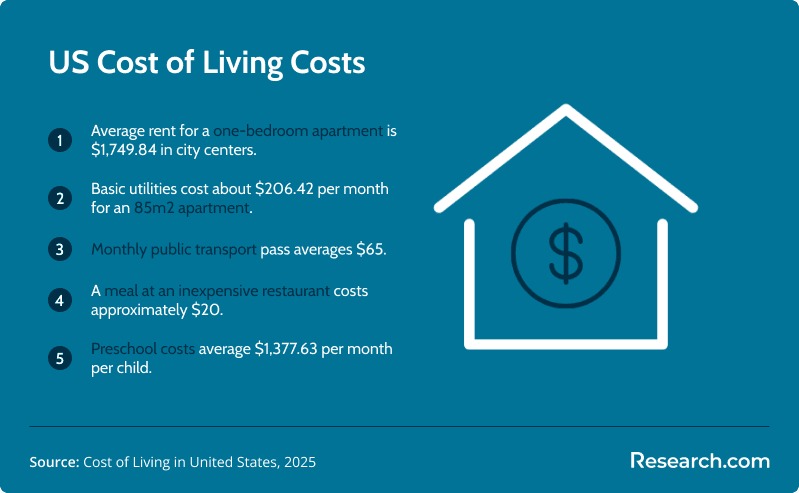
The cost side matters. The average annual tuition discussed earlier is $13,599 for in-state students and $26,262 for out-of-state students, while broader annual costs including living expenses can be about $27,146. Numbeo lists average monthly living costs for a single person in the United States at approximately $1,164.4 without rent, which means location and housing choices can significantly affect affordability.
The earnings side can be compelling but should be evaluated realistically. Roles in this guide report salaries from $106,760 for Technical Support Managers to $169,510 for Computer and Information Systems Managers. Job growth rates range from 10% to 26%, depending on the occupation. A degree may help you compete for these roles, but experience, technical credibility, leadership record, and industry fit still matter.
| The degree may be worth it if... | You may want another option if... |
| You already work in IT and need graduate credentials for management advancement | You want deep software engineering or research training more than management preparation |
| You want to lead systems, data, cybersecurity, or IT operations teams | You are unsure whether you want a technology career and would need to borrow heavily |
| Your employer offers tuition assistance or promotion pathways tied to graduate education | A certification or lower-cost specialized program would meet your immediate goal |
| The curriculum includes practical projects aligned with your target role | The program has weak career services, unclear outcomes, or limited technical relevance |
What Graduates Say About Their Master’s in Information Systems
- My Master’s in Information Systems helped me access opportunities I had not been able to reach before. The coursework was demanding but highly applicable, and the project-based assignments gave me experience solving problems similar to the ones I now handle at work. Pete
- Studying online made the degree possible for me. I could keep my full-time job, use course concepts immediately, and connect what I was learning to the systems and decisions I worked with every week. Julia
- The program was challenging, but it gave me stronger analytical, technical, and management skills. Those skills have been especially useful in my IT manager role and have helped me take on more responsibility. Liam
Can a fast track computer science degree complement a Master’s in Information Systems?
A fast-track computer science pathway can complement MIS training when a student needs deeper technical ability in programming, software design, algorithms, systems architecture, or data-intensive computing. MIS programs often focus on managing and applying technology, while computer science study can build stronger technical foundations for professionals who want to work more closely with engineering teams.
This combination may be useful for careers involving software strategy, cybersecurity, data analytics, systems integration, or technical product leadership. Students interested in accelerating technical preparation can review a fast track computer science degree and compare its content with MIS requirements before committing to both pathways.
What challenges do graduates of Master’s in Information Systems face?
MIS graduates often face a labor market where technology changes quickly and employers expect continuous skill development. A graduate degree can provide a strong framework, but professionals still need to keep learning about cloud platforms, cybersecurity threats, AI tools, data governance, enterprise systems, and changing regulatory requirements.
Another challenge is proving practical leadership ability. Employers may want evidence that candidates can manage teams, budgets, vendors, deadlines, and cross-functional communication—not just complete technical coursework. Competition can be especially strong for the highest paying computer science jobs, where advanced technical skill, leadership experience, and measurable business impact often matter together.
| Common challenge | Why it happens | How to prepare |
| Keeping skills current | Platforms, security threats, and AI tools change quickly | Choose electives and projects that build adaptable technical judgment |
| Competing for management roles | Employers often require both experience and graduate education | Document leadership results, project outcomes, and business impact |
| Translating technical work for executives | MIS professionals often bridge IT and business teams | Practice concise reporting, budget justification, and stakeholder communication |
| Building a professional network | Online and part-time students may have fewer informal networking moments | Use alumni events, faculty connections, internships, and professional associations |
Can You Balance Quality and Affordability in an MIS Program?
Yes, but it requires comparing more than tuition. A low-cost program is not automatically a good value if it has weak advising, outdated courses, limited career services, or poor alignment with your goals. At the same time, a higher-priced program is not automatically better if it does not improve your career options enough to justify the expense.
Students should compare curriculum depth, accreditation, faculty, employer connections, technology tools, flexibility, graduation requirements, and total cost. Looking at other affordable technical education models, including the cheapest online universities for engineering, can help students see how schools structure cost, quality, online delivery, and career relevance.
Common mistakes to avoid when choosing an MIS program
- Choosing a program before verifying accreditation and institutional credibility.
- Comparing only tuition while ignoring fees, books, software, travel, and living costs.
- Assuming every online program receives the same employer response.
- Ignoring whether the curriculum includes current topics such as cybersecurity, analytics, cloud systems, governance, and AI-related change.
- Relying only on rankings instead of checking course content, outcomes, faculty, and career support.
- Assuming a degree alone will guarantee a salary increase or management role.
- Not asking whether online students receive the same advising, networking, and career services as campus students.
How can AI integration transform Information Systems careers?
AI is changing the way information systems professionals manage data, automate workflows, detect risks, support decision-making, and improve system performance. MIS graduates who understand AI can help organizations evaluate tools, govern data responsibly, reduce operational inefficiencies, and integrate predictive insights into business processes.
AI knowledge is especially useful when paired with strong information systems fundamentals. Professionals need to understand not only what AI tools can do, but also how data quality, privacy, cybersecurity, user adoption, and system integration affect real-world implementation. Students who want focused preparation can explore the best online AI degrees and compare them with MIS electives in analytics, machine learning, automation, and data governance.
Should Health Informatics Complement Your Information Systems Expertise?
Health informatics can be a strong complement to MIS training for students who want to work in healthcare technology, hospital systems, clinical data, patient privacy, telehealth operations, or healthcare analytics. Healthcare organizations have specialized requirements around patient data, compliance, interoperability, workflow design, and clinical decision support.
General information systems knowledge provides a foundation for managing technology, but healthcare roles may require more specific understanding of medical data systems and regulatory expectations. Students targeting this sector can compare MIS electives with health informatics programs online to determine whether a specialized credential would improve their preparation.
Questions to Ask Before Enrolling in a Master’s in Information Systems Program
- Is the institution accredited, and is the accreditation clearly stated by a recognized accrediting body?
- Does the curriculum match the roles I want, such as IT manager, systems director, cybersecurity leader, data systems manager, or technology consultant?
- How often are courses updated to reflect changes in cloud computing, AI, cybersecurity, analytics, and enterprise systems?
- Are online students taught by the same faculty and given the same career support as campus students?
- What is the total program cost after tuition, fees, books, software, and any required travel?
- Can I complete the program while working full time, and what is the realistic weekly workload?
- Does the program include applied projects, internships, capstones, or portfolio-building assignments?
- What career outcomes does the school report for graduates in roles similar to my target job?
- Will my employer help pay for the degree, and are there repayment conditions if I leave the company?
- Would a certificate, MBA, computer science degree, cybersecurity program, or health informatics program serve my goals better?
References
- Bureau of Labor Statistics. Computer and Information Research Scientists.
- Bureau of Labor Statistics. Computer and Information Systems Managers.
- College Tuition Compare. Management Information Systems and Services (other) Graduate Program 2024 Tuition.
- Drexel University. Online Degree vs. Traditional Degree: Which is Right for You?
- Education Data. Average Cost of College & Tuition.
- Numbeo. Cost of Living in United States.
- Zippia. Director of Information Jobs.
- Zippia. Information Services Manager Jobs.
- Zippia. Information Systems Director Jobs.
- Zippia. Information Technology Director Jobs.
- Zippia. Information Technology Manager Jobs.
- Zippia. Information Technology Operations Manager Jobs.
- Zippia. Senior Manager-Systems Jobs.
- Zippia. Technical Support Manager Jobs.
Key Insights
- A Master’s in Information Systems is best suited for professionals who want to manage technology as a business asset, not just perform technical tasks.
- The degree can lead to roles with salaries ranging from $106,760 to $169,510, but salary outcomes depend on experience, location, industry, and leadership responsibility.
- Average annual tuition is $13,599 for in-state students and $26,262 for out-of-state students, while broader annual costs can reach about $27,146 when living and education expenses are included.
- Online MIS degrees can be respected when they come from accredited, reputable institutions with strong curricula and comparable academic standards.
- Career demand is strongest for professionals who combine MIS knowledge with practical skills in cybersecurity, analytics, AI, cloud systems, governance, and communication.
- The degree is most likely to be worth it when it supports a specific career move, keeps debt manageable, and provides applied projects or employer connections.
- Before enrolling, compare accreditation, total cost, curriculum relevance, faculty expertise, career services, online student support, and whether the program’s outcomes match your target role.
Other Things You Should Know About Master’s in Information Systems
Most MIS programs require 30 to 36 credit hours, including database management, systems analysis, enterprise architecture, cybersecurity, and IT project management. Many also require a capstone or internship before graduation. These courses prepare students to design, manage, and secure business information systems.
In 2027, a Master's in Information Systems can be pivotal in business and healthcare by optimizing data management, enhancing decision-making via analytics, and improving operational efficiency. Graduates often work on systems integration, cybersecurity, or business intelligence, driving innovation across these industries.
Typical admission requirements for a Master’s in Information Systems in 2027 include a bachelor’s degree in a related field, a minimum GPA of 3.0, letters of recommendation, a personal statement, and sometimes GRE or GMAT scores. Some programs may also require relevant work experience.


