2027 How to Become a Mental Health Counselor in Columbus, OH: Education Requirements & Certification

Co-Founder and Chief Data Scientist
Becoming a mental health counselor in Columbus, OH, is a long but clearly defined path: you need graduate-level counseling education, state licensure, supervised clinical experience, and ongoing professional development. The decision matters because Ohio’s counseling workforce is projected to expand over 20% by 2032, and Columbus continues to need professionals who can support individuals, families, students, and communities facing behavioral health challenges.
This guide explains the education, financial aid options, licensure steps, certifications, specializations, salary expectations, workplace settings, and practical decisions involved in becoming a mental health counselor in Columbus. It is designed for students comparing counseling programs, career changers planning a move into behavioral health, and current helping professionals who want to understand Ohio’s LPC and LPCC pathway before committing time and money.
Quick Answer: How Do You Become a Mental Health Counselor in Columbus, OH?
To become a mental health counselor in Columbus, you typically earn a bachelor’s degree, complete a CACREP-accredited master’s degree in counseling or a closely related field, pass the required counseling exams, apply for Ohio’s Licensed Professional Counselor credential, and then complete supervised clinical experience to qualify for Licensed Professional Clinical Counselor status. The LPCC credential is the key license for independent clinical practice in Ohio.
- Education comes first: Ohio expects graduate-level counseling preparation, and CACREP accreditation is central to the state licensure pathway.
- Licensure happens in stages: Most candidates move from LPC to LPCC after meeting supervision and exam requirements.
- Columbus offers multiple practice settings: Counselors may work in hospitals, schools, community agencies, telehealth practices, addiction treatment programs, and private practice environments.
- Academic requirements for mental health counselors in Columbus
- Financial aid options for counseling students in Ohio
- Ohio LPC and LPCC licensure process
- License reciprocity and endorsement for out-of-state counselors
- Counseling credentials and certifications available in Columbus
- In-demand counseling specializations in Columbus
- Mental health counselor salaries in Columbus
- Professional development and networking opportunities
- Technology and telehealth in counseling practice
- Transitioning from counseling to marriage and family therapy
- Demand for mental health counselors in Columbus
- Common workplaces for mental health counselors
- How difficult the counseling career path is
What are the academic requirements to become a mental health counselor in Columbus, OH?
The academic path to mental health counseling in Columbus starts before licensure. Ohio requires professional counselors to build a foundation in counseling theory, ethics, assessment, human development, multicultural practice, and supervised clinical work. The degree you choose matters because a program that does not align with Ohio licensure expectations can delay or limit your eligibility.
- Bachelor’s degree: Start with an undergraduate degree. Psychology, social work, human services, and related majors can be useful, but Ohio does not require one specific undergraduate major for future counseling students.
- Master’s degree: Complete a master’s program in counseling or a closely connected area such as clinical mental health counseling or addiction counseling. The program should be accredited by the Council for Accreditation of Counseling & Related Educational Programs (CACREP). Ohio has 21 CACREP-accredited programs.
- Graduate coursework: Expect training in counseling methods, human growth and development, ethical practice, group counseling, multicultural counseling, diagnosis-related content, and professional identity.
- Practicum and internship: Counseling students complete at least 100 hours of supervised practicum and at least 600 hours of clinical internship as part of their graduate preparation.
- Postgraduate clinical experience: After the master’s degree, candidates who want independent clinical practice complete 3,000 hours of supervised clinical work over a minimum of two years to qualify for Ohio’s LPCC credential.
| Stage | What You Complete | Why It Matters |
| Undergraduate study | Bachelor’s degree, often in psychology, social work, human services, or a related field | Builds the academic base needed for admission to counseling graduate programs |
| Graduate education | CACREP-accredited master’s degree in counseling or a related counseling field | Aligns your education with Ohio’s professional counseling licensure expectations |
| Practicum | At least 100 hours of supervised counseling practice | Introduces direct clinical skill-building under faculty and site supervision |
| Internship | At least 600 hours of clinical internship | Provides structured, real-world counseling experience before graduation |
| Postgraduate supervision | 3,000 hours over a minimum of two years | Supports advancement from LPC-level practice toward independent LPCC practice |
Before enrolling, ask each program whether its curriculum is designed for Ohio LPC and LPCC eligibility. Online programs can be convenient, but students should confirm that field placements, supervision policies, and state authorization rules fit their Columbus-area career goals.
Are there financial aid programs for mental health counselors in Columbus, OH?
Yes. Counseling students in Columbus may be able to reduce graduate school costs through state scholarships, federal workforce programs, institutional aid, assistantships, paid internships, and loan repayment opportunities. The best strategy is to compare aid sources early because some programs are limited to students in specific fields, service settings, or stages of completion.
Great Minds Fellowship
The Great Minds Fellowship is a state-funded scholarship for Ohio students who are within two years of finishing a degree or certificate in mental health counseling or a related behavioral health field. Eligible students may receive up to $15,000, along with paid internships at Community Behavioral Health Centers and support for licensing exam fees. The award increased from $10,000 for enrollments beginning Fall 2024 onward.
Mental Health Service Professional Demonstration Grant Program
This federal program is designed to expand the school-based mental health workforce. Competitive grant funding may support tuition waivers, stipends, and paid internships. Kent State University has received nearly $144,000 in recent funding to help prepare students for school counseling roles.
Federal Grants for Counseling Students
Federal options may include the Behavioral Health Workforce Education and Training Program and the National Health Service Corps. These programs can provide scholarships, loan repayment, grants, or other forms of support for students and professionals entering behavioral health service roles.
Ohio Department of Mental Health and Addiction Services Funding
Some Ohio Department of Mental Health and Addiction Services funding is distributed through organizations rather than directly to individual students. Even so, universities, nonprofits, and behavioral health agencies may use these funds to offer scholarships, stipends, paid training placements, or other student support.
| Aid Option | Potential Benefit | Best Fit |
| Great Minds Fellowship | Up to $15,000, paid internships, and licensing exam fee support | Ohio students close to completing a qualifying behavioral health degree or certificate |
| Mental Health Service Professional Demonstration Grant Program | Tuition waivers, stipends, and paid internships through participating institutions | Students preparing for school-based mental health roles |
| Behavioral Health Workforce Education and Training Program | Workforce-focused grant support | Students entering behavioral health service areas |
| National Health Service Corps | Scholarship or loan repayment opportunities | Counselors willing to serve qualifying communities or settings |
| Institutional scholarships and assistantships | School-based tuition support or paid academic work | Graduate students comparing counseling programs in or near Columbus |
To improve your chances of receiving aid, contact admissions offices, counseling department coordinators, field placement directors, and financial aid staff before applying. Ask whether paid practicum or internship placements are available, whether scholarships can be combined, and whether graduates have used loan forgiveness programs after working in underserved communities.
If you are still comparing related careers, Research.com’s guide to clinical mental health counselor and clinical psychologist career paths can help you understand how counseling differs from doctoral-level psychology training.
The following chart shows the industries and organizations that employ the largest number of substance abuse, behavioral disorder, and mental health counselors nationwide.
What is the licensure process for mental health counselors in Columbus, OH?
Mental health counselors in Columbus follow Ohio’s professional counseling licensure structure. In practical terms, most candidates first qualify for the Licensed Professional Counselor credential and then pursue the Licensed Professional Clinical Counselor credential after completing supervised experience. The LPCC is the more advanced credential because it supports independent clinical practice.
The Ohio pathway generally includes the following steps:
- Earn a master’s degree in counseling or a related field from a CACREP-accredited program.
- Apply for the Licensed Professional Counselor credential and submit the $80 application fee.
- Pass the National Counselor Examination and complete a criminal background check through Ohio’s Bureau of Criminal Identification and Investigation or the FBI.
- Understand the LPC scope of practice. Ohio does not require supervised clinical hours after graduation for the LPC, but LPCs work under supervision and have a limited scope for diagnosis and treatment.
- Move toward the Licensed Professional Clinical Counselor credential if you want independent practice authority.
- Complete 24 months and 3,000 hours of supervised clinical experience while licensed as an LPC.
- Make sure the supervised experience includes at least 1,500 hours of direct client counseling and 150 hours of supervision from a qualified supervisor.
- Submit the LPCC application with the $100 fee.
- Pass the National Clinical Mental Health Counseling Examination and the Ohio laws and rules exam, which costs $30.
- Use available Ohio testing locations, including centers in Columbus, when scheduling required exams.
| Credential | Main Requirements | Practice Implication |
| LPC | Master’s degree, $80 application fee, National Counselor Examination, background check | Allows supervised professional counseling practice with limitations on independent diagnosis and treatment |
| LPCC | LPC license, 24 months, 3,000 supervised hours, 1,500 direct client counseling hours, 150 supervision hours, $100 application fee, National Clinical Mental Health Counseling Examination, $30 laws and rules exam | Supports independent clinical counseling practice in Ohio |
If your goal is the most direct route into mental health counseling, plan backward from the LPCC requirements. Choose a licensure-aligned graduate program, verify practicum and internship support, and identify potential supervisors before you graduate.
Is there license reciprocity for mental health counselors in Columbus, OH?
Ohio does not offer broad automatic reciprocity for mental health counselors licensed in other states. Out-of-state counselors who want to practice in Columbus should review Ohio’s endorsement or reciprocity rules before relocating or accepting a position.
Only counselors licensed in Kentucky may apply through Ohio’s reciprocity process using the eLicense system. Counselors from other states generally apply by endorsement. To use this pathway, applicants must have held a license in another state for a minimum of five years and must have earned a graduate counseling degree from an accredited institution. They must also have passed either the National Counselor Examination or the National Clinical Mental Health Counseling Examination.
Typical documentation includes official transcripts, exam scores, a criminal background check, proof of current licensure, and evidence of at least two years of relevant professional experience. Depending on the applicant’s background, Ohio may require additional steps such as an ethics or jurisprudence exam. Because counseling licensure portability remains limited across the United States, out-of-state applicants should begin this review well before changing jobs.
What counseling certifications can you get in Columbus, OH?
In Columbus, the most important counseling credentials are the Ohio LPC and LPCC licenses. National certification can also strengthen professional credibility, especially for counselors who may later move, apply for competitive roles, or pursue specialized practice areas. These credentials are not interchangeable, so it is important to understand what each one does.
- Licensed Professional Counselor: The LPC is Ohio’s entry professional counseling license. It requires a master’s degree in clinical mental health counseling, the National Counselor Examination, and the Ohio Laws and Rules Examination. LPCs may work in settings such as schools, hospitals, agencies, and private practices, but they practice under supervision.
- Licensed Professional Clinical Counselor: The LPCC is the advanced Ohio counseling license for independent clinical practice. Candidates complete 3,000 supervised clinical hours over two years and pass the National Clinical Mental Health Counseling Examination. This credential can support independent work and clinical leadership responsibilities.
- National Certified Counselor: The NCC is offered by the National Board for Certified Counselors. It is commonly associated with a CACREP-accredited master’s degree and passing the National Counselor Examination. It is not required for Ohio licensure, but it can support mobility and demonstrate national professional standards.
Some Columbus-area graduates from CACREP-accredited programs report strong job placement outcomes, often reaching 100% within a year. When evaluating this claim from any school, ask how the placement rate is calculated, which job titles count, whether graduates are working in licensed counseling roles, and how many graduates were included in the reporting group.
What types of counseling specializations are in demand in Columbus, OH?
Columbus needs counselors across several service areas, but the strongest fit depends on your training, client population preferences, tolerance for crisis work, and long-term licensure goals. Specialization can help you compete for roles, choose practicum sites, and build a clearer professional identity.
Clinical Mental Health Counseling
Clinical mental health counselors work with concerns such as depression, anxiety, trauma, and substance use disorders. They may practice in hospitals, outpatient programs, community mental health agencies, and private practice settings. This path is a good fit for students who want broad clinical training and the option to work with adults, adolescents, groups, or specialized populations.
Addiction Counseling
Addiction counseling remains a major need in Columbus because Ohio continues to face the effects of opioid misuse and other substance use challenges. Counselors in this area may work in rehabilitation programs, hospitals, outpatient clinics, community agencies, or integrated behavioral health teams. This specialization can be emotionally demanding but highly relevant for counselors interested in recovery-focused care.
School Counseling
School counselors support K-12 students with academic planning, emotional development, behavioral concerns, crisis response, and family-school communication. Columbus-area schools need professionals who understand youth mental health, student development, and the pressures affecting diverse student populations.
Marriage and Family Therapy
Marriage and family therapy focuses on couples, families, communication patterns, parenting concerns, relational conflict, and major life transitions. Counselors interested in this direction should understand that MFT licensure has its own academic, clinical, and examination requirements.
| Specialization | Typical Clients | Common Work Settings | Best For Students Who Want To |
| Clinical mental health counseling | Adults, adolescents, groups, and clients with varied mental health concerns | Hospitals, clinics, community agencies, private practices | Build a broad clinical counseling career |
| Addiction counseling | Clients and families affected by substance use disorders | Rehabilitation centers, outpatient programs, hospitals, community agencies | Support recovery and behavioral change |
| School counseling | K-12 students and families | Public and private schools, school-based mental health programs | Work with youth development, academic planning, and student well-being |
| Marriage and family therapy | Couples, families, and relational systems | Family therapy practices, agencies, clinics | Focus on relationships, family systems, and life transitions |
Advanced education may help counselors move into teaching, supervision, research, or specialized clinical leadership roles. If you are considering doctoral study, compare costs carefully and review options such as affordable online PhD in Counseling programs before committing.
How much do mental health counselors typically earn in Columbus, OH?
Mental health counselor pay in Columbus depends on job title, license level, setting, years of experience, specialty, and whether the role involves supervision, private practice, telehealth, or high-need clinical populations. Salary estimates also vary by source, so use ranges rather than one number when evaluating return on investment.
The average licensed mental health counselor pay in Columbus is around $72,327 per year, or about $34.77 per hour, as of mid-2025. The 25th percentile is about $56,100, while the 75th percentile is about $84,400. Higher-earning counselors may make close to $97,381 per year, particularly when they have stronger credentials, specialized experience, or supervisory responsibilities.
Another comparison point is mental health therapist pay in Columbus, which averages $65,259, with most salaries falling between $58,445 and $71,508. Licensed professional counselors report a higher average of $77,725 annually. Some posted roles list compensation up to $100,000 for experienced or specialized candidates.
| Role or Salary Measure | Reported Pay in Columbus | How to Interpret It |
| Licensed mental health counselor average | $72,327 annually, or about $34.77 per hour | A general benchmark for licensed counseling roles |
| Licensed mental health counselor 25th percentile | About $56,100 | A useful reference for earlier-career or lower-paying roles |
| Licensed mental health counselor 75th percentile | About $84,400 | Often reflects stronger experience, setting, or specialization |
| Higher-end licensed mental health counselor pay | Close to $97,381 per year | May apply to experienced, specialized, or supervisory counselors |
| Mental health therapist average | $65,259 | A related title that may not map exactly to the same license level |
| Mental health therapist common range | $58,445 to $71,508 | Shows how title definitions can affect salary comparisons |
| Licensed professional counselor average | $77,725 annually | Another benchmark for counseling-specific job titles |
| Some experienced or specialized job listings | Up to $100,000 | Not a guaranteed outcome; review duties, caseload, license requirements, and employment model |
If you are comparing counseling with social work, review the difference between LPC and LCSW degree programs. The right choice depends on whether you want counseling-focused clinical practice, social work licensure, case management opportunities, or broader human services roles.
What Are the Available Professional Development and Networking Opportunities for Mental Health Counselors in Columbus, OH?
Professional development is not optional for counselors who want to remain effective, ethical, and employable. In Columbus, counselors can build skills through continuing education, clinical workshops, supervision training, conference participation, specialized certification programs, and local behavioral health networks.
Useful development areas include trauma-informed care, addiction treatment, crisis intervention, telehealth ethics, multicultural counseling, school-based services, documentation, assessment, and supervision. State and regional events can also help new counselors meet supervisors, learn about agency hiring needs, and stay current on Ohio counseling rules.
For a broader view of local credentialing and practice options, Research.com’s guide on how to become a licensed therapist or LPC in Columbus can help you compare related pathways.
How Do Mental Health Counselors Leverage Technology and Telehealth in Columbus, OH?
Telehealth is now a routine part of many counseling practices in Columbus. Counselors may use secure video platforms, electronic health records, digital intake forms, appointment reminders, and client communication tools to manage care. These systems can improve access for clients who face transportation, scheduling, disability, or geographic barriers.
Technology also creates professional responsibilities. Counselors must protect confidentiality, use appropriate platforms, document services properly, follow privacy standards, and understand when remote care is not clinically appropriate. AI-enabled tools may help with administrative workflows, but they do not replace clinical judgment, licensure, supervision, or ethical decision-making.
Counselors interested in technology-supported treatment for behavioral health and addiction services may also explore how to become a substance abuse counselor in Columbus to understand a related high-need pathway.
Can I Transition to Marriage and Family Therapy in Columbus, OH?
Yes, but the transition from mental health counseling to marriage and family therapy is not simply a change in job title. Marriage and family therapy uses a relational and systems-based approach, and the licensure pathway has separate academic, supervised experience, and examination requirements.
A counselor who wants to move into MFT work may need coursework in family systems, couple and family therapy methods, relational assessment, and systemic theory. Targeted supervised clinical hours are also typically required under qualified supervision. Before changing tracks, compare the requirements, timeline, and license scope so you do not duplicate coursework unnecessarily.
For a focused breakdown, review Research.com’s guide to marriage and family therapist license requirements in Columbus.
Are mental health counselors in demand in Columbus, OH?
Yes. Columbus has a strong need for mental health counselors across schools, clinics, community agencies, hospitals, addiction treatment programs, private practices, and telehealth services. Demand is influenced by greater public awareness of mental health, expanded behavioral health services, substance use treatment needs, and the growing use of integrated care models.
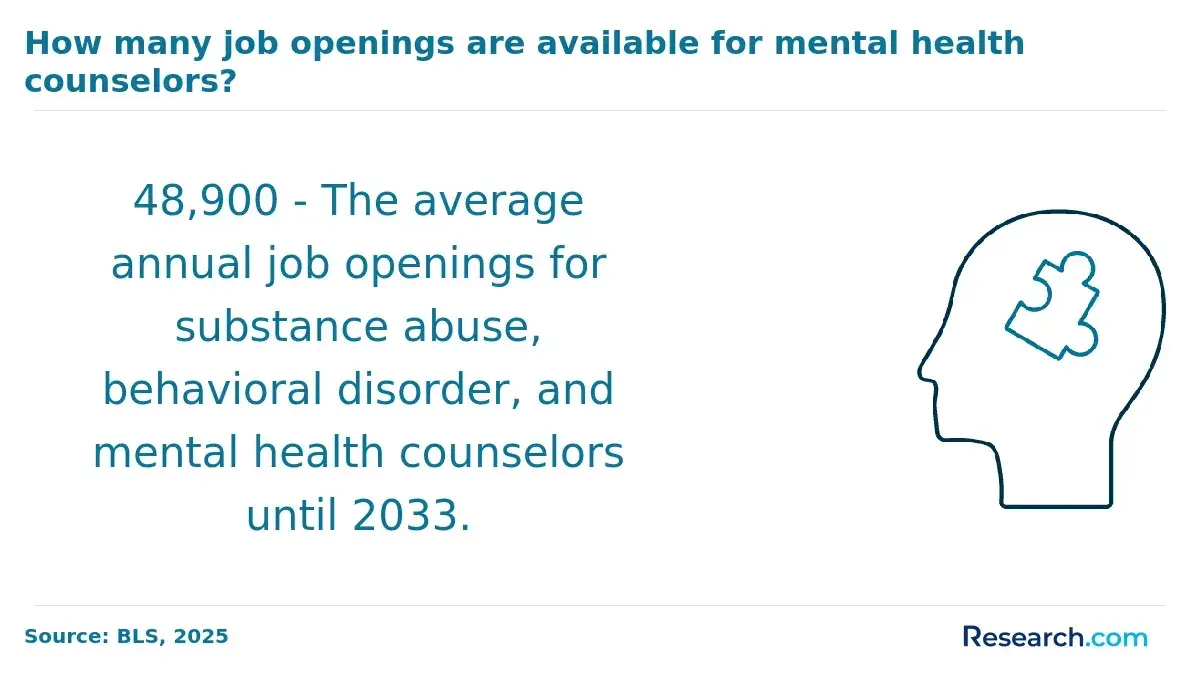
One salary estimate places average yearly pay for mental health counselors in Columbus at around $60,000, though actual pay varies by license, specialty, setting, and experience. Statewide projections point to growth in counseling roles, especially for substance abuse, behavioral disorder, and mental health counselors, over the next decade.
For new graduates, the job market can be encouraging but not automatic. Employers often value practicum and internship experience, familiarity with electronic health records, crisis response skills, and readiness to work with diverse clients. Networking with supervisors, field placement sites, and professional organizations can make a meaningful difference during the first job search.
-
: "
A Columbus counselor described the local market as competitive but workable. She said the biggest challenge was not simply getting hired, but finding the right environment, whether that meant a school, a community clinic, or another behavioral health setting. She also emphasized that local networking and broad clinical experience helped her secure a role that matched her goals.
"
The chart below shows the states with the highest employment levels for substance abuse, behavioral disorder, and mental health counselors nationwide.
Where do mental health counselors typically work in Columbus, OH?
Mental health counselors in Columbus work in a wide range of settings. Your best fit depends on whether you prefer medical teams, school environments, community-based services, private practice, crisis work, addiction treatment, or telehealth.
Healthcare Systems
Hospitals, outpatient clinics, and specialty care centers employ counselors to provide assessments, individual counseling, group counseling, care coordination, and collaboration with medical providers. Equitas Health, for example, serves LGBTQ+ and HIV-affected communities and addresses concerns such as trauma, anxiety, and substance use.
Education Sector
School-based counselors and clinicians support students with emotional concerns, academic stress, behavioral issues, family challenges, and crisis needs. Syntero places licensed clinicians in local schools to help students and families manage academic, social, and mental health concerns.
Community Mental Health Agencies
Community agencies often serve clients with complex needs, limited resources, or barriers to care. Counselors may provide therapy, case coordination, crisis response, referrals, and recovery support. The Recovery Village Columbus focuses on addiction treatment and mental health recovery, including rehabilitation and reintegration support.
| Work Setting | Common Responsibilities | Potential Trade-Offs |
| Hospitals and healthcare systems | Assessment, therapy, integrated care, coordination with medical teams | Can involve complex cases, faster pace, and interdisciplinary documentation demands |
| Schools | Student support, crisis response, family communication, academic and emotional counseling | Requires comfort working with youth, families, school policies, and academic calendars |
| Community agencies | Therapy, case coordination, resource referral, crisis support | Often mission-driven but may involve high caseloads and clients with significant needs |
| Addiction treatment programs | Recovery counseling, relapse prevention, group work, family support | Requires resilience, strong boundaries, and specialized substance use training |
| Private practice and telehealth | Individual therapy, scheduling flexibility, niche specialization | May require business skills, referral building, insurance knowledge, and independent practice credentials |
As of early 2025, more than 400 mental health counseling positions were available in Columbus. These included full-time, part-time, and remote roles, giving licensed counselors multiple ways to match work arrangements with their career stage and personal responsibilities.
Is it challenging to become a mental health counselor in Columbus, OH?
Yes, the path is demanding. It requires graduate school, exams, background checks, supervised clinical experience, and ongoing professional learning. The challenge is manageable for students who plan carefully, choose the right program, and understand the licensure timeline before enrolling.
The most time-intensive stage is often the period between LPC and LPCC. Candidates must complete at least 3,000 supervised clinical hours over a minimum of two years, including 1,500 direct client counseling hours and 150 face-to-face supervision hours. Balancing these requirements with paid work, family obligations, and emotional exposure to client distress can be difficult.
The career also requires strong boundaries, ethical judgment, documentation skills, cultural humility, and the ability to keep learning as laws, technology, and clinical expectations change. Students who want flexibility should compare online and campus-based options carefully. A low-cost online master’s in counseling program may be practical, but only if it aligns with Ohio licensure expectations and offers appropriate field placement support.
| Common Mistake | Why It Can Hurt You | Better Approach |
| Choosing a program without checking CACREP alignment | Licensure eligibility can become complicated or delayed | Confirm accreditation and Ohio LPC/LPCC preparation before applying |
| Looking only at tuition | Fees, exam costs, commuting, unpaid fieldwork, and lost work hours can change the real cost | Build a full cost estimate that includes tuition, fees, books, practicum, internship, and exams |
| Assuming any online program works for Ohio | State authorization, field placement rules, and licensure fit may vary | Ask the program directly whether it prepares students for Ohio licensure |
| Waiting too long to arrange supervision | LPCC progress depends on qualified supervised experience | Discuss supervision options during internship and early job interviews |
| Relying on rankings alone | A highly ranked program may not be the best fit for your budget, schedule, or licensure needs | Compare accreditation, placement support, field sites, faculty access, cost, and graduate outcomes |
| Assuming salary outcomes are guaranteed | Pay varies by license, employer, specialty, and experience | Review local job postings and ask programs about verified graduate outcomes |
What Mental Health Counselors in Columbus, OH Say About Their Careers
-
: "
Working as a mental health counselor in Columbus has given me both purpose and stability. Demand for services continues to grow, and the local salary range has made the career financially workable for my family. Jonas
"
-
: "
Columbus brings together many different communities, so the work rarely feels repetitive. The variety of client experiences pushes me to keep learning and makes the profession feel meaningful. Ryan
"
-
: "
The professional learning opportunities here have helped me stay engaged. Workshops, certifications, and university-based training options make it easier to keep improving my clinical skills. Phoebe
"
How to Decide If This Career Path Is Right for You
Before investing in a counseling graduate program, consider whether the profession fits your strengths, values, and life constraints. Counseling can be deeply rewarding, but it is not a quick credential or a low-stress career.
| This Path May Fit You If | You May Want Another Path If |
| You want a clinical helping profession focused on mental health and behavior change | You want to prescribe medication or primarily work in medical diagnosis and treatment |
| You are willing to complete a master’s degree and supervised postgraduate experience | You need a career that requires only short-term training |
| You can handle emotionally complex conversations and maintain boundaries | You prefer work with little exposure to crisis, trauma, or interpersonal distress |
| You are interested in schools, clinics, community agencies, addiction treatment, or private practice | You mainly want research, testing, or doctoral-level psychology work |
| You are comfortable with documentation, ethics, privacy rules, and continuing education | You want a role with minimal regulation or licensing oversight |
Questions to Ask Before Choosing a Counseling Program in Columbus
- Is the program CACREP-accredited, and does it prepare students for Ohio LPC and LPCC requirements?
- How does the program help students secure practicum and internship placements in or near Columbus?
- Are online students eligible for the same placement support as campus students?
- What are the total costs beyond tuition, including fees, books, exam fees, commuting, and background checks?
- Do students have access to scholarships, assistantships, paid internships, or Great Minds Fellowship support?
- What percentage of graduates pass required exams and obtain counseling employment?
- How are job placement rates calculated, and which job titles are included?
- Does the curriculum support your preferred specialization, such as school counseling, addiction counseling, or clinical mental health counseling?
- What support does the program offer for finding qualified supervision after graduation?
- Will the program still meet your goals if you later move outside Ohio?
Related Articles for Nearby Cities
- 2027 How to Become a Mental Health Counselor in Cincinnati, OH: Education Requirements & Certification
- 2027 How to Become a Mental Health Counselor in Toledo, OH: Education Requirements & Certification
- 2027 How to Become a Mental Health Counselor in Cleveland, OH: Education Requirements & Certification
- 2027 How to Become a Mental Health Counselor in Fort Wayne, IN: Education Requirements & Certification
- 2027 How to Become a Mental Health Counselor in Lexington, KY: Education Requirements & Certification
- 2027 How to Become a Mental Health Counselor in Pittsburgh, PA: Education Requirements & Certification
- 2027 How to Become a Mental Health Counselor in Detroit, MI: Education Requirements & Certification
- 2027 How to Become a Mental Health Counselor in Indianapolis, IN: Education Requirements & Certification
- 2027 How to Become a Mental Health Counselor in Louisville, KY: Education Requirements & Certification
- 2027 How to Become a Mental Health Counselor in Chicago, IL: Education Requirements & Certification
References:
- Central Ohio Primary Care. (n.d.). Your mental health matters. Central Ohio Primary Care.
- Directions Counseling & Coaching. (2024). Can mental health counselors diagnose. Directions Counseling & Coaching.
- Equitas Health. (n.d.). Mental health counseling. Equitas Health.
- MentalHealthCounselorLicense.com. (n.d.). Ohio mental health counselor licensure: LPC, PCC & LPCC requirements in OH. MentalHealthCounselorLicense.com.
- OhioHealth. (n.d.). Behavioral and mental health. OhioHealth.
Key Insights
- Columbus mental health counselors generally need a CACREP-accredited master’s degree, supervised clinical training, and Ohio licensure before they can practice independently.
- The LPC is the entry professional license, while the LPCC is the credential that supports independent clinical counseling practice in Ohio.
- The supervised experience requirement is substantial: 3,000 hours over a minimum of two years, including 1,500 direct client counseling hours and 150 supervision hours.
- Financial aid may be available through the Great Minds Fellowship, federal behavioral health workforce programs, institutional scholarships, paid internships, and loan repayment options.
- Salary estimates in Columbus vary by title and source, with reported figures including $72,327 for licensed mental health counselors, $65,259 for mental health therapists, and $77,725 for licensed professional counselors.
- Specializations such as clinical mental health counseling, addiction counseling, school counseling, and marriage and family therapy can shape your job options and training requirements.
- The smartest program choice is not always the cheapest or highest ranked. Prioritize accreditation, Ohio licensure alignment, field placement support, total cost, and verified graduate outcomes.
Other Things You Need to Know About Becoming a Mental Health Counselor in Columbus, OH
To become licensed in Columbus, OH in 2027, candidates must pass the National Counselor Examination (NCE) as required by the Ohio Counselor, Social Worker, and Marriage and Family Therapist Board. This exam assesses the knowledge critical for effective counseling practice.
In 2027, aspiring mental health counselors in Columbus, OH must complete a minimum of 3,000 hours of supervised clinical experience over at least two years. This experience must be documented and verified to meet the licensure requirements set by the Ohio Counselor, Social Worker, and Marriage and Family Therapist Board.
The Ohio Counselor, Social Worker, and Marriage and Family Therapist Board licenses mental health counselors in Columbus. Applicants must meet Ohio’s education, supervision, and exam requirements, then apply through the board for the Licensed Professional Clinical Counselor credential and any required supervisor designation.