2027 How to Become a Licensed Therapist (LPC) in Nashville, TN

Co-Founder and Chief Data Scientist
Becoming a Licensed Professional Counselor (LPC) in Nashville is a state-regulated process, not just a local career choice. You need the right graduate education, supervised clinical training, exams, background checks, and documentation before you can practice independently in Tennessee. Nashville can be an attractive market for counselors because of its healthcare presence, university network, community mental health organizations, and growing demand for behavioral health services, but the path takes planning.
This guide explains how to become an LPC in Nashville, what to look for in counseling graduate programs, how supervision works, where students may find practicum or internship experience, what salary range to expect, and how to evaluate whether Nashville is the right place to build your counseling career. It is written for prospective graduate students, career changers, counseling interns, and associate-level professionals preparing for Tennessee licensure.
Quick answer: How do you become an LPC in Nashville?
To become an LPC in Nashville, you generally need a qualifying graduate degree in counseling or a closely related field, supervised clinical training, a board-recognized counseling exam, jurisprudence or ethics preparation, fingerprinting, a background check, and approval from the Tennessee Board of Licensed Professional Counselors, Marital and Family Therapists, and Clinical Pastoral Therapists. Because Tennessee requirements can be described differently by source and licensure stage, applicants should verify current hour requirements directly with the Board before enrolling in a program or submitting supervision documentation.
- LPCs in Nashville can expect to earn between $45,000 and $65,000 annually, with higher earnings possible for experienced counselors, supervisors, private practitioners, and clinicians with specialized expertise.
- Candidates for LPC must then document a minimum of 2,000 hours of supervised clinical experience achieved over at least 24 months.
- The Tennessee Board of Licensed Professional Counselors requires candidates to complete 3,000 hours of supervised professional experience following the attainment of a master’s degree in counseling or a closely related discipline.
- Do not confuse LPCs with LPNs. The average salary for Licensed Practical Nurses (LPNs) in Nashville is approximately $45,000, reflecting a competitive healthcare market, but LPN is a nursing credential, not a counseling license.
- What education do you need to become an LPC in Nashville?
- How do you apply for LPC licensure in Nashville?
- Which Nashville-area schools offer counseling programs for aspiring LPCs?
- Where can counseling students complete internships or practicums in Nashville?
- How much do LPCs make in Nashville?
- What supervision requirements apply to LPC candidates in Nashville?
- How can LPCs build specialized counseling expertise in Nashville?Review supervision requirements again
- How can LPCs transition into marriage and family therapy in Nashville?
- What continuing education and renewal rules apply to Nashville LPCs?
- What trends are shaping LPC careers in Nashville?
- Can added certifications improve an LPC’s career options in Nashville?
- Is Nashville a strong place to work as an LPC?
- How competitive is the Nashville LPC job market?
- Which counseling associations serve Nashville professionals?
- Which employers commonly hire LPCs in Nashville?Additional employer information
What are the educational requirements to become an LPC in Nashville?
Nashville LPC candidates must meet Tennessee’s educational standards before they can move into full licensure. The most important academic requirement is graduate-level counseling preparation that aligns with state expectations for professional counseling practice. A bachelor’s degree alone is not enough for independent LPC practice.
A strong counseling program should prepare students in assessment, diagnosis, ethics, human development, counseling theory, multicultural practice, treatment planning, group counseling, and supervised clinical work. Students should also confirm whether the program is designed for Tennessee LPC eligibility, because not every counseling-related degree automatically meets licensing expectations.
- The graduate curriculum should include substantial study of counseling theories, ethical decision-making, human development, helping skills, assessment, and professional counseling methods.
- Students are expected to complete a supervised internship or practicum during graduate study. Tennessee state law mandates a minimum of 600 clock hours of direct client contact, including at least 240 hours of face-to-face counseling sessions.
- Nashville-area students often consider programs at institutions such as Tennessee State University in Nashville, Vanderbilt, Lipscomb, and other nearby universities that combine classroom learning with supervised clinical placements.
| Education checkpoint | Why it matters for LPC candidates | What to verify before enrolling |
| Graduate degree in counseling or a closely related discipline | Forms the academic foundation for Tennessee LPC eligibility | Whether the program is explicitly designed to meet Tennessee counseling licensure requirements |
| Clinical mental health coursework | Prepares students for diagnosis, treatment planning, ethics, and client care | Whether required content areas are included in the degree plan |
| Practicum and internship | Provides supervised client-contact experience before graduation | Whether the program includes the required 600 clock hours and 240 face-to-face counseling hours |
| Accreditation and state alignment | Can affect licensure review, transferability, and employer confidence | Whether accreditation and curriculum requirements are current at the time of admission |
Before choosing a school, ask the program director for written confirmation that the degree is intended to support LPC eligibility in Tennessee. This is especially important for online, out-of-state, psychology, human services, pastoral counseling, or counseling-adjacent programs.
How do you apply for licensure as a counselor in Nashville?
LPC licensure in Nashville is handled at the state level by the Tennessee Board of Licensed Professional Counselors, Marital and Family Therapists, and Clinical Pastoral Therapists. Nashville applicants follow Tennessee rules rather than a separate city licensing process. The Board reviews education, supervised experience, examination results, legal background, and professional readiness before issuing a license.
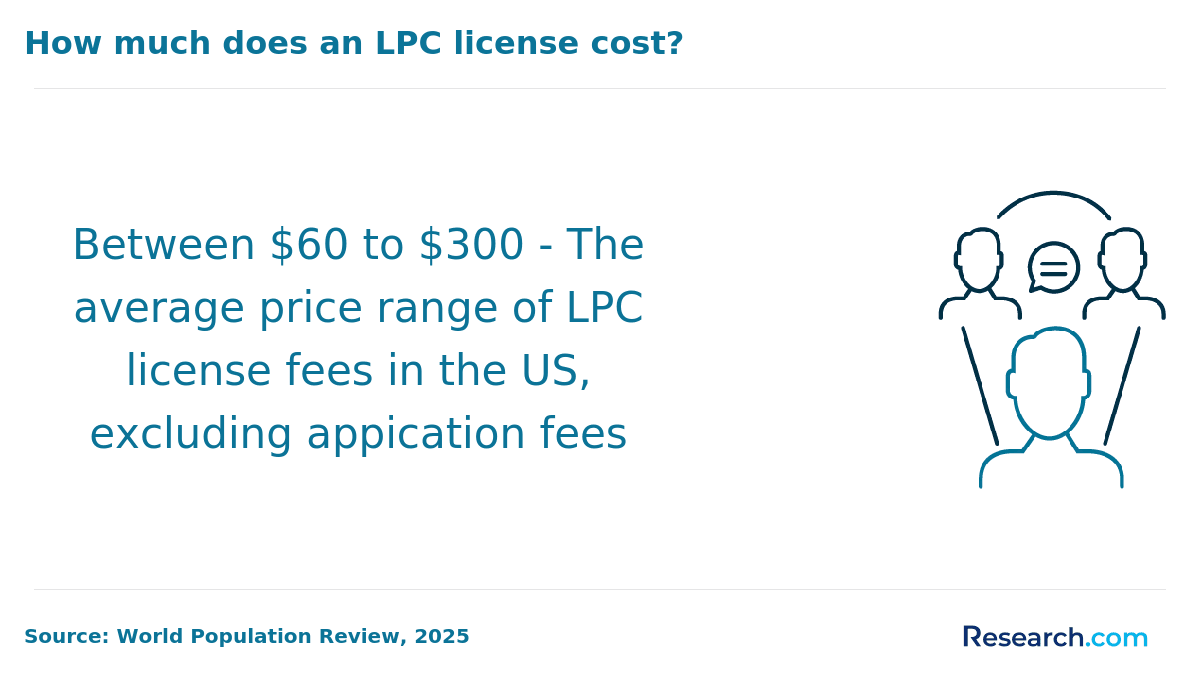
The counselor licensure application process in Nashville requires careful recordkeeping. Applicants submit the required application and fees, document supervised counseling experience, complete examination requirements, and satisfy background check procedures. Candidates must then document a minimum of 2,000 hours of supervised clinical experience achieved over at least 24 months, including at least 100 hours of direct supervision by a Board-approved LPC supervisor. Applicants should maintain organized logs, signed supervision forms, job descriptions, and client-contact summaries throughout the process.
After supervised experience is complete, candidates must pass the National Counselor Examination (NCE) or another Board-recognized equivalent. Tennessee also expects applicants to understand the state’s counseling laws, professional ethics, and jurisprudence expectations. This legal and ethical knowledge is not a formality; it affects confidentiality, recordkeeping, scope of practice, reporting duties, supervision, and client protection.
The final application stage includes fingerprinting and a criminal background check. Once all materials are submitted, the Board evaluates the file and determines whether the applicant may practice as a Licensed Professional Counselor in Nashville and across Tennessee.
If you are still deciding which counseling pathway fits your goals, it can help to compare the types of counseling jobs before committing to a graduate program or supervision plan.
The basic LPC application sequence usually includes these steps:
- Complete a qualifying graduate counseling degree.
- Submit the LPC application and required fees to the Tennessee Board.
- Complete minimum 2,000 hours supervised clinical experience over 24 months.
- Obtain at least 100 hours of direct supervision from an approved LPC supervisor.
- Pass the National Counselor Examination (NCE) or Board-approved equivalent.
- Complete jurisprudence training or show knowledge of Tennessee counseling laws and ethics.
- Complete fingerprinting and a criminal background check.
- Wait for Board review and licensure approval before practicing independently.
| Licensure step | What applicants should do | Common mistake to avoid |
| Education review | Confirm that your graduate coursework and clinical training match Tennessee expectations | Assuming any counseling-related master’s degree qualifies |
| Supervised experience | Track hours, supervision sessions, dates, and supervisor approvals from the beginning | Trying to reconstruct supervision records after months or years of work |
| Examination | Prepare for the NCE or Board-approved equivalent before your target application date | Waiting until the last stage to learn exam requirements |
| Background check | Follow fingerprinting instructions exactly and disclose required information honestly | Submitting incomplete or inconsistent application materials |
Which schools in Nashville offer programs for aspiring LPCs?
Nashville-area students have several graduate counseling options to consider, but the best program is the one that fits Tennessee licensure requirements, your budget, your preferred client population, and your schedule. Do not choose a counseling school based only on reputation. Confirm accreditation, clinical placement support, faculty supervision experience, and whether graduates commonly pursue LPC licensure in Tennessee.
Among the best LPC schools in Nashville and nearby areas are the following institutions:
- Vanderbilt University: Offers a Master of Education in Human Development Counseling with training in counseling theory, ethics, and applied clinical skills. The program holds accreditation from the Council for Accreditation of Counseling & Related Educational Programs (CACREP), which signals alignment with national counseling education standards.
- Belmont University: Provides a Master of Arts in Clinical Mental Health Counseling that emphasizes evidence-based practice, multicultural competence, and supervised clinical experience. Belmont’s CACREP accreditation is important for students planning to pursue Tennessee licensure.
- Lipscomb University in nearby Franklin, Tennessee: Features a Master of Education in Counseling with specializations connected to LPC preparation, including coursework in human development and counseling techniques. This program is also CACREP accredited.
| School | Program mentioned | Best fit for students who want | Question to ask admissions |
| Vanderbilt University | Master of Education in Human Development Counseling | A university-based counseling program with CACREP accreditation | How does the program support Tennessee LPC licensure planning? |
| Belmont University | Master of Arts in Clinical Mental Health Counseling | Clinical mental health preparation with multicultural and evidence-based training | Where do students typically complete practicum and internship hours? |
| Lipscomb University in nearby Franklin, Tennessee | Master of Education in Counseling | Counseling coursework with LPC-aligned specializations | Which specialization best matches LPC goals in Tennessee? |
Students interested in counseling but unsure about clinical mental health practice may also compare adjacent paths, including genetic counseling graduate programs, which prepare graduates for a different counseling-related healthcare specialty.
Are there internship or practicum opportunities for counseling students in Nashville?
Yes. Nashville has practicum and internship options through hospitals, community mental health agencies, nonprofit organizations, outpatient clinics, and university-affiliated training sites. These placements matter because they help students turn classroom knowledge into client-facing counseling skills while also meeting required clinical training expectations.
Students should not wait until the last semester to think about placements. Competitive sites may require interviews, background checks, immunization records, liability coverage, onboarding, and proof that the student’s program will provide faculty supervision. The right placement should match your career goals, not just your need for hours.
- Centerstone Nashville: Offers outpatient counseling internships where students may participate in client assessment, individual counseling, group services, case management, and treatment planning across a range of mental health concerns.
- Vanderbilt University Medical Center’s Department of Psychiatry: Provides clinical rotations that may involve diagnostic evaluation, treatment planning, interdisciplinary collaboration, and work with adolescent and adult clients in inpatient and outpatient environments.
- Nashville CARES: Offers internship experiences for students interested in working with HIV-positive populations, including supportive counseling, psychosocial assessment, and coordination with healthcare professionals.
| Placement type | Potential experience | Best for students interested in |
| Community mental health agency | High-volume client care, case coordination, crisis needs, outpatient therapy | Public behavioral health, underserved populations, serious mental illness |
| Hospital or medical center | Interdisciplinary care, diagnostic work, treatment planning, complex cases | Integrated healthcare, psychiatry settings, medical-behavioral collaboration |
| Nonprofit organization | Population-specific counseling, advocacy, resource coordination | Community-based care, social services, specialized client groups |
| Private or group practice | Outpatient therapy, documentation, client retention, treatment planning | Long-term therapy, private practice preparation, specialty niches |
When evaluating placements, ask who will supervise you, what client populations you will see, whether direct client-contact hours are available, how documentation is handled, and whether the site has successfully hosted counseling interns before.
How much do LPCs make in Nashville?
LPC salary in Nashville depends on experience, employer type, caseload, specialization, insurance participation, and whether the counselor works in an agency, hospital, school, group practice, or private practice. On average, LPCs in Nashville can expect to earn between $45,000 and $65,000 annually. Entry-level counselors often start near the lower end of the range, while experienced clinicians, supervisors, and specialists may earn salaries exceeding $70,000.
Compensation can vary widely by setting. Government agencies and nonprofits may offer steadier benefits but lower base pay. Healthcare systems and private practices may offer stronger earning potential, though private practice income can depend on referrals, payer contracts, client retention, and business expenses. Specialized experience in trauma counseling, substance abuse treatment, crisis care, child and adolescent counseling, or integrated behavioral health can improve a counselor’s competitiveness.
| Factor | How it can affect Nashville LPC earnings |
| Experience level | New LPCs often earn less than clinicians with years of independent practice, supervisory responsibilities, or advanced specialization. |
| Employer type | Hospitals, private practices, nonprofits, schools, and government agencies may use very different compensation models. |
| Specialization | Skills in trauma, substance abuse, crisis intervention, or family systems can strengthen job prospects and salary negotiations. |
| Licensure status | Fully licensed counselors typically have broader clinical opportunities than pre-licensed or non-licensed counseling staff. |
| Private practice model | Income may be higher, but counselors must account for overhead, insurance billing, marketing, taxes, and inconsistent caseloads. |
Because counseling licenses and requirements differ by state, review counseling certification requirements before relocating, enrolling in an out-of-state program, or planning telehealth services across state lines.
What are the supervision requirements for LPCs in Nashville?
Supervision is one of the most important stages in the LPC pathway. It is where candidates develop clinical judgment, ethical decision-making, documentation habits, treatment planning skills, and professional identity under the guidance of an approved supervisor. In Nashville, supervision requirements are governed by Tennessee rules rather than by city-specific standards.
The Tennessee Board of Licensed Professional Counselors requires candidates to complete 3,000 hours of supervised professional experience following the attainment of a master’s degree in counseling or a closely related discipline. Other licensure process descriptions also state that candidates must document a minimum of 2,000 hours of supervised clinical experience achieved over at least 24 months. Because these figures may reflect different categories, licensure stages, or source interpretations, candidates should confirm the current requirement with the Board before beginning or submitting supervised hours.
Supervised experience usually takes two to three years, depending on the candidate’s work schedule, caseload, approved setting, and supervisor availability. Hours may be earned in community mental health centers, hospitals, private practices, schools, outpatient clinics, and other qualifying counseling environments. A good supervision plan should include regular meetings, case review, ethical consultation, crisis planning, documentation review, and feedback on counseling technique.
| Supervision component | What to clarify before you start |
| Supervisor approval | Confirm that the supervisor is accepted by the Board for LPC supervision. |
| Eligible work setting | Make sure your role involves counseling duties that fit the LPC scope of practice. |
| Hour tracking | Use a consistent system for direct hours, indirect hours, supervision hours, dates, and signatures. |
| Supervision format | Ask how often supervision occurs, whether it is individual or group, and how emergencies are handled. |
| Documentation | Keep copies of forms, logs, supervisor credentials, job descriptions, and any Board correspondence. |
The strongest candidates treat supervision as professional training, not just a checklist. Choose a supervisor who can help you grow in your intended specialty, whether that is trauma work, couples counseling, substance use treatment, school-based services, crisis care, or private practice.
How can LPCs diversify their counseling expertise in Nashville?
LPCs in Nashville can strengthen their career options by developing focused expertise beyond general outpatient counseling. Specialization can help counselors serve specific populations, qualify for more targeted roles, and build a clearer referral identity in a competitive market. Common areas include trauma-informed care, child and adolescent counseling, grief counseling, substance abuse treatment, crisis intervention, couples work, and integrated behavioral health.
Specialization should be strategic. Choose an area based on client need, employer demand, supervision access, continuing education quality, and your long-term practice goals. For example, counselors interested in addiction treatment can review the pathway for how to become a drug counselor in Nashville.
| Specialization | Why Nashville LPCs may consider it | Career settings where it may help |
| Trauma-informed counseling | Useful across crisis care, community mental health, private practice, and healthcare settings | Hospitals, agencies, outpatient clinics, group practices |
| Substance abuse counseling | Can expand work with clients facing addiction, co-occurring disorders, and recovery needs | Treatment centers, nonprofits, outpatient programs, correctional settings |
| Child and adolescent counseling | Supports work with young clients, families, and school-related concerns | Schools, pediatric settings, family clinics, community agencies |
| Couples and family-focused practice | Builds skills for relationship dynamics, family systems, and communication issues | Private practice, family service agencies, group practices |
How can LPCs transition to becoming a marriage and family therapist in Nashville?
An LPC who wants to become a marriage and family therapist should understand that MFT practice is not simply individual counseling with couples added. Marriage and family therapy uses systemic, relational, and family-based frameworks that may require additional coursework, supervised experience, and a separate licensure process. LPCs considering dual licensure should compare scope of practice, supervision rules, degree requirements, and clinical philosophy before investing time and money.
This path may make sense for counselors who regularly work with couples, families, co-parenting issues, relational trauma, or family systems. It may not be necessary for LPCs whose work is primarily individual therapy, crisis response, assessment, or general outpatient counseling. For a deeper look at the separate pathway, review how to become a marriage and family therapist in Nashville.
What are the continuing education and licensure renewal requirements for LPCs in Nashville?
LPC licensure does not end after the initial license is issued. Nashville counselors must keep their Tennessee license active by meeting continuing education, renewal, ethics, and documentation requirements. Continuing education helps clinicians stay current with evidence-based practices, legal duties, telehealth expectations, diagnosis and treatment methods, cultural competence, and risk management.
Because renewal rules can change, LPCs should check Board instructions before each renewal cycle and retain proof of completed continuing education. Keep certificates, provider names, dates, course descriptions, and ethics-related documentation in an organized file. If audited, counselors may need to show that their continuing education meets Tennessee standards.
Some professionals eventually consider broader education roles, school-based work, or career changes outside counseling. In that case, comparing the cheapest way to become a teacher in Nashville may be useful, but teaching credentials are separate from LPC renewal and should not be treated as a substitute for counseling licensure requirements.
What future trends are driving LPC career growth in Nashville?
Several trends are shaping LPC work in Nashville. Telehealth has changed how many clients access therapy, integrated behavioral healthcare is creating more collaboration between medical and mental health providers, and employers increasingly value counselors who can work with complex needs such as trauma, substance use, anxiety, depression, family stress, and crisis situations.
Technology is also changing daily counseling work. AI-supported documentation tools, online screening platforms, electronic health records, teletherapy systems, and digital scheduling tools can reduce administrative burden when used carefully. However, counselors remain responsible for confidentiality, informed consent, clinical judgment, record accuracy, and ethical use of technology.
For professionals planning a broader behavioral health career, it may help to compare LPC preparation with the route for how to become a mental health counselor in Nashville.
Can additional certifications improve an LPC’s career prospects in Nashville?
Additional certifications can help LPCs stand out, but only when they match a real clinical goal. A credential is most valuable when it deepens competence, improves client care, and aligns with employer needs. Certifications in trauma, addiction, play therapy, telehealth, behavioral interventions, or family-focused practice may be useful depending on the counselor’s setting.
One possible interdisciplinary option is behavior analysis training, especially for counselors who work in settings serving clients with developmental, behavioral, or educational needs. LPCs interested in that direction can review BCBA certification requirements in Nashville.
| Before pursuing a certification, ask | Why the answer matters |
| Does this credential fit my client population? | A certification should improve the services you actually provide. |
| Is it recognized by employers or referral sources? | Some credentials carry more weight than others in hiring and contracting. |
| Does it require supervised hours or renewal? | Hidden maintenance requirements can affect cost and time commitment. |
| Will it expand my scope legally? | Many certifications add training but do not change what you are licensed to do. |
Common mistakes to avoid when pursuing LPC licensure in Nashville
The LPC pathway is manageable, but small planning errors can delay licensure or increase costs. The most common mistakes involve assuming a program qualifies, starting supervision without approval, underestimating documentation requirements, or choosing a school without considering internship access.
| Mistake | Better approach |
| Choosing a graduate program without checking licensure alignment | Ask the program for written information on Tennessee LPC preparation before enrolling. |
| Focusing only on tuition | Compare total cost, internship support, graduation requirements, commute, schedule flexibility, and licensure outcomes. |
| Assuming online programs automatically qualify | Confirm state eligibility, practicum rules, residency requirements, and supervision expectations. |
| Waiting to find a supervisor | Identify approved supervisors early and clarify fees, meeting frequency, and documentation procedures. |
| Keeping poor hour records | Track supervised experience weekly and get signatures on schedule. |
| Assuming salary outcomes are guaranteed | Research employers, specialties, caseload expectations, benefits, and private practice costs. |
Is Nashville a good place to work as an LPC?
Nashville can be a strong place for LPCs, especially those who want access to healthcare systems, community agencies, universities, nonprofit organizations, and private practice networks. The city’s growth and increasing awareness of mental health needs create opportunities, but counselors should also weigh cost of living, competition, reimbursement realities, and access barriers for clients.
- Population growth and service demand: Nashville’s expanding population, including young adults and families, can increase the need for counseling services and broaden the potential client base.
- Economic inequality and affordability challenges: Some residents may struggle to afford private counseling, which can affect clinicians who rely heavily on self-pay clients or do not participate in insurance and public programs.
- Behavioral health integration: Tennessee’s gradual movement toward integrated behavioral healthcare may create opportunities for LPCs to work alongside medical providers, though access and implementation can vary by setting.
- Licensure standards: Tennessee’s LPC process creates a professional quality threshold, but it also requires time, supervision, documentation, and persistence before independent practice.
| Nashville may be a good fit if you want | You may want to compare other markets if you need |
| Access to hospitals, universities, agencies, and outpatient mental health organizations | A less competitive market for entry-level counseling roles |
| Opportunities to specialize in trauma, substance use, integrated care, or family services | Lower licensing complexity or a shorter supervised practice timeline |
| A city with diverse client needs and multiple practice settings | A market where private-pay counseling is easier to sustain immediately |
One Nashville therapist described the city as rewarding but demanding, noting that community growth creates meaningful clinical work while limited public resources and shifting healthcare collaborations can make practice management more complicated.
How competitive is the job market for LPCs in Nashville?
The Nashville LPC job market is best described as opportunity-rich but competitive. The city has more behavioral health infrastructure than many smaller Tennessee markets, including hospitals, outpatient clinics, nonprofits, schools, and private practices. At the same time, new graduates may face competition from other counseling program alumni, social workers, marriage and family therapists, psychologists, and pre-licensed clinicians.
Licensed therapists typically have stronger employment prospects than non-licensed counselors because many clinical roles, payer contracts, and insurance-reimbursed services require an appropriate license. Employers may also prefer candidates with crisis experience, trauma training, substance use expertise, child and family experience, bilingual skills, or comfort with electronic health records and telehealth tools.
Important points about the licensed professional counselor job market in Nashville include:
- Demand is supported by population growth and wider awareness of mental health needs.
- Nashville generally offers more employment settings than many other Tennessee cities.
- LPCs may work in schools, private practices, hospitals, outpatient clinics, nonprofit agencies, and community mental health organizations.
- New graduates can face competition as more counseling programs produce qualified applicants.
Some students with faith-based counseling interests may consider a masters in christian counseling, but they should verify whether the program supports LPC eligibility if independent clinical licensure is the goal.
Are there counseling associations in Nashville?
Yes. Counseling associations can help Nashville LPCs stay connected to professional development, policy updates, ethics education, supervision resources, conferences, and networking opportunities. Membership is not a replacement for Board guidance, but it can help counselors understand practice trends and build professional relationships.
- Tennessee Counseling Association (TCA): Serves LPCs and other counseling professionals across the state. It supports networking, continuing education, professional advocacy, and awareness of state-level counseling issues.
- American Association for Marriage and Family Therapy (AAMFT): Supports therapists focused on marriage and family therapy, including professionals in the Nashville region. It offers resources related to family systems, clinical practice, supervision, and professional development.
- Tennessee Psychological Association (TPA): Primarily serves psychologists, but LPCs with interdisciplinary interests may find value in conferences, research conversations, advocacy updates, and regional mental health policy discussions.
Graduate students and career changers should also understand how degree types differ. Comparing an MA vs MS in counseling can help clarify which academic route best fits clinical practice, research interests, or future doctoral study.
Which are the most popular employers of LPCs in Nashville?
LPCs in Nashville work for healthcare systems, nonprofit behavioral health agencies, outpatient counseling centers, schools, private practices, and community organizations. The best employer depends on the counselor’s preferred population, risk tolerance, schedule needs, supervision goals, and interest in benefits versus autonomy.
- Vanderbilt University Medical Center: LPCs may work as part of multidisciplinary healthcare teams, providing individual and group therapy to clients managing trauma, chronic health conditions, psychiatric concerns, or other mental health needs. Responsibilities may include clinical assessments, treatment plans, documentation, and care coordination with medical professionals.
- Mental Health Cooperative: This nonprofit community agency hires LPCs for roles such as outpatient therapist and crisis intervention counselor. Work may focus on severe and persistent mental illness, case management, crisis response, evidence-based interventions, and services for veterans or underserved populations.
- Centerstone: LPC roles may include outpatient therapy, substance abuse counseling, family services, psychoeducation, treatment planning, and collaboration with social service organizations to support recovery and stability.
| Employer type | Advantages | Trade-offs |
| Hospital or medical center | Team-based care, complex cases, structured systems, potential benefits | Documentation demands, productivity expectations, medical-system pace |
| Community mental health agency | Broad clinical exposure, mission-driven work, supervision opportunities | High caseloads, crisis demands, possible lower base pay |
| Private or group practice | More autonomy, niche development, potential for higher income | Referral building, insurance billing, business expenses, less predictable income |
| School or youth-focused setting | Work with children, adolescents, and families in structured environments | Calendar constraints, coordination with families and school systems |
What LPCs in Nashville Say About Their Careers
-
: "
Working as an LPC in Nashville has shown me how resilient this community can be. My training at Vanderbilt’s counseling program helped me use culturally responsive approaches with clients from many backgrounds, and the most meaningful part of the job is watching people build insight, stability, and confidence. - Maya
"
-
: "
Nashville’s music and arts culture gives counseling work a distinctive character. In a downtown clinic, I often use creative approaches when they fit the client’s goals, and the city continually pushes me to keep learning and adapting. - Jordan
"
-
: "
After more than 15 years as an LPC in Nashville, I value the mix of career stability, family-friendly communities, and professional growth. In a suburban practice near Brentwood, I have also enjoyed mentoring newer counselors as they move toward independent practice. - Thomas
"
Key Insights
- Becoming an LPC in Nashville requires Tennessee licensure approval, not a city-specific counseling license.
- A qualifying graduate counseling degree, practicum or internship experience, supervised post-graduate work, examination completion, jurisprudence knowledge, fingerprinting, and background checks are central parts of the process.
- Hour requirements are commonly described as both a minimum of 2,000 hours over at least 24 months and 3,000 hours of supervised professional experience after the master’s degree, so applicants should verify the current rule with the Tennessee Board before planning supervision.
- Nashville LPCs can expect to earn between $45,000 and $65,000 annually, with salaries exceeding $70,000 possible for some experienced or specialized professionals.
- The best counseling program is not always the most famous one. Choose a school based on licensure alignment, accreditation, clinical placement support, cost, schedule, and supervision connections.
- Specializations such as trauma, substance abuse counseling, child and adolescent therapy, integrated behavioral health, and family-focused practice can improve career flexibility.
- Nashville offers meaningful LPC opportunities, but new graduates should be prepared for competition, documentation-heavy roles, and the realities of agency, healthcare, or private practice work.
Related Articles for Nearby Cities
- 2027 How to Become a Licensed Therpist (LPC) in Huntsville, AL: Counselor License Requirements
- 2027 How to Become a Licensed Therapist (LPC) in Louisville, KY
- 2027 How to Become a Licensed Therapist (LPC) in Lexington, KY
- 2027 How to Become a Licensed Therapist (LPC) in Memphis, TN
- 2027 How to Become a Licensed Therapist (LPC) in Atlanta, GA: Counselor License Requirements
- 2027 How to Become a Licensed Therapist (LPC) in Cincinnati, OH
- 2027 How to Become a Licensed Therapist (LPC) in Indianapolis, IN
- 2027 How to Become a Licensed Therapist (LPC) in St. Louis, MO
- 2027 How to Become a Licensed Therapist (LPC) in Columbus, OH
- 2027 How to Become a Licensed Therapist (LPC) in Charlotte, NC
References:
- Best Online Counseling Programs in Tennessee https://www.counselingpsychology.org/counseling/schools/tennessee/
- Counseling Careers in Tennessee (TN): Licensure & School Requirements https://www.counselingschools.com/licenses/tennessee
- How to Become a Licensed Counselor (LPC) in Tennessee https://onlinecounselingprograms.com/become-a-counselor/counseling-licensure/how-to-become-a-counselor-in-tennessee/
- Degree in Mental Health Counseling | Ed.S. | MTSU https://www.mtsu.edu/program/professional-counseling-clinical-mental-health-counseling-concentration-ed-s/
- Human Development Counseling (M.Ed.) - Peabody College of Education and Human Development | Vanderbilt University https://peabody.vanderbilt.edu/academics/masters-programs/human-development-counseling-med/
- Master’s degree in clinical mental health counseling https://www.trevecca.edu/academics/program/counseling
- School Counseling | Lipscomb University https://lipscomb.edu/academics/programs/school-counseling
- Mental Health Counseling, MA | Belmont University https://www.belmont.edu/academics/majors-programs/ma-counseling/
- Masters of Science in Counseling Psychology (M.S.) https://www.tnstate.edu/psychology/masters-counseling.aspx
- Internships for Mental Health Advocacy - The Refuge Center https://refugecenter.org/internships/
Other Things You Should Know About How to Become an LPC in Nashville
Nashville LPC candidates must pass the National Counselor Examination (NCE) or the National Clinical Mental Health Counseling Examination (NCMHCE), both administered by the National Board for Certified Counselors. Tennessee’s Board for Licensed Professional Counselors uses the exam result as part of the LPC application review.
In 2027, candidates must complete 3,000 hours of supervised clinical experience to qualify for LPC licensure in Nashville. This includes at least 1,500 hours of direct client contact under the supervision of an approved licensed mental health professional.