
2027 MS vs. MA in Counseling: What's the Difference and Which Degree Should You Choose?

Co-Founder and Chief Data Scientist
Choosing between an MA and MS in counseling is less about which degree title is “better” and more about whether the program prepares you for the license, clients, work setting, and long-term career you want. Both degrees can lead to counseling roles, but they may differ in academic emphasis, admissions expectations, research training, specialization options, and how closely the curriculum aligns with state licensure rules.
This guide is for prospective graduate students comparing MS vs. MA in counseling programs, including online options. You will learn how the degrees differ, when each path makes sense, what to check before enrolling, how licensure works, what clinical training usually involves, and how factors such as cost, accreditation, location, specialization, and technology can affect your counseling career.
Quick Answer: MS vs. MA in Counseling
An MA in Counseling often emphasizes counseling theory, human development, helping relationships, and client-centered practice. An MS in Counseling often places more weight on research methods, assessment, statistics, data use, and evidence-based practice. However, the degree title alone does not determine licensure eligibility. The most important factors are accreditation, state licensing alignment, supervised clinical training, required credits, specialization, and whether the program meets the rules in the state where you plan to practice.
Key Things You Should Know About MS vs. MA in Counseling
- Both MA and MS counseling degrees can prepare graduates for paths such as licensed professional counselor, school counselor, marriage and family therapist, mental health counselor, or substance abuse counselor, depending on the program and state requirements.
- Counselor earnings vary by role, work setting, experience, specialization, and geography, with annual salaries often ranging from around $50,000 to more than $75,000.
- Online counseling master’s programs can help working adults and students outside major metro areas access graduate training, but applicants must carefully verify accreditation, residency expectations, practicum placement support, and licensure compatibility.
- Top counseling master’s programs for 2027
- Graduate perspectives on earning a counseling degree
- What are the main differences between an MA and MS in Counseling?
- Can either degree lead to counselor licensure?
- Do you need a specific bachelor’s degree before applying?
- What counseling specializations are available in MA and MS programs?
- What is the job outlook for counseling graduates?
- Does an MA in Counseling include clinical training?
- How much do MA and MS counseling programs cost?
- Can you earn an MA or MS in Counseling online?
- What career paths and advancement options are available to counselors?
- What steps help you start a counseling career?
- How should you evaluate ROI for an MA vs. MS in Counseling?
- How is technology changing counseling practice?
- What financial aid options can reduce counseling program costs?
- How do programs teach cultural competency and diversity?
- How can a counseling degree support substance abuse counseling careers?
- What is the average salary for MA vs. MS counseling graduates?
- How does location affect counselor pay?
- What experiential learning opportunities do counseling students complete?
- How can graduates strengthen their credentials after an MA or MS?
- Can counseling careers reach six figures?
- How do LPC and LCSW pathways compare?
- How should you choose the right counseling program?
Top Counseling Masters Programs for 2027
How do we rank schools?
A counseling master’s degree requires a major investment of time, tuition, clinical training, and long-term professional planning. Research.com evaluates counseling master’s programs to help prospective students compare options using structured, data-informed criteria rather than relying only on advertising claims or name recognition.
The ranking process follows a transparent methodology and draws from trusted education data sources, including the Integrated Postsecondary Education Data System (IPEDS), Peterson's databases and its Distance Learning Licensed Data Set, and the College Scorecard database from the National Center for Education Statistics. These sources help compare programs across factors that matter to students, including cost, delivery format, institutional data, and program characteristics.
Concordia University-Irvine
Concordia University Irvine's online master’s in clinical mental health counseling is built around a biblical framework. Students complete most coursework online but must also attend a four-day residency that includes eight process-focused growth groups. The program is designed to help students support people experiencing mental health challenges and uses an accelerated curriculum that can be completed in 24 to 36 months.
- Program Length: 4 years
- Tracks/concentrations: Clinical Mental Health
- Cost per Credit: $695
- Required Credits to Graduate: 72
- Accreditation: Western Association of Schools and Colleges Senior Colleges and University Commission
Crown College
Crown College offers an online Christian-centered master of arts in counseling that approaches counseling through a biblical and holistic lens. The program is structured for working learners, provides multiple start dates, and includes a required four-day summer residency where students practice counseling, assessment, and diagnostic skills with experienced faculty.
- Program Length: 4 years
- Tracks/concentrations: Counseling
- Cost per Credit: $610
- Required Credits to Graduate: 60
- Accreditation: Higher Learning Commission
Loyola University Maryland
Loyola University Maryland offers an MS in Clinical Professional Counseling intended for students pursuing professional counselor licensure. The curriculum covers areas such as assessment and evaluation, marital and family therapy, and advanced counseling and psychotherapy methods. Students complete 600 hours of supervised field experience, and the MS also includes externship training in the Baltimore-Washington area.
- Program Length: 4 years
- Tracks/concentrations: Clinical Counseling
- Cost per Credit: $1,072
- Required Credits to Graduate: 60
- Accreditation: Middle States Commission on Higher Education
California Baptist University
California Baptist University's online MS in counseling psychology teaches counseling and psychology from a Christian perspective. Students may prepare for professional clinical counseling in marriage and family therapy or clinical counseling. The curriculum, which may be completed in 24 months, asks students to examine how their personal development and professional work intersect.
- Program Length: 4 years
- Tracks/concentrations: Counseling
- Cost per Credit: $800
- Required Credits to Graduate: 68
- Accreditation: Western Association of Schools and Colleges Senior Colleges and University Commission
Webster University
Webster University's master of arts in counseling has a long-standing history of more than three decades. The program combines academic coursework with applied clinical learning and covers ethical, legal, advocacy, and supervisory issues relevant to counseling practice. It is designed for students pursuing counseling licensure as well as professionals seeking to move into or advance within counseling-related work.
- Program Length: 4 years
- Tracks/concentrations: Counseling
- Cost per Credit: $730
- Required Credits to Graduate: 60
- Accreditation: Higher Learning Commission
Here’s What Graduates Have to Say About Their Counseling Degree
Working full time while caring for my family made graduate school feel unrealistic at first. The online counseling program gave me the structure and flexibility I needed. I could complete coursework around my schedule, and the virtual discussions still helped me feel connected to classmates. I now work as a school counselor and use what I learned every day. -Sarah
I knew I wanted to help people, but moving for a campus-based program was not an option. The online MA in counseling let me study counseling theories deeply while accessing lectures and materials when I needed them. The program gave me a strong foundation for the real challenges of mental health counseling. -David
As a single parent living in a rural community, I had very few nearby graduate options. An online master’s program made counseling training possible. Faculty were available through email and online office hours, and the program helped me navigate practicum requirements from my area. Today, I work in private practice close to home. -Lisa
What are the key differences between an MA and MS in Counseling?
The practical difference between an MA and MS in counseling usually comes down to curriculum emphasis, not the letters on the diploma. An MA in Counseling commonly leans toward counseling theory, human development, relationship-building, therapeutic approaches, and the humanistic side of client care.
An MS in Counseling commonly gives more attention to research literacy, assessment, data interpretation, program evaluation, and evidence-based interventions. Students who enjoy statistics, outcome measurement, and research-informed practice may prefer this structure.
In 2021-2022, a total of 7,570 mental health counseling masters degrees were conferred, the highest among the counseling specializations, combining both MA and MS programs.
Coursework often reflects the distinction. MA programs may include a broader range of classes on counseling models, lifespan development, group counseling, and therapeutic skills. MS programs may add more coursework in research design, statistics, testing, evaluation, and applied data use.
Admissions expectations can also differ by school. Some MS programs may prefer applicants with previous coursework in psychology, statistics, research methods, or a related field. MA programs may be more flexible for students coming from humanities, education, social work, sociology, or other backgrounds.
Both degrees can support licensure if the program satisfies state requirements. For students focused on clinical practice, the better question is not “MA or MS?” but “Does this exact program meet the educational and supervised experience rules for the license I want?”
| Decision Factor | MA in Counseling | MS in Counseling |
| Typical academic emphasis | Counseling theories, therapeutic relationships, human development, and helping skills | Research methods, assessment, data analysis, evaluation, and evidence-based practice |
| Coursework pattern | Often broader coverage of counseling approaches and client-centered techniques | Often stronger focus on research design, statistics, program evaluation, and measurement |
| Admissions profile | May be accessible to applicants from several undergraduate majors | May favor applicants with psychology, research, statistics, or related preparation |
| Best fit | Students who want practice-oriented training grounded in theory and client interaction | Students who want clinical preparation plus stronger research and analytical training |
| Licensure potential | Can meet licensure requirements if the program is properly aligned | Can meet licensure requirements if the program is properly aligned |
Can I become a licensed counselor with either degree?
Yes. You can pursue counselor licensure with either an MA or MS in Counseling if the program meets the educational requirements set by the licensing board in the state where you plan to practice. The degree title matters less than the curriculum, supervised clinical experience, accreditation status, and exam preparation.
Accreditation is one of the first items to verify. Many students look for programs accredited by the Council for Accreditation of Counseling and Related Educational Programs (CACREP), because CACREP accreditation signals that the curriculum meets recognized counseling education standards. However, you should still confirm your state’s specific rules before enrolling.
In 2021, there were 60.24% public institutions accredited by CACREP, and 36.18% private institutions. Students seeking lower-cost options can compare affordable online CACREP school counseling programs while also checking whether each option meets licensure expectations in their state.
Before applying, review your state licensing board’s website, identify the license you want, and compare the program’s required credits, course titles, practicum, internship, and supervised hour structure against those rules. If you plan to move after graduation, check requirements in both your current state and the state where you may eventually practice.
A master’s degree is not always required for every helping role, but independent clinical counseling roles generally require graduate education and licensure. If you are exploring entry-level routes first, you can review the fastest way to be a counselor and decide whether to work in a related support role before pursuing graduate school.
Do I need a specific undergraduate degree to pursue an MA or MS in Counseling?
No. Most MA and MS counseling programs do not require every applicant to hold a specific undergraduate major. Still, your bachelor’s coursework can affect how prepared you feel for graduate-level counseling classes and how competitive your application appears.
Commonly helpful undergraduate backgrounds include psychology, sociology, social work, education, human services, communication, and the humanities. These fields can build writing ability, critical thinking, research skills, interpersonal awareness, and understanding of human behavior. Students who want a stronger psychology foundation before graduate school may consider an accelerated psychology degree online.
A psychology degree can be useful because it often includes abnormal psychology, developmental psychology, research methods, statistics, and theories of personality. Those topics frequently reappear in counseling master’s coursework.
If your bachelor’s degree is unrelated, you can strengthen your application by taking selected psychology or counseling-related courses, gaining volunteer or work experience in human services, and writing a focused statement of purpose. Some students also compare the cheapest online LPC programs to understand typical prerequisite expectations before committing to a graduate pathway.
While the MA and MS in mental health recorded the highest number of graduates in 2021, the bachelor's conferred for this program were significantly less, only 27, compared to other undergraduate degrees. Because requirements vary by institution, always review prerequisites, minimum GPA rules, recommendation expectations, and any required psychology coursework for each program on your list.
What are the different counseling specializations offered by MA and MS programs?
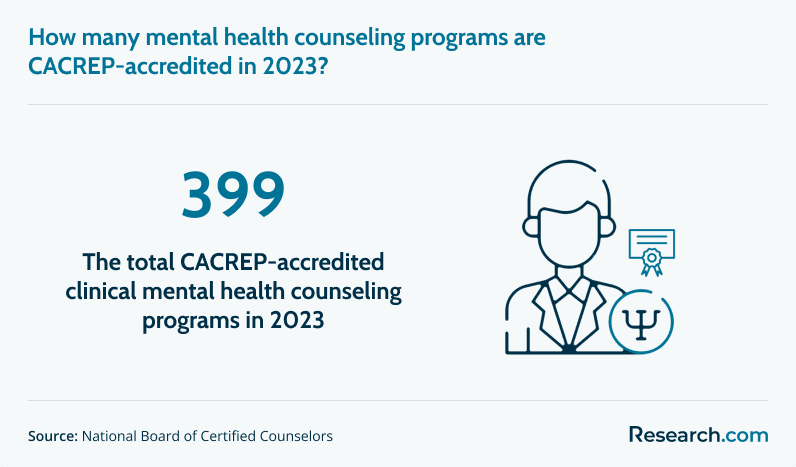
Specialization matters more than the MA or MS label in many counseling careers. Clinical mental health counseling was the specialty area with the highest number of CACREP-accredited programs, 399 in 2023, while school counseling programs had the second most at 276.
| Specialization | Primary Focus | Common Work Settings |
| Marriage and Family Therapy (MFT) | Couple relationships, family systems, communication patterns, and relational conflict | Private practices, family service agencies, community clinics, mental health centers |
| School Counseling | Academic planning, student development, social-emotional support, and school-based intervention | K-12 schools and educational organizations |
| Mental Health Counseling | Assessment and treatment support for concerns such as anxiety, depression, trauma, and life transitions | Clinics, hospitals, community agencies, private practices |
| Substance Abuse Counseling | Addiction treatment, relapse prevention, recovery support, and co-occurring concerns | Treatment centers, outpatient programs, correctional settings, community agencies |
| Career Counseling | Career exploration, job search planning, workplace transitions, and vocational decision-making | Colleges, workforce centers, private coaching or counseling practices |
| Rehabilitation Counseling | Support for people with disabilities seeking independence, employment, and improved quality of life | Rehabilitation agencies, healthcare systems, government programs |
| Gerontological Counseling | Mental health, adjustment, grief, family concerns, and life transitions among older adults | Aging services, healthcare settings, community agencies, private practice |
| Military and Veteran Counseling | Support for service members, veterans, and families managing deployment, transition, trauma, or reintegration | Veterans organizations, military support programs, clinics |
| Sports Counseling | Performance anxiety, mental focus, injury adjustment, motivation, and athlete well-being | Schools, athletic organizations, private practice, performance programs |
Students interested in addiction-focused work should verify whether the curriculum supports substance abuse counseling requirements in their state. Some candidates begin by researching CACREP-accredited online colleges for drug and alcohol counseling before moving into graduate-level preparation.
Some specializations require additional coursework, supervised hours, exams, or separate credentials. Before choosing a concentration, ask the program whether graduates are eligible for the exact license or credential associated with that field.
What are the job growth projections for counselors with MA vs. MS in Counseling?
Job outlook data generally does not separate MA counseling graduates from MS counseling graduates. Employers and labor market reports usually classify counselors by occupation, specialty, license, and setting rather than by the degree title printed on the transcript.
The BLS projects a much faster than average growth rate of 22% for substance abuse, behavioral disorder, and mental health counselors between 2022 and 2032. This translates to roughly 80,000 new jobs being created in this field.
School and career counselors are also expected to see growth, though the projected pace is lower than for mental health counselors. The BLS projects a 10% growth rate for school counselors between 2021 and 2031.
Several factors can shape your prospects more than whether you choose an MA or MS:
- Specialization: Demand can vary by counseling area. Mental health and substance abuse counseling are often discussed in the context of rising need for services.
- Location: Rural regions, underserved communities, and high-demand metro areas may offer different opportunities and compensation patterns.
- Licensure: Employers often prioritize candidates who are licensed, license-eligible, or progressing through supervised post-graduate hours.
- Clinical experience: Strong practicum, internship, and post-graduate supervision experiences can make a candidate more competitive.
- Additional preparation: Some counselors pursue leadership or administrative training later, including options such as the cheapest MHA programs, especially if they want to supervise programs or move into healthcare management.
Does an MA in Counseling offer opportunities for clinical training?
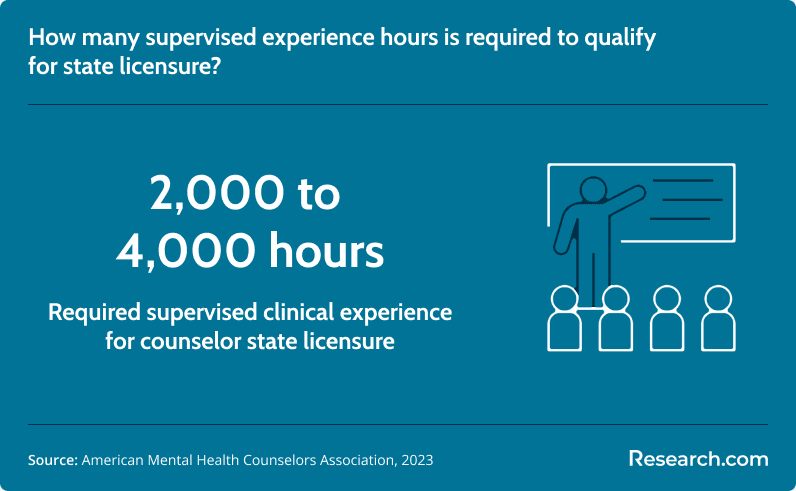
Yes. Many MA in Counseling programs are designed specifically for students preparing for clinical counseling practice, and clinical training is typically central to the curriculum. State licensure requirements for mental health counselors typically include supervised clinical experience ranging from 2,000 to 4,000 hours.
MA and MS counseling curricula often include coursework in assessment, psychotherapy methods, crisis response, ethics, diagnosis, group counseling, and multicultural counseling. These courses prepare students to move from classroom learning into supervised client-facing work.
Practicum is usually the first major applied experience. During practicum, students work under supervision while practicing counseling skills, documentation, treatment planning, intake procedures, and professional communication.
Internship usually follows practicum and is more intensive. Depending on the program and licensure track, students may train in community mental health agencies, schools, hospitals, treatment centers, college counseling offices, private practices, or nonprofit organizations.
When comparing MA programs, do not assume all clinical training is equal. Ask how placements are arranged, whether students must find their own sites, how supervision is handled, whether telehealth hours count, and whether the program’s clinical sequence satisfies your state’s licensing requirements.
How much does an MA or MS in Counseling typically cost?
For an in-state student pursuing an online MA or MS in counseling, the average cost is $37,000 per year. Costs can vary widely, with some programs as low as $9,840 and others exceeding $100,000.
The final cost depends on tuition rate, credit requirements, residency fees, books, technology fees, travel for campus intensives, clinical placement costs, graduation fees, and living expenses. Public universities may be more affordable for in-state students, while private institutions often charge higher tuition.
Online programs can reduce relocation and commuting expenses, but they are not automatically cheaper. Some online programs charge additional technology or distance learning fees, and students may still need to travel for residencies or secure local practicum placements.
| Cost Factor | Why It Matters | Question to Ask |
| Tuition per credit | Small per-credit differences can become significant across 60 or more credits. | What is the total tuition for the full degree, not just one course? |
| Required credits | Programs with more credits can cost more even if the per-credit rate is lower. | How many credits are required for graduation and licensure preparation? |
| Residency or intensive fees | Online students may need to budget for travel, lodging, and meals. | Are any campus visits required, and what extra costs should I expect? |
| Clinical placement expenses | Students may pay for background checks, liability insurance, screenings, or travel. | What costs are associated with practicum and internship? |
| Financial aid | Scholarships, grants, assistantships, and loans can change the net cost. | What aid do counseling graduate students typically receive? |
Do not evaluate programs by sticker price alone. Compare total program cost, expected aid, licensure alignment, completion timeline, clinical training support, and likely work options after graduation. Students comparing related fields may also review the master's in psychology online cost to understand how counseling and psychology graduate costs can differ.
Are there online options available for MA and MS in Counseling?
Yes. Many schools now offer online MA and MS counseling programs for students who need flexibility because of work, family, military service, caregiving, or geographic limitations. The cheapest CACREP accredited programs online may be especially appealing to students who want licensure-oriented training without relocating.
Online counseling programs typically combine asynchronous coursework, live virtual sessions, discussion boards, recorded lectures, group projects, and supervised fieldwork in approved local settings. Students interested in relationship and family-focused practice can also compare accredited online MFT programs.
| Online Counseling Program Factor | Why It Matters | Red Flag |
| Accreditation | Accreditation can affect licensure eligibility, employer recognition, and transferability. | The school cannot clearly explain whether the program meets your state’s licensing rules. |
| Practicum and internship placement | Counseling requires supervised field experience, even when coursework is online. | Students are fully responsible for finding sites without meaningful program support. |
| Residency requirements | Some online programs require in-person intensives for skills assessment or community building. | Residency costs and dates are unclear before enrollment. |
| Technology expectations | Reliable internet, secure platforms, and video participation may be required. | Technical requirements are vague or support is limited. |
| Faculty and student support | Strong advising, supervision guidance, and peer interaction can improve persistence. | Students have little access to advisors, faculty, or clinical placement coordinators. |
Online learning can be a strong option, but it is not the same as a self-paced certificate. Counseling training requires live interaction, skills practice, supervision, ethical development, and client-facing experience. Make sure the program’s online format still gives you the professional preparation needed for the license and population you intend to serve.
What career paths are available to counselors and what influences career advancement?
Counseling careers can develop in several directions depending on specialization, license type, supervised experience, work setting, and professional goals. MA and MS graduates may work in clinical mental health, school counseling, addiction treatment, family services, college counseling, rehabilitation services, community agencies, or private practice.
Diverse Career Paths for Counselors
Common counseling roles include mental health counselor, marriage and family therapist, school counselor, substance abuse counselor, behavioral specialist, rehabilitation counselor, and career counselor. Each role serves different clients and may require different coursework, supervised hours, exams, and credentials. Students still deciding on a specialty can compare the major types of counselors by education path, licensure requirements, and career direction.
Factors Influencing Career Advancement
- Licensure and certifications: Independent practice, supervision roles, and specialized work often require state licensure plus additional training or credentials.
- Continuing professional development: Workshops, conferences, continuing education, and specialized training help counselors keep up with changing treatment methods, legal requirements, and ethical standards.
- Work setting: Advancement looks different in schools, agencies, hospitals, government programs, and private practice. Some settings offer predictable promotion ladders, while private practice may offer more autonomy.
- Geographic demand: Underserved areas, rural communities, and regions with high service needs may create additional opportunities for licensed counselors.
- Specialized expertise: Training in trauma, addiction, family systems, child and adolescent counseling, telehealth, or multicultural counseling can strengthen long-term career options.
The strongest advancement strategy is to choose a specialization early enough to meet licensure requirements, then continue developing targeted skills after graduation.
What are the essential steps to launch a counseling career?
After earning your degree, the next phase is usually licensure preparation. Start by confirming your state’s supervised hour requirements, required exams, application process, background check rules, and documentation standards. Keep detailed records of supervised clinical hours and stay in contact with your state licensing board if requirements change.
Build a professional portfolio that includes your resume, practicum and internship experience, supervisor references, specialized coursework, training certificates, and a clear description of the clients or settings you are prepared to serve. Joining professional associations, finding mentors, and networking with local agencies can also help you identify post-graduate supervised roles. For a step-by-step overview of the early career path, review how to become a mental health counselor.
What is the return on investment for an MA vs. MS in Counseling degree?
ROI for a counseling degree depends on the full cost of attendance, how quickly you complete the program, whether it leads to licensure, how much debt you take on, and the salary range in your intended specialty and location. The MA vs. MS distinction may matter less than whether the program gets you to the credential required for the job you want.
An MS may offer a stronger fit for students who want research-informed roles, program evaluation, assessment-heavy work, or future doctoral study. An MA may be a strong fit for students who want theory-rich, practice-oriented preparation for direct client care. Both can provide value if the program is accredited, clinically rigorous, and aligned with your state’s licensure rules.
When evaluating ROI, compare total program cost, completion time, financial aid, field placement support, graduation outcomes, licensure exam preparation, and alumni employment patterns. Students who need flexible delivery can also compare counseling degree online accredited options as part of a broader cost-and-fit review.
What role does technology play in modern counseling practice?
Technology now affects how counselors train, document care, communicate with clients, and deliver services. Telehealth platforms, secure video sessions, electronic health records, online scheduling, digital assessments, and virtual continuing education have become common parts of modern practice.
Technology does not replace clinical judgment, ethical practice, or the counseling relationship. Counselors still need to understand confidentiality, informed consent, crisis protocols, state telehealth rules, and privacy expectations. Students preparing for technology-enabled practice may benefit from programs that teach telehealth ethics, secure documentation, and remote client engagement. Those exploring digital education pathways can learn more about how to become a therapist online.
What financial aid and scholarship opportunities can help offset counseling program costs?
Many counseling graduate students use a combination of federal aid, institutional scholarships, grants, employer tuition assistance, payment plans, work-study options, assistantships, and loans. Some students may also investigate loan forgiveness opportunities tied to mental health service, public service, or work in underserved communities, depending on eligibility rules.
Start the financial aid process early. Ask each program for the full cost of attendance, typical aid packages for counseling students, scholarship deadlines, graduate assistantship availability, and whether part-time students qualify for the same aid as full-time students. If speed and affordability are both priorities, comparing the fastest MFT program options may help you think through timeline, tuition, and licensure trade-offs.
How do counseling programs address cultural competency and diversity?
Quality counseling programs prepare students to work with clients across differences in race, ethnicity, language, religion, gender identity, sexual orientation, disability, age, socioeconomic status, immigration background, and family structure. Cultural competency is not limited to one class; it should appear in ethics, assessment, diagnosis, intervention planning, supervision, and fieldwork.
Look for programs that include multicultural counseling, social justice perspectives, culturally responsive assessment, community-based field placements, and faculty with relevant clinical expertise. Students considering faith-based programs should also ask how the curriculum integrates religious identity with ethical practice and culturally responsive care. For one example of how faith-oriented programs may approach counseling education, review the best online master's in Christian counseling degrees.
How Can Counseling Degrees Expand Your Substance Abuse Counselor Career Opportunities?
A counseling degree can support substance abuse counseling careers by providing training in assessment, addiction theory, relapse prevention, motivational interviewing, group counseling, co-occurring disorders, ethics, and treatment planning. Programs with addiction-focused electives or practicum placements can be especially useful for students planning to work in recovery centers, community agencies, correctional settings, or integrated behavioral health environments.
Because substance abuse counseling credentials vary by state, students should confirm whether the program supports the coursework and supervised experience needed for their intended license or certification. A focused counseling program can also create a pathway toward broader substance abuse counselor career opportunities as healthcare systems continue to integrate behavioral health and addiction services.
What is the average salary for counselors with an MA vs. MS in Counseling degree?
Salary data usually does not show a major difference between MA and MS counseling graduates because compensation is more commonly reported by occupation, specialty, experience, license, and work setting. Employers typically care more about whether you are licensed or license-eligible, clinically competent, and experienced with the client population they serve.
The BLS reports a median annual wage of $53,710 for substance abuse, behavioral disorder, and mental health counselors in 2023.
Several factors influence counselor pay:
- Specialization: Some areas, such as marriage and family therapy or mental health counseling, may offer different earning opportunities depending on local demand.
- Location: Salaries often vary between states, metro areas, rural communities, and high-cost regions.
- Experience: Counselors commonly earn more as they complete supervised hours, gain licensure, develop expertise, and move into advanced roles.
- Work setting: Pay can differ across private practice, schools, community agencies, hospitals, treatment centers, and government programs.
- Credentials: Additional certifications or specialized training may improve competitiveness for certain roles.
To improve earning potential, prioritize licensure, build strong clinical experience, choose a specialization with stable demand, pursue continuing education, and consider settings where your skills are valued. The degree title can matter, but the license, experience, and specialization usually matter more.
How does location impact a counselor's salary?
Location can strongly affect counselor salaries because pay often reflects cost of living, service demand, funding sources, local employer competition, and shortages of qualified professionals. Major cities and coastal regions may offer higher salaries, but those salaries may also come with higher housing and transportation costs.
Counselor pay may also rise in communities with a shortage of qualified counselors, including some rural areas, underserved regions, and places with growing demand for mental health services.
Work setting and specialization also interact with geography. For example, urban private practices may have different earning potential than rural school districts, while a counselor with child and adolescent expertise may find stronger demand in certain school systems or pediatric behavioral health settings.
For instance, while the employment of counselors in California is one of the highest at 14, 210 while Maryland only employed 1,440 in 2023, the wage per hour in Maryland is higher at $29.67 compares to California's $24.12.
Before choosing where to practice, compare wages, cost of living, licensure portability, supervision availability, job openings, and demand for your specialty. A higher salary in one location may not always mean better net income or a better quality of life.
What types of experiential learning opportunities are available in MA and MS counseling programs?
Experiential learning is where counseling students begin turning theory into professional skill. Both MA and MS programs usually include structured opportunities to practice counseling techniques, receive feedback, observe professionals, and work with clients under supervision.
| Experience Type | What Students Do | Why It Matters |
| Practicum | Complete initial supervised counseling work with clients or simulated clients under licensed supervision. | Builds foundational counseling skills before more intensive internship responsibilities. |
| Internship | Work in a professional setting such as a school, clinic, hospital, agency, or private practice. | Provides deeper exposure to real clients, documentation, ethical issues, and treatment planning. |
| Role-playing and simulations | Practice counseling scenarios with peers, instructors, or trained actors. | Allows students to develop communication, empathy, and intervention skills in a lower-risk environment. |
| Workshops and seminars | Receive hands-on training in focused methods such as trauma-informed care or cognitive-behavioral therapy. | Adds practical skill development beyond standard coursework. |
| Supervision and case consultation | Discuss client work, ethical questions, treatment decisions, and professional growth with supervisors. | Helps students connect theory, ethics, self-awareness, and clinical decision-making. |
When comparing programs, ask where students complete placements, who approves sites, how supervisors are selected, whether online students receive placement support, and whether the required hours match state licensure rules.
How to improve a graduate's credentials after earning an MA or MS in Counseling?
An MA or MS in Counseling is often the foundation, not the finish line. After graduation, many counselors continue building credentials to qualify for independent practice, specialize, supervise others, teach, conduct research, or move into leadership.
- Complete licensure requirements: Most independent counseling roles require supervised post-graduate hours, a licensing exam, and state board approval.
- Add specialized certifications: Credentials in trauma counseling, family therapy, addiction counseling, play therapy, or other areas can strengthen your practice focus.
- Pursue advanced specialization: Post-graduate training can help you serve specific populations, such as children, couples, veterans, older adults, or clients with substance use concerns.
- Consider doctoral study: A PhD or PsyD in Counseling Psychology or a related field may fit professionals interested in teaching, research, advanced clinical leadership, or program development.
- Maintain continuing education: Ongoing learning helps counselors meet license renewal rules and stay current on ethics, cultural competency, technology, and therapeutic methods.
The best post-degree plan depends on your target role. A future private practice therapist, school counselor, clinical supervisor, agency director, and faculty member may all need different credentials after the master’s degree.
Can Counseling Careers Reach a Six-Figure Salary?
Some counseling careers can reach six figures, but that outcome is not automatic and should not be assumed when calculating degree ROI. Higher earnings are more likely when counselors combine licensure, advanced experience, in-demand specialization, strong referral networks, leadership responsibilities, or private practice ownership.
Counselors pursuing higher income often focus on specialized clinical niches, supervision, consulting, group practice development, administrative leadership, or work in higher-demand locations. To compare possible strategies and roles, review which therapist has the highest salary.
How Do LPC and LCSW Compare for Advancing Your Counseling Career?
LPC and LCSW pathways can both support clinical careers, but they are built around different professional traditions. The Licensed Professional Counselor route usually centers on counseling theory, psychotherapy, assessment, diagnosis, and direct client intervention. The Licensed Clinical Social Worker route combines clinical practice with social work training, case management, systems-level thinking, and community resource coordination.
The stronger choice depends on the clients you want to serve, the settings where you want to work, and the license recognized by employers in your state. If you are comparing these routes, review which is better: LPC or LCSW before committing to a graduate program.
How to Choose the Right Counseling Program Based on Your Career Goals and Licensure Requirements
The right counseling program is the one that fits your target license, specialization, learning format, budget, and career goals. Use the MA vs. MS distinction as one factor, but do not make it the only factor.
Start With the License You Want
Identify the state where you plan to practice and the credential you want, such as LPC, LMHC, school counselor, or MFT. Then compare each program’s required credits, course list, practicum, internship, and supervision structure against that licensing board’s rules.
Match the Program to Your Specialty
If you want to work with couples and families, look for targeted MFT coursework and supervised relational therapy experience. Students concerned about cost can compare the most affordable online mft programs. If you want to work in schools, prioritize school counseling programs that meet state educator or school counselor credential requirements. If you want clinical mental health practice, verify that the program prepares graduates for the relevant professional counseling license.
Evaluate Clinical Training Before Tuition
A low-cost program may not be a good value if it provides weak placement support or does not meet licensure requirements. Ask how placements are secured, whether online students receive help finding sites, how supervision works, and whether graduates commonly complete licensure requirements successfully.
Compare Online and Campus Formats Honestly
Online programs can be excellent for flexibility, but counseling is not purely academic. You still need live skills practice, supervision, feedback, field placements, and professional networking. Campus programs may offer easier access to local placements and faculty relationships, while online programs may work better for students who cannot relocate.
Look Beyond Sticker Price
Compare total cost, aid, time to completion, residency travel, lost income, placement expenses, and licensure outcomes. A program with higher tuition may be worth considering if it provides strong clinical support and direct alignment with your license. A cheaper program may be better if it is accredited, well-supported, and accepted by your state board.
Ask These Questions Before Enrolling
- Is the program accredited, and by which accrediting body?
- Does the curriculum meet licensure requirements in the state where I plan to practice?
- How many supervised practicum and internship hours are required?
- Who helps online students secure clinical placements?
- Are there required campus residencies or intensive weekends?
- What percentage of students complete the program and pursue licensure?
- What is the total cost after fees, travel, and clinical placement expenses?
- Can I attend part time while working?
- Does the program support my intended specialization?
- What support is available for licensure exams, supervision planning, and job search?
Common Mistakes to Avoid
| Mistake | Why It Can Hurt You | Better Approach |
| Choosing based only on MA vs. MS | The degree title does not guarantee licensure eligibility or strong training. | Compare accreditation, curriculum, fieldwork, and state licensing alignment. |
| Ignoring accreditation | Licensure boards and employers may not recognize some programs. | Confirm accreditation before applying and verify it with your state board. |
| Looking only at tuition | Fees, residency travel, extra credits, and placement costs can change the true price. | Calculate total cost of attendance and expected net cost after aid. |
| Assuming online means fully remote | Many online counseling programs still require clinical placements and sometimes residencies. | Ask about in-person requirements before enrolling. |
| Skipping licensure research | A program may meet one state’s rules but not another’s. | Check the licensing board in every state where you may practice. |
| Relying only on rankings | A highly ranked program may not fit your specialty, schedule, budget, or location. | Use rankings as one input, then verify personal fit and licensure outcomes. |
Key Insights
- An MA in Counseling often emphasizes theory, human development, and therapeutic practice, while an MS in Counseling often adds more research, assessment, and data-focused training.
- Either degree can lead to licensure if the program satisfies your state’s educational and clinical requirements.
- Accreditation, supervised fieldwork, specialization, and state board alignment matter more than the MA or MS label.
- Online counseling programs can be flexible and practical, but students must verify residency requirements, placement support, and licensure compatibility.
- Program cost should be evaluated as total cost, not just tuition per credit. Include fees, travel, clinical expenses, and time to completion.
- Career outcomes depend heavily on license status, specialization, experience, location, work setting, and post-graduate credentials.
- The best counseling program is the one that prepares you for the exact clients, license, and work environment you want—not simply the one with the most familiar degree title.
References
- American Counseling Association. (2023). The 2023 counseling workforce report.
- Bureau of Labor Statistics. (2023). Counseling, mental health, and school counselors.
- Bureau of Labor Statistics. (2023). Substance abuse, behavioral disorder, and mental health counselors.
- National Center for Education Statistics. (2023). Digest of education statistics, 2022.
Other Things You Should Know About MS vs. MA in Counseling
No. MS and MA counseling degrees can both qualify graduates for licensure, but the exam is set by the state board and usually includes the National Counselor Examination (NCE) or the National Clinical Mental Health Counseling Examination (NCMHCE). Some states also require supervised post-degree hours before full licensure.
In 2027, both MS and MA in Counseling graduates must pass the National Counselor Examination (NCE) for licensure. However, some states may have additional requirements based on the program type, such as specific supervised experience hours or coursework variations to meet state standards.


