2027 Most Affordable Online MBA in Entrepreneurship Degree Programs

Co-Founder and Chief Data Scientist
Choosing an affordable online MBA in entrepreneurship is a high-stakes decision: you want graduate-level business training that can help you launch, fund, manage, or scale a venture, but you also need the program to fit your budget, schedule, and career goals. This guide is built for working professionals, aspiring founders, startup managers, family business successors, and corporate innovators comparing cost-effective online MBA options for 2027.
You will learn what an online MBA in entrepreneurship usually includes, how long it takes, what it can cost, which affordable programs to compare, how employers may view the degree, and what questions to ask before enrolling. The goal is not just to list programs, but to help you decide whether this degree is the right investment for your entrepreneurial path.
Quick answer: Is an affordable online MBA in entrepreneurship worth considering?
An online MBA in entrepreneurship can be worth it if you need broad business training, want flexibility while working, and plan to use the degree for startup leadership, corporate innovation, consulting, business development, venture funding, franchising, or nonprofit leadership. It is less useful if you only need a short technical credential, already have strong business training, or expect the degree alone to guarantee startup success or a specific salary.
- An online MBA in entrepreneurship can prepare graduates to start their own companies, lead innovation inside established organizations, or manage growth in startups across sectors such as technology, healthcare, retail, service, and social enterprise.
- Graduates who move into traditional management roles may see median annual salaries from $99,000 to more than $135,000, while successful entrepreneurs and venture capital professionals may reach about $206,000 and more than $205,000, respectively. These outcomes depend heavily on experience, role, location, industry, and business performance.
- Online delivery can make an MBA more realistic for working adults because students can often study around job and family commitments while still using virtual forums, group projects, alumni networks, and faculty interaction to build professional connections.
What can I expect from an online MBA in entrepreneurship?
An online MBA in entrepreneurship combines the standard MBA foundation with coursework focused on opportunity recognition, venture planning, innovation, funding, and business growth. Students usually study accounting, finance, marketing, management, operations, business law, communication, and strategy, then apply those concepts to startup and entrepreneurial contexts.
The entrepreneurship component typically emphasizes practical decision-making: validating a market need, writing a business plan, estimating costs and revenue, evaluating financing options, building teams, managing early growth, and adapting when market conditions change. Many programs also use capstones, simulations, pitch assignments, or venture projects so students can test ideas rather than only study theory.
Because the program is online, the experience depends heavily on your discipline and the school’s learning design. Strong programs provide clear course structure, responsive faculty, career support, group collaboration, and networking opportunities. Weak programs may feel isolating if they lack student support or meaningful interaction.
Where can I work with an online MBA in entrepreneurship?
Graduates can use this degree in several directions. Some become founders and use the MBA to plan, finance, launch, or expand their own ventures. Others work in startups where leaders need broad business knowledge across finance, sales, marketing, operations, and strategy.
The degree can also support intrapreneurship in larger companies. In these roles, professionals develop new products, test new markets, improve processes, or lead internal innovation projects. Graduates may also pursue consulting, business development, venture capital, franchise ownership, nonprofit leadership, or family business management.
| Career Direction | Best Fit | What the MBA Helps You Do |
| Founder or co-founder | Students with a business idea or desire to launch a venture | Build a plan, assess risk, understand finance, and manage growth |
| Startup manager | Professionals who want fast-moving leadership roles | Handle cross-functional responsibilities in marketing, operations, finance, or strategy |
| Corporate intrapreneur | Employees who want to lead innovation inside an existing company | Identify market opportunities and develop new initiatives within a larger organization |
| Consultant or business developer | Professionals who enjoy advising or growing organizations | Analyze business models, recommend strategies, and support expansion |
| Venture capital or investment-related roles | Graduates interested in evaluating startups and growth companies | Understand founders, markets, financial models, and early-stage business risks |
How much can I make with an online MBA in entrepreneurship?
Income after an online MBA in entrepreneurship varies widely because graduates do not all follow the same path. Those entering corporate roles often have more predictable salaries, while founders may have unstable income in the early stages and higher upside only if the business succeeds.
For MBA-related management roles, median annual salaries for positions such as top executives, sales managers, and management analysts range from $99,000 to more than $135,000. Entrepreneurs have no guaranteed income, especially when a company is new. However, successful entrepreneurs may reach average chief executive salaries around $206,000, and venture capitalists may earn more than $205,000 when bonuses and profit sharing are included.
-
: "
Important: Salary figures should be treated as benchmarks, not promises. Your earnings will depend on your prior experience, industry, location, company size, job level, network, and whether your venture becomes profitable.
"
- Most Affordable Online MBA in Entrepreneurship Programs for 2027
- How Long Does an Online MBA in Entrepreneurship Take?
- Online MBA in Entrepreneurship vs. Campus MBA
- Average Cost of an Online MBA in Entrepreneurship
- Financial Aid for Online MBA in Entrepreneurship Students
- Admissions Requirements and Prerequisites
- Common Courses in an Online MBA in Entrepreneurship
- Entrepreneurship MBA Specializations
- How to Choose the Best Online MBA in Entrepreneurship
- Can You Succeed Without a Business Degree?
- Common Challenges in Online Entrepreneurship MBA Programs
- How Self-Paced Learning Affects Entrepreneurial Training
- Career Paths After an Online MBA in Entrepreneurship
- Employer Perception of Online MBA Programs
- Experiential Learning in Online Entrepreneurship MBA Programs
- Accreditation and Quality Indicators
- Startup Funding and Investor Access
- Salary Outcomes Compared With Other Business Fields
- Job Market for Entrepreneurship MBA Graduates
- Networking Opportunities in Online MBA Programs
- Long-Term ROI of an Online MBA in Entrepreneurship
- Can an Accelerated Online MBA Speed Up Entrepreneurial Progress?
- Emerging Trends in Online MBA Programs for Entrepreneurs
List of the Most Affordable Online MBA in Entrepreneurship Programs for 2027
How do we rank schools?
To identify affordable online MBA in entrepreneurship programs, we used a ranking methodology based on reputable public data and institutional information. The review considered schools that offer relevant online MBA options and compared them using affordability, academic quality, enrollment-related indicators, and other available measures of program value.
Sources used in the analysis include:
- Peterson’s data set;
- College Scorecard database;
- National Center for Education Statistics; and
- IPEDS database.
The list below should be used as a starting point, not as the only basis for enrollment. Students should verify current tuition, fees, accreditation, course delivery format, admissions requirements, and whether the entrepreneurship concentration is currently available before applying.
| School | Program Length | Cost per Credit | Credits Required | Accreditation |
| Fayetteville State University | One year (minimum) | $271.44 (in-state); $635.44 (out-of-state) | 36 | Association to Advance Collegiate Schools of Business (AACSB) |
| University of the Cumberlands | One year (minimum) | $355 | 46 | International Accreditation Council for Business Education (IACBE) |
| Southeastern Oklahoma State University | One year (minimum) | $345 | 36 | AACSB |
| Louisiana State University-Shreveport | 10 months (minimum) | $479 | 30 | AACSB |
| University of Louisiana at Lafayette | One year (minimum) | $387.88 | 33 | AACSB |
| University of Pikeville | One year (minimum) | $465 | 30 | Commission on Colleges of the Southern Association of Colleges and Schools (SACSCOC) |
| East Texas Baptist University | One year (minimum) | $424.12 | 33 | SACSCOC |
| University of Houston-Victoria | One year (minimum) | $469.47 (in-state); $877.47 (out-of-state) | 30 | AACSB |
| Southern Arkansas University | Two years | $401.89 (in-state); $567.89 (out-of-state) | 36 | AACSB |
| University of West Alabama | One year (minimum) | $429 | 33 | Accreditation Council for Business Schools and Programs |
1. Fayetteville State University
The MBA in Entrepreneurship at Fayetteville State University is designed for students who want to build innovative business plans and apply entrepreneurial strategies to new or existing ventures.
- Program Length: One year (minimum)
- Cost per Credit: $271.44 (in-state); $635.44 (out-of-state)
- Required Credits to Graduate: 36
- Accreditation: Association to Advance Collegiate Schools of Business (AACSB)
2. University of the Cumberlands
The MBA at the University of the Cumberlands prepares students for advancement in business, government, or education by strengthening broad management and leadership capabilities.
- Program Length: One year (minimum)
- Cost per Credit: $355
- Required Credits to Graduate: 46
- Accreditation: International Accreditation Council for Business Education (IACBE)
3. Southeastern Oklahoma State University
The online MBA in Entrepreneurship at Southeastern Oklahoma State University includes entrepreneurship-focused study in marketing, new venture financing, and product development, supported by core courses in accounting, economics, behavioral management, research, and data analysis.
- Program Length: One year (minimum)
- Cost per Credit: $345
- Required Credits to Graduate: 36
- Accreditation: AACSB
4. Louisiana State University-Shreveport
LSU Shreveport offers an online MBA in Entrepreneurship and Family Enterprise that focuses on recognizing market opportunities, assessing financial feasibility, organizing resources, and launching ventures.
- Program Length: 10 months (minimum)
- Cost per Credit: $479
- Required Credits to Graduate: 30
- Accreditation: AACSB
5. University of Louisiana at Lafayette
The University of Louisiana at Lafayette provides an MBA concentration in Entrepreneurship that blends business fundamentals, analytical tools, and applied learning for students pursuing entrepreneurial careers.
- Program Length: One year (minimum)
- Cost per Credit: $387.88
- Required Credits to Graduate: 33
- Accreditation: AACSB
6. University of Pikeville
The MBA at UPIKE helps students prepare for leadership in a competitive global business environment, while the Entrepreneurship concentration adds focused knowledge for venture-oriented career goals.
- Program Length: One year (minimum)
- Cost per Credit: $465
- Required Credits to Graduate: 30
- Accreditation: Commission on Colleges of the Southern Association of Colleges and Schools (SACSCOC)
7. East Texas Baptist University
East Texas Baptist University offers fall and spring entry options for MBA students, and its Entrepreneurship Specialization is structured for students who want graduate coursework connected to individual entrepreneurial goals.
- Program Length: One year (minimum)
- Cost per Credit: $424.12
- Required Credits to Graduate: 33
- Accreditation: SACSCOC
8. University of Houston-Victoria
The Strategic MBA at the University of Houston-Victoria uses a cross-disciplinary format to help students analyze complex business problems and build strategic expertise, including through concentration options such as Entrepreneurship.
- Program Length: One year (minimum)
- Cost per Credit: $469.47 (in-state); $877.47 (out-of-state)
- Required Credits to Graduate: 30
- Accreditation: AACSB
9. Southern Arkansas University
The MBA with a Social Entrepreneurship emphasis at SAU is intended for students who want to use innovative business strategies to address social entrepreneurship goals.
- Program Length: Two years
- Cost per Credit: $401.89 (in-state); $567.89 (out-of-state)
- Required Credits to Graduate: 36
- Accreditation: AACSB
10. University of West Alabama
The online MBA from the University of West Alabama strengthens knowledge across major business areas and offers concentration choices such as Entrepreneurship and Innovation, with completion possible in a little over one year.
- Program Length: One year (minimum)
- Cost per Credit: $429
- Required Credits to Graduate: 33
- Accreditation: Accreditation Council for Business Schools and Programs
What graduates often value in an online MBA in entrepreneurship
-
: "
"The online format made graduate school possible while I was working full time and raising a family. I could apply what I learned quickly, including using customer segmentation concepts to improve a marketing strategy at work. The workload was demanding, but the flexibility made the degree realistic." - Sarah
"
-
: "
"Class discussions exposed me to entrepreneurs and managers from industries I had never worked in. Faculty members were available online, and one professor gave detailed feedback on my business plan through virtual meetings. That access to mentorship was one of the strongest parts of the program." - David
"
-
: "
"I expected networking to be the biggest weakness of an online MBA. Instead, the forums, video meetings, and occasional regional events helped me form useful relationships with classmates who were building businesses in different markets." - Maria
"
Key findings about online MBA in entrepreneurship programs
- Completion time depends on pacing: accelerated programs can take as few as 18 months, standard formats often require 24 to 36 months, and part-time options may extend to five years.
- Online programs are usually best for working professionals who need scheduling flexibility, while campus programs may better serve students who want daily in-person interaction and a more traditional MBA environment.
- The cost of an online MBA in entrepreneurship can range from $31,000 to $90,000, depending on the school, program structure, prestige, and whether tuition is charged by credit or as a full-program rate.
- Students may reduce out-of-pocket costs through federal student aid, scholarships, employer tuition assistance, and military or veteran benefits.
- Relevant labor market projections show 3% growth for top executives from 2022 to 2032, 4% growth for sales managers, and 10% growth for management analysts, with about 311,600, 43,200, and 92,900 job openings per year, respectively.
How long does it take to complete an online MBA in entrepreneurship?
Most students complete an online MBA in entrepreneurship based on their enrollment intensity and the program’s course schedule. A faster program may require heavier course loads and fewer breaks, while a part-time format gives working adults more breathing room.
- Accelerated Programs: Accelerated MBA programs may be completed in as few as 18 months. This route works best for students who can handle a demanding pace and have enough weekly study time.
- Standard Programs: Many online MBA programs take 24 to 36 months, offering a more manageable rhythm for students balancing school with work and family obligations.
- Part-Time Options: Flexible part-time plans can stretch across three to five years, which may be useful for professionals with unpredictable workloads or major personal responsibilities.
| Program Type | Typical Program Length | Best For |
| Accelerated | 18 months | Students who can commit to a heavier academic schedule |
| Standard | 2-3 years | Working adults who want balance and steady progress |
| Part-time | 3-5 years | Professionals who need maximum flexibility |
How does an online MBA in entrepreneurship compare to an on-campus program?
The better format depends on your schedule, learning style, networking expectations, budget, and need for structure. Online and campus MBAs can both be rigorous, but they create different student experiences.
| Factor | Online MBA in Entrepreneurship | On-Campus MBA |
| Flexibility | Often easier to fit around work and family responsibilities | Usually follows fixed class times and campus attendance requirements |
| Learning style | Requires self-direction, time management, and comfort with digital tools | Provides more built-in structure and face-to-face classroom interaction |
| Networking | Depends on virtual events, group work, alumni platforms, and optional meetups | Offers frequent in-person access to classmates, faculty, speakers, and campus events |
| Cost | May be less expensive, and some online MBAs costing less than $10,000 are available, though technology and fees still matter | Can involve higher total costs because of campus fees, commuting, housing, and living expenses |
| Best fit | Working professionals who value flexibility and can stay motivated independently | Students who want immersion, structured schedules, and daily in-person networking |
What is the average cost of an online MBA in entrepreneurship?
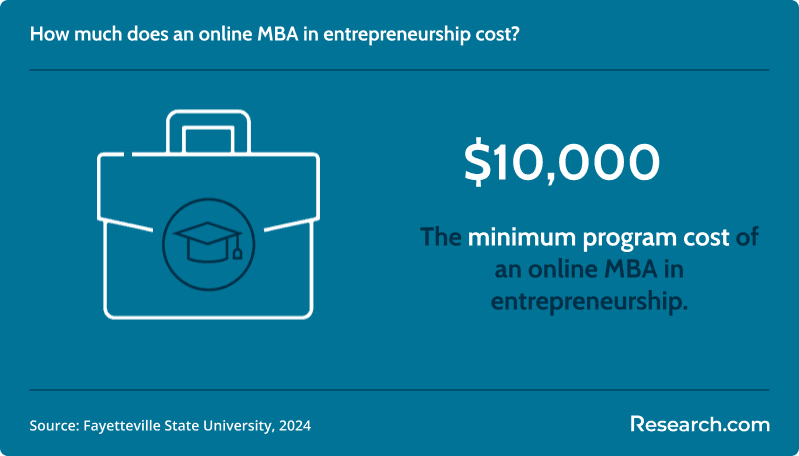
The price of an affordable online MBA in entrepreneurship varies by school and program design. A total program cost may start at a minimum of $10,000, while broader cost estimates for online MBA in entrepreneurship programs can range from $31,000 to $90,000.
When comparing programs, look beyond the advertised tuition rate. The lowest per-credit price is not always the lowest total cost if the program requires more credits, extra fees, foundation courses, or travel for residencies.
- Institution type: Public universities are often less expensive than private institutions, especially when in-state tuition applies.
- Program reputation: Highly ranked or highly selective programs may charge more.
- Location-related costs: Online students may avoid relocation, but some programs still charge fees tied to the institution.
- Per-credit pricing: Multiply the per-credit rate by the number of required credits, then add fees to understand the realistic cost.
- Hidden expenses: Check for application fees, textbooks, technology requirements, graduation fees, and any in-person residency costs.
What are the financial aid options for students enrolling in an online MBA in entrepreneurship?
Students in online MBA in entrepreneurship programs may use several funding sources. Availability depends on the school, your eligibility, enrollment status, employer policies, and military or veteran status.
- Federal Student Aid: Eligible students can begin by completing the FAFSA to determine access to federal aid, including Direct Loans. Pell Grants are listed as a federal aid category, but graduate students should verify current eligibility rules.
- Scholarships: Universities, professional associations, foundations, and independent scholarship providers may offer awards based on merit, need, identity, career goals, or entrepreneurial interests.
- Employer Assistance: Some employers provide tuition reimbursement or tuition assistance, especially when the degree supports leadership, strategy, innovation, or business development needs.
- Military and Veteran Benefits: Service members and veterans may be able to use benefits such as the GI Bill® to help pay for an online MBA.
How to reduce the cost before enrolling
- Ask whether tuition differs for in-state and out-of-state online students.
- Confirm the total number of credits needed to graduate.
- Request a full fee list, not just the tuition rate.
- Ask whether foundation courses add time or cost.
- Check whether your employer will reimburse tuition before you start.
- Apply for school-based scholarships as early as possible.
What are the prerequisites for enrolling in an online MBA in entrepreneurship?
Admissions requirements vary, but most online MBA programs evaluate academic preparation, professional background, leadership potential, and readiness for graduate-level business study.
Common baseline requirements
- Bachelor's Degree: Applicants generally need a bachelor’s degree from an accredited institution. The major does not always have to be business.
- Work Experience: Many programs prefer applicants with professional experience, often two to five years, because MBA coursework is more valuable when students can connect concepts to real workplace problems.
Academic requirements
- Business Foundation Courses: Students without prior coursework in accounting, finance, economics, or statistics may need foundation or bridge courses before or during the MBA.
- GMAT or GRE Scores: Some schools still request standardized test scores, while others offer waivers or have test-optional policies. Applicants comparing MBA programs that do not require standardized test scores should still review whether other admissions materials must be stronger.
Application materials
- Personal Statement or Essay: Use this to explain your entrepreneurial goals, leadership experience, and reasons for choosing the program.
- Letters of Recommendation: Strong recommendations from supervisors, professors, clients, or mentors can demonstrate readiness and credibility.
- Resume or CV: Highlight management experience, business achievements, startup work, project leadership, and measurable results.
What courses are typically in an online MBA in entrepreneurship?
Most online MBA in entrepreneurship programs combine core MBA coursework with classes focused on new ventures and innovation. The best programs help students understand both how businesses operate and how entrepreneurial ideas become viable organizations.
Core business courses
- Accounting: Students learn to interpret financial statements, manage budgets, and use financial information to make business decisions.
- Finance: Coursework often covers capital budgeting, investments, financial markets, and funding decisions.
- Marketing: Students study customer behavior, segmentation, positioning, branding, and go-to-market strategy.
- Management: Courses examine leadership, organizational behavior, operations, and the systems needed to run a growing business.
- Business Communication: Students practice writing, presenting, pitching, negotiating, and communicating with stakeholders.
- Business Law: This area introduces legal issues such as contracts, intellectual property, employment rules, and business formation.
Entrepreneurship specialization courses
- New Venture Creation: Students move from opportunity identification to business planning and launch strategy.
- Entrepreneurial Finance: Coursework may examine bootstrapping, angel investment, venture capital, cash flow, and early-stage financing choices.
- Innovation and Creativity: Students practice identifying problems, generating solutions, and evaluating whether ideas have market potential.
- Small Business Management: This course focuses on the practical realities of operating, growing, and sustaining a smaller company.
- Social Entrepreneurship: Students explore business models that aim for financial sustainability while pursuing social or environmental impact.
What types of specializations are available in online MBA in entrepreneurship programs?
Some online MBA programs offer a general entrepreneurship concentration, while others allow students to focus on a narrower area. The right specialization should match the type of organization you want to build or lead.
| Specialization | What It Focuses On | Good Fit For |
| Social Entrepreneurship | Business models that pursue social or environmental impact alongside financial sustainability | Students interested in mission-driven companies, nonprofits, or impact ventures |
| Family Business Management | Governance, succession planning, growth, and the unique dynamics of family-owned firms | Students preparing to join, lead, or modernize a family enterprise |
| Technology Entrepreneurship | Tech startup development, product strategy, innovation trends, and funding in technology markets | Students interested in software, digital platforms, or technology-enabled ventures |
| Innovation and Design Thinking | Creative problem-solving, user-centered design, product development, and innovation management | Students who want to develop new products, services, or internal innovation systems |
| Sustainable Entrepreneurship | Environmentally responsible operations, sustainable supply chains, and impact measurement | Students focused on green business practices or socially responsible ventures |
How to choose the best online MBA in entrepreneurship?
The best program is not simply the cheapest or the highest ranked. It is the one that fits your goals, budget, learning style, schedule, and expected return.
Step 1: Define the outcome you want
Clarify whether you want to launch a business, grow an existing venture, move into startup leadership, lead innovation inside a corporation, work in consulting, or explore investment-related roles. Different goals require different networks, faculty expertise, course projects, and specializations.
Step 2: Check accreditation and credibility
Look for institutional accreditation and, when relevant, business accreditation. You can also review whether the program is accredited by a reputable body. Accreditation can affect employer perception, transferability, financial aid eligibility, and overall quality assurance.
Step 3: Review the curriculum, not just the concentration name
Two programs may both use the word entrepreneurship but teach very different content. Look for courses in venture creation, entrepreneurial finance, innovation, market analysis, strategy, and applied projects.
Step 4: Evaluate the online experience
Ask whether classes are live, asynchronous, self-paced, cohort-based, or a mix. Review the learning platform, faculty availability, technical support, tutoring, advising, and career services for online students.
Step 5: Compare total cost and funding
Do not rely only on cost per credit. Compare total tuition, fees, foundation course costs, textbooks, technology needs, and any residency expenses. Then subtract realistic aid, scholarships, employer support, or military benefits.
Step 6: Ask about entrepreneurship resources
Strong programs may offer pitch competitions, incubators, mentors, alumni founders, investor events, business plan feedback, or startup clinics. These resources can matter as much as the course list.
Questions to ask before applying
- Is the entrepreneurship concentration fully online?
- Are any campus visits or residencies required?
- What accreditation does the business school or institution hold?
- How many credits are required, and are foundation courses extra?
- Does the program include a capstone, pitch project, or venture plan?
- What career services are available to online MBA students?
- How does the program support networking with alumni, founders, or investors?
- Can I attend part time, and what is the maximum completion window?
- Are GMAT or GRE scores required, optional, or waivable?
- What is the full estimated cost including fees?
Must I Hold a Business Degree to Excel in an Online MBA for Entrepreneurship?
No. Many students enter online MBA programs from non-business backgrounds and succeed, especially if they bring work experience, leadership potential, analytical ability, and a clear entrepreneurial purpose. Admissions committees may value professional accomplishments and career direction as much as undergraduate major.
However, students without business coursework should check whether the program requires foundation classes in accounting, finance, statistics, or economics. Preparatory courses can make the MBA more manageable and help non-business majors keep pace. For a deeper look at this route, review Research.com’s guide on whether you can get an MBA without a business degree.
What are the common challenges in online MBA in entrepreneurship programs?
Online MBA students often underestimate the discipline required to manage graduate coursework without a campus routine. Entrepreneurship courses can also be ambiguous and project-heavy, requiring students to make decisions with incomplete information, just as founders do.
| Common Mistake | Why It Causes Problems | Better Approach |
| Choosing only by tuition | A low price may hide weak support, limited networking, or extra fees | Compare total cost, accreditation, outcomes, curriculum, and services |
| Ignoring accreditation | Unaccredited or poorly recognized programs may create employer or financial aid issues | Verify institutional and business-school accreditation before applying |
| Assuming online means easy | Graduate business work requires regular reading, analysis, teamwork, and writing | Build a weekly study schedule before classes begin |
| Overlooking networking | Entrepreneurship depends heavily on relationships, mentors, customers, and partners | Choose programs with active alumni, group projects, and entrepreneur events |
| Expecting guaranteed startup success | An MBA provides tools, but market fit, execution, capital, timing, and risk still matter | Use the program to test ideas, gather feedback, and reduce avoidable mistakes |
Students who want a more flexible or lower-pressure format may compare programs known for accessibility, such as options discussed in Research.com’s guide to the easiest MBA program.
How does self-paced learning impact your entrepreneurial education?
Self-paced learning can be valuable for entrepreneurs because it lets students move through material while applying concepts to their own ventures, jobs, or business ideas. Students can spend more time on difficult topics such as finance or analytics and move faster through material they already know.
The trade-off is accountability. Without fixed class meetings, students must create their own structure and deadlines. A self paced online MBA may work well for disciplined learners, but students who need regular instructor interaction may prefer cohort-based or live online formats.
What career paths are available for graduates of online MBA in entrepreneurship programs?
Graduates can apply an entrepreneurship MBA in founder roles, corporate leadership, startup management, consulting, investing, franchising, nonprofit leadership, education, government, and independent work. The right path depends on your risk tolerance, previous experience, network, and whether you want to build your own organization or innovate within someone else’s.
- Launching Your Own Business: Many students pursue this degree to move from idea to operating venture with stronger planning, finance, marketing, and leadership skills.
- Intrapreneurship within a Corporation: Graduates can lead new initiatives, develop internal ventures, and improve innovation inside established organizations.
- Consulting or Business Development: Entrepreneurship training can support advisory work in growth strategy, market entry, innovation, and expansion.
- Investment Banking or Venture Capital: Students interested in startup finance can use the degree to better evaluate founders, markets, business models, and investment potential.
- Management Positions in Startups: Startups often need leaders who can operate across marketing, finance, operations, and strategy rather than in only one narrow function.
- Franchising: Graduates interested in business ownership with an established model can use MBA training to evaluate franchise opportunities and operating requirements.
- Non-Profit Leadership: Skills in fundraising, resource management, innovation, and impact strategy can be useful for mission-driven organizations.
- Education and Training: Experienced professionals may teach entrepreneurship, develop training programs, or mentor aspiring founders.
- Government Agencies: Some agencies need professionals who understand small business development, economic initiatives, and innovation programs.
- Freelancing or Independent Consulting: The degree can support independent work in strategy, marketing, operations, and business planning.
The chart below shows median annual salaries for selected roles that graduates of MBA in entrepreneurship programs may pursue.
An online MBA in entrepreneurship is not the only graduate path for cost-conscious students. If your goals are more technical, clinical, creative, or education-focused, you may want to compare other affordable online options before committing to an entrepreneurship MBA.
- affordable online MBA programs in information systems
- low-cost online BSN to DNP programs
- affordable online creative writing programs
- affordable online master's degrees in higher education
How do employers perceive online MBA in entrepreneurship programs?
Employers are generally more likely to respect an online MBA when it comes from an accredited, recognized institution with rigorous coursework and relevant applied learning. The delivery format matters less when the program demonstrates quality, but the school’s reputation, accreditation, faculty, curriculum, and student outcomes still carry weight.
Hiring managers may look for evidence that graduates can solve real business problems, communicate clearly, lead teams, analyze financial information, and manage ambiguity. Accelerated formats, including 1-year MBA programs, can be respected when they maintain academic rigor and do not sacrifice depth for speed.
What experiential learning opportunities are offered in online MBA in entrepreneurship programs?
Strong online MBA programs do more than assign readings and exams. They give students structured ways to practice entrepreneurial decision-making through simulations, business plan development, virtual incubators, capstone projects, case analyses, and collaborations with classmates or external partners.
Students who want hands-on work should ask whether they will create a venture plan, pitch an idea, analyze a live business problem, or work with a real organization. Those interested in execution-heavy business roles may also compare related options such as an affordable online master's program in project management.
What accreditation and quality measures verify an online MBA in entrepreneurship’s credibility?
Accreditation is one of the clearest quality signals for online MBA programs. Students should verify institutional accreditation first, then review whether the business school or program holds specialized business accreditation such as AACSB or EQUIS. Accreditation helps confirm that the school follows recognized academic standards for curriculum, faculty qualifications, assessment, and student support.
Quality also depends on practical factors: faculty experience, course design, student services, alumni engagement, career support, and whether online learners receive the same academic attention as campus students. Students looking for condensed but credible options can compare the best online 1 year MBA programs.
How do online MBA programs facilitate access to startup funding and investment opportunities?
Online MBA programs can help students understand funding options and meet people who support early-stage ventures, although no program can guarantee investment. Useful resources may include pitch competitions, startup incubators, investor workshops, venture plan reviews, entrepreneurship centers, alumni founder networks, and guest sessions with venture capitalists or financial advisors.
Students should ask whether these opportunities are open to online learners, whether events are virtual or in person, and whether the school has a track record of supporting student ventures. Those still exploring lower-cost business education routes can also compare affordable online business degrees.
How do salary outcomes for online MBA in entrepreneurship compare to those in other business disciplines?
Entrepreneurship salaries are harder to predict than salaries in more traditional MBA paths. Corporate roles in management, sales, consulting, operations, or analytics often provide structured compensation and clearer advancement steps. Startup founders may earn little at first and may not see meaningful income unless the business survives, grows, and becomes profitable.
The upside can be significant for successful founders, executives, and investment professionals, but the risk is also higher. Students comparing entrepreneurial careers with broader business roles may benefit from reviewing the business management and administration salary range to understand how compensation can differ across business disciplines.
What is the job market for graduates of online MBA in entrepreneurship programs?
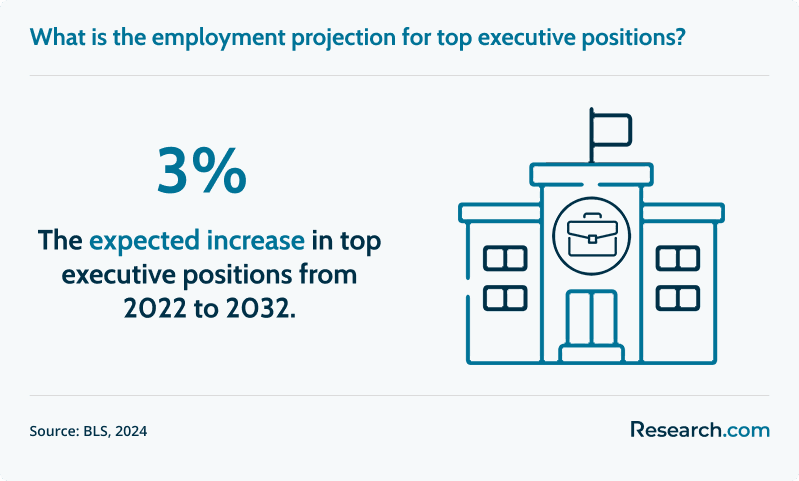
The job market for entrepreneurship MBA graduates is broad because the degree can lead to multiple roles rather than one licensed occupation. Relevant BLS projections show employment of top executives growing by 3% from 2022 to 2032, sales managers growing by 4%, and management analysts growing by 10% over the same period.
About 311,600 openings for top executives are expected each year. Demand for general and operations managers is tied to organizations’ need for leaders who can keep operations running effectively.
Sales managers are expected to have about 43,200 openings annually. Their employment outlook depends partly on the growth or contraction of the industries that employ them, but organizations continue to need strong sales leadership to compete and generate revenue.
Management analysts are projected to have around 92,900 openings each year. Consulting demand is supported by organizations seeking better efficiency, cost control, and resource use in competitive markets.
What networking opportunities are available in online MBA in entrepreneurship programs?
Networking matters in entrepreneurship because opportunities often come through classmates, mentors, investors, alumni, customers, and industry partners. Online MBA programs can support networking, but students must be more intentional than they would be on campus.
Virtual networking events
Programs may host webinars, founder talks, panel discussions, speaker series, and live Q&A sessions. Breakout rooms and moderated discussions can help students interact directly with speakers and peers.
Alumni networks
Alumni platforms, LinkedIn groups, and school-sponsored communities can connect students with graduates in target industries. These contacts may lead to mentorship, job leads, venture advice, customer introductions, or partnerships.
Project-based collaboration
Group assignments, business plan projects, market research tasks, and capstone courses allow students to work closely with classmates from different professional backgrounds. These relationships can continue after graduation.
Local and regional meetups
Some online programs offer optional regional events or hybrid sessions that allow online students to meet classmates, faculty, or alumni in person.
LinkedIn and professional platforms
Many students extend classroom relationships through LinkedIn, alumni groups, and program-specific online communities. This is especially useful for students who want to build visibility around a startup idea or professional niche.
Students who prioritize recognized business-school quality and a strong network may want to compare an online MBA accredited by AACSB.
What is the long-term return on investment (ROI) of an online MBA in entrepreneurship?
The ROI of an online MBA in entrepreneurship depends on what you do with the degree. It can support career advancement, startup development, leadership growth, and stronger business decision-making, but the payoff is not automatic.
- Higher Earning Potential: MBA-level skills can help graduates qualify for management, executive, consulting, or business development roles with stronger compensation potential than many entry-level business positions.
- Better Business Decision-Making: Coursework in finance, marketing, strategy, operations, and leadership can help entrepreneurs avoid costly mistakes and make more informed decisions.
- Network Value: Faculty, classmates, alumni, mentors, and investor contacts may become long-term sources of advice, referrals, funding introductions, or partnerships.
- Industry Flexibility: Entrepreneurship skills can apply across technology, healthcare, finance, consumer goods, and other sectors. Students interested in technology-focused business leadership may also compare the cheapest online MBA in information technology.
- Scaling and Innovation Skills: MBA training can strengthen leadership, negotiation, problem-solving, strategic planning, and adaptability, all of which matter when growing a business or leading innovation.
When the ROI is strongest
- You already have relevant work experience and can use the MBA to move into a higher-responsibility role.
- You choose an accredited program with a reasonable total cost.
- You actively use networking, career services, and applied projects.
- You have a clear business or career goal before enrolling.
- You avoid taking on debt that is out of proportion to your expected career outcomes.
Can an accelerated MBA online fast-track entrepreneurial success?
An accelerated online MBA can help motivated professionals gain business training faster, but speed does not guarantee entrepreneurial success. These programs compress the workload, so students must be ready for intensive reading, projects, discussions, and deadlines.
This format may be useful if you already have business experience, need the credential quickly, or want to apply coursework immediately to a venture or leadership role. Before enrolling, compare academic rigor, accreditation, faculty access, workload, and student support. You can review additional options for an accelerated MBA online.
What are the emerging trends in online MBA programs for entrepreneurs?
Online MBA programs for entrepreneurs are adapting to changes in business, technology, and employer expectations. One trend is the use of micro-credentialing, where students may earn targeted credentials in areas such as digital marketing, sustainability, or blockchain alongside the MBA.
Another trend is the integration of AI-supported learning tools that can personalize content, feedback, or study resources. Programs are also placing more emphasis on sustainability, ethical business practice, innovation, and technology-enabled ventures as entrepreneurs face more complex market and regulatory expectations.
Students should look for programs that balance current tools with durable business fundamentals. Trend-focused courses are useful, but they should not replace strong training in finance, strategy, leadership, customer analysis, and execution. Students still comparing post-MBA directions can review broader MBA career paths.
Key Insights
- An affordable online MBA in entrepreneurship is best for students who need flexible graduate business training and want to apply it to startups, innovation, consulting, business development, or leadership.
- Do not choose a program by tuition alone. Compare accreditation, total credits, fees, online support, faculty experience, networking, experiential learning, and entrepreneurship resources.
- Program length varies widely: accelerated options may take 18 months, standard formats often take 2-3 years, and part-time study may last 3-5 years.
- Entrepreneurship offers high upside but less predictable income than traditional corporate paths. Salary figures are useful benchmarks, not guaranteed outcomes.
- Online delivery can be valuable for working professionals, but success requires discipline, time management, proactive networking, and careful use of faculty and alumni support.
- The strongest ROI usually comes from choosing an accredited, reasonably priced program and using the MBA to achieve a specific business or career goal.
References:
- BLS. (2023). Chief executives. https://www.bls.gov/oes/current/oes111011.htm
- BLS. (2024). Management Analysts. https://www.bls.gov/ooh/business-and-financial/management-analysts.htm
- BLS. (2024). Sales Managers. https://www.bls.gov/ooh/management/sales-managers.htm
- BLS. (2024). Top executives. https://www.bls.gov/ooh/management/top-executives.htm
- Salary.com. (2024). Venture Capitalist i Salary. https://www.salary.com/research/salary/benchmark/venture-capitalist-i-salary
Other Things You Should Know About Online MBA in Entrepreneurship Programs
Many accredited online MBA in Entrepreneurship programs accept up to 6 to 12 transfer credits, but only from regionally accredited graduate coursework with a grade of B or higher. Schools usually require official transcripts and may cap transfers at half the degree’s total credits.
Financial aid options for online MBA in Entrepreneurship programs include federal loans, grants, scholarships, and employer tuition reimbursements. These can help reduce overall costs, making programs more affordable. Check individual program websites for specific aid packages available in 2027.
Consider accreditation, tuition fees, financial aid options, program flexibility, and curriculum relevance. Investigate faculty expertise, networking opportunities, and alumni success. Compare program lengths and prerequisites to ensure they align with your goals and schedule. These factors will help identify affordable yet high-quality programs.