
2027 Choosing the Right MBA Program

Co-Founder and Chief Data Scientist
Choosing an MBA is not just a question of whether a graduate business degree looks good on a resumé. The harder decision is whether a specific program is worth the time, tuition, career disruption, and opportunity cost for your goals. MBA graduates can pursue leadership, consulting, finance, operations, analytics, entrepreneurship, human resources, and technology management roles, but outcomes vary widely by school quality, specialization, work experience, location, network, and employer demand. The starting average MBA salary is currently $98,514, but salary should be treated as one part of the value equation rather than a guaranteed result.
Competition also matters. The number of business master’s degrees conferred in the United States is around 205,800, which means simply earning a business graduate credential may not be enough to stand out. The right MBA should strengthen your leadership profile, expand your network, build marketable skills, and fit your budget and schedule. This guide explains how to compare top MBA programs, what factors matter most, how online and executive formats differ, and how to avoid costly mistakes before you apply.
Choosing the Right MBA Program 2027 Guide Table of Contents
- Start with your MBA goal and readiness
- Compare top MBA programs by fit, not just brand
- Review additional MBA decision factors
- See selected top MBA programs for 2027
- Compare online MBA costs with campus-based costs
- Understand Executive MBA versus traditional MBA formats
- Use an MBA to build entrepreneurial capability
- Evaluate MBA coverage of FinTech and cryptocurrency
- Use complementary business degrees before or after an MBA
- Consider whether a doctoral business degree is the next step
- Assess online and accelerated MBA options
- See how technology is changing MBA education
- Check whether online MBAs are respected by employers
- Decide whether an international MBA supports global goals
- Reduce MBA costs without weakening program quality
Quick Answer: How Should You Choose a Top MBA Program?
The best MBA program is the one that matches your career target, experience level, learning format, budget, specialization needs, and networking goals. Start by identifying the role or industry you want after graduation. Then compare accredited programs by curriculum, career outcomes, employer connections, internship access, faculty expertise, total cost, scholarship options, alumni network, and schedule flexibility. A highly ranked MBA can be valuable, but a lower-cost accredited program with the right specialization, strong employer ties, and manageable debt may be the better choice for many students.
| Decision Point | What to Look For | Why It Matters |
| Career goal | Clear alignment with consulting, finance, analytics, operations, HR, entrepreneurship, healthcare, technology, or general management | The strongest MBA choice depends on the jobs and industries you plan to pursue. |
| Accreditation | Recognized business school accreditation such as AACSB when available | Accreditation helps signal academic quality and may matter to employers, transfer policies, and institutional credibility. |
| Format | Full-time, part-time, online, hybrid, weekend, evening, executive, or accelerated | The wrong format can create unnecessary work, family, relocation, or financial strain. |
| Total cost | Tuition, fees, travel, housing, technology, books, lost income, interest, and time away from work | ROI depends on total investment, not tuition alone. |
| Career support | Recruiting partnerships, internships, coaching, alumni access, employer events, and job placement support | Career services can be a major difference between a degree and a career move. |
Assess Your Academic Needs and Career Goals
Before comparing the top MBA programs, define what you need the degree to do. Are you trying to move into management, change industries, increase earnings, start a company, build finance or analytics expertise, or qualify for executive responsibility? The answer should shape your program list. A student seeking investment banking roles may prioritize recruiting pipelines and finance electives, while a working manager may care more about a flexible part-time or executive format.
Why Get an MBA
An MBA can be worthwhile when it gives you access to opportunities you are unlikely to reach with work experience alone. It can help you build a structured understanding of strategy, accounting, finance, marketing, operations, leadership, data-driven decision-making, and organizational behavior. It can also expand your professional network and expose you to classmates, faculty, alumni, and recruiters who may influence your next role.
The degree is not automatically the best path for everyone. The average starting pay of MBA holders in the US is approximately $121,324, significantly higher than undergraduate wages, but individual outcomes depend on specialization, prior experience, school reputation, geography, industry, and economic conditions. Before applying, compare the MBA with alternatives such as a specialized master’s degree, professional certification, employer training program, or targeted graduate certificate. Researching what an MBA teaches you can help you decide whether the curriculum matches the skills you actually need.
| An MBA May Make Sense If... | You May Want a Different Path If... |
| You need broad business leadership training across several functions. | You only need one technical skill, such as coding, bookkeeping, or a single analytics tool. |
| You want to pivot into consulting, corporate leadership, finance, product management, operations, or entrepreneurship. | You are unsure about your career direction and would be borrowing heavily without a clear plan. |
| Your employer values graduate business education for promotion or reimbursement. | Your target field rewards licenses, portfolios, or technical certifications more than MBAs. |
| You can use the network, internship access, and career services strategically. | You plan to enroll only for the credential and will not engage with classmates, faculty, or recruiters. |
Are You Ready for Graduate School?
The value of college education’s influence on pay and job security should be weighed against the demands of graduate-level study. MBA students often manage case discussions, team projects, presentations, quantitative assignments, reading loads, exams, and networking obligations while balancing jobs and family responsibilities. Full-time programs can require a major career pause, while part-time and online formats can stretch your workload across evenings and weekends.
Readiness is not only academic. Graduate school can affect sleep, finances, relationships, and mental health. Research has linked intense academic pressure with academic burnout, inefficiency, and fatigue. Before applying, ask whether you have the time, support system, financial plan, and emotional bandwidth to complete the program without undermining your health or job performance.
Find the Right Fit: Research Top MBA Programs
Once your goals are clear, compare programs using evidence rather than reputation alone. Rankings can be useful starting points, but they should not replace your own review of accreditation, curriculum, career services, specialization depth, cost, faculty, class format, and alumni outcomes.
Reputation and Accreditation
Where you earn an MBA can matter, especially in fields where employers recruit heavily from specific schools. Well-known business schools may offer strong alumni networks, brand recognition, employer access, and rigorous admissions standards. However, lesser-known universities can also be strong choices when they offer accredited programs, relevant concentrations, lower tuition, strong regional employer ties, or specialized tracks that match your target industry.
Accreditation should be a baseline quality check. Look for institutional accreditation and, when relevant, business school accreditation such as the Association to Advance Collegiate Schools of Business (AACSB). Accreditation does not guarantee a job, but it helps confirm that a school meets recognized academic standards.
Specialization Options
Specializations can make an MBA more targeted. Employers across global regions are highly confident in graduate business schools' ability to prepare students for success, with 99% of employers retaining confidence in GME programs to prepare students for careers. That confidence is most useful when your coursework maps to employer needs. Common MBA concentrations include finance, marketing, business analytics, strategy, supply chain management, entrepreneurship, healthcare management, human resources, information technology, and international business.
If your undergraduate degree or professional background is outside business, a dual degree may help connect leadership training with your current field. For example, the best MSN MBA online programs combine advanced nursing preparation with business management coursework for healthcare professionals who want administrative or executive responsibilities.
Curriculum and Internship Opportunities
Review the course catalog before you apply. A strong MBA curriculum should include core business foundations and enough electives to support your career direction. Look for applied learning through consulting projects, simulations, capstones, internships, practicums, residencies, case competitions, or employer-sponsored projects. These experiences help you test classroom concepts in real business settings and can create talking points for interviews.
Internships are especially important for career changers. A student exploring what jobs can you get with a MBA in human resources, for example, should look for HR-focused projects, people analytics electives, labor relations coursework, and access to employers hiring for talent management or organizational development roles.
Financial Consideration
Cost should be evaluated as a full investment, not just a tuition line. The average cost of tuition and fees for full-time graduate students in A.Y. 2024-2025 was $17,011 in private institutions. A top online MBA degree program from a highly recognized school can cost much more, while some accredited universities offer affordable MBA programs with lower tuition and flexible pacing.
Build a realistic MBA budget that includes tuition, required fees, books, technology, travel, residency costs, relocation, childcare, loan interest, and possible lost income. Then compare scholarships, grants, assistantships, employer tuition support, veterans benefits, and payment plans. The lowest advertised tuition is not always the lowest total cost.
Faculty and Class Size
Faculty profiles can reveal whether a program emphasizes academic research, executive practice, consulting, entrepreneurship, analytics, or industry-specific expertise. Professors with current business experience may bring practical examples and employer connections, while research-active faculty may be valuable for students interested in doctoral study, strategy, economics, or data-heavy fields.
Class size also changes the learning experience. Smaller cohorts may offer more direct faculty access and closer peer relationships. Larger programs may provide broader elective menus, more clubs, wider alumni networks, and greater diversity of professional backgrounds. Neither is automatically better; the right choice depends on how you learn and network best.
Networks and Connections
Networking is one of the main reasons students choose an MBA over a self-paced business certificate. In a survey, 54% of workers learn about job openings through professional connections. Strong MBA networks can include alumni, classmates, recruiters, professors, executives-in-residence, internship sponsors, and corporate partners.
When comparing schools, ask where graduates work, which employers recruit on campus or virtually, how active alumni are in your target city, and whether student clubs connect to your industry. A school with a powerful regional network may be more useful than a nationally famous program if you plan to work in that region.
Resources and Career Services
The best schools for MBA in USA usually provide more than lectures. Look for career coaching, mock interviews, resumé reviews, job boards, employer treks, alumni mentoring, leadership labs, databases, research centers, startup support, writing assistance, quantitative tutoring, and technical support for online learners. These services can matter most when you are changing careers, returning to school after several years, or competing for selective roles.
Admission Requirements and Processes
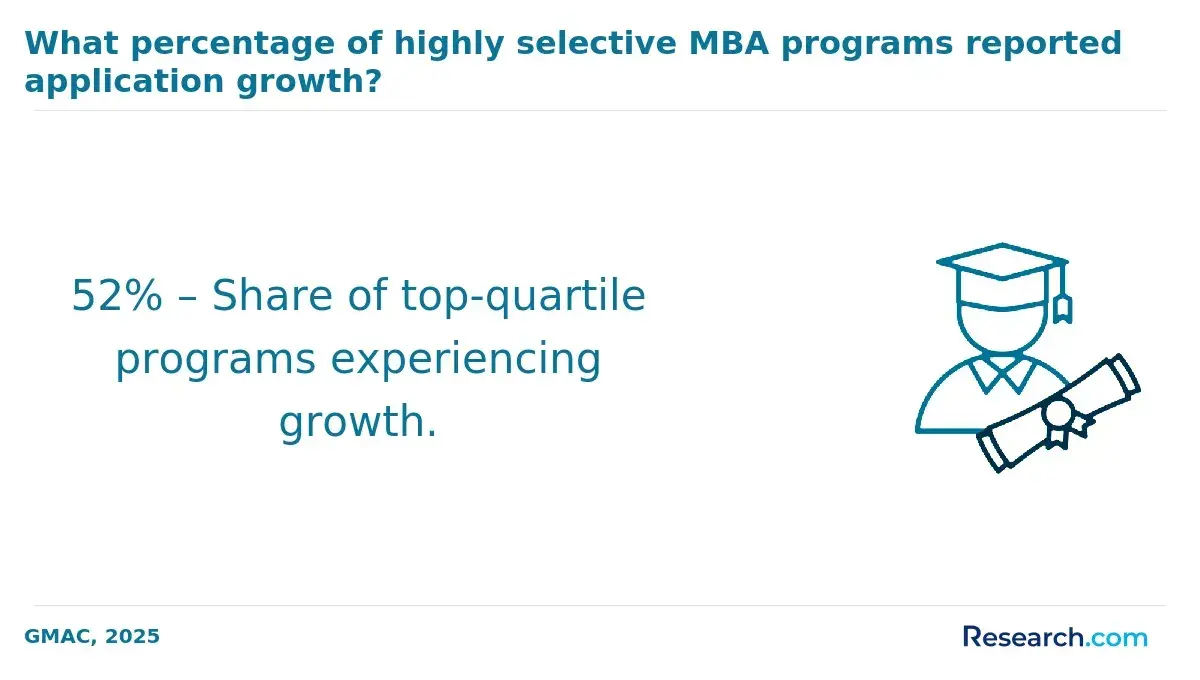
In a survey among aspiring graduate students, the MBA remained the top preferred program type globally at 47%, though specialized business master's programs gained significant traction with nearly 1 in 3 candidates now preferring them. Because demand remains strong, start preparing early. Common MBA application materials include undergraduate transcripts, a resumé, essays, recommendations, test scores when required, proof of work experience, and interviews. Some programs waive GMAT or GRE requirements for applicants with strong professional or academic backgrounds, but policies vary by school.
| Application Component | What Admissions Teams Usually Evaluate | How to Strengthen It |
| Academic record | Quantitative readiness, consistency, and ability to handle graduate coursework | Explain weak grades honestly and consider taking prerequisite quantitative courses if needed. |
| Work experience | Leadership potential, progression, impact, and maturity | Use specific examples of results, decisions, team leadership, or process improvements. |
| Essays | Career clarity, school fit, communication skills, and motivation | Connect your goals to the program’s curriculum, network, and resources. |
| Recommendations | Credibility of your leadership, collaboration, and performance | Choose recommenders who can discuss your actual work, not just your title. |
| Interview | Professional presence, judgment, goals, and fit with the cohort | Prepare concise stories that show leadership, resilience, ethics, and problem-solving. |
Other Things to Consider When Choosing MBAs
After narrowing your list, examine the practical factors that will affect your day-to-day experience and long-term payoff. These details often determine whether a strong program is actually sustainable for you.
- Program type. Full-time, part-time, online, hybrid, weekend, evening, executive, and accelerated MBAs serve different students. A full-time MBA may fit career changers who need internships. A part-time or online MBA may fit working professionals who want to keep earning while studying.
- Location. Campus location affects commuting, housing, internships, employer access, alumni networks, and cost of living. If you plan to work in a specific city or region, local recruiting connections may be more valuable than national name recognition.
- Salary expectations. MBA earnings vary by role, industry, location, experience, and specialization. For instance, a finance major salary ranges from $73,000-$111,000, while an entrepreneurship major earns $81,000-$187,000 yearly.
- Employer reimbursements. Some companies help pay for graduate business education. In fact, 92% of U.S. employers offer educational benefits, including tuition assistance and reimbursements. Review eligibility rules, grade requirements, annual caps, repayment obligations, and whether you must remain with the employer after graduation.
- Campus visits and student feedback. A visit, virtual class session, student ambassador conversation, or alumni call can reveal what brochures cannot. Ask about faculty access, workload, career services, group projects, technology platforms, and whether students feel supported.
| Common Mistake | Better Approach |
| Choosing only by ranking or school name | Compare fit, outcomes, cost, specialization strength, and employer access. |
| Looking only at tuition | Calculate total cost, including fees, travel, technology, interest, and lost income. |
| Assuming every online MBA has the same reputation | Check accreditation, curriculum rigor, faculty, student services, and alumni outcomes. |
| Ignoring career services until graduation | Use coaching, networking, internships, and employer events from the first term. |
| Borrowing without a salary plan | Compare realistic post-MBA roles, compensation ranges, debt payments, and time to payoff. |
List of the Top MBA Programs for 2027
Because an MBA is among the highest-paying master’s degrees, many students begin their search with well-known business schools. The programs below can help you compare formats, concentrations, estimated costs, and accreditation. Use this list as a starting point, then verify current admissions details, tuition, and outcomes directly with each school.
| School | Program Overview | Program Types | Tracks/Concentrations | Cost | Accreditation |
| Northwestern University Kellogg School of Management | Northwestern University offers in-person MBA options designed to build strategic, analytical, and leadership capability. Students can use electives and exchange opportunities to tailor the degree to global business interests. | Full-time, Evening, Weekend, Executive | Strategy, Managing Organizations, Management Science, etc. | $27,005 (per quarter) | Association to Advance Collegiate Schools of Business (AACSB) |
| University of Chicago Booth School of Business | Chicago Booth combines business fundamentals, management coursework, peer learning, and global connections for students preparing for high-impact roles. | Full-time, Evening, Weekend, Executive | Analytic Finance, Behavioral Science, International Business, etc. | $80,961 (three quarters) | AACSB |
| University of Florida Warrington College of Business | University of Florida provides flexible MBA pathways with collaborative coursework, analytical training, and career-focused specialization options. | Full-time, Executive, Weekend, Professional, Online | Finance, Human Capital, Marketing, etc. | $26,473 (in-state), $61,260 (out-of-state) | AACSB |
| University of Pennsylvania The Wharton School | Wharton offers a broad MBA experience with 21 different tracks, extensive career services, extracurricular opportunities, and a large interdisciplinary network. | Full-time, Part-time, Executive, Online | Entrepreneurship & Innovation, Multinational Management, Business Analytics, etc. | $87,370 | AACSB |
| University of Texas Permian Basin | The University of Texas Permian Basin offers affordable MBA study with core coursework in accounting, finance, organizational behavior, marketing, and leadership. | Full-time, Online | Analytics, Accounting, Finance, etc. | $11,729.70-14,075.64 | AACSB |
How Does the Cost of an Online MBA Compare to Traditional Programs?
An online MBA may reduce costs tied to relocation, commuting, parking, housing, and time away from work, but it is not automatically cheaper. Some online programs from highly ranked schools charge premium tuition, while some campus-based public universities may be comparatively affordable for in-state students. To compare accurately, calculate the total program cost and not just the per-credit rate.
Review tuition, fees, required residencies, travel, software, books, graduation fees, and loan interest. Then compare those costs with likely career benefits, your ability to keep working, and the strength of the school’s recruiting support. Research.com’s guide to the cost of online MBA programs can help you organize the major expense categories before committing.
| Cost Category | Online MBA | Campus MBA |
| Tuition | May be lower, similar, or higher depending on the school | Varies widely by public, private, in-state, and out-of-state status |
| Housing and relocation | Often avoidable unless residencies are required | May be significant for full-time students who move |
| Work continuity | Often easier to keep working while enrolled | Full-time formats may require reducing hours or leaving work |
| Networking costs | May require travel for residencies, conferences, or optional events | More networking may happen on campus but can involve higher living costs |
What Distinguishes an Executive MBA from a Traditional MBA?
An Executive MBA is built for experienced professionals who want advanced leadership education without stepping away from senior responsibilities. Traditional MBAs often serve a wider range of students, including career changers and earlier-career professionals. Executive formats usually emphasize peer learning, strategic decision-making, applied projects, and schedules designed around working executives.
Choose an Executive MBA if you already have substantial professional responsibility and need boardroom-level strategy, leadership, and network access. Choose a traditional full-time MBA if you need internships, structured recruiting, or a major career pivot. If cost is a major concern, compare accredited options carefully, including the least expensive executive MBA programs that may support advancement without requiring a long career pause.
How Can an MBA Enhance Your Entrepreneurial Skills and Ventures?
An MBA can support entrepreneurs when the curriculum goes beyond theory and gives students access to mentors, market testing, financial modeling, pitch development, venture labs, and startup networks. It is most useful for founders who need stronger business discipline, investor readiness, or leadership skills as their company grows.
- Strategy development: MBA coursework can help founders assess market size, competitive positioning, pricing, customer segments, and growth options.
- Financial management: Accounting, corporate finance, and forecasting courses can improve budgeting, cash-flow planning, valuation, and investor communication.
- Network building: Classmates, alumni, professors, mentors, and guest speakers may become co-founders, advisors, customers, investors, or referral sources.
- Leadership practice: Team-based projects help entrepreneurs practice delegation, conflict resolution, hiring judgment, and culture building.
- Access to startup resources: Some schools offer incubators, accelerators, competitions, funding introductions, legal clinics, and entrepreneurship centers.
How Can MBA Programs Enhance Their Focus on FinTech and Cryptocurrency?
Technology is changing financial services, so MBA programs that serve finance-minded students should address digital payments, blockchain, risk management, cybersecurity, financial analytics, regulation, and cryptocurrency market structure. The most useful programs connect these topics to business strategy rather than treating them as isolated technical subjects.
Students interested in this area should look for electives, labs, faculty research, industry speakers, applied projects, and partnerships with financial technology firms. Some learners may also explore a dedicated degree in cryptocurrency or related blockchain and FinTech education to complement a broader MBA.
How Can Complementary Online Business Administration Degrees Enhance Your MBA Journey?
Not every student should begin with an MBA. If you lack formal business coursework, an undergraduate or foundational business program may help you build confidence in accounting, economics, management, marketing, and business communication before graduate study. For students still completing a bachelor’s degree, the best online business administration degree options can provide a practical academic base before pursuing an MBA later.
Can a Doctoral Degree Enhance Your Business Expertise?
An MBA is usually a professional management degree. A doctoral business degree, such as a DBA, is a different investment that may fit experienced professionals who want to conduct applied research, teach, consult, publish, or solve complex organizational problems at a high level. It is not necessary for most management roles, but it can be useful for those pursuing academic, executive advisory, or research-intensive paths. If cost and flexibility matter, compare affordable online DBA programs against your long-term goals before enrolling.
The Role of Online and Accelerated MBA Programs in Modern Education
Online and accelerated MBA programs are popular because many students cannot pause work, relocate, or spend several years in a traditional full-time format. These options can be effective when they preserve academic rigor, faculty access, networking, career services, and employer relevance.
- Online MBA: Best for working professionals who need location flexibility and can stay disciplined in a digital learning environment.
- Accelerated MBA: Best for students who already have business foundations or clear goals and want to reduce time in school.
- Hybrid MBA: Best for students who want online convenience plus in-person residencies, networking, or intensive workshops.
- Part-time MBA: Best for students who want steady progress while continuing full-time employment.
When reviewing accelerated options such as one year MBA programs online, check whether the compressed schedule leaves enough time for recruiting, internships, electives, and networking. A shorter program can reduce opportunity cost, but it may not suit students who need a slower transition into a new industry.
How Technology is Shaping Modern MBA Programs
Modern MBA programs increasingly teach students how to lead in data-rich, technology-driven organizations. This does not mean every MBA student must become a software engineer. It means managers need to understand analytics, digital transformation, AI use cases, cybersecurity risk, automation, platform business models, and technology investment decisions.
- Digital learning tools: Online platforms, simulations, collaborative software, and virtual classrooms make MBA study more flexible and interactive.
- Analytics and AI exposure: Many programs now include data analytics, artificial intelligence, automation, and digital strategy topics.
- Global collaboration: Technology allows students in different locations to work together on projects and case analyses.
- Career services platforms: Virtual coaching, online recruiting events, interview tools, and digital job boards help students connect with employers.
- Technology management careers: Students interested in IT leadership can compare coursework and outcomes with career information such as MBA information technology management salary.
When comparing programs, look for technology topics that are integrated into business decision-making. A strong MBA should help students evaluate when technology creates value, when it adds risk, and how leaders should manage change across teams.
Are Online MBA Programs as Reputable as Traditional Ones?
Online MBA reputation depends less on delivery format and more on institutional quality, accreditation, curriculum rigor, faculty involvement, student support, and employer recognition. A well-designed online MBA from an accredited university can be respected, especially when the diploma does not separate online students from other graduates and the program provides strong career services.
Do not assume all online programs are equal. Ask whether classes are live, asynchronous, or mixed; whether students complete team projects; how exams and presentations are handled; how networking works; and whether recruiters engage with online students. For learners who want a faster business credential before or instead of an MBA, the fastest online business degree options may be worth comparing.
Should I Consider an International MBA for Global Career Opportunities?
An international MBA may be valuable if your target career involves cross-border operations, multinational leadership, international finance, global consulting, supply chains, trade, or emerging markets. These programs can expose students to different business cultures, regulatory environments, currencies, consumer markets, and leadership expectations.
Before choosing an international program, verify accreditation, language expectations, visa rules, internship access, employer relationships, alumni presence in your target countries, and whether the degree is recognized where you want to work. Students comparing global business and finance pathways may also review affordable specialized options such as the cheapest online masters in economics when finance-focused graduate study is a better fit than a general MBA.
How to Pursue a Top MBA Without Breaking the Bank
An MBA can be financially demanding, so affordability should be part of your strategy from the beginning. A lower-cost program is not automatically weaker, and an expensive program is not automatically worth the debt. The goal is to find the strongest accredited program you can afford that also supports your career outcome.
1. Compare Online MBA Programs Carefully
Online MBAs can reduce relocation, commuting, and schedule-related costs. They are especially useful for students who need to keep working while studying. Budget-conscious learners can compare programs such as online masters under 10k per year, but should still check accreditation, faculty quality, student support, and career services.
2. Look at Public Universities
Public universities may offer respected MBA programs at lower tuition, especially for in-state residents. They can also have strong regional employer relationships, practical curricula, and online options that reduce the need to relocate.
3. Consider Accelerated Formats
Accelerated MBA programs can reduce time in school and may lower opportunity cost. They work best for students with clear goals, strong preparation, and the ability to handle an intensive pace.
4. Apply Early for Scholarships and Aid
Scholarships, grants, fellowships, assistantships, employer reimbursement, veterans benefits, and institutional aid can change the net cost substantially. Apply early and ask each school whether aid is renewable, merit-based, need-based, or tied to enrollment status.
5. Use Employer Education Benefits Strategically
If your employer offers tuition assistance, read the policy closely. Some benefits require minimum grades, approved programs, continued employment, or repayment if you leave the company within a specified period.
6. Evaluate ROI Before Borrowing
Estimate your likely post-MBA role, realistic salary range, monthly loan payment, and time required to recover your investment. Avoid borrowing based only on the highest possible salary outcome. Use conservative assumptions and compare multiple scenarios.
Questions to Ask Before You Apply
- Is the program institutionally accredited, and does the business school hold recognized business accreditation?
- Which employers recruit from this MBA, and do they recruit students in my format?
- What percentage of students use career services before graduation?
- Are internships, consulting projects, or practicums available to online and part-time students?
- How much will I pay in total after tuition, fees, travel, technology, books, and loan interest?
- Can I complete the program while maintaining work, health, and family responsibilities?
- Does the curriculum include the specialization, electives, or experiential learning I need?
- What support exists for career changers, entrepreneurs, international students, or executive-level students?
Key Insights
- Choose by outcome, not prestige alone. A top MBA should connect directly to your target role, industry, location, and leadership goals.
- Accreditation and career support are nonnegotiable. Verify academic quality and make sure the program has meaningful employer access, coaching, and alumni engagement.
- Total cost matters more than tuition. Include fees, travel, technology, relocation, lost income, and loan interest before judging affordability.
- Format should fit your life. Full-time, online, part-time, executive, hybrid, and accelerated MBAs serve different students; the best format is the one you can complete successfully.
- Specialization can improve value. Finance, analytics, technology, entrepreneurship, HR, healthcare, and international business tracks can make the degree more relevant to specific career plans.
- Online MBAs can be credible when quality is strong. Reputation depends on accreditation, rigor, faculty, outcomes, and employer recognition, not only whether courses meet online or on campus.
- Do the ROI math before enrolling. MBA salaries vary, so compare realistic post-graduation opportunities against your debt and opportunity cost.
References:
- College Tuition Compare. Florida Private 4-Year Colleges 2025 Average Tuition. https://www.collegetuitioncompare.com/statistics/cost-of-attendance/?state=FL&type=private&level=4-year-colleges
- Coursera. MBA Salary: 2026 Guide. https://www.coursera.org/articles/mba-degree-salary
- Escalera, J. Networking Nation: 54% of Workers Got Hired Through a Connection. MyPerfectResume. https://www.myperfectresume.com/career-center/careers/basics/networking-nation
- Ethier, M. Forget The Rankings: New GMAC Survey Shows What Drives MBA Decisions Today. Poets & Quants. https://poetsandquants.com/2025/04/16/forget-the-rankings-new-gmac-survey-shows-what-drives-mba-decisions-today/
- Graduate Management Admission Council. Corporate recruiters survey: 2025 report. https://www.gmac.com/-/media/files/gmac/research/employment-outlook/2025-corporate-recruiters-survey/summary-report.pdf
- Graduate Management Admission Council. GMAC prospective students survey: 2025 summary report. https://www.gmac.com/-/media/files/gmac/research/prospective-student-data/2025/2025_pss_final.pdf
- Hoppock, D. What Is the Average Salary for an MBA Graduate? Investopedia. https://www.investopedia.com/articles/personal-finance/031215/what-average-salary-mba-graduate.asp
- International Foundation of Employee Benefit Plans. Education Benefits: 2024 Survey Report. https://www.ifebp.org/detail-pages/resource/survey/education-benefits--2024-survey-report
- Leckrone, B. Employers Remain Confident in Graduate Business Education: GMAC Survey. BestColleges. https://www.bestcolleges.com/news/2025-gmac-corporate-recuriters-survey-ai-human-skills/
- National Association of Colleges and Employers. 2026 Salary Survey. https://www.naceweb.org/docs/default-source/default-document-library/2026/publication/executive-summary/nace-winter-2026-salary-survey-executive-summary.pdf?sfvrsn=841b6e8_3
- National Center for Education Statistics. Graduate Degree Fields. https://nces.ed.gov/programs/coe/indicator/ctb/graduate-degree-fields
- National Center for Education Statistics. Student charges: What is the average amount of tuition and required fees for graduate students at public postsecondary institutions operating on an academic year calendar system? Trend Generator. https://nces.ed.gov/ipeds/TrendGenerator/app/answer/13/207
- National Center for Education Statistics. Student charges: What is the average amount of tuition and required fees for full-time graduate students at private postsecondary institutions operating on an academic year calendar system? Trend Generator. https://nces.ed.gov/ipeds/TrendGenerator/app/answer/13/208
- Payscale. Master of business administration (MBA), finance degree. https://www.payscale.com/research/US/Degree=Master_of_Business_Administration_(MBA)%2C_Finance/Salary
- Payscale. Master of business administration (MBA), entrepreneurship degree. https://www.payscale.com/research/US/Degree=Master_of_Business_Administration_(MBA)%2C_Entrepreneurship/Salary
Other Things You Should Know About Choosing the Right MBA Program
Accreditation is a key quality check for MBA programs in 2027. The main business-school accreditors are AACSB, EQUIS, and AMBA. An accredited program is more likely to meet employer and licensing expectations, and it can affect credit transfer and graduate-school recognition.
For MBA admission in 2027, most programs prefer candidates with 2-5 years of professional work experience. Specific requirements may vary, but leadership roles and industry-relevant experience can enhance your application significantly. Always check individual program criteria for detailed expectations.


