
2027 Fastest Online MBA in Healthcare Management Programs

Co-Founder and Chief Data Scientist
Choosing the fastest online MBA in healthcare management is usually a time-sensitive decision: you want graduate-level business training, healthcare leadership credibility, and a program format that does not require stepping away from work. The right program can help clinicians, administrators, analysts, and career changers move toward management roles in hospitals, health systems, insurers, long-term care organizations, public health agencies, and healthcare technology firms.
This guide explains what an accelerated online MBA in healthcare management includes, how quickly programs can be completed, what they cost, how online study compares with campus-based learning, and which career paths may follow. It also highlights the fastest online MBA in healthcare management programs for 2027 and gives practical criteria for comparing programs before you apply.
Quick answer: Is an online MBA in healthcare management worth considering?
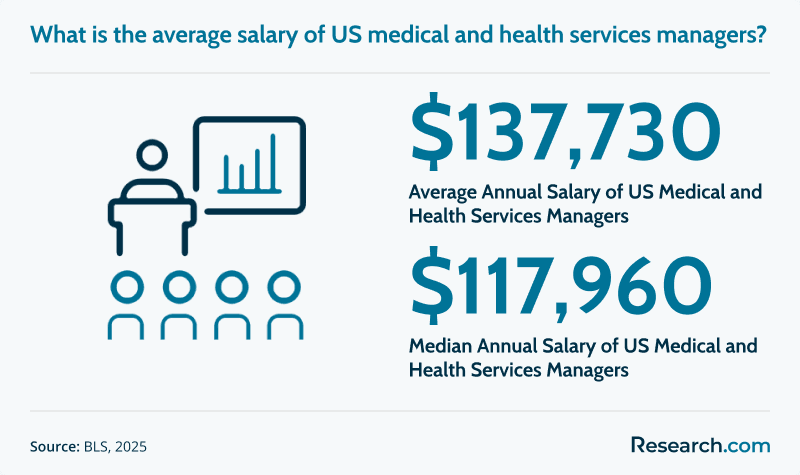
An online MBA in healthcare management can be a strong option for professionals who want business leadership training with healthcare-specific coursework and need the flexibility of remote study. It is most useful for learners targeting roles such as medical and health services manager, hospital administrator, healthcare consultant, health policy analyst, clinical operations manager, or healthcare information manager. According to BLS data cited in this guide, medical and health services managers earn an average annual salary of $137,730 and a median annual salary of $117,960, though individual outcomes depend on location, experience, employer type, and role level.
Main advantages of earning an online MBA in healthcare management
- Strong salary potential: Medical and health services managers have an average annual salary of $137,730 and a median annual salary of $117,960.
- Multiple leadership pathways: Graduates may pursue roles in healthcare administration, hospital operations, health policy, consulting, insurance, long-term care, healthcare technology, and related fields.
- Flexible study format: Online MBA programs often allow working adults to continue their careers while completing coursework through asynchronous, synchronous, or hybrid online delivery.
- Potentially lower total costs: Online students may avoid relocation, commuting, campus housing, and some in-person expenses, although technology and online course fees can still apply.
What should I expect from an online MBA in healthcare management?
An online MBA in healthcare management combines general MBA training with coursework focused on the healthcare sector. Students usually study finance, accounting, operations, marketing, strategy, analytics, leadership, and organizational behavior, then apply those skills to healthcare systems, reimbursement, policy, quality improvement, patient safety, healthcare law, and health economics.
The format is typically built for working professionals. Many programs use online learning platforms with recorded lectures, live sessions, discussion boards, team projects, simulations, and case analyses. Some programs also include capstone projects, consulting-style assignments, virtual residencies, or short in-person requirements. The goal is not only to understand healthcare policy or hospital operations, but to make better management decisions in settings where cost, access, compliance, staffing, and patient outcomes are all connected.
Where can graduates with an online MBA in healthcare management work?
Graduates can work across the healthcare ecosystem, not only in hospitals. The degree is designed for professionals who want to manage people, budgets, systems, services, compliance requirements, or strategic initiatives in organizations connected to patient care and health services.
| Work setting | How MBA healthcare management skills may be used |
| Hospitals and health systems | Managing departments, budgets, staffing plans, service lines, performance metrics, and operational improvement projects. |
| Health insurance companies | Supporting compliance, plan design, provider relations, product development, reimbursement strategy, or managed care operations. |
| Pharmaceutical, biotech, and medical device firms | Working in strategy, marketing, project management, business development, regulatory planning, or product commercialization. |
| Government and public health agencies | Analyzing policy, managing programs, overseeing public health initiatives, or supporting regulatory implementation. |
| Long-term care and assisted living facilities | Overseeing facility operations, resident care standards, staffing, compliance, budgeting, and service quality. |
| Healthcare consulting firms | Advising organizations on cost control, operations, compliance, technology adoption, workflow redesign, and growth strategy. |
How much can I earn with an online MBA in healthcare management?
Many graduates of online MBA programs in healthcare management pursue medical and health services manager roles. According to the United States Bureau of Labor Statistics, these professionals earn an average annual salary of $137,730 and a median annual salary of $117,960.
That median is far above the collective median annual pay for all occupations in the country, which is $49,500. However, salary is not guaranteed by the degree alone. Pay varies based on experience, facility size, geography, industry, job scope, credentials, and whether the role involves responsibility for a department, service line, facility, region, or system-wide function.
BLS wage data show that medical and health services managers can earn between $69,680 and $219,080. Lower salaries are more common for early-career managers or smaller employers, while higher compensation is more likely for experienced leaders in large hospitals, health systems, or high-cost labor markets.
- Fastest online MBA in healthcare management programs for 2027
- How long does an online MBA in healthcare management take?
- Online vs. on-campus MBA in healthcare management: which is better?
- How much does an online MBA in healthcare management cost?
- Financial aid options for online MBA healthcare management students
- Admission requirements for online MBA in healthcare management programs
- Common courses in an online MBA in healthcare management
- Healthcare management MBA specializations
- ROI of an online MBA in healthcare management
- Challenges of completing an online MBA in healthcare management
- How to choose the best online MBA in healthcare management
- Accreditation and ranking factors to check
- Career paths after an online MBA in healthcare management
- Job market for healthcare management MBA graduates
- Entrepreneurial opportunities in healthcare management
Fastest Online MBA in Healthcare Management Programs for 2027
How do we rank schools?
An online MBA in healthcare management requires a major investment of time, money, and professional energy, so speed should not be evaluated in isolation. A fast program is most valuable when it is also credible, affordable for your situation, properly accredited, and aligned with your career goals.
To identify accelerated options, our research team reviewed information from trusted education data sources, including College Scorecard, Peterson's database, the IPEDS database, and the National Center for Education Statistics.
You can review the ranking process in more detail on our methodology page.
| Rank | School and program | Fastest listed completion time | Credits or course requirement | Listed cost | Accreditation |
| 1 | Texas A&M University at Corpus Christi Online Master of Business Administration with a Concentration in Healthcare Administration | 12 to 24 months | 36 | $18,252 | Association to Advance Collegiate Schools of Business |
| 2 | Florida International University Online Healthcare MBA | 18 months | N/A | $59,892 | Association to Advance Collegiate Schools of Business and Commission on Accreditation of Healthcare Management Education |
| 3 | Northern Kentucky University Master of Business Administration Online with a Concentration in Healthcare Administration | As few as 12 months | 33 | $17,259 | Association to Advance Collegiate Schools of Business |
| 4 | Boise State University Online MBA in Healthcare Leadership | As few as 12 months | 49 | $36,840 | Association to Advance Collegiate Schools of Business |
| 5 | Southeastern Oklahoma State University Master of Business Administration with a Concentration in Healthcare Information Systems Online | As few as 12 months | 30 | $11,400 | Association to Advance Collegiate Schools of Business |
| 6 | Lamar University Master of Business Administration in Healthcare Administration Online | As few as 12 months | 30 | $14,340; $17,211 with leveling courses | Association to Advance Collegiate Schools of Business |
| 7 | University of Southern Indiana MBA with a Concentration in Healthcare Administration Online | As few as 12 months | 30 | $13,950 | Association to Advance Collegiate Schools of Business |
| 8 | University of Central Arkansas Health Care Administration MBA | 18 to 24 months | 30 | $325 per credit | Association to Advance Collegiate Schools of Business |
| 9 | University of Northern Colorado Master of Business Administration with a Concentration in Healthcare Administration Online | 12 months | 36 | $25,038 | Association to Advance Collegiate Schools of Business |
| 10 | Freed-Hardeman University M.B.A. in Healthcare Management | 1 year | 10 courses | $680 per credit hour | Accreditation Council for Business Schools and Programs |
1. Texas A&M University at Corpus Christi Online Master of Business Administration with a Concentration in Healthcare Administration
The online MBA in Healthcare Administration at Texas A&M University–Corpus Christi is a fully online AACSB-accredited option for professionals who want business training with a healthcare administration focus. The 36-credit program can be completed in as few as 12 months and has an approximate total cost of $18,252. Students take MBA coursework along with four healthcare-focused courses in health systems, economics, finance, and law.
- Program Length: 12 to 24 months
- Required Credits to Graduate: 36
- Total Cost: $18,252
- Accreditation: Association to Advance Collegiate Schools of Business
2. Florida International University Online Healthcare MBA
The online Healthcare MBA at Florida International University is an 18-month fully online program for healthcare professionals who want advanced leadership and business skills. The program holds AACSB and CAHME accreditation, integrates healthcare topics throughout the business curriculum, and includes residencies plus a final research project completed in collaboration with healthcare institutions.
- Program Length: 18 months
- Required Credits to Graduate: N/A
- Total Cost: $59,892
- Accreditation: Association to Advance Collegiate Schools of Business and Commission on Accreditation of Healthcare Management Education
3. Northern Kentucky University Master of Business Administration Online with a Concentration in Healthcare Administration
Northern Kentucky University offers a 100% online AACSB-accredited MBA with accelerated courses, several start dates, and concentration options. Students who select the Healthcare Administration path study topics such as healthcare finance, policy, law, and strategic planning while completing a flexible MBA curriculum designed for career progression.
- Program Length: As few as 12 months
- Required Credits to Graduate: 33
- Total Cost: $17,259
- Accreditation: Association to Advance Collegiate Schools of Business
4. Boise State University Online MBA in Healthcare Leadership
The online MBA in Healthcare Leadership from Boise State University is designed for clinicians and healthcare professionals preparing for leadership roles. The program covers healthcare systems, finance, operations, and leadership strategies tied to healthcare-sector challenges. Potential outcomes include roles such as medical director, hospital administrator, and risk director.
- Program Length: As few as 12 months
- Required Credits to Graduate: 49
- Total Cost: $36,840
- Accreditation: Association to Advance Collegiate Schools of Business
5. Southeastern Oklahoma State University Master of Business Administration with a Concentration in Healthcare Information Systems Online
Southeastern Oklahoma State University offers a 100% online MBA in Healthcare Information Systems for professionals interested in healthcare technology, information management, and business leadership. The 30-credit AACSB-accredited curriculum combines finance, marketing, and data analysis with healthcare law, insurance systems, and electronic health records.
- Program Length: As few as 12 months
- Required Credits to Graduate: 30
- Total Cost: $11,400
- Accreditation: Association to Advance Collegiate Schools of Business
6. Lamar University Master of Business Administration in Healthcare Administration Online
The 100% online MBA in Healthcare Administration at Lamar University blends MBA leadership training with healthcare-specific management coursework. Students develop knowledge in strategic planning, compliance, resource allocation, and healthcare business practices that can support advancement into roles such as hospital administrator, medical and health services director, or health system CEO.
- Program Length: As few as 12 months
- Required Credits to Graduate: 30
- Total Cost: $14,340; $17,211 with leveling courses
- Accreditation: Association to Advance Collegiate Schools of Business
7. University of Southern Indiana MBA with a Concentration in Healthcare Administration Online
The 100% online MBA with a Healthcare Administration concentration at the University of Southern Indiana is built for healthcare professionals who want to strengthen leadership, strategy, and analytical abilities. This AACSB-accredited program includes business topics such as leadership, IT management, accounting, and marketing, along with healthcare risk management, policy analysis, and organizational strategy.
- Program Length: As few as 12 months
- Required Credits to Graduate: 30
- Total Cost: $13,950
- Accreditation: Association to Advance Collegiate Schools of Business
8. University of Central Arkansas Health Care Administration MBA
The University of Central Arkansas provides a 30-credit-hour online MBA in Healthcare Administration. Students complete 24 hours of MBA core coursework, including Marketing Strategy, Financial Decision Making, Organizational Behavior, and Administration of Health Programs, plus 6 elective hours in areas such as Nutritional Services Administration, Health Promotion Interventions, and Research in Health Sciences.
- Program Length: 18 to 24 months
- Required Credits to Graduate: 30
- Cost per Credit: $325
- Accreditation: Association to Advance Collegiate Schools of Business
9. University of Northern Colorado Master of Business Administration with a Concentration in Healthcare Administration Online
The online MBA with a Healthcare Administration concentration at the University of Northern Colorado combines general business education with healthcare management preparation. This 36-credit, 12-month program includes coursework in healthcare systems, economics, ethics, and strategic management and features instruction from experienced professionals, including a regional hospital CEO.
- Program Length: 12 months
- Required Credits to Graduate: 36
- Total Cost: $25,038
- Accreditation: Association to Advance Collegiate Schools of Business
10. Freed-Hardeman University M.B.A. in Healthcare Management
The 100% online M.B.A. in Healthcare Management at Freed-Hardeman University is a 10-course, one-year program that combines advanced business education with ethical, Christian-centered learning. Students study strategic decision-making, healthcare compliance, marketing, informatics, and financial management through flexible eight-week course blocks.
The program emphasizes faculty mentorship and applied preparation for healthcare administration, hospital operations, and consulting roles. Tuition is $680 per credit hour. Applicants need a bachelor's degree with a minimum 3.0 GPA, although conditional admission may be available with a 2.5 GPA.
- Program Length: 1 year
- Required Credits to Graduate: 10 courses
- Cost per Credit: $680
- Accreditation: Accreditation Council for Business Schools and Programs
How long does it take to complete an online MBA in healthcare management?
Most online MBA in healthcare management programs take 1 to 3 years, depending on the required credits, course length, enrollment pace, transfer policies, and whether the student studies full time or part time. The fastest formats may be completed in as little as 12 months, while flexible part-time plans can extend to 3 years or more.
| Program pace | Typical completion time | Best fit | Trade-off |
| Accelerated | 12 to 18 months | Students who can handle intensive coursework and want the fastest credential timeline. | Less room for schedule disruption; heavy weekly workload. |
| Standard full-time | About 2 years | Learners who want a structured MBA pace without the intensity of the shortest programs. | May be harder to balance with demanding full-time employment. |
| Part-time or flexible | Up to 3 years or more | Working adults, caregivers, and students with unpredictable schedules. | Longer time before seeing the full career benefit of the degree. |
A bachelor’s degree is generally the baseline education requirement for healthcare management roles, but many professionals in the field hold graduate degrees. Students who are still evaluating undergraduate options may also compare the fastest online health information management degree programs as a possible route into healthcare administration before pursuing an MBA.
As shown in the chart below, Zippia reports that the largest share of medical and health services managers earned a master's degree.
How does an online MBA in healthcare management compare to an on-campus program?
Online and campus-based MBA programs in healthcare management usually cover similar academic ground, but the learning experience can feel very different. The better choice depends on your schedule, learning preferences, access to local programs, budget, and need for in-person networking.
| Factor | Online MBA in healthcare management | On-campus MBA in healthcare management |
| Schedule | Often asynchronous, synchronous online, or hybrid; better for full-time workers and students with family obligations. | Usually follows fixed class times and semester schedules. |
| Learning style | Requires independence, time management, and comfort with digital platforms. | Offers face-to-face discussion, classroom structure, and immediate in-person feedback. |
| Networking | Built through virtual teams, webinars, online alumni communities, and live video sessions. | Often stronger for local networking, campus events, student organizations, and in-person career fairs. |
| Access | Allows students to enroll without relocating, which expands school choice. | Best for students who live near campus or can move for school. |
| Cost considerations | May reduce commuting, relocation, and housing costs, though online fees may apply. | Can include transportation, parking, housing, campus fees, and other in-person costs. |
Flexibility and scheduling
- Online: Online programs are often the better fit for students who need to work while studying. Some learners also use the flexibility of online education to add complementary business credentials, such as a fast-track online entrepreneurship bachelor's degree, especially if they are interested in healthcare ventures or business ownership.
- On-campus: Campus programs provide more structure and predictable in-person engagement, which can help students who learn best through scheduled classroom routines.
Learning environment
- Online: Students use digital platforms for lectures, assignments, discussions, exams, and team projects. Success depends heavily on planning, self-discipline, and consistent participation.
- On-campus: Students interact directly with faculty and classmates in classrooms, study groups, and campus activities, which can make collaboration more immediate.
Resources and support
- Online: Online students commonly receive digital library access, remote advising, virtual career services, and technical support. Some programs may include optional residencies or brief campus visits.
- On-campus: Campus students can use physical libraries, study spaces, support offices, and, where available, healthcare simulation or professional development facilities.
Cost and accessibility
- Online: Online learning can be more accessible for students who live far from universities or cannot pause their careers. Healthcare professionals who need narrower clinical or administrative upskilling may also compare options such as affordable online pediatric NP graduate certificate programs.
- On-campus: Campus programs may offer a richer in-person academic environment, but they can also require higher total spending when relocation, commuting, and campus-based costs are included.
What is the average cost of an online MBA in healthcare management?
The average cost of an online MBA in healthcare management in the United States typically ranges from $20,000 to $30,000 in total tuition. Actual prices vary widely by school type, reputation, program length, credit requirement, residency expectations, and included student services.
Some lower-cost public university options charge under $10,000, while highly ranked or private programs may exceed $100,000. Per-credit pricing is also common, with many programs charging $300 to $600 per credit hour. Because credit requirements differ, a low per-credit price does not always mean the lowest total cost.
Students comparing business graduate programs may notice similar pricing patterns in other accelerated formats, such as an accelerated entrepreneurship master's degree online, where shorter timelines may reduce opportunity costs as well as total time in school.
| Cost factor | Why it matters | Question to ask |
| Tuition structure | Programs may list total tuition, per-credit tuition, or per-course tuition. | What is the total tuition for the full degree, not just one term or credit? |
| Required credits or courses | A cheaper per-credit rate can still become expensive if the program requires more credits. | How many credits or courses are required to graduate? |
| Technology and online fees | Online students may pay fees for learning platforms, digital services, or course delivery. | Are online program fees included in the advertised price? |
| Residencies or campus visits | Travel can add costs even to a mostly online program. | Are any in-person sessions required, and who pays travel expenses? |
| Leveling or prerequisite courses | Students without a business background may need extra coursework. | Will I need foundation courses before starting the MBA core? |
Online students may avoid some campus-related costs, such as rent near the university, meal plans, parking, and commuting. Still, they should budget for technology, books or digital course materials, graduation fees, and possible residency expenses.
Some graduates improve their earning potential by pursuing roles in higher-paying regions. The states or jurisdictions with the highest average annual salaries for medical and health services managers, as shown in the visual below, are New York ($179,160), the District of Columbia ($170,710), and Delaware ($164,190). Comparable regional salary considerations can also affect healthcare coordinator salary expectations.
What are the financial aid options for students enrolling in an online MBA in healthcare management?
Online MBA students can use several funding sources, but availability depends on enrollment status, school eligibility, employer policies, military status, and individual credit profile. Before borrowing, compare the total cost of attendance with realistic salary goals and advancement opportunities.
- Federal Student Aid: Graduate students can submit the Free Application for Federal Student Aid (FAFSA) to determine eligibility for federal aid. Direct Unsubsidized Loans are common for eligible graduate students, and Graduate PLUS Loans may help cover remaining qualified costs.
- Scholarships and Grants: These awards do not need to be repaid and may be based on academic record, financial need, leadership, healthcare experience, or professional association involvement. Universities, healthcare organizations, and private foundations may offer relevant awards.
- Employer Tuition Reimbursement: Healthcare employers and related organizations sometimes help pay for graduate education, particularly when the degree supports leadership development. Read the terms carefully because GPA requirements, repayment clauses, or post-graduation work commitments may apply.
- Military and Veteran Benefits: Active-duty service members, veterans, and eligible dependents may be able to use benefits such as the Post-9/11 GI Bill®, Yellow Ribbon Program, or military Tuition Assistance. Many online MBA programs have staff who support military-affiliated students.
- Private Student Loans: Private loans from banks, credit unions, or lenders can fill gaps, but they usually require a credit check and may have fixed or variable rates. Compare repayment terms before borrowing.
- Institutional Payment Plans: Some schools let students split tuition into monthly payments. These plans may reduce the need for loans if you can pay as you go.
Students considering advanced business credentials beyond the MBA may see similar aid structures in programs such as the shortest management DBA online programs, where scholarships, employer support, military benefits, and payment plans may also be available.
What are the prerequisites for enrolling in an online MBA in healthcare management?
Admission requirements vary by institution, but most online MBA in healthcare management programs look for evidence that applicants can handle graduate-level business coursework. Requirements may resemble other healthcare administration pathways, including public health administration degree requirements, though MBA programs usually emphasize business readiness and leadership potential.
| Requirement | What schools usually want to see | How to strengthen your application |
| Bachelor’s degree | A degree from an accredited college or university; the major may be in any field for many programs. | Explain how your academic background connects to healthcare, business, leadership, or analytics. |
| Minimum GPA | Many programs expect a GPA around 2.5 to 3.0 on a 4.0 scale. | If your GPA is lower, highlight work experience, certifications, quantitative ability, or recent coursework. |
| Professional experience | Some programs prefer 1–3 years of experience in healthcare, business, or a related field. | Use your résumé and essay to show leadership, project ownership, process improvement, or patient-care exposure. |
| Résumé or CV | A current summary of education, employment, certifications, and relevant accomplishments. | Quantify results where possible, such as budgets managed, teams supported, or workflow improvements. |
| Recommendations | One to three letters from supervisors, faculty, or professional contacts. | Choose recommenders who can speak to your judgment, reliability, leadership, and readiness for graduate study. |
| Statement of purpose | A clear explanation of your goals and why healthcare management fits your career plan. | Connect the program to specific roles, industries, or leadership problems you want to solve. |
| GMAT or GRE | Many programs are test-optional or offer waivers, but some still require scores. | If testing is required, compare the GMAT vs GRE for MBA programs before choosing an exam. |
What courses are typically in an online MBA in healthcare management?
An online MBA in healthcare management usually includes two layers: a core MBA curriculum and healthcare administration coursework. Students who want a narrower healthcare management credential rather than a broad MBA may also compare an accelerated online Master of Science in Healthcare Management.
Common core MBA courses
- Managerial Accounting: Focuses on using financial information for internal decisions, budgeting, cost control, and performance review.
- Financial Management: Covers capital planning, risk, investment decisions, financial analysis, and resource allocation.
- Marketing Strategy: Examines market research, consumer behavior, positioning, competitive strategy, and campaign planning.
- Operations Management: Teaches methods for improving workflow, quality, supply chains, logistics, and service delivery.
- Organizational Behavior and Leadership: Explores motivation, team dynamics, leadership styles, conflict resolution, and change management.
- Business Analytics or Data-Driven Decision Making: Builds skills in interpreting data for business decisions. Students who want deeper technical preparation may also consider an accelerated master's degree in data analytics online.
Common healthcare management courses
- Healthcare Systems and Policy: Introduces healthcare delivery models, regulations, policy processes, and the structure of U.S. and global healthcare systems.
- Healthcare Economics: Examines demand, supply, insurance markets, reimbursement pressures, and cost-containment strategies.
- Healthcare Finance: Applies financial management to hospitals, clinics, and other healthcare organizations, including budgeting and reimbursement.
- Healthcare Law and Ethics: Covers legal responsibilities, patient rights, privacy, compliance, and ethical decision-making.
- Quality Improvement in Healthcare: Focuses on patient outcomes, error reduction, performance measures, and quality systems.
- Strategic Management in Healthcare: Teaches long-term planning, competitive positioning, growth strategy, and innovation in healthcare organizations.
What types of specializations are available in online MBA programs in healthcare management?
Many programs let students customize the MBA through concentrations, electives, or certificates. The best specialization depends on whether you want to manage facilities, data, policy, population health, care quality, technology, or healthcare business ventures. These tracks can also support transitions into non clinical medical jobs.
| Specialization | What it emphasizes | Good fit for students interested in |
| Health Informatics | Electronic health records, health information systems, data use, and healthcare technology. | Health data leadership, EHR management, analytics, or becoming a medical records manager. |
| Healthcare Policy and Regulation | Healthcare law, ethics, compliance, regulation, and policy implementation. | Government, advocacy, compliance, or policy analysis. |
| Hospital Administration | Hospital operations, budgeting, staffing, service coordination, and executive decision-making. | Department leadership, hospital administration, or health system management. |
| Public Health | Population health, prevention, epidemiology, community programs, and public health operations. | Public agencies, nonprofits, community health, or population health strategy. |
| Global Health Management | International healthcare systems, cross-border care, global policy, and health challenges. | NGOs, international health organizations, or multinational healthcare employers. |
| Long-Term Care Administration | Nursing homes, assisted living, rehabilitation services, elder care regulations, and facility quality. | Long-term care leadership; note that administrator licensure rules can vary by state and role. |
| Pharmaceutical and Biotech Management | Drug development, regulatory strategy, healthcare marketing, product management, and commercialization. | Pharma, biotech, medical devices, or healthcare product strategy. |
| Quality Improvement and Patient Safety | Care quality, safety culture, risk reduction, performance improvement, and measurement tools. | Quality director roles, patient safety, process improvement, or clinical operations. |
What is the return on investment for an online MBA in healthcare management?
The ROI of an online MBA in healthcare management depends on the gap between what you spend and what the degree helps you achieve. The clearest return usually comes when the program supports a realistic promotion, career change, leadership track, or salary increase that would have been difficult without graduate business training.
Students should compare tuition, fees, borrowing costs, time to completion, employer reimbursement, and the income they may lose if they reduce work hours. For price-sensitive students, an affordable online MBA may offer a better risk-to-reward balance than a higher-cost program, especially if the school is accredited and has strong healthcare management coursework.
| ROI factor | Why it matters | How to evaluate it |
| Total program cost | Debt can reduce the financial benefit of a higher salary. | Calculate tuition, fees, books, technology costs, and interest if borrowing. |
| Career goal fit | A general MBA may not be enough if your target role requires healthcare-specific knowledge. | Match courses and electives to actual job descriptions. |
| Time to completion | Finishing faster can shorten the time before you use the credential professionally. | Make sure the accelerated pace is realistic with your work schedule. |
| Employer support | Tuition reimbursement can significantly improve ROI. | Ask HR about reimbursement limits, required grades, and retention agreements. |
| Promotion pathway | The degree is more valuable when it connects to a defined advancement route. | Talk with supervisors, mentors, and alumni about roles graduates actually obtain. |
What challenges might I face during my online MBA in healthcare management?
The biggest challenges are rarely limited to course difficulty. Online MBA students often balance work shifts, family obligations, group projects, deadlines, and the self-direction required for remote learning. Healthcare professionals may also face unpredictable schedules, making time management especially important.
- Work-life-school balance: Accelerated formats can be intense, so students should block weekly study hours before enrolling.
- Limited in-person networking: Online students need to be proactive about joining webinars, alumni groups, virtual career events, and professional associations.
- Technology dependence: Reliable internet, updated software, and comfort with learning platforms are essential.
- Group project coordination: MBA programs often use team assignments, which can be harder when classmates work in different time zones or healthcare shifts.
- Career translation: Students must learn how to explain the value of online learning and healthcare management coursework to employers.
When comparing programs, look closely at student support, career coaching, online advising, and technical assistance. Similar evaluation habits are useful when reviewing other executive business programs, including the best value online EMBA programs.
How to choose the best online MBA in healthcare management?
The best program is not automatically the fastest, cheapest, or highest ranked. It is the one that fits your career target, budget, schedule, prior education, and need for healthcare-specific credibility. Use the factors below to compare programs before applying.
- Accreditation: Look for recognized business or healthcare management accreditation, such as AACSB, ACBSP, or CAHME when applicable. If you are comparing business accreditors, review the differences among MBA accreditation types.
- Curriculum and specialization options: Make sure the program includes healthcare finance, policy, operations, quality, law, and leadership topics that match your intended role.
- Faculty background: Faculty with healthcare administration, executive leadership, policy, analytics, or consulting experience can bring practical context to case studies and projects.
- Online format: Confirm whether courses are asynchronous, live online, hybrid, accelerated, or cohort-based. The delivery model should fit your schedule and learning style.
- Student support: Strong programs offer academic advising, technology help, career services, writing support, library access, and networking resources for online learners.
- Total cost and aid: Compare full tuition and fees, not just per-credit cost. Ask about scholarships, employer reimbursement, military benefits, and payment plans.
- Career outcomes: Look for available information about alumni roles, employer connections, internship or project opportunities, and career services for healthcare management students.
A Rasmussen University report cited in this guide found that 66% of medical and health services manager job postings seek candidates with at least a bachelor's degree, while 12% prefer candidates with at least a master's degree. This suggests that an online MBA in healthcare management can strengthen employability for some roles, particularly when paired with relevant experience.
What accreditation and ranking factors should I consider?
Accreditation is one of the first quality checks students should make. Institutional accreditation helps confirm that the university meets recognized academic standards. Programmatic business or healthcare management accreditation can provide another signal of curriculum quality, faculty standards, and employer recognition.
Rankings can be useful, but they should not be the only decision tool. A highly ranked program may not be the best fit if it is too expensive, too slow, not flexible enough, or weak in your target specialization. Instead, use rankings alongside accreditation, cost, completion time, healthcare coursework, faculty experience, student support, and career outcomes.
| Factor | What to verify | Why it matters |
| Institutional accreditation | The university is accredited by a recognized accreditor. | Can affect financial aid eligibility, credit transfer, employer recognition, and graduate school options. |
| Business accreditation | The MBA has accreditation such as AACSB or ACBSP when listed. | Signals that the business curriculum has been externally reviewed. |
| Healthcare management accreditation | CAHME accreditation, where applicable. | May be especially relevant for students targeting healthcare administration leadership. |
| Ranking methodology | How the ranking measures cost, completion time, outcomes, selectivity, and data quality. | Prevents overreliance on rankings that do not match your priorities. |
| Graduate outcomes | Career services, alumni roles, promotion examples, and employer connections. | Helps estimate whether the degree supports your intended career path. |
Students evaluating credential quality in other business fields can use similar verification habits when reviewing accelerated online finance degree comparisons.
Current trends affecting healthcare management MBA students
Healthcare management is being reshaped by digital health tools, data analytics, staffing pressures, cost control demands, value-based care models, cybersecurity concerns, and ongoing regulatory complexity. MBA students who can connect business strategy with healthcare operations, technology, compliance, and patient experience may be better prepared for leadership roles than students who study management in a purely general business context.
Artificial intelligence and automation are also changing administrative work. Healthcare leaders increasingly need to understand how data systems, decision-support tools, electronic health records, privacy requirements, and analytics affect operations. An MBA does not make a student a data scientist, but programs with analytics, informatics, quality improvement, and operations coursework can help managers ask better questions and supervise technology-driven initiatives more effectively.
Common mistakes to avoid when choosing an online MBA in healthcare management
| Mistake | Why it can hurt you | Better approach |
| Choosing only the fastest program | A short timeline is not helpful if the curriculum, accreditation, or support services are weak. | Balance speed with credibility, cost, coursework, and career fit. |
| Looking only at tuition | Fees, books, residencies, technology charges, and loan interest can change the real price. | Ask for the full cost of attendance before enrolling. |
| Ignoring accreditation | Unaccredited or poorly recognized programs may limit employer confidence or financial aid options. | Verify institutional and programmatic accreditation directly with the school. |
| Assuming online means easy | Accelerated online MBA programs can be demanding and require strong self-management. | Review weekly workload expectations and course schedules in advance. |
| Overlooking licensure requirements | Some roles, especially in long-term care administration, may have state-specific requirements beyond the MBA. | Check state and employer requirements for your target role. |
| Relying only on rankings | Rankings may not measure your priorities, such as schedule fit, employer reimbursement, or healthcare specialization depth. | Use rankings as one data point, not the final decision. |
| Assuming salary outcomes are guaranteed | Pay depends on location, role, experience, employer, and market conditions. | Compare job postings in your region and talk with alumni in your target field. |
What career paths are available for graduates of online MBA programs in healthcare management?
Graduates can pursue administrative, strategic, analytical, consulting, and operations-focused roles across healthcare. Some positions may require prior clinical or healthcare experience, while others are open to business professionals who can demonstrate industry knowledge.
| Career path | Typical responsibilities | Best fit for |
| Medical and Health Services Manager | Overseeing healthcare departments, budgets, staff, compliance, and service delivery. | Professionals seeking broad healthcare operations leadership. |
| Hospital Administrator | Coordinating facility operations, departments, staffing, finances, and performance improvement. | Students aiming for hospital or health system leadership. |
| Healthcare Consultant | Advising organizations on strategy, compliance, operations, technology, and cost reduction. | Problem-solvers who enjoy project-based work and client interaction. |
| Health Information Manager | Managing health records, data governance, EHR processes, privacy, and information systems. | Students interested in healthcare data, compliance, and informatics. |
| Pharmaceutical Project Manager | Coordinating timelines, budgets, teams, trials, or product development projects. | Professionals interested in biotech, pharma, or medical products. |
| Health Policy Analyst | Evaluating laws, regulations, public programs, and proposed health system reforms. | Students drawn to policy, research, public health, or advocacy. |
| Managed Care Executive | Managing care models, reimbursement systems, provider networks, and cost-efficiency programs. | Students interested in insurance, payer strategy, or provider networks. |
| Clinical Operations Manager | Supervising patient care delivery processes, staffing levels, protocols, and equipment use. | Clinicians or administrators moving into operational leadership. |
| Long-Term Care Administrator | Managing nursing homes, rehabilitation centers, assisted living facilities, compliance, and resident care. | Students interested in elder care or post-acute care leadership. |
| Director of Patient Experience or Quality Improvement | Developing strategies to improve service quality, patient satisfaction, outcomes, and safety. | Professionals focused on quality, safety, and organizational improvement. |
What is the job market for graduates with an online MBA in healthcare management?
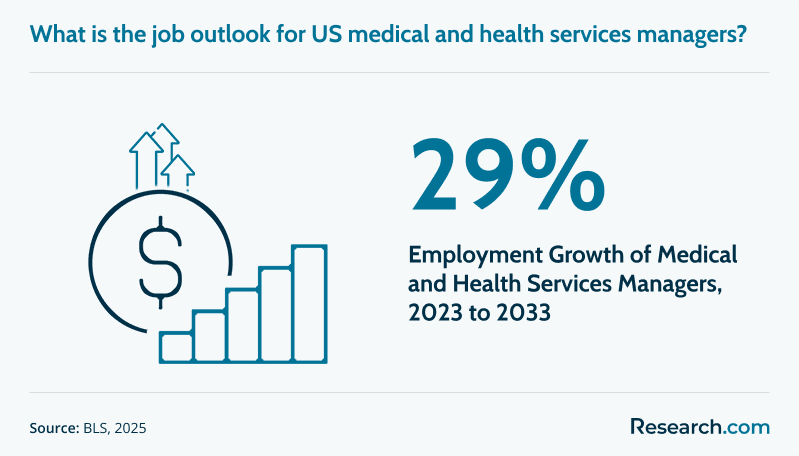
The labor market outlook for healthcare managers is strong. According to the BLS, employment of medical and health services managers is projected to grow 29% from 2023 to 2033, compared with the national average of 4% for all occupations.
During that same period, the BLS projects 61,400 openings for medical and health services managers each year. At the time referenced in this article, Indeed.com lists over 138,000 job openings for these professionals. Job seekers should still evaluate postings carefully by role scope, required experience, salary range, location, licensure expectations, and employer reputation.
Some professionals strengthen their management profile with related credentials. For example, the fastest online master's degree in human resources management programs may appeal to healthcare leaders who want deeper preparation in staffing, organizational culture, workforce planning, and employee relations.
High-demand employers vary by region, but BLS data shown in the visual below indicate that general medical and surgical hospitals employ the most medical and health services managers.
What graduates say about online MBA programs in healthcare management
"The online format allowed me to learn alongside professionals from many parts of the country, which made the discussions more practical and grounded in real healthcare experience. Courses in healthcare operations and strategy gave me tools I could use at work and helped me move toward leadership roles I had not previously considered. Online study changed what I thought was possible for my career." - Louise
"An online MBA in Healthcare Management matched my career goals because it gave me specialized training without requiring me to relocate. The emphasis on healthcare informatics and leadership improved my ability to support change in my organization. Being able to study around my shifts made the degree realistic for me." - Nestor
"Earning my MBA in healthcare management online helped me keep my hospital job and family responsibilities while continuing my education. The work was demanding, but the assignments connected directly to problems I was seeing in our clinic, so I could apply lessons almost immediately." - Aster
What entrepreneurial opportunities can an online MBA in healthcare management unlock?
An online MBA in healthcare management can also support entrepreneurial goals. Graduates may use their training to launch healthcare consulting services, build administrative support businesses, improve internal service lines, develop digital health ideas, manage private practice growth, or lead innovation projects inside established healthcare organizations.
The strongest entrepreneurial opportunities usually come from combining healthcare knowledge with finance, operations, strategy, compliance, and market analysis. Students interested in venture creation or alternative business paths may also explore jobs you can get with entrepreneurship degree to compare broader business-building options.
Questions to ask before applying
- Is the university institutionally accredited, and does the MBA hold relevant business or healthcare management accreditation?
- Can I realistically complete an accelerated program while working?
- What is the full program cost, including fees, books, technology charges, and any residency expenses?
- Does the curriculum include healthcare finance, law, policy, quality improvement, analytics, and operations?
- Are courses asynchronous, live online, hybrid, cohort-based, or self-paced?
- Will I need leveling courses because I do not have a business background?
- What career services are available to online students?
- Do graduates work in the roles, regions, and healthcare settings I am targeting?
- Does the program help with networking through alumni, faculty, projects, residencies, or employer partnerships?
- Will this degree meet any state-specific or employer-specific requirements for my intended role?
Key Insights
- An online MBA in healthcare management is best for professionals who want business leadership training applied to healthcare operations, finance, policy, quality, compliance, and strategy.
- Fast programs can take as little as 12 months, but students should weigh speed against workload, accreditation, student support, curriculum depth, and total cost.
- Medical and health services managers have strong labor market projections, with BLS data showing 29% employment growth from 2023 to 2033 and 61,400 projected openings each year.
- Salary potential is attractive, with medical and health services managers earning an average annual salary of $137,730 and a median annual salary of $117,960, but earnings depend on role, experience, employer, and location.
- The average cost of an online MBA in healthcare management typically ranges from $20,000 to $30,000, though some programs cost under $10,000 and others exceed $100,000.
- Accreditation matters. Check institutional accreditation first, then review programmatic accreditation such as AACSB, ACBSP, or CAHME when relevant.
- Do not choose a program based only on rankings or tuition. The better decision is based on career fit, total cost, format, specialization options, employer recognition, and realistic ROI.
- Common career paths include medical and health services manager, hospital administrator, healthcare consultant, health information manager, health policy analyst, clinical operations manager, long-term care administrator, and quality improvement leader.
- Healthcare leaders increasingly need comfort with analytics, digital health systems, AI-enabled tools, compliance, staffing strategy, and patient experience improvement.
- Before enrolling, ask whether the program will help you reach a specific role—not just whether it offers the fastest completion time.
References:
- American Hospital Association (2025). Fast Facts on U.S. Hospitals, 2025. American Hospital Association
- BLS (2024, April 3). 11-9111 Medical and Health Services Managers. BLS
- BLS (2025, June 16). Industry: Cross-industry, Private, Federal, State, and Local Government Period: May 2024. BLS
- BLS (2025, April 18). Medical and Health Services Managers. BLS
- Mesrobian, C. (2022, March 21). What Is a Health Services Manager? A Look at the Pros Who Keep Healthcare Facilities Humming. Rasmussen University Related research
- Zippia (2025, January 8). Medicine And Health Service Manager Education Requirements. Zippia
Other Things You Should Know About Online MBA Programs in Healthcare Management
In 2027, accelerated online MBA programs in Healthcare Management typically range from 12 to 18 months. These programs are designed for individuals seeking a quicker path to graduation while balancing their professional and personal commitments.
Minimum admission prerequisites typically include a bachelor's degree, relevant work experience in healthcare, and a GMAT score or equivalent. Some programs may waive the GMAT for candidates with significant professional accomplishments or higher academic achievements in 2027.
Yes. Many 2027 accelerated online MBA in Healthcare Management programs end with a capstone, strategic consulting project, or practicum instead of a thesis. These final requirements are often worth 3 to 6 credits and are used to show applied planning, finance, and healthcare operations skills.


