2027 Most Affordable Online Pediatric Nurse Practitioner Graduate Certificate Programs

Co-Founder and Chief Data Scientist
Choosing an online pediatric nurse practitioner graduate certificate is usually not a first step into nursing—it is a specialization decision for nurses who already have graduate-level preparation and want to focus their advanced practice career on children, adolescents, and families. The right program can help you qualify for pediatric nurse practitioner certification, move into primary or acute pediatric care, and expand your clinical scope without leaving your current job.
This guide is designed for working nurses comparing affordable online pediatric nurse practitioner graduate certificate programs. You will learn what these certificates include, how long they take, what they cost, how online programs handle clinical training, which schools offer lower-cost options, and what to check before enrolling.
Quick Answer: Is an Online Pediatric Nurse Practitioner Graduate Certificate Worth It?
An online pediatric nurse practitioner graduate certificate can be worth it if you already hold an MSN or DNP and want to qualify for pediatric NP practice without completing another full graduate degree. The strongest candidates are nurses who understand the difference between pediatric primary care and pediatric acute care, can complete required in-person clinical hours, and choose an accredited program aligned with state licensure and national certification requirements.
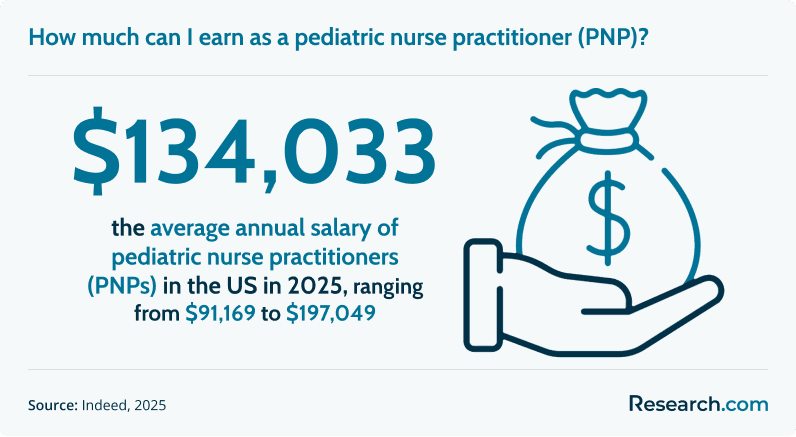
The broader nurse practitioner field is projected to grow by 46%, and pediatric nurse practitioners in the U.S. earn an average annual salary of $134,033. However, outcomes depend on your prior credentials, state regulations, specialty track, location, clinical experience, and employer demand.
What are the benefits of getting an online pediatric nurse practitioner graduate certificate?
- It can help you move into child-focused advanced practice. A PNP certificate prepares graduate-trained nurses for roles in pediatric clinics, hospitals, school-based health centers, community clinics, and other child health settings.
- It may improve your earning potential. Pediatric nurse practitioners in the U.S. earn an average annual salary of $134,033, although actual pay varies by employer, location, experience, and specialty.
- It offers flexibility for working nurses. Online coursework can make it easier to continue working while completing graduate-level pediatric theory, assessment, pharmacology, and care-management courses.
- It provides a focused route to specialization. Instead of repeating an entire graduate nursing degree, eligible nurses can add pediatric primary care or acute care preparation through a post-graduate certificate.
What can I expect from an affordable online pediatric nurse practitioner graduate certificate program?
An affordable online pediatric nurse practitioner graduate certificate usually combines online didactic coursework with required in-person supervised clinical practice. The online portion typically covers pediatric assessment, child development, pharmacology, pathophysiology, health promotion, and management of acute and chronic conditions affecting infants, children, adolescents, and young adults.
The clinical portion is not optional. Even when lectures, assignments, discussions, and exams are delivered online, legitimate PNP programs require hands-on practice in approved pediatric settings. Before enrolling, confirm who finds clinical placements, whether your state is approved for enrollment, and whether the program prepares you for the correct national certification track.
| Program Feature | What It Means for Students | Why It Matters |
| Online coursework | You complete most classroom learning remotely through learning platforms, recorded or live sessions, and digital assignments. | This supports nurses who need to keep working while studying. |
| In-person clinical hours | You complete supervised pediatric practice in approved healthcare settings. | Clinical hours are essential for competency, certification eligibility, and state licensure. |
| Primary care or acute care track | Programs usually prepare students for one pediatric NP certification pathway. | Your track determines your likely practice setting and patient population. |
| Graduate-level admission standards | Most programs expect an MSN or DNP, active RN licensure, and often advanced practice experience. | These certificates are not designed for nurses whose highest credential is a BSN. |
| Accreditation expectations | Reputable programs hold nursing accreditation such as CCNE or ACEN. | Accreditation is commonly tied to certification and licensure eligibility. |
Where can I work with an online pediatric nurse practitioner graduate certificate?
Graduates may work in settings that match their certification preparation and clinical background. Pediatric primary care nurse practitioners often practice in outpatient pediatric offices, community health centers, school-based health centers, and preventive care clinics. Their work may include well-child visits, immunization counseling, developmental screening, common illness management, and chronic condition follow-up.
Pediatric acute care nurse practitioners are more likely to work in hospitals, pediatric intensive care units, inpatient units, emergency departments, and specialty services caring for children with complex or unstable conditions. Some graduates also pursue roles in urgent care, pediatric specialty clinics, public health programs, and home-based services for medically complex children.
How much can I make with an online pediatric nurse practitioner graduate certificate?
Pediatric nurse practitioners in the U.S. earn an average annual salary of $134,033. This figure is useful for estimating potential return on investment, but it should not be treated as a guaranteed outcome. Compensation can change based on your city, years of experience, certification track, employer type, scope of practice rules, and whether you work in outpatient, inpatient, specialty, or high-acuity environments.
When comparing programs, calculate the total cost of attendance against realistic local salary expectations. A lower-cost certificate may produce a stronger ROI if it is accredited, supports clinical placement, and meets certification requirements in your state.
- 10 Most Affordable Online Pediatric Nurse Practitioner Graduate Certificate Programs for 2027
- How long does it take to complete an online pediatric nurse practitioner graduate certificate program?
- How does an online pediatric nurse practitioner graduate certificate program compare to an on-campus program?
- What is the average cost of an online pediatric nurse practitioner graduate certificate program?
- What are the financial aid options for students enrolling in an online pediatric nurse practitioner graduate certificate program?
- What are the prerequisites for enrolling in an online pediatric nurse practitioner graduate certificate program?
- What courses are typically in an online pediatric nurse practitioner graduate certificate program?
- What specializations are available in an online pediatric nurse practitioner graduate certificate program?
- How do certificate programs compare to online direct entry MSN programs?
- What digital resources and support systems boost success in online pediatric nurse practitioner certificate programs?
- How to choose an affordable online pediatric nurse practitioner graduate certificate program?
- How do online pediatric nurse practitioner programs support continual professional development?
- What are the certification and licensing requirements after completing an online pediatric nurse practitioner graduate certificate program?
- What career paths are available for graduates of online pediatric nurse practitioner graduate certificate programs?
- What is the job market for graduates of online pediatric nurse practitioner graduate certificate programs?
- What challenges should I anticipate during an online pediatric nurse practitioner graduate certificate program?
10 Most Affordable Online Pediatric Nurse Practitioner Graduate Certificate Programs for 2027
How do we rank schools?
Because certificate cost is a major factor for working nurses, this ranking emphasizes affordability while also considering publicly available institutional and program information. Research.com uses established education data sources, including the IPEDS database, Peterson's database, the College Scorecard database, and The National Center for Education Statistics.
These sources help provide a consistent foundation for comparing nursing certificate options. To learn more about the ranking process, review Research.com's methodology page.
| Rank | School and Program | Track | Credits or Length | Cost Information | Accreditation |
| 1 | University of Texas at Arlington — Post Master's Pediatric Primary Care Nurse Practitioner Certificate | Primary Care | As few as 5 courses; 18 credits | $654 per credit; $1,962 per course; estimated total of $14,915 | Commission on Collegiate Nursing Education (CCNE) |
| 2 | University of Colorado Anschutz Medical Campus — Post-Graduate Certificate Acute Care Pediatric Nurse Practitioner | Acute Care | 4 semesters, approximately 1.5 years; 19 credits | $14,915 in-state; $24,187 out-of-state | Commission on Collegiate Nursing Education (CCNE) |
| 3 | University of Missouri–Kansas City — Pediatric Nurse Practitioner Graduate Certificate | Primary Care | 18 months to 2 years; 18 credit hours | $880.65 tuition + fees per credit; estimated total tuition of $15,851.70 | Commission on Collegiate Nursing Education (CCNE) |
| 4 | Rush University — Acute Care Pediatric Nurse Practitioner Postgraduate Certificate | Acute Care | 20 months; 12 credits | $1,384 per credit | Commission on Collegiate Nursing Education (CCNE) |
| 5 | Herzing University — Post Master’s Online Pediatric NP Certificate | Pediatric NP | 20 months; 33 credits | $755 per credit | Commission on Collegiate Nursing Education (CCNE) |
| 6 | St. Catherine University — Pediatric Nurse Practitioner Post-Graduate Certificate | Pediatric primary healthcare focus | 3 years; 21 credits | $1,200 per credit | Commission on Collegiate Nursing Education (CCNE) |
| 7 | University of Arizona — Pediatric Nurse Practitioner Graduate Certificate | Primary Care Pediatric Nurse Practitioner | 2 years part-time; 27 credits | $1,053 per credit | Commission on Collegiate Nursing Education (CCNE) |
| 8 | University of Rochester — Pediatric NP - Acute Care Advanced Certificate | Acute Care Advanced Certificate | 1 year; 12 to 18 credits | $1,740 per credit | Commission on Collegiate Nursing Education (CCNE) |
| 9 | Walden University — Pediatric Nurse Practitioner (PNP) Primary Care Online | Primary Care | 5 quarters; 43 quarter credits + 640 clinical hours | $775 per quarter hour; estimated total of $33,325 | Commission on Collegiate Nursing Education (CCNE) |
| 10 | Drexel University — Pediatric Acute Care Nurse Practitioner Post-Master's Certificate | Acute Care | Four 10-week quarters per year; duration varies; 39.0 credits | $1,134 per credit for academic year 2024-2025 | Commission on Collegiate Nursing Education (CCNE) |
1. University of Texas at Arlington - Post Master's Pediatric Primary Care Nurse Practitioner Certificate
The University of Texas at Arlington program is built for nurses who want to deliver evidence-based pediatric primary care. Students study health promotion, pediatric assessment, and management of acute and chronic childhood conditions, preparing them for roles in outpatient clinics, school-based health centers, and community care environments.
- Program Length: As few as 5 courses
- Specialization: Primary Care
- Required Credits to Graduate: 18
- Cost per Credit: $654, based on $1,962 per course with an estimated total of $14,915
- Accreditation: Commission on Collegiate Nursing Education (CCNE)
2. University of Colorado Anschutz Medical Campus - Post-Graduate Certificate Acute Care Pediatric Nurse Practitioner
The University of Colorado Anschutz Medical Campus program serves master's-prepared nurses who want advanced preparation in caring for acutely and critically ill children. The curriculum emphasizes assessment, diagnosis, and management of complex pediatric conditions in hospitals and specialized pediatric units.
- Program Length: 4 semesters, approximately 1.5 years
- Specializations: Acute Care
- Required Credits to Graduate: 19
- Estimated Total Tuition: $14,915 in-state; $24,187 out-of-state
- Accreditation: Commission on Collegiate Nursing Education (CCNE)
3. University of Missouri–Kansas City - Pediatric Nurse Practitioner Graduate Certificate
The University of Missouri–Kansas City certificate prepares advanced practice nurses to provide family-centered pediatric primary care from birth through age 21. Students focus on culturally responsive care, wellness promotion, disease prevention, and evidence-based management of acute, chronic, and complex conditions.
- Program Length: 18 months to 2 years
- Specializations: Primary Care
- Required Credits to Graduate: 18 credit hours
- Cost per Credit: $880.65 tuition + fees, with an estimated total tuition of $15,851.70
- Accreditation: Commission on Collegiate Nursing Education (CCNE)
4. Rush University - Acute Care Pediatric Nurse Practitioner Postgraduate Certificate
Rush University offers a postgraduate acute care certificate for master's-prepared nurses who want to care for children with critical, complex illnesses or injuries. The program emphasizes comprehensive, family-centered care, stabilization, complication prevention, and recovery support.
- Program Length: 20 months
- Specializations: Acute Care
- Required Credits to Graduate: 12
- Cost per Credit: $1,384
- Accreditation: Commission on Collegiate Nursing Education (CCNE)
5. Herzing University - Post Master’s Online Pediatric NP Certificate
Herzing University provides online pediatric NP preparation for master's-prepared nurses seeking advanced knowledge in pediatric pathophysiology, pharmacology, and care of infants, children, and adolescents. The program highlights clinical judgment, health promotion, and pediatric decision-making.
- Program Length: 20 months
- Required Credits to Graduate: 33
- Cost per Credit: $755
- Accreditation: Commission on Collegiate Nursing Education (CCNE)
6. St. Catherine University - Pediatric Nurse Practitioner Post-Graduate Certificate
St. Catherine University offers a post-graduate certificate for master's-prepared nurses who want to provide pediatric primary healthcare. Coursework and clinical learning focus on health promotion, prevention, and management of common acute and chronic conditions from infancy through adolescence.
- Program Length: 3 years
- Required Credits to Graduate: 21
- Cost per Credit: $1,200
- Accreditation: Commission on Collegiate Nursing Education (CCNE)
7. University of Arizona - Pediatric Nurse Practitioner Graduate Certificate
The University of Arizona online certificate develops advanced pediatric primary care competencies for nurses who want to care for children from birth through young adulthood. Students study well-child care, prevention, and management of acute and chronic pediatric conditions through integrated coursework and clinical practice.
- Program Length: 2 years, part-time
- Specializations: Primary Care Pediatric Nurse Practitioner
- Required Credits to Graduate: 27
- Cost per Credit: $1,053
- Accreditation: Commission on Collegiate Nursing Education (CCNE)
8. University of Rochester - Pediatric NP - Acute Care Advanced Certificate
The University of Rochester certificate is intended for pediatric nurse practitioners with primary care preparation who want to add acute care expertise. The curriculum focuses on children with acute, complex, critical, and chronic illnesses and prepares graduates for higher-acuity pediatric environments.
- Program Length: 1 year
- Specializations: Acute Care Advanced Certificate
- Required Credits to Graduate: 12 to 18
- Cost per Credit: $1,740
- Accreditation: Commission on Collegiate Nursing Education (CCNE)
9. Walden University - Pediatric Nurse Practitioner (PNP) Primary Care Online
Walden University structures its online PNP primary care program around compassionate, competent pediatric care. Students build advanced theoretical and clinical skills intended to support national certification preparation and practice in community and clinical settings.
- Program Length: 5 quarters
- Specializations: Primary Care
- Required Credits to Graduate: 43 quarter credits + 640 clinical hours
- Cost per Credit: $775 per quarter hour, with an estimated total of $33,325
- Accreditation: Commission on Collegiate Nursing Education (CCNE)
10. Drexel University - Pediatric Acute Care Nurse Practitioner Post-Master's Certificate
Drexel University offers an online post-master's pediatric acute care certificate that builds on primary care experience. The program emphasizes evidence-based practice, interdisciplinary collaboration, and technology-supported care for high-acuity pediatric settings. Graduates become eligible for the Acute Care Pediatric exam.
- Program Length: Four 10-week quarters per year; duration varies
- Specializations: Acute Care
- Required Credits to Graduate: 39.0
- Cost per Credit: $1,134 for academic year 2024-2025
- Accreditation: Commission on Collegiate Nursing Education (CCNE)
How long does it take to complete an online pediatric nurse practitioner graduate certificate program?
Completion time depends on the program structure, required credits, clinical hour requirements, and whether you enroll full-time or part-time. Working nurses often choose part-time study because it allows them to keep practicing while completing graduate coursework and clinical placements.
Among the affordable programs reviewed here, some certificates can be completed in about 8 to 12 months and may require about 12 to 18 credit hours. Other programs take 1.5 to 3 years and may require 18 to 30 or even 40 credits, depending on whether the school uses semester or quarter credits and how extensive the curriculum is.
| Timeline | Typical Student Profile | What to Watch For |
| 8 to 12 months | Students with closely aligned prior coursework or existing pediatric NP preparation | Fast programs may have intense clinical scheduling demands. |
| 1.5 to 2 years | Working nurses balancing employment, coursework, and clinical hours | This is often more manageable but requires sustained planning. |
| Up to 3 years | Part-time students, students completing more credits, or students in longer program models | Longer timelines may increase total fees and delay certification. |
Nurses comparing efficient healthcare education options sometimes also review the fastest online health information management degree programs, especially when they are considering healthcare roles outside direct advanced practice nursing.
How does an online pediatric nurse practitioner graduate certificate program compare to an on-campus program?
The most important difference is not academic rigor; it is delivery format. A reputable online PNP certificate should meet the same educational and clinical expectations as a campus-based program. The better question is whether the format fits how you learn, work, and complete clinical requirements.
| Factor | Online PNP Certificate | On-Campus PNP Certificate |
| Course delivery | Lectures, discussions, assignments, and exams are completed remotely. | Students attend scheduled in-person classes or hybrid sessions. |
| Clinical training | Still completed in person at approved pediatric sites. | Also completed in person at approved pediatric sites. |
| Flexibility | Often better for nurses with work or family responsibilities. | May require relocation, commuting, or fixed class attendance. |
| Faculty interaction | Uses video meetings, email, discussion boards, and virtual office hours. | Offers more face-to-face contact and campus-based networking. |
| Cost considerations | May reduce commuting or relocation costs, but tuition and fees still vary widely. | May offer local clinical networks but can include commuting or housing expenses. |
| Best fit | Self-directed students who can manage deadlines and clinical logistics. | Students who prefer classroom structure and in-person access to faculty and peers. |
If your long-term goal is healthcare leadership rather than direct pediatric practice, you may want to compare this clinical route with administrative options such as the fastest online master's degree in healthcare management programs.
What is the average cost of an online pediatric nurse practitioner graduate certificate program?
The average total tuition for the online pediatric nurse practitioner graduate certificate programs reviewed here is about $25,150. The range is wide: some programs cost as little as $11,800, while others approach $49,000 or more.
On a per-credit basis, the average is about $1,080, with program rates ranging from $654 to $1,740 per credit. These figures should be treated as a starting point. Always verify current tuition, fees, clinical costs, technology requirements, and any travel expenses directly with each school.
What costs should you include besides tuition?
- University fees, online learning fees, and technology fees
- Books, clinical tools, software, and required equipment
- Background checks, drug screening, immunization documentation, and liability insurance
- Travel to clinical sites or campus immersions, if required
- Certification exam fees and state licensing expenses after graduation
- Lost income if clinical scheduling reduces work hours
Comparing PNP certificate costs with other nursing specialties
Cost varies not only by school but also by specialty. Nurses comparing advanced practice routes may also research the cheapest online PMHNP programs to understand how tuition differs across nurse practitioner tracks.
How to think about ROI
Return on investment is not just a comparison between tuition and salary. A stronger ROI comes from a program that is accredited, accepted by your state board, aligned with the certification you need, and realistic for your schedule. With pediatric nurse practitioners earning an average annual salary of $134,033, a lower-cost certificate may be financially attractive, but only if it leads to the credential and practice authority you are seeking.
What are the financial aid options for students enrolling in an online pediatric nurse practitioner graduate certificate program?
Financial aid options for graduate certificates vary by school, enrollment status, and federal aid eligibility. Before assuming a certificate qualifies for aid, ask the financial aid office whether the program is aid-eligible and what minimum credit load applies.
- Federal student loans: Eligible graduate certificate students may be able to use Direct Unsubsidized Loans or Graduate PLUS Loans after completing the Free Application for Federal Student Aid (FAFSA).
- Private student loans: Banks, credit unions, and online lenders may offer loans, but rates, repayment protections, and borrower terms differ from federal options.
- Scholarships and grants: Look for awards for graduate nursing students, pediatric nursing, advanced practice nursing, rural healthcare, or underserved communities.
- Employer tuition assistance: Hospitals and health systems may help pay for education that supports workforce needs, especially if you agree to remain employed for a set period.
- School-based aid and payment plans: Universities may offer institutional scholarships, installment plans, or graduate nursing funding.
Working professionals comparing flexible healthcare degrees often review financing options across programs, including fast-track online healthcare management master's programs, because aid policies and employer reimbursement rules can differ by credential type.
What are the prerequisites for enrolling in an online pediatric nurse practitioner graduate certificate program?
Most online pediatric nurse practitioner graduate certificates are post-graduate programs, so they are generally intended for nurses who already have advanced nursing education. Requirements differ by school and track, but applicants should expect selective admission standards.
- Graduate nursing degree: Programs commonly require an MSN or DNP from an accredited institution.
- Active RN license: Applicants typically need a current, unencumbered U.S. registered nurse license.
- Clinical experience: Many schools prefer or require pediatric experience or experience in a closely related nursing field.
- Academic record: A minimum GPA, often such as 3.0 on a 4.0 scale, may be required.
- Advanced practice background: Some certificates are designed for nurses who are already APRNs. If you are unsure how these roles differ, review the difference between APRN and NP.
If your highest credential is a BSN, this certificate is usually not the next direct step. You will generally need to complete an MSN or DNP pathway before applying for a post-graduate pediatric NP certificate.
What courses are typically in an online pediatric nurse practitioner graduate certificate program?
Coursework is designed to fill the pediatric specialty gap for nurses who already have graduate-level nursing preparation. The exact curriculum depends on whether the program is primary care or acute care, but several content areas are common.
- Advanced pediatric health assessment: Physical, developmental, behavioral, and psychosocial assessment across pediatric age groups.
- Advanced pediatric pharmacology: Medication selection, dosing, monitoring, safety, pharmacokinetics, and pharmacodynamics for infants, children, and adolescents.
- Pediatric pathophysiology and disease management: Diagnosis and evidence-based management of common, acute, chronic, and complex pediatric conditions.
- Child development, health promotion, and wellness: Growth, nutrition, immunizations, anticipatory guidance, family education, and preventive care. Nurses interested in deeper nutrition-focused study may also compare online nutrition schools.
- Professional role, ethics, and health policy: Scope of practice, family-centered care, ethical decision-making, healthcare systems, and pediatric health policy.
- Clinical practicum courses: Supervised pediatric practice in approved settings aligned with the certification track.
Where certificates fit in pediatric nursing education
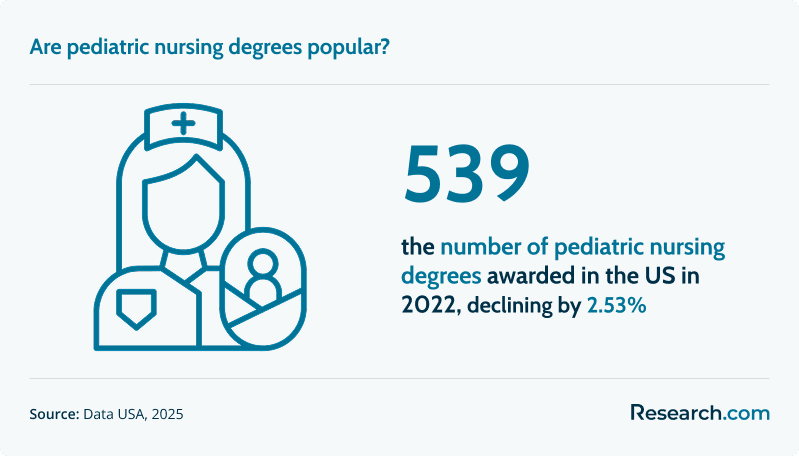
In 2022, master's degrees represented the largest share of advanced pediatric nursing credentials, with 415 individuals earning this degree and accounting for about 81.7% of such awards. Post-master's certificates accounted for 44 professionals, or 8.66% of the total.
That pattern shows that post-master's certificates serve a specific purpose: they help nurses who already have advanced education add pediatric specialization without completing a second full graduate degree.
What specializations are available in an online pediatric nurse practitioner graduate certificate program?
The most important specialization decision is whether to pursue pediatric primary care or pediatric acute care. These tracks are not interchangeable. They prepare you for different certification exams, patient needs, and practice settings.
| Track | Best For Nurses Who Want To | Common Settings | Typical Patient Focus |
| Pediatric Nurse Practitioner – Primary Care (PNP-PC) | Provide ongoing, preventive, and outpatient pediatric care | Pediatric offices, community clinics, school-based health centers, outpatient clinics | Well-child care, common illnesses, stable chronic conditions, developmental monitoring, family education |
| Pediatric Nurse Practitioner – Acute Care (PNP-AC) | Care for acutely, critically, or medically complex children | Hospitals, PICUs, emergency departments, inpatient units, specialty services | Unstable conditions, complex illnesses, critical care needs, post-acute recovery, complications |
Pediatric Nurse Practitioner – Primary Care (PNP-PC)
The PNP-PC path is appropriate if you want to build long-term relationships with children and families, emphasize prevention, and manage common pediatric conditions in outpatient settings. This route fits nurses drawn to wellness visits, immunization guidance, developmental screening, and chronic condition follow-up.
Pediatric Nurse Practitioner – Acute Care (PNP-AC)
The PNP-AC path is better suited for nurses who want to work with children who are acutely ill, critically ill, hospitalized, or medically complex. This track is commonly associated with children’s hospitals, pediatric intensive care units, emergency departments, and specialty inpatient services.
Nurses who want to pair clinical specialization with management or operations training sometimes compare PNP certificates with accelerated healthcare MBA online programs, particularly if they hope to lead clinics, manage pediatric service lines, or move into healthcare administration.
How certification alignment affects your choice
Most online pediatric nurse practitioner graduate certificates prepare students for either PNP-PC or PNP-AC certification, not both. Review the curriculum, clinical placement expectations, and certification eligibility statement before applying.
If you are reconsidering healthcare entirely and want to compare a very different academic direction, Research.com also covers the cheapest anthropology online programs.
How do certificate programs compare to online direct entry MSN programs?
A pediatric nurse practitioner graduate certificate and an online direct entry MSN serve very different audiences. A PNP certificate is for nurses who already have graduate nursing education and want to add pediatric specialization. Online direct entry MSN programs are designed for students who do not have a nursing background and need an entry route into nursing education and clinical preparation.
| Pathway | Who It Is For | Main Goal | When It Makes Sense |
| PNP graduate certificate | MSN- or DNP-prepared nurses | Add pediatric NP specialization | You are already a nurse with graduate preparation and want PNP certification eligibility. |
| Online direct entry MSN | Non-nurses with a bachelor's degree in another field | Enter the nursing profession | You are changing careers and need foundational nursing preparation. |
What digital resources and support systems boost success in online pediatric nurse practitioner certificate programs?
Strong online PNP programs do more than post readings and recorded lectures. They use digital resources to connect theory, clinical reasoning, and faculty feedback. Useful supports may include virtual case studies, online simulation tools, digital libraries, secure messaging, exam preparation resources, clinical tracking systems, and remote advising.
Students should also look for career services, accessible faculty office hours, clinical coordination support, peer discussion spaces, and technical support. Nurses who are still mapping earlier nursing pathways may also compare options such as accelerated online BSN programs to understand how clinical progression differs across nursing credentials.
How to choose an affordable online pediatric nurse practitioner graduate certificate program?
The cheapest program is not always the best value. A strong program must be affordable, accredited, clinically practical, and aligned with the certification and licensure path you need. Use the following checklist before applying.
| Question to Ask | Why It Matters | Red Flag |
| Is the program accredited by CCNE or ACEN? | Accreditation is commonly required for certification and licensure eligibility. | The school is vague about programmatic nursing accreditation. |
| Does the certificate prepare for PNP-PC or PNP-AC certification? | Your track determines your certification route and likely job settings. | The program does not clearly state which certification exam it supports. |
| Who secures clinical placements? | Clinical placement can be the hardest part of online study. | The school leaves students fully responsible without meaningful support. |
| Is your state approved for enrollment? | State authorization and clinical approval can affect your ability to complete the program. | The admissions team cannot confirm state eligibility in writing. |
| What is the full cost, not just tuition? | Fees, books, travel, clinical compliance, and exam costs can change affordability. | The school advertises tuition but does not provide a full cost estimate. |
| Are faculty experienced in pediatric NP practice? | Current clinical expertise improves mentorship and practice relevance. | Faculty credentials or specialty backgrounds are difficult to find. |
Verify accreditation first
Confirm that the program is accredited by the Commission on Collegiate Nursing Education (CCNE) or the Accreditation Commission for Education in Nursing (ACEN). Do not rely only on marketing language. Check the accreditor’s official information and ask the program how accreditation connects to certification eligibility.
Examine clinical placement support
Clinical placement support can determine whether an online program is manageable. Ask whether the school has site agreements, whether it helps identify preceptors, how early placement planning begins, and what happens if a placement falls through.
Review curriculum depth and specialty fit
Match the curriculum to your intended certification track. Primary care programs should emphasize preventive care, growth and development, common pediatric illness, and outpatient management. Acute care programs should emphasize high-acuity assessment, complex conditions, hospital-based care, and stabilization.
Compare total value
Affordability includes more than the per-credit rate. Consider accreditation, clinical support, pass-rate information if available, faculty access, scheduling flexibility, and state eligibility. Nurses considering management-focused alternatives may also compare fast-track MBA in healthcare management online programs.
Students evaluating unrelated graduate leadership routes can apply similar decision criteria when comparing the shortest online organizational leadership master's programs, especially around accreditation, cost, faculty experience, and career relevance.
Common mistakes to avoid when choosing an online PNP certificate
- Choosing by tuition alone: A low price will not help if the program does not meet certification or licensure requirements.
- Ignoring clinical placement logistics: Online coursework is flexible, but clinical hours require real sites, preceptors, schedules, and approvals.
- Confusing primary care and acute care tracks: These tracks lead to different practice settings and certification expectations.
- Assuming every online program accepts students in every state: State authorization and clinical rules can limit enrollment or placement options.
- Overlooking total cost: Fees, travel, compliance documents, technology, and exam expenses can increase the final price.
- Waiting too long to plan certification: Confirm exam eligibility before you start, not after graduation.
How do online pediatric nurse practitioner programs support continual professional development?
Many accredited online pediatric nurse practitioner graduate certificate programs encourage ongoing professional growth through continuing education resources, alumni networks, webinars, faculty mentorship, and updates on pediatric practice standards. Some programs also integrate telehealth, simulation, and technology-supported clinical learning to help students adapt to modern care delivery.
Nurses who want to broaden advanced practice expertise may eventually compare related NP pathways, such as the fastest MSN women's health NP degree, depending on their long-term clinical interests.
What are the certification and licensing requirements after completing an online pediatric nurse practitioner graduate certificate program?
After completing a PNP certificate, graduates usually need to pass the appropriate national pediatric nurse practitioner certification exam and meet their state board of nursing’s advanced practice requirements. The exact steps vary by state and by whether you completed a primary care or acute care track.
- Confirm that your program’s accreditation and curriculum meet certification eligibility requirements.
- Apply for the national certification exam aligned with your track, such as pediatric primary care or pediatric acute care.
- Submit required documents to your state board of nursing for APRN recognition or licensure, if applicable.
- Complete any state-specific requirements related to prescriptive authority, collaborative practice, or continuing education.
- Track renewal cycles for certification, licensure, and employer credentialing.
For readers comparing this advanced pathway with entry-level nursing admissions, Research.com also provides information on the easiest nursing school to get into.
What career paths are available for graduates of online pediatric nurse practitioner graduate certificate programs?
Career options depend heavily on whether you complete a PNP-PC or PNP-AC track. Both paths center on children and families, but the day-to-day work can look very different.
| Career Setting | Likely Track | Typical Responsibilities |
| Pediatric primary care office | PNP-PC | Well-child visits, common illness management, preventive counseling, developmental monitoring |
| Community health center | PNP-PC | Accessible pediatric care, family education, chronic condition follow-up, preventive services |
| School-based health center | PNP-PC | Student wellness, screenings, health education, acute minor illness care |
| Children's hospital inpatient unit | PNP-AC | Management of hospitalized pediatric patients, care coordination, treatment monitoring |
| Pediatric intensive care unit | PNP-AC | Care for critically ill children, stabilization, complex assessment, interdisciplinary planning |
| Pediatric emergency department | PNP-AC | Evaluation and management of urgent and emergent pediatric conditions |
| Pediatric specialty clinic | PNP-PC or PNP-AC, depending on role | Condition-specific care in areas such as cardiology, endocrinology, or other specialties |
PNPs work closely with pediatricians, nurse practitioners, physician assistants, specialists, social workers, therapists, and families. Because pediatric care often involves development, behavior, family systems, and mental health, knowledge connected to different areas of psychology can also strengthen practice.
If you are interested in healthcare but not sure advanced nursing is the right fit, you can compare clinical and nonclinical routes such as accelerated health information management programs online.
Geographic opportunities and salary variation
PNP compensation can vary substantially by region. Recent data cited in this guide shows average annual salary figures for pediatric nurses of around $266,927 in Dallas, TX, and around $196,240 in Los Angeles, CA. These figures illustrate how location can affect earning potential, but local employer demand, experience, specialty, and scope of practice still matter.
What is the job market for graduates of online pediatric nurse practitioner graduate certificate programs?
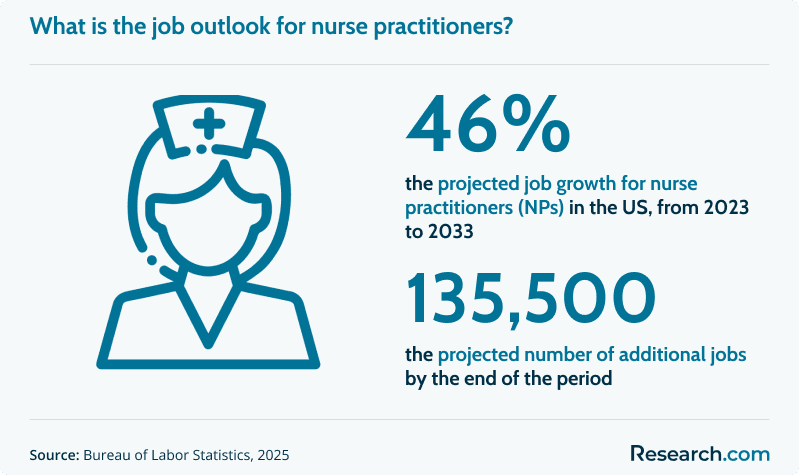
The job market for nurse practitioners is strong. According to the U.S. Bureau of Labor Statistics, employment for all nurse practitioners is projected to grow by 46% from 2023 to 2033. For nurses with pediatric specialization, this broader demand can support opportunities in outpatient care, hospitals, specialty clinics, schools, and community health settings.
That said, pediatric NP job availability is not identical in every region. Some areas have more children’s hospitals and pediatric specialty practices, while others may have stronger demand in primary care or rural clinics. Before enrolling, search job postings in your target location and note whether employers prefer PNP-PC, PNP-AC, FNP with pediatric experience, or another credential.
Current trends affecting pediatric nurse practitioners
- Greater reliance on advanced practice providers: Healthcare systems continue to use nurse practitioners to expand access to care.
- Growth in telehealth and hybrid care: Pediatric follow-up, family education, and chronic care management increasingly use digital tools where clinically appropriate.
- Higher expectations for evidence-based practice: Employers value NPs who can interpret guidelines, document clearly, and work across interdisciplinary teams.
- Technology-supported learning and practice: Simulation, virtual cases, electronic health records, and clinical decision-support tools are now common parts of training and practice.
- Ongoing debate over advanced preparation: Some nurses planning long-term advancement compare certificate routes with doctoral education. For more context, read Do you need a DNP to be an NP?
What challenges should I anticipate during an online pediatric nurse practitioner graduate certificate program?
Online PNP certificate programs are flexible, but they are not easy. The biggest challenge is often coordinating graduate coursework with in-person clinical hours, employment, family responsibilities, and certification preparation.
| Challenge | Why It Happens | How to Reduce the Risk |
| Clinical placement delays | Pediatric sites and preceptors may be limited in some regions. | Ask about placement support before enrolling and begin planning early. |
| Time-management pressure | Students often work while completing advanced coursework and clinical hours. | Build a weekly study and clinical schedule before classes begin. |
| Online isolation | Remote programs require more independent communication. | Use faculty office hours, peer groups, advising, and discussion boards regularly. |
| Technology demands | Online learning platforms, simulations, and clinical tracking systems require comfort with digital tools. | Test required systems early and use technical support before deadlines. |
| Licensure uncertainty | State rules and certification requirements can differ. | Confirm eligibility with the program and your state board before applying. |
Students who are still exploring earlier nursing pathways or lower-cost bridge options may also review the cheapest LPN to RN online programs, although those programs serve a very different stage of nursing education.
What graduates say about affordable online pediatric nurse practitioner graduate certificate programs
“I was already working as an FNP, but pediatrics was always where I wanted to focus. The online certificate helped me specialize without relocating or stepping away from my job. The coursework was demanding, but it connected directly to the work I wanted to do with children.” — Vivian
“I knew I wanted to care for children, but I was unsure whether primary care or acute care fit me better. Faculty discussions and focused coursework helped me understand the difference and choose the acute care track with confidence.” — Beth
“Becoming a pediatric provider had been my goal since I started nursing. The certificate gave me the pediatric-specific preparation I needed to make that transition and feel ready for the role.” — Michaela
Key Insights
- An online pediatric nurse practitioner graduate certificate is best for nurses who already hold graduate nursing preparation and want a focused route into pediatric advanced practice.
- The most important decision is choosing the correct track: PNP-PC for outpatient, preventive, and ongoing pediatric care, or PNP-AC for hospitalized, critically ill, or medically complex children.
- Affordability should be measured by total value, not tuition alone. Accreditation, clinical placement support, state authorization, certification alignment, and total fees all affect ROI.
- The reviewed programs show an average total tuition of about $25,150, with total costs ranging from $11,800 to nearly $49,000 or more and per-credit rates ranging from $654 to $1,740.
- Pediatric nurse practitioners earn an average annual salary of $134,033, but pay varies by region, experience, employer, scope of practice, and specialty setting.
- The broader nurse practitioner job market is projected to grow by 46% from 2023 to 2033, supporting strong long-term demand for advanced practice nurses.
- In 2022, 415 master's degrees accounted for about 81.7% of advanced pediatric nursing credentials, while 44 post-master's certificates represented 8.66%, showing that certificates are a specialized but established route.
- Clinical hours are required even in online programs. Before enrolling, ask exactly how placements are approved, who finds preceptors, and whether your state is eligible.
- Do not enroll until you verify that the program prepares you for the national certification exam and state licensing pathway you need.
References:
- American Association of Colleges of Nursing. (2025). Nursing shortage fact sheet. Retrieved June 16, 2025, from AACN.
- Data USA. (2025). Nursing practice. Retrieved June 16, 2025, from Data USA.
- Data USA. (2025). Registered nursing. Retrieved June 16, 2025, from Data USA.
- Indeed. (2025). Pediatric nurse practitioner salary in United States. Retrieved June 16, 2025, from Indeed.
- National Association of Pediatric Nurse Practitioners. (2025). About Pediatric Nurse Practitioners. Retrieved June 16, 2025, from NAPNAP.
Other Things You Should Know About Affordable Online Pediatric Nurse Practitioner Graduate Certificate Programs
In 2027, several schools are noted for offering affordable online Pediatric Nurse Practitioner Graduate Certificate Programs. Institutions like the University of South Alabama and Texas Tech University Health Sciences Center provide competitive tuition rates. Prospective students should verify current tuition fees and available financial aid options for accurate comparisons.
In 2027, opting for an affordable online Pediatric Nurse Practitioner Graduate Certificate Program offers financial savings and the convenience of remote learning. It enables professional advancement without the commitment of a full MSN or DNP program, making it an ideal choice for enhancing clinical skills while managing other obligations.
When selecting an affordable program in 2027, consider factors like program cost, accreditation, flexibility, and faculty expertise. Also assess clinical placement opportunities and support services to ensure they align with your career goals and personal circumstances.