2027 Fastest Online Master’s Programs in Organizational Leadership

Co-Founder and Chief Data Scientist
An online master’s in organizational leadership is for professionals who already understand how organizations work and now need stronger tools for leading people, managing change, improving culture, and making decisions across departments. The main decision is not simply whether to earn the degree, but whether a fast online format fits your career goals, schedule, budget, and existing experience.
This guide explains what accelerated online organizational leadership master’s programs include, how quickly they can be completed, what they typically cost, what admissions committees look for, and which roles may value the credential. It also shows how to compare programs based on accreditation, transfer credit, employer tuition support, career outcomes, and flexibility so you can choose a program for practical career advancement rather than convenience alone.
Quick answer: Is a fast online master’s in organizational leadership worth it?
A fast online master’s in organizational leadership can be worth it for working professionals who want to move into management, human resources leadership, operations, training and development, consulting, nonprofit administration, or organizational change roles. The best candidates already have workplace experience and want a graduate credential that focuses less on accounting or finance than an MBA and more on leading people, improving systems, communicating strategy, and guiding change.
Key benefits of the fastest online master’s programs in organizational leadership
- Graduates often pursue roles such as HR manager, operations manager, training and development manager, program director, organizational development consultant, or nonprofit administrator in sectors including business, healthcare, education, government, and social services.
- Common career paths connected to this degree report annual earnings ranging from $72,910 to $140,030, although compensation depends heavily on job title, industry, location, experience, and certifications.
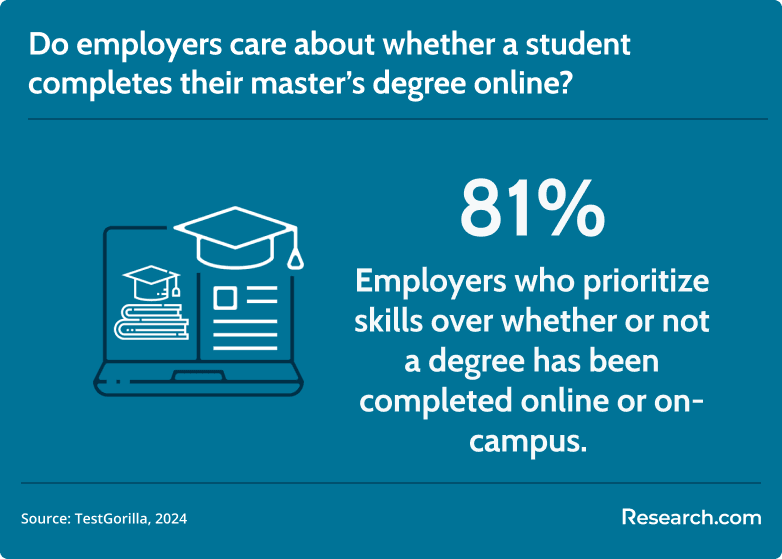
- Online degrees from accredited institutions can be credible in hiring and promotion decisions, especially when paired with relevant leadership experience; 83% of hiring managers view online credentials as equivalent to campus-based degrees when experience is also present.
What can I expect from an online master's in organizational leadership?
An online master’s in organizational leadership is a graduate program built around applied leadership rather than broad business administration. Students study how people behave in organizations, how teams respond to change, how leaders communicate priorities, and how ethical decisions shape culture and performance.
Most online programs use asynchronous coursework, accelerated terms, applied projects, discussion boards, leadership assessments, and case-based assignments. Instead of focusing primarily on balance sheets, marketing strategy, or corporate finance, the curriculum usually centers on topics such as organizational behavior, ethics, strategic communication, conflict management, talent development, systems thinking, and change leadership.
Many programs end with a capstone, consulting-style project, or workplace-based analysis. This can be valuable for working students because assignments often connect directly to real problems inside their current organizations, such as improving employee engagement, designing a training initiative, managing restructuring, or building a leadership development plan.
| Program feature | What it usually means for students | Why it matters |
| Accelerated terms | Courses may run in four-, five-, eight-, or ten-week blocks instead of traditional semesters. | Shorter terms can reduce time to graduation but require consistent weekly effort. |
| Applied coursework | Assignments often use workplace scenarios, leadership assessments, or organizational case studies. | Students can build evidence of leadership skill while completing the degree. |
| Capstone project | The final course may require a strategic plan, change proposal, or organizational analysis. | A strong capstone can become a portfolio piece for promotions or job interviews. |
| Flexible online delivery | Students typically complete coursework remotely, often while working full time. | Online access can reduce relocation and commuting costs, but self-management is essential. |
Where can I work with an online master's in organizational leadership?
This degree can support advancement in organizations that need leaders who can align people, processes, and strategy. It is especially relevant for roles that require communication across teams, employee development, operational planning, performance improvement, or change management.
- Human resources manager: Directs talent strategy, employee relations, workforce planning, compliance, compensation, and engagement initiatives.
- Training and development director: Leads learning programs, leadership academies, onboarding systems, and professional development strategies.
- Operations manager: Coordinates staff, workflows, resources, process improvement, and performance targets in complex environments.
- Organizational development consultant: Helps employers diagnose culture issues, redesign teams, improve communication, and manage change.
- Program director or administrator: Oversees teams, budgets, service delivery, and strategic initiatives in healthcare, higher education, public service, or nonprofits.
- Corporate communications lead: Develops internal messaging that helps employees understand strategy, policy changes, restructuring, or cultural priorities.
- Diversity and inclusion officer: Builds initiatives that support equity, inclusion, belonging, compliance, and long-term workforce health.
The degree is most useful when paired with experience in a specific function or industry. Employers generally hire leaders for both judgment and context, so a graduate credential is strongest when it builds on proven work history, measurable results, and the ability to manage people or projects.
How much can I make with an online master's in organizational leadership?
Salary outcomes vary widely because organizational leadership is not one single occupation. Graduates may work in HR, training, operations, consulting, administration, or workforce development. According to 2024 U.S. Bureau of Labor Statistics data, several roles aligned with this degree report strong median pay, particularly at the management level.
| Related occupation | Reported median salary | How the degree may help |
| Human Resources Manager | $140,030; the highest 10% earn more than $239,000 | Supports advancement into talent strategy, employee relations, compliance, and workforce planning leadership. |
| Training and Development Manager | $127,090 | Builds preparation for learning strategy, leadership development, and employee capability-building roles. |
| Management Analyst | $101,190 | Connects leadership, diagnostics, change management, and process improvement skills to consulting or internal advisory roles. |
| Human Resources Specialist | $72,910 | Can serve as an early-career or transitional role that leads toward HR management with experience. |
Certifications can strengthen the value of the degree. Professionals who add credentials such as SHRM-CP, Lean Six Sigma, or Prosci may be better positioned for roles involving workforce strategy, process improvement, or change management. However, no degree or certificate guarantees a specific salary; pay depends on job scope, employer size, sector, geography, and prior accomplishments.
- Online Master's in Organizational Leadership Programs for 2027
- How long does an online master’s in organizational leadership take?
- Fastest ways to finish an online master’s in organizational leadership
- Is this degree a good choice for working adults?
- Average cost of an online master’s in organizational leadership
- Financial aid options for online organizational leadership graduate students
- Skills gained in an online organizational leadership master’s program
- Future trends affecting online organizational leadership programs
- Typical admission requirements
- Accreditation to check before enrolling
- Highest-paying industries for organizational leadership graduates
- Job market outlook for organizational leadership graduates
- Challenges of earning this degree online
- What to do after earning the degree
List of Online Master's in Organizational Leadership Programs for 2027
How do we rank schools?
Choosing a fast online master’s program should involve more than finding the shortest completion time. A strong program should be accredited, transparent about cost, flexible enough for working students, and structured so that accelerated pacing does not weaken academic quality.
Research.com evaluates programs using our methodology, with attention to factors such as institutional credibility, online flexibility, completion speed, cost information, and program structure. Students should use rankings as a starting point, then verify details directly with each school before applying.
Program information is based on publicly available data from sources such as the National Center for Education Statistics (NCES), the U.S. Department of Education’s College Scorecard, Peterson’s Distance Learning database, and the Integrated Postsecondary Education Data System (IPEDS).
| School | Fastest or typical completion | Credits | Cost per credit | Accreditation |
| Trine University | As few as 10 months; typical part-time pace of 18–22 months | 30 | $575 | Higher Learning Commission (HLC) |
| Concordia University–St. Paul | 12–24 months, depending on course load | 36 | $475 | HLC |
| University of Dallas | Approximately 18–24 months | 30 | $1,300 | Southern Association of Colleges and Schools Commission on Colleges (SACSCOC) |
| Auburn University at Montgomery | 16 months | 30 | $469 in-state; $516 out-of-state | SACSCOC |
| Arizona State University | 12–18 months, depending on course load | 33 | $825 | HLC |
| Southern New Hampshire University | 15–18 months at a typical pace | 36 | $637 | New England Commission of Higher Education (NECHE) |
| Purdue University Global | Approximately 18 months | 56 quarter credit hours | $417.10 per quarter credit | HLC |
| National University | 12–14 months at a typical pace | 30 quarter credit hours | $442 per quarter credit | WASC Senior College and University Commission (WSCUC) |
| East Tennessee State University | 12–18 months, depending on course load | 39 | $625 per credit hour | SACSCOC |
| University of Colorado Boulder | Approximately 12–18 months | 30 | $772 in-state; $844 out-of-state | HLC |
1. Trine University
Trine University offers the Lou Holtz Master of Science in Organizational Leadership in a fully online format. Courses run in five-week blocks, and students can choose from six start dates each year. Its Z-Degree model uses Open Educational Resources, which removes textbook costs. The curriculum focuses on leadership ethics, organizational communication, and technology leadership, and the accelerated format may benefit students who already have applicable prior credit.
- Program Length: As few as 10 months, typical part-time completion at 18–22 months
- Tracks/concentrations: No formal tracks; core courses in Leadership Ethics, Organizational Communication for Leaders, and Technology Topics for Leaders
- Cost per Credit: $575 (2024–25 online graduate rate)
- Required Credits to Graduate: 30
- Accreditation: Higher Learning Commission (HLC)
2. Concordia University–St. Paul
Concordia University–St. Paul’s online MA in Leadership and Management uses accelerated eight-week terms and multiple annual start dates. The program is designed for adults who want to strengthen leadership, communication, project execution, and ethical decision-making skills while continuing to work.
- Program Length: 12–24 months, depending on course load
- Tracks/concentrations: General leadership curriculum with courses in strategic leadership, project and quality management, organizational culture, and legal issues
- Cost per Credit: $475 (2025–26 online graduate rate)
- Required Credits to Graduate: 36
- Accreditation: HLC
3. University of Dallas
The University of Dallas provides a fully online Master of Leadership for professionals seeking a leadership program grounded in ethical reasoning, strategic thinking, and practical business application. Courses such as Critical and Strategic Thinking and The Virtuous Leader reflect the program’s emphasis on values-based leadership.
- Program Length: Approximately 18–24 months, depending on enrollment pace
- Tracks/concentrations: No formal tracks, electives include Executive Coaching, Social Psychology, and Ethical Dimensions of Leadership
- Cost per Credit: $1,300 (2025–26 graduate rate)
- Required Credits to Graduate: 30
- Accreditation: Southern Association of Colleges and Schools Commission on Colleges (SACSCOC)
4. Auburn University at Montgomery
Auburn University at Montgomery offers a fully online MS in Psychology with a specialization in Industrial-Organizational Psychology. This option may appeal to students who want a behavioral science approach to workplace leadership, motivation, performance, assessment, and organizational change.
- Program Length: 16 months
- Tracks/concentrations: Industrial-Organizational Psychology
- Cost per Credit: $469 (in-state), $516 (out-of-state)
- Required Credits to Graduate: 30
- Accreditation: SACSCOC
5. Arizona State University
Arizona State University’s online Master of Science in Organizational Leadership uses accelerated eight-week courses and a capstone project focused on applying leadership concepts to real organizational issues. Optional immersive workshops can add hands-on context for students who want additional experiential learning.
- Program Length: 12–18 months, depending on course load
- Tracks/concentrations: General leadership curriculum with electives in change management and team dynamics
- Cost per Credit: $825
- Required Credits to Graduate: 33
- Accreditation: HLC
6. Southern New Hampshire University
Southern New Hampshire University offers an online Master of Science in Organizational Leadership with twelve ten-week courses and six start dates per year. The program emphasizes strategic leadership, global awareness, and change readiness, and its flat tuition structure can help students compare cost more easily across locations.
- Program Length: 15–18 months at a typical pace
- Tracks/concentrations: Core organizational leadership curriculum with electives in change management and global leadership
- Cost per Credit: $637
- Required Credits to Graduate: 36
- Accreditation: New England Commission of Higher Education (NECHE)
7. Purdue University Global
Purdue University Global’s online Master of Science in Management and Leadership is structured for working adults who want to lead organizational change while maintaining professional responsibilities. The curriculum aligns with Society for Human Resource Management standards and includes optional competency-based pathways for experienced learners.
- Program Length: Approximately 18 months
- Tracks/concentrations: Core management and leadership curriculum with electives in change management, strategic leadership, and team dynamics
- Cost per Credit: $417.10 per quarter credit
- Required Credits to Graduate: 56 quarter credit hours
- Accreditation: HLC
8. National University
National University offers a fully online Master of Science in Organizational Leadership with four-week courses and year-round enrollment. Students study ethical leadership, organizational change, strategic communication, and applied problem-solving, with elective options in areas such as project management and human resource leadership.
- Program Length: 12–14 months at a typical pace
- Tracks/concentrations: Organizational leadership core with electives in project management, human resource leadership, and change implementation
- Cost per Credit: $442 per quarter credit (500-level course rate)
- Required Credits to Graduate: 30 quarter credit hours
- Accreditation: WASC Senior College and University Commission (WSCUC)
9. East Tennessee State University
East Tennessee State University offers an online Master of Science in Interdisciplinary Studies with a concentration in Leadership, Organizations, and Workforce Studies. The program combines workforce analytics, organizational strategy, team development, and a final capstone through eight-week courses and multiple start dates.
- Program Length: 12–18 months, depending on course load
- Tracks/concentrations: Leadership, Organizations, and Workforce Studies
- Cost per Credit: $625 per credit hour (2025–26 "E-Tuition" rate)
- Required Credits to Graduate: 39
- Accreditation: SACSCOC
10. University of Colorado Boulder
The University of Colorado Boulder offers a fully online Master of Science in Organizational Leadership made up of ten asynchronous courses taught by Leeds School of Business faculty. The program blends communication, behavioral science, strategy, ethics, and team leadership in an accelerated online format.
- Program Length: Approximately 12–18 months, depending on enrollment pace
- Tracks/concentrations: General organizational leadership curriculum with electives in team dynamics, strategic communication, and ethical decision-making
- Cost per Credit: $772 in-state, $844 out-of-state (2024–25 rates)
- Required Credits to Graduate: 30
- Accreditation: HLC
How long does it take to complete an online master's in organizational leadership?
Most online master’s in organizational leadership programs require 30–39 credits, though some use quarter credits. Completion time depends on term length, course load, transfer credit, prior learning policies, and whether students enroll continuously through summer or intersession terms.
Students comparing an MBA and an organizational leadership degree should note that organizational leadership programs often have a more focused curriculum. An MBA usually covers a broader business core, while leadership degrees concentrate more heavily on people, culture, communication, change, and organizational effectiveness.
| Enrollment path | Typical timeline | Best for | Trade-off |
| Standard two-year schedule | About 24 months | Students who want predictable pacing across traditional academic terms | Slower than accelerated formats, but easier to balance with work |
| Accelerated track | 12–16 months | Highly organized students who can handle frequent deadlines and year-round study | Workload can be intense, especially during short terms |
| Competency-based model | 14–18 months | Experienced professionals who can demonstrate mastery quickly | Requires self-direction and comfort with less traditional pacing |
| Part-time option | 36–48 months | Students balancing demanding jobs, caregiving, or military responsibilities | Longer time to credential and possibly more exposure to fee changes |
Some schools accept up to 12 graduate transfer credits or evaluate prior learning, professional training, or military education. If approved, those credits can reduce the number of courses required and shorten completion by one or two terms.
What are the fastest ways to earn an online master’s in organizational leadership?
The quickest path is usually a combination of accelerated terms, transfer credit, continuous enrollment, and a realistic course load. Speed should not be the only priority, though. Students should confirm that the program is accredited, that workload expectations are manageable, and that the curriculum supports the roles they want.
Students who are comparing accelerated graduate options may also review fields where targeted online learning is common, such as the shortest online social media marketing programs, to understand how program design, pacing, and credential goals differ by discipline.
- Use accelerated course blocks: Four-, five-, eight-, or ten-week terms can help students complete courses faster than a semester-based calendar.
- Ask about prior learning assessment: Some programs may award credit for relevant work history, employer training, professional credentials, or military education.
- Consider 4+1 pathways: Eligible undergraduates may begin graduate coursework early and shorten the total time needed for both degrees.
- Enroll in summer or intersession courses: Avoiding long academic breaks can keep progress steady.
- Increase the course load carefully: Taking more credits per term can speed graduation, but it can also raise burnout risk.
- Submit military or formal training records: Students with service-related learning or documented training may qualify for up to 15 transfer credits.
- Evaluate self-paced options: Competency-based programs can be efficient for experienced learners who can move quickly through familiar material.
| Before choosing the fastest option, ask | Why the answer matters |
| How many hours per week does each course require? | Short terms often compress readings, discussions, papers, and projects into a demanding schedule. |
| Can I transfer graduate credit, and what is the limit? | Transfer policies can significantly affect both cost and completion time. |
| Are courses offered every term? | If required courses are offered infrequently, a “fast” program may still create delays. |
| Is the capstone available year-round? | A delayed capstone can extend graduation even after coursework is complete. |
| Does accelerated pacing affect financial aid status? | Course load and term structure can influence aid eligibility, disbursement timing, and borrowing needs. |
Is an online master’s in organizational leadership a good fit for working professionals?
Yes, this degree is often designed for working adults, especially those who already manage people, projects, programs, operations, training, or internal initiatives. Like fast-track online MBA programs in healthcare administration, accelerated leadership programs can help students keep working while preparing for more responsibility.
The strongest fit is usually a mid-career professional who wants to apply course concepts immediately. For example, a student might use a current workplace challenge as the basis for a change management plan, communication strategy, leadership assessment, or employee development project.
- Workplace application: Many assignments can be connected to the student’s current role, which makes the learning more practical and visible to supervisors.
- Promotion readiness: A graduate degree can signal preparation for broader responsibility, especially when combined with measurable leadership results.
- Employer education support: According to SHRM (2024), 48% of employers offer support for graduate study, particularly when the program supports leadership development or succession planning.
- Lower career disruption: Online study can eliminate relocation and reduce commuting while allowing students to continue earning income.
This degree may not be the best option for someone seeking a heavily quantitative finance, accounting, analytics, or technical management credential. In those cases, an MBA, MS in analytics, HR-specific degree, or industry-focused graduate program may be a better match.
The chart below shows the increase in remote work, or telecommuting, among adults aged 25 and older since 2023.
What is the average cost of an online master's in organizational leadership?
Costs vary by institution type, residency policy, credit requirement, term structure, and fee schedule. Students looking for an affordable online MS in organizational leadership should compare total program cost, not just the advertised tuition rate.
| Pricing category | Typical tuition range | Estimated total tuition | Important note |
| Public university in-state tuition | $450–$600 per credit | $15,000–$20,000 for a 33-credit program | Often the lowest-cost route for eligible residents. |
| Flat-rate online public tuition | $625–$725 per credit | $21,000–$24,000 | May apply equally to in-state and out-of-state online learners. |
| Private nonprofit tuition | $750–$925 per credit | $26,000–$30,000 | Scholarships or employer benefits may reduce the actual out-of-pocket cost. |
| Competency-based or subscription tuition | Six-month terms average $4,200 | Approximately $16,800 if completed in four terms | Students who move quickly and bring transfer or prior-learning credit may save more. |
Students should also budget for technology fees of $50–$150 per term and course materials averaging $600. Programs using Open Educational Resources or flat textbook models may reduce those extra costs.
What are the financial aid options for students enrolling in an online master's in organizational leadership?
Graduate students in accredited online programs may qualify for federal loans, institutional scholarships, employer tuition assistance, military education benefits, and other funding options. The first step is usually completing the FAFSA and confirming that the school participates in federal student aid programs.
- Direct Unsubsidized Loan: Graduate students may borrow up to $20,500 annually, and eligibility does not require demonstrated financial need.
- Graduate PLUS Loan: This option can cover remaining costs after other aid, but it requires credit approval and carries a fixed 9.08% interest rate for 2024–25.
- Federal Work-Study: Eligible students may earn income through part-time work, including administrative or remote roles when available.
- Graduate scholarships and fellowships: Some institutions offer merit awards, service-based funding, or program-specific support for online graduate students.
- Military and veteran benefits: Eligible students may use the Post-9/11 GI Bill and the Yellow Ribbon Program to help pay for accredited online study.
To reduce borrowing, ask each school whether it offers employer partnership discounts, military tuition rates, alumni discounts, payment plans, or scholarships for organizational leadership students.
What practical and professional competencies are gained from an online master's in organizational leadership?
Organizational leadership programs are valuable because they teach frameworks that can be used across departments, industries, and job functions. The curriculum usually blends human behavior, strategy, communication, ethics, and organizational analysis. Students interested in leadership roles that intersect with analytics may also compare the degree with career pathways such as becoming a business intelligence developer.
| Competency | What students learn | Where it applies |
| Strategic decision-making | How to set priorities, allocate resources, evaluate trade-offs, and align actions with goals. | Operations, administration, consulting, program management |
| Change management | How to use structured approaches such as ADKAR or Kotter’s model to reduce resistance and guide transitions. | Restructuring, technology adoption, mergers, culture change |
| Talent development | How to coach employees, plan succession, give feedback, and support leadership pipelines. | Human resources, training, management development |
| Data-informed leadership | How to use workforce metrics, dashboards, surveys, and performance indicators to support decisions. | HR analytics, operations, executive reporting |
| Ethical and inclusive leadership | How to evaluate decisions through compliance, equity, fairness, and organizational values. | Policy, employee relations, DEI, governance |
| Organizational diagnostics | How to identify root causes of performance issues and recommend targeted interventions. | Consulting, process improvement, organizational development |
| Executive communication | How to write briefs, present recommendations, manage stakeholders, and explain change clearly. | Senior leadership, project leadership, internal communications |
Students who previously completed an accelerated online bachelor’s in organizational leadership may find that the master’s degree moves from foundational leadership concepts into higher-level strategy, organizational systems, and executive decision-making.
The best programs help students produce work that can be shown to employers, such as leadership development plans, change proposals, communication strategies, and organizational assessments.
What future trends are reshaping online master's in organizational leadership?
Online organizational leadership programs are adapting to changes in how people work, how organizations manage talent, and how leaders use technology. Remote and hybrid teams have made virtual communication, digital collaboration, employee engagement, and distributed leadership more important. Employers also expect leaders to make decisions using data, not instinct alone.
Curricula are increasingly likely to include workforce analytics, change management, inclusive leadership, digital transformation, and cross-functional collaboration. Some students may also explore adjacent industries or undergraduate pathways, including the fastest online bachelor’s in sports management programs, to understand how leadership skills transfer into specialized fields.
Artificial intelligence is another important trend. AI tools can support scheduling, reporting, employee sentiment analysis, training personalization, and process improvement, but leaders still need judgment, ethics, communication skills, and the ability to manage trust. Programs that address AI governance, ethical technology use, and data-informed decision-making may be more useful for 2026 and beyond.
What are the typical admission requirements?
Admission requirements vary by school, but most online master’s in organizational leadership programs expect applicants to hold a bachelor’s degree from an accredited institution. Many schools also review undergraduate GPA, professional experience, a resume, recommendation letters, and a statement of purpose.
- Bachelor’s degree: Usually required from an accredited college or university.
- Minimum GPA: Programs may set a threshold, though some use holistic review for applicants with strong work experience.
- Resume: Schools often want to see leadership potential, supervisory experience, project ownership, military service, nonprofit work, HR experience, or operations responsibility.
- Statement of purpose: This essay should explain career goals, leadership experience, and why the program fits the applicant’s plans.
- Recommendations: Professional or academic references can help demonstrate readiness for graduate-level work.
- Test scores: Some schools may consider standardized test scores, although many programs no longer require them.
Applicants comparing leadership programs with business administration options can review admissions expectations for the best online MBA programs to see how requirements differ across graduate business pathways.
What accreditations should I look for in an online master's in organizational leadership?
Accreditation should be one of the first items you verify. It affects financial aid eligibility, credit transfer, employer recognition, and academic credibility. This is also important when comparing leadership degrees with related options such as online MBA programs in human resource management.
- Institutional accreditation: Confirm that the college or university is accredited and listed in the U.S. Department of Education’s Database of Accredited Postsecondary Institutions and Programs (DAPIP).
- Recognized accreditor: The accrediting agency should be recognized by the Council for Higher Education Accreditation or the U.S. Department of Education.
- Business school accreditation: If the degree is housed in a business school, AACSB, ACBSP, or IACBE accreditation can indicate additional quality review.
- NC SARA participation: For out-of-state online students, NC SARA participation can help confirm that the school is authorized to deliver online education across participating states.
- Professional alignment: Programs connected to SHRM, PMI, or change management frameworks may be more relevant for students pursuing industry certifications.
| Common mistake | Better approach |
| Choosing the cheapest program without checking accreditation | Verify institutional accreditation before considering tuition or speed. |
| Assuming all online programs are equally accepted | Check employer expectations, regional authorization, and whether the school appears in official accreditation databases. |
| Looking only at tuition per credit | Compare total program cost, fees, transfer policies, books, and expected time to completion. |
| Ignoring transfer credit rules | Ask how many credits can transfer and whether prior learning or professional training is considered. |
Which industries pay the most for graduates of an online master's in organizational leadership?
High salaries for organizational leadership graduates are most likely in industries where leaders manage large workforces, specialized talent, complex compliance requirements, or fast-changing operations. Students comparing this degree with an affordable online master’s in nonprofit management should consider whether they want sector-specific preparation or broader access to private-sector leadership roles.
According to BLS data, the following sectors report strong wages for HR-related leadership roles:
- Motion Picture and Video Industries: HR leaders may manage union rules, hiring logistics, creative workforce needs, and contract issues. Mean wage is $236,420. Professionals with creative backgrounds, including those who previously considered the shortest online audio and music programs, may find that leadership training opens administrative or workforce roles in media environments.
- Web Portals and Information Services: Workforce leaders support hiring, retention, team scaling, and organizational systems in data-heavy digital companies. Average salary is $233,080.
- Computer and Peripheral Equipment Manufacturing: HR managers support engineering, operations, technical staffing, and production teams. Mean wage is $231,160.
- Securities and Financial Investment Firms: Leadership roles may involve executive talent, compensation, compliance, and organizational strategy in finance. Pay averages $216,840.
- Computer Systems Design: HR managers earn a mean annual wage of $183,570, reflecting the need for talent strategy in technology-focused firms.
- Corporate Headquarters: Leaders in the “management of companies and enterprises” sector average $173,010 annually.
- Consulting Services: Management, scientific, and technical consulting firms report HR manager wages of $160,420.
These industries can be competitive. A master’s degree may help, but candidates often need industry knowledge, leadership experience, strong communication skills, and evidence that they can improve organizational outcomes.
The chart below shows sectors with the highest annual mean wages for graduates of organizational leadership programs.
What is the job market for graduates of an online master's in organizational leadership?
The job market is strongest for graduates who can connect leadership training to a specific business function, such as HR, workforce development, operations, organizational development, consulting, finance, public administration, or training. BLS projections show continued demand in several roles associated with people leadership, analysis, and organizational improvement.
Professionals interested in finance-focused leadership may also compare this pathway with the fastest online taxation management degree programs, which can support roles related to corporate tax strategy, compliance, and financial operations.
- Human Resources Managers: 6% growth from 2023 to 2033, with approximately 17,400 openings per year.
- Training and Development Managers: 7% growth, with around 3,600 openings annually.
- Management Analysts: 11% projected growth, with about 95,700 annual openings.
- Human Resources Specialists: 8% growth, with roughly 86,200 openings per year.
- Training and Development Specialists: 12% growth, producing about 42,200 annual openings.
- Business and Financial Occupations: About 963,500 openings each year across occupations that often reward leadership and analytical ability.
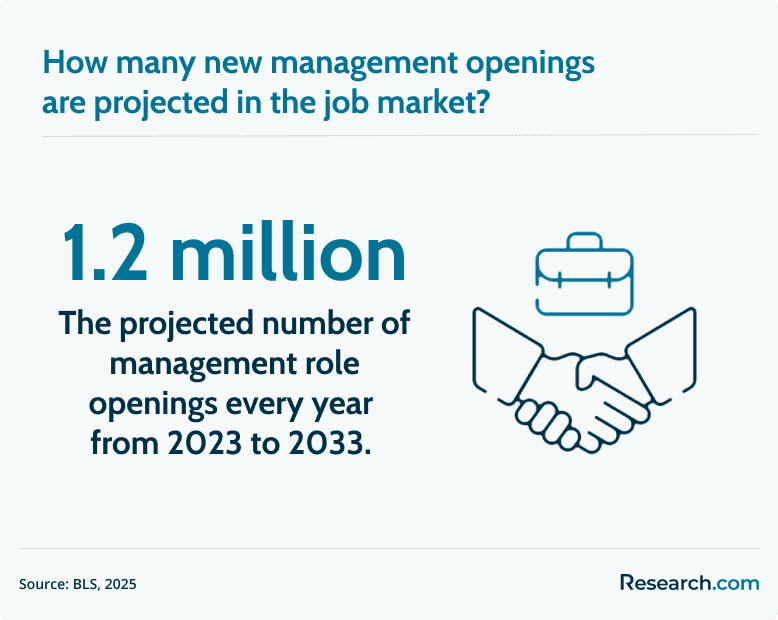
- Management Occupations: 1.2 million openings annually, with demand for professionals who can coordinate teams, operations, and strategy.
Mission-driven professionals may compare organizational leadership with the fastest online master’s degree in nonprofit management, especially if they want to lead programs, fundraising teams, advocacy groups, or public-service organizations. Those building an earlier academic foundation may also consider the shortest online bachelor’s degree in entrepreneurship to develop leadership, innovation, and venture-building skills before pursuing graduate study.
What challenges might I face while pursuing an online master's in organizational leadership?
Online study can be efficient, but it is not effortless. The same flexibility that makes these programs attractive can create problems for students who underestimate the time commitment or choose a program without enough support.
| Challenge | Why it happens | How to reduce the risk |
| Time management pressure | Accelerated courses can require frequent reading, writing, discussion, and project work. | Block weekly study time before the term starts and avoid taking too many courses at once. |
| Limited informal networking | Online students may miss hallway conversations, campus events, and spontaneous peer interaction. | Choose programs with live sessions, cohort models, alumni groups, career events, or active discussion formats. |
| Technology barriers | Learning platforms, video tools, or unreliable internet can disrupt participation. | Confirm technical requirements and available support before enrolling. |
| Unclear career payoff | A leadership degree is broad, so students need a defined career target. | Map the curriculum to specific roles, certifications, and promotion requirements. |
| Comparing programs only by speed | The fastest program may not offer the strongest curriculum, support, or reputation. | Compare accreditation, faculty, student services, career support, and total cost. |
Students who want a more traditional business credential may also compare organizational leadership with affordable online MBA programs, especially if they need broader preparation in finance, accounting, marketing, or business analytics.
What are the next steps after earning an online master's in organizational leadership?
After graduation, the degree’s value depends on how clearly you connect it to career advancement. The strongest next steps usually involve updating your professional brand, pursuing targeted certifications, documenting leadership outcomes, and applying for roles where the degree directly supports the job description.
Professionals comparing broader leadership pathways with a degree in human resources should decide whether they want to specialize deeply in HR or keep a wider leadership focus across departments and industries.
- Earn the SHRM–SCP: The Society for Human Resource Management’s Senior Certified Professional credential is associated with a 14–15% salary premium over non-certified peers.
- Complete Prosci Certification: Prosci training can help leaders use the ADKAR framework to manage organizational transitions.
- Pursue a Lean Six Sigma Black Belt: According to the American Society for Quality (ASQ), Black Belt certification increases average pay by more than $15,000 annually.
- Add executive coaching credentials: International Coaching Federation (ICF)-aligned programs can help leaders formalize coaching methods and demonstrate professional standards.
- Join professional associations: SHRM, the International Organization Development Association (IODA), and the Association of Change Management Professionals (ACMP) offer networking, job boards, and continuing education.
- Monitor hiring trends: Robert Half reports can help graduates identify high-demand HR and leadership roles by region and specialty.
- Target remote leadership roles: As of late 2023, 37.9% of master’s-level professionals reported teleworking, which can expand access to national opportunities.
Graduates who want to move into government or public-sector leadership may compare this degree with a fast-track online master’s in public administration, particularly if their goals involve policy, public management, or civic institutions.
Professionals aiming for executive-level research, consulting, teaching, or advanced management strategy may eventually consider a fast-track online DBA in management. A doctorate is not necessary for most leadership roles, but it can be useful for senior consulting, academic, or research-oriented paths.
Key Insights
- A fast online master’s in organizational leadership is best for experienced professionals who want to lead teams, manage change, improve culture, or move into HR, operations, training, consulting, nonprofit, or administrative leadership roles.
- Most programs require 30–39 credits and can take anywhere from 12–48 months depending on pacing, transfer credit, prior learning, and course load.
- Speed should not outweigh quality. Always verify accreditation, total program cost, student support, course availability, and whether the curriculum fits your target role.
- Reported salaries for related roles range from $72,910 to $140,030, but outcomes depend on industry, location, experience, job title, and certifications.
- Employer tuition support, scholarships, federal loans, military benefits, transfer credit, and competency-based pricing can all reduce out-of-pocket cost.
- The most useful programs teach practical skills: change management, executive communication, workforce analytics, ethical leadership, organizational diagnostics, and talent development.
- After graduation, certifications such as SHRM–SCP, Prosci, Lean Six Sigma Black Belt, or executive coaching credentials can help translate the degree into more specific career opportunities.
References:
- Bureau of Labor Statistics. (2024). Telework Trends. Beyond the Numbers. https://www.bls.gov/opub/btn/volume-14/telework-trends.htm
- Bureau of Labor Statistics. (2025, April). Human resources managers. Occupational Outlook Handbook. https://www.bls.gov/ooh/management/human-resources-managers.htm
- Bureau of Labor Statistics. (2025, April). Training and development managers. Occupational Outlook Handbook. https://www.bls.gov/ooh/management/training-and-development-managers.htm
- Bureau of Labor Statistics. (2025, April). Management analysts. Occupational Outlook Handbook. https://www.bls.gov/ooh/business-and-financial/management-analysts.htm
- Bureau of Labor Statistics. (2025, April). Human resources specialists. Occupational Outlook Handbook. https://www.bls.gov/ooh/business-and-financial/human-resources-specialists.htm
- College Board. (2024). Trends in College Pricing Highlights. https://research.collegeboard.org/trends/college-pricing/highlights
- Federal Student Aid. (2024). Grad PLUS Loans. https://studentaid.gov/understand-aid/types/loans/plus/grad
- Federal Student Aid. (2024). How much can I borrow through Direct Unsubsidized Loans? https://studentaid.gov/help-center/answers/article/how-much-can-i-borrow-through-direct-unsubsidized-loan
- National Center for Education Statistics. (2024). Distance education in IPEDS: Graduate enrollment trends. https://nces.ed.gov/ipeds/use-the-data/distance-education-in-ipeds
- National Center for Education Statistics. (2024). Tuition and fees for distance education graduate students. https://nces.ed.gov/programs/coe/indicator/cua
- Robert Half. (2025). Demand for Skilled Talent Report. https://www.roberthalf.com/us/en/insights/research/data-reveals-which-hr-roles-are-in-highest-demand
- Society for Human Resource Management. (2024). SHRM Body of Applied Skills and Knowledge™ (formerly BoCK) Overview. https://www.shrm.org/content/dam/en/shrm/credentials/shrm-certification/shrm-bask.pdf
- Society for Human Resource Management. (2025). Employee Benefits Survey: Development. https://www.shrm.org/topics-tools/research/employee-benefits-survey/development
- TestGorilla. (2024). The state of skills-based hiring 2024 report. https://www.testgorilla.com/skills-based-hiring/state-of-skills-based-hiring-2024/
- U.S. Department of Veterans Affairs. (2024). Yellow Ribbon Program. https://www.va.gov/education/about-gi-bill-benefits/post-9-11/yellow-ribbon-program/
- U.S. Office of Personnel Management. (2024). Executive Core Qualifications. https://www.opm.gov/policy-data-oversight/senior-executive-service/executive-core-qualifications/
Other Things You Should Know About Online Master's Programs in Organizational Leadership
A fast online master’s in organizational leadership should come from a regionally accredited university, and the business school should ideally hold AACSB or ACBSP accreditation. These accreditations confirm academic quality and matter for employer review, transfer credit decisions, and admission to further graduate study.
Typically, the fastest online Master’s programs in Organizational Leadership require around 30 to 36 credit hours for completion in 2027. The exact requirement may vary by institution, with some programs offering accelerated paths to accommodate quicker completion.