2027 Best Online Leadership and Management Courses

Co-Founder and Chief Data Scientist
Choosing an online leadership and management course is usually a career decision, not just an education decision. You may be trying to qualify for a supervisor role, manage a larger team, move into operations, strengthen your executive presence, or test whether a formal business degree is worth pursuing later. The right course can help you build practical skills quickly; the wrong one can leave you with a certificate that does little for your résumé or day-to-day performance.
This guide explains what online leadership and management courses teach, how they compare with campus-based options, what they cost, which programs are worth considering, and how to evaluate whether a course fits your goals. It is designed for working professionals, career changers, new managers, team leads, entrepreneurs, and senior professionals who want structured leadership training without committing immediately to a full degree.
Quick Answer: Are Online Leadership and Management Courses Worth It?
Online leadership and management courses can be worth it when they teach skills you can apply immediately, come from a credible provider, fit your schedule, and align with a specific career goal. They are especially useful for professionals who need focused training in team leadership, strategy, communication, change management, project management, or organizational decision-making. They are not a substitute for every management degree or executive credential, but they can be a practical and affordable way to strengthen your leadership profile.
What are the benefits of getting online leadership and management courses?
- They can support career movement into management roles in fields such as healthcare, technology, construction, marketing, manufacturing, education, hospitality, and public relations.
- They may help learners build the leadership, communication, and strategic thinking skills often expected in higher-paying management occupations, though salary outcomes depend on role, industry, location, and experience.
- They give working adults a flexible way to study without relocating, commuting, or leaving a full-time job.
- They can help professionals test an interest in management before enrolling in a longer program such as a business management degree online.
- They often focus on applied skills, including leading teams, managing conflict, making decisions, coaching employees, and implementing change.
What can I expect from online leadership and management courses?
Online leadership and management courses usually focus on the practical skills needed to lead people, coordinate work, make decisions, and improve organizational performance. Depending on the provider, a course may be a short skills module, a multi-course specialization, a professional certificate, or part of a broader academic pathway.
Most courses combine video lessons, readings, quizzes, assignments, case studies, discussion boards, and sometimes live sessions. Short courses may focus on a single competency, such as coaching or communication. Longer programs often cover strategy, organizational behavior, team dynamics, ethics, change leadership, financial decision-making, and project execution.
| Course Type | Best For | Typical Focus | Decision Point |
| Short skills course | Busy professionals who need one specific skill | Coaching, communication, conflict management, delegation, or feedback | Choose this if you need immediate workplace application rather than a broad credential. |
| Specialization or certificate | New managers, team leads, and professionals preparing for promotion | Leadership foundations, strategy, team management, and organizational change | Choose this if you want structured training that can be listed on a résumé or LinkedIn profile. |
| Executive or university-backed course | Mid-career and senior professionals | Organizational transformation, strategic leadership, executive decision-making, and change management | Choose this if brand reputation, instructor expertise, and peer networking matter. |
| Degree pathway course | Learners considering long-term academic progression | Management theory, business operations, leadership research, and applied projects | Choose this if you may later pursue a business, leadership, or management degree. |
Where can I work with online leadership and management courses?
Leadership and management skills are transferable across industries because most organizations need people who can coordinate teams, improve processes, manage budgets, communicate across departments, and guide change. According to the U.S. Bureau of Labor Statistics (BLS), management occupations are well-compensated and in demand, although a course alone does not guarantee a management job.
Common industries that hire managers include:
- Healthcare: Medical and health services managers oversee facilities, departments, operations, compliance, and staff coordination.
- Technology: Computer and information systems managers lead IT teams, systems planning, cybersecurity initiatives, and technology strategy.
- Construction: Construction managers coordinate timelines, contractors, budgets, safety requirements, and project delivery.
- Marketing: Advertising, promotions, and marketing managers plan campaigns, manage teams, analyze audiences, and align messaging with business goals.
- Manufacturing: Industrial production managers supervise production processes, quality control, staffing, and operational efficiency.
- Education: Postsecondary education administrators manage academic departments, student services, enrollment, or institutional operations.
- Hospitality: Lodging managers oversee guest services, staffing, property operations, and financial performance.
- Public Relations: Public relations and fundraising managers guide communications strategy, campaigns, donor relations, and stakeholder engagement.
Location also matters. Zippia identifies California, Texas, and New York as notable states for managerial roles because of their large economies and broad industry mix. Major urban centers such as Los Angeles, New York City, and Chicago offer many management opportunities due to their size and economic diversity. Smaller cities can also be strong options when they are tied to fast-growing sectors, such as tech in Austin or finance in Charlotte.
How much can I make with online leadership and management courses?
Leadership and management course completers can pursue a wide range of roles, so salaries vary substantially by job title, employer, industry, experience, location, and whether the learner also has a degree or specialized credential. The figures below show reported salary data from different sources for management-related roles.
| Source | Reported Salary Figure | How to Interpret It |
| BLS | The median annual wage for management occupations is $116,880 as of May 2023. | This is a broad occupational category and includes many senior and specialized management roles. |
| Zippia | The average salary for a manager is $58,651, ranging from $37,000 at the entry-level to $92,000 at the high end. | This reflects a general manager salary estimate and may include many experience levels. |
| Glassdoor | Reports an average salary for managers around $93,525. | This is a platform-reported average and can differ by employer, role, and submitted salary data. |
| Indeed | Lists the average annual manager salary at $74,009. | This can be useful for comparing job postings but should be checked against your target location and industry. |
| Comparably | Offers a higher average with $115,331 for managers. | This figure may reflect a different salary sample and role mix. |
| SalaryExpert | Suggests the highest average manager salary at $131,225. | Use this as one benchmark, not as a guaranteed outcome. |
| ZipRecruiter | Reports that the average annual pay for a Business Leader in the United States is $108,426. | This applies to the “Business Leader” title rather than all management jobs. |
The most useful way to estimate your own return is to compare salaries for the exact roles you want, in the region where you plan to work, using several salary sources rather than relying on one national average.
- Best Online Leadership and Management Courses for 2027
- How long does it take to complete online leadership and management courses?
- How do online leadership and management courses compare to on-campus courses?
- What is the average cost of online leadership and management courses?
- What financial aid options are available?
- What prerequisites should you expect?
- What do these courses usually cover?
- What leadership and management specializations are available?
- What trends are shaping online leadership education?
- What is the return on investment?
- How does accreditation affect credibility?
- What challenges should online learners expect?
- Are these courses useful for senior professionals?
- Can these courses support doctoral study later?
- How can courses improve networking and mentorship?
- Can these courses support affordable academic progression?
- Do employers value online leadership and management credentials?
- How do these courses connect theory with workplace practice?
- How do you choose the best online leadership and management course?
- What career paths are available after completion?
- What is the job market for learners who complete these courses?
- What should you do before enrolling?
Best Online Leadership and Management Courses for 2027
How do we rank schools?
Research.com evaluates online leadership and management courses using a structured methodology based on research, program analysis, and review of trusted education data sources. The goal is to help learners compare options by quality, relevance, accessibility, and potential career usefulness rather than relying only on brand names or marketing claims.
Our research draws on the IPEDS database from the National Center for Education Statistics, which provides information about U.S. colleges and universities. We also use Peterson's database, including the Distance Learning Licensed Data Set, to assess online education offerings. Financial and outcome-related information is reviewed through the College Scorecard database.
| Rank | Course | Provider | Price | Time to Complete | Best Fit |
| 1 | Strategic Leadership and Management Specialization | Coursera / University of Illinois Urbana-Champaign | Included with Coursera Plus | 2 months (10 hours/week) | Learners who want a broad, university-backed leadership sequence covering strategy, teams, and organizational leadership. |
| 2 | Leadership & Management Skills: 18 Leadership Courses In 1 | Udemy | $79.99 | 18 hours | Professionals who want a low-commitment course covering many leadership and management topics in one package. |
| 3 | Management Skills - Team Leadership Skills Masterclass | Udemy | $174.99 | 22.5 hours | Managers who want practical training in team leadership, change management, Lean BPM, and team building. |
| 4 | Leadership in 21st Century Organizations | Coursera / Copenhagen Business School | $49 | 38 hours over 3 weeks | Learners interested in modern leadership challenges and organizational complexity. |
| 5 | Think Like a Leader With Brian Tracy | Udemy | $199.99 (often discounted) | 3 hours | Professionals who want quick, actionable leadership habits without a long course sequence. |
| 6 | Inspired Leadership Specialization | Coursera | $49/month | 2 months (10 hours/week) | Learners who want to build emotional intelligence, coaching ability, inclusion, and change leadership. |
| 7 | Agile Leadership Principles and Practices | edX | Free; $249 for a certificate | 4 weeks (2-3 hours/week) | Managers working in Agile, product, software, technology, or fast-changing team environments. |
| 8 | Coaching Skills for Leaders and Managers | LinkedIn Learning | Free for 1 month, then $39.99/month | 34 minutes | Busy leaders who need a fast introduction to coaching conversations and employee development. |
| 9 | Becoming a Successful Leader | edX | Free to audit; $69 for a certificate | 4 weeks (1-2 hours/week) | New managers who want an accessible introduction to inclusive leadership, accountability, and empowerment. |
| 10 | Strategic Leadership and Management Specialization | Udemy listing | $79.99 | 2 months (10 hours per week) | Learners comparing comprehensive leadership development options and shareable certificates. |
| 11 | Leading Organizations and Change | Emeritus / MIT Sloan School | $1,343 | 2 months (2-4 hours/week) | Professionals focused on organizational change, implementation, and executive-level leadership frameworks. |
1. Coursera — Strategic Leadership and Management Specialization
The Strategic Leadership and Management Specialization from the University of Illinois Urbana-Champaign is designed for learners who want a structured, multi-course path rather than a short one-topic class. Taught by Jeff Flesher, Joe Mahoney, and Deepak Somaya, it includes seven courses covering areas such as strategic leadership, organizational strategy, and team management.
- Price: Included with Coursera Plus
- Time to complete: 2 months (10 hours/week)
- Flexible schedule: Yes
- Certificate of completion: Yes
2. Udemy — Leadership & Management Skills: 18 Leadership Courses In 1
Leadership & Management Skills is a broad Udemy course for learners who want a large amount of leadership and management content in one place. It is best suited for aspiring or current managers who want exposure to multiple leadership topics without enrolling in a university program.
- Price: $79.99
- Time to complete: 18 hours
- Flexible schedule: Yes
- Certificate of completion: Yes
3. Udemy — Management Skills - Team Leadership Skills Masterclass
Management Skills - Team Leadership Skills Masterclass, led by Mark Timberlake and Stephen Mather, emphasizes team leadership, Lean BPM, change management, and team building. It is a practical option for managers who need to improve how they organize people, processes, and team performance.
- Price: $174.99
- Time to complete: 22.5 hours
- Flexible schedule: Yes
- Certificate of completion: Yes
4. Coursera — Leadership in 21st Century Organizations
Leadership in 21st Century Organizations from Copenhagen Business School examines leadership in modern organizational settings. Led by Robert Austin and Shannon Hessel, it is useful for professionals who want to understand how leadership expectations are changing in complex business environments.
- Price: $49
- Time to complete: 38 hours over 3 weeks
- Flexible schedule: Learn at your own pace
- Certificate of completion: Yes
5. Udemy — Think Like a Leader With Brian Tracy
Think Like a Leader is a short, habit-focused course led by Brian Tracy. It introduces eight leadership pillars: Vision, Integrity, Strategic Planning, Project Management, Courage, Communication, Teamwork, and Action. It is best for learners who want a fast leadership reset rather than an in-depth academic course.
- Price: $199.99 (often discounted)
- Time to complete: 3 hours
- Flexible schedule: Yes
- Certificate of completion: Yes
6. Coursera — Inspired Leadership Specialization
The Inspired Leadership Specialization brings together five courses on topics such as emotional intelligence, coaching, leadership, and change. It is a strong fit for learners who want to lead with greater self-awareness and build positive, inclusive workplace environments.
- Price: $49/month
- Time to complete: 2 months (10 hours/week)
- Flexible schedule: Yes
- Certificate of completion: Yes
7. edX — Agile Leadership Principles and Practices
Agile Leadership Principles and Practices is geared toward managers who want to lead teams in Agile work environments. The course emphasizes facilitation, communication, adaptability, and team performance.
- Price: Free; $249 for a certificate
- Time to complete: 4 weeks (2-3 hours/week)
- Flexible schedule: Yes
- Certificate of completion: Yes
8. LinkedIn Learning — Coaching Skills for Leaders and Managers
Coaching Skills for Leaders and Managers is a brief course for professionals who want to improve employee conversations quickly. At 34 minutes, it is most useful as a targeted skill booster rather than a comprehensive leadership program.
- Price: Free for 1 month, then $39.99/month
- Time to complete: 34 minutes
- Flexible schedule: Yes
- Certificate of completion: Yes
9. edX — Becoming a Successful Leader (Inclusive Leadership Training)
Becoming a Successful Leader introduces leadership through themes such as empowerment, accountability, humility, and inclusion. It is appropriate for early-career professionals, first-time managers, and team leads who need foundational tools.
- Price: Free to audit; $69 for a certificate
- Time to complete: 4 weeks (1-2 hours/week)
- Flexible schedule: Yes
- Certificate of completion: Yes, if paid
10. Udemy Strategic Leadership and Management Specialization
Best for Comprehensive Leadership Development is listed as a comprehensive leadership option for learners who want practical strategies in organizational leadership. The course information highlights seven courses covering areas such as team leadership, organizational change, strategic thinking, and leadership development.
- Price: $79.99
- Time to complete: 2 months (10 hours per week)
- Flexible schedule: Yes
- Certificate of completion: Yes, shareable on LinkedIn
11. Emeritus — Leading Organizations and Change
Leading Organizations and Change, taught by MIT Sloan School's Professor John van Maanen, focuses on organizational change through a mix of frameworks and applied learning. The course includes video lectures, assignments, and live sessions.
- Price: $1,343
- Time to complete: 2 months (2-4 hours/week)
- Flexible schedule: Mostly
- Certificate of completion: Yes
How long does it take to complete online leadership and management courses?
Completion time depends on the course depth, format, assignments, and weekly time commitment. Most online leadership courses are much shorter than full academic programs such as a business management degree online.
Some structured programs take about two months. Coursera’s Strategic Leadership and Management Specialization from the University of Illinois Urbana-Champaign, for example, lists a 2-month timeline with 10 hours per week. Emeritus — Leading Organizations and Change also lists a 2-month timeline, but with 2-4 hours per week.
Other options are designed for rapid skill development. Udemy’s Think Like a Leader With Brian Tracy takes 3 hours, while LinkedIn Learning’s Coaching Skills for Leaders and Managers takes 34 minutes. These shorter courses are useful when you need one skill quickly, but they generally do not provide the same depth as multi-course certificates or executive programs.
| Time Commitment | Example | Best For |
| Under 1 hour | LinkedIn Learning’s Coaching Skills for Leaders and Managers | A quick introduction to one leadership skill |
| 3 to 22.5 hours | Udemy leadership and management courses | Professionals who want practical content without a long schedule |
| 3 to 4 weeks | Coursera or edX short courses | Learners who want a defined schedule with moderate structure |
| 2 months | Coursera specialization or Emeritus executive course | Learners who want a more complete leadership curriculum |
How do online leadership and management courses compare to on-campus courses?
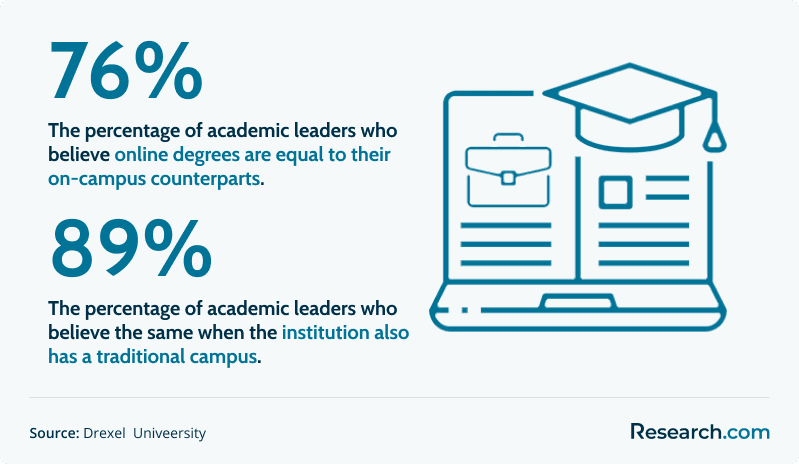
Online leadership and management courses can be valuable when they meet the same quality signals employers and learners use to judge campus-based education: recognized provider, relevant curriculum, qualified instructors, practical assignments, and credible completion documentation. For formal degrees, accreditation is especially important. Drexel University Online notes that online programs are viewed more favorably when they adhere to key criteria important to employers.
The biggest difference is the learning experience. Online courses offer flexibility and wider access, while campus-based courses may provide more face-to-face interaction, structured schedules, and local networking. A learner considering an online MIS-focused path, for example, should compare not only format but also the program’s technology requirements, instructor access, employer recognition, and alignment with career goals.
Research cited in the original article notes that online degrees from institutions with physical campuses are viewed more favorably, with support increasing from 70% to 89% compared to online-only institutions. Degrees from long-established institutions, especially those over 95 years old, may also benefit from stronger name recognition among HR directors and CEOs. However, reputation should not be the only factor; curriculum fit and skill application matter just as much.
| Factor | Online Course | On-Campus Course | Which Should You Choose? |
| Schedule | Often self-paced or flexible | Usually fixed class times | Choose online if you work full time or travel often. |
| Networking | Discussion boards, virtual events, peer groups, and online communities | In-person classmates, faculty access, and campus events | Choose campus if local relationships and face-to-face interaction are a priority. |
| Cost | Often lower for short courses, though executive options can cost more | May include tuition, fees, transportation, and opportunity costs | Compare total cost, not just listed tuition. |
| Employer perception | Stronger when backed by a reputable institution or platform | Often familiar to employers, especially if institution is well known | Choose the option with the strongest credibility for your target field. |
| Learning style | Requires self-discipline and independent study habits | Provides more external structure | Choose online only if you can manage deadlines and stay engaged without frequent in-person accountability. |
What is the average cost of online leadership and management courses?
Costs vary widely because online leadership and management courses range from free audit options to subscription platforms, individual paid courses, professional certificates, and executive education programs. Some learners may also compare these courses with specialized career credentials, such as a certified management accountant course.
LinkedIn Learning uses a subscription model: $39.99 monthly or $239.88 annually. This can be cost-effective if you plan to take multiple courses. Coursera and edX offer more varied pricing, including individual course purchases, subscriptions such as Coursera Plus at approximately $59 per month, free auditing on some edX courses, verified certificates, MicroMasters, and professional certificate programs.
Cost should be evaluated against your purpose. A $49 course may be enough if you need a single management concept. A $1,343 executive course may make sense if the provider reputation, faculty, live sessions, and change-management content are directly relevant to your next role.
| Cost Model | Examples | Best For | Watch Out For |
| Free audit | Some edX courses | Learners who want knowledge without a certificate | Certificate may require payment. |
| Monthly subscription | LinkedIn Learning at $39.99 monthly; Coursera Plus at approximately $59 per month | Learners taking several courses in a short period | Subscription costs can add up if you do not finish quickly. |
| Individual paid course | Coursera, Udemy, edX certificate upgrades | Learners who want one specific course | Discounts and certificate policies vary by platform. |
| Executive education | Emeritus — Leading Organizations and Change at $1,343 | Mid-career or senior professionals seeking advanced instruction | Higher price does not automatically mean stronger career impact. |
The broader e-learning market also shows why online professional education has become mainstream. The global e-learning market was valued at $263.5 billion in 2023 and is projected to reach $933.5 billion by 2032, with a CAGR of 14.8%.

What are the financial aid options for students enrolling in online leadership and management courses?
Financial aid depends heavily on the course provider. Many short, noncredit courses do not qualify for federal student aid, while degree-based or accredited college programs may offer more formal funding options. Before enrolling, confirm whether the course is noncredit, credit-bearing, certificate-based, or part of a degree program.
- Coursera: Coursera offers financial aid for many courses and Specializations. Applicants typically explain their financial need and how the course supports their career goals.
- edX: edX provides financial assistance that can offer up to a 90% discount on verified certificate fees for eligible learners.
Employer sponsorship can also help, especially when the course directly supports your current role. However, corporate training expenditure in the United States fluctuated significantly, decreasing by almost four billion U.S. dollars in 2024 from the previous year, so professionals should also explore other funding options.
- Educational grants and scholarships: Organizations and foundations may offer awards based on need, merit, career field, or professional background. Search platforms such as Scholarships.com and Fastweb can help locate possibilities.
- Private loans: Private education loans can cover costs when other funding is unavailable, but they should usually be treated as a last resort because interest rates and repayment terms vary.
- Crowdfunding: Platforms such as GoFundMe may help learners raise money for career-related education, especially when the course has a clear professional purpose.
- Degree-linked aid: If you enroll in a college program rather than a standalone course, you may want to compare online schools that accept FAFSA.
What are the prerequisites for enrolling in online leadership and management courses?
Prerequisites vary from open-enrollment beginner courses to advanced executive programs. Many short leadership courses have no formal admission requirements, while graduate-level or executive courses may expect prior management experience, a degree, or application materials.
- Educational background: Introductory courses may be open to anyone. Advanced or graduate-level options may expect college coursework or a completed degree.
- Work experience: Senior leadership, Executive MBA-style, or organizational change courses may be more useful when learners already have professional or supervisory experience.
- English proficiency: Because many courses are delivered in English, non-native speakers may need strong reading, writing, and listening skills. Some formal programs may request TOEFL or IELTS scores.
- Technical requirements: Learners need reliable internet access, a computer, and the ability to use a learning platform. Some courses may require specific software or video conferencing tools.
- Application materials: More selective programs may request a résumé, recommendation letters, a statement of purpose, or proof of employment experience.
What do online leadership and management courses typically cover?
Most leadership and management courses are built around the skills managers use to guide people and make organizational decisions. The exact curriculum depends on the level and purpose of the course, but common topics include:
- Leadership foundations: Core leadership theories, leadership styles, self-awareness, motivation, influence, and the behaviors associated with effective leaders.
- Strategic management: How leaders set priorities, analyze competitive conditions, make cross-functional decisions, and support long-term organizational goals.
- Organizational behavior: Team dynamics, communication, motivation, culture, group decision-making, and employee engagement.
- Change management: Methods for planning, communicating, and implementing organizational change while reducing resistance.
- Ethics and corporate governance: Ethical decision-making, accountability, stakeholder responsibilities, and governance expectations for leaders.
- Information systems management: Technology strategy, data use, cybersecurity awareness, and digital operations, especially relevant for learners considering an MIS degree.
- Project management: Planning, scheduling, risk management, budgeting, execution, and closure. Learners who want this track can review the project management career path.
- Financial management: Budgeting, resource allocation, financial analysis, and business decision-making.
What types of specializations are available in online leadership and management courses?
Specializations help learners focus on the management skills most relevant to their target industry or role. A general leadership course is useful for broad development, but a specialization can be more valuable when it maps directly to a promotion path or career transition.
| Specialization | What It Builds | Who Should Consider It |
| Strategic Leadership | Decision-making, planning, competitive analysis, and executive thinking | Professionals preparing for senior management or department leadership |
| Project Management | Planning, scheduling, stakeholder management, budgets, and delivery | Team leads, operations professionals, and aspiring project managers |
| Healthcare Management | Operations, compliance, patient-care systems, and healthcare leadership | Healthcare professionals seeking management roles; some may also compare one year MPH programs online |
| Human Resources Management | Talent development, employee relations, performance systems, and organizational culture | HR professionals and managers responsible for people strategy |
| Change Management | Transformation planning, communication, implementation, and resistance management | Professionals leading reorganizations, technology adoption, or process redesign |
| Information Systems Management | Technology leadership, data-informed decisions, systems strategy, and cybersecurity awareness | Managers working at the intersection of business and technology |
| Hospitality Management | Service operations, guest experience, staffing, and property performance | Learners interested in hotel and restaurant management jobs |
What are the emerging trends in online leadership and management education?
Online leadership education is becoming more applied, shorter-form, and technology-enabled. Instead of relying only on lectures, many programs now use microlearning, virtual simulations, case-based assignments, collaborative platforms, and real-time analytics that help learners track progress.
Another trend is closer alignment with workplace needs. Courses increasingly focus on leading distributed teams, managing digital transformation, coaching employees, using data in decision-making, and adapting to fast-changing business conditions. Some learners who want more advanced academic preparation may later compare programs such as online masters in management and leadership.
AI and automation are also changing what managers need to know. Leaders are expected to understand how technology affects workflows, employee roles, communication, cybersecurity, and ethical decision-making. A strong course should not simply mention AI; it should help learners decide how to lead teams through technology-driven change.
What is the return on investment of online leadership and management courses?
The return on investment depends on whether the course helps you achieve a specific professional outcome. A course may be worthwhile if it supports a promotion, improves your performance in a current role, helps you transition into management, expands your network, or prepares you for a more advanced credential.
To estimate ROI, compare the course cost with realistic benefits such as improved skills, stronger job applications, better interview stories, internal advancement opportunities, and potential salary growth. Also consider opportunity cost: a short $49 course with immediate application may produce more value than a more expensive certificate if the expensive option does not match your goals.
Some learners use leadership courses as stepping stones toward graduate study or advanced credentials, including an online PhD organizational leadership. That path can make sense for professionals interested in consulting, research, academia, or senior organizational strategy, but it requires a much larger time and financial commitment.
| ROI Factor | Why It Matters | Question to Ask Before Enrolling |
| Career alignment | The course should match your target role, not just sound impressive. | Will this course help me qualify for a specific job, project, promotion, or responsibility? |
| Credential credibility | Provider reputation affects how employers interpret the certificate. | Will my employer or target industry recognize this provider? |
| Skill application | Leadership training is most valuable when applied at work. | Can I use what I learn in my current role within the next 30 to 90 days? |
| Cost | Low-cost courses may offer strong value; expensive courses need clearer payoff. | What outcome would justify the price? |
| Networking | Peer and instructor relationships can increase long-term value. | Does the course include live sessions, discussion groups, mentorship, or alumni access? |
How Does Accreditation Impact the Credibility of Online Leadership and Management Courses?
Accreditation matters most when a course is part of a college, university, or degree program. It signals that the institution has been reviewed against recognized academic standards. For short noncredit courses, accreditation may not apply in the same way, so learners should evaluate provider reputation, instructor qualifications, curriculum transparency, and employer recognition.
If you are comparing college-based online options, accreditation should be nonnegotiable. It can affect credit transfer, employer acceptance, graduate school eligibility, and financial aid access. Learners who want degree-oriented options may want to review accredited pathways from non profit online colleges.
What challenges might students face with online leadership and management courses?
Online leadership courses are flexible, but that flexibility can become a challenge if learners lack structure. The most common issues include procrastination, limited interaction, unclear course quality, weak feedback, technology barriers, and difficulty translating concepts into workplace action.
- Time management: Self-paced does not mean effortless. Learners need a weekly study plan.
- Limited live interaction: Some courses rely heavily on recorded videos, which may reduce peer connection and instructor feedback.
- Uneven course quality: A certificate is not automatically valuable. Review curriculum, instructor background, assignments, and student feedback.
- Technology access: Reliable internet and a working computer are essential for videos, live sessions, assignments, and discussion boards.
- Financial uncertainty: Standalone courses may not qualify for federal aid. Learners seeking aid-connected pathways should compare online schools that accept FAFSA.
Are these courses effective for senior professionals?
Online leadership and management courses can be effective for senior professionals when they go beyond introductory management advice. Experienced learners should look for executive-level content, peer interaction, case studies, live discussion, coaching, change management, strategy, and industry-specific application.
Senior professionals may not need basic lessons on delegation or communication unless they are filling a specific skill gap. They often gain more value from courses that help them lead transformation, manage cross-functional teams, mentor future leaders, or strengthen strategic decision-making. Older learners or career-stage learners can also explore education options designed for mature students through online school for seniors.
Are online leadership and management courses a stepping stone to doctoral studies?
They can be, but they are usually an indirect stepping stone. Short online courses do not replace graduate prerequisites, research experience, or formal academic preparation. However, they can help professionals clarify whether they want to study organizational leadership, management theory, change leadership, or executive decision-making at an advanced level.
Professionals interested in teaching, consulting, research, or senior organizational strategy may eventually compare doctoral options, including affordable PhD programs. Before moving from a short course to doctoral study, confirm admissions requirements, dissertation expectations, accreditation, faculty expertise, and time commitment.
How can online leadership and management courses enhance professional networking and mentorship?
The strongest online leadership courses create more than a content library. They help learners meet peers, instructors, mentors, and sometimes industry executives through discussion boards, live sessions, group projects, networking events, and alumni communities.
Networking value varies by course. A 34-minute skills module may offer little interaction, while an executive education program may provide stronger peer engagement. If networking is a priority, ask whether the course includes live meetings, cohort-based learning, moderated forums, instructor feedback, or mentorship opportunities. Learners comparing long-term career pathways may also review fields connected to most employable degrees.
Can online leadership and management courses facilitate affordable academic progression?
Online leadership courses can be a lower-cost way to explore management education before committing to a full degree. They may help learners identify whether they prefer business management, organizational leadership, project management, healthcare administration, information systems management, or another specialization.
Some institutions offer pathways from certificates or individual courses into degree programs, but transferability is not automatic. Before enrolling, ask whether the course carries academic credit, whether credits can transfer, and whether the provider has articulation agreements. Learners seeking a lower-cost degree entry point can compare options such as the cheapest associate degree online.
Do Employers Value Online Leadership and Management Credentials?
Employers may value online leadership credentials when they are relevant, credible, and backed by evidence of skill. A certificate is strongest when you can explain what you learned, show how you applied it, and connect it to measurable workplace results.
Hiring managers often care less about the delivery format and more about the provider, rigor, practical relevance, and your ability to use the training. Online credentials connected to reputable institutions or structured academic programs may carry more weight, especially when comparable to recognized graduate pathways such as an easiest online masters degree. Still, no certificate guarantees a promotion or salary increase.
How Do Online Leadership and Management Courses Bridge Theory and Practice?
Good leadership courses connect ideas with workplace action. They do this through case studies, simulations, reflection exercises, capstone projects, role-based assignments, and scenarios involving team conflict, strategy, budgeting, change management, or communication.
The most practical courses ask learners to diagnose real organizational problems, test leadership approaches, and receive feedback. This matters because leadership is not mastered by watching videos alone. Advanced learners who want to continue from applied leadership training into research-focused education may compare options such as 1 year PhD online, while carefully verifying academic rigor and program requirements.
How do you choose the best online leadership and management course?
The best course is the one that matches your career goal, current skill gap, budget, schedule, and desired credential level. A learner preparing for a team lead role needs a different course than a senior professional leading organizational change or someone comparing a risk management degree online.
- Start with the outcome: Decide whether you want a promotion, a new role, better team performance, a résumé credential, or preparation for a degree.
- Check credibility: Review the provider, institutional affiliation, instructor qualifications, and whether accreditation applies.
- Read the curriculum closely: Make sure the course covers the exact skills you need, such as coaching, strategy, change management, budgeting, or project leadership.
- Match format to your schedule: Choose self-paced courses if you need flexibility; choose cohort-based courses if you need structure and peer accountability.
- Evaluate assignments: Courses with projects, cases, and feedback usually provide stronger applied value than video-only courses.
- Compare total cost: Include certificate fees, subscriptions, materials, and the time needed to complete the course.
- Review learner outcomes: Look for specific student feedback about skill gains, job relevance, instructor quality, and support.
- Consider networking: If relationships matter, prioritize live sessions, cohort models, mentorship, or alumni access.
- Verify certificate value: Ask whether the certificate is shareable, recognized by employers, or connected to a university or professional body.
Online education continues to expand. Statista data cited in the original article projects that the penetration rate for these platforms will rise from 4.8% to 16.7% by 2033, reinforcing that online learning is becoming a more common professional development route.
Common mistakes to avoid when choosing a course
| Mistake | Why It Hurts | Better Approach |
| Choosing only by price | The cheapest course may not teach the skill you need, while the most expensive may not produce better outcomes. | Compare cost against curriculum, instructor quality, assignments, and career relevance. |
| Assuming every certificate is equally valuable | Employers may not recognize all platforms or credentials the same way. | Prioritize reputable providers and be ready to explain what you learned and applied. |
| Ignoring accreditation | For degree-linked programs, accreditation can affect transfer credit, financial aid, and employer acceptance. | Verify accreditation for college-based programs before enrolling. |
| Picking a course without a career goal | You may finish with general knowledge but no clear next step. | Choose a course tied to a role, project, promotion, or skill gap. |
| Overlooking time commitment | Flexible courses still require consistent effort. | Block study time before paying for the course. |
| Relying only on rankings | A ranked course may not fit your industry, experience level, or learning style. | Use rankings as a shortlist, then evaluate fit personally. |
What career paths are available for completers of online leadership and management courses?
Completing an online leadership and management course can support several management-related career paths, especially when combined with relevant experience, education, and industry knowledge. These courses are often most useful for professionals already close to management responsibilities or those seeking to strengthen leadership evidence on their résumé.
- General Manager: Oversees business operations or major departments and ensures teams, budgets, and processes align with organizational goals.
- Project Manager: Plans, coordinates, executes, and closes projects while managing deadlines, budgets, scope, and stakeholders. Learners interested in construction roles can review what jobs can a construction management degree get.
- Human Resources Manager: Leads HR practices, employee relations, talent development, compliance, and workforce planning.
- Operations Manager: Improves day-to-day systems, resource use, workflows, staffing, and process efficiency.
- Marketing Manager: Designs marketing strategies, manages campaigns, coordinates teams, and connects brand activity with business objectives.
- Sales Manager: Leads sales teams, sets goals, analyzes performance data, and develops training for sales representatives.
- IT Manager: Oversees technology strategy, systems, staff, and digital infrastructure, especially in roles connected to an MIS degree.
- Consultant: Helps organizations solve operational, structural, strategic, or performance problems through expert analysis and recommendations.
| Career Goal | Best Course Focus | Additional Preparation That May Help |
| First-time supervisor | Communication, delegation, feedback, and team motivation | Practice leading meetings, documenting results, and managing small projects. |
| Project manager | Project planning, risk management, stakeholder communication, and budgeting | Build a portfolio of completed projects and learn industry-specific tools. |
| Operations leader | Process improvement, analytics, Lean management, and decision-making | Gain experience with workflow analysis, budgeting, and cross-functional coordination. |
| Senior leader | Strategy, change leadership, executive communication, and organizational design | Seek mentorship, executive coaching, and high-impact leadership assignments. |
What is the job market for learners who had online leadership and management courses?
The job market for management-trained professionals is broad, but course completion alone is not usually enough to secure a management role. Employers typically look for a combination of experience, technical knowledge, communication ability, decision-making skills, and evidence that you can lead people or projects.
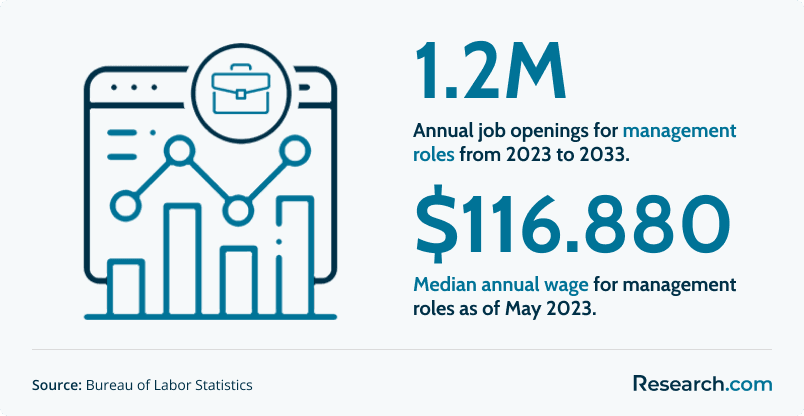
According to the BLS, employment in management occupations is projected to grow faster than the average for all occupations between 2023 and 2033, with about 1.2 million openings each year due to growth and replacement needs.
The wage data also shows why management training attracts career-focused learners. As of May 2023, the median annual wage for management occupations was $116,880, compared to the overall median of $48,060. Related fields, including organizational leadership salary pathways, may also appeal to professionals seeking leadership-centered careers.
The strongest candidates use courses strategically. They do not simply list a certificate; they connect the training to workplace results, such as improving a process, leading a team, reducing conflict, launching a project, or managing change.
What should you do before enrolling?
Before paying for an online leadership and management course, take time to verify fit. A few checks can prevent wasted money and help you choose a course that supports your actual career plan.
- Define your goal in one sentence: For example, “I want to prepare for a project manager role” or “I need to improve how I coach employees.”
- Compare at least three courses: Look at curriculum, price, completion time, assignments, instructor background, and certificate value.
- Ask your employer: Find out whether the course is recognized, reimbursable, or useful for internal promotion.
- Check whether the course is credit-bearing: If you may pursue a degree later, confirm whether credits transfer before enrolling.
- Review the refund and subscription policy: Subscription courses can keep billing if you forget to cancel.
- Plan when you will study: Put study blocks on your calendar before the course starts.
- Decide how you will show results: Plan to apply one concept at work and document the outcome for performance reviews or interviews.
Here's What Graduates Have To Say About Their Online Leadership and Management Courses
-
: "
My online leadership and management course changed how I approached work. I could study around my schedule, and the modules helped me become more confident in strategic thinking, problem-solving, and leading people. Luna
"
-
: "
The leadership skills I developed online helped me move forward professionally. Learning with people from different countries broadened my view of business, and I was able to use the collaboration techniques right away. Raj
"
-
: "
Taking leadership and management online strengthened both my managerial ability and my personal communication style. The real-world case studies were especially useful because they showed how leadership decisions play out at work. AJ
"
Key Insights
- Online leadership and management courses are best for focused skill development, promotion preparation, and flexible professional learning; they are not automatic substitutes for degrees or required credentials.
- Course length varies widely, from 34 minutes to 2 months, so learners should match the time commitment to their goal and experience level.
- Costs range from free audit options and subscriptions such as LinkedIn Learning at $39.99 monthly to executive programs such as Emeritus — Leading Organizations and Change at $1,343.
- Management salary data is promising but broad. The BLS reports a $116,880 median annual wage for management occupations as of May 2023, but individual outcomes depend on role, industry, experience, and location.
- Credibility matters. For college-based programs, accreditation can affect employer trust, credit transfer, financial aid, and future academic progression.
- The strongest courses include applied projects, case studies, feedback, peer interaction, and skills that can be used immediately at work.
- Before enrolling, define your career goal, compare providers, check certificate value, confirm costs, and ask whether the course will help you produce evidence of leadership impact.
References:
- Allied Market Research. Global E-learning Market Size Report. Allied Market Research.
- Bureau of Labor Statistics. Occupational Outlook Handbook: Management Occupations. BLS.
- Bureau of Labor Statistics. Data for Occupations Not Covered in Detail: Management Occupations. BLS.
- Drexel University Online. Online Degree vs. Traditional Degree. Drexel University Online.
- Glassdoor. Leadership and Management Salaries. Glassdoor.
- Statista. Training Expenditures in the United States. Statista.
- Statista. Outlook: Online Education Worldwide - Users. Statista.
- ZipRecruiter. Business Leader Salary. ZipRecruiter.
- ZipRecruiter. Leadership Salary. ZipRecruiter.
- Zippia. Manager Jobs. Zippia.
- Zippia. Manager Salaries. Zippia.
- Zippia. Trends in Manager Jobs. Zippia.
Other Things You Should Know About the Best Online Leadership and Management Courses
In 2027, the best online leadership and management courses typically focus on developing skills such as strategic planning, decision making, team dynamics, and effective communication. These courses often include modules on digital transformation and managing remote teams, reflecting current industry needs.
Yes, many 2027 online leadership and management courses award continuing education units, often 1 to 3 CEUs per course, if the provider is approved by a recognized body such as IACET. Learners should confirm the exact CEU value and approval before enrolling.