2027 Becoming a Certified Management Accountant: How to Get a Certification

Co-Founder and Chief Data Scientist
Becoming a Certified Management Accountant (CMA) is a practical career move for accounting and finance professionals who want to work closer to business strategy, budgeting, performance analysis, and executive decision-making. Unlike credentials focused mainly on public accounting or tax compliance, the CMA is built for professionals who help organizations plan, control costs, measure performance, manage risk, and turn financial data into business decisions.
This guide explains what the CMA credential is, how to qualify, what the exam covers, how much it costs, how long the process can take, and whether the investment makes sense for your career goals. It also compares the CMA with the CPA, outlines salary and job outlook data, and highlights the skills, certifications, and career paths that can strengthen your long-term value in management accounting.
Quick answer: what are the benefits of becoming a certified management accountant?
The CMA is best suited for professionals who want to move into corporate finance, financial planning and analysis, controllership, budgeting, cost management, risk analysis, or finance leadership. It is not a degree; it is a professional certification awarded by the Institute of Management Accountants after candidates meet education, exam, and experience requirements.
- The Certified Management Accountant (CMA) credential is recognized in over 150 countries, with over 100,000 certifications earned globally.
- According to the IMA 2024 Global Salary Survey, CMAs earn, on average, 58% more in median total compensation compared to non-CMAs (IMA, 2024).
- Management accountants with a CMA certification are also reported to earn, on average, 21% more in median total compensation compared to non-CMAs.
- The annual average salary for management accountants in the US in 2024 is $115,738.
- The projected job growth for accountants and auditors in the US from 2024 to 2034 is 5%, faster than the average for all occupations (U.S. Bureau of Labor Statistics, 2025).
- The highest-paying cities for management accountants in the US in 2024, based on average annual salary, include Santa Clara, CA ($139,628), Federal Way, WA ($137,513), Washington, DC ($137,266), San Francisco, CA ($134,960), and San Jose, CA ($131,645).
- What is a certified management accountant?
- Why should I pursue a certification as a management accountant?
- What are the steps to becoming a certified management accountant?
- How long does it take to become a certified management accountant?
- How can I prepare effectively for the certification exam and ensure success?
- What is the cost of becoming a certified management accountant?
- Which certification is the best with CMA?
- What is the salary range for certified management accountants?
- What is the job outlook for certified management accountants?
- What are the most in-demand skills for certified management accountants?
- What are common career paths for certified management accountants?
- How does an affordable accounting degree influence the CMA journey?
- How can continuous professional development and networking enhance my CMA career?
- What are the global career opportunities for CMAs?
- What is the role of foundational education in advancing a CMA career?
- How are emerging technologies reshaping the role of CMAs?
- What is the return on investment of earning a CMA certification?
- What are the ethical considerations and standards in management accounting?
- What are the alternative career pathways with CMA skills?
- What other certifications can I pursue alongside CMA to enhance my career prospects?
- How do CMA and CPA earnings compare?
- What are the supplementary certifications that complement the CMA designation?
What is a certified management accountant?
A Certified Management Accountant is an accounting and finance professional credential focused on internal business decision-making. CMAs use financial information to help organizations set budgets, evaluate performance, control costs, assess risk, forecast results, and make strategic choices. In many organizations, they sit at the intersection of accounting, operations, finance, and leadership.
The CMA is especially relevant for professionals who do not want to limit their careers to bookkeeping, tax preparation, or audit work. It signals that a candidate understands how financial data supports management decisions, not just how transactions are recorded.
Is CMA a professional degree?
No. The CMA is a professional certification, not an academic degree. The Institute of Management Accountants awards the credential to candidates who meet its education, exam, and work experience requirements. A degree is still part of the pathway for most candidates, and students may complete that requirement through online business degree programs or accredited campus-based institutions.
What does a CMA do day to day?
CMA responsibilities vary by company size and industry, but the work usually centers on financial decision support. Common tasks include building budgets, analyzing cost behavior, preparing variance reports, developing forecasts, evaluating investment decisions, monitoring internal controls, and translating financial trends into recommendations for managers.
| CMA work area | What it means in practice | Why employers value it |
| Budgeting and forecasting | Preparing financial plans, comparing actual results with projections, and updating assumptions | Helps leaders allocate resources and respond to changing business conditions |
| Cost management | Analyzing production, labor, overhead, and operating costs | Supports pricing, profitability, and efficiency decisions |
| Performance reporting | Creating dashboards, reports, and financial summaries for leadership | Turns accounting data into actionable business insight |
| Risk and controls | Identifying weaknesses in processes, compliance, and financial reporting | Reduces errors, fraud exposure, and operational surprises |
| Strategic finance | Evaluating projects, investments, and long-term financial choices | Connects finance expertise with business growth decisions |
What is the difference between a CMA and a CPA?
The CMA and CPA are both respected accounting credentials, but they serve different career goals. The CMA is designed for management accounting, corporate finance, financial planning, and internal decision support. The CPA is generally associated with public accounting, audit, tax, financial reporting, and regulatory compliance. If you are comparing accounting and finance pathways, this distinction matters because the best credential depends on the type of work you want to do.
The CMA is not a state license. The CPA is licensed at the state level, and requirements differ by jurisdiction. For example, Illinois CPA requirements may not match NJ CPA requirements, and Texas CPA requirements can differ from requirements in other states. Similarly, accounting schools in PA may teach comparable accounting concepts to programs elsewhere, but CPA licensing rules are handled by separate boards. By contrast, the CMA is administered through one professional organization: the Institute of Management Accountants.
| Credential | Best fit | Typical focus | Licensing structure |
| CMA | Corporate finance, FP&A, management accounting, controllership, internal strategy roles | Budgeting, cost analysis, performance management, decision analysis, risk, internal controls | Professional certification through the Institute of Management Accountants |
| CPA | Public accounting, audit, tax, compliance, financial reporting, some corporate accounting roles | Auditing, taxation, external reporting, regulatory compliance, assurance | State-based licensure with requirements that vary by state |
Why should I pursue a certification as a management accountant?
You should consider the CMA if you want your accounting career to move beyond transaction processing and into analysis, planning, and leadership. The credential can be especially useful if your target roles include financial analyst, cost accountant, budget analyst, controller, finance manager, FP&A manager, or CFO-track positions.
The CMA’s value comes from three areas: market recognition, skill validation, and career direction. It tells employers that you have studied management accounting and financial management at a professional level. It also gives you a structured way to build expertise in budgeting, forecasting, cost management, analytics, internal controls, and strategic financial management.
Who should choose the CMA?
- Corporate accounting professionals who want to move into analysis, planning, or management roles.
- Finance professionals who need stronger accounting, cost, and performance management skills.
- Accounting graduates who prefer internal business decision-making over audit or tax work.
- Managers and controllers who want a credential aligned with budgeting, forecasting, and operational finance.
- International professionals who want a credential recognized in over 150 countries.
Who may be better served by another path?
- If you want to sign audit reports or build a career in public accounting, the CPA may be more appropriate.
- If your goal is investment research or portfolio management, the CFA may align better with your target work.
- If you are new to accounting and lack a degree, you may need to focus first on foundational education through options such as online associate degree programs or a bachelor’s program.
- If your role is mainly transactional bookkeeping, a shorter bookkeeping credential may be a better first step before committing to the CMA.
What are the steps to becoming a certified management accountant?
The CMA process is straightforward, but it requires planning. Candidates must satisfy education expectations, join the CMA program, pass both exam parts, document relevant experience, and maintain the credential through continuing education.
- Confirm your education eligibility. CMA candidates generally need a bachelor’s degree from an accredited institution or an approved professional certification such as a CPA. The degree does not have to be in accounting or a business management degree, although accounting, finance, economics, business analytics, and management courses can make exam preparation easier.
- Register with the Institute of Management Accountants. Candidates enroll through the IMA, which administers the CMA program and sets certification requirements.
- Build an exam preparation plan. The CMA exam has two parts covering financial planning, performance, analytics, and strategic financial management. Candidates commonly use self-study materials, review courses, question banks, and timed practice exams.
- Pass both parts of the CMA exam. Candidates must pass both exam sections within a three-year period. The test is computer-based and offered through Prometric testing centers worldwide.
- Complete the professional experience requirement. Candidates need two years of relevant experience in management accounting or financial management. This work can be completed before or after passing the exam.
- Submit verification and apply for certification. After meeting the exam, education, and experience requirements, candidates provide documentation to the IMA.
- Maintain the credential. CMAs must complete continuing education requirements each year to keep their certification active and current.
How long does it take to become a certified management accountant?
The timeline depends on where you are starting. A candidate who already has a bachelor’s degree and relevant experience may focus mainly on exam preparation and certification paperwork. A recent high school graduate may need a longer route that includes college, early accounting or finance jobs, and the required experience. For some candidates, degree completion may be shortened through online accelerated degree programs, while others may take five to seven years when education, exam preparation, and professional experience are combined.
Typical CMA pathway by starting point
| Starting point | Main next steps | Key planning issue |
| High school graduate | Complete a degree, pursue internships or entry-level accounting work, prepare for the CMA exam | Choose an affordable accredited program with accounting and finance coursework |
| College student | Join the IMA as a student, plan coursework around exam topics, pursue relevant internships | Use student pricing and build experience early |
| Accounting or finance professional | Register for the CMA program, study for both exam parts, document qualifying experience | Balance exam preparation with work responsibilities |
| CPA or advanced professional | Use existing accounting knowledge, focus on CMA-specific management accounting topics | Avoid assuming CPA preparation fully covers CMA content |
What is the CMA exam?
The CMA exam is the professional assessment candidates must pass to earn the Certified Management Accountant credential. It is administered by the Institute of Management Accountants and divided into two parts. Each part tests applied knowledge through multiple-choice questions and essay scenarios.
Part 1 focuses on Financial Planning, Performance, and Analytics. It covers external financial reporting decisions, planning, budgeting, forecasting, performance management, cost management, internal controls, and technology and analytics.
CMA Exam Part 1 Content Outline: Financial Planning, Performance, and Analytics
| Domain | Percentage (%) |
| External Financial Reporting Decisions | 15% |
| Planning, Budgeting, and Forecasting | 20% |
| Performance Management | 20% |
| Cost Management | 15% |
| Internal Controls | 15% |
| Technology and Analytics | 15% |
Part 2 focuses on Strategic Financial Management. It includes financial statement analysis, corporate finance, decision analysis, risk management, investment decisions, and professional ethics.
CMA Exam Part 2 Content Outline: Strategic Financial Management
| Domain | Percentage (%) |
| Financial Statement Analysis | 20% |
| Corporate Finance | 20% |
| Decision Analysis | 25% |
| Risk Management | 10% |
| Investment Decisions | 10% |
| Professional Ethics | 15% |
Each exam part includes 100 multiple-choice questions and two essay scenarios. Candidates have four hours to complete the multiple-choice and essay portions. Results are emailed approximately six weeks after the end of the month in which the CMA exam was taken.
Preparation time varies, but candidates spend approximately 170 hours preparing for Part 1 and 130 hours for Part 2 on average. Because the exam tests application rather than memorization alone, candidates should practice calculations, written explanations, time management, and business judgment.
How can I prepare effectively for the certification exam and ensure success?
The strongest CMA exam preparation plans combine content review, repeated question practice, essay writing, and performance tracking. Self-study can work for disciplined candidates, while review courses may help those who need structure, accountability, or guided explanations.
- Start with the exam blueprint. Review the official topic areas for both parts before buying materials or creating a schedule. This prevents overstudying familiar topics and underpreparing for heavily weighted domains.
- Choose materials built for the CMA exam. General accounting textbooks are useful for background, but CMA-specific question banks and review guides are better aligned with exam style and difficulty.
- Create a weekly study calendar. Break the exam content into specific weekly goals. Include time for reading, practice questions, formulas, essay drills, and cumulative review.
- Practice multiple-choice questions under timed conditions. The exam requires both accuracy and pacing. Track missed questions by topic so you know whether the issue is knowledge, calculation speed, or interpretation.
- Do not ignore the essay section. CMA essays reward clear reasoning and structured answers. Practice explaining your calculations and recommendations in concise business language.
- Use review courses when you need structure. A course may be worth the cost if you struggle with self-study, need expert explanations, or want a guided timeline.
- Review weak areas repeatedly. Focus extra time on topics where your scores remain low, especially high-weight areas such as planning, budgeting, forecasting, performance management, corporate finance, and decision analysis.
- Protect your final review period. In the last weeks before testing, shift from learning new material to mixed practice, formula review, essay practice, and simulated exams.
Becoming a Certified Management Accountant: The Professional Experience Requirement
Passing the exam is not the only requirement. CMA candidates must also complete two years of professional experience in management accounting or financial management. Relevant roles may include financial analyst, budget analyst, cost accountant, internal auditor, finance manager, controller, or similar positions. Experience can come from industries such as manufacturing, healthcare, finance, technology, or other sectors where professionals work with budgeting, forecasting, financial analysis, internal controls, or decision support. Candidates can accumulate this experience within a seven-year period after passing the exam.
What is the cost of becoming a certified management accountant?
The CMA is less expensive than completing a full degree program, including many online accounting degree options, but candidates should still plan for multiple costs. The main expenses include IMA membership, the CMA entrance fee, exam fees, preparation materials, and any optional review course or travel-related costs.
The CMA exam itself costs between $1,000 to $1,600, depending on whether the candidate is a student, professor, or professional. Candidates must also join the Institute of Management Accountants and enroll in the CMA program. Membership fees vary by type, with professional and academic memberships ranging from $160 to $295. The entrance fee also varies by membership type.
When membership, entrance, and exam fees are combined, the total cost can range from $1,014 to $1,585. This does not include paid review courses, books, question banks, retake expenses, travel, or the value of study time.
CMA Exam Cost Breakdown
| Membership Type | Membership Fee | Entrance Fee | Exam Fee | Total Cost |
| Professional | $295 | $300 | $990 | $1,585 |
| Academic | $160 | $225 | $740 | $1,125 |
| Student | $49 | $225 | $740 | $1,014 |
How to reduce the cost of becoming a CMA
- Use student pricing if eligible. Students have the lowest total cost shown in the fee breakdown.
- Compare review materials before buying. The most expensive course is not always the best fit; choose based on learning style, question quality, analytics, and pass-support features.
- Avoid retakes through disciplined scheduling. A rushed exam attempt can become more expensive than delaying until practice scores are stronger.
- Ask employers about reimbursement. Some organizations support professional certification when the credential aligns with your role.
- Choose affordable prerequisite education. If you still need a degree, compare accredited options carefully before borrowing.
Is becoming a certified management accountant worth it?
The CMA can be worth it if your target roles require management accounting, financial planning, business analysis, cost management, or finance leadership skills. The credential is globally recognized, and compensation data cited in this guide shows a meaningful earnings premium for CMAs compared with non-CMAs. However, the return depends on your current experience, employer demand, location, industry, and how well you use the credential to move into higher-responsibility work.
Location also matters. In 2024, high-paying cities for management accountants include Santa Clara, CA ($139,628), Federal Way, WA ($137,513), Washington, DC ($137,266), San Francisco, CA ($134,960), and San Jose, CA ($131,645). These figures should be treated as market indicators, not guaranteed outcomes.
What certification is the best with CMA?
The best certification to pair with the CMA depends on your career goal. A CPA may be the strongest match for professionals who want broader accounting authority and public accounting options. A CFA may be better for finance professionals moving toward investment analysis or corporate finance. A CIA or CFE can fit roles centered on internal controls, audit, governance, risk, or fraud prevention.
| Certification | Best paired with CMA for | Career advantage |
| Certified Public Accountant (CPA) | Financial reporting, audit, tax, compliance, controllership | Expands accounting credibility and may support public accounting or senior corporate accounting roles |
| Chartered Financial Analyst (CFA) | Corporate finance, investment analysis, portfolio-related roles | Adds depth in valuation, financial markets, and investment decision-making |
| Certified Internal Auditor (CIA) | Internal audit, governance, risk management, controls | Strengthens risk and assurance capabilities for corporate environments |
| Certified Fraud Examiner (CFE) | Fraud detection, investigations, compliance, governance | Useful for professionals involved in risk management or financial integrity work |
| Certified Information Systems Auditor (CISA), Certified Management Consultant (CMC), or Project Management Professional (PMP) | Technology risk, consulting, process improvement, project leadership | Helps CMAs specialize beyond traditional accounting and finance roles |
What is the salary range for certified management accountants?
CMA compensation varies by job title, experience level, location, employer size, industry, and leadership responsibility. The majority of management accountant salaries fall between $70,000 to $129,500 annually, while top earners make up to $230,000 per year. The average salary for certified management accountants in the United States is $115,738 per year as of 2024.
Salary data should not be read as a promise. A newly certified professional in an entry-level role may earn less than the national average, while an experienced controller, finance director, or CFO-track professional may earn considerably more. The CMA tends to have the strongest salary impact when paired with relevant experience, analytical ability, communication skills, and measurable business results.
What is the job outlook for certified management accountants?
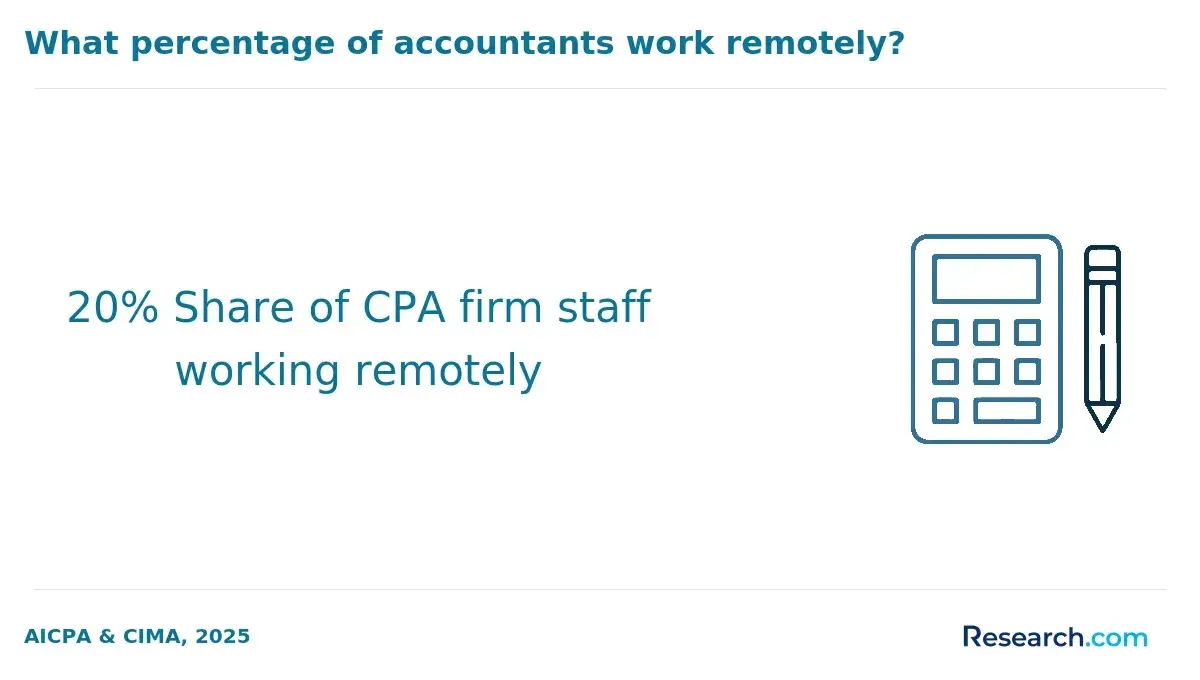
The employment outlook is favorable for professionals who can combine accounting knowledge with analysis, technology, and business judgment. The projected job growth for accountants and auditors in the US from 2024 to 2034 is 5%, faster than the average for all occupations (U.S. Bureau of Labor Statistics, 2025).
For CMAs specifically, demand is tied to employers’ need for better budgeting, forecasting, cost control, performance measurement, and risk management. Organizations are also expecting finance teams to use data more effectively, which makes analytics and technology skills increasingly important.
What are the most in-demand skills for certified management accountants?
The CMA credential can help validate technical knowledge, but employers still look for professionals who can apply that knowledge in real business settings. If you are considering graduate education to deepen your accounting expertise, you may also be asking whether a master’s in accounting is worth it. Advanced education can be useful, but it should be weighed against cost, career goals, and whether the CMA already covers your most relevant skill gaps.
- Financial analysis and reporting: CMAs must interpret complex financial data and turn it into reports that managers can use to make decisions.
- Budgeting, forecasting, and planning: The ability to build realistic financial plans and adjust them as business conditions change is central to management accounting.
- Strategic thinking: CMAs are expected to connect financial outcomes with operational choices, growth plans, pricing, and investment decisions.
- Communication and leadership: Strong CMAs explain financial issues clearly to non-accountants and often work across departments.
- Risk management: Employers value professionals who can identify financial and operational risks before they become expensive problems.
- Technology and analytics: Modern management accounting often involves dashboards, financial modeling, enterprise systems, spreadsheet automation, and data visualization tools.
- Ethical judgment: Because CMAs influence internal decisions and handle sensitive financial information, integrity and objectivity are essential.
What are common career paths for certified management accountants?
CMAs work across many corporate finance and accounting roles. The credential is especially useful in positions where accounting information is used for planning, performance management, and strategic decisions.
- Financial analyst: Reviews financial data, builds models, prepares reports, and supports business planning.
- Cost accountant: Tracks product, service, labor, and operational costs to support pricing and efficiency decisions.
- Budget analyst: Develops and monitors budgets, analyzes variances, and helps departments manage spending.
- Controller: Oversees accounting operations, internal controls, financial reporting, budgeting, and compliance.
- Finance manager: Leads forecasting, financial planning, investment analysis, and risk management activities.
- Chief Financial Officer (CFO): Provides senior leadership over financial strategy, capital planning, reporting, risk, and organizational performance.
- Management consultant: Advises organizations on financial processes, performance improvement, cost control, and operating efficiency.
- Entrepreneur or independent advisor: Uses financial management expertise to build a business or advise clients.
Some professionals also move toward teaching, research, or policy work. If you are considering academic or research-oriented roles and wondering what a doctorate degree is used for, doctoral study may support careers in higher education, research organizations, or specialized think tanks.
How does an affordable accounting degree influence the CMA journey?
An affordable accounting degree can reduce the total cost of becoming a CMA while still building the foundation needed for exam success. The key is not simply choosing the lowest tuition; students should compare accreditation, course coverage, faculty support, transfer policies, graduation requirements, and career outcomes. Reviewing options such as affordable accounting bachelor’s degree programs can help candidates align education spending with long-term management accounting goals.
How can continuous professional development and networking enhance my CMA career?
Continuous professional development keeps CMAs current as accounting standards, technology, analytics tools, and business expectations change. Workshops, conferences, employer training, industry seminars, and professional association events can strengthen technical knowledge while also expanding career opportunities.
Networking is equally important. Mentors, former coworkers, finance leaders, and professional groups can help you identify openings, understand employer expectations, and move into specialized roles. If you are mapping a broader accounting career, relationships inside and outside your organization can be as valuable as the credential itself.
What are the global career opportunities for CMAs?
Because the CMA is recognized in over 150 countries, it can support careers with multinational corporations, global financial services firms, international manufacturing companies, consulting organizations, and employers operating across multiple regulatory environments. Global roles may require knowledge of regional accounting practices, cross-border reporting expectations, currency effects, and cultural differences in business decision-making.
Before pursuing an international move, compare local demand, compensation, work authorization requirements, and cost of living. Benchmarks such as accountant salary data can help you evaluate whether a move or global employer opportunity fits your financial goals.
What is the role of foundational education in advancing a CMA career?
Foundational education gives CMA candidates the accounting, finance, economics, quantitative, and business communication skills needed to understand exam content and perform well at work. A strong academic base can also make it easier to move from entry-level accounting work into financial analysis, budgeting, or controllership roles.
Students who are not ready for a bachelor’s program may begin with lower-cost pathways such as the most affordable online accounting associate degree programs. However, they should confirm whether credits transfer and whether the eventual pathway satisfies CMA education expectations.
How are emerging technologies reshaping the role of CMAs?
Technology is changing management accounting by automating routine tasks and increasing demand for analysis, interpretation, and advisory work. CMAs are increasingly expected to work with dashboards, cloud-based financial systems, data analytics, automation tools, and integrated reporting platforms. The goal is not to replace judgment with software, but to use better data to improve budgeting, forecasting, risk analysis, and performance management.
Professionals who work closely with transactional systems may also benefit from targeted credentials such as the best bookkeeping certification, particularly when they need to strengthen operational accounting knowledge before moving into higher-level analysis.
What is the return on investment of earning a CMA certification?
The return on investment depends on whether the CMA helps you qualify for better roles, earn higher compensation, or move into leadership faster than you would without it. Candidates should compare total costs, including exam fees, membership dues, study materials, review courses, and time, against realistic career gains in their market.
The CMA is more likely to pay off when it is connected to a career plan. For example, a candidate who combines affordable education, relevant experience, and exam preparation may control upfront costs while building the qualifications needed for advancement. Some students explore options such as a 6 month accelerated associate degree as part of an early education strategy, but any accelerated path should be evaluated for accreditation, transferability, and fit with long-term goals.
What are the ethical considerations and standards in management accounting?
CMAs often handle confidential information and influence decisions that affect budgets, employees, investors, customers, and organizational strategy. Ethical conduct is therefore central to the profession. A technically skilled accountant who lacks integrity can create serious financial, legal, and reputational risks.
- Confidentiality: CMAs must protect sensitive financial and operational information and share it only with authorized parties or when legally required.
- Integrity: CMAs should avoid conflicts of interest, misleading reporting, and actions that serve personal gain at the organization’s expense.
- Objectivity: Financial analysis should be unbiased, evidence-based, and free from pressure to distort results.
- Compliance with standards: CMAs are expected to follow applicable regulations, employer policies, and professional standards set by relevant governing bodies.
What are the alternative career pathways with CMA skills?
CMA skills are useful beyond traditional accounting departments. Because the credential emphasizes decision analysis, budgeting, cost control, and strategic finance, it can support roles in consulting, operations, technology, nonprofit management, startups, and project-based industries.
- Project management in construction and infrastructure: CMA skills can support cost tracking, budgeting, forecasting, and project financial controls. Candidates interested in this sector may also compare options such as the cheapest construction management degree programs.
- Business strategy and consulting: CMAs can help organizations improve profitability, evaluate investments, streamline processes, and strengthen financial discipline.
- Technology and data analytics: Finance teams need professionals who can interpret data, build models, and communicate insights using tools such as Excel, Tableau, or Python.
- Nonprofit financial management: Nonprofits need budgeting, grant tracking, reporting, compliance, and resource allocation expertise.
- Entrepreneurship and startups: A CMA background can help founders manage cash flow, funding, budgets, growth plans, and financial risk.
What other certifications can I pursue alongside CMA to enhance my career prospects?
Pairing the CMA with another credential can make sense when the second qualification supports a specific career direction. For example, professionals who manage cross-functional finance initiatives may benefit from project leadership training, and a master in project management online may strengthen skills in planning, scheduling, team coordination, and process improvement.
The best combination is not always the longest list of credentials. Employers value a coherent story: CMA plus CPA for controllership and reporting, CMA plus CFA for corporate finance or investment-related work, CMA plus CIA for internal audit and controls, or CMA plus PMP for finance transformation and major implementation projects.
How do CMA and CPA earnings compare?
CMA and CPA earnings differ because the credentials often lead to different roles. CMAs typically build earning power in corporate finance, FP&A, cost management, controllership, and executive decision support. CPAs may see strong compensation in public accounting, audit, tax, compliance, and financial reporting roles. Industry, region, seniority, employer size, and leadership responsibility can influence either path.
Professionals comparing the two should evaluate not only pay but also job duties, licensing obligations, work environment, and long-term fit. Reviewing benchmarks such as CPA salary information can help you compare compensation patterns before choosing a credential strategy.
What are the supplementary certifications that complement the CMA designation?
Additional certifications can broaden a CMA’s career options when they are chosen strategically. The goal is to fill a real skill gap or qualify for a specific role, not to collect credentials without a plan.
- Certified Public Accountant (CPA): Best for CMAs who want deeper authority in audit, tax, compliance, and financial reporting.
- Chartered Financial Analyst (CFA): Useful for professionals moving toward investment analysis, valuation, corporate finance, or portfolio-related roles.
- Certified Internal Auditor (CIA): A strong complement for careers in internal controls, governance, enterprise risk, and audit leadership.
- Project Management Professional (PMP): Helpful for CMAs leading complex finance projects, systems implementations, or cross-department initiatives.
- Bookkeeping Certification: A practical option for professionals who want to strengthen transactional accounting foundations; a bookkeeping certification can be especially useful earlier in an accounting career.
- Certified Fraud Examiner (CFE): Valuable for roles involving fraud prevention, investigations, internal controls, and corporate governance.
Common mistakes to avoid when pursuing the CMA
- Choosing the CMA without a career target: The credential is most valuable when it supports a clear move into management accounting, finance analysis, controllership, or leadership.
- Underestimating the exam: Professional experience alone does not guarantee a passing score. Candidates need structured preparation and timed practice.
- Ignoring the essay section: Many candidates focus too heavily on multiple-choice questions and fail to practice written business responses.
- Focusing only on fees: Exam costs matter, but so do review quality, retake risk, study time, and the opportunity cost of delaying certification.
- Assuming all accounting degrees are equal: Check accreditation, transfer policies, course coverage, and support services before enrolling.
- Expecting salary increases automatically: The CMA can improve marketability, but compensation depends on experience, job performance, location, industry, and employer demand.
- Neglecting technology skills: Management accounting increasingly requires analytics, modeling, systems knowledge, and data communication.
Questions to ask before starting the CMA path
- Do I want a career in internal business decision-making rather than mainly audit or tax?
- Do I already meet the education requirement, or do I need to complete a degree first?
- Can my current or target job help satisfy the two-year experience requirement?
- How many hours per week can I realistically study for each exam part?
- Will my employer pay for membership, exam fees, or review materials?
- Which credential combination best matches my target role: CMA only, CMA plus CPA, CMA plus CFA, CMA plus CIA, or another pairing?
- What salary range is realistic in my location, industry, and experience level?
- How will I maintain continuing education after certification?
References
- AICPA & CIMA. (2025). MAP survey executive summary. https://www.aicpa-cima.com/resources/download/map-survey-executive-summary
- Gleim Exam Prep. (2024). CMA exam dates. Retrieved March 13, 2024, from Gleim Exam Prep.
- Institute of Management Accountants. (2024). IMA global salary survey 2024. https://www.imanet.org/career-resources/salary-information
- U.S. Bureau of Labor Statistics. (2025, August 27). Accountants and auditors. Occupational Outlook Handbook. https://www.bls.gov/ooh/business-and-financial/accountants-and-auditors.htm
- ZipRecruiter. (2024). Management accountant salary. Retrieved March 13, 2024, from ZipRecruiter.
Key Insights
- The CMA is a professional certification for management accounting and financial management, not an academic degree or state license.
- It is strongest for careers in corporate finance, FP&A, budgeting, cost management, controllership, internal decision support, and finance leadership.
- Candidates must meet education requirements, pass both CMA exam parts, complete two years of relevant experience, and maintain continuing education.
- The exam has two parts: Financial Planning, Performance, and Analytics; and Strategic Financial Management.
- Total CMA membership, entrance, and exam costs can range from $1,014 to $1,585, excluding preparation materials and other expenses.
- Salary outcomes vary, but the average salary for certified management accountants in the United States is $115,738 per year as of 2024.
- The CMA is most worth it when paired with relevant work experience, strong analytics skills, communication ability, and a clear career plan.
- Before enrolling, compare the CMA with the CPA, CFA, CIA, CFE, PMP, and other credentials based on the job you actually want.
Other Things You Should Know About Becoming a Certified Management Accountant
CMA certification focuses on management accounting and strategic financial management, unlike CPA, which emphasizes public accounting and audit. The CMA covers topics like budgeting, forecasting, and performance management, providing specific skills for management roles. These unique aspects differentiate it from other certifications in the accounting field.
The CMA designation enhances career prospects in finance and accounting by:
- Providing specialized knowledge in management accounting, financial management, strategic planning, and analysis.
- Increasing credibility and demonstrating expertise to employers and clients.
- Opening doors to higher-level positions such as financial manager, controller, CFO, or management consultant.
- Offering global recognition, as the CMA is recognized and respected internationally.
- Elevating earning potential, with CMAs often earning higher salaries compared to non-certified professionals.
- Facilitating networking opportunities through membership in professional organizations like the Institute of Management Accountants (IMA).
Certified Management Accountant (CMA) programs prepare students for management roles in accounting and finance by focusing on advanced topics such as financial planning, analysis, and decision-making. Students develop skills in cost management, budgeting, performance evaluation, and strategic financial management. CMAs also gain expertise in risk management, internal controls, and financial reporting standards. This comprehensive training equips them to handle complex financial challenges, make data-driven decisions, and provide strategic insights to organizations. Additionally, CMAs learn leadership and communication skills essential for collaborating with teams and effectively managing financial operations in diverse business environments.