2027 Financial Accounting Careers: Guide to Career Paths, Options & Salary

Co-Founder and Chief Data Scientist
Financial Accounting Careers: What They Are and How to Choose the Right Path
If you are considering a financial accounting career, the real question is not only “Is accounting stable?” but “Which accounting path fits my goals, education level, and earning expectations?” Financial accounting remains one of the most practical business career tracks because organizations need professionals who can record transactions, prepare financial statements, support compliance, and help leaders make informed decisions.
This guide breaks down the career paths, salary expectations, required skills, education options, certifications, and advancement routes in financial accounting. It is designed to help students, career changers, and working professionals decide whether this field is worth pursuing and what to do next.
Positive industry revenue and strong employability continue to make the field attractive. In 2024, the accounting industry revenue in the United States is projected to reach $156.40 billion, and the sector employed 645,840 employees in the same year (Statista, 2024).
Whether you choose the best online accounting degree or an on-campus program, you will build skills in financial reporting, payroll, taxes, budgeting, and internal controls. With the right education and credentials, you can move into roles such as accountant, auditor, financial analyst, tax specialist, or CFO over time.
In this article, you will learn what financial accounting careers involve, which roles pay the most, what education is usually required, how certifications can help, and how to evaluate whether the field is the right fit for you.
Financial Accounting Careers Table of Contents
- Why pursue a career in financial accounting?
- Financial Accounting Career Outlook for 2027
- Required Skills for Financial Accounting
- How to Start Your Career in Financial Accounting
- How can I advance my career in financial accounting?
- The Role of Internal Auditing in Financial Accounting Careers
- What are the long-term career benefits of a financial accounting degree?
- What are the emerging trends in financial accounting?
- Is an MBA in accounting Worth the Investment for Career Advancement?
- How Are Economic Trends Impacting Financial Accounting Careers?
- Can Further Education Transform My Financial Accounting Career?
- Is an Online MBA a Strategic Choice for Financial Accounting Professionals?
- Alternative Career Options for Financial Accounting
- Can Cross-Disciplinary Education Enhance Financial Accounting Careers?
- Which Financial Accounting Roles Command the Highest Pay?
- How to Stay Competitive in the Evolving Financial Accounting Industry
- How Do Ethics and Regulatory Compliance Impact Financial Accounting Careers?
Why pursue a career in financial accounting?
Financial accounting can be a strong career choice if you want stable work, clear advancement paths, and the chance to influence business decisions. The field is built around helping organizations track money, prepare accurate reports, comply with laws, and plan for growth.
One of the biggest advantages is versatility. Financial accounting skills apply across nearly every industry, including healthcare, government, manufacturing, education, retail, banking, and nonprofit organizations. That makes it easier to find work in a location or sector that matches your interests.
The profession also supports long-term business value. Financial accountants help leaders interpret performance, manage budgets, identify financial risks, and spot unusual activity before it becomes a larger problem. In that sense, the role is both analytical and protective.
Technology has also expanded the field. Automation can speed up repetitive tasks, but it has not removed the need for skilled professionals. Instead, employers increasingly want accountants who can use software, interpret data, and communicate insights clearly.
For students and career changers who want a field with dependable demand, a financial accounting career can be a practical option. It is especially appealing if you like structure, numbers, compliance, and problem-solving.
It is also worth noting that the global accounting services market was valued at $646.06 billion in 2024 and is projected to reach $682.69 billion in 2025, with a compound annual growth rate (CAGR) of 5.40% through 2032 (Fortune Business Insights, 2024). That growth reflects ongoing demand for accounting expertise, digital tools, and compliance support.
Financial Accounting Career Outlook for 2027
Financial accounting offers a structured career ladder. Many people begin in clerical or support roles, then move into accounting, auditing, analysis, management, and executive positions as they gain education and experience.
At the entry level, bookkeeping, accounting, and auditing clerks had a median annual pay of $47,440, while tax preparers had a median annual pay of $54,500. The job outlook for bookkeeping, accounting, and auditing clerks is projected to decline by 4%, but the occupation is still expected to have 195,000 openings from 2024 to 2034. Tax preparers are projected to grow by 3% during the same period (BLS, 2025).
With a bachelor’s degree in financial accounting, the median yearly pay for accountants and auditors is $81,680, and employment is projected to grow 6% from 2024 to 2034. More advanced study can expand access to roles such as postsecondary teacher or top executive, which may raise earning potential (BLS, 2025).
| Role | Salary | Demand |
| Bookkeeping, Accounting, and Auditing Clerks | $47,440 | -4% |
| Tax Preparers | $54,500 | 3% |
| Accountants and Auditors | $81,680 | 6% |
| Budget Analysts | $79,940 | 3% |
| Financial Analysts | $95,570 | 9% |
| Tax Examiners and Collectors, and Revenue Agents | $56,780 | -7% |
| Financial Examiners | $81,410 | 21% |
| Financial Specialist | $77,300 | 6% |
| Business Teachers, Postsecondary | $94,360 | 12% |
| Top Executives | $110,410 | 6% |
For most students, the best way to read this table is to compare salary, growth, and the level of schooling needed. A faster-growing role is not always the highest-paying role, and a higher-paying role is not always the easiest to enter.
Required Skills for Financial Accounting
Success in financial accounting depends on more than being good at math. Employers want professionals who can work accurately, adapt to software, interpret financial data, and communicate results in a business setting.
Core technical skills
- Accounting software proficiency. Financial accountants use software to record transactions, reconcile accounts, generate reports, and monitor balances. Comfort with accounting systems improves speed and reduces errors.
- Strong numerical ability. You need to work with calculations, ratios, spreadsheets, and financial formulas. This does not require being a mathematician, but it does require confidence with numbers.
- Analytical thinking. Financial accounting often involves comparing data, identifying patterns, and explaining what those numbers mean for business performance and compliance.
Core workplace skills
- Attention to detail. Small errors can create major reporting and compliance problems, so accuracy matters at every stage of the work.
- Organization. Accountants often manage deadlines, filings, reconciliations, and reports at the same time. Strong organization helps keep work on track.
- Technological literacy. Employers expect familiarity with spreadsheets, cloud-based platforms, business intelligence tools, and digital reporting systems.
Technology skills matter even more now because AI adoption is changing how accounting work is done. Recent industry surveys indicate that over 60% of accounting firms now use AI tools for automation and data analysis, which highlights the value of combining accounting knowledge with digital fluency (Sage, 2024).
For job seekers, the takeaway is simple: accounting knowledge opens the door, but tech comfort and analytical communication help you stand out.
How to Start Your Career in Financial Accounting
The usual entry point is an associate’s degree, bachelor’s degree, or certificate in accounting or a related business field. Some students begin with an associates degree in accounting, while others choose a bachelor’s degree in accounting, finance, economics, or business. If your goal is broader business flexibility, an online degree in business can also support an accounting-related career path.
Program quality matters. Look for regionally or nationally accredited schools, and if possible, review programs with professional recognition such as AACSB accredited schools or similar accreditation standards. Accreditation affects transferability, employer trust, and in some cases licensure eligibility.
An associate’s degree usually requires 60 to 65 credit hours and can take about two years. A bachelor’s degree usually requires 120 credits and may take up to four years. Among the accountant resumes in Zippia, 71% or most accounting firm employees have a bachelor’s degree, 12% have an associate’s degree, and 12% obtained a master’s degree (Zippia, n.d.).
That data suggests a simple pattern: an associate’s degree may help you enter the field, but a bachelor’s degree usually creates more room for advancement.
Common career paths by education level
| Private Accounting Path | Public Accounting Path | Teaching Path | Consulting Path | |
| Works inside one organization to review records, manage budgets, and support internal financial operations. | Serves multiple clients by providing financial guidance, tax support, and strategic recommendations. | Teaches accounting and business concepts at the college or university level. | Advises clients on finances, taxes, insurance, and investments. | |
| Entry Level Jobs | Accounts Payable Specialists ($66,560) | Bookkeeping, Accounting, and Auditing Clerks ($45,560) | Assistant Professor of Accountings ($71063) | Associate Business Consultants ($60,993) |
| Junior Management Jobs | Junior Accountants ($77,250) | Auditors ($77,250) | Accounting Professors ($84,237) | Business Consultants ($78943) |
| Middle Management Jobs | Senior Accountants ($87,090) | Management Analysts ($93,000) | Business Teachers, Postsecondary ($94,360) | Senior Business Consultants ($101480) |
| Senior Management Jobs | Chief Financial Officers ($145060) | Senior Partners ($189,360) | Postsecondary Education Administrators ($96,910) | Consulting Directors ($161631) |
What can you do with an associate’s degree in financial accounting?
An associate’s degree is often best for students who want to enter the workforce quickly. It can also work well for people planning to continue later toward a bachelor’s degree.
Bookkeeping, Accounting, and Auditing Clerks
These professionals organize and check financial records, enter transaction details, and help keep reports accurate. They often use accounting software, spreadsheets, and databases to handle daily recordkeeping tasks.
Median salary: $45,560
Payroll and Timekeeping Clerks
Payroll and timekeeping clerks compile employee hours, review attendance records, and help make sure pay is processed correctly. Accuracy is critical because payroll errors affect both workers and organizations.
Median salary: $44,920
Tax Preparers
Tax preparers help clients complete tax forms, review financial records, and calculate returns. They often communicate with clients and tax authorities to keep filings accurate and timely.
Median salary: $46,290
What can you do with a bachelor’s degree in financial accounting?
A bachelor’s degree opens the door to broader responsibility, stronger earning potential, and more advancement options.
Accountants and Auditors
An affordable online business degree with an accounting focus can lead to roles in accounting or auditing. Professionals in these roles prepare and examine financial records, evaluate risk, support compliance, and help individuals or organizations keep accurate books.
Median salary: $77,250
Budget Analysts
Budget analysts create reports, review spending, and help organizations plan how to allocate resources. They work in private companies, government agencies, and universities.
Median salary: $79,940
Financial Analysts
Financial analysts evaluate investments, review market performance, and help individuals or organizations make decisions about spending and growth. They often examine bonds, stocks, and industry trends.
Median salary: $95,570
Can you get a financial accounting job with just a certificate?
Yes, but usually in limited entry-level roles. A certificate can be a good option if you want a shorter, lower-cost path into the field or if you need a credential while planning to continue your education later. Certificates often take less than two years and may require around 30 credit hours.
If you are preparing for a stronger academic path, free accounting resources for students can help you build confidence before enrolling in a full degree program.
With a certificate, you are more likely to qualify for roles such as accounting clerk, accounting assistant, bookkeeping assistant, or accounting associate in small businesses. It is a practical entry point, but it usually does not offer the same upward mobility as an associate’s or bachelor’s degree.
How can I advance my career in financial accounting?
Career growth in financial accounting usually comes from a combination of experience, added credentials, and specialization. A bachelor’s degree is often enough for many accounting roles, but advanced positions may require a master’s degree, a doctoral degree, or a professional certification.
Some professionals pursue a bachelor’s degree meaning as the foundational step, then continue into specialized study such as master in taxation programs or forensic accounting masters programs. These pathways can support work in auditing, tax, finance, compliance, and investigation.
A master’s in financial accounting often takes around two years to complete in a traditional on-campus format, while an online masters degree program in accounting may offer more flexibility. A doctorate in accounting is often a four-year program and is typically best for professionals who want research, teaching, or high-level executive roles.
Before choosing graduate school, be realistic about cost, time, and your target job title. Extra education helps most when it aligns with a specific career goal.
What can you do with a master’s in financial accounting?
A master’s degree is usually the better choice for professionals who want leadership, teaching, or specialized technical work.
Senior Accountants
Senior accountants supervise accounting work, review records for accuracy, manage junior staff, and meet with leaders to verify financial statements. This role often involves greater responsibility for internal controls and reporting quality.
Median salary: $87,090
Postsecondary Teachers
Postsecondary teachers instruct students in accounting and business topics at colleges and universities. Some focus on tax, auditing, or other specialized areas.
Median salary: $94,360
Accounting Managers
Accounting managers oversee reporting systems, evaluate financial processes, and supervise accounting staff. They may also assist with hiring, onboarding, and financial planning.
Median salary: $70,069
What kind of job can you get with a doctorate in financial accounting?
A doctorate is usually best for professionals pursuing academic, executive, or highly specialized leadership roles.
Top Executives
Top executives set direction, guide operations, and establish policies for organizations. They focus on long-term goals and overall performance.
Median salary: $179,520
Chief Financial Officers
Knowing the average cost of a doctorate degree is important before taking this step, because doctorate programs require significant time and financial commitment. CFOs oversee financial operations, develop strategy, monitor regulations, and communicate financial results to leadership teams.
Median salary: $145,060
Internal Auditors
Internal auditors examine records and controls to identify risk, reduce losses, and improve how organizations manage money and operations.
Median salary: $87,077
Which certification is best for financial accounting?
The right certification depends on the career track you want. Some credentials support public accounting, others are better for corporate finance, internal audit, fraud investigation, or systems control.
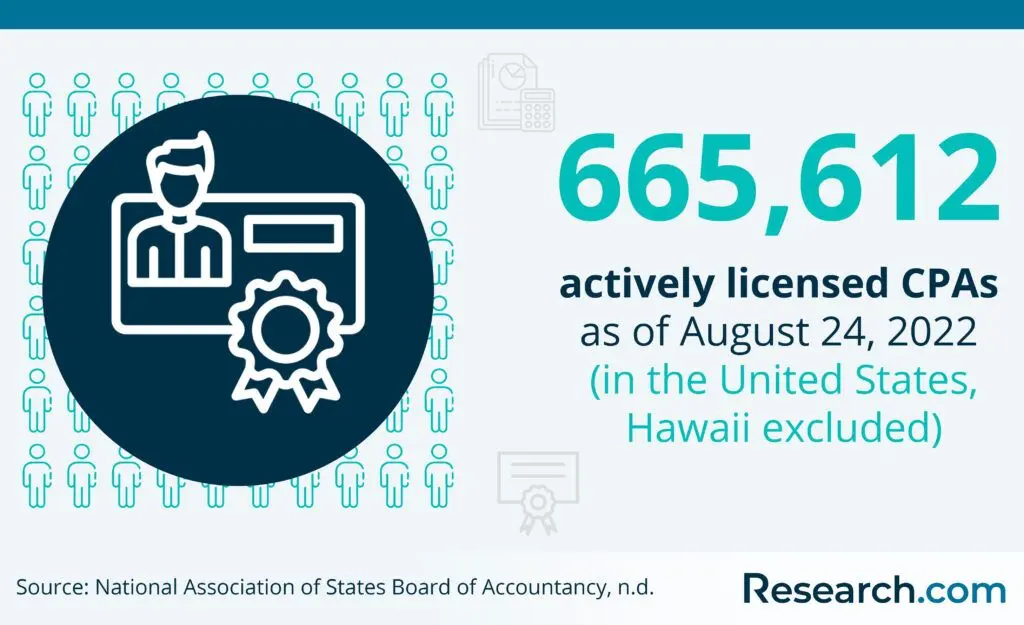
In the United States, Hawaii excluded, there were 665,612 actively licensed CPAs (National Association of States Board of Accountancy, n.d). That makes the CPA one of the most recognized credentials in accounting, but not the only valuable one.
Common certifications include:
- Certified Public Accountant (CPA)
- Chartered Financial Analyst (CFA)
- Certified Management Accountant (CMA)
- Certified Fraud Examiner (CFE)
- Certified Internal Auditor (CIA)
- Certified Information Systems Auditor (CISA)
- Chartered Global Management Accountant (CGMA)
Use this rule of thumb: choose the certification that matches the job you want, not the one with the most name recognition.
The role of internal auditing in financial accounting careers
Internal auditing is one of the most useful specialization options within financial accounting for professionals who want to work closely with risk, compliance, and controls. Internal auditors examine financial and operational processes to identify weaknesses, reduce losses, and improve how organizations function.
This path can be especially valuable for accountants who want broader business exposure. Instead of focusing only on reporting, internal auditors often assess whether systems are working as intended and whether policies are being followed.
That makes internal auditing a strong bridge into leadership roles. Professionals who understand risk management, compliance, and internal controls are often trusted with more strategic responsibilities over time.
If you are considering this specialty, reviewing the auditor job outlook can help you judge long-term demand. The Certified Internal Auditor (CIA) credential can also strengthen your qualifications in this area.
Technology is changing this work as well. Internal auditors increasingly use data analytics and AI-based tools to test controls, identify anomalies, and improve efficiency.
What are the long-term career benefits of a financial accounting degree?
A financial accounting degree can support long-term career growth because it creates access to multiple industries, multiple levels of responsibility, and multiple types of credentials. It is one of the more adaptable business degrees available.
It also provides a foundation for future specialization. You can move into tax, audit, financial analysis, management accounting, forensic accounting, education, or executive finance roles depending on your interests and experience.
If you want to explore broader career value, review what can you do with an accounting degree to compare possible outcomes and education levels.
What are the emerging trends in financial accounting?
Financial accounting is changing quickly. The biggest shifts are being driven by automation, regulation, cloud systems, and sustainability reporting. Students and professionals who understand these changes are better positioned to stay competitive.
- AI and automation: Routine tasks such as data entry, reconciliation, and error checking are increasingly automated. That means accountants are expected to spend more time interpreting data and advising decision-makers. If you are still choosing a school, an affordable online accounting degree can help build both accounting and technology fluency.
- Sustainability and ESG reporting: More organizations now want financial professionals who can track environmental, social, and governance data alongside traditional financial metrics.
- Global compliance: Firms that operate across borders need accountants who understand international standards, tax rules, and reporting requirements.
- Cloud-based systems: Cloud accounting tools have made real-time reporting, remote collaboration, and scalable operations more common across small and large firms.
The key trend for job seekers is clear: accounting roles are becoming more analytical and more technology-driven, not less important.
Is an MBA in accounting worth the investment for career advancement?
An MBA in accounting can be worth the cost if your goal is leadership, finance management, or broader business responsibility. It is most useful for professionals who already have accounting experience and want to move into supervisory or executive work.
The value of the degree depends on several factors: accreditation, program quality, cost, alumni network, and whether the curriculum matches your target role. Before enrolling, compare the program’s practical outcomes against your career timeline.
If you want to research options, start with the MBA in accounting. That can help you evaluate whether the degree matches your long-term goals.
How are economic trends impacting financial accounting careers?
Economic conditions affect hiring, compliance demand, and the types of financial questions businesses need answered. During periods of uncertainty, companies often rely more heavily on accountants to manage risk, review budgets, and maintain accurate reporting.
That makes financial accountants especially valuable when businesses need tighter cost control or better forecasting. At the same time, economic pressure can push employers to look for candidates who can do more than basic bookkeeping. They often want people who understand data, strategy, and regulatory requirements.
For professionals who want to strengthen their adaptability, targeted upskilling and time-efficient graduate study, such as an MBA one year, may help support career mobility.
Can further education transform my financial accounting career?
Yes, but only if the program matches your career goals. Additional education can help you qualify for promotions, enter specialized fields, or compete for leadership roles. It can also deepen your understanding of strategy, regulation, and financial decision-making.
An accelerated online MBA may be a smart choice for professionals who want advancement without spending several more years in school. This option can be especially useful if you already have work experience and need a flexible route to the next level.
The main question to ask is whether the degree adds something your current qualifications do not. If the answer is yes, further education may be a strong investment.
Is an online MBA a strategic choice for financial accounting professionals?
An online MBA can be a practical option for working professionals who need flexibility. It allows you to continue working while building management, strategy, and leadership skills that are useful in accounting-related roles.
Before enrolling, check the school’s accreditation, course design, faculty background, and scheduling format. Also compare the time commitment with the likely career payoff.
Cost matters too. Review the average MBA cost before deciding, and compare it with the type of role you want after graduation. An online MBA is most valuable when it helps you move into a clearly defined next step.
Alternative career options for financial accounting
Not everyone who studies financial accounting stays in the same job title forever. The skills you gain can transfer into other business, investigative, and mission-driven roles.
Based on 30 million profiles, 40% of accountants prefer to work in private, 41% in public, 9% in education, and 8% in government companies (Zippia, n.d.). That distribution shows how flexible the field can be.
Here are a few alternatives that often fit people with accounting training:
What else can a financial accountant do?
- Fraud investigators. These professionals examine suspected fraud, review records, interview relevant people, and report findings that may support legal or internal action.
- Purchasing managers. Purchasing managers oversee buying decisions, vendor relationships, supply needs, and cost control for an organization.
- Fundraising directors. Fundraising directors plan and manage donation strategies for nonprofits and mission-driven organizations, often using financial analysis to support campaign goals.
If you are unsure about staying in accounting, these paths show how transferable your training can be.
Can cross-disciplinary education enhance financial accounting careers?
Yes. Accounting becomes more valuable when paired with knowledge from another field. A stronger understanding of operations, healthcare, finance, information systems, or management can help you interpret numbers in a real business context.
That is especially useful in industries with specialized regulations or complex operations. For example, combining accounting knowledge with an accelerated healthcare administration online degree can prepare you to support healthcare organizations where financial decisions affect both compliance and patient services.
Cross-disciplinary education is most useful when it helps you work in a specific industry better than a generalist candidate can.
Which financial accounting roles command the highest pay?
The highest-paying financial accounting roles are usually the ones that combine technical expertise, leadership responsibility, and business strategy. In many cases, advanced credentials and several years of experience are required.
Common high-pay pathways include CFO roles, senior executive positions, senior partner roles in public accounting, and specialized roles such as financial analyst, financial examiner, or internal auditor. For a broader view of related roles, see the highest paying accounting jobs.
If salary is your main goal, compare not just pay but also entry requirements, competition, stress level, and advancement timeline.
How do financial accounting salaries differ by region?
Location can have a major impact on accounting pay. Salaries often rise in major financial centers, but so can living costs. In lower-cost regions, pay may be slightly lower while overall affordability is better.
| Region | Example Locations | Typical Pay Pattern | Common Industry Drivers |
| Northeast | New York City, NY; Boston, MA | Often higher due to concentrated finance and corporate demand | Banking, consulting, public accounting, corporate finance |
| West Coast | San Francisco, CA; Los Angeles, CA | Often strong compensation, especially in specialized industries | Technology, entertainment, startups |
| Midwest | Chicago, IL; Minneapolis, MN | Competitive pay with generally lower living costs than coastal hubs | Finance, manufacturing, corporate headquarters |
| Southern United States | Houston, TX; Atlanta, GA | Solid compensation with strong opportunities in major growth sectors | Energy, healthcare, technology |
| International Locations | London, United Kingdom; Dubai, UAE; Sydney, Australia | Pay varies widely by country, tax structure, and employer type | Global finance, multinational corporations, regional headquarters |
Examples by region
- New York City, NY: Accountants and auditors often earn above-average salaries because of the city’s role in global finance. Senior roles such as CFOs may earn between $170,000 and $250,000.
- Boston, MA: This market supports strong demand for accountants, with salaries commonly ranging from $85,000 to $120,000 depending on experience.
- San Francisco, CA: Accountants may earn around $110,000, with senior professionals such as controllers or CFOs earning $180,000 or more.
- Los Angeles, CA: The average salary is around $85,000, and the entertainment industry can create specialized accounting opportunities.
- Chicago, IL: Average accountant salaries are around $85,000, with senior roles often exceeding $150,000.
- Minneapolis, MN: Average pay is around $75,000, but the lower cost of living may improve overall value.
- Houston, TX: Average salaries are around $90,000, with energy-sector leadership roles often exceeding $150,000.
- Atlanta, GA: Average salaries are approximately $80,000, with growing demand in healthcare and tech.
- London, United Kingdom: Accountants often earn an average salary of £60,000 to £80,000, while senior finance leaders may earn well over £150,000 annually.
- Dubai, UAE: Financial accountants may earn from $70,000 to $100,000, with senior professionals sometimes reaching upward of $200,000.
- Sydney, Australia: Financial accountants earn an average salary of AU$85,000 to AU$110,000, and senior executives may earn over AU$200,000.
When comparing regions, do not focus on salary alone. A lower-paying area can still offer a better quality of life if housing and transportation costs are lower.
How to stay competitive in the evolving financial accounting industry
Financial accounting is still a strong field, but the nature of the work is changing. To stay competitive, professionals need to think beyond traditional bookkeeping and develop skills that support modern business needs.
- Build technology fluency. Learn how accounting platforms, automation tools, cloud systems, and data analytics are used in real workplaces.
- Earn relevant certifications. Choose credentials that match your target role, whether that is CPA, CMA, CIA, CFE, CFA, CISA, or CGMA.
- Track regulatory updates. Tax changes, reporting standards, and compliance rules affect daily accounting work.
- Specialize strategically. Focus on areas such as fraud investigation, tax, internal audit, or financial analysis if you want to stand out.
- Keep learning. Flexible online education can support career growth without requiring you to leave the workforce.
- Strengthen communication. Accountants who can explain financial data to non-financial leaders are often more valuable than those who only understand the numbers.
- Network with purpose. Professional associations, webinars, and industry groups can create job leads and mentoring opportunities.
If you are considering additional training, the cheapest online finance degree option may be worth comparing with accounting-focused graduate programs, especially if you want a broader finance role.
How do ethics and regulatory compliance impact financial accounting careers?
Ethics and compliance are central to financial accounting. Employers rely on accountants to tell the truth through numbers, protect sensitive data, and follow laws and reporting standards. A lapse in judgment can damage a company’s reputation, create legal exposure, and weaken trust with investors or regulators.
That is why compliance knowledge is not optional. Financial accountants are often expected to understand reporting rules, internal controls, and industry-specific requirements. Strong ethical judgment helps prevent fraud, reduces reporting errors, and supports transparent decision-making.
If you want more context on how broader economic thinking supports this work, an affordable online bachelors in economics degree can add useful perspective on markets, policy, and regulation.
Questions to ask before choosing a financial accounting program
- Is the program properly accredited?
- Will this degree or certificate meet the licensing or CPA requirements in my state?
- What kinds of internships, practicums, or employer partnerships does the school offer?
- How many graduates move into accounting jobs within a reasonable time after finishing?
- Does the curriculum include current accounting software, data tools, and AI-related workflow training?
- Can I transfer credits later if I decide to continue to a bachelor’s or master’s degree?
- What will the total cost be after tuition, fees, books, and exam preparation?
- Is the format flexible enough for my work and family schedule?
Common mistakes to avoid
- Choosing a program without checking accreditation.
- Assuming every online degree automatically satisfies licensure rules.
- Looking only at tuition and ignoring fees, time, and exam costs.
- Believing salary estimates are guaranteed outcomes.
- Ignoring the software and data skills employers now expect.
- Assuming a certificate has the same career power as a degree.
- Picking a certification that does not match your intended job path.
Who should pursue financial accounting, and who should consider another path?
Financial accounting may be a strong fit if you: like structured work, enjoy numbers and accuracy, want a career with multiple advancement routes, and are comfortable learning business software and compliance rules.
You may want a different path if you: prefer highly creative work, dislike routine tasks, avoid detail-heavy responsibilities, or want a career that does not involve reporting and regulation.
If you are still uncertain, start with a certificate or associate’s degree, then decide whether a bachelor’s degree or specialization makes sense after you gain exposure to the field.
Secure a future beyond the ledger with financial accounting careers
Financial accounting is more than recordkeeping. It is a career field built around accuracy, business insight, compliance, and long-term organizational stability. That makes it useful for people who want dependable work and room to grow.
For many learners, the path starts with an associate’s or bachelor’s degree and leads to entry-level accounting work. For others, graduate study and certifications create opportunities in management, specialized analysis, or executive finance. The right route depends on how quickly you want to enter the field and how far you want to go.
Accounting degree job opportunities can range from clerical roles to senior leadership positions. With continued education and strong professional skills, you can move into higher-responsibility positions over time.
Organizations of every size still need people who can safeguard revenue, manage expenses, and support reliable reporting. That is why financial accounting continues to be a meaningful career choice for students and professionals who want both stability and advancement potential.
Key Insights
- Financial accounting is a flexible career path. It can lead to work in private accounting, public accounting, teaching, consulting, internal audit, financial analysis, and executive finance.
- Education level affects both access and earnings. Certificates can help you enter the field, associate’s degrees can support entry-level roles, and bachelor’s degrees usually open more doors.
- Skills matter as much as credentials. Employers want accounting software knowledge, analytical ability, attention to detail, organization, and technology fluency.
- Growth often comes from specialization. Certifications and graduate study can help you move into higher-paying or more advanced roles, but only when they fit your career plan.
- Technology is reshaping the profession. AI, automation, and cloud tools are changing how accounting work is done, which makes digital literacy increasingly important.
- Always evaluate accreditation, licensure rules, and total cost before enrolling. These factors can matter more than rankings or marketing claims when you are choosing a program.
References:
- Fortune Business Insights. (2024). Accounting services market size, share | Growth report. https://www.fortunebusinessinsights.com/accounting-services-market-114727
- Grand View Research. (2024, May). U.S. accounting services market size & share analysis report, 2024–2030. https://www.grandviewresearch.com/industry-analysis/us-accounting-services-market
- National Association of States Board of Accountancy. (n.d). How Many CPAs Are There? https://nasba.org/licensure/howmanycpas
- QuickBooks. (2024). 2024 accountant perspectives report. https://quickbooks.intuit.com/accountants/trends/report/
- Sage. (2024). AI in accounting: 2024 adoption report. https://www.sage.com/en-us/accounting-ai-report/
- U.S. Bureau of Labor Statistics. (2024, September). Budget analysts. Occupational Outlook Handbook. https://www.bls.gov/ooh/business-and-financial/budget-analysts.htm
- U.S. Bureau of Labor Statistics. (2024, September). Financial analysts. Occupational Outlook Handbook. https://www.bls.gov/ooh/business-and-financial/financial-analysts.htm
- U.S. Bureau of Labor Statistics. (2025, September). Occupational outlook handbook. https://www.bls.gov/ooh/
- U.S. Bureau of Labor Statistics. (2025, September). Accountants and auditors. Occupational Outlook Handbook. https://www.bls.gov/ooh/business-and-financial/accountants-and-auditors.htm
- Zippia. (n.d.). What is an Accountant? https://www.zippia.com/accountant-jobs
Other Things You Should Know About Financial Accounting Careers
Financial accountants can explore various alternative career options, such as financial advisory, management accounting, or forensic accounting. These roles allow for skill specialization and offer diverse opportunities for career growth, often requiring additional certifications or training to transition effectively.
Key skills for a financial accounting career include familiarity with accounting software, strong computation and analytical skills, attention to detail, organizational skills, and technological literacy.
Beneficial certifications for financial accountants include Certified Public Accountant (CPA), Chartered Financial Analyst (CFA), Certified Management Accountant (CMA), Certified Fraud Examiner (CFE), Certified Internal Auditor (CIA), and Certified Information Systems Auditor (CISA).
In 2027, technological integration reshapes financial accounting by automating repetitive tasks with AI and machine learning, improving data analysis accuracy. Accountants increasingly focus on strategic planning and advisory roles, emphasizing the need for tech-savvy skills to leverage new tools effectively. This shift enhances efficiency but requires ongoing education to stay current.
Yes, a certificate in accounting can qualify you for entry-level positions such as accounting clerk, accounting assistant, bookkeeper, or accounting associate. However, higher-level positions typically require a degree and additional certifications.
The job outlook for financial accountants is positive, with an expected 6% growth for accountants and auditors from 2021 to 2031. Financial analysts and other specialized roles also show strong demand, with financial examiners expected to grow by 21%.
In 2027, financial accounting offers diverse advancement opportunities. Financial accountants can progress to roles such as Senior Accountant, Financial Analyst, or Controller. Further up, positions like Chief Financial Officer (CFO) are attainable. Gaining certifications like CPA or CMA enhances prospects, as does acquiring expertise in technological tools and data analysis.