2027 How to Become an Accountant: Salary and Career Paths

Co-Founder and Chief Data Scientist
Becoming an accountant is a practical career choice for people who want to work with financial records, taxes, audits, business decisions, and compliance. The role matters because every organization, from a small local company to a large public enterprise, depends on accurate financial information. Small businesses typically require three to four accounting staff (G3CFO, 2024), mid-sized firms with $500 million in revenue may need between 23 and 39 finance employees (Finance Market Research, 2024), and large enterprises often employ 45.5 to 78.6 full-time equivalents per $1 billion in revenue (Finance Market Research, 2024).
For most aspiring accountants, the starting point is a bachelor’s degree in accounting, business, finance, or a closely related field. Students who need flexibility can consider an affordable online business degree with accounting coursework, especially if they are working, changing careers, or trying to reduce relocation costs. Some accountants stop at entry-level or staff roles, while others pursue Certified Public Accountant (CPA) licensure to qualify for audit, tax, public accounting, and senior finance positions.
Quick Answer: How Do You Become an Accountant?
To become an accountant, you usually need a bachelor’s degree in accounting or a related business field, hands-on experience through internships or entry-level work, and strong skills in financial reporting, tax rules, bookkeeping, accounting software, and data analysis. If you want to become a CPA, most states require 150 semester hours of accounting coursework, a minimum of 2,000 hours of experience, passing scores on the Uniform CPA Exam, and, in some states, an ethics exam.
| Step | What It Involves | Why It Matters |
| Earn a bachelor’s degree | Complete accounting, finance, business, auditing, tax, and information systems coursework. | Most accounting jobs require at least a bachelor’s degree. |
| Gain experience | Complete an internship or start in a staff accountant, junior auditor, tax associate, or bookkeeping role. | Employers value applied experience with real financial records, deadlines, and software. |
| Decide whether to pursue CPA licensure | Meet state education, experience, exam, and ethics requirements. | CPA licensure can expand opportunities in public accounting, audit, tax, and leadership roles. |
| Build technical and soft skills | Develop accounting software, Excel, tax, communication, organization, and analytical skills. | Technology is changing accounting work, but employers still need professionals who can interpret and explain financial information. |
| Continue learning | Maintain credentials, complete continuing education, or pursue graduate study. | Tax rules, reporting standards, technology, and employer expectations keep changing. |
How to Become an Accountant: 2027 Salary and Career Paths Table of Contents
- Earn an Accounting or Business Bachelor’s Degree
- Complete an Internship or Start in an Entry-Level Accounting Role
- Decide Whether a Master’s Degree Makes Sense
- Prepare for CPA Licensure
- Compare Accounting Career Paths and Advancement Options
- Explore Online Accounting Degree Options
- Choose Beginner-Friendly Accounting Certifications
- Use an Online Accounting Degree to Support Career Growth
- Identify Higher-Paying Accounting Roles
- Use Accounting Skills for Social Impact Review salary-focused roles
- Consider Whether Actuarial Work Fits Your Strengths
- Find Professional Associations for Accountants
- Evaluate Advanced Finance Degrees
- Assess Non-Traditional Degrees for Accounting Careers
- Plan for Continuing Education
- Compare Degree Costs and Financial Aid Options Review continuing education requirements
What Is an Accountant?
An accountant records, organizes, analyzes, and reports financial information for individuals, companies, nonprofit organizations, government agencies, and other entities. The job is not limited to “doing the books.” Accountants help leaders understand cash flow, prepare reports, comply with tax and reporting rules, review financial risks, and make better operational decisions. Students comparing accounting degree opportunities should look closely at whether a program teaches both technical accounting and business decision-making.
- Reconciling bank statements and account balances
- Preparing financial statements, reports, budgets, and supporting schedules
- Reviewing payroll, billing, accounts payable, and accounts receivable processes
- Helping clients or managers understand financial results
- Identifying errors, fraud risks, weak controls, or unusual transactions
- Supporting tax preparation, tax planning, and regulatory compliance
CPA licensure can expand what an accountant is allowed to do. CPAs may complete work that non-CPAs cannot perform in certain contexts, including filing reports with the Securities and Exchange Commission (SEC), auditing public companies, and acting as fiduciaries. Accountants also work across many industries. In a 2024 report, 23% were employed in accounting, tax preparation, bookkeeping, and payroll services, 8% were employed in government, 8% in finance and insurance, 6% in management of companies and enterprises, and 5% were self-employed (U.S. Bureau of Labor Statistics, 2025).
Required Skills for Accountants
Accounting requires more than comfort with numbers. Employers increasingly expect accountants to combine technical accuracy, software fluency, judgment, and the ability to explain financial information to people who do not work in accounting. The best preparation includes both classroom learning and repeated practice with real or realistic financial records.
Technical Skills
- Mathematics and quantitative reasoning. Accountants do not need to be theoretical mathematicians, but they must be accurate with calculations, percentages, ratios, reconciliations, estimates, and financial analysis. Coursework in statistics or calculus can also help students who want to move into analytics, finance, or risk-focused roles.
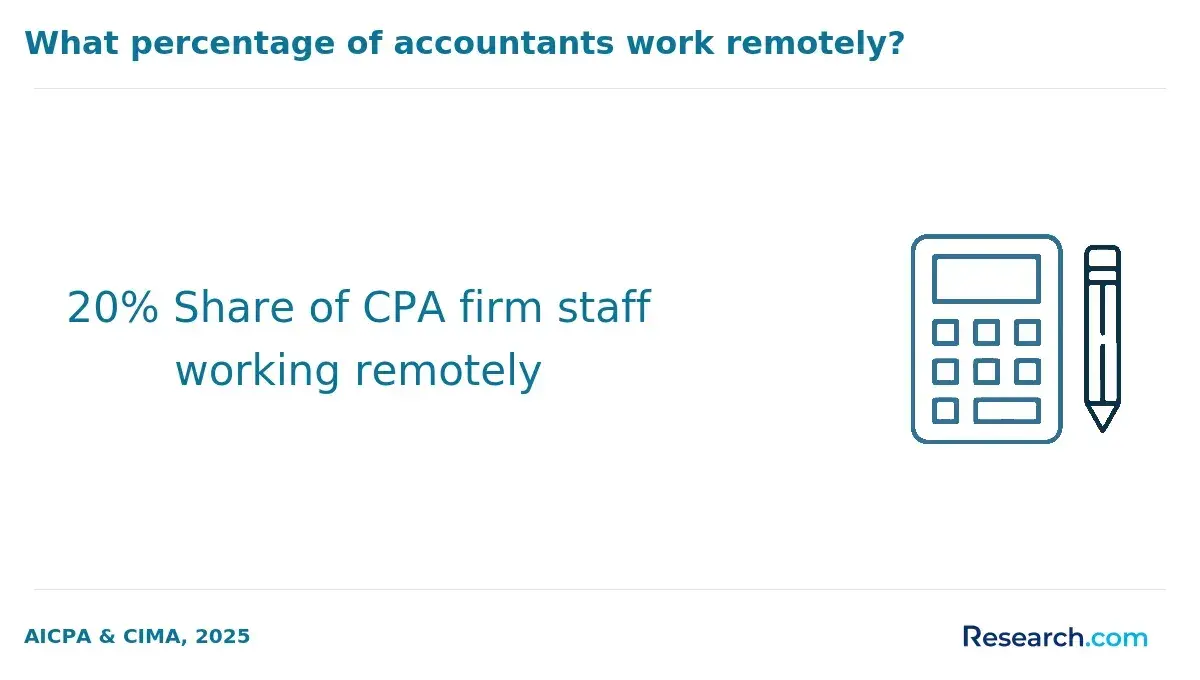
- Accounting software and computer literacy. Technology is now central to accounting work. In one study, 95% of accountants report that automation has improved the quality of their client services (Intuit QuickBooks, 2025), and 81% state that AI has positively affected productivity by giving them more time for client assistance. Future accountants should become comfortable with spreadsheets, enterprise systems, cloud accounting tools, automation features, and basic data workflows.
- Bookkeeping, financial reporting, and auditing. Accountants need to understand how transactions move through ledgers, how financial statements are prepared, and how records are checked for accuracy. Auditing adds another layer: evaluating evidence, testing controls, and forming an independent view of whether financial information is reliable.
- Tax knowledge and compliance awareness. Accountants often work with federal, state, and local tax rules. Understanding how tax laws apply to businesses or individuals can support tax planning, filing, and risk management. Students interested in regulatory systems may also find value in legal or policy coursework, including related options such as online criminal justice programs.
Soft Skills
- Communication. Accountants must translate complex financial details into clear recommendations for clients, executives, managers, auditors, regulators, or board members. Strong writing and presentation skills can set candidates apart.
- Organization and attention to detail. Accounting work involves deadlines, documents, reconciliations, supporting evidence, and compliance requirements. Missing a detail can affect tax filings, audits, budgets, or management decisions.
- Analytical and critical thinking. Accountants often need to investigate why numbers changed, identify unusual patterns, test assumptions, and recommend solutions. This is especially important as routine tasks become more automated.
- Collaboration. Accounting teams work with operations, sales, human resources, technology, legal, executives, and outside advisors. Collaboration helps accountants understand the business context behind the numbers.
| Skill Area | Why Employers Value It | How to Build It |
| Financial reporting | Supports accurate statements, audits, budgets, and management decisions. | Take intermediate accounting, auditing, and financial statement analysis courses. |
| Taxation | Helps organizations comply with rules and plan responsibly. | Complete tax coursework, volunteer in tax clinics, or work in seasonal tax roles. |
| Accounting technology | Improves efficiency and reduces manual processing. | Practice with spreadsheets, accounting systems, data tools, and automation features. |
| Communication | Turns financial data into usable business advice. | Practice writing memos, presenting findings, and explaining reports to non-accountants. |
| Ethical judgment | Protects clients, employers, investors, and the public. | Study professional ethics, internal controls, fraud cases, and reporting responsibilities. |
How to Become an Accountant: A Step-by-Step Guide
The accounting path can be straightforward, but the right route depends on your goal. A person who wants a corporate staff accounting job may not need the same credentials as someone who wants to audit public companies, lead tax engagements, become a controller, or eventually serve as CFO. Use the steps below to plan your education, experience, and credential choices.
Earn an Accounting or Business Bachelor’s Degree
In 2024, a total of 55,152 accounting degrees were awarded in the United States (AICPA, 2025). A bachelor’s degree in accounting is the most direct route, but students may also consider finance, economics, business management, or business administration if they include enough accounting coursework for the intended role. Comparing finance and accounting degree similarities and differences can help clarify the decision: finance usually emphasizes investment, valuation, capital markets, and financial strategy, while accounting focuses more heavily on reporting systems, controls, taxes, audits, and compliance.
| Degree Path | Best For | Potential Limitation |
| Accounting bachelor’s degree | Students who want staff accountant, auditor, tax, CPA, or corporate accounting roles. | May feel specialized if you later want a broader business path. |
| Finance degree | Students interested in analysis, investments, corporate finance, or financial planning. | May require extra accounting courses for CPA eligibility. |
| Business administration or management degree | Students who want a broad business foundation with accounting exposure. | May not provide enough depth for technical accounting positions. |
| Economics degree | Students interested in markets, policy, forecasting, or analytical roles. | Usually needs additional accounting coursework for accounting-specific jobs. |
Complete an Internship or Start in an Entry-Level Accounting Role
Internships give students a practical view of month-end close, audit documentation, tax preparation, reconciliations, client communication, and accounting software. Graduates who already meet employer requirements can also apply directly for junior roles, such as accounting assistant, staff accountant, tax associate, payroll specialist, accounts payable specialist, accounts receivable specialist, or audit associate. The goal is to move from classroom knowledge to workplace judgment.
Early experience also helps you decide what kind of accountant you want to become. Tax work, audit work, corporate accounting, nonprofit accounting, government accounting, and forensic accounting can feel very different day to day. Exposure before graduation can prevent costly career mismatches.
Decide Whether a Master’s Degree Makes Sense
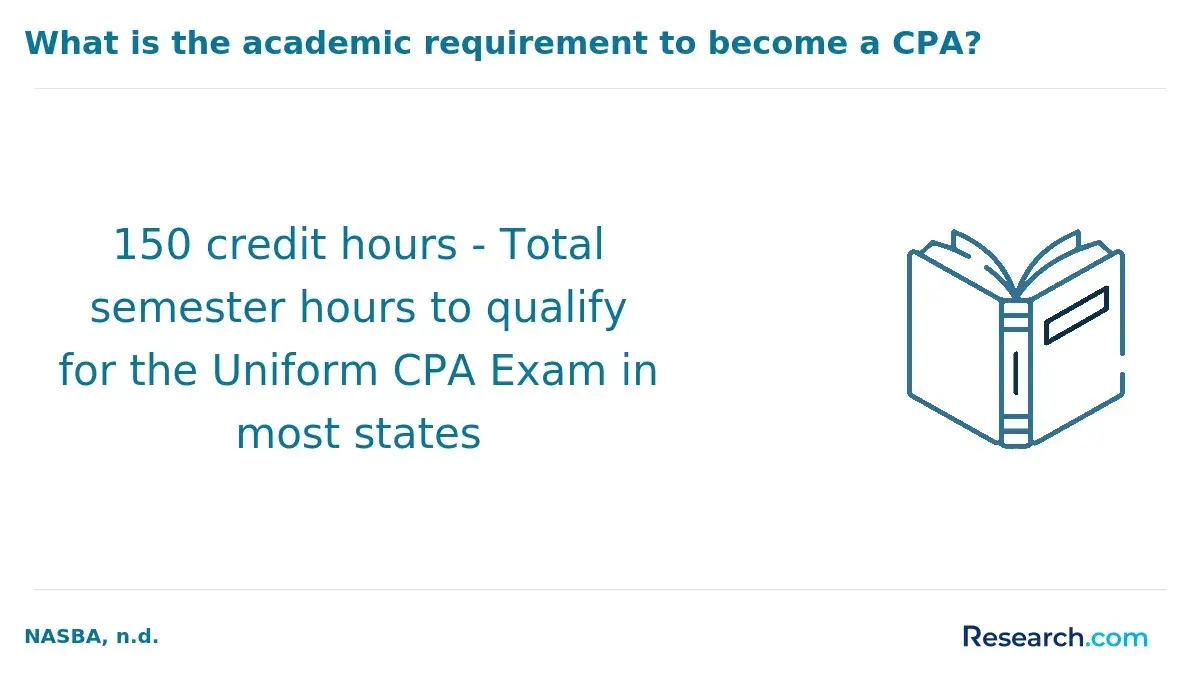
Most states require CPAs to earn 150 semester hours of accounting coursework (American Institute of Certified Public Accountants, n.d.). Some students meet this requirement through a five-year undergraduate accounting program worth 150 credit hours, while others complete a master’s degree in accounting, taxation, business, finance, or a related discipline. A master’s degree is not automatically necessary for every accounting career, but it can be useful if you need additional credits, want specialized training, or are aiming for CPA-focused roles.
Specializations may include public accounting, corporate accounting, managerial accounting, taxation, auditing, forensic accounting, or information systems. Some professionals also combine accounting with public-sector or policy training, including an online master’s in public policy, when they want to work in government, regulation, nonprofit finance, or public administration.
| Option | When It Makes Sense | What to Check Before Enrolling |
| Five-year accounting program | You want a structured route to 150 credit hours. | Confirm the program meets your state board’s CPA coursework rules. |
| Master’s in accounting | You want advanced accounting depth and CPA-aligned preparation. | Review accreditation, CPA pass support, cost, and employer recruiting relationships. |
| MBA or business graduate degree | You want broader management, leadership, or executive preparation. | Make sure you will still meet accounting-specific course requirements if CPA licensure is the goal. |
| Graduate certificate | You only need targeted coursework or additional credits. | Ask whether the credits count toward CPA eligibility in your state. |
Prepare for CPA Licensure
CPA requirements vary by state, so applicants should verify rules before choosing courses or paying exam fees. In addition to education requirements, CPA candidates must typically complete a minimum of 2,000 hours of experience. They must also pass the Uniform CPA Exam, which now includes three core sections: Auditing and Attestation, Financial Accounting and Reporting, and Regulation. Candidates also choose one discipline section from Business Analysis and Reporting, Information Systems and Controls, or Tax Compliance and Planning.
Exam takers must complete the four sections within 18 months and earn a minimum score of 75 in each section. Some states require an additional ethics examination. Before applying, review the National Association of State Boards of Accountancy state boards directory so you understand the rules for your jurisdiction.
CPA costs also differ by state. Researching CPA exam costs and certification requirements can help you budget realistically. If you are not ready for CPA licensure, a bookkeeping credential may be a shorter starting point; however, becoming a certified bookkeeper is not the same as becoming a CPA and may lead to different responsibilities.
| CPA Requirement | What Candidates Should Know |
| Education | Most states require 150 semester hours of accounting coursework. |
| Experience | Candidates must complete a minimum of 2,000 hours of experience. |
| Exam | The Uniform CPA Exam includes three core sections and one selected discipline section. |
| Passing score | Candidates must earn at least 75 on each section. |
| Testing window | The four sections must be completed within 18 months. |
| State-specific rules | Some states require an ethics exam or additional conditions. |
Career Opportunities and Growth Paths
Accounting can lead to many roles because financial information is used in nearly every sector. Graduates may begin in public accounting firms, corporate finance departments, government agencies, nonprofit organizations, payroll teams, tax practices, or small business accounting offices. Common first jobs include staff accountant, junior auditor, tax associate, accounting assistant, and bookkeeping or payroll roles.
With experience, accountants can move into senior accountant, tax advisor, audit senior, accounting manager, controller, finance director, financial manager, consultant, or CFO roles. Specialization can also shape advancement. For example, someone who enjoys investigations may move toward forensic accounting, while someone who likes planning may focus on tax strategy or managerial accounting.
Accounting is often attractive because it combines structure with mobility. The degree can support traditional accounting careers, but it can also help professionals transition into consulting, entrepreneurship, operations, financial analysis, compliance, or higher education. Students looking for a faster academic route may compare accelerated online accounting degree programs, especially if they already have transfer credits.
| Career Stage | Possible Roles | Typical Focus |
| Entry level | Accounting assistant, staff accountant, tax associate, junior auditor, payroll specialist | Transactions, reconciliations, documentation, tax preparation support, audit testing |
| Mid-career | Senior accountant, audit senior, tax advisor, financial analyst, accounting supervisor | Review work, analyze results, manage deadlines, support process improvements |
| Management | Accounting manager, controller, finance manager, compliance manager | Lead teams, oversee reporting, improve controls, advise leadership |
| Executive or specialized | Finance director, CFO, forensic accounting specialist, consultant, accounting professor | Strategy, governance, investigations, advisory work, teaching, or research |
Online Learning Options for Aspiring Accountants
Online accounting programs can be a strong fit for working adults, parents, military learners, rural students, and anyone who needs scheduling flexibility. A well-designed online program can teach the same core accounting, tax, auditing, business law, and information systems concepts as a campus program. The key is to evaluate quality carefully rather than assuming all online degrees are equal.
Online learning may also help students practice the digital tools now used in accounting offices. Many courses require spreadsheets, accounting systems, virtual collaboration, document sharing, and data-based assignments. Students comparing flexible pathways can also review accessible online college degree options, but they should not choose a program only because it seems easy. Accounting requires accuracy, persistence, and technical depth.
| Online Accounting Degree Factor | What to Ask | Why It Matters |
| Accreditation | Is the institution properly accredited? | Accreditation can affect credit transfer, graduate admission, employer acceptance, and financial aid eligibility. |
| CPA alignment | Does the coursework meet CPA education requirements in your state? | CPA rules vary, and not every program automatically satisfies them. |
| Transfer credit policy | How many previous credits can be accepted? | Generous transfer policies can reduce time and cost. |
| Software exposure | Will you use spreadsheets, accounting systems, or data tools? | Employers expect technology fluency. |
| Career support | Does the school offer internships, recruiting support, exam preparation, or alumni connections? | Career services can be especially important for online students. |
| Total cost | What is the full cost after fees, books, technology charges, and transfer credits? | Tuition alone may not reflect the real price. |
What Are the Best Accounting Certifications for Beginners?
Beginner certifications can help new professionals show commitment, strengthen fundamentals, and qualify for bookkeeping, payroll, tax preparation, or accounting assistant roles. They are most useful when paired with practical skills such as spreadsheets, reconciliations, financial statement basics, and accounting software. Students who are not ready for a full degree can start by comparing certificate in accounting programs.
Choose a certification based on your target job. If you want to handle small business books, prioritize bookkeeping and software skills. If you want to work in tax, look for tax preparation training. If your long-term goal is CPA licensure, make sure short-term certificates do not distract from the credit hours and coursework you ultimately need.
How Can an Online Accounting Degree Propel Career Growth?
An online accounting degree can support career growth when it is accredited, rigorous, and aligned with the student’s goals. For career changers, it can provide the accounting foundation needed to move from administrative, operations, banking, or general business roles into accounting work. For current accounting employees, it can help qualify them for promotion or CPA preparation.
The main advantage is flexibility. Students may be able to keep working while completing courses, which helps them apply what they learn immediately and avoid stepping away from income. However, online learners should be disciplined about deadlines, faculty interaction, networking, and internship opportunities.
What Are the Highest Paying Accounting Jobs?
Higher-paying accounting roles generally require a combination of technical expertise, experience, leadership ability, and sometimes CPA licensure or graduate education. Specialized areas such as forensic accounting, corporate finance analytics, tax advisory work, and executive financial management can command stronger compensation because the responsibilities are more complex. Professionals comparing compensation paths can review more detail on higher-paying accounting jobs and careers.
Salary should not be the only decision factor. A high-paying role may involve long hours, busy-season pressure, travel, client demands, regulatory risk, or management responsibilities. The best accounting path balances income potential with your tolerance for deadlines, detail work, client service, leadership, and specialization.
Can Accountants Combine Financial Expertise with Social Impact?
Yes. Accountants can support social impact by working with nonprofit organizations, public agencies, foundations, community development organizations, healthcare organizations, education institutions, and mission-driven businesses. Their work can improve budgeting, grant reporting, donor transparency, fraud prevention, and long-term financial sustainability.
Some professionals combine accounting with public service, policy, or human services knowledge. Others pursue nonprofit finance roles or advisory work for organizations serving local communities. If graduate study is part of the plan, compare value carefully; this guide to affordable online master’s in accounting options can help students think through cost and flexibility before committing.
Is Pursuing an Actuarial Career a Viable Option for Accountants?
An actuarial career can be a good alternative for accounting students who enjoy advanced mathematics, probability, statistics, risk modeling, and long-term financial forecasting. The work is different from traditional accounting because actuaries focus more on quantifying risk, often in insurance, pensions, finance, and related fields. If you are considering this route, review the steps for how to become an actuary before switching academic or career plans.
This path is best for people who want more quantitative modeling and are prepared for a demanding exam process. It may not be ideal for students who prefer financial reporting, tax, audit, client advisory work, or business operations.
What Are the Key Professional Associations for Accountants?
Professional associations can help accountants stay current, meet peers, find mentors, access continuing education, and understand changes in regulation, technology, and employer expectations. They can be especially helpful for students and early-career professionals who are still deciding between tax, audit, government, corporate accounting, and advisory work.
Membership is most valuable when you actively use the resources. Attend webinars, join student chapters, ask about mentorship, read technical updates, and compare certification guidance. Professionals focused on public accounting should also review CPA certification requirements so they understand the education, exam, and experience steps.
Should Accountants Pursue an Advanced Finance Degree?
An advanced finance degree can make sense for accountants who want to move toward corporate finance, investment analysis, treasury, financial planning and analysis, risk management, or executive decision-making. It can broaden a professional’s view beyond reporting historical results and into forecasting, capital decisions, market risk, valuation, and strategic finance.
However, it is not necessary for every accountant. Before enrolling, compare the cost, time commitment, employer support, and expected career benefit. If flexibility and cost are priorities, review options such as an affordable online master’s in finance.
How Can a Non-Traditional Degree Enhance an Accounting Career?
A non-traditional degree can be useful when it adds industry knowledge or leadership perspective to accounting expertise. For example, an accountant working with sports organizations, athletic departments, event companies, or recreation businesses may benefit from understanding sports management, operations, marketing, and revenue models. Students interested in that combination can compare affordable online bachelor’s degree programs in sports management.
The key is relevance. A second degree should solve a clear career problem, such as entering a specific industry, moving into leadership, strengthening client credibility, or developing a specialized advisory niche. Otherwise, targeted certificates or experience may offer a better return.
Plan for Continuing Education
CPAs must complete 120 hours of continuing professional education (CPE) every three years to maintain licensure (AICPA, n.d.). CPE can include self-study, group study, webinars, conferences, technical courses, ethics training, and other approved learning formats. Requirements can vary by state, so CPAs should track credits carefully and confirm what their board accepts.
Some accountants also pursue doctoral study. Meeting the requirements for PhD programs may be appropriate for professionals who want to teach accounting at the college level, conduct research, or contribute to academic work. For most practicing accountants, however, targeted CPE, certifications, and specialized training are more practical than a doctorate.
Accountant Salary and Career Outlook
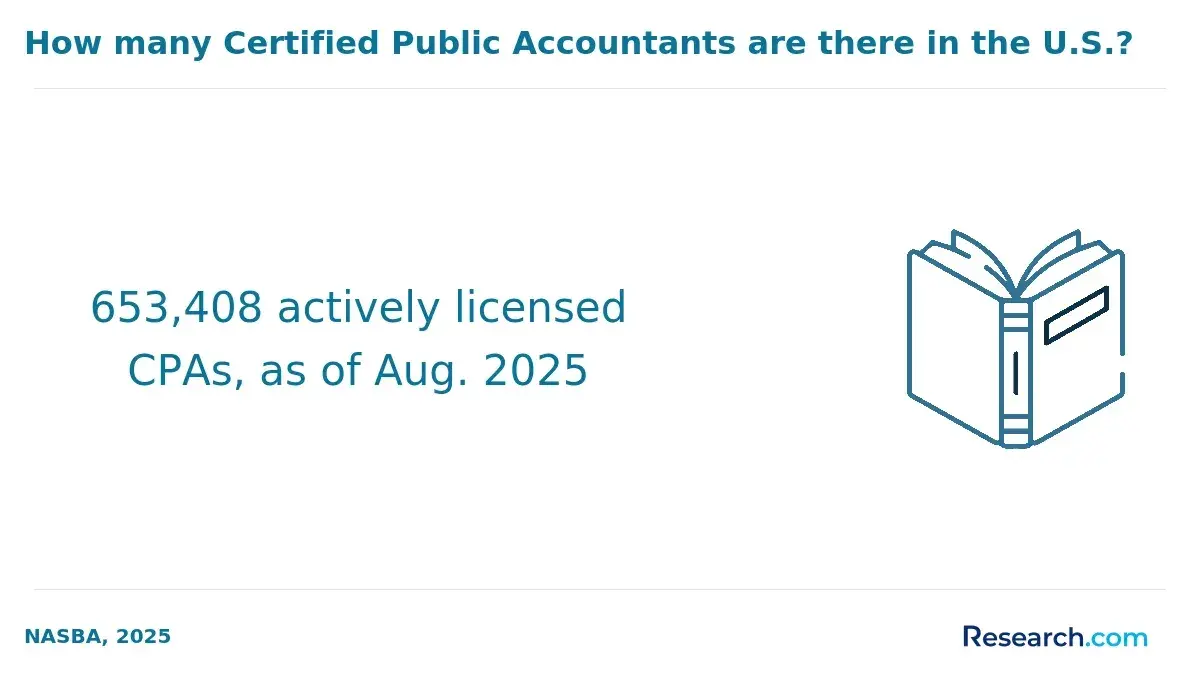
According to U.S. Bureau of Labor Statistics data cited for 2025, the annual average accountant salary in May 2024 was $88,500. Salary.com reports that the 2025 median pay for a CPA typically ranges from $85,000 to $350,000 (Salary.com, 2025). Actual pay depends on location, employer, industry, experience, education, specialization, and CPA status. For example, CPA salary in California can be relatively high because California is considered one of the top-paying states.
The career outlook remains positive, although the work is changing. The overall employment of accountants and auditors is projected to grow 5% from 2024 to 2034, with about 130,000 openings for these roles each year during that period (U.S. Bureau of Labor Statistics, 2026). At the same time, accounting is identified as a profession undergoing transformation (World Economic Forum, 2025). Automation and AI are likely to reduce some manual tasks, but they also increase the need for accountants who can verify data, interpret results, advise clients, manage controls, and apply professional judgment.
A 2025 study titled “Transforming Accounting Education: Integrating Technological, Soft and Research Skills in Education” proposes an updated framework that incorporates generative AI, data stewardship, and real-time financial data analysis to help accounting schools prepare students for a more digital profession (Mohd Fadhil et al., 2025).
- : "“Future accountants need to be able to understand the uses and limitations of digital technologies in the broader business context and not just limited to the accounting function… [F]uture accountants need to possess a balance of skills and a growing importance of soft skills. Soft skills are seen as paramount in helping accountants to be successful in the future of work where higher cognitive skills are valued. Also, in the context of global and local citizenship that becomes central to the society and economy, future accountants need to be introduced to the concepts of inclusivity and sustainability.""
The same work, published in Accounting Education, adds: “More broadly, the analysis of the reports identifies an implied expectation about the transformation of the accounting profession and the role of future accountants in it. The ability of accountants to embrace digital technologies and use soft skills will not only affect their employability but also plays a key role in the transformation of the accounting function from being transaction-based to become value-adding."
| Career Factor | Current Takeaway |
| Average salary | The annual average accountant salary in May 2024 was $88,500. |
| CPA pay range | The 2025 median pay for a CPA typically ranges from $85,000 to $350,000. |
| Projected growth | Employment of accountants and auditors is projected to grow 5% from 2024 to 2034. |
| Annual openings | About 130,000 openings are projected each year within that period. |
| Technology impact | Automation and AI are changing tasks, but they increase the importance of analysis, controls, ethics, and advisory skills. |
Alternative Career Options for Accountants
An accounting degree can lead beyond traditional accounting roles. Some graduates use their financial training in investigations, business ownership, journalism, education, consulting, compliance, or analytics. The best alternative path depends on whether you prefer numbers, writing, teaching, entrepreneurship, public service, or investigative work.
Fraud Investigation Officers: $64,793
Fraud investigation officers review allegations of financial wrongdoing by collecting evidence, analyzing records, interviewing people, and determining whether suspicious activity occurred. They need knowledge of financial laws, regulations, documentation standards, and investigative methods. Some work with law enforcement agencies, legal teams, or compliance departments and may support court proceedings through reports or testimony.
Entrepreneurs: $66,319
Accounting graduates can use their financial knowledge to start or manage businesses. Entrepreneurs oversee daily operations, customer relationships, staffing, inventory, quality control, pricing, cash flow, and growth strategy. Accounting knowledge can be especially valuable for budgeting, tax planning, financing decisions, and evaluating whether a business idea is financially sustainable.
Financial Journalists: $71,288
Financial journalists report on business, markets, companies, investments, currencies, commodities, and economic trends. Accounting knowledge can help them interpret financial statements, evaluate company performance, and ask stronger questions when interviewing executives, economists, government officials, or industry experts.
Accounting Professors: $134,201
Accounting professors teach college students, conduct research, advise learners, serve on academic committees, and may consult with organizations. These roles typically require a doctoral degree, particularly for full-time university faculty positions. This path is best for accountants who enjoy teaching, writing, research, and long-term academic development.
| Alternative Role | Best Fit For | Accounting Skills That Transfer |
| Fraud investigation officer | People who enjoy research, evidence, compliance, and investigations. | Auditing, controls, documentation, financial analysis, regulatory awareness. |
| Entrepreneur | People who want to build or manage a business. | Budgeting, cash flow, tax planning, cost control, financial decision-making. |
| Financial journalist | People who enjoy writing, markets, interviews, and public communication. | Financial statement interpretation, business analysis, economic context. |
| Accounting professor | People interested in teaching, research, and academic leadership. | Accounting theory, technical expertise, research, communication. |
Is Becoming an Accountant Worth It?
Becoming an accountant can be worth it for students who want a stable business career with clear skill requirements, multiple industries to choose from, and advancement options through experience, CPA licensure, or graduate study. The profession is not the right fit for everyone, though. Accounting involves deadlines, detailed documentation, ethical responsibility, and ongoing learning.
Students who want broad business preparation can start with an on-campus or online business degree program and add accounting coursework. Students who already know they want audit, tax, reporting, or CPA-focused roles should choose a dedicated accounting program and verify CPA alignment early. Location can also shape options; for example, students can compare regional pathways such as the best accounting schools in NC.
Common Mistakes to Avoid
- Choosing a program without checking accreditation. Accreditation can affect financial aid, transfer credits, graduate school options, and employer confidence.
- Assuming every accounting degree meets CPA requirements. CPA rules vary by state, and students should confirm coursework and credit-hour requirements before enrolling.
- Looking only at tuition. Fees, books, technology costs, commuting, relocation, lost wages, and exam preparation can change the total cost.
- Ignoring internships. Classroom performance matters, but employers often prefer candidates who have already worked with accounting records, deadlines, and software.
- Waiting too long to learn technology. Automation, AI, and cloud accounting tools are now part of the profession. Students should build software and data skills early.
- Assuming salary outcomes are guaranteed. Pay varies by location, industry, role, experience, CPA status, and employer.
- Choosing a graduate degree without a clear purpose. A master’s degree can help with CPA credits or specialization, but it should align with a specific career goal.
Cost Considerations and Financial Aid Options
An accounting degree is an investment, so students should compare total cost, not just advertised tuition. Costs can differ by institution type, state residency, online or campus format, transfer credits, course load, technology fees, books, and whether the student can keep working while enrolled.
- Bachelor’s degree: On average, in-state tuition for public four-year institutions offering accounting programs is around $11,600 per year, while out-of-state tuition can exceed double that amount, nearing $27,100. Online programs may be less expensive in some cases. An affordable online accounting degree usually ranges from $10,000 to $20,000.
- Master’s degree: A master’s degree in accounting can support CPA preparation or specialization, but it adds cost. Graduate tuition can range from $20,000 to over $50,000 per year, depending on the program and institution.
Financial Aid Opportunities
- Federal grants and loans: Federal Student Aid resources explain options such as Pell Grants and Stafford Loans, which may be awarded based on eligibility and financial need.
- State grants and scholarships: Some states provide financial support for students pursuing accounting or business degrees. Students should check their state higher education agency for current programs.
- Institutional scholarships: Colleges and universities may offer merit-based, need-based, transfer, adult learner, military, or program-specific scholarships.
- Employer tuition support: Working students should ask whether their employer offers tuition reimbursement, exam fee support, or paid study time for accounting credentials.
| Question to Ask Before Enrolling | Why It Matters |
| Is the school accredited? | Accreditation affects credibility, aid eligibility, and transfer options. |
| Will the program meet CPA requirements in my state? | Not all accounting programs automatically satisfy state board rules. |
| How many credits can I transfer? | Transfer credits can reduce both time and cost. |
| What is the total cost after fees? | Tuition alone may understate the real price. |
| Does the program offer internships or career support? | Career services can improve access to entry-level roles. |
| Are courses offered in a format I can realistically complete? | Flexibility matters, but students still need time for assignments, exams, and group work. |
Key Insights
- The usual path starts with a bachelor’s degree. Accounting, finance, business administration, economics, and related degrees can all be relevant, but CPA-focused students should verify state-specific coursework requirements early.
- CPA licensure is optional for some roles but valuable for many advancement paths. CPA candidates typically need 150 semester hours of accounting coursework, at least 2,000 hours of experience, passing CPA Exam scores, and sometimes an ethics exam.
- Accounting work is becoming more technology-driven. Automation and AI can reduce repetitive work, but they increase the value of accountants who can interpret results, manage controls, communicate clearly, and exercise judgment.
- Salary varies widely by role, location, and credential. The annual average accountant salary in May 2024 was $88,500, while the 2025 median pay for a CPA typically ranges from $85,000 to $350,000.
- The job outlook remains steady but not static. Employment of accountants and auditors is projected to grow 5% from 2024 to 2034, with about 130,000 openings each year during that period.
- Online accounting programs can work well when they are accredited and CPA-aligned. Students should compare accreditation, total cost, transfer policies, software exposure, and career services before enrolling.
- Accounting degrees are versatile. Graduates can work in tax, audit, corporate accounting, government, nonprofit finance, forensic accounting, entrepreneurship, financial journalism, or higher education.
References:
- Accounting Today. (2024). 2024 Accounting Industry Outlook: Salaries and Growth. https://www.accountingtoday.com/reports/2024-industry-outlook
- American Institute of CPAs. (2025, January 27). 2025 Trends: A Report on Accounting Education, the CPA Exam, and Public Accounting Firms' Hiring of Recent Graduates. https://www.aicpa-cima.com/news/article/accounting-firms-report-strong-hiring-outlook-aicpa-report-finds
- Finance Market Research. (2024, December 24). What is the Benchmark for Revenue Per Employee in the Finance Department? https://www.financemarketresearch.com/post/what-is-the-benchmark-for-revenue-per-employee-in-the-finance-department
- G3CFO. (2024, December 31). The Typical Size of an Accounting Department. https://g3cfo.com/the-typical-size-of-an-accounting-department/
- Intuit QuickBooks. (2025, July 30). 2025 Intuit QuickBooks Accountant Technology Report. https://investors.intuit.com/news-events/press-releases/detail/1263/accountants-embrace-ai-and-strategic-advisory-services-to-fuel-growth-yet-continue-to-face-tech-and-talent-barriers-according-to-2025-intuit-quickbooks-survey
- Mohd Fadhil, N. F., et al. (2025, February). Elevating Accounting Skills with IMAGINE: A New Approach to Critical, Creative and Problem-solving Skills. International Journal of Research and Innovation in Social Science. https://doi.org/10.1080/2331186X.2025.2478304
- NASBA. (2026). CPA Exam & Licensure Requirements. Retrieved January 2026, from https://nasba.org/become-a-cpa/cpa-exam-licensure-requirements/
- Salary.com. (2025). Certified Public Accountant (CPA) Salary. Retrieved from https://www.salary.com/research/salary/benchmark/certified-public-accountant-cpa-salary
- U.S. Bureau of Labor Statistics. (2025, May). Occupational Employment and Wage Statistics: Accountants and Auditors (13-2011). Retrieved from https://www.bls.gov/oes/current/oes132011.htm
- U.S. Bureau of Labor Statistics. (2026, January 5). Accountants and Auditors: Occupational Outlook Handbook. https://www.bls.gov/ooh/business-and-financial/accountants-and-auditors.htm
Other Things You Should Know About How to Become an Accountant
In 2027, becoming a CPA offers enhanced job prospects, higher earning potential, and increased career stability. CPAs possess expertise recognized globally, opening doors to international opportunities. They often take on leadership roles within organizations, contributing to strategic decision-making, and they maintain a competitive edge due to continuous education requirements.
To become a CPA, you must complete 150 semester hours of accounting coursework, gain a minimum of 2,000 hours of work experience, and pass the Uniform CPA Exam. Some states may also require an additional Ethics examination.
Accountants need strong math skills, software and computer literacy, expertise in bookkeeping and auditing, and knowledge of taxation laws. Additionally, soft skills such as communication, organization, analytical thinking, and collaboration are crucial.
To become an accountant in 2027, you typically need a bachelor's degree in accounting or a related field. Some positions may require further credentials, such as a Certified Public Accountant (CPA) license, which necessitates passing the CPA exam and completing a specified amount of work experience.
The average annual salary for accountants is $77,250. Certified Public Accountants (CPAs) can earn between $70,235 and $461,014, depending on experience, location, and job role.
Yes, CPAs are required to obtain 120 hours of continuing professional education (CPE) every three years to maintain their licensure. This ensures they stay updated with the latest developments in the field.
Technology can streamline accounting processes, reduce redundant tasks, and provide more time for key services. Accountants need to adapt to digital tools and software to enhance their efficiency and effectiveness in the modern business environment.