2027 Fastest Online Electrical Engineering Bachelor's Degree Programs You Can Finish in 3 Years or Less

Co-Founder and Chief Data Scientist
Choosing a fast online electrical engineering bachelor’s degree is a trade-off between time, cost, workload, accreditation, and career risk. The right program can help you finish sooner by using transfer credits, year-round courses, shorter terms, or competency-based progress. The wrong one can leave you with nontransferable credits, excessive weekly workload, limited lab support, or a credential employers may question.
This guide is for students who want to complete an accredited online electrical engineering bachelor’s degree in three years or less, including transfer students, working adults, military learners, and career changers with prior STEM or technical experience. It explains which formats are fastest, how credit transfer works, what admissions teams look for, how financial aid applies to accelerated study, and how employers tend to evaluate accelerated online engineering credentials.
Before comparing programs, focus on three essentials: institutional accreditation, engineering-specific accreditation where relevant, and the number of credits you still need to complete. Speed matters only if the degree remains credible, affordable, and realistic for your schedule.
Key Benefits of the Fastest Online Electrical Engineering Bachelor's Degree Programs
- Accelerated online electrical engineering programs offer flexible scheduling, enabling working professionals to balance full-time jobs and studies without compromising career progress.
- These programs focus on accelerated skill acquisition through streamlined curricula and competency-based learning, often allowing degree completion in as little as three years.
- Students gain access to global professional networks and virtual collaboration opportunities, enhancing career prospects and exposure to diverse engineering practices worldwide.
What Are the Fastest Online Electrical Engineering Bachelor's Degree Programs You Can Complete in 3 Years or Less?
The fastest online electrical engineering bachelor’s degree programs usually combine three features: shorter academic terms, year-round enrollment, and generous transfer-credit policies. Some also use competency-based assessments, which allow students with strong prior knowledge to move faster once they prove mastery. In practice, finishing in 36 months or less is most realistic for students who already have college credits, military training, AP or CLEP credits, or professional technical experience.
“Fastest” does not mean easiest. Electrical engineering is math-heavy and lab-intensive, and accelerated formats often compress the same academic expectations into fewer weeks. Students should compare not only advertised completion time but also credit limits, course sequencing, lab requirements, and whether required courses are offered every term.
| School | Fast-track features | Key details stated | Best fit |
| Arizona State University | Fully online format, accelerated 7.5-week courses, year-round enrollment | About 120 credit hours; tuition is approximately $561 per credit hour for online students | Students who want a structured university program with shorter course sessions |
| WGU (Western Governors University) | Competency-based pacing and flat-rate terms | Bachelor of Science in Electrical Engineering Technology; tuition is around $3,625 per six-month term | Self-directed learners who can complete more work per term by demonstrating mastery |
| University of Florida Online | Flexible, accelerated sessions offered year-round | 120-credit-hour program; about $129.44 per credit hour for out-of-state students; can be completed in roughly three years when studied full-time | Full-time students seeking a low-cost online option with consistent enrollment |
| Oregon State University Ecampus | Compressed terms and transfer-focused scheduling | Post-baccalaureate electrical engineering degree; 180-credit-hour program; tuition averaging $422 per credit | Transfer students or students seeking a second bachelor’s pathway |
Completion speed depends less on the catalog description and more on your individual credit evaluation. A student entering with substantial transferable credits may finish far faster than a first-time student who must complete the full sequence of calculus, physics, programming, circuits, electronics, signals, and senior design.
Before enrolling, ask each school these questions:
- How many transfer credits can apply to the degree, not just to general electives? Credits that do not satisfy degree requirements may not shorten your timeline.
- Are upper-division electrical engineering courses available every term? Missing one prerequisite course can delay graduation by a full term or more.
- Are labs fully online, hybrid, or campus-based? Lab logistics can affect both cost and completion speed.
- Is the program engineering-focused or engineering technology-focused? The career outcomes and employer expectations may differ.
- Does the program support graduate study plans? If you are considering an easy masters degree pathway later, confirm prerequisite alignment early.
How Does an Accelerated Online Electrical Engineering Bachelor's Degree Save You Money Compared to a Traditional 4-Year Program?
An accelerated online electrical engineering bachelor’s degree can save money in two ways: by reducing the number of terms you pay for and by helping you enter the workforce sooner. The savings are strongest for students who transfer credits, study year-round, avoid repeated courses, and maintain enough enrollment intensity to keep financial aid eligibility.
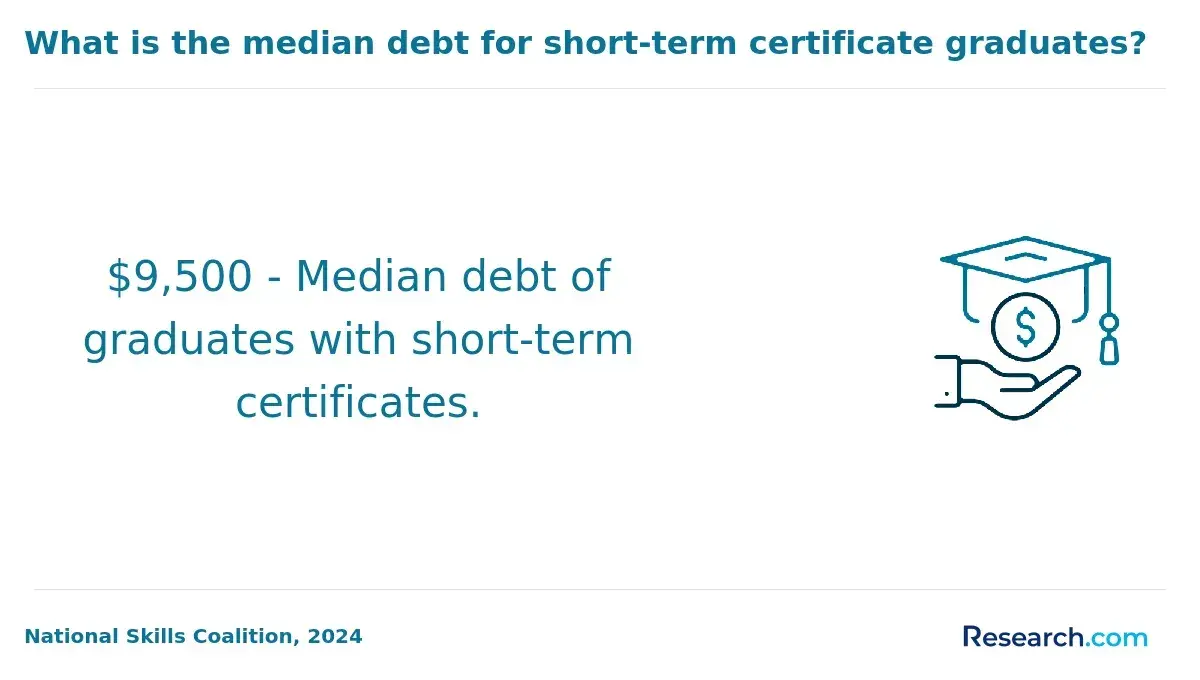
Based on National Center for Education Statistics (NCES) data, public institution tuition and fees average around $10,000 annually for in-state students. Completing a degree in three years instead of four can save roughly $10,000 in direct tuition costs alone, before considering semester-based fees, course materials, lab supplies, technology costs, and software licenses.
The larger financial advantage may be opportunity cost. The U.S. Bureau of Labor Statistics (BLS) reports median weekly earnings for bachelor’s degree holders at about $1,305, or $67,860 annually. Graduating one year earlier can mean earning income sooner, building professional experience earlier, and reducing the time spent delaying full-time career advancement.
| Cost factor | How acceleration can reduce cost | What to verify before enrolling |
| Tuition and fees | Fewer semesters can reduce direct tuition and mandatory term-based charges | Whether tuition is per credit, per term, or flat rate |
| Books, labs, and technology | Shorter enrollment can reduce repeated access fees and materials costs | Whether engineering software, lab kits, or proctored exams carry separate fees |
| Time away from full-time work | Graduating sooner can help you begin full-time employment earlier | Whether the workload allows you to keep working while enrolled |
| Loan borrowing | A shorter timeline may reduce total borrowing if you avoid unnecessary credits | Annual and aggregate loan limits, especially in compressed schedules |
| Transfer credits | Accepted credits can eliminate duplicate coursework | Whether transferred courses apply to major requirements or only electives |
However, accelerated study is not automatically cheaper. A heavier course load can increase short-term expenses, reduce work hours, or lead to course withdrawals if the pace is unrealistic. A low-cost program can also become expensive if it accepts too few transfer credits or if required engineering courses are not offered frequently enough.
- Lower Tuition Fees: Completing the degree in fewer semesters can reduce tuition and mandatory fees.
- Reduced Incidental Expenses: Fewer enrollment periods may lower spending on textbooks, technology access, lab resources, and course materials.
- Earlier Workforce Entry: Graduates may begin earning a bachelor’s-level salary sooner.
- Opportunity Cost Savings: Saving a year can reduce the income lost while completing school.
- Financial Flexibility: Lower borrowing and earlier earnings can make repayment and career planning easier.
Students comparing engineering with other high-return fields can review the top degrees in the world to understand how degree choice, completion time, and career outcomes interact.
Which Accredited Online Colleges Offer the Cheapest Electrical Engineering Bachelor's Degrees That Can Be Completed in Under 3 Years?
The cheapest fast online electrical engineering bachelor’s programs are usually those that combine low tuition with generous transfer credit or flat-rate pricing. Accreditation is nonnegotiable. Regional accreditation supports federal financial aid eligibility, employer recognition, and transferability. ABET programmatic accreditation is also important for many engineering career paths because it signals that the curriculum meets recognized engineering education standards.
The following options are described as regionally accredited institutions verified through CHEA and are commonly considered by students looking for a lower-cost accelerated route.
| School | Stated tuition | Stated completion timeline | Accreditation details stated | Why it may be cost-effective |
| Western Governors University | $3,370 per six-month term | Most students finish in about 2.5 years | Regional accreditation from NWCCU and ABET programmatic accreditation | Flat-rate tuition can reward students who complete more courses per term |
| Fort Hays State University | Around $218 per credit hour | With transfer credits, students typically complete the accelerated track in 3 years | Regionally accredited by HLC and offers an ABET-accredited electrical engineering program | Low per-credit pricing can reduce total cost if credits transfer efficiently |
| University of North Dakota | About $469 per credit hour for online engineering courses | Roughly 2.5 years for transfer students | Regional accreditation from HLC and ABET accreditation for its engineering curriculum | Accelerated completion is most realistic for students entering with prior credits |
| Old Dominion University | About $335 per credit hour for out-of-state online students | As little as 2.5 years with prior credits | Regional accreditation from SACS and ABET accreditation | Transfer-friendly options can reduce time and total tuition |
| Texas A&M University-Corpus Christi | Approximately $345 per credit hour | Typical completion under 3 years | Regionally accredited by SACS, maintains ABET accreditation, and facilitates priority transfer credit review | Priority transfer review can help students determine the fastest realistic pathway earlier |
When comparing “cheap” programs, calculate total degree cost rather than only tuition per credit. A school with a higher per-credit rate may be cheaper overall if it accepts more credits toward the major. A school with low tuition may cost more if you must retake prerequisites, buy specialized lab equipment, or remain enrolled longer because courses are offered infrequently.
Use this decision rule: the best-value accelerated program is the accredited option that lets you complete the fewest remaining credits at a manageable pace without weakening your employment or graduate school options.
A professional who enrolled in one of the fastest online electrical engineering bachelor’s programs described transfer-credit evaluation and full-time work as the hardest parts of the process. “The rigorous pace demanded discipline, but seeing progress every term kept me motivated,” he said. He also noted that industry-aligned coursework and recognized accreditation made it easier to discuss the credential with employers. His experience illustrates the main advantage of a well-chosen accelerated program: speed matters most when it is paired with credibility.
What Admissions Requirements Must You Meet for a Fast-Track Online Electrical Engineering Bachelor's Program?
Fast-track online electrical engineering bachelor’s programs typically look for evidence that you can handle a demanding STEM curriculum at an accelerated pace. Admissions requirements vary, but traditional universities commonly expect a minimum GPA between 2.5 and 3.0, official transcripts, and proof that you have completed or can complete prerequisite coursework in calculus, physics, and chemistry.
Because electrical engineering builds sequentially, prerequisites matter more than they do in many other majors. If you are missing calculus or calculus-based physics, you may still be admitted, but your graduation timeline may extend beyond three years. Transfer students should request a course-by-course evaluation before assuming previous credits will apply.
Common admissions requirements
- Official transcripts: Schools use these to verify GPA, credits earned, prerequisite completion, and transfer eligibility.
- Minimum GPA: Many programs require a GPA between 2.5 and 3.0, though standards vary by institution and student type.
- Math and science prerequisites: Calculus, physics, and chemistry are often required before upper-division engineering courses.
- Standardized tests: SAT or ACT scores are often optional or waived, especially for transfer students or competency-based formats.
- Personal statement: A focused statement can explain your technical background, career goals, and readiness for compressed coursework.
- Recommendation letters: Letters from STEM instructors, supervisors, or engineering-related employers can support your application.
- Technical experience documentation: Certifications, internships, military training, or work experience may strengthen your file.
- Background checks or security clearances: Some programs connected to government or sensitive projects may require additional screening.
How to strengthen your application
Complete as many prerequisite courses as possible before applying, especially college algebra, precalculus, calculus, physics, and introductory programming. Request syllabi from previous courses because engineering departments may need them to evaluate equivalency. If your GPA is below the preferred range, use your personal statement to show recent academic readiness, not excuses.
Applicants comparing accelerated engineering with other cost-conscious online routes can review options such as an accounting degree to understand how admissions requirements and tuition structures differ by field.
How Many Credit Hours Are Required to Finish an Online Electrical Engineering Bachelor's Degree in 3 Years or Less?
Most U.S. bachelor’s degree programs, including electrical engineering programs, require about 120 credit hours. To finish in three years, a student must complete close to 40 credits per year. That usually means taking fall, spring, and summer courses rather than relying only on the traditional two-semester calendar.
A three-year plan might average 13 or 14 credits in fall and spring plus additional summer credits. The exact schedule depends on course sequencing. Electrical engineering courses often have strict prerequisites, so students cannot simply take any available class to fill a term.
| Pathway | How it can shorten time | Important limitation |
| Standard accelerated schedule | Completes about 120 credits across fall, spring, and summer terms | Requires strong time management and consistent course availability |
| Transfer credits | Reduces the number of credits left to complete | Credits must apply to degree requirements, not only electives |
| Prior learning assessment (PLA) | May award credit for exams, military training, or documented learning | Engineering major courses may have stricter review standards |
| CLEP exams | Can sometimes satisfy general education requirements | Acceptance varies by institution and course category |
| Competency-based education | Allows students to advance by proving mastery rather than waiting for term completion | Requires self-direction and may not fit every engineering course format |
A practical three-year schedule might include 14 credits in the fall, 13 in the spring, and 13 during the summer. This pacing can help students reach the 120-credit requirement while avoiding a single overloaded term. Still, engineering labs, group projects, and capstone requirements can make a credit load feel heavier than the number suggests.
- Credit Hour Requirements: Electrical engineering degrees usually require around 120 credits, consistent with the depth expected in a professional engineering curriculum.
- Transfer and PLA Advantages: Previous coursework, exams, or military service can reduce remaining requirements.
- Competency-Based Learning: Students may progress faster by demonstrating skills instead of repeating familiar material.
- Strategic 3-Year Scheduling: Using all three academic terms each year is often necessary to stay on pace.
- Industry Trend: Over half of recent undergraduates use transfer credits or PLA to expedite their education, according to the National Center for Education Statistics.
One graduate who completed an online electrical engineering bachelor’s degree in three years said the credit load was manageable only because her program accepted military training credits and offered a competency-based option. “It was challenging to stay on track with such a high credit load, especially juggling work and family,” she said. “Being able to demonstrate what I already knew instead of retaking familiar courses kept me motivated and confident.”
Can You Transfer Credits to Finish Your Online Electrical Engineering Bachelor's Degree Faster - and How Does It Work?
Yes. Transfer credit is one of the most effective ways to finish an online electrical engineering bachelor’s degree faster. Most accredited programs review prior coursework to determine whether it matches the content, level, credit hours, and grade requirements of the new degree plan. The key question is not “Will the school accept my credits?” but “Will those credits satisfy required courses in the electrical engineering curriculum?”
The transfer process typically begins with official transcripts. For engineering, schools may also ask for course descriptions, syllabi, lab details, textbook information, and learning outcomes. This is especially common for calculus, physics, programming, circuits, and other technical courses where content alignment matters.
| Credit source | How it may apply | What to prepare |
| Accredited college coursework | May satisfy general education, math, science, or major requirements | Official transcripts, course descriptions, and syllabi |
| CLEP exams | May substitute for selected general education courses | Official score reports and the school’s CLEP policy |
| AP credits | May fulfill foundational requirements depending on exam scores | Official AP score reports |
| Prior learning assessments | May recognize military training, work experience, or documented technical learning | Training records, certifications, portfolios, or employer documentation |
Some online programs permit up to 90 semester credits to transfer. For students with substantial previous coursework, that can reduce the remaining degree timeline significantly and make completion in under three years realistic. However, transfer students should be cautious: they may lose an average of 13 credit hours when courses do not meet the new program’s requirements.
- Start the review early: Request a preliminary transfer evaluation before committing to a program.
- Ask where each credit applies: Credits that count only as electives may not shorten an engineering degree.
- Keep syllabi: Technical courses are more likely to require detailed documentation than general education courses.
- Check expiration rules: Some programs may limit older math, science, or technology credits.
- Get decisions in writing: Written transfer evaluations help prevent surprises after enrollment.
In 2023, over 60% of students who transferred credits in online bachelor’s programs reported reducing their degree length by at least one full academic year. The lesson is clear: transfer credit can be powerful, but only when students confirm applicability before enrolling.
What Financial Aid Options Are Available for Students Pursuing an Accelerated Online Electrical Engineering Bachelor's Degree?
Students in accredited accelerated online electrical engineering bachelor’s programs may qualify for many of the same financial aid options as campus-based students. The starting point is the FAFSA, which determines eligibility for federal aid such as Pell Grants, subsidized loans, and work-study opportunities. Aid depends on the institution’s eligibility, the student’s financial profile, and enrollment status.
Accelerated study can complicate aid planning because students may take courses in shorter terms, summer sessions, or unusual academic calendars. Full-time students tend to qualify for the most substantial federal aid, while part-time enrollment usually limits access to some benefits. Students should speak with the financial aid office before finalizing a three-year plan to understand how aid is packaged across fall, spring, and summer terms.
| Funding option | How it helps | What to check |
| FAFSA-based federal aid | Can provide access to Pell Grants, subsidized loans, and work-study programs | Whether the school and program are eligible for federal aid |
| Institutional scholarships | May reduce tuition for strong academic performance or STEM involvement | Application deadlines and whether online students qualify |
| Engineering grants and awards | Can support students pursuing Electrical Engineering or related STEM fields | Eligibility rules, GPA requirements, and renewal conditions |
| Employer tuition reimbursement | Can offset costs for working students | Whether accelerated or online Electrical Engineering programs are covered |
| Military or workforce benefits | May help eligible students reduce out-of-pocket cost | Credit transfer, benefit limits, and required enrollment intensity |
- Federal Financial Aid Eligibility: Completing the FAFSA is essential for access to Pell Grants, subsidized loans, and work-study programs.
- Institutional Scholarships and Grants: Many colleges offer merit-based aid for Electrical Engineering students with strong academic or STEM leadership records.
- Enrollment Intensity Considerations: Accelerated students must plan credit loads carefully to maintain eligibility.
- Employer Tuition Reimbursement: Working students should confirm whether their employer covers online or accelerated Electrical Engineering programs.
- Discipline-Specific Funding: Professional organizations may offer grants that reduce out-of-pocket costs.
According to data from the National Center for Education Statistics, nearly 45% of undergraduates receive some form of financial aid. Students pursuing an accelerated format should compare the net price after aid, not only the published tuition rate.
How Does Competency-Based Education (CBE) Help You Finish an Online Electrical Engineering Bachelor's Degree Faster?
Competency-based education (CBE) can shorten an online electrical engineering bachelor’s degree by allowing students to progress after proving they have mastered required skills. Instead of advancing only after a fixed term ends, students complete assessments, projects, or exams that verify competency. This model is especially useful for learners who already understand parts of the curriculum through work, military training, technical certifications, or previous college study.
Traditional credit-hour programs move students through scheduled courses. CBE programs place more responsibility on the learner to study independently, submit assessments, and keep momentum. That flexibility can be a major advantage for disciplined students, but it can be difficult for learners who need frequent live instruction, fixed deadlines, or cohort-based accountability.
Several accredited online universities, notably Western Governors University (WGU) and Northern Arizona University (NAU), offer CBE tracks in electrical engineering or related STEM fields. These programs emphasize real-world projects and competency assessments. When paired with strong prior knowledge or relevant work experience, some students have completed degrees in as little as 12 to 18 months. Both WGU and NAU qualify their students for federal financial aid.
| CBE advantage | Why it can speed completion | Potential drawback |
| Mastery-based progression | Students can move past material they already know | Requires strong self-assessment and study discipline |
| Flexible scheduling | Learners can study around work and family responsibilities | Less structure can lead to procrastination |
| Flat-rate terms | Students who complete more courses in a term may lower total cost | Slow progress can reduce the financial advantage |
| Project-based assessments | Demonstrates applied skill rather than seat time | Students must clearly document and explain what they learned |
- Mastery-Based Progression: Students prove skills through assessments and can avoid repeating familiar material.
- Flexible Scheduling: The format can work well for working adults and career changers.
- Accelerated Completion: Prior knowledge and experience can shorten program length, with some finishing between 12 and 18 months.
- Accreditation and Financial Aid: Programs at WGU and NAU are regionally accredited and provide access to federal financial aid.
- Potential Employer Hesitation: Some employers may be less familiar with CBE, so graduates should be ready to explain the program’s rigor and accreditation.
CBE can be a strong option for independent learners, but it is not a shortcut around engineering rigor. Students considering future graduate study, such as an online MBA without GMAT, should verify how CBE transcripts are evaluated by the programs they may apply to later.
What Is the Difference Between an Accelerated Online Electrical Engineering Degree and a Degree-Completion Program?
An accelerated online electrical engineering degree is designed to move students through a bachelor’s curriculum faster than the standard four-year schedule. It may use shorter terms, year-round enrollment, heavier course loads, or competency-based pacing. This option is most appropriate for students who are starting with few credits but can commit to an intensive schedule.
A degree-completion program is different. It is built for students who already have significant college credit, often 30 to 60 college credits or an associate’s degree. Instead of compressing the entire bachelor’s program, it focuses on the remaining requirements needed to finish. These programs are often a better fit for working adults returning to college after a break.
| Factor | Accelerated online degree | Degree-completion program |
| Typical student | Student with few or no prior college credits | Student with 30 to 60 college credits or an associate’s degree |
| Main time-saving method | Compressed terms, heavier loads, year-round study | Applying prior credits toward remaining requirements |
| Possible timeline | Designed to shorten a traditional four-year path | Can often be completed within one to two years |
| Best for | Students who can study intensively from the beginning | Adult learners and transfer students with usable credits |
| Main risk | High workload and prerequisite bottlenecks | Credits may not transfer as expected |
Use this checklist to decide which path fits:
- Credit History: If you have fewer than 30 credits, an accelerated program is usually more appropriate. If you hold an associate’s degree or substantial transferable credits, a degree-completion program may be faster.
- Career Timeline: Accelerated programs suit students who can prioritize school heavily. Degree-completion formats often work better for employed adults.
- Financial Constraints: Degree-completion programs may reduce tuition by avoiding repeated coursework, while accelerated degrees may reduce costs by shortening total enrollment time.
- Prior Academic Experience: Degree-completion programs are built around prior learning; accelerated degrees are more likely to cover the full curriculum from the start.
According to the National Center for Education Statistics, over 40% of undergraduate students take longer than four years to graduate. That makes both accelerated and degree-completion pathways attractive for students who want a clearer, shorter route to graduation.
Military students and other learners who need flexible support may also want to compare an online college for military with standard accelerated programs before choosing a pathway.
What Does a Typical Curriculum Look Like in a Fast-Track Online Electrical Engineering Bachelor's Program?
A fast-track online electrical engineering bachelor’s curriculum covers the same broad academic areas as a traditional program but delivers them in a more compressed schedule. Courses may be offered in 5-10 week sessions instead of traditional 16-week semesters, which can significantly increase the weekly workload. Students should expect a rigorous mix of math, science, computing, design, labs, and applied engineering projects.
The sequence usually begins with general education and technical foundations before moving into advanced electrical engineering topics. Because prerequisites stack tightly, falling behind in calculus, physics, or circuits can delay later courses.
| Curriculum stage | Typical subjects | Why it matters |
| Foundational courses | Calculus, physics, chemistry, programming, and general education | Builds the math and science base required for engineering analysis |
| Core engineering courses | Circuit analysis, digital systems, electronics, and signals | Develops the technical knowledge used in electrical engineering roles |
| Advanced technical courses | Electromagnetics, control systems, embedded systems, or power-related topics | Prepares students for specialized work or graduate study |
| Labs and applied work | Virtual labs, lab kits, simulations, or supervised practical assignments | Connects theory with measurement, troubleshooting, and design practice |
| Capstone project | Senior design or applied engineering project | Demonstrates the ability to solve a real engineering problem |
| Internship or practicum | Industry-based experience where available or required | Builds practical experience and employer credibility |
- Compressed Course Terms: Terms may last between 5 to 10 weeks, requiring substantial weekly study time.
- Foundational and Specialized Curriculum: Programs balance general education, math, science, and core electrical engineering topics.
- Capstone and Internship Integration: Senior projects and hands-on experiences help connect academic theory with industry needs.
- Accreditation and Quality Assurance: Programs may follow ABET or equivalent standards to support academic rigor and employer recognition.
- Intensive Time Commitment: Students need strong organization, consistent study habits, and realistic expectations about workload.
Accelerated degree programs in engineering are expanding by over 15% annually, reflecting growing demand for faster, more flexible education pathways. Students should still confirm that faster delivery does not reduce access to labs, faculty support, advising, or career services.
How Does Employer Perception of an Accelerated Online Electrical Engineering Bachelor's Degree Compare to a Traditional Campus Degree?
Employers are generally more likely to respect an accelerated online electrical engineering bachelor’s degree when it comes from a properly accredited institution and the graduate can demonstrate strong technical ability. The delivery format matters less when the school is credible, the curriculum is rigorous, and the candidate has evidence of applied skills.
Recent research shows that employer attitudes toward accelerated online electrical engineering bachelor’s degrees have become more favorable, particularly when programs hold regional accreditation. Surveys indicate that employers often prioritize accreditation status over whether the degree was completed quickly or online. Students and job seekers should verify accreditation through the Council for Higher Education Accreditation (CHEA) database before enrolling or listing a credential on a resume.
Still, employer perception can vary. Some traditional or specialized engineering employers may prefer campus-based programs, especially for roles that rely heavily on hands-on labs, regulated engineering practice, or established recruiting pipelines. Graduates can reduce concern by building a portfolio, completing internships, earning relevant certifications, and clearly explaining major projects.
- Accreditation Priority: Employers often value regional accreditation because it signals institutional legitimacy and quality assurance.
- Programmatic Accreditation: ABET accreditation can be important for engineering roles and should be checked when relevant to career goals.
- Verification Resources: The CHEA database can help confirm whether a school meets recognized accreditation standards.
- Building Credibility: Internships, certifications, portfolios, and work experience can strengthen an accelerated online degree.
- Industry Variations: Some sectors may still prefer traditional degrees, so students should research hiring expectations before enrolling.
On a resume, graduates do not need to emphasize that the program was accelerated unless it is relevant. It is usually better to highlight the degree title, accredited institution, technical projects, tools used, engineering coursework, and measurable work outcomes.
What Graduates Say About Their Fast Online Electrical Engineering Bachelor's Degree Program
- Ramon: "Choosing an online electrical engineering bachelor's degree was a game-changer for me because I needed flexibility while working full-time. The affordability of the program allowed me to pursue my passion without accumulating significant debt. Today, I'm thriving in a competitive industry thanks to the practical skills I gained along the way."
- Marcos: "I was initially drawn to the fast-paced nature of the online electrical engineering bachelor's program, which fit perfectly with my goal of accelerating my career growth. The cost-effectiveness compared to traditional schools made it an even more appealing option. Looking back, this decision opened doors to new job opportunities that I hadn't imagined possible before."
- Silas: "The biggest factor for me was the ability to learn from anywhere while still receiving a quality education in electrical engineering. Financially, the program was a smart investment that didn't strain my resources. It's encouraging to see how this degree has improved my professional standing and expanded my network within the engineering field."
Other Things You Should Know About Electrical Engineering Degrees
For these accelerated programs, you'll need a reliable computer with high-speed internet, a webcam, and access to software like MATLAB and AutoCAD. These tools are essential for coursework and virtual labs, facilitating effective online learning experiences and project completion.
Many fast-track programs accept prior coursework like calculus, physics, and introductory engineering courses for transfer credits. Typically, accredited coursework completed with a grade of C or higher is eligible, potentially reducing the time required to finish in 3 years or less.
References
- Fastest Online Engineering Degree Programs - Educating Engineers https://educatingengineers.com/degrees/fastest-online-engineering-degree-programs/
- Electrical Engineering https://info.online.bradley.edu/college-of-engineering/electrical-engineering
- What Is Competency-Based Education? - 10 Facts About This Online Learning Model https://www.umassglobal.edu/blog-news/competency-based-education-10-facts-online-learning-model
- Accelerated Degree Pros and Cons| University of Bridgeport https://www.bridgeport.edu/news/accelerated-degree-pros-and-cons/
- Competency-Based Education (CBE) https://lakeshore.edu/future-students/flexible-learning-options/competency-based-education
- What is Competency-Based Education (CBE)? | University of Phoenix https://www.phoenix.edu/blog/what-is-competency-based-education-and-how-does-it-work.html
- Inside the Best Online Bachelor's in Electrical Engineering Degrees https://www.onlinecolleges.me/engineering-degrees/bachelors/electrical-engineering/
- A Complete Guide On Accelerated Degree Programs https://www.ebu.ac/blog/9-A-Complete-Guide-On-Accelerated-Degree-Programs-blog.php
- Online Engineering Degree Scholarships - Eligibility, Rewards & Deadlines https://www.onlineengineeringprograms.com/features/online-engineering-degree-scholarships
- Online Electrical Engineering Degrees https://www.affordablecollegesonline.org/degrees/engineering-programs/electrical-engineering/