
2027 Fastest Online Forensic Accounting Degree Programs

Co-Founder and Chief Data Scientist
Choosing a forensic accounting degree too slowly could mean missing out on rapid career growth and specialized roles projected to rise by 5.3%. Delaying the decision risks falling behind peers who already leverage accelerated online options to enter fraud investigation, compliance, and litigation support faster.
This guide highlights the fastest online forensic accounting degree programs for 2027, backed by insights from career planning experts. It explains which universities offer flexible, accredited, and intensive programs designed to help future professionals gain specialized skills quickly—and seize opportunities before demand outpaces supply.
What are the benefits of the fastest online forensic accounting degree programs?
- Qualifies graduates for roles in fraud investigation, litigation support, internal auditing, and compliance across corporate, nonprofit, and government sectors.
- Median annual salary exceeds $80,000, with potential to rise further through specialized certifications like CFE.
- Online programs offer accelerated completion, flexible scheduling, and immediate career entry without pausing full‑time work.
What can I expect from the fastest online forensic accounting degree programs?
These accelerated online programs blend accounting theory with specialized courses in fraud examination, financial investigations, and data analytics. Students typically complete a core curriculum covering auditing, ethics, and forensic techniques, along with a capstone project that applies classroom knowledge to real-world cases.
Some programs include optional internship hours to build practical experience in fraud risk analysis or litigation support. Tuition can range widely, often between $320 and $900 per credit depending on the school and program level.
Classes are usually delivered 100% online through asynchronous modules, recorded lectures, and interactive assignments—letting learners study around work or family commitments. This flexible format helps graduates complete their degrees faster without sacrificing professional responsibilities.
Where can I work with an online forensic accounting degree?
Graduates can find opportunities across industries, from corporate compliance teams to government agencies like the FBI or IRS. Nonprofit organizations also hire forensic accountants to monitor grants and prevent misuse of funds.
Some open their own consulting practices, helping clients investigate fraud and strengthen internal controls. Others move into management, research, or specialized roles in cybersecurity and financial crime prevention.
According to the U.S. Bureau of Labor Statistics, employment for accountants and auditors is projected to grow by 4.6% by 2034, adding about 124,200 new jobs. The analytical and communication skills gained also translate to roles in education, technology, and even healthcare, offering career flexibility in a changing job market.
How much can I make with an online forensic accounting degree?
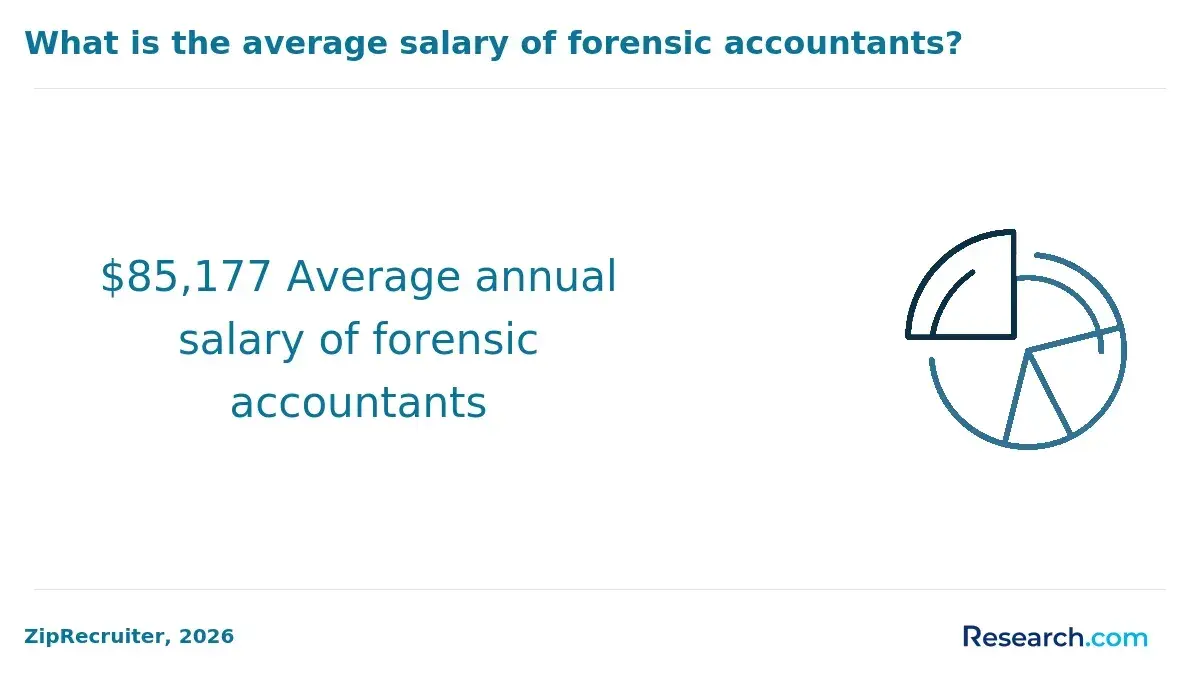
Graduates with an online forensic accounting degree can expect an average annual salary of around $85,177, according to ZipRecruiter. Earnings often vary by industry, employer size, and location—those in large metropolitan areas or specialized consulting roles can earn well over $100,000.
Entry-level professionals typically start between $60,000–$75,000, while experienced forensic accountants or certified fraud examiners can exceed $120,000. Advanced degrees or credentials like the CFE or CPA often boost salaries further, opening doors to senior positions in management, compliance, and litigation support.
- List of the Fastest Online Forensic Accounting Degree Programs for 2027 List of Programs
- How long does it take to complete the fastest online forensic accounting degree programs? Program Duration
- How do the fastest online forensic accounting degree programs compare to on-campus programs? How do the fastest online forensic accounting degree programs compare to on-campus programs?
- What is the average cost of the fastest online forensic accounting degree programs? Cost
- What are the financial aid options for students enrolling in the fastest online forensic accounting degree programs? Financial Aid
- What are the prerequisites for enrolling in the fastest online forensic accounting degree programs? What are the prerequisites for enrolling in the fastest online forensic accounting degree programs?
- What courses are typically in the fastest online forensic accounting degree programs? Courses
- What types of specializations are available in the fastest online forensic accounting degree programs? What types of specializations are available in the fastest online forensic accounting degree programs?
- How to Choose the Best Online Forensic Accounting Degree Programs How to Choose the Best Online Forensic Accounting Degree Programs
- What career paths are available for graduates of the fastest online forensic accounting degree programs? Career Paths
- What is the job market like for graduates of the fastest online forensic accounting degree programs? What is the job market like for graduates of the fastest online forensic accounting degree programs?
- How do online forensic accounting programs address emerging digital threats? How do online forensic accounting programs address emerging digital threats?
- How can I maximize the ROI of an online forensic accounting degree? How can I maximize the ROI of an online forensic accounting degree?
Fastest Online Forensic Accounting Degree Programs for 2027
Choosing a fast online forensic accounting degree is not just about finding the shortest program. You also need to compare accreditation, total credits, tuition, transfer policies, certification preparation, and whether the curriculum actually teaches the investigative skills employers expect. Forensic accounting sits at the intersection of accounting, auditing, fraud investigation, litigation support, compliance, and data analysis, so the right program should help you move quickly without sacrificing credibility.
This guide is built for working adults, transfer students, accounting professionals, career changers, and bachelor’s degree holders who want a faster path into fraud examination or forensic accounting roles. You will find a ranked program list, timeline and cost comparisons, online vs. campus trade-offs, admissions requirements, common courses, career options, job market data, and practical steps for choosing a program with a strong return on investment.
Quick answer: What is the fastest online forensic accounting degree?
The fastest options are usually online master’s, M.Acc, or MBA programs with forensic accounting coursework, because many can be completed in 12–21 months. Bachelor’s programs generally take 3–4 years, though students with transfer credits, military credit, prior college coursework, or year-round enrollment may finish sooner. The best choice depends on your current education level: first-time college students usually need a bachelor’s degree, while accounting or business graduates can often move directly into an accelerated master’s or MBA track.
How Research.com ranks these programs
Because a degree requires a major investment of time and money, our rankings emphasize useful, data-informed comparisons rather than promotional claims. This list draws on trusted education data sources, including the IPEDS database, Peterson’s database, the College Scorecard database, and the National Center for Education Statistics.
Programs are evaluated using factors such as completion speed, online availability, tuition, accreditation, degree level, curriculum relevance, and alignment with forensic accounting or fraud examination careers. You can review the broader ranking process on Research.com’s methodology page.
Fastest online forensic accounting programs at a glance
| Rank | School and program | Degree level | Program length | Cost per credit | Credits | Accreditation |
| 1 | West Virginia University – M.S. in Forensic & Fraud Examination | Master’s | 12–18 months | $820 | 30 | AACSB |
| 2 | Southern New Hampshire University – B.S. in Forensic Accounting and Fraud Examination | Bachelor’s | 3–4 years (faster with transfer credits) | $320 | 120 | NECHE |
| 3 | Liberty University – B.S. in Accounting with Forensic Specialization | Bachelor’s | 3.5 years (accelerated) | $390 | 120 | ACBSP |
| 4 | Rider University – Online MBA in Forensic Accounting | MBA | 12 months full‑time | $890 | 33 | AACSB |
| 5 | Purdue Global – B.S. in Accounting with Forensic Accounting Certificate | Bachelor’s plus certificate | 4 years | $371 | 180 quarter credits | ACBSP |
| 6 | Florida Atlantic University – Executive M.Acc in Forensic Accounting | Master’s | 12–21 months | $105 (master’s total ~$16,695) | 30–36 | AACSB |
| 7 | Utica University – B.S. in Fraud and Financial Crime Investigation | Bachelor’s | 4 years | $475 | 120 | MSCHE |
| 8 | Franklin University – MBA with Forensic Accounting Concentration | MBA | 14 months | $670 | 36 | IACBE |
| 9 | University of Alabama at Birmingham – Master of Accounting (M.Acc) with Forensic Focus | Master’s | 2 years | $667 | 30 | AACSB |
| 10 | California College San Diego – B.S. in Business Administration with Forensic Emphasis | Bachelor’s | 3–4 years | $495 | 120–180 | DEAC |
1. West Virginia University – M.S. in Forensic & Fraud Examination
West Virginia University offers a fully online graduate program for students who want advanced preparation in fraud detection, forensic analysis, and litigation-related financial investigation. The curriculum includes interactive simulations created with input from FBI experts, giving students practice with investigative scenarios rather than only textbook-based theory. The program is also structured to support preparation for the Certified Fraud Examiner (CFE) credential and specialized forensic accounting work.
- Program length: 12–18 months
- Cost per credit: $820
- Total credits: 30
- Accreditation: AACSB
2. Southern New Hampshire University – B.S. in Forensic Accounting and Fraud Examination
Southern New Hampshire University provides an online bachelor’s program built for students who need flexibility while completing a full undergraduate degree. Courses are delivered asynchronously in 8‑week terms, which can help motivated students maintain momentum while balancing work, family, or transfer credit planning. The program combines accounting, auditing, fraud prevention, and digital forensics for students interested in compliance, fraud investigation, or forensic auditing roles.
- Program length: 3–4 years (faster with transfer credits)
- Cost per credit: $320
- Total credits: 120
- Accreditation: NECHE
3. Liberty University – B.S. in Accounting with Forensic Specialization
Liberty University offers a 100% online accounting bachelor’s degree with a forensic specialization and an emphasis on Christian ethics. Its 8‑week course format may appeal to students who want a structured but accelerated schedule. The curriculum is designed for learners seeking entry-level forensic accounting roles or future preparation for CPA or CFE certification.
- Program length: 3.5 years (accelerated)
- Cost per credit: $390
- Total credits: 120
- Accreditation: ACBSP
4. Rider University – Online MBA in Forensic Accounting
Rider University delivers an AACSB-accredited online MBA that blends management training with focused forensic accounting coursework. This option is best suited to professionals who already have undergraduate preparation and want to move toward leadership, fraud risk analysis, litigation consulting, or advisory roles. The program’s value is its combination of business strategy and investigative accounting expertise.
- Program length: 12 months full‑time
- Cost per credit: $890
- Total credits: 33
- Accreditation: AACSB
5. Purdue Global – B.S. in Accounting with Forensic Accounting Certificate
Purdue Global offers an online accounting bachelor’s pathway with a forensic accounting certificate for adult learners who want both broad accounting preparation and focused fraud investigation training. Students complete core accounting coursework along with certificate content in fraud detection and ethics. The program may also support students who want an accelerated route into master’s-level study later.
- Program length: 4 years
- Cost per credit: $371
- Total credits: 180 quarter credits
- Accreditation: ACBSP
6. Florida Atlantic University – Executive M.Acc in Forensic Accounting
Florida Atlantic University offers an online executive master’s program for professionals seeking deeper training in fraud examination, forensic investigation, law, and ethics. The format includes live virtual classes and cohort-based collaboration, which may be useful for students who want more interaction than a fully asynchronous model provides. Graduates often use the program to support CFE preparation and advancement into fraud prevention or investigative leadership roles.
- Program length: 12–21 months
- Cost per credit: $105 (master’s total ~$16,695)
- Total credits: 30–36
- Accreditation: AACSB
7. Utica University – B.S. in Fraud and Financial Crime Investigation
Utica University provides a fully online bachelor’s program focused on fraud, compliance, financial crime, and cybercrime. Students use case-based assignments and interactive projects to connect accounting concepts with investigation practices. This degree may fit students interested in corporate security, risk management, government fraud units, or financial crime prevention.
- Program length: 4 years
- Cost per credit: $475
- Total credits: 120
- Accreditation: MSCHE
8. Franklin University – MBA with Forensic Accounting Concentration
Franklin University offers an accelerated online MBA for working professionals who want to combine business leadership with fraud prevention and investigation knowledge. Coursework covers fraud analysis, ethics, and business strategy, with topics that align with CFE exam content. Students looking for a shorter graduate business route may be able to complete the degree in as few as 14 months.
- Program length: 14 months
- Cost per credit: $670
- Total credits: 36
- Accreditation: IACBE
9. University of Alabama at Birmingham – Master of Accounting (M.Acc) with Forensic Focus
The University of Alabama at Birmingham offers an online master’s program with coursework relevant to auditing, fraud examination, and risk assessment. The program is designed to build both technical accounting depth and practical investigative judgment. Students may also use the degree to support CPA or CFE certification goals.
- Program length: 2 years
- Cost per credit: $667
- Total credits: 30
- Accreditation: AACSB
10. California College San Diego – B.S. in Business Administration with Forensic Emphasis
California College San Diego offers an online bachelor’s program that combines business administration fundamentals with forensic-focused fraud prevention and investigation coursework. Interactive simulations and virtual internship-style experiences help students practice applied skills. Graduates may pursue entry-level work in compliance, risk analysis, business operations, or fraud investigation support.
- Program length: 3–4 years
- Cost per credit: $495
- Total credits: 120–180
- Accreditation: DEAC
How Long Does It Take to Finish an Accelerated Online Forensic Accounting Degree?
The shortest online forensic accounting programs are typically graduate degrees, which may take 12 months to 2 years depending on enrollment pace and format. Online bachelor’s degrees usually require 3–4 years, but students with transfer credits, prior college coursework, military experience, or year-round enrollment can sometimes reduce that timeline. Program length varies by field and degree structure, much like the differences students see when comparing clinical psychology and counseling psychology degree paths.
| Program type | Typical fast-track timeline | Best for | What can shorten completion time? |
| Bachelor’s degree | 3–4 years | Students without a bachelor’s degree who need foundational accounting training | Transfer credits, military credits, 8‑week terms, summer courses, prior learning credit |
| Master’s or M.Acc | 12–21 months to 2 years | Accounting or business graduates seeking specialized forensic training | Full-time enrollment, cohort schedules, no thesis requirement, prior accounting prerequisites |
| MBA with forensic accounting concentration | 12 months full‑time to 14 months or longer | Professionals seeking management, consulting, or fraud risk leadership roles | Accelerated course sequencing, continuous enrollment, online delivery |
| Certificate or add-on concentration | Varies by school | Accountants who want targeted fraud examination skills without a full degree | Stackable credits, employer sponsorship, focused curriculum |
Master’s and MBA timelines
- Many full-time online graduate programs can be completed in 12–21 months.
- Part-time students may need up to two years, especially if they are working full time.
- Executive and cohort-based formats can help students move through courses in a predictable sequence.
Bachelor’s timelines
- A standard online bachelor’s degree usually takes about 3–4 years.
- Transfer-friendly schools may help students finish sooner if they already have college credits.
- Eight-week terms, self-paced coursework, and year-round enrollment can reduce time to graduation.
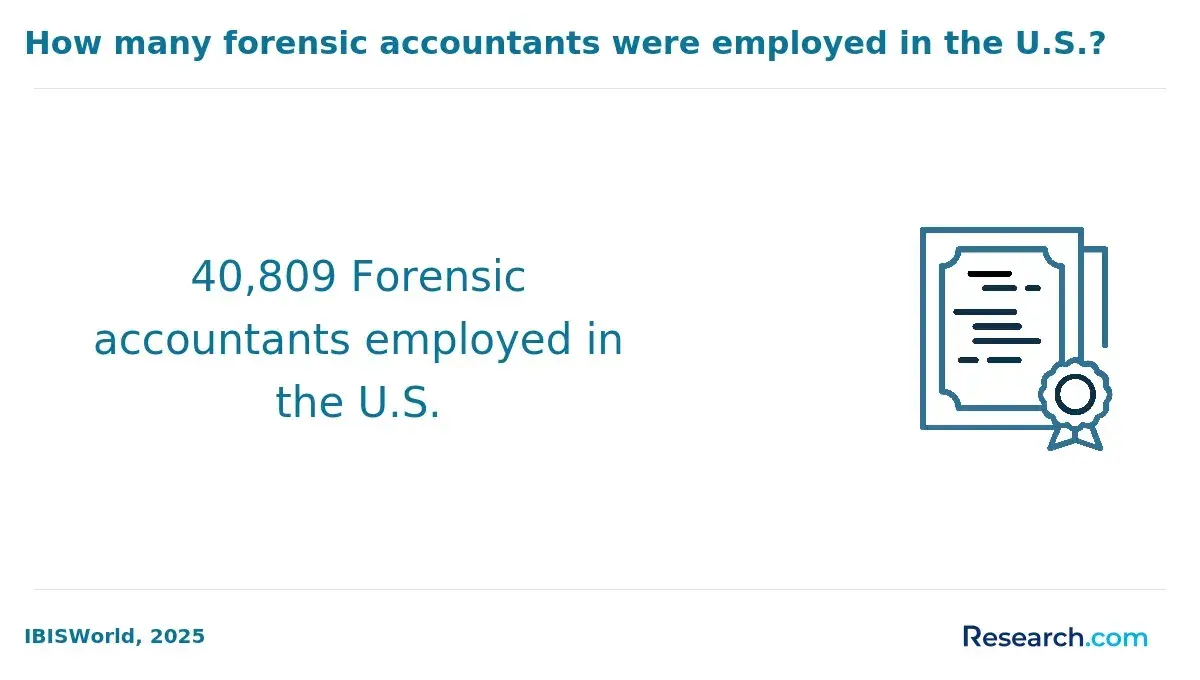
Speed can matter for career planning. There were already 40,809 people employed in forensic accounting services in the U.S. (IBISWorld, 2025), and students who finish sooner may be able to enter or advance in the field earlier. However, the fastest program is not always the best program if it lacks appropriate accreditation, career support, or forensic accounting depth.
Online vs. On-Campus Forensic Accounting Programs: Which Format Makes More Sense?
Online and campus-based forensic accounting programs often cover similar academic content, including fraud examination, auditing, ethics, litigation support, and financial reporting. The biggest differences are scheduling, access to faculty, networking style, and how quickly students can complete courses. A reputable online program should still meet recognized academic standards and should not be treated as easier simply because it is remote.
| Factor | Online forensic accounting program | On-campus forensic accounting program | Choose this if... |
| Schedule | Often asynchronous or offered in short terms | Usually follows set class times and semester calendars | You need flexibility around work or family obligations |
| Completion speed | May offer accelerated terms and year-round enrollment | May be slower if courses are tied to traditional semesters | You want the shortest realistic route to graduation |
| Networking | Virtual discussions, webinars, online student groups, remote career events | In-person faculty contact, campus events, local employer visits | You prefer either remote access or face-to-face relationship building |
| Learning style | Requires self-discipline and comfort with online platforms | Provides more physical classroom structure | You know whether you work better independently or in person |
| Location | Available to students who cannot relocate | Best for students near campus or willing to move | You want to avoid commuting or relocation costs |
Key differences to consider
- Flexibility: Online programs are often better for employed students because lectures, assignments, and discussions may be available outside standard business hours.
- Pacing: Accelerated online courses can shorten the academic calendar, but they also compress assignments and exams into a tighter schedule.
- Networking: Campus students may build local professional contacts more easily, while online students need to be intentional about virtual networking, faculty outreach, and professional association involvement.
- Accountability: Online learning requires strong time management. If you need in-person reminders and structured classroom routines, a campus program may be a better fit.
The better format depends on your schedule, learning preferences, budget, and career goals. Employers generally focus more on accreditation, skills, experience, and credentials than on whether a legitimate program was completed online or on campus.
How Much Do Fast Online Forensic Accounting Programs Cost?
Fast online forensic accounting programs can vary widely in price because bachelor’s, master’s, MBA, and certificate options use different credit systems and fee structures. The listed programs in this guide range from $105 per credit to $890 per credit, although total cost depends on transfer credits, fees, books, residency rules, and whether the school charges separate online technology costs. As with researching career-focused programs in other fields, such as marriage and family therapy career paths, students should compare the full program cost rather than only the advertised per-credit tuition.
Cost ranges and examples to verify
- Bachelor’s programs: Some online bachelor’s programs cost from $280 (University of Northwestern Ohio) to around $510 per credit (University of Arizona Global Campus).
- Master’s degrees: Graduate tuition may range from approximately $580 to $900 per credit; Liberty University charges around $580–$645 for graduate courses, while Carlow’s MS runs about $800/credit.
- Certificates: A certificate such as La Salle University’s fraud‑focused program runs about $1,065 per credit, totaling roughly $16,000.
Tuition is only one part of the budget. Ask each school for a full cost breakdown that includes mandatory fees, textbooks, software, proctoring, graduation fees, and any travel or residency requirements. Students comparing accelerated healthcare, business, or technology programs can use the same cost-checking approach used for fast online medical billing and coding certificate programs.
| Cost item | Why it matters | Question to ask the school |
| Tuition per credit | Determines the base academic cost | Is the tuition rate locked while I am enrolled? |
| Total required credits | A lower per-credit cost may still be expensive if the program requires more credits | How many credits will I personally need after transfer evaluation? |
| Fees | Online, technology, graduation, and proctoring fees can add up | Can you provide a total estimated cost of attendance? |
| Books and software | Accounting courses may require specialized platforms or analytics tools | Are textbooks, software, or exam materials included? |
| Transfer credit policy | Accepted credits can reduce both cost and time | How many credits can I transfer, and how will they apply to major requirements? |
Financial Aid Options for Online Forensic Accounting Students
Students in eligible online forensic accounting programs may qualify for many of the same aid options as campus-based students. The starting point is usually the FAFSA, which determines eligibility for federal grants, student loans, and work-study when available through the institution. Aid rules depend on the school, program eligibility, enrollment status, and student circumstances.
In addition to federal aid, many universities offer merit scholarships, need-based institutional grants, transfer scholarships, military tuition discounts, veteran benefits, or employer partnership discounts. Professional organizations, including the Association of Certified Fraud Examiners (ACFE), may also offer scholarship opportunities for students pursuing fraud examination and forensic accounting careers.
Ways to reduce out-of-pocket cost
- Submit the FAFSA early and confirm whether the online program is aid-eligible.
- Ask about transfer credit, prior learning credit, military credit, and credit for professional certifications.
- Check whether your employer offers tuition reimbursement for accounting, compliance, auditing, or fraud-related education.
- Compare total program cost instead of focusing only on per-credit tuition.
- Look for scholarships from schools, accounting associations, fraud examination groups, and local professional organizations.
Admissions Requirements for Fast Online Forensic Accounting Degree Programs
Admissions requirements depend on whether you are applying to a bachelor’s, master’s, MBA, certificate, or post-baccalaureate program. As with other accelerated online degrees, including an accelerated online elementary education master’s program, schools may streamline admissions but still require proof that you can handle compressed coursework.
| Degree level | Common prerequisites | What may strengthen an application |
| Bachelor’s degree | High school diploma or GED, transcripts, minimum GPA often around 2.0–2.5 | Transfer credits, prior accounting coursework, business experience, military training |
| Master’s or M.Acc | Bachelor’s degree, often in accounting, business, or a related field; minimum GPA usually 2.5–3.0 | Accounting prerequisites, professional experience, strong statement of purpose, relevant certifications |
| MBA with forensic accounting concentration | Bachelor’s degree, transcripts, possible business or quantitative prerequisites | Management experience, accounting background, fraud or compliance experience |
| Certificate | Varies by school; may require a bachelor’s degree or prior accounting coursework | Current accounting, auditing, compliance, or law enforcement experience |
For bachelor’s applicants
- A high school diploma or GED is commonly required.
- Schools usually request transcripts from previous high schools and colleges.
- Minimum GPA requirements often fall around 2.0–2.5.
- Transfer credits may shorten both time to graduation and total cost.
For master’s applicants
- A bachelor’s degree is typically required, often in accounting, business, or a related field.
- Minimum GPA requirements usually range from 2.5–3.0.
- Some programs request letters of recommendation, a resume, or a personal statement.
- Many online forensic accounting programs do not require GRE or GMAT scores, though policies vary by school.
Common Courses in Accelerated Online Forensic Accounting Programs
Forensic accounting programs combine traditional accounting knowledge with investigative methods used to identify, document, and explain financial misconduct. The pace may be accelerated, but the coursework should still build technical competence in auditing, reporting, evidence handling, ethics, and fraud analysis. Students comparing program rigor may find it useful to examine how course expectations differ across accelerated fields, such as an accelerated online master’s in special education.
Typical course topics
- Fraud examination and fraud detection methods
- Forensic accounting principles and litigation support
- Auditing, internal controls, and advanced financial reporting
- Business law, ethics, and fraud-related legal issues
- Data analytics, digital forensics tools, and cyber-enabled financial crime
- Risk management, compliance, and governance
- Capstone projects based on investigation scenarios or applied case analysis
Students interested in becoming a fraud investigator should look for programs that go beyond general accounting theory and include practical work with evidence, interviews, reporting, analytics, and fraud schemes. According to the U.S. Bureau of Labor Statistics, the largest share of accountants and auditors—23%—work in accounting, tax preparation, bookkeeping, and payroll services. Others work in finance and insurance (8%), government (8%), and management of companies (6%), while 5% are self-employed.
Forensic Accounting Specializations to Consider
Specializations help students align their degree with the type of fraud, compliance, or investigative work they want to pursue. Many accelerated programs offer focused electives or concentrations, similar to how students may choose a niche within an accelerated online public safety degree.
| Specialization | What it focuses on | Best fit for students interested in... |
| Fraud examination and prevention | Fraud schemes, red flags, controls, and investigative procedures | Corporate fraud investigation, CFE preparation, internal investigation teams |
| Cybercrime and digital forensics | Digital evidence, cyber-enabled financial crime, data trails, technology risks | Financial crime units, cyber fraud roles, digital investigation support |
| Litigation support and expert testimony | Financial analysis for legal disputes, damages, reports, and court-related work | Consulting firms, law firm support, expert witness pathways |
| Internal auditing and compliance | Controls, regulation, governance, audit planning, and compliance monitoring | Internal audit departments, regulated industries, corporate compliance |
| Risk management | Identifying and reducing financial, operational, and fraud risks | Risk analysis, fraud prevention strategy, management roles |
The best specialization is the one that matches your intended work environment. For example, a student targeting law enforcement or government investigations may prefer financial crime or cybercrime coursework, while someone pursuing corporate advancement may benefit more from internal auditing, compliance, or risk management.
How to Choose the Best Online Forensic Accounting Degree Program
The best program is not automatically the fastest or cheapest. It is the program that gives you a credible credential, prepares you for the roles you want, fits your schedule, and makes financial sense. Start by verifying accreditation, including business-specific accreditation such as AACSB or ACBSP when relevant, as well as recognized institutional accreditation. Then review the curriculum for fraud examination, digital forensics, auditing, litigation support, ethics, and applied projects. This decision process is similar to comparing professional paths in other fields, such as evaluating the difference between a case manager and a social worker.
Careful selection is especially important because the field is becoming more specialized. The global forensic accounting market is projected to reach $13.64 billion by 2035 (Market Research Future). The article’s cited market context also notes a 400% increase in corporate legal threats and complaints, reinforcing why employers may value graduates who understand modern fraud risk, compliance pressure, and financial investigation methods.
Questions to ask before enrolling
- Is the institution accredited, and is the business or accounting program separately accredited?
- Will the curriculum help prepare me for CFE or CPA goals?
- How many transfer credits will the school accept, and will they reduce major requirements or only electives?
- Is the program asynchronous, synchronous, cohort-based, self-paced, or a mix?
- What is the total estimated cost, including fees, books, software, and proctoring?
- Does the program include case studies, simulations, capstones, internships, or applied fraud investigation projects?
- What career services are available to online students?
- Do graduates work in forensic accounting, auditing, compliance, risk, government, or consulting roles?
- If you plan to pursue CPA licensure, will the program help meet your state’s education requirements?
Who should choose an accelerated online program?
- Working adults who need a flexible schedule and cannot attend daytime campus courses
- Transfer students who can reduce the number of credits needed for graduation
- Accounting professionals who want to specialize in fraud examination or litigation support
- Career changers who want a structured route into accounting, compliance, or investigation work
- Students who are disciplined enough to handle compressed courses and regular deadlines
Who should consider a slower or different path?
- Students who need significant academic support before taking advanced accounting courses
- Learners who struggle with independent study and prefer in-person instruction
- Applicants who need a state-specific CPA pathway and have not confirmed that the online program meets those requirements
- Students whose budget would require excessive borrowing for a program with limited career support
- People who want a law enforcement career that requires academy training or separate agency qualifications beyond accounting education
Career Paths for Graduates of Fast Online Forensic Accounting Programs
Graduates can pursue roles in corporations, accounting firms, consulting firms, government agencies, nonprofit organizations, insurance companies, financial institutions, and legal support settings. Common job titles include forensic accountant, fraud examiner, internal auditor, compliance analyst, litigation support specialist, risk analyst, and financial investigator.
Some professionals focus on reconstructing financial records, tracing suspicious transactions, analyzing damages, preparing reports for legal teams, or strengthening internal controls. Others support cyber-enabled fraud investigations, anti-money laundering work, regulatory compliance, or enterprise risk management. Students who later move into supervisory roles may find related guidance in Research.com’s guide to becoming an accounting manager.
| Career path | Typical focus | Helpful preparation |
| Forensic accountant | Investigates financial discrepancies, fraud schemes, and disputed financial records | Forensic accounting, auditing, financial reporting, litigation support |
| Fraud examiner | Detects, documents, and helps prevent fraud | Fraud examination, ethics, interviewing, CFE-aligned coursework |
| Internal auditor | Reviews controls, procedures, risks, and compliance systems | Auditing, internal controls, risk management, compliance |
| Litigation support specialist | Assists attorneys with financial analysis, damages, and documentation | Business law, expert reporting, forensic accounting, communication skills |
| Compliance officer or analyst | Helps organizations follow laws, regulations, and internal policies | Compliance, governance, risk management, regulatory analysis |
| Risk analyst or consultant | Identifies financial and operational risks and recommends controls | Analytics, risk assessment, fraud prevention, business strategy |
Salary potential varies by role, location, industry, degree level, certifications, and experience. According to BLS (2024), the mean annual wage for accountants and auditors is highest in Web Search Portals, Libraries, Archives, & Other Information Services at $153,030. Advanced credentials such as CFE or CPA may help professionals qualify for more specialized or senior roles, but no degree can guarantee a specific salary.
Job Market Outlook for Forensic Accounting Graduates
Forensic accounting graduates enter a broader accounting and auditing labor market that remains stable, with specialized demand tied to fraud investigations, compliance pressure, cybercrime, litigation, and financial risk management. The U.S. Bureau of Labor Statistics projects jobs for accountants and auditors to increase by 4.6% through 2034, adding over 124,200 new positions.
Why employers need forensic accounting skills
- Organizations face more complex fraud schemes and cyber-enabled financial crime.
- Regulatory and compliance expectations require stronger documentation and controls.
- Government agencies, including the FBI and IRS, hire professionals with accounting and investigative expertise.
- Companies need employees who can use data, audit trails, and financial records to detect suspicious activity.
The global forensic accounting market is also expected to expand at a 7.24% annual growth rate by 2035. Professionals who pair a relevant degree with CFE, CPA, auditing, analytics, or compliance experience may have stronger prospects for specialized roles and advancement.
Can an Affordable Online Associate Degree in Accounting Lead Toward Forensic Accounting?
An associate degree is not usually enough for specialized forensic accounting positions, but it can be a practical first step. Students who need an affordable entry point can use an associate program to build accounting fundamentals, financial recordkeeping skills, basic auditing knowledge, and ethical decision-making habits before transferring into a bachelor’s degree. For cost-conscious students, Research.com’s guide to the most affordable online associate degrees in accounting can help identify lower-cost starting options.
How Online Forensic Accounting Programs Address Digital Fraud and Emerging Threats
Modern forensic accounting programs increasingly include data analytics, cybersecurity basics, digital evidence handling, and technology-driven fraud detection. Students may study cyber-enabled fraud, blockchain-related issues, electronic records, and investigative use of data. These topics matter because financial misconduct now often involves digital systems, remote transactions, cloud records, and complex data trails. Graduates who understand both accounting and technology may be better positioned for advanced roles in fraud prevention, compliance, risk, and some of the highest-paying accounting career paths.
How to Maximize the ROI of an Online Forensic Accounting Degree
Return on investment depends on more than tuition. A faster program can reduce opportunity cost, but only if it leads to a credible credential and relevant skills. Before enrolling, compare total cost, transfer credit value, career services, certification preparation, employer tuition assistance, and salary expectations in your target location. Regional pay differences can be significant, so students considering CPA-related pathways may also want to review where CPAs earn the most by state.
Practical ROI steps
- Calculate your actual net cost. Include tuition, fees, books, software, lost work hours, and loan interest.
- Use transfer credits strategically. The fastest and cheapest program for you may be the one that accepts the most applicable credits.
- Match the degree to your target role. A bachelor’s may fit entry-level accounting or compliance roles, while a master’s or MBA may fit advancement or specialization.
- Confirm certification alignment. If you want CPA or CFE preparation, ask how the curriculum supports those requirements or exam topics.
- Prioritize applied learning. Case studies, simulations, analytics tools, and capstones can make your resume stronger than coursework alone.
- Use career services early. Do not wait until graduation to seek internships, networking opportunities, resume feedback, or employer introductions.
Common Mistakes to Avoid When Choosing a Fast Online Forensic Accounting Program
| Mistake | Why it can hurt you | Better approach |
| Choosing only the shortest program | A rushed program may lack depth, support, or employer recognition | Balance speed with accreditation, curriculum quality, and outcomes |
| Ignoring accreditation | Accreditation can affect transfer credits, employer confidence, financial aid, and graduate study options | Verify institutional and business/accounting accreditation before applying |
| Comparing only tuition per credit | Total cost depends on fees, required credits, transfer policy, and course materials | Request a full estimated cost of attendance |
| Assuming online means self-paced | Many online programs have fixed deadlines, live sessions, or cohort schedules | Ask how courses are delivered before enrolling |
| Overlooking CPA requirements | CPA education rules vary by state and may require specific accounting credits | Check your state board requirements if CPA licensure is part of your plan |
| Relying only on rankings | A high-ranked program may not fit your budget, schedule, or career target | Use rankings as a shortlist, then compare fit and ROI |
| Assuming salary outcomes are guaranteed | Pay depends on role, location, industry, credentials, and experience | Research local job postings and salary ranges before borrowing heavily |
What Graduates Say About Fast Online Forensic Accounting Programs for 2027
- George: "Completing the program in a little over a year helped me change direction professionally without leaving my job. Evening and weekend coursework made the schedule manageable while I developed fraud detection skills."
- Sandy: "The accelerated pace required discipline, but each term felt like real progress. Earning the online forensic accounting degree helped me move toward better-paying opportunities sooner than I thought possible."
- Tom: "I appreciated how quickly the coursework connected to real investigation scenarios. The virtual simulations and fast-moving classes made the program practical, focused, and engaging."
Key Insights
- The fastest route depends on your starting point. Students with a bachelor’s degree may finish a forensic accounting master’s, M.Acc, or MBA in 12–21 months, while bachelor’s students usually need 3–4 years unless they bring transfer credits.
- Accreditation matters as much as speed. Look for recognized institutional accreditation and, when relevant, business accreditation such as AACSB or ACBSP.
- Online programs can be rigorous and respected. A legitimate online degree should offer comparable academic standards, but students must be ready for independent study and compressed deadlines.
- Cost comparisons should include total price, not just tuition per credit. Fees, books, software, proctoring, credit transfer rules, and program length can change the real cost significantly.
- Career preparation should be practical. Strong programs include fraud examination, auditing, digital forensics, litigation support, ethics, analytics, and applied case work.
- Certifications can strengthen career options. CFE and CPA preparation may improve competitiveness, but students should verify exam and licensure requirements before enrolling.
- ROI comes from fit. The best program is one that matches your career goal, accepts your credits, fits your schedule, supports your credential plans, and keeps borrowing at a manageable level.
References:
- IBISWorld. (2025, October). Forensic Accounting Services in the US - Employment (2002–2031). IBISWorld
- Market Research Future. (2025). Forensic Accounting Market. Market Research Future
- U.S. Bureau of Labor Statistics. (2024). Accountants and auditors. U.S. Bureau of Labor Statistics
- Zippia. (2025, January 8). Forensic accountant demographics and statistics in the US. Zippia
- ZipRecruiter. (2026). Forensic Accountant salary. ZipRecruiter
Other Things You Should Know About Online Forensic Accounting Degree Programs
Some accelerated online forensic accounting degrees require an internship or practicum, often 120 to 150 hours, while others waive it for students with prior accounting experience. Schools set the rule, and accreditation standards usually come from AACSB or regional accreditors.
Applicants typically need a bachelor’s degree in accounting or a related field and may be required to demonstrate relevant work experience. Some programs might also need a minimum GPA and specific coursework completed to qualify for admission in 2027.








