
2027 Virginia Nursing License Requirements

Co-Founder and Chief Data Scientist
Virginia nurses face two related decisions: how to qualify for a state nursing license and how to keep that license active without interruptions. Whether you are applying for your first RN or LPN license, moving to Virginia from another state, using a multistate compact license, or planning an advanced nursing path, the rules matter because licensure determines whether you can legally practice. This guide explains the Virginia nursing license process in practical terms, including license types, education and exam requirements, renewal timing, endorsement, compact practice, program selection, costs, common mistakes, and career advancement options.
Quick answer: How does Virginia nursing licensure work?
To practice nursing in Virginia, you generally need to complete an approved nursing education program, meet clinical training requirements, pass the appropriate NCLEX exam, submit an application to the Virginia Board of Nursing, complete required background checks, and pay the applicable fees. RN and LPN licenses renew every two years. Nurses already licensed in another state may qualify through endorsement, while eligible nurses with a multistate Nurse Licensure Compact license may practice in Virginia without applying for a separate single-state license.
Key things you should know about Virginia nursing licenses
- Licensing body: The Virginia Board of Nursing, which operates under the Department of Health Professions, regulates nursing licensure and monitors compliance with state nursing rules.
- Required exam: RN candidates must pass the NCLEX-RN, while practical nurse candidates must pass the NCLEX-PN.
- Education prerequisite: Applicants must graduate from an accredited nursing program. The licensing checklist commonly includes a minimum of 1,500 hours of supervised clinical practice, so students should verify that their program documents clinical eligibility for Virginia licensure.
- Application process: Candidates may apply online through the Virginia Board of Nursing and should be ready to provide transcripts, clinical-hour documentation, and background-check information.
- Fees: The RN licensure application fee is $190, and the LPN licensure application fee is $150. NCLEX registration and other related costs are separate.
| Licensure situation | Best starting point | Main item to verify |
| First-time RN applicant | Complete an approved ADN or BSN program and prepare for the NCLEX-RN | Program approval, transcript submission, clinical documentation, and background check |
| First-time LPN applicant | Finish an approved practical nursing program and prepare for the NCLEX-PN | Program approval, exam eligibility, and licensure application requirements |
| Nurse licensed in another state | Apply by endorsement if you do not already have qualifying compact privileges | License verification, fingerprints, background check, and fee payment |
| Compact nurse | Confirm your multistate license and home-state eligibility | Whether your home state is part of the Nurse Licensure Compact and whether your license is multistate |
| Virginia nurse renewing a license | Track renewal date and continuing education before the deadline | Completion of required renewal steps every two years |
- What is a Virginia nursing license, and why do nurses need one?
- What types of nursing licenses are available in Virginia?
- What are the requirements for a Virginia nursing license?
- How do you apply for a nursing license in Virginia?
- How often do Virginia nurses renew their licenses?
- Can a compact nurse practice in Virginia?
- How can nurses licensed in other states get licensed in Virginia?
- Are accelerated nursing programs a good option in Virginia?
- How should you choose the right nursing program in Virginia?
- How should you plan financially for nursing education in Virginia?
- What common mistakes delay Virginia nursing licensure?
- How can Virginia nurses keep up with regulatory changes?
- What resources can help you prepare for the NCLEX in Virginia?
- What are the requirements to become an LPN in Virginia?
- What should you compare when selecting a Virginia nursing school?
- Can online certification programs support a nursing career in Virginia?
- What advanced nursing education paths are available in Virginia?
- Can nutrition certification strengthen nursing practice in Virginia?
- Which online degree options can help nurses advance affordably?
- What additional healthcare credentials can expand career options?
- Can medical billing and coding certification help nurses?
- What are the requirements and opportunities for nurse midwifery in Virginia?
- What career advancement options are available for Virginia nurses?
What is a Virginia nursing license, and why is it necessary?
A Virginia nursing license is the state authorization that allows a qualified person to practice nursing in Virginia. It is more than an employment credential. It is a public-protection tool that confirms a nurse has completed required education, passed the appropriate licensing exam, and met standards set by the Virginia Board of Nursing.
The Virginia Board of Nursing, within the Virginia Department of Health Professions, issues nursing licenses, verifies license status, and enforces professional standards. For patients, licensing helps reduce the risk of unqualified care. For employers, it provides a way to confirm that a nurse is legally eligible to work. For nurses, it creates a formal professional status that must be maintained through renewal and compliance.
What a Virginia nursing license does
- Defines legal practice: RN, LPN, CNA, and APRN roles have different scopes of responsibility, supervision expectations, and qualification routes.
- Protects patients: Licensure limits nursing practice to people who meet state education, exam, and conduct standards.
- Supports accountability: Nurses must follow professional and ethical regulations. Serious violations may lead to discipline, suspension, or revocation.
- Enables verification: Employers and the public can use the Virginia Board of Nursing’s license lookup tools to check whether a license is active.
- Requires ongoing maintenance: Renewal and continuing education help nurses stay current as healthcare practice changes.
If you plan to move into advanced practice, it is also important to understand how national certification fits with state licensure. For example, family nurse practitioner candidates often compare FNP-C and FNP-BC certification differences before choosing an exam pathway.
The National Council Licensure Examination, commonly called the NCLEX, is the required licensing exam for nursing graduates. One reported national result shows that U.S. Bachelor's degree graduates had a 90.3% pass rate, which illustrates why program quality and exam preparation should be part of your school-selection process.
What types of nursing licenses are available in Virginia?
Virginia recognizes several nursing-related credentials. The right one depends on the kind of care you want to provide, how much education you are ready to complete, and whether you plan to pursue advanced clinical authority later.
| Credential | Typical preparation | Exam or competency requirement | Common responsibilities |
| Registered Nurse (RN) | Accredited nursing program, often an ADN or BSN | NCLEX-RN | Assess patients, administer medications, coordinate care, educate patients, and collaborate with healthcare teams |
| Licensed Practical Nurse (LPN) | Approved practical nursing program | NCLEX-PN | Provide basic nursing care under the direction of RNs, physicians, or other authorized providers |
| Certified Nurse Aide (CNA) | State-approved nurse aide training | Competency evaluation | Assist with daily living activities, support basic patient needs, and help nursing staff monitor patients |
| Advanced Practice Registered Nurse (APRN) | Graduate nursing education, RN licensure, and national certification | Role-specific national certification | Diagnose, treat, prescribe when authorized, manage patient care, and practice in specialized roles |
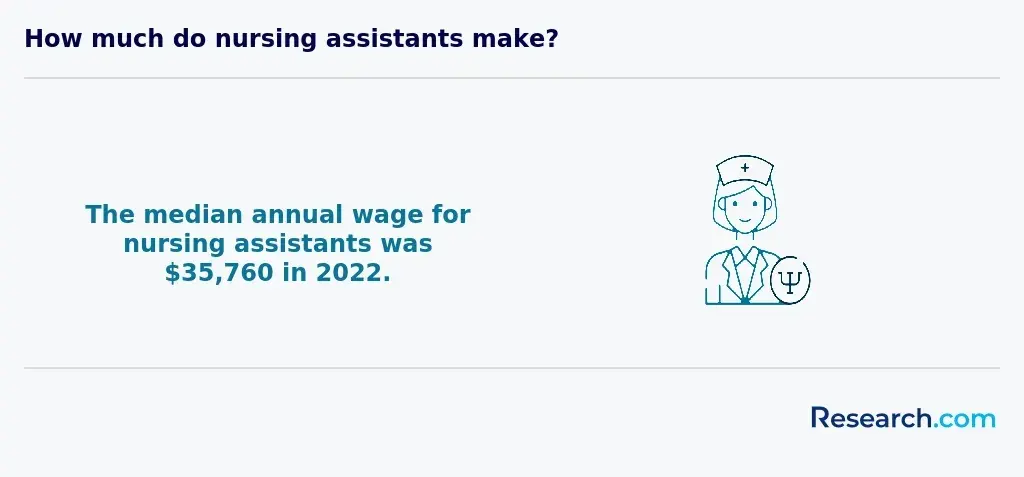
RNs and LPNs both renew their licenses every two years. CNAs also typically renew certification every two years. As of 2022, the median annual wage for nursing assistants was $35,760.
APRNs include Nurse Practitioners, Clinical Nurse Specialists, Certified Nurse Midwives, and Clinical Registered Nurse Anesthetists. Nurses considering graduate-level practice can compare campus and online nurse practitioner programs to understand how advanced preparation fits their schedule and career goals.
Which Virginia nursing credential should you choose?
- Choose CNA if you want a shorter entry route into patient care and are comfortable with hands-on support duties.
- Choose LPN if you want a practical nursing role with a faster path than many RN programs and are willing to work under appropriate supervision.
- Choose RN if you want broader clinical responsibility, more mobility across settings, and a stronger foundation for leadership or graduate study.
- Choose APRN if you already hold or plan to earn RN licensure and want advanced diagnostic, prescribing, or specialty-practice authority.
What are the requirements for a Virginia nursing license?
Virginia nursing license requirements depend on the credential, but the core pattern is similar: complete an approved education program, document supervised clinical training, pass the required exam, submit an application, and satisfy background-check requirements.
Virginia RN license requirements
Prospective RNs typically complete either an Associate Degree in Nursing or a Bachelor of Science in Nursing. Nursing programs combine classroom instruction with supervised clinical practice in settings such as hospitals, outpatient clinics, and long-term care facilities. Program descriptions often refer to at least 500 hours of clinical practice, while licensure documentation should be checked carefully because clinical-hour expectations may appear differently by program type and application category.
After graduation, RN candidates must pass the NCLEX-RN. The exam assesses whether a new nurse can provide safe entry-level care. Once education and exam requirements are met, candidates submit their licensure materials to the Virginia Board of Nursing.
Virginia LPN license requirements
LPN candidates complete an approved practical nursing program, complete required clinical learning, pass the NCLEX-PN, and apply to the Virginia Board of Nursing. LPNs provide essential bedside care, but their scope differs from RN practice and often involves supervision by RNs, physicians, or other authorized clinicians.
Alternative routes into registered nursing
Some healthcare workers already have clinical experience and want a shorter transition into nursing. For example, a paramedic to RN program may help qualified paramedics build on existing emergency-care knowledge while completing RN education requirements.
| Requirement area | What to check before applying | Why it matters |
| Program approval | Whether the nursing program is accepted for Virginia licensure | An unapproved program can make you ineligible or delay licensing |
| Clinical experience | How the school documents supervised clinical hours | The Board may need proof that you met required practice preparation |
| NCLEX eligibility | Whether your school submits required completion information promptly | Exam authorization depends on accurate documentation |
| Background check | Fingerprinting instructions and disclosure requirements | Missing or incomplete background materials can slow approval |
| Application category | Initial licensure, endorsement, reinstatement, or compact practice | Each route has different documentation steps |
Educational attainment varies across nursing support roles. The chart below shows Zippia data on certified nursing assistant education levels, including those who stop at a high school diploma and those who continue into higher education.
How do you apply for a nursing license in Virginia?
The Virginia nursing license application process is easier to manage when you treat it as a checklist rather than a single form. Start early, because schools, testing services, fingerprint vendors, and licensing staff may all be involved.
- Select the correct license type. Use the Virginia Board of Nursing application pathway for RN or LPN licensure. Choosing the wrong application category can create delays.
- Complete the online application. Expect to provide identifying information, education details, and other eligibility information requested by the Board.
- Arrange transcript and program verification. Your nursing program may need to send completion information or transcripts directly, depending on the application process.
- Complete fingerprinting and the criminal background check. Background review is required to support public safety and professional accountability.
- Pay the required fees. The RN application fee is $190, and the LPN application fee is $150. NCLEX-related charges are additional.
- Register for the NCLEX. After your eligibility is approved, follow testing instructions for the NCLEX-RN or NCLEX-PN.
- Monitor your application status. Do not assume that submitted means complete. Check for missing documents, name mismatches, or Board requests.
Documents to organize before you apply
- Government identification with the same name used on school and exam records
- Nursing program completion documentation or official transcripts
- Clinical-hour or program verification materials, when required
- Fingerprinting and background-check confirmation
- NCLEX registration information
- Payment records and application confirmation
The biggest practical tip is to keep copies of every confirmation page, receipt, and message. If an item is missing, having a clear paper trail can help you resolve the issue faster.
How often do you need to renew your nursing license in Virginia?
Virginia nursing licenses must be renewed every two years. Renewal is usually less complicated than initial licensure, but it still requires careful tracking. Missing the renewal deadline can interrupt employment, create administrative problems, and affect professional credibility.
Virginia nursing license renewal checklist
- Confirm your renewal deadline. Do not wait for a reminder; maintain your own calendar alerts.
- Complete continuing education requirements. Renewal depends on meeting required professional-development expectations.
- Submit the renewal application. Many nurses complete renewal online, but you should verify your own renewal instructions.
- Pay the renewal fee. Keep proof of payment and submission.
- Report required changes or disclosures. Criminal activity or disciplinary issues during the renewal period may affect license status.
| Renewal mistake | Why it causes problems | Better approach |
| Waiting until the final week | Technical issues or missing records may leave no time to fix errors | Start the renewal review well before the deadline |
| Not saving CE proof | You may need documentation if selected for review or if records are questioned | Keep certificates, dates, provider names, and course descriptions together |
| Assuming employer training always counts | Not every workplace module may satisfy licensing expectations | Confirm whether each course meets Virginia requirements |
| Ignoring name or address changes | Board notices may not reach you, and records may not match | Update official records promptly |
Can a Compact nurse practice in Virginia?
Yes, an eligible nurse with a valid multistate license issued by a Nurse Licensure Compact home state may practice in Virginia under compact privileges. The Nurse Licensure Compact allows RNs and LPNs/VNs to practice across member-state lines without obtaining a separate license in each compact state.
The NLC was enacted in 2000 and currently includes 39 states. Virginia joined the NLC on January 1, 2021. To use compact privileges in Virginia, a nurse must hold a multistate license from a compact home state and satisfy compact eligibility standards, including NCLEX passage and a criminal background check.
When compact practice is useful
- You live in a compact state and accept temporary or telehealth work involving Virginia patients.
- You travel between compact states and want to avoid multiple single-state licenses.
- You work for an employer serving patients across state lines.
Compact practice is not the same as having unlimited practice rights everywhere. Nurses should verify their home-state status, license type, employer requirements, and any state-specific practice rules before accepting work.
How can nurses licensed in other states obtain a license in Virginia?
Nurses who already hold a license in another state may apply for Virginia licensure by endorsement. Endorsement allows qualified nurses to seek a Virginia license without retaking the full licensing exam, provided they meet Virginia’s requirements.
Steps for licensure by endorsement
- Submit an endorsement application. Apply to the Virginia Board of Nursing and pay the required fee, currently $190.
- Verify your current license. Provide license verification from the state where you are licensed, often through the National Council of State Boards of Nursing system.
- Complete the criminal background check. Fingerprints must be submitted to the Virginia State Police as part of the process.
- Respond quickly to Board requests. Missing documentation is one of the most common reasons an endorsement application stalls.
Additional considerations for internationally educated nurses
- Credential evaluation: Foreign-educated applicants may need a recognized credentialing agency to evaluate their nursing education for equivalency with Virginia standards.
- English proficiency: Applicants whose first language is not English may need to document proficiency through a standardized test such as the TOEFL.
If you are relocating for work, ask your employer whether you should apply by endorsement or rely on compact privileges. The correct answer depends on your legal residence, license type, and whether your existing license is multistate.
Are accelerated nursing programs a good option in Virginia?
Accelerated nursing programs can make sense for students and working nurses who want to move faster toward a BSN or expanded career options. They are not automatically the right choice for everyone. The format is often intensive, and students need enough time, financial stability, and support to handle a compressed schedule.
When an accelerated RN to BSN program may be a strong fit
- You are already an RN. RN to BSN programs are designed for licensed nurses who want to build on prior nursing education.
- You need speed. Many fast-track RN to BSN programs can be completed in 12 to 18 months, while traditional BSN programs often take 3-4 years.
- You need flexible study options. Online or hybrid coursework may help nurses keep working while completing degree requirements.
- You are aiming for roles that prefer a BSN. Leadership, specialty, public health, and some hospital roles may favor BSN-prepared nurses.
When to be cautious
- You cannot reduce work hours during heavy terms.
- You need significant in-person support or tutoring and the program is mostly online.
- You are choosing the program only because it is fast, without checking accreditation, transfer credit, or clinical expectations.
- You have not compared total cost, fees, and lost work time.
To compare flexible options, review fast-track RN to BSN programs and look beyond the advertised completion time. Graduation support, transfer policies, and clinical or practicum requirements can matter as much as speed.
How to choose the right nursing program in Virginia
Your nursing program affects licensure eligibility, NCLEX readiness, clinical confidence, total cost, and long-term career mobility. A lower tuition price or convenient schedule is helpful, but neither should outweigh approval status, outcomes, and clinical quality.
Program factors that deserve close review
- Accreditation and state approval: Confirm that the program is recognized by appropriate nursing education accreditors, such as ACEN or CCNE when applicable, and that it supports Virginia licensure eligibility.
- NCLEX preparation: Ask for recent NCLEX-RN or NCLEX-PN pass-rate information and how the school supports students who struggle academically.
- Clinical placements: Strong partnerships with hospitals, long-term care facilities, outpatient clinics, and community health sites can improve hands-on preparation.
- Schedule format: Compare full-time, part-time, evening, hybrid, and online options. If admission access is a concern, research nursing schools with more accessible admissions pathways while still checking quality indicators.
- Transfer credit: If you already completed college coursework, ask exactly which credits transfer and whether they reduce time to completion.
- Student support: Look for tutoring, simulation labs, advising, mental health resources, and NCLEX coaching.
- Total cost: Include tuition, fees, books, uniforms, equipment, transportation, testing, background checks, and lost work hours.
| Question to ask a nursing school | Why the answer matters |
| Is this program approved for Virginia RN or LPN licensure? | Approval affects whether you can sit for the NCLEX and apply for licensure. |
| What are the most recent NCLEX pass results? | Pass outcomes can indicate how well the curriculum prepares students. |
| Where do students complete clinical rotations? | Clinical site quality shapes patient-care experience and networking. |
| How many students do not complete the program? | Attrition can reveal workload, support, or program-fit issues. |
| What costs are not included in tuition? | Hidden expenses can change the real price of attendance. |
| Does the program meet requirements if I move states? | Licensure rules vary, especially for online and out-of-state programs. |
Before enrolling, compare several schools, speak with admissions and financial aid staff, and ask current students about workload and clinical placement experiences. Choosing well at the beginning can prevent licensing delays later.
Financial planning for nursing education in Virginia
Nursing education costs include more than tuition. Students often need to budget for textbooks, lab supplies, uniforms, background checks, immunizations, exam preparation, transportation to clinical sites, and reduced work hours during demanding terms. A realistic budget helps you avoid dropping out because of expenses you could have anticipated.
Major cost categories to include
- Tuition and institutional fees: Community colleges may offer lower-cost ADN options, while universities may charge more for BSN programs.
- Clinical-related expenses: Students may need uniforms, equipment, health screenings, drug tests, background checks, and travel money.
- Testing and licensure costs: Budget for NCLEX-related expenses, application fees, and future renewal costs.
- Living costs: Housing, food, childcare, transportation, and lost wages can be larger than school charges for some students.
- Future education: Nurses planning advanced practice should also account for graduate study. If that is your goal, review the pathway and costs discussed in becoming a nurse practitioner in Virginia.
Ways to reduce out-of-pocket costs
- Compare community college, public university, private university, and online options before committing.
- Ask whether your employer offers tuition reimbursement or tuition assistance.
- Apply for scholarships and grants early, including nursing-specific awards.
- Look into service-based funding opportunities that support work in underserved areas.
- Use transfer credits carefully so you do not pay twice for similar coursework.
- Build an emergency fund for clinical transportation, exam retakes, or schedule changes.
Virginia nursing students may find scholarships, grants, and loan repayment opportunities through state-level organizations, private institutions, professional associations, and national programs. The Virginia Health Workforce Development Authority, the American Nurses Association, and the Health Resources and Services Administration are examples of sources students often review for nursing-related funding opportunities. Virginia also participates in nursing loan repayment programs for professionals who commit to high-need service areas, including the Virginia State Loan Repayment Program.
What common pitfalls should you avoid during the Virginia nursing licensure process?
Most licensing delays come from preventable administrative errors. Applicants often focus on the NCLEX but underestimate documentation, identity matching, program verification, background-check timing, and renewal tracking. Use official instructions and keep a clean record of every step. For a broader walkthrough of state-specific preparation, see this guide on how to become a nurse in Virginia.
| Common pitfall | What can happen | How to avoid it |
| Choosing a program without confirming approval | You may have trouble qualifying for the NCLEX or licensure | Verify program approval before enrolling |
| Submitting incomplete documents | Your application may sit pending until missing items arrive | Use a checklist and confirm receipt of transcripts and background materials |
| Using inconsistent names across records | Exam, school, and Board records may not match | Align legal names or provide required name-change documentation |
| Ignoring compact-license rules | You may assume you can practice when you need a Virginia license | Confirm whether your license is single-state or multistate |
| Waiting too long to renew | A lapse may interfere with employment | Track renewal dates and continuing education throughout the two-year cycle |
| Focusing only on tuition | The cheapest program may cost more if it delays graduation or licensure | Compare total cost, outcomes, support, and clinical placement quality |
How can Virginia nurses stay informed about regulatory updates?
Nursing rules can change through Board policy, legislation, compact updates, and employer compliance requirements. Virginia nurses should monitor official Board communications, review renewal notices carefully, and keep their contact information current with licensing authorities. Professional organizations, employer education departments, webinars, and conferences can also help nurses interpret changes in scope of practice, continuing education, and license maintenance.
If you are planning a faster degree pathway, make sure the curriculum aligns with current rules before enrolling. Comparing affordable accelerated nursing programs can be useful, but approval, clinical requirements, and graduation support should come before speed alone.
What tips and resources can help you through the licensing exam in Virginia?
NCLEX preparation should begin before graduation. The strongest candidates usually combine course review, practice questions, test-plan familiarity, remediation of weak areas, and a realistic study schedule. Do not rely only on passive reading. The NCLEX is designed to test judgment, prioritization, safety, and application of nursing knowledge.
Practical NCLEX preparation steps
- Read the current NCLEX candidate information. Understand registration, testing rules, identification requirements, and score reporting.
- Use the exam test plan. Match your study schedule to the content areas and question styles you will face.
- Take timed practice tests. This builds endurance and helps you identify weak areas before exam day.
- Review rationales, not just answers. Learning why an option is right or wrong improves clinical judgment.
- Join a structured study group if it helps you stay accountable. Peer review can be useful, but only if the group stays focused.
- Use faculty and mentors. Ask for help early if practice scores or content areas are weak.
Helpful support resources
- The Virginia Board of Nursing for state licensure instructions
- The National Council of State Boards of Nursing for NCLEX candidate materials
- Faculty review sessions, tutoring centers, and simulation labs
- Professional groups such as the Virginia Nurses Association for networking and continuing education support
- NCLEX review books, question banks, and practice exams designed for your exam type
The goal is not simply to memorize facts. Strong NCLEX preparation teaches you to think like a safe entry-level nurse under exam conditions.
What are the requirements to become an LPN in Virginia?
To become an LPN in Virginia, you must complete an approved practical nursing program, finish required classroom and supervised clinical training, pass the NCLEX-PN, complete the Virginia Board of Nursing application process, and satisfy background-check requirements. LPNs provide direct patient care, collect basic clinical information, assist with medications and treatments within their scope, and work under appropriate supervision.
Students should compare program approval, clinical placements, NCLEX-PN preparation, cost, and schedule before enrolling. For a focused explanation of the LPN pathway, see requirements to become an LPN in Virginia.
What factors should you consider when selecting a nursing school in Virginia?
When comparing Virginia nursing schools, look at accreditation, state approval, NCLEX outcomes, clinical placement quality, faculty support, graduation expectations, cost, and student services. Rankings can help you build a shortlist, but they should not replace direct questions to the school. A program that is convenient but weak in clinical placement or exam preparation can create long-term problems.
Prospective students can use Research.com’s overview of the best nursing schools in Virginia as a starting point, then verify details directly with each institution.
How can flexible online certification programs boost your nursing career in Virginia?
Online certification and short-term training can help nurses add targeted skills without leaving the workforce. These programs may be useful for nurses who want to strengthen knowledge in administration, informatics, leadership, patient education, or specialty care. However, online credentials vary widely, and not every course affects licensure, pay, or promotion.
Before enrolling, check whether the program is recognized by employers, whether it provides continuing education credit, and whether it fits your long-term role. If you are comparing flexible nursing-related pathways, review resources on online nursing career options in Virginia and confirm how each credential applies in the state.
What advanced education pathways can expand your nursing expertise in Virginia?
Advanced nursing education can prepare RNs for more specialized clinical, leadership, teaching, or research roles. Common graduate pathways include nurse practitioner, clinical nurse specialist, nurse midwifery, nurse anesthesia, nursing administration, nursing education, and doctoral study. Each pathway has its own certification, clinical, and licensing implications.
Nurses interested in expanded clinical responsibility can compare nurse practitioner programs in Virginia and evaluate specialty tracks, practicum support, certification preparation, and state authorization.
Can acquiring nutrition certification complement your nursing expertise in Virginia?
Nutrition knowledge can strengthen nursing practice, especially in chronic disease management, preventive care, patient education, maternal health, aging services, and community health. A nutrition credential does not replace nursing licensure, but it may help nurses communicate more effectively about diet-related health goals and collaborate with dietitians and other clinicians.
Nurses interested in formal nutrition training can explore how to become a nutritionist in Virginia to understand education and credential options that may complement clinical nursing work.
What online degree options offer flexibility and affordability for advancing your nursing career?
Online nursing degrees can be valuable for working nurses, especially when coursework is asynchronous and clinical requirements can be completed near the student’s location. Still, flexibility should not be confused with ease. Advanced online programs require strong time management, clinical planning, and careful verification of accreditation and state authorization.
Nurses planning doctoral-level practice or leadership study can compare affordable online BSN to DNP programs, paying close attention to practicum placement support, certification alignment, faculty access, and total program cost.
What additional healthcare credentials can broaden your career potential in Virginia?
Some nurses expand their career options by adding credentials outside traditional nursing. This can be useful for those interested in medication safety, operations, compliance, education, informatics, public health, or interdisciplinary care. The key is to choose a credential that supports a clear career goal rather than collecting certificates without a plan.
For example, professionals interested in pharmacy practice can review the process for becoming a licensed pharmacist in Virginia. That pathway requires separate education, examination, and state-specific licensing, so it should be treated as a major career decision rather than a simple add-on.
Can obtaining a medical billing and coding certification enhance your nursing career in Virginia?
Medical billing and coding knowledge can help nurses who want to move into utilization review, case management, clinical documentation improvement, revenue cycle operations, compliance, or healthcare administration. It is especially relevant for nurses who enjoy connecting clinical care with documentation, reimbursement, and operational accuracy.
A nurse considering this route can explore medical billing and coding certification in Virginia and compare it with other non-clinical nursing career options.
What are the requirements and opportunities for nurse midwifery in Virginia?
Nurse midwifery is an advanced practice pathway for nurses interested in reproductive health, pregnancy, birth, postpartum care, and patient-centered family health services. In Virginia, aspiring nurse midwives must complete advanced nursing education, meet clinical training expectations, obtain appropriate certification, and follow state practice requirements.
Because nurse midwifery involves advanced clinical authority, candidates should choose accredited programs carefully and confirm that coursework and clinical experiences align with Virginia expectations. Review educational requirements for a nurse midwife in Virginia before committing to a program.
What career advancement opportunities are available for nurses in Virginia?
Virginia nurses can advance by deepening clinical expertise, moving into leadership, earning advanced degrees, specializing through certification, or shifting into education, policy, or healthcare operations. The best path depends on whether you want more bedside responsibility, more independence, a higher-level administrative role, or a non-clinical career direction.
| Advancement path | Best fit for nurses who want | Common preparation |
| Advanced practice nursing | Greater clinical autonomy and specialty patient care | Graduate nursing degree, RN license, national certification, and state authorization |
| Leadership and administration | Unit management, staffing responsibility, quality improvement, or executive roles | Experience plus leadership training, often an MSN or related graduate preparation |
| Specialty certification | Recognition in areas such as critical care, pediatrics, oncology, or emergency nursing | Relevant clinical experience and specialty exam preparation |
| Nursing education | Teaching students, orienting new nurses, or developing clinical training programs | Advanced education, teaching skill, and clinical expertise |
| Public health and policy | Community health, systems improvement, advocacy, or regulatory work | Public health knowledge, policy experience, and strong communication skills |
| Healthcare operations | Case management, documentation, billing, compliance, or informatics | Targeted certificates, data skills, and experience with healthcare systems |
Career advancement should be planned backward from the role you want. Before paying for another degree or certificate, ask employers what they value, confirm whether licensure or certification is required, and compare the time and cost against likely opportunities.
Related Articles for Nearby States
- 2027 West Virginia Nursing License Requirements
- 2027 Maryland Nursing License Requirements
- 2027 North Carolina Nursing License Requirements
- 2027 Tennessee Nursing License Requirements
- 2027 Kentucky Nursing License Requirements
- 2027 Pennsylvania Nursing License Requirements
- 2027 South Carolina Nursing License Requirements
- 2027 Ohio Nursing License Requirements
- 2027 Delaware Nursing License Requirements
- 2027 New Jersey Nursing License Requirements
Key insights
- Virginia nursing licensure is role-specific. RN, LPN, CNA, and APRN credentials have different education, exam, renewal, and scope-of-practice implications.
- The NCLEX is essential for first-time RN and LPN licensure. RN candidates take the NCLEX-RN, while LPN candidates take the NCLEX-PN.
- Application accuracy matters. Missing transcripts, incomplete background checks, name mismatches, and wrong application categories can delay approval.
- Renewal happens every two years. Track continuing education and renewal deadlines early to avoid a lapse in licensure.
- Compact practice can simplify mobility. Eligible nurses with a multistate compact license may practice in Virginia, but they still need to verify compact status and state-specific rules.
- School choice affects licensure and career outcomes. Confirm approval, accreditation, NCLEX support, clinical placement quality, total cost, and transfer policies before enrolling.
- Advanced credentials should serve a clear goal. RN to BSN, NP, DNP, nurse midwifery, nutrition, billing and coding, and other healthcare credentials can help, but only when they align with a specific career plan.
Resources:
- dhp.virginia.gov (19 Jul 2024). Application Wizard - Registered Nurse. [dhp.virginia.gov] https://www.dhp.virginia.gov/Boards/Nursing/ApplicantResources/ApplyforLicense/RegisteredNurse/
- Grabowski, D., Chen, A., & Saliba, D. (2023). Paying for Nursing Home Quality: An Elusive But Important Goal. Journal of the American Geriatrics Society, 71, 342 - 348. https://doi.org/10.1111/jgs.18260
- U.S. Bureau of Labor Statistics. (2023, September 6). Occupational outlook handbook - Nurse anesthetists, nurse midwives, and nurse practitioners. Retrieved February 16, 2024, from https://www.bls.gov/ooh/healthcare/nurse-anesthetists-nurse-midwives-and-nurse-practitioners.htm
- nursinglicensemap.com (03 Apr 2020). Become a Nurse in Virginia – Licensure & Requirements. [nursinglicensemap.com] https://nursinglicensemap.com/states/virginia-nursing-license/
- dhp.virginiainteractive.org (26 Jul 2024). License Lookup. https://dhp.virginiainteractive.org/Lookup/Index
Other Things You Should Know About Virginia Nursing License Requirements
The Virginia Board of Nursing regulates registered nurses, licensed practical nurses, and advanced practice registered nurses in the state. It sets licensure standards, issues and renews licenses, enforces practice rules, and handles disciplinary actions under the Virginia Department of Health Professions.
Virginia nurses must complete at least 30 contact hours of continuing education in their specialty area or practice focus every two years for license renewal in 2027, ensuring adherence to the Virginia Board of Nursing regulations.





