2027 Best Nursing Schools in Virginia – Accredited ADN, BSN, MSN Programs

Co-Founder and Chief Data Scientist
Choosing a nursing school in Virginia is not just a question of which campus is closest or which online program looks fastest. The better question is whether the program will qualify you for licensure, prepare you for the NCLEX, fit your work schedule, and make financial sense based on your career goal. Virginia has many nursing options, from LPN and ADN programs to BSN, RN to BSN, MSN, DNP, nurse practitioner, and nurse midwife pathways.
This guide is for prospective nursing students, working LPNs, registered nurses considering a BSN or graduate degree, and career changers comparing nursing with other health degree options. You will learn how nursing employment looks in Virginia, what education and licensure steps are required, how long programs usually take, what costs to compare, how to evaluate online nursing programs, and which Virginia schools are worth considering for 2027.
Best Nursing Schools in Virginia Table of Contents
- Is nursing a good job in Virginia?
- What are the steps to becoming a nurse in Virginia?
- Nursing Program Length in Virginia
- Tuition and Costs of Nursing Programs in Virginia
- Best Nursing Schools in Virginia for 2027
- What To Look For in a Nursing Program in Virginia
- What Types of Online Nursing Programs Are Available in Virginia?
- What advantages do nurse practitioner programs in Virginia offer for career advancement?
- How can specialized certifications elevate nursing careers in Virginia?
- What are the requirements for maintaining a nursing license in Virginia?
- Are online RN to BSN no clinicals programs an effective pathway for working nurses in Virginia?
- What continuing education opportunities are available for nurses in Virginia?
- What are the LPN requirements in Virginia?
- Exploring Pathways to Affordable Nursing Education in Virginia
- What advantages do LPN programs offer for future nursing careers in Virginia?
- How can nurses maintain a good work-life balance in Virginia?
- How can nurses become nurse midwives in Virginia?
- Navigating Virginia’s Nursing Job Market and Employer Expectations
- How can nurses transition to other healthcare roles in Virginia?
- How can nurses diversify their careers with complementary healthcare roles in Virginia?
- How is technology reshaping nursing innovation in Virginia?
Quick Answer: Are Nursing Schools in Virginia Worth Considering?
Yes, Virginia is a strong state for nursing education and employment if you choose an approved, accredited program that matches your licensure goal. The state employed 71,940 registered nurses in May 2024 for a population of 8,822,377, equal to 8.15 nurses per 1,000 residents. The U.S. Bureau of Labor Statistics also estimates 73,710 registered nurses in Virginia, with a mean hourly wage of $42.06 and an annual mean salary of $87,490. Advanced practice roles report higher averages: nurse anesthetists earned $216,210 annually, nurse midwives earned $110,650, and 8,900 nurse practitioners earned $125,580.
The decision is still individual. An ADN may be the fastest route to RN licensure, a BSN may offer broader long-term mobility, an RN to BSN can help working nurses complete a bachelor’s degree, and MSN or DNP programs can support advanced practice, leadership, or teaching careers. The national hospital RN turnover rate was 22.5% in 2024, according to NSI Nursing Solutions, which means employers continue to need qualified nurses, but students should also evaluate workload, burnout risk, clinical placement expectations, and total cost before enrolling.
Many people are drawn to nursing because of its practical benefits, but the best outcome usually comes from choosing the right entry point rather than rushing into the first available program.
Is nursing a good job in Virginia?
Nursing can be a strong career choice in Virginia because the state has steady healthcare demand, a large RN workforce, many nursing education options, and salaries that can compare favorably with broader cost-of-living conditions. It is not an easy career, however. Shift work, staffing pressure, emotional strain, and physical demands are real, especially in hospital and long-term care settings.
Virginia’s nursing workforce data also points to a replacement need. In 2024, 89.6% of nurses in Virginia were female. Female nurses under 30 numbered 15,223, or 15.5%; those ages 30 to 34 numbered 13,859, or 14.1%; and nurses ages 35 to 39 numbered 13,087, or 13.3%. Nurses ages 40 to 44 numbered 11,540, or 11.7%, while those ages 45 to 49 numbered 9,926, or 10.1%. The median age was 43.
The more important workforce concern is age distribution. Almost 2 out of 5 Virginia RNs, or 39.58%, were 50 or older, and 16,397 RNs, or 20.1%, were 60 and over. That does not automatically guarantee easy hiring for every graduate, but it does show why hospitals, clinics, home health agencies, and long-term care providers need a pipeline of new nurses.
| Factor | What it means for nursing students in Virginia |
| Workforce demand | A large share of older RNs suggests continued need for new nurses and succession planning. |
| Salary potential | Virginia RN and advanced practice salaries can be attractive, but actual pay depends on role, employer, shift, region, and experience. |
| Program choice | Students can enter through LPN, ADN, BSN, RN to BSN, MSN, DNP, and certificate pathways. |
| Work-life fit | Hospital work can be demanding; outpatient, telehealth, school nursing, and administrative roles may offer more predictable schedules. |
Healthcare needs driving nursing demand
Chronic disease rates help explain why nurses remain essential across Virginia’s healthcare system. In 2021, arthritis prevalence was 27.1%, COPD was 6.4%, diabetes was 11.5%, strokes were 3.4%, and heart attacks were 3.8%. Common risk factors were also widespread: high cholesterol affected 38.6% of the population, hypertension affected 34.4%, and 68.1% of residents were overweight or obese.
These conditions often require long-term monitoring, medication education, prevention counseling, care coordination, and support during acute episodes. That creates opportunities not only in hospitals but also in primary care, specialty clinics, community health, case management, rehabilitation, and home health.
Cost of living considerations
Virginia is listed as the 19th most expensive state and the 31st best U.S. state to live in. The monthly cost of living is estimated at about $2,298 with rent and $858 without rent for a single person. For a family of four, the estimated monthly cost is around $5,248 with rent and $2,698 without rent. Food costs are listed at $595 per month for singles and $1,540 for a family of four, while rent and utilities are around $1,440 and $2,550, respectively.
For nursing students, this means affordability depends heavily on where you live, whether you can work during school, and whether you qualify for in-state tuition, transfer credits, employer tuition assistance, scholarships, or online coursework that reduces commuting and housing costs.
Nursing salaries in Virginia
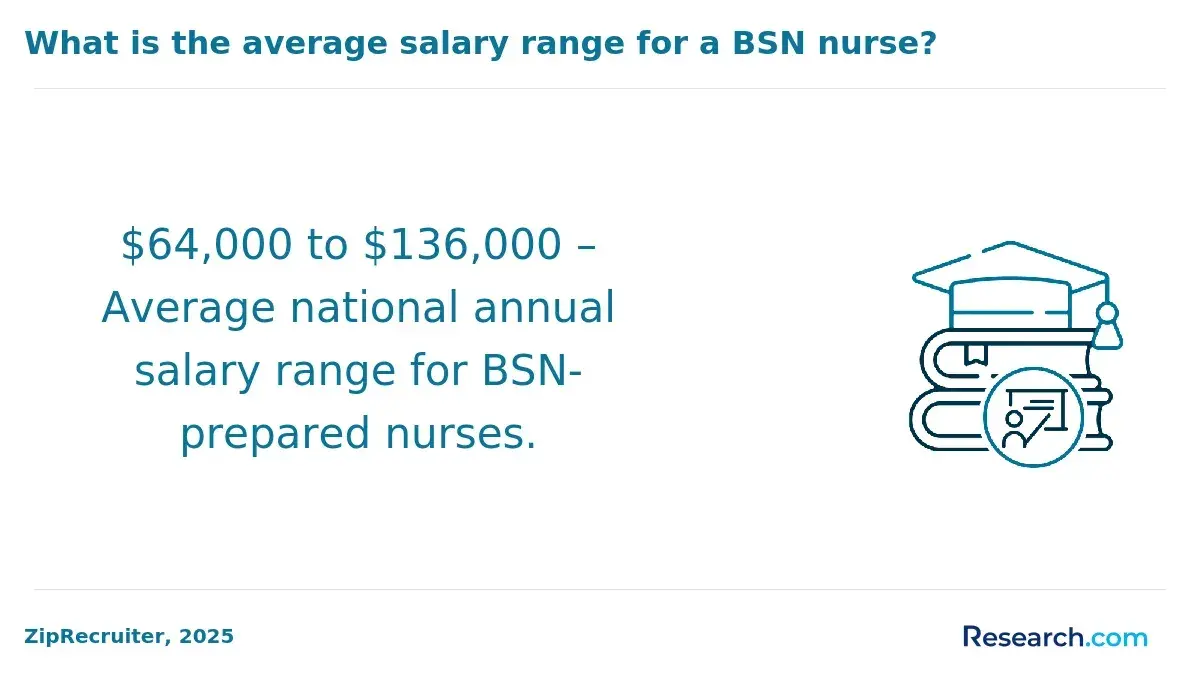
In 2024, registered nurses in Virginia earned $89,170 annually on average, slightly above the 2024 median pay of $89,010 per year for all U.S. RNs. Salary should not be the only reason to choose nursing, but it is an important part of evaluating return on investment.
Students should compare expected earnings with the total program cost, including tuition, fees, books, uniforms, immunizations, background checks, testing fees, clinical travel, and lost income if a program requires full-time attendance.
What are the steps to becoming a nurse in Virginia?
Virginia participates in the Enhanced Nurse Licensure Compact, often called the eNLC. If you already hold a multistate license from another compact state, you generally do not need a separate Virginia license unless Virginia becomes your primary state of residence.
For new nursing students, the process depends on whether you want to become an LPN, RN, or advanced practice registered nurse. The RN pathway usually requires an approved nursing program, the NCLEX-RN, and a license application through the Virginia Board of Nursing.
| Step | What to do | Why it matters |
| 1. Choose an approved program | Complete an ADN or BSN program from a nursing school approved for RN education. | Graduating from an unapproved or non-accredited program can block licensure eligibility. |
| 2. Confirm accreditation and approval | Use the Virginia Board of Nursing’s approved nursing program list. | Approval status, program type, location, and contact details help you verify legitimacy before applying. |
| 3. Pass the licensing exam | Take the NCLEX-RN for RN licensure or the NCLEX-PN for practical nursing. | The exam is required before you can receive the relevant nursing license. |
| 4. Apply for licensure | Submit the online license application through the Virginia Board of Nursing application system. | The board reviews your credentials and issues your license if all requirements are satisfied. |
| 5. Begin the job search | Apply to hospitals, clinics, long-term care facilities, home health agencies, public health organizations, and specialty practices. | Your first role can shape your specialty interests, schedule expectations, and future education plans. |
RN licensure by endorsement
Registered nurses who are already licensed may be able to apply by endorsement. Virginia’s compact status can simplify mobility, but applicants may still need to submit items such as a background check, proof of primary state of residence, proof of current licensure, employment verification, and official transcripts. The Virginia Board of Nursing’s online application wizard guides applicants through the applicable requirements.
Nursing roles and specialization options
Nursing is not a single career track. After earning initial licensure, nurses may pursue roles as LPNs, RNs, APRNs, nurse anesthetists, nurse midwives, nurse practitioners, clinical nurse specialists, certified nursing assistants, advanced certified nurse aides, and medication aides. CNAs and LPNs typically provide foundational care under RN supervision, while APRNs complete graduate-level preparation for advanced clinical roles.
RNs can also focus their careers in adult gerontology, critical care, medical-surgical nursing, nursing leadership, oncology, palliative care, pediatrics, psychiatric-mental health, and other specialties. Students comparing credentials can review the different nursing degree levels before committing to a pathway.
Nursing entry points in Virginia
Virginia students can enter registered nursing through a nursing diploma, an Associate Degree in Nursing, or a Bachelor of Science in Nursing. In 2024, the highest professional degree distribution among Virginia RNs included 1,122 nurses whose lowest entry credential was an LPN diploma or certificate, 4,579 hospital RN diploma holders, 22,597 associate degree holders, and 44,395 baccalaureate degree holders, according to the Virginia Department of Health Professions. Some nurses may have first earned licensure with an earlier credential before completing a higher degree.
Working RNs without a bachelor’s degree may want to compare affordable online RN to BSN programs. Many RN to BSN options are designed for licensed nurses and may accept current employment or prior clinical experience as part of the admissions context. Full-time completion is often possible in about one year, but part-time study may be a better fit for nurses balancing shifts, family responsibilities, and tuition costs.
Nursing Program Length in Virginia
The time required to become a nurse in Virginia depends on your starting point and target credential. Pre-licensure programs include ADN, traditional BSN, accelerated BSN, MSN entry, and hospital diploma routes. Post-licensure options such as RN to BSN, MSN, DNP, and certificates vary by school and specialty.
| Program type | Typical length stated for Virginia pathways | Best fit |
| Associate Degree in Nursing | Usually 1.5 to two years | Students seeking a shorter academic path to RN licensure. |
| Traditional BSN | Usually around four years full-time | First-time college students who want a bachelor’s degree and broader career mobility. |
| Accelerated BSN | About 12 months to 19 months | Students who already hold a bachelor’s degree in another field. |
| MSN entry program | Around two years | Career changers with a bachelor’s degree outside nursing who want graduate-level preparation. |
| Hospital RN diploma program | Varies by program | Students seeking hospital-based practical preparation rather than a traditional university format. |
Students should note that the Virginia Board of Nursing does not regulate or approve out-of-state or post-licensure nursing education programs. This is especially important for online learners. Before enrolling in an online program based outside Virginia, confirm whether it meets your professional goals, clinical requirements, and any state-specific licensure expectations.
Tuition and Costs of Nursing Programs in Virginia
Nursing program cost depends on the school, degree level, residency status, delivery format, transfer credits, and clinical requirements. Online and hybrid formats may reduce commuting, parking, and housing costs, but they do not eliminate all expenses. Students should budget for fees, uniforms, immunizations, background checks, lab supplies, textbooks, testing fees, equipment such as stethoscopes, and travel to clinical sites.
| School or program example | Cost information stated | Decision point for students |
| University of Virginia BSN | $19,868 total tuition cost in-state; $56,798 total tuition cost out-of-state | Residency status makes a large difference in total tuition. |
| University of Virginia RN to BSN | $583/credit for Virginia residents; $1,810/credit for non-Virginia residents | Working RNs should calculate total credits remaining after transfer review. |
| University of Virginia MSN | $20,682 total tuition cost for Virginia residents; $33,774 for non-Virginia residents | Graduate students should also account for clinical travel and specialty costs. |
| Virginia Commonwealth University BSN | $12,850 in-state annual tuition; $34,744 out-of-state annual tuition | Annual tuition should be multiplied by expected years of enrollment. |
| Virginia Commonwealth University MSN | $13,404 in-state annual tuition; $27,550 out-of-state annual tuition | Compare tuition with specialty, clinical support, and completion timeline. |
| Virginia Commonwealth University DNP | $11,050 in-state annual tuition; $23,583 out-of-state annual tuition | DNP students should ask about project support and clinical hour requirements. |
| Marymount University BSN | $37,400 per year | Private university pricing may be offset by institutional aid, but students should verify net cost. |
| Marymount University graduate degrees | $1,275/credit hour | Per-credit pricing requires knowing the exact credit requirement. |
| ECPI nursing program examples | BS Nursing Traditional: $9,000; BS to BSN: $10,912.50; Master of Science in Nursing: $6,480; MSN, Family Nurse Practitioner: $4,896 | Students should confirm what each listed amount includes and whether additional fees apply. |
Graduate nursing programs such as MSN and DNP degrees generally require clinical practice in a hospital or healthcare facility. Some students complete these requirements through their employer or an approved internship facility, which can reduce relocation costs, but clinical placement policies vary. Ask each school whether it arranges placements, assists with placements, or requires students to find their own preceptors.
Best Nursing Schools in Virginia for 2027
The following schools are examples of strong Virginia nursing options identified through Research.com’s review of available program information, approval status, accreditation, NCLEX data, and public program details. This is not a complete list of every quality nursing school in the state. Students should also review the Virginia Board of Nursing’s complete currently approved Nursing RN/PN education programs before applying.
1. University of Virginia
The University of Virginia School of Nursing offers BSN, RN to BSN, MSN, DNP, certificate, CNL, RN to CNL, and PhD pathways. The school also offers guaranteed admissions opportunities for alumni interested in MSN, post-master’s certificate specialties, and DNP study. It is connected with the Nurses Climate Challenge, which focuses on the relationship between climate change and health.
- Program length: BSN: 4 years; CNL: two-year Master’s; RN to BSN Hybrid Program: two-year, part-time; DNP Post-BSN Pathway: 2 + 2 years plan of study or a three-year accelerated plan of study; DNP Post-MSN Pathway: two years full-time or three years part-time.
- Tracks and concentrations: Various.
- Tuition cost: BSN: $19,868 total tuition cost in-state and $56,798 total tuition cost out-of-state; RN to BSN: $583/credit for Virginia residents and $1,810/credit for non-Virginia residents; MSN: $20,682 total tuition cost for Virginia residents and $33,774 total tuition cost for non-Virginia residents.
- Required credits: Various.
- Accreditation: Commission on Collegiate Nursing Education.
2. Virginia Commonwealth University
The Virginia Commonwealth University School of Nursing offers traditional BSN, accelerated BSN, RN to BSN, MSN, DNP, and certificate programs. Some online VCU nursing coursework can be paired with in-person learning through a community college. Graduate pathways prepare students for nurse practitioner, leadership, and administration roles, and the program is ranked among the top 50 master’s nursing programs nationwide.
- Program length: BSN: 4 years; RN to BSN: 1 year; MSN: 2 years.
- Tracks and concentrations: Various.
- Tuition cost: BSN: $12,850 in-state annual tuition and $34,744 out-of-state annual tuition; MSN: $13,404 in-state annual tuition and $27,550 out-of-state annual tuition; DNP: $11,050 in-state annual tuition and $23,583 out-of-state annual tuition.
- Required credits: Various.
- Accreditation: Commission on Collegiate Nursing Education.
3. Marymount University
The Malek School of Nursing Professions at Marymount University offers traditional BSN, transfer BSN, accelerated second degree BSN, MSN, online MSN options, DNP, BSN to DNP, post-master’s DNP, and PMHNP online pathways. Its programs emphasize clinical experience, student-centered learning, leadership development, and service to diverse communities.
- Program length: BSN: 4 years; Accelerated BSN: full-time 4 consecutive semesters, online/distance 4 consecutive semesters, part-time 9 consecutive semesters; MSN: varies.
- Tracks and concentrations: Various.
- Tuition cost: BSN: $37,400 per year; graduate degrees: $1,275/credit hour.
- Required credits: Various.
- Accreditation: Commission on Collegiate Nursing Education.
4. George Mason University
The George Mason University School of Nursing offers BSN, RN to BSN, MSN, BSN to DNP, and MSN to DNP options. Many courses are available online, while some require classroom-based learning. The school’s graduate programs support preparation in clinical practice, nursing education, and leadership.
MSN students use practicum experiences to build advanced skills with an expert preceptor in their concentration. Available areas include Adult-Gerontology, Acute Care Nurse Practitioner, Family Nurse Practitioner, Nurse Midwife, Pediatric Nurse Practitioner, and Psychiatric-Mental Health Nurse Practitioner, among others. DNP students must complete 1,000 precepted or mentored clinical hours and two practice inquiry project courses that lead to an approved scholarly product.
- Program length: BSN: 4 years; MSN: 2 years.
- Tracks and concentrations: Various.
- Tuition cost: BSN: $10,095.00 in-state and $34,259.00 out-of-state; MSN, Nursing Family Nurse Practitioner online: $20,400 for both in-state and out-of-state students.
- Required credits: Various.
- Accreditation: Commission on Collegiate Nursing Education.
5. James Madison University
James Madison University School of Nursing offers a Bachelor of Science in Nursing, RN to BSN completion program, Master of Science in Nursing, Doctor of Nursing Practice, Chronic Illness minor, and continuing education programs. Its RN to BSN program is fully online and designed for licensed RNs who completed community college or diploma nursing education.
The MSN includes concentrations such as Clinical Nurse Leader, Nurse Administrator, Family Nurse Practitioner, Adult-Gerontology Primary Care Nurse Practitioner, Nurse Midwifery in conjunction with Shenandoah University, and Psychiatric Mental Health Nurse Practitioner in conjunction with Shenandoah University. The DNP offers Post-Master’s DNP and Advanced Practice Post-Bachelor’s DNP tracks.
- Program length: RN to BSN: 2.5 years; MSN: four full-time academic semesters fulltime.
- Tracks and concentrations: Various.
- Tuition and fees: BSN: $13,576 in-State and $30,790 out-of-State; graduate tuition per credit and fees: $545 in-state and $1,272 out-of-state.
- Required credits: Various.
- Accreditation: Commission on Collegiate Nursing Education.
What to Look For in a Nursing Program in Virginia
The best nursing school is not always the most famous one. For most students, the right program is the one that is approved for licensure, has credible outcomes, fits the student’s schedule, supports clinical placement, and has a total cost that can be justified by the intended career path.
Accreditation and state approval
Accreditation and state approval protect students and patients. A nursing degree from an unapproved, non-accredited, or fraudulent program may not qualify you for licensure, employment, or graduate study. It can also create serious patient safety and legal concerns.
For U.S. nursing programs, major accrediting bodies include the Commission on Collegiate Nursing Education and the Accreditation Commission for Education in Nursing. Midwifery programs are accredited by the Accreditation Commission for Midwifery Education, and nurse anesthetist programs are accredited by the Council on Accreditation of Nurse Anesthesia Education Programs.
Before applying, check the Virginia Board of Nursing’s list of currently approved Nursing RN/PN education programs. If a program is not listed or cannot clearly explain its approval status, treat that as a warning sign.
Faculty credentials and student support
Strong nursing faculty should bring both teaching ability and current clinical or scholarly expertise. This matters most for MSN, DNP, and certificate students who need mentoring in advanced practice, research, leadership, education, or specialty practice. Review faculty profiles, clinical backgrounds, publications, and professional service before choosing a graduate program.
Specialty alignment
A program’s curriculum should match the role you want. Leadership courses matter for future nurse managers. Informatics courses can help nurses move toward data, technology, or systems roles. Psychiatric-mental health, family practice, adult-gerontology, pediatrics, oncology, and nurse midwifery tracks should be evaluated based on clinical placement quality and certification preparation.
NCLEX pass rates
NCLEX pass rates are one useful measure of program quality, especially for pre-licensure ADN and BSN programs. They do not tell the whole story, but consistently low pass rates may indicate weak academic support, poor admissions screening, or inadequate exam preparation. The National Council of State Boards of Nursing publishes NCLEX pass rate statistics by exam period.
Virginia’s healthcare provider ratios also show why nursing support matters. In 2024, annual ratios in Virginia were 1,410 patients for every primary care physician, 503 to 1 mental health provider, and 955 to 1 other primary care provider, according to Data USA. Nurses help extend access, coordinate care, educate patients, and support providers across these settings.

Students can also review the 2024 NCLEX pass rates of each school in Virginia using the available interactive map.
For 20 nursing schools in Virginia with Associate Degree in Nursing education programs, the 2024 mean pass rate was 80.21%, the minimum was 55.10%, the maximum was 94.37%, and the median was 80.715%.
For 34 baccalaureate degree nursing education programs, the 2024 mean pass rate was 80.87%, with a minimum of 37.50%, a maximum of 100%, and a median of 86.25%.
Galen College of Nursing’s Richmond, Virginia campus and Southside College of Health Sciences deserve consideration as honorable mentions for students comparing program quality and NCLEX outcomes. Students still deciding on a nursing pathway can also compare college majors for nursing.
What Types of Online Nursing Programs Are Available in Virginia?
Online nursing education in Virginia is most common for post-licensure students, but some hybrid and accelerated options are also available. Fully online coursework can be helpful, but most nursing degrees still include clinical, practicum, lab, simulation, or local placement requirements. Always ask what must be completed in person before enrolling.
| Online or hybrid option | Who it serves | What to verify before enrolling |
| Online accelerated BSN | Students with a non-nursing bachelor’s degree who want a faster RN pathway, often in 12-19 months. | Clinical placement location, state approval, schedule intensity, and NCLEX preparation. Compare online accelerated BSN programs carefully. |
| Online RN to BSN | Licensed RNs with an ADN or diploma who want a bachelor’s degree. | Transfer credits, total credits required, tuition per credit, and whether clinical-style requirements are project-based. |
| Online MSN | RNs seeking leadership, education, informatics, or advanced practice preparation. | Specialty accreditation, practicum requirements, preceptor support, and certification exam alignment. |
| Online DNP | Advanced practice nurses or nurse leaders pursuing doctoral-level practice preparation. | Required clinical hours, project expectations, residency requirements, and faculty mentorship. |
| Online certificates | Nurses adding a specialty or preparing for a new role. | Eligibility requirements, certification relevance, and whether credits can apply to a future degree. |
What advantages do nurse practitioner programs in Virginia offer for career advancement?
Nurse practitioner programs can help experienced RNs move into advanced clinical roles with greater responsibility for assessment, diagnosis, treatment planning, patient education, and care coordination. These programs are especially relevant for nurses who want more clinical autonomy, stronger specialty expertise, or a path into primary care, psychiatric-mental health, pediatrics, adult-gerontology, women’s health, or family practice.
Prospective students should compare certification alignment, clinical placement assistance, faculty practice experience, and state authorization. For a focused comparison, review Research.com’s guide to nurse practitioner programs in Virginia.
How can specialized certifications elevate nursing careers in Virginia?
Specialty certifications can help nurses document advanced knowledge in areas such as critical care, oncology, pediatrics, telehealth, psychiatric-mental health, informatics, and leadership. They are not a substitute for required licensure, but they can support promotion, specialty hiring, and professional credibility.
Certifications are most useful when they match your actual job duties or intended specialty. Nurses interested in psychiatric-mental health practice can compare affordable online PMHNP programs as part of a broader graduate education plan.
What are the requirements for maintaining a nursing license in Virginia?
Maintaining a Virginia nursing license requires timely renewal and compliance with continuing competency rules. Nurses should track renewal deadlines, continuing education documentation, practice requirements, and any updates from the Virginia Board of Nursing. Missing renewal requirements can affect employment eligibility, especially in roles where an active license is mandatory.
For a detailed walkthrough of renewal and compliance steps, use Research.com’s guide to nursing license requirements in Virginia.
Are online RN to BSN no clinicals programs an effective pathway for working nurses in Virginia?
Online RN to BSN programs with no traditional clinical placements can be effective for licensed RNs who already have bedside or clinical experience and need a flexible route to a bachelor’s degree. These programs may use case-based assignments, community health projects, simulations, leadership projects, or practice-focused coursework instead of traditional clinical rotations.
The key is accreditation and employer acceptance. Before enrolling in online RN to BSN no clinicals options, ask whether the program is accredited, how practice learning is assessed, whether your ADN credits will transfer, and whether graduate schools or employers you are targeting recognize the degree.
What continuing education opportunities are available for nurses in Virginia?
Continuing education helps Virginia nurses maintain licensure, stay current with clinical standards, and prepare for advancement. The right CE choices should support both compliance and career direction.
- License renewal CE: Virginia requires 30 contact hours of continuing education for RNs and APRNs every two years. Topics may include patient care, healthcare law updates, safety, pharmacology, technology, and clinical practice changes.
- Specialty certifications: Certifications such as CCRN, OCN, and CPN can strengthen expertise in critical care, oncology, pediatrics, and other focused areas.
- Online CE courses: Accredited providers, professional associations, and Virginia schools offer online CE in areas such as pharmacology, telehealth, leadership, and evidence-based care.
- Workshops and seminars: Hospitals and healthcare organizations may offer in-person training on emergency response, patient safety, health policy, and specialty procedures.
- Academic progression: Nurses who want a broader role can consider RN to BSN, RN to MSN, BSN to DNP, and certificate pathways, often with online or part-time formats.
What are the LPN requirements in Virginia?
The Licensed Practical Nurse route can be a faster entry into nursing practice than an RN degree. In Virginia, LPN candidates must complete an approved practical nursing program with classroom and supervised clinical training, then pass the NCLEX-PN before state licensure. LPNs provide important direct care in long-term care, clinics, rehabilitation, home health, and other settings, typically under RN or provider supervision.
For the full pathway, review Research.com’s guide to LPN requirements in Virginia.
Exploring Pathways to Affordable Nursing Education in Virginia
Nursing school can be expensive, but students can reduce cost by choosing the right program level, maximizing transfer credits, comparing net price instead of sticker price, and asking direct questions about clinical expenses.
Scholarships and grants
Virginia nursing students may be able to use state-funded scholarships, school-based scholarships, grants, employer tuition support, and other aid. The Virginia Nursing Scholarship Program is one example of financial assistance connected to working in the state after graduation. Schools such as the University of Virginia and Virginia Commonwealth University may also offer institutional aid based on merit, need, or program criteria.
Online and hybrid formats
Online and hybrid programs can lower indirect costs by reducing commuting, parking, and relocation expenses. They may also allow students to remain employed. However, students should not choose a program solely because it is online or easier to enter. If admission flexibility matters, compare nursing schools with accessible admissions while still checking approval, accreditation, NCLEX performance, and clinical expectations.
Federal financial aid
Completing the Free Application for Federal Student Aid is an important step for students seeking grants, loans, and work-study opportunities. Federal programs such as the Federal Pell Grant and Federal Supplemental Educational Opportunity Grant may help eligible students reduce out-of-pocket costs.
Cost-saving questions to ask before enrolling
- How many credits will transfer into the program?
- What is the total program cost, not just tuition?
- Are lab, simulation, testing, background check, and clinical placement fees included?
- Does online tuition differ for in-state and out-of-state students?
- Can I attend part time while working?
- Does the school help secure clinical placements?
- What percentage of students complete the program on time?
What advantages do LPN programs offer for future nursing careers in Virginia?
LPN programs can be useful for students who want to enter healthcare sooner, build hands-on patient care experience, and later decide whether to pursue RN or BSN education. They usually require less time than RN degree programs and may cost less, though students should still compare total expenses and local job opportunities.
For many learners, the LPN pathway is a practical first step rather than a final destination. If advancement is the goal, look for bridge options and schools that support progression to RN or BSN study. Research.com’s guide to the best online LPN programs in Virginia can help students compare flexible routes.
How can nurses maintain a good work-life balance in Virginia?
Work-life balance in nursing depends on specialty, employer, shift structure, staffing levels, commute, family responsibilities, and career stage. Hospital roles may involve nights, weekends, holidays, mandatory overtime, and physically demanding work. Some nurses prefer that pace, while others eventually move into outpatient clinics, school nursing, case management, telehealth, public health, informatics, education, or administrative roles with more predictable schedules.
Nurses pursuing graduate education should be realistic about time demands. Online programs can help, but they still require study hours, assignments, clinical planning, and practicum work. Nurses interested in family practice roles sometimes compare affordable online FNP programs to keep graduate costs and schedule demands manageable.
Practical strategies include setting boundaries around overtime, using employer wellness resources, choosing shifts intentionally, planning recovery time after difficult rotations, and selecting education formats that fit actual work patterns rather than idealized schedules.
How can nurses become nurse midwives in Virginia?
To become a nurse midwife in Virginia, an RN generally needs graduate-level midwifery education, supervised clinical preparation, and eligibility for the required professional certification and state recognition. Nurse midwifery programs combine advanced coursework with clinical training in maternal, reproductive, newborn, and family-centered care.
Because midwifery requirements are specialized, students should confirm accreditation, clinical placement access, certification preparation, and Virginia-specific practice rules before enrolling. Research.com provides a step-by-step guide to nurse midwife education requirements in Virginia.
Navigating Virginia’s Nursing Job Market and Employer Expectations
Virginia employers typically look for more than a nursing license. Strong candidates can communicate clearly, work in teams, manage competing priorities, document accurately, adapt to technology, and respond calmly in high-pressure situations. New graduates should expect employers to evaluate clinical readiness, NCLEX status, professionalism, schedule availability, and interest in specialty areas.
Students can improve employability by choosing strong clinical experiences, maintaining a professional resume, building relationships with preceptors, joining student nursing organizations, and exploring specialties such as oncology, pediatrics, psychiatric care, emergency nursing, long-term care, or community health. For a complete state-specific pathway, see Research.com’s guide on how to become an RN in Virginia.
How can nurses transition to other healthcare roles in Virginia?
Nursing experience can open doors beyond bedside care. Some nurses move into advanced clinical practice, education, leadership, informatics, care management, quality improvement, compliance, public health, or allied health roles. A transition may require a new degree, certification, license, or supervised training, so nurses should verify requirements before leaving their current path.
Nurses interested in pharmacy-related work can explore the education and licensing route in Research.com’s guide on how to become a pharmacist in Virginia. This type of transition is substantial, but nursing experience can provide a useful foundation in patient care, medications, safety, and healthcare systems.
How can nurses diversify their careers with complementary healthcare roles in Virginia?
Not every nursing career move requires leaving healthcare. Some nurses add administrative, billing, coding, informatics, compliance, or quality management skills to move into hybrid or non-bedside roles. This can be valuable for nurses facing burnout, physical limitations, or a desire for more predictable work.
Medical billing and coding is one example of a complementary skill area that can support roles in documentation, revenue cycle, compliance, and health information workflows. Nurses interested in this route can review how to become a medical biller and coder in Virginia.
How is technology reshaping nursing innovation in Virginia?
Technology is changing both nursing education and nursing practice. Virtual simulations, electronic health records, telehealth, remote monitoring, AI-supported learning tools, and digital assessments are becoming more common in classrooms and clinical environments. These tools can improve access and consistency, but they do not replace hands-on clinical judgment, patient communication, or supervised practice.
Students should ask schools how simulation is used, whether telehealth is included in the curriculum, how electronic documentation is taught, and how faculty evaluate clinical reasoning. Nurses pursuing advanced practice can also review Research.com’s guide on how to become a nurse practitioner in Virginia.
Common Mistakes to Avoid When Choosing a Virginia Nursing Program
| Mistake | Why it can hurt you | Better approach |
| Choosing a program before checking approval | An unapproved program may not qualify you for licensure. | Verify the program through the Virginia Board of Nursing before applying. |
| Looking only at tuition | Fees, supplies, clinical travel, and lost work hours can change the real cost. | Calculate total cost of attendance and compare net price after aid. |
| Assuming online means fully remote | Nursing programs often require labs, simulations, practicums, or clinical placements. | Ask exactly where and when in-person requirements occur. |
| Ignoring NCLEX pass rates | Low pass rates may signal weak preparation. | Review several years of pass rate history, not just one year. |
| Choosing the fastest option without considering workload | Accelerated programs can be intense and may limit your ability to work. | Match program pace to your finances, family responsibilities, and study capacity. |
| Assuming salary outcomes are guaranteed | Pay varies by employer, region, shift, experience, and specialty. | Compare local job postings and speak with nurses in your target setting. |
| Relying only on rankings | A highly ranked school may not be the best fit for your schedule or budget. | Use rankings as one input alongside accreditation, cost, clinical support, and outcomes. |
The Future of Nursing Schools in Virginia
Virginia nursing education is likely to keep expanding flexible pathways because healthcare systems need new nurses while working adults need programs that fit complex schedules. Nationally, RN hospital turnover was recorded at 22.5% in 2024, and an aging population with chronic illness continues to require sustained nursing care.
To help address workforce needs, schools are offering more bridge programs, online coursework, and graduate options such as affordable online MSN programs. BSN completion pathways are also important for ADN and diploma-prepared RNs who want broader advancement options. LPNs and other working healthcare professionals can benefit from flexible education routes, including online LPN program research when appropriate.
At the same time, students should remain cautious. Online learning can be convenient, but nursing still requires clinical competence, professional judgment, and state-compliant preparation. The strongest programs will combine flexibility with rigorous instruction, transparent outcomes, credible accreditation, and meaningful clinical learning.
Key Insights
- Virginia is a strong nursing state, but program choice matters. Students should prioritize state approval, accreditation, NCLEX outcomes, clinical support, and total cost over convenience alone.
- Demand is supported by workforce and health data. Virginia employed 71,940 registered nurses in May 2024, and a large share of the RN workforce is 50 or older, creating continued need for new nurses.
- There are several valid nursing entry points. ADN, BSN, LPN, RN to BSN, MSN, DNP, nurse practitioner, and nurse midwife pathways serve different goals and timelines.
- Online nursing programs can be useful, but not always fully remote. Clinicals, practicums, labs, simulations, or local placements may still be required.
- Cost comparison should go beyond tuition. Fees, equipment, clinical travel, transfer credits, work reduction, and residency pricing can significantly affect affordability.
- NCLEX pass rates are important but not the only quality measure. Review pass rates along with graduation support, faculty strength, clinical placement policies, and student services.
- Career advancement requires planning. Certifications, BSN completion, graduate study, and specialty experience can improve mobility, but each step should align with a realistic role and licensure goal.
Related Articles for Nearby States
- 2027 Best Nursing Schools in West Virginia – Accredited ADN, BSN, MSN Programs
- 2027 Best Nursing Schools in Maryland – Accredited ADN, BSN, MSN Programs
- 2027 Best Nursing Schools in North Carolina – Accredited ADN, BSN, MSN Programs
- 2027 Best Nursing Schools in Tennessee – Accredited ADN, BSN, MSN Programs
- 2027 Best Nursing Schools in Kentucky – Accredited ADN, BSN, MSN Programs
- 2027 Best Nursing Schools in Pennsylvania – Accredited ADN, BSN, MSN Programs
- 2027 Best Nursing Schools in South Carolina: Accredited ADN, BSN, MSN Programs
- 2027 Best Nursing Schools in Ohio – Accredited ADN, BSN & MSN Programs
- 2027 Best Nursing Schools in Delaware – Accredited ADN, BSN, MSN Programs
- 2027 Best Nursing Schools in New Jersey – Accredited ADN, BSN, MSN Programs
References:
- AACN. (2025). 2024-2025 Enrollment and Graduations in Baccalaureate and Graduate Programs. https://www.aacnnursing.org
- Carson-Newman. (2025). By the Numbers: Nursing Statistics 2025. https://onlinenursing.cn.edu/news/nursing-by-the-numbers
- College Ave. (2025). BSN Nurse Salary: What Graduates Can Expect to Earn. https://www.collegeave.com
- Data USA. (2024). Virginia: Population and Demographics. https://datausa.io/profile/geo/virginia
- Livingcost.org. (2025, December). Cost of Living in Virginia 2025. Retrieved January 26, 2026, from https://livingcost.org/cost/united-states/va
- NCSBN. (2025). 2024 National Nursing Workforce Study. https://www.ncsbn.org/workforce
- National Center for Education Statistics. (2024). Tuition and fees for undergraduate programs. https://nces.ed.gov/pubsearch/pubsinfo.asp?pubid=2024
- National Council of State Boards of Nursing. (2024). NCLEX-PN pass rates report 2024. https://www.ncsbn.org/nclex-pass-rates
- Nightingale College. (2024). Nursing Shortage: 2026 US Statistics. https://nightingale.edu/blog/nursing-shortage-by-state.html
- NSI Nursing Solutions, Inc. (2024). 2024 National Health Care Retention & RN Staffing Report. NSI Nursing Solutions, Inc. https://www.nsinursingsolutions.com/documents/NSI_National_Healthcare_Retention_Report.pdf
- NurseJournal.org. (2024, July 12). Virginia Nurse Salary, Requirements, and Programs 2024. Retrieved from https://nursejournal.org/state/virginia/
- Precedence Research. (2025). Healthcare Staffing Market Size to Hit USD 82.47 Bn. https://www.precedenceresearch.com/healthcare-staffing-market
- U.S. Census Bureau. (2024, May 16). Population and housing unit estimates, April 1, 2020 to July 1, 2024. https://www.census.gov/data/tables/time-series/demo/popest/2020s-state-total.html
- U.S. Bureau of Labor Statistics. (2024). Employment & Wages — May 2024. https://www.bls.gov/news.release/archives/ecopro_05242024.htm
- U.S. Bureau of Labor Statistics. (2024). Nursing employment projections. https://www.bls.gov/ooh/healthcare/registered-nurses.htm
- U.S. Bureau of Labor Statistics. (2025). Occupational Employment and Wages: Nurse Practitioners. https://www.bls.gov/oes/current/oes291071.htm
- U.S. Bureau of Labor Statistics. (2025). Occupational Outlook Handbook: Registered Nurses. https://www.bls.gov/ooh/healthcare/registered-nurses.htm
- Virginia Board of Nursing. (2025, January 13). NCLEX RN & PN Pass Rates (First Time Takers) By Program Virginia Schools Calendar Year 2024. Virginia Department of Health Professions. https://www.dhp.virginia.gov/nursing/nursing_passrates.htm
- Virginia Department of Health Professions. (2024). Virginia Nursing Workforce Annual Report 2024. https://www.dhp.virginia.gov/Boards/Nursing/StatutesRegulations/Reports/2024_Nursing_Supply_and_Demand_Report.pdf
Other Things You Should Know About The Best Nursing Schools in Virginia
Admission requirements vary, but generally include a high school diploma or equivalent, prerequisite coursework (such as biology and chemistry), a competitive GPA, and standardized test scores like the SAT or ACT. Some programs may also require prior healthcare experience or interviews.
Virginia BSN programs typically require about 500 to 1,000 supervised clinical hours before graduation. Clinical rotations are completed in hospitals, community health settings, long-term care facilities, and specialty units. Programs align coursework with Virginia Board of Nursing standards and prepare students for NCLEX-RN eligibility.