2027 Online Digital Photography Degrees With Portrait Photography Focus

Co-Founder and Chief Data Scientist
Choosing an online digital photography degree is really a decision about career readiness, portfolio quality, and return on investment. Portrait photographers need technical lighting skills, client direction, editing judgment, and business confidence-not just a camera. The U. S. Bureau of Labor Statistics reported a May 2024 median annual wage of $42,520 for photographers, showing that earnings can vary widely by specialization, market, and self-employment strategy. This guide is for students comparing online programs, certificates, and career paths so they can choose a program that fits their goals, budget, schedule, and creative direction.
Key Things You Should Know
- Online portrait-focused photography degrees are best for students who need portfolio development, lighting instruction, editing practice, and business training, while short certificates may be enough for hobbyists or working photographers filling skill gaps.
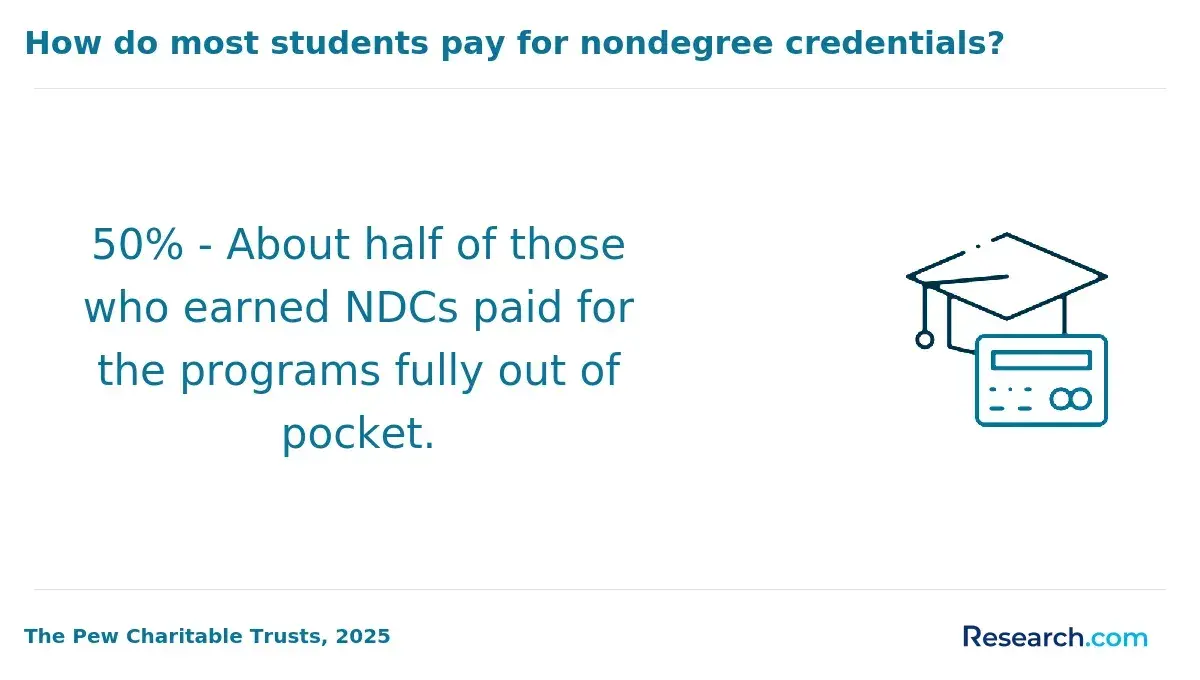
- Cost varies sharply by school type: College Board's 2024 pricing report lists average 2024-25 published tuition and fees at $4,050 for public two-year colleges, $11,610 for in-state public four-year colleges, and $43,350 for private nonprofit four-year colleges.
- Career outcomes are not guaranteed; BLS data shows photographers had a May 2024 median annual wage of $42,520, while higher earnings usually depend on niche, location, pricing, client acquisition, editing workflow, and business ownership.
What is an online digital photography degree with a portrait photography focus?
An online digital photography degree with a portrait photography focus is an undergraduate program that teaches camera operation, lighting, image editing, visual storytelling, client communication, and photography business practices through remote coursework. The portrait focus means students spend significant time learning how to photograph individuals, couples, families, graduates, professionals, performers, or editorial subjects in a way that is technically strong and emotionally effective.
These programs may be offered as associate degrees, bachelor's degrees, or applied arts degrees. Some schools do not label the major "portrait photography" but allow students to build that focus through electives, portfolio projects, studio lighting courses, senior capstones, and business assignments. A strong program should help students produce a polished portrait portfolio rather than only complete isolated technical exercises.
The degree is usually a good fit for students who want structured feedback, a credential, access to instructors, and a guided path into freelance or studio work. It may not be the best fit for someone who already has a strong client base and only needs one skill, such as flash lighting or Lightroom workflow. In that case, a certificate, workshop, mentorship, or continuing education course may be more cost-effective.
The main degree options differ in time, depth, and career purpose. The table below summarizes how each option usually fits a portrait photography learner.
| Program type | Typical academic level | Best fit | Main trade-off |
| Certificate in digital photography | Nondegree or undergraduate | Beginners, hobbyists, assistants, or working photographers adding a specific skill | Faster and cheaper, but may offer less academic depth and fewer general education credits |
| Associate degree in photography | Two-year undergraduate | Students seeking entry-level skills, transfer options, or a lower-cost start | Good foundation, but may not provide the same portfolio depth as a bachelor's degree |
| Bachelor's degree in photography, visual arts, or digital media | Four-year undergraduate | Students seeking broader creative, technical, business, and portfolio preparation | More comprehensive, but usually requires more time and higher total cost |
| BFA with photography concentration | Four-year studio-intensive undergraduate | Students pursuing advanced creative practice, gallery work, editorial portraits, or graduate study | Often portfolio-heavy, but may be less flexible for students seeking fast career entry |
How do online portrait-focused photography degrees compare to campus programs?
Online and campus photography programs can both work well, but they create different learning environments. The right choice depends on whether you need schedule flexibility, access to physical studios, in-person critique, school-owned gear, or local networking opportunities.
Online portrait photography programs usually deliver lectures, demonstrations, editing assignments, peer critiques, and portfolio reviews through a learning platform. Students complete shoots independently, often using household spaces, rented studios, outdoor locations, or local clients. This can be a strength because portrait photographers must learn to create strong images in real-world environments rather than only in a controlled classroom studio.
Campus programs may offer easier access to studio lighting labs, print facilities, faculty-supervised shoots, and student models. They may also make it easier to collaborate with fashion, theater, journalism, or design students. However, campus programs can be harder for working adults, parents, military-connected learners, and students who do not live near a strong photography school.
The table below compares the main decision points. Use it to identify which format supports your learning style and career constraints.
| Factor | Online portrait photography degree | Campus photography degree | Best choice when |
| Schedule | Often asynchronous or hybrid, with flexible assignment windows | Usually tied to class meetings, studio times, and campus events | Online fits students balancing work, family, or relocation limits |
| Studio access | Student may need to buy, borrow, or rent lighting and backdrops | School may provide lighting labs, print rooms, and controlled shooting spaces | Campus fits students who need hands-on equipment access |
| Critique | Video, discussion board, live review, and annotated portfolio feedback | In-person group critique and real-time studio coaching | Campus helps students who learn best through immediate physical demonstration |
| Local networking | Depends on student initiative and local market participation | May include campus exhibits, visiting artists, and local internships | Campus may help students building a local creative network from scratch |
| Portfolio realism | Students shoot in varied real-life locations and lighting conditions | Students may have more controlled studio practice | Online can be strong for students planning freelance or location portrait work |
Students with military benefits or frequent relocation needs should pay special attention to transfer policies, asynchronous course availability, and camera-equipment requirements. A focused guide to photography programs online for veterans can be useful for comparing benefits-friendly program features.
Which accreditation and quality standards matter for online digital photography degrees?
Accreditation matters because it affects financial aid eligibility, transfer credit, graduate school options, and employer confidence. For photography, there is usually no state license required to work as a portrait photographer, so program quality is judged less by licensure alignment and more by institutional legitimacy, faculty experience, portfolio outcomes, and student support.
The most important quality marker is institutional accreditation from an agency recognized by the U.S. Department of Education or the Council for Higher Education Accreditation. Students should verify accreditation directly through official databases rather than relying only on a school's marketing page.
Specialized art and design accreditation can also be useful, but it is not always required. The National Association of Schools of Art and Design is one recognized specialized accreditor for art and design programs. A photography program without specialized accreditation can still be reputable if the institution is accredited, the curriculum is strong, faculty have relevant expertise, and student work demonstrates real competence.
Before enrolling, review these quality signals together rather than treating one factor as decisive:
- Institutional accreditation from a recognized accrediting agency, especially if you plan to use federal financial aid or transfer credits later.
- Transparent curriculum showing portrait lighting, digital workflow, critique, business practices, and portfolio development rather than only general visual arts courses.
- Faculty portfolios, professional experience, exhibition history, editorial work, studio practice, or commercial portrait experience.
- Clear equipment expectations, including camera body, lenses, lighting, editing software, color management tools, and storage requirements.
- Evidence of student outcomes, such as portfolio examples, capstone exhibitions, internship support, alumni profiles, or career services for creative freelancers.
- State authorization for online enrollment, especially if you live outside the school's home state.
A common mistake is assuming that any online art school with attractive sample images is academically sound. Another is choosing only by name recognition while ignoring whether the coursework actually supports portrait work. The safer approach is to check accreditation first, then evaluate portfolio fit, cost, transfer options, and faculty feedback quality.
What core courses and portrait photography skills are taught in these programs?
A strong online portrait photography curriculum combines technical control with human direction. Students need to understand exposure and lighting, but they also need to make subjects feel comfortable, guide posing, solve location problems, edit consistently, and deliver professional files.
Core courses often start with camera fundamentals and build toward advanced portrait projects. In a degree program, students may also take art history, design, visual culture, writing, business, and general education courses that support broader creative and professional judgment.
The following course areas are especially important for portrait-focused students because they connect directly to client work and portfolio quality:
- Digital camera operation, including exposure, aperture, shutter speed, ISO, focus modes, lens selection, file formats, and color settings.
- Portrait lighting, including natural light, window light, continuous lighting, speedlights, strobes, modifiers, reflectors, high-key setups, low-key setups, and mixed-light correction.
- Posing and subject direction, including body language, facial expression, hand placement, group arrangement, age-appropriate posing, and inclusive client communication.
- Digital editing and retouching, including Lightroom or Capture One workflow, Photoshop techniques, skin retouching, color grading, noise reduction, file export, and nondestructive editing.
- Studio and location workflow, including pre-shoot planning, location scouting, safety, backup systems, tethering, model releases, and client galleries.
- Photography business, including pricing, contracts, copyright, licensing, branding, marketing, client experience, taxes, and basic bookkeeping.
- Portfolio development, including image sequencing, critique, website presentation, artist statements, print preparation, and capstone review.
Technology is also changing what students need to learn. AI-assisted culling, masking, noise reduction, background cleanup, and retouching can speed up production, but portrait photographers still need ethical judgment around authenticity, consent, and disclosure. Students interested in the technical side of creative automation may also explore what an AI degree can lead to, especially if they want to combine photography, imaging tools, and machine learning rather than work only behind the camera.
The strongest programs do not treat software as a substitute for photographic judgment. They teach students when to fix an image in postproduction and when to solve the problem with better lighting, posing, preparation, or client communication during the shoot.
What admission requirements and application materials do schools typically expect?
Admission requirements depend on the school and degree level. Associate programs are often open-access or lightly selective, while bachelor's and BFA programs may require stronger academic records, a portfolio, or a creative statement. Online programs may also ask students to confirm that they have access to required equipment and a reliable computer setup.
Most applicants should expect some combination of academic, identity, and creative materials. The exact list varies, so always review the school's current admissions page before applying.
- Completed online application with personal information, residency details, intended start term, and program selection.
- Official high school transcript, GED documentation, or college transcripts for transfer applicants.
- Minimum GPA requirement if the program is selective, although many community colleges and open-enrollment schools do not require a high GPA.
- Portfolio of photographs or visual work, especially for BFA or selective art programs; some schools accept beginner portfolios that show potential rather than professional polish.
- Personal statement explaining creative interests, career goals, prior experience, and why the online format fits the applicant's needs.
- Letters of recommendation if required by the institution or scholarship process.
- English proficiency documentation for applicants whose prior education was not in English.
- FAFSA submission if the student wants to be considered for federal aid, grants, work-study, or federal loans.
Applicants without a portfolio should not automatically rule out a degree. Many introductory programs are designed for beginners. However, if a program claims to prepare professional portrait photographers but never reviews student images before or during the program, that may signal weak creative assessment.
Students who need a fast start should compare academic calendars carefully. Some schools use traditional semesters, while others offer rolling or frequent enrollment windows. Programs listed among online colleges with weekly start dates may be useful for learners who cannot wait several months to begin, although students should still check whether photography courses follow the same schedule as general education courses.
How long do online portrait photography degrees take, and what do they cost?
Online portrait photography degrees can take a few months to four years or more, depending on credential level, transfer credits, course load, and whether the program uses accelerated terms. Full-time students usually finish faster, while part-time students may need more terms but can continue working and building a client base.
Cost should be evaluated as total cost, not tuition alone. Photography students may also need a camera body, portrait lens, lighting kit, tripod, memory cards, backup drives, calibrated monitor, editing software, website hosting, printing, props, backdrops, and liability insurance for client-facing work.
College Board's 2024 Trends in College Pricing and Student Aid reported average published 2024-25 tuition and fees of $4,050 at public two-year colleges, $11,610 for in-state students at public four-year colleges, and $43,350 at private nonprofit four-year colleges. These figures are not photography-specific, but they help students understand why starting at a community college or transferring credits can significantly affect total cost.
The table below summarizes typical timelines and cost considerations by credential type. Use it as a planning framework rather than a quote from any specific school.
| Credential | Typical completion time | Cost factors to compare | When it may make sense |
| Certificate | Several months to one year | Course fees, software, camera gear, noncredit status, limited aid eligibility | You need focused skill training without completing a full degree |
| Associate degree | About two years full time | Community college tuition, transferability, equipment, online course fees | You want an affordable foundation or a pathway into a bachelor's program |
| Bachelor's degree | About four years full time | Tuition, transfer credits, portfolio courses, technology fees, capstone costs | You want broader creative training, stronger portfolio development, and a degree credential |
| Degree completion program | Often one to three years after transfer | Accepted credits, residency requirements, upper-division tuition, portfolio review | You already have college credits and want to finish a bachelor's degree online |
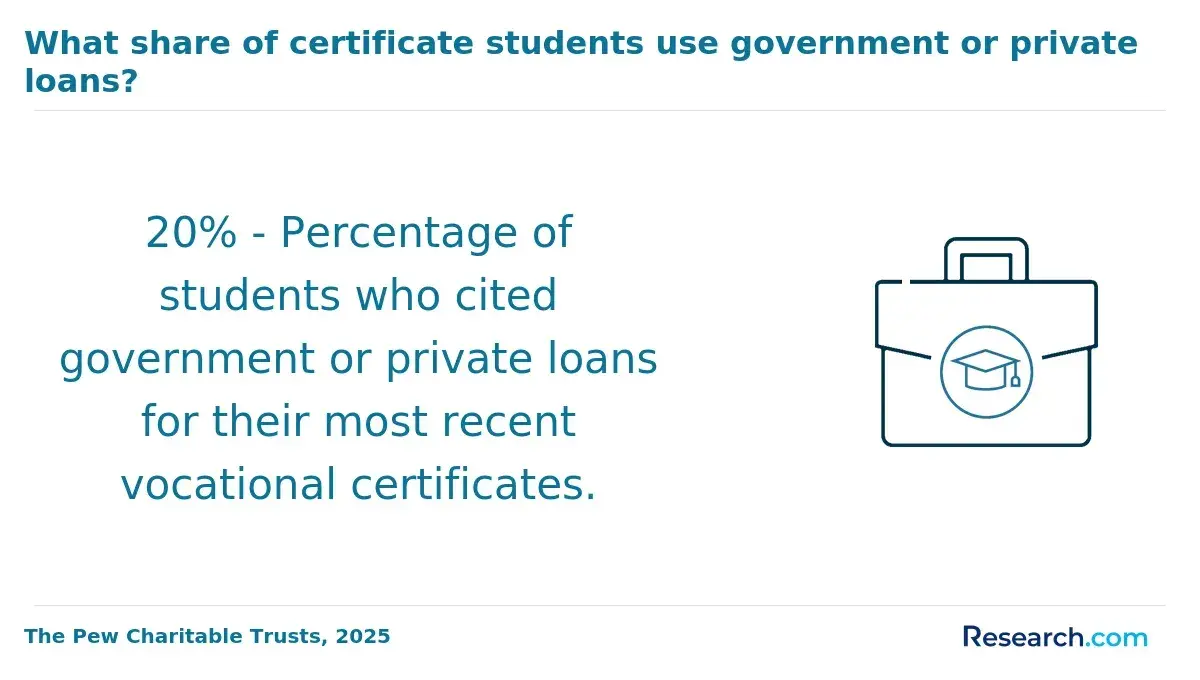
Students using loans should factor interest into affordability. For federal Direct Subsidized and Unsubsidized Loans first disbursed to undergraduates during the 2024-25 award year, the fixed interest rate is 6.53%. That rate makes borrowing decisions especially important for photographers because many entry-level earnings depend on self-employment growth rather than a predictable salaried path.
To reduce cost risk, students should take practical steps before committing:
- Ask for a full cost estimate that includes tuition, fees, equipment, software, books, portfolio printing, and graduation fees.
- Confirm whether transfer credits can shorten the program and whether studio or portfolio courses must be taken at the school.
- Compare monthly payment plans, scholarships, employer tuition assistance, military education benefits, and federal aid eligibility.
- Estimate how many paid shoots you would need to cover annual school costs, using conservative local pricing rather than ideal income scenarios.
- Avoid overborrowing for gear; many students can start with one reliable camera body, one portrait lens, basic lighting, and a disciplined editing workflow.
What career paths and job titles can a portrait-focused photography degree support?
A portrait-focused photography degree can support several creative and client-facing paths, but most opportunities depend heavily on portfolio strength, professional network, marketing ability, and reliability. The degree can help you build those assets, but clients and employers usually care most about the quality and consistency of your work.
Portrait photographers may work independently, for studios, for schools, for media companies, for hospitals, for corporations, or as part of creative teams. Many combine several income streams, such as family sessions, headshots, weddings, event portraits, product-adjacent branding sessions, and editing services.
The table below shows common job titles and how a portrait-focused degree may connect to each path.
| Career path | Typical responsibilities | How the degree helps | Common advancement route |
| Portrait photographer | Plan and shoot individual, family, senior, maternity, or lifestyle portraits | Builds lighting, posing, editing, and client-management skills | Move into premium sessions, studio ownership, or niche branding |
| Headshot and personal branding photographer | Create professional images for executives, actors, entrepreneurs, and online profiles | Supports consistent lighting, fast direction, retouching, and commercial delivery | Develop corporate accounts or subscription-style business packages |
| School or volume photographer | Photograph students, teams, events, and large groups on tight schedules | Builds workflow discipline and subject direction under time pressure | Manage teams, own a territory, or expand into sports and events |
| Studio assistant or digital tech | Support lighting setup, tethering, file management, equipment handling, and postproduction | Provides technical vocabulary and workflow familiarity | Progress to lead photographer, retoucher, producer, or studio manager |
| Photo editor or retoucher | Select, color-correct, retouch, export, and archive images for photographers or brands | Strengthens editing judgment, color consistency, and file management | Specialize in high-end retouching, creative direction, or production management |
| Visual content creator | Create portrait-based imagery for social media, brands, campaigns, and digital platforms | Combines photography, storytelling, editing, and audience awareness | Build a personal brand, agency service, or multimedia business |
This path is strongest for students who enjoy working with people, can handle feedback, and are willing to learn business operations. It may be a poor fit for students who want a highly predictable income path, dislike marketing, or prefer technical work without frequent client interaction.
Students should also recognize that portrait photography is often entrepreneurial. A degree can teach the craft, but sustainable work usually requires pricing discipline, referral systems, repeat clients, contracts, backup procedures, and a professional client experience from inquiry to final delivery.
What salary ranges and earning potential exist for portrait photographers today?
Salary data for photographers should be read carefully because the field includes salaried employees, freelancers, part-time workers, seasonal roles, studio owners, and high-end specialists. A national median is useful for context, but it does not predict what an individual portrait photographer will earn.
The U.S. Bureau of Labor Statistics reported a May 2024 median annual wage of $42,520 for photographers. This means half of workers in the occupation earned more and half earned less, but it does not separate portrait specialists from commercial, news, event, school, or self-employed photographers.
Earning potential in portrait photography tends to depend on several practical variables: local market size, pricing model, booking volume, repeat client strategy, editing efficiency, niche, brand reputation, and whether the photographer sells prints, albums, licensing, or corporate packages. A photographer who charges premium rates but books inconsistently may earn less than one with moderate pricing and reliable repeat clients.
The table below explains how different income models can affect earning stability. It is meant to help readers think about business structure, not to promise income levels.
| Income model | Typical source of revenue | Strength | Risk |
| Part-time freelance portraits | Evening or weekend sessions, referrals, seasonal work | Flexible and lower-risk while building experience | Income may be inconsistent and limited by availability |
| Full-time portrait studio | Family, newborn, senior, headshot, or branding sessions | Greater control over brand, pricing, and client experience | Requires marketing, rent or studio costs, insurance, and steady bookings |
| Corporate headshot business | Company headshot days, executive portraits, LinkedIn branding | Potential for repeat business and larger bookings | Requires professional workflow, fast delivery, and business-to-business sales |
| School or volume photography | Contracts with schools, teams, organizations, or events | Can produce recurring seasonal work | Operationally demanding and often competitive |
| Editing and retouching services | Postproduction for other photographers or brands | Can be remote and scalable with efficient workflow | May be affected by automation and price competition |
The BLS also projects photographer employment to grow 4% from 2024 to 2034, which is close to the average pace for all occupations. For students, the practical takeaway is that a degree should be evaluated alongside portfolio differentiation and business preparation, because broad occupational growth does not remove competition in local portrait markets.
What professional certifications or industry credentials benefit portrait photographers?
Portrait photographers generally do not need a government license to work in the U.S., but professional credentials can help signal commitment, technical knowledge, and client trust. Certifications are most useful when they align with the photographer's niche and are supported by a strong portfolio.
Credentials should not be treated as substitutes for skill. A client hiring a portrait photographer will usually look at images first, then reviews, pricing, professionalism, turnaround time, and communication. Still, certifications and memberships can support credibility, continuing education, and networking.
The table below outlines common credential options and when they may be worth considering.
| Credential or membership | Provider type | Potential value | Best fit |
| Certified Professional Photographer | Professional photography association | Signals knowledge of technical standards, image evaluation, and professional practice | Portrait photographers seeking credibility with clients and peers |
| Adobe software certification or training | Software vendor or training provider | Demonstrates editing workflow knowledge in tools commonly used for retouching and production | Students pursuing retouching, editing, studio support, or content production roles |
| Professional association membership | Photography trade organization | May provide education, competitions, legal resources, networking, and business templates | Freelancers who need ongoing business and creative development |
| Business or entrepreneurship certificate | College, extension program, or continuing education provider | Strengthens pricing, marketing, accounting, client management, and business planning | Students planning to run a studio or freelance practice |
| First aid, youth safety, or background screening | Local agency, employer, or organization | May support trust for school, youth sports, hospital, or childcare-related photography | Photographers working with minors, schools, or sensitive environments |
Students should ask whether a program prepares them for any optional certifications or includes industry-standard software training. The best programs also teach legal and ethical basics, including copyright, model releases, privacy, contracts, image manipulation ethics, and respectful representation of clients.
How can students choose a reputable online portrait photography program that fits their goals?
Choosing a reputable online portrait photography program starts with your goal. A student who wants to open a family portrait studio needs different preparation than one who wants to become a retoucher, school photographer, editorial assistant, or visual content creator. Start with the outcome, then compare programs based on evidence.
A practical evaluation process should include both academic checks and creative checks. The following steps can help reduce the risk of choosing a program that looks appealing online but does not match your needs.
- Define your target work -- family portraits, headshots, school photography, editorial portraiture, retouching, studio assistance, or content creation.
- Verify institutional accreditation and state authorization before reviewing marketing claims or sample galleries.
- Compare the curriculum against your target work, making sure it includes lighting, critique, editing, client workflow, business, and portfolio development.
- Review faculty work to see whether instructors have relevant portrait, commercial, editorial, studio, or fine-art experience.
- Ask admissions what equipment is required in the first term and what can be delayed until advanced courses.
- Request examples of student portfolios, capstones, exhibitions, or alumni outcomes, while remembering that individual results vary.
- Check transfer credit rules, residency requirements, course rotation, and whether online students can access the same career services as campus students.
- Calculate total cost after grants, scholarships, transfer credits, equipment, software, and likely borrowing costs.
- Speak with an advisor about internships, local client projects, portfolio reviews, and whether assignments can be completed in your community.
- Avoid enrolling until you understand refund policies, course withdrawal deadlines, technology requirements, and how critique is delivered.
Several red flags deserve special caution. Be careful with programs that cannot clearly explain accreditation, hide total cost, require expensive gear before students understand their niche, promise unrealistic income, offer little instructor feedback, or focus heavily on software presets without teaching lighting and client direction.
Veterans and military-connected students should also compare education benefits across creative and technical paths before committing. If you are weighing photography against a more engineering-oriented route, reviewing online electrical engineering degrees for veterans can help clarify how program structure, benefits use, and career goals differ.
The best choice is the program that fits your budget, schedule, learning style, and intended market while producing a portfolio you would be confident showing to real clients. A lower-cost program with strong critique and transferable credits may be a better investment than a more expensive program with weak portfolio support.
Other Things You Should Know About Digital Photography
Usually yes, but you may not need the most expensive model. Many programs require a digital camera with manual controls and interchangeable lenses. Before buying gear, ask the school for its official equipment list so you do not overspend on items that are not required in early courses.
Yes. Many strong portrait portfolios are built with window light, outdoor locations, rented spaces, client homes, or simple portable lighting. What matters most is consistent exposure, flattering light, intentional posing, clean editing, and a clear visual style.
It can be, especially for students who start with low-risk sessions for friends, families, classmates, or local professionals. Students should use contracts, clarify delivery timelines, back up files, and avoid charging premium rates until their work and client process are reliable.
Many programs require access to a three-point lighting kit for portrait assignments. Students are often expected to use one key light, one fill light, and one backlight, plus reflectors and a tripod. Some courses list these tools in the first-week syllabus or equipment checklist.
References
- Private School Admissions Checklist for 2026 https://www.sparkadmissions.com/blog/private-school-admissions-checklist/
- What are the 5 Main Admission Requirements for International Schools? From Age and English Proficiency to Nationality https://yoyogi-is.com/international_school_admission_requirments/
- Photography School, Degree, and Career Guide | All Art Schools https://www.allartschools.com/photography/
- Guide to International School Admission Process https://www.inventureacademy.com/blog/guide-to-international-school-admission-process/
- Top 10 Online Photography Classes You Can't-Miss: From Beginner to Pro https://www.zno.com/blog/top-10-online-photography-classes.html
- Photography Course Toronto: Online Training vs In-Person School Comparison https://www.canadianphotographyschool.ca/blog/photography-course-toronto-online-vs-inperson-comparison/
- How To Choose A Photography Class Or Workshop https://digital-photography-school.com/how-to-choose-a-photography-class-or-workshop/
- Photography Course - Career Training | Stratford Career Institute https://www.scitraining.com/photography
- How Much Do Photographers Earn: 2025 Industry Report UK https://www.alanranger.com/blog-on-photography/how-much-do-photographers-earn
- The Photography Institute https://www.thephotographyinstitute.com/us/en/blog-salary