2027 Highest-Paying Careers With an AI Bachelor's Degree

Co-Founder and Chief Data Scientist
Transitioning into the field of artificial intelligence can be daunting without a clear understanding of which careers offer the highest financial rewards. Many prospective students and professionals struggle to identify roles that align with a bachelor's degree in AI, while also promising sustainable income growth. This uncertainty often delays career shifts or educational investments. The evolving tech landscape demands informed decisions about specializations and job markets. This article examines the 2026 highest-paying careers available to those with an AI bachelor's degree and offers guidance to help readers strategically position themselves for success in this competitive industry.
Key Things You Should Know
- Graduates with an AI bachelor's degree typically earn starting salaries between $85,000 and $110,000 annually, reflecting a 15% increase over general computer science graduates in 2025.
- High-paying roles include machine learning engineer, data scientist, and AI research scientist, with median salaries exceeding $120,000 by 2026 due to growing demand in tech, finance, and healthcare.
- The U.S. Bureau of Labor Statistics projects 22% job growth for AI-related fields from 2024-2034, significantly higher than the 5% average for all occupations.
What are the highest-paying jobs for graduates with an AI bachelor's degree?
Graduates with an AI bachelor's degree have some of the highest-paying jobs for artificial intelligence bachelor's graduates available today. The top career opportunity is machine learning engineer, with a median salary of $208,000 annually, according to Levels.fyi's 2024 compensation data. These roles involve creating algorithms that enable systems to learn from data and improve autonomously, which is vital in industries like healthcare, finance, and autonomous vehicles.
Data scientist positions also offer lucrative opportunities, typically earning between $100,000 and $150,000 annually. Professionals in this field analyze complex datasets to support decision-making and optimize strategies using AI tools. AI research scientists command high salaries often exceeding $120,000, focusing on advancing AI theories and developing innovative applications, especially in robotics and natural language processing.
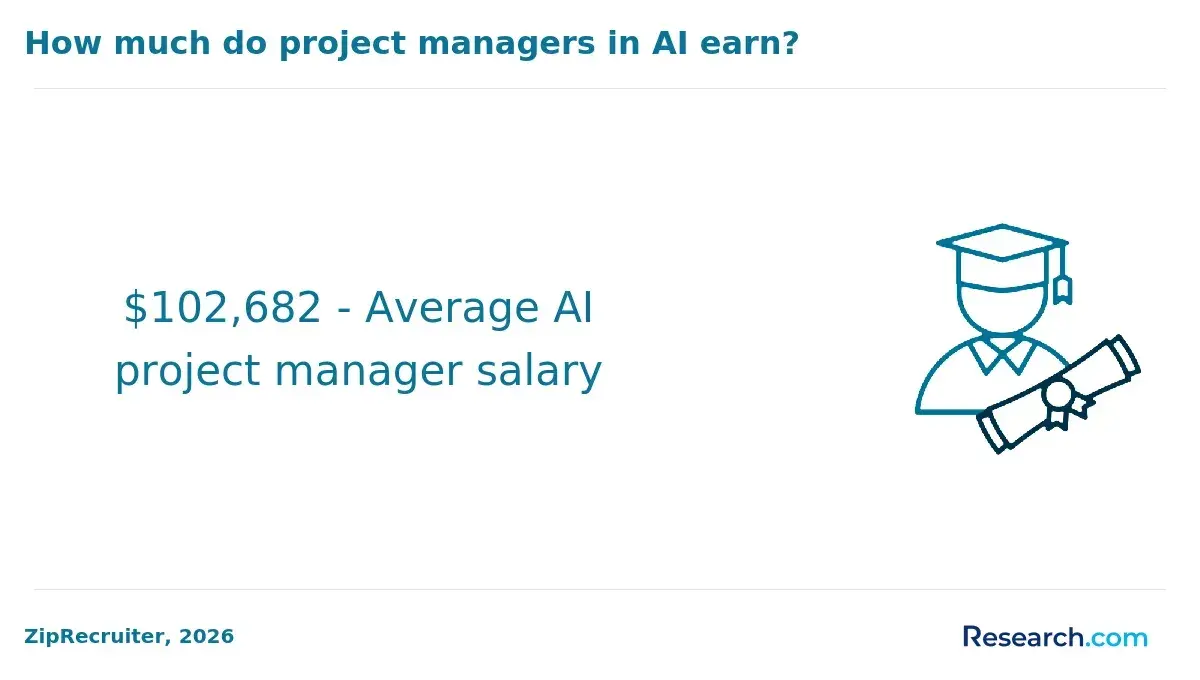
Roles such as AI software engineer and AI product manager are in high demand. AI software engineers develop AI-driven applications with salaries ranging from $110,000 to $160,000, while product managers overseeing AI products earn $120,000 or more by ensuring market alignment and user experience. Those pursuing these top career opportunities with an AI bachelor's degree should build strong programming skills in Python or Java and gain expertise in neural networks and cloud platforms.
Specialized certifications in machine learning and cloud AI tools significantly increase employability and salary potential. Emerging sectors like AI ethics and policy are growing but currently offer lower starting salaries compared to engineering roles. Prospective students can explore options through a computer science accelerated program to enter this competitive field efficiently.
What is the average salary for AI bachelor's degree holders in 2027?
AI professionals holding a bachelor's degree in the United States can anticipate an average starting salary between $85,000 and $95,000. Mid-career earnings typically rise to the $130,000-$150,000 range, reflecting strong demand for skilled specialists capable of developing and maintaining AI systems across diverse industries. This average salary for AI bachelor's graduates United States shows that factors such as industry, location, and job role significantly influence compensation levels.
For instance, AI graduates in technology hubs like Silicon Valley and New York often start near $90,000, advancing toward $150,000 as machine learning engineers, data scientists, or AI software developers. In contrast, sectors including healthcare, finance, and manufacturing tend to offer starting salaries closer to $85,000, but steady growth occurs as AI integration expands in these fields. Typical earnings with an AI degree in the US increase further with specialization in areas like natural language processing or computer vision.
Combining AI expertise with skills in cloud computing, cybersecurity, or business strategy enhances earning potential. Prospective students are encouraged to pursue certification and internships to improve job prospects. Those researching educational options may also consider related fields such as the mechanical engineer degree programs, which often intersect with AI development and applications.
Ongoing training is essential to keep pace with rapid technological advances, directly impacting mid-career salaries and long-term advancement opportunities.
What skills and coursework are covered in an accredited AI bachelor's program?
Accredited AI bachelor's programs teach core programming languages and AI coursework requirements that prepare students for careers in this fast-growing field. Key classes cover machine learning algorithms, enabling students to build, train, and evaluate models for applications like image recognition and natural language processing. Programming proficiency, especially in Python, is essential due to its extensive libraries such as TensorFlow and PyTorch that support AI development.
Data analysis techniques in AI bachelor's programs include statistical methods, data mining, and data visualization to help students extract valuable insights from complex datasets. Foundational subjects like linear algebra, calculus, and probability provide the mathematical background necessary for understanding AI methods. Specialized courses in neural networks, robotics, and computer vision equip students with skills to design AI systems addressing real-world challenges.
Ethics and AI policy are increasingly emphasized to prepare graduates for the ethical considerations around bias, fairness, and privacy. Practical experience through internships and projects is common, offering opportunities to apply theoretical knowledge and build portfolios valued by employers. According to the LinkedIn Jobs on the Rise report, 89% of employers prioritize machine learning, Python programming, and data analysis skills when hiring AI bachelor's graduates.
Students seeking a balanced program should consider options focused on both theory and hands-on coding. For those interested in cost-effective pathways, an affordable online engineering degree can provide quality preparation for a career in AI and related fields.
What are the admission requirements and prerequisites for AI bachelor's degree programs?
Admission requirements for ai bachelor's degree programs emphasize strong academic preparation in math and computer science. Top-tier programs typically expect applicants to have completed advanced coursework in calculus and introductory computer science prior to matriculation. According to recent reports, 76% of admitted students meet these prerequisites, showing the importance of solid STEM foundations.
Prerequisites for enrolling in ai undergraduate degrees often include competitive standardized test scores highlighting quantitative reasoning. Students admitted to elite programs usually maintain an average SAT score of 1520 and a GPA of 3.9, reflecting rigorous academic standards. However, some schools now follow test-optional policies, placing greater weight on GPA, coursework difficulty, and essays describing technical interests or relevant projects.
Strong letters of recommendation, ideally from math or computer science instructors, and personal statements detailing motivation for studying artificial intelligence are typically required. Evidence of programming skills in languages like Python or Java, participation in robotics competitions, or independent AI projects may enhance applications. Selectivity varies: public universities may accept slightly lower test scores but emphasize prerequisite completion, while private research-intensive schools prioritize demonstrated passion through research or internships.
Applicants without advanced math can boost their candidacy by taking summer or community college courses in calculus and programming before applying. Early preparation supports success in complex AI curricula. Prospective students should also consider financial factors; for instance, those exploring affordable education options can learn more about cyber security online degree cost as part of their decision-making.
How long does an AI bachelor's degree take, and what is the typical cost?
An AI bachelor's degree normally involves four years of full-time study. The initial two years cover foundational courses in computer science, mathematics, and data structures. The final two years emphasize advanced topics such as machine learning, neural networks, natural language processing, and specialized AI applications. Some programs offer accelerated or part-time options, which can extend the timeline to five or six years depending on the student's pace and course load.
Cost varies significantly based on the institution. According to the 2024 College Board Trends in College Pricing report, private institutions charge between $120,000 and $180,000 for total attendance over four years, including tuition, fees, and housing. Public universities are substantially more affordable, typically costing between $40,000 and $60,000 for in-state students. Scholarships, cooperative education programs, and in-state tuition rates can help reduce the financial burden.
Graduates often recover these costs rapidly. The report notes that most AI degree holders recoup their investment within 2.5 years of full-time work due to high demand and competitive salaries across sectors like technology, healthcare, and finance. Students with prior technical coursework or who transfer credits may shorten degree duration and further lower expenses. Selecting accredited programs ensures education aligns with industry standards and future career needs.
What is the job outlook and industry demand for AI professionals through 2032?
The job outlook for ai professionals is exceptionally strong through 2032. According to the U.S. Bureau of Labor Statistics 2024 employment projections, ai specialist positions are expected to grow 35%, far exceeding the 3.5% average growth rate across all occupations. This rapid increase is driven by demand across industries such as healthcare, finance, automotive, and technology, where ai plays a key role in innovation and efficiency.
Experts in machine learning, natural language processing, robotics, and data analysis are increasingly sought after. Healthcare companies use ai to develop diagnostic tools and personalized treatment plans. Financial institutions rely on ai for fraud detection and algorithmic trading, while automotive firms apply ai to autonomous vehicles and smart manufacturing.
Graduates with ai bachelor's degrees can pursue diverse roles including machine learning engineers, ai research scientists, data engineers, and ai ethics specialists. Employers prioritize strong programming skills, familiarity with ai frameworks, and practical experience. Internships and projects significantly boost employability. Continuous learning is crucial to keep pace with fast-evolving technologies and to maintain a competitive edge in this expanding field.
Students and professionals can explore more about these career trends and degree options at Research.com.
Are AI bachelor's degrees offered online, and how do they compare to campus programs?
AI bachelor's degrees are commonly available online, offering a flexible alternative to traditional campus programs. Accredited universities deliver fully online curricula that include interactive lectures, virtual labs, and access to research databases, mimicking the campus learning experience. Graduates of online AI programs achieve a 94% job placement rate within six months, closely paralleling campus-based students, according to the National Association for College Admission Counseling.
While campus graduates typically earn 8% to 12% higher starting salaries, this advantage likely stems from better access to in-person networking, internships, and on-campus career services. Students targeting competitive tech hubs or employers with traditional preferences may find on-campus degrees more beneficial in the early career phase. On the other hand, online programs suit working professionals or those with geographic constraints, providing comparable employment outcomes.
Evaluating program accreditation, curriculum quality, and employer partnerships is crucial beyond delivery method. Some online degrees collaborate with industry for capstone projects and internships, while others offer synchronous sessions to foster real-time interaction, enhancing practical experience and engagement.
Hybrid options combining online coursework with in-person opportunities can further optimize educational value. Ultimately, AI bachelor's degrees earned online provide quality education with near-equal job placement success, though campus programs have a measurable edge in initial salary potential.
Which professional certifications complement an AI bachelor's degree and boost earning potential?
Certifications that complement an AI bachelor's degree can significantly enhance earning potential. Notably, the AWS Certified Machine Learning Specialty and Google Cloud Professional Data Engineer certifications boost salaries by 18% to 22% compared to non-certified peers, according to the O'Reilly Skills Index. These credentials highlight expertise in cloud-based AI and data engineering, essential for deploying scalable AI solutions in production.
Beyond cloud-specific options, certifications such as Certified Data Scientist (CDS) and Microsoft Certified: Azure AI Engineer Associate broaden skills in advanced analytics, model development, and cross-platform deployment. The CDS emphasizes practical statistical modeling and data science methodologies, while the Azure AI Engineer certifies proficiency in integrating AI services within the Microsoft Azure cloud ecosystem, expanding opportunities in enterprise settings.
Additional valuable credentials include the TensorFlow Developer Certificate, which demonstrates deep learning framework mastery, and the Certified Analytics Professional (CAP), focusing on interpreting complex data to inform business strategies. These certifications address diverse industry roles from software engineering to business analytics.
Students and graduates should carefully assess job market demands and popular technology stacks among employers. Aligning certifications with leading cloud platforms or niche AI applications maximizes salary gains and career advancement. Targeted certifications, combined with an AI bachelor's degree, substantially improve starting salaries and long-term growth prospects.
How do I choose between accredited AI programs and verify program quality?
ABET accreditation is the most trusted standard for AI and computer science programs in the U.S., reflecting rigorous criteria that significantly impact graduate quality and employer satisfaction. According to the 2024 ABET Program Outcomes Survey, programs with ABET accreditation achieve a 96% employer satisfaction rating, compared to just 73% for non-accredited programs. This gap highlights how accreditation not only guarantees comprehensive education but also builds employer trust.
When evaluating programs, it is essential to confirm specific ABET accreditation in AI or computer science, ensuring curricula align with industry needs such as machine learning, data ethics, and natural language processing. Graduates from accredited programs also earn starting salaries approximately 15-20% higher on average, indicating stronger career returns. Faculty credentials, research tied to AI innovation, and student outcomes like graduation and job placement rates are additional critical factors.
Prospective students should seek firsthand insights from alumni or current students on program reputation and support services. Cross-referencing programs with official ABET records and employer reviews further verifies quality. Prioritizing ABET-accredited AI programs supports better academic preparation and improved employment prospects in this competitive field.
What entry-level and mid-career roles are available immediately after earning an AI bachelor's degree?
Entry-level positions for graduates with a bachelor's degree in artificial intelligence include roles such as AI software engineer, machine learning engineer, data analyst specializing in AI models, and AI research assistant. These jobs focus on algorithm development, machine learning pipeline implementation, model testing, and large-scale data analysis. Titles can differ by sector, with natural language processing engineer and computer vision developer being common in tech firms. Many new graduates start as junior engineers or data scientists, gaining hands-on experience in training and deploying models.
Within 3 to 4 years, professionals often progress to mid-career roles like senior AI engineer, AI specialist, machine learning architect, or AI product manager. These positions require leading AI teams, designing comprehensive AI solutions, and refining complex models for production use. According to Blind's 2024 Career Progression Analysis, 68% of entry-level AI workers achieve senior roles earning $140,000 or more during this period, reflecting rapid career advancement fueled by demand and skill growth.
Developing expertise in software engineering, data management, and domain-specific AI applications early is essential. Internships or certifications in scalable AI frameworks such as TensorFlow or PyTorch can significantly accelerate career growth. Addressing real-world challenges like bias mitigation and model interpretability prepares candidates for senior-level responsibilities. Evaluating these technical and management requirements supports informed decisions about specialization and skill development.
Other Things You Should Know About Artificial Intelligence
Top employers include Big Tech firms, defense contractors, robotics companies, and enterprise software vendors. Entry-level AI roles at companies such as Google, Microsoft, Amazon, NVIDIA, and Lockheed Martin often require a 3.0 GPA, strong Python skills, and internship experience, with starting salaries commonly above $100,000.
Certifications in machine learning from organizations like Google and AWS can boost salaries for AI bachelor's degree holders. Completing these can demonstrate advanced skills and knowledge, making candidates more competitive in high-paying roles across various industries.
AI students and graduates generally need proficiency in programming languages such as Python, R, and Java. Python is particularly essential due to its extensive libraries for machine learning and data science, including TensorFlow and PyTorch. Knowledge of SQL and C++ can also be valuable depending on the specific AI application or industry.
In 2027, emerging high-paying AI career paths for bachelor's degree holders include roles in autonomous systems engineering, AI ethics consulting, and AI-driven healthcare solutions. To deepen expertise in healthcare applications, consider pursuing an AI in healthcare graduate degree.
References
- AI pricing: how much does AI cost in 2025? | Future Processing https://www.future-processing.com/blog/ai-pricing-is-ai-expensive/
- Undergraduate https://ai.seas.upenn.edu/academics/undergraduate/
- 23 Top AI Certifications to Know | Built In https://builtin.com/articles/ai-certification
- AI Careers - Top AI Jobs with Education Requirements and Pay https://aidegreeprograms.org/ai-careers/
- Artificial Intelligence | Università degli Studi di Milano Statale https://www.unimi.it/en/education/bachelor/artificial-intelligence
- AI Careers: Roles, Salaries, and Certifications to Get You Hired - ONLC https://www.onlc.com/blog/ai-careers-roles-salaries-certifications/
- Artificial Intelligence Course Eligibility: Requirements & Prerequisites https://www.mygreatlearning.com/artificial-intelligence/courses/eligibility
- 10 AI career paths that pay well in 2026 - Access Creative College https://www.accesscreative.ac.uk/blog/10-ai-career-paths-that-pay-well-in-2026/
- Which jobs can remain secure until 2030 despite AI? - AEEN https://www.aeen.org/which-jobs-can-remain-secure-until-2030-despite-ai/
- Artificial Intelligence Degree Salary & ROI Analysis 2026 https://hakia.com/degrees/artificial-intelligence/salary-roi/