
2027 What Can You Do With a General Studies Degree?

Co-Founder and Chief Data Scientist
General studies programs have seen notable growth in recent years, particularly at the associate-degree level. According to the U.S. Department of Education, 383,300 associate degrees were awarded in “liberal arts and sciences, general studies, and humanities.” The workforce in liberal arts and humanities also grew from approximately 685,146 in 2022 to 697,336 in 2023, underscoring the steady demand for this broad academic pathway.
As the workforce evolves and competition intensifies, students pursuing general studies need to consider how to shape their education into a career asset. This article explores expert insights on maximizing the value of a general studies degree and building a path that aligns with employer needs.
Key things you should know about what to do with a general studies degree
- Graduates with a general studies degree often venture into sales, marketing, customer service, human resources, and management. They also have the flexibility to transition across healthcare, education, and nonprofits.
- The average salary for a general studies graduate varies by career, with entry-level positions earning around $55,000. More experienced professionals can earn upwards of $60,000, depending on the industry and role.
- A general studies associate degree typically takes 2 years to complete, while a bachelor's degree takes around 4 years.
- What jobs can you get with a general studies degree? Best Jobs
- Can you go to graduate school with a general studies degree? Can you go to graduate school with a general studies degree?
- How flexible is a general studies degree for changing careers later? Career Flexibility
- What skills do you gain with a general studies degree? Skills
- What is the average salary for a general studies degree graduate? Average Salary
- Is a general studies degree respected like other bachelor’s degrees? Is a general studies degree respected like other bachelor’s degrees?
- Can you get a general studies degree online? Online Options
- What should you look for in a general studies degree program? Program Considerations
- Is financing your general studies degree a viable option? Is financing your general studies degree a viable option?
- Who should major in general studies? Who should major in general studies?
- How do general studies graduates use their degree in the workforce? How do general studies graduates use their degree in the workforce?
General studies degree careers: what jobs can you get?
A general studies degree is built for students who want a broad, flexible education rather than training for one narrowly defined profession. That flexibility can be useful, especially for transfer students, working adults, military-connected learners, and people who want to finish a degree without losing credits. The trade-off is that graduates often need to translate their coursework into clear workplace skills, such as communication, project coordination, writing, research, customer service, and problem-solving.
This guide explains what you can do with a general studies degree, how employers may view it, whether it can lead to graduate school, what salary data suggests, and how to choose a program that supports your career goals. It also covers when this degree makes sense—and when a more specialized major may be the better option.
Quick answer
With a general studies degree, graduates commonly pursue roles in administration, sales, customer service, marketing support, human resources, nonprofit work, operations, and entry-level management. The degree is most useful when paired with work experience, internships, certifications, a concentration, or a strong portfolio of skills. It is less direct for licensed or highly technical careers unless you add the required prerequisites, credentials, or graduate education.
| Career option | Why a general studies degree can fit | What may strengthen your candidacy |
| Human resources specialist | HR roles rely on communication, documentation, employee support, policy awareness, and conflict resolution. | HR internship experience, payroll or recruiting exposure, and familiarity with workplace policies. |
| Sales representative | Sales positions reward persuasion, relationship-building, active listening, and the ability to explain products or services clearly. | Industry knowledge, CRM experience, measurable sales results, and interview preparation. You can compare expectations in this sales representative career guide. |
| Marketing assistant | Marketing support work often involves writing, audience research, campaign coordination, and collaboration across teams. | Writing samples, social media or analytics experience, design basics, and examples of campaign work. |
| Customer service manager | Customer-facing leadership depends on organization, coaching, problem-solving, and the ability to handle difficult situations professionally. | Prior customer service experience, scheduling or supervisory duties, and performance metrics. |
| Administrative assistant | Administrative roles use scheduling, office coordination, records management, writing, and communication skills. | Software proficiency, attention to detail, and knowledge of office or legal procedures. Some administrative pathways have specific prerequisites, such as court clerk job requirements. |
The best jobs for general studies graduates are usually roles where employers value adaptable thinking, clear communication, reliability, and the ability to learn quickly. If a job posting asks for “a bachelor’s degree” without naming a specific major, a general studies degree may meet the academic requirement. If the posting requires a specialized major, license, or technical background, you may need additional preparation.
Can you go to graduate school with a general studies degree?
Yes. A general studies degree can qualify you for graduate school, but admission depends on the program, your transcript, prerequisite coursework, grades, recommendations, test requirements if applicable, work history, and how well you explain your academic direction. Graduate schools do not evaluate the major name alone; they look for evidence that you can succeed in advanced study.
The strongest applicants use their general studies background strategically. For example, they may choose electives in business, psychology, education, public administration, communication, or another area that aligns with the graduate program they want to enter. They may also build relevant experience through internships, employment, volunteer work, research projects, or certifications.
Some graduate programs may require additional foundation courses. An applicant interested in a Master's in Business Administration (MBA), for instance, might be asked to complete introductory business coursework before or after admission. Programs in counseling, health sciences, engineering, data science, or teaching may have more specific prerequisite or licensure requirements.
| Graduate goal | How a general studies degree can help | What to check before applying |
| MBA or management graduate program | Broad coursework can support leadership, communication, and analytical thinking. | Business prerequisites, work experience expectations, quantitative coursework, and admissions requirements. |
| Education or teaching program | General studies can provide a broad academic foundation useful for education-focused study. | State licensure rules, subject-area requirements, field experience, and approved educator preparation pathways. |
| Public administration or nonprofit management | Interdisciplinary coursework can connect well to policy, communication, ethics, and organizational work. | Writing samples, professional experience, and whether public service experience is preferred. |
| Counseling, health, or licensed professions | The degree may satisfy the bachelor’s-level requirement for entry into some programs. | Required psychology, science, statistics, clinical, or licensure-related prerequisites. |
Master's and doctoral degree holders have the lowest unemployment rates. That does not mean graduate school is automatically the right next step. Before enrolling, compare tuition, prerequisites, time commitment, licensure outcomes, and expected career value.
How flexible is a general studies degree for changing careers later?
A general studies degree can be useful for career changers because it emphasizes transferable skills rather than preparing students for one fixed occupation. Students often take courses across humanities, social sciences, natural sciences, communication, and professional electives. This creates a foundation that can apply to business, public service, education support, administrative work, customer operations, and nonprofit roles.
The flexibility is similar to other broad academic pathways. For example, people who ask what you can do with a humanities degree often find that the answer depends less on the degree title and more on writing ability, critical thinking, workplace experience, and the ability to explain how their education applies to a specific role.
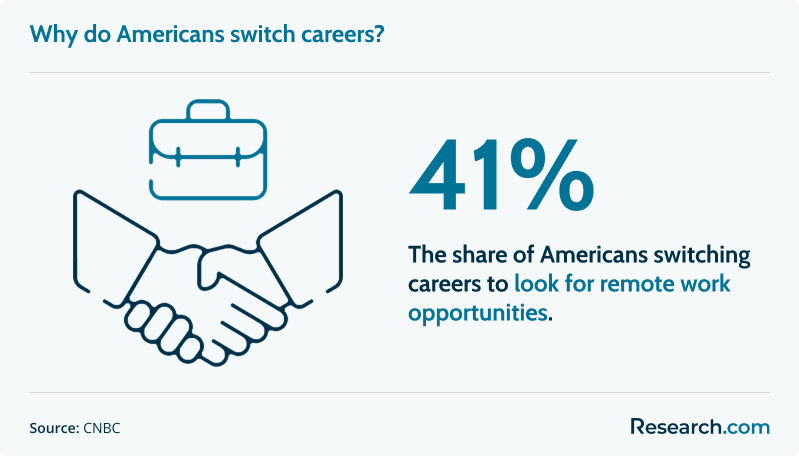
Career changes are easier when the new field values general competencies. Moving into management, marketing coordination, sales, customer success, HR support, or administrative operations may be realistic with experience and targeted upskilling. Moving into fields such as information technology, engineering, nursing, accounting, teaching licensure, or clinical practice usually requires specific courses, exams, credentials, or graduate programs.
| Career change target | How smooth the transition may be | Likely next step |
| Sales, customer service, operations, or administration | Often more direct because employers may prioritize communication, reliability, and experience. | Build role-specific experience and highlight measurable achievements. |
| Marketing, HR, or nonprofit work | Moderately direct if you have relevant electives, internships, writing samples, or volunteer experience. | Add a portfolio, internship, certification, or targeted coursework. |
| Technology or data-related work | Less direct without technical preparation. | Complete technical courses, certifications, projects, or a specialized program. |
| Licensed or regulated careers | Not direct unless the degree meets prerequisite requirements. | Confirm licensure rules and complete approved education or training. |
The degree gives you room to pivot, but it does not replace field-specific preparation. A successful career change usually requires a bridge: a certificate, portfolio, internship, industry credential, or strategically chosen graduate program.
What skills do you gain with a general studies degree?
A general studies program is designed to develop broad academic and professional skills. These skills can matter in roles where employees must understand information quickly, communicate with different audiences, coordinate tasks, and solve problems without relying on one narrow technical specialty.
- Critical thinking: Students learn to compare evidence, question assumptions, and evaluate issues from more than one perspective.
- Written and verbal communication: Coursework often requires essays, presentations, discussions, and reports, helping students explain ideas clearly.
- Problem-solving: Because the curriculum spans multiple subjects, students practice applying different approaches to practical and academic challenges.
- Research and information literacy: Graduates learn how to locate sources, assess credibility, synthesize findings, and present conclusions.
- Time management: Balancing different types of assignments helps students plan, prioritize, and meet deadlines.
- Collaboration: Group work, class discussion, and interdisciplinary projects can build teamwork and coordination skills.
- Cultural awareness: Exposure to different fields and viewpoints can improve empathy, context, and communication with diverse groups.
These abilities are valuable in business, education support, public service, healthcare administration, nonprofit work, and client-facing fields. They can also transfer to areas such as real estate jobs, where communication, judgment, negotiation, and client trust are central to the work.
How to make these skills visible to employers
A common mistake is listing “communication” or “critical thinking” without proof. Employers respond better to examples. Instead of saying you have research skills, describe a project where you analyzed information and presented recommendations. Instead of saying you are organized, show how you coordinated schedules, managed records, improved a process, or supported a team.
| Skill from the degree | How to show it on a resume or interview |
| Communication | Writing samples, presentations, customer-facing work, reports, or team documentation. |
| Research | Capstone projects, policy briefs, data summaries, literature reviews, or market research tasks. |
| Problem-solving | Examples of resolving customer issues, improving workflows, or coordinating projects under constraints. |
| Collaboration | Group projects, cross-functional work, committee service, volunteer coordination, or team leadership. |
| Adaptability | Experience learning new systems, changing roles, supporting multiple departments, or handling varied responsibilities. |
What is the average salary for a general studies degree graduate?
Salary outcomes for general studies graduates vary widely because the degree can lead to many different occupations. Pay depends on degree level, industry, job function, location, experience, employer, and whether the graduate adds specialized skills or credentials. A general studies degree does not guarantee a specific salary.
Average salaries by degree level
| Degree level | Reported salary information | How to interpret it |
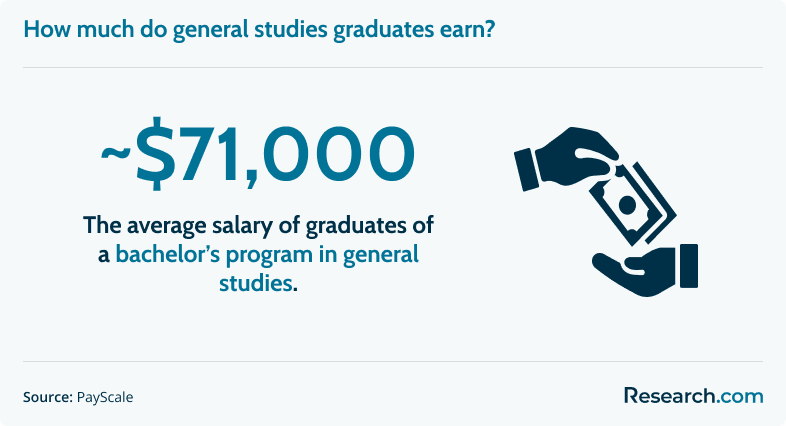
| Bachelor of General Studies (BGS) | Graduates with a BGS earn an average annual salary of approximately $71,000. | This figure reflects reported salary data and can vary by role, location, and experience. |
| Associate of General Studies | This degree leads to an average annual salary of about $64,000, based on PayScale data. Other estimates suggest a range between $60,000 and $65,000. | Associate-level outcomes often depend heavily on prior work experience and whether the degree helps the graduate qualify for advancement. |
Industry and role considerations
Graduates who move into operations, project coordination, sales management, administrative leadership, or supervisory roles may earn more than graduates who remain in entry-level support positions. Managerial tracks can vary substantially; for comparison, role-specific guides such as this overview of accounting manager salary show how specialized responsibilities can affect compensation.
According to the U.S. Bureau of Labor Statistics, the median annual wage for liberal arts degree holders is approximately $55,000, though this can differ based on the specific field and job market. Because general studies is broad, the smartest way to evaluate earning potential is to identify target job titles first, then research salary data for those roles in your location.
Is a general studies degree respected like other bachelor’s degrees?
A general studies degree is a legitimate college credential when it comes from an accredited institution. However, employer perception depends on the job. In roles that require a bachelor’s degree but do not specify a major, the degree may be viewed similarly to other broad liberal arts or interdisciplinary degrees. In technical, clinical, engineering, accounting, or licensure-driven fields, employers may prefer or require a specialized major.
The degree’s value often depends on how you present it. If you describe it only as a broad program, employers may be unsure what you can do. If you connect your coursework to a clear career direction—such as communication, business operations, HR support, public service, or project coordination—the degree becomes easier to understand.
| Where the degree is often easier to position | Where you may need more specialization |
| Administration, sales, customer service, nonprofit operations, HR support, marketing support, and entry-level management. | Engineering, accounting, clinical healthcare, counseling licensure, teaching licensure, data science, and other technical or regulated fields. |
Graduates can improve how the degree is perceived by adding internships, certifications, minors, concentrations, work experience, or graduate study. Comparisons with related pathways, such as interdisciplinary studies salary, can also help students understand how broad degree programs may translate into varied career outcomes.
Can you get a general studies degree online?
Yes. Many colleges and universities offer online general studies degrees at the associate and bachelor’s levels. Online formats are especially common for students who already have college credits and want a flexible path to degree completion.
An online general studies program may include courses in humanities, social sciences, communication, natural sciences, business, education, health-related topics, or other elective areas. Some programs are fully online, while others use a hybrid format. Courses may be asynchronous, meaning you complete work on your own schedule, or synchronous, meaning you attend scheduled virtual sessions.
This format can be useful for working adults, parents, transfer students, and military-connected learners. Students comparing flexible options may also want to review resources on online colleges for military spouses and dependents, especially if relocation, benefits, or scheduling flexibility are important.
Online vs. campus general studies programs
| Factor | Online program | Campus program |
| Schedule | Often better for students balancing work, family, or military obligations. | May suit students who prefer fixed class times and in-person structure. |
| Networking | Can include virtual advising, discussion boards, and online career services. | May provide easier access to campus events, clubs, and local employer connections. |
| Learning style | Requires self-direction, time management, and comfort with technology. | Provides face-to-face interaction and immediate classroom engagement. |
| Program quality | Depends on accreditation, faculty, support services, and curriculum design. | Also depends on accreditation, faculty, student support, and career resources. |
Online does not automatically mean easier. The best online programs provide clear advising, strong transfer-credit policies, career support, accessible faculty, and a curriculum that lets students build a focused academic plan.
What should you look for in a general studies degree program?
The right general studies program should do more than let you collect random credits. It should help you create a coherent degree plan tied to career goals, graduate school requirements, or degree-completion needs. Before enrolling, compare programs carefully.
- Accreditation: Choose an accredited institution so your credits and degree are more likely to be recognized by employers, graduate schools, and financial aid providers. Students comparing flexible options can review programs such as a top interdisciplinary studies online degree to understand how broad academic pathways are structured.
- Curriculum design: Look for electives, minors, concentrations, or focus areas that let you build a recognizable pathway rather than a scattered transcript.
- Advising and career support: Strong advising can help you choose courses that support employment, graduate school, or transfer goals. Career services can help with resumes, interviews, internships, and job searches.
- Class experience: Review average class size, faculty access, course format, and whether online students receive the same support as campus students.
- Transfer-credit policy: If you already have college credits, ask how many will apply to the degree, whether there are residency requirements, and whether old credits expire.
- Experiential learning: Internships, capstones, service learning, workplace projects, or portfolio assignments can make a broad degree more career-relevant.
- Graduate school alignment: If you plan to pursue a master’s degree, check whether the program allows you to complete prerequisite courses in your intended field.
Questions to ask before choosing a program
| Question | Why it matters |
| Is the institution accredited? | Accreditation affects transferability, employer recognition, graduate school options, and access to certain financial aid. |
| How many of my previous credits will count? | A generous transfer policy can reduce both time and cost. |
| Can I build a concentration or career-focused pathway? | A focused plan can make the degree easier to explain to employers. |
| Are internships, capstones, or applied projects available? | Hands-on experience helps convert academic skills into resume evidence. |
| What career services are available to online students? | Online learners need access to advising, resume help, interview preparation, and job-search support. |
| Will this degree meet requirements for my intended graduate program? | Some graduate or licensed pathways require specific undergraduate coursework. |
Interns get to earn the following amounts as their starting salaries:
Is financing your general studies degree a viable option?
Financing a general studies degree can be viable, but only if the total cost fits your career plan. Because the degree is broad, students should be especially careful about borrowing more than their likely job path can support. Compare tuition, fees, transfer-credit acceptance, textbook costs, technology costs, transportation if applicable, and the time you may need to spend out of the workforce.
Start with lower-cost funding sources when possible: institutional scholarships, federal aid, work-study, employer tuition assistance, military or veteran education benefits if applicable, and grants. Private loans should be evaluated cautiously because repayment terms may be less flexible.
Accreditation matters for financing. It can affect whether you qualify for federal aid and whether the degree is recognized by employers or graduate schools. Flexible payment plans, transfer credits, and accelerated degree-completion options can also reduce the amount you need to borrow.
If you already have a bachelor’s degree or need targeted skills instead of another full degree, a shorter credential may be more cost-effective. For example, students seeking focused postgraduate training may compare options such as the cheapest online graduate certificate programs before committing to a longer program.
Ways to reduce the cost of a general studies degree
- Ask for a transfer-credit evaluation before enrolling.
- Choose electives that count toward a career goal or graduate prerequisite instead of taking unrelated courses.
- Compare online, in-state, community college, and degree-completion options.
- Use employer tuition assistance if available.
- Complete the FAFSA if you are eligible for federal aid.
- Avoid borrowing for living costs unless you have no realistic alternative.
- Confirm that the program’s format allows you to keep working if employment is part of your financial plan.
Who should major in general studies?
A general studies major can be a smart choice for students who need flexibility, already have credits in multiple subjects, or want a broad education that can support several career directions. It is often strongest as a degree-completion pathway rather than as a substitute for a specialized professional program.
| General studies may be a good fit if... | You may want a different major if... |
| You have previous college credits and want to finish a degree efficiently. | You need a degree that directly prepares you for licensure or a regulated profession. |
| You want to explore multiple disciplines while building transferable skills. | You already know you want a technical field that requires specific coursework. |
| You are a working adult who needs an online, hybrid, or flexible curriculum. | You want a program with a highly structured professional sequence. |
| You plan to pair the degree with internships, certifications, work experience, or graduate study. | You expect the degree title alone to qualify you for specialized jobs. |
| You are interested in broad roles in administration, sales, customer support, nonprofit work, or entry-level management. | You want to become a licensed professional, such as in pathways related to licensed marriage and family therapist jobs, where specific graduate education and licensure requirements apply. |
The best candidates for this major are intentional. They do not treat general studies as a default option; they use it to assemble a practical academic plan. That may mean choosing business electives for management roles, communication courses for marketing or public relations, psychology and sociology courses for human services, or public administration courses for government and nonprofit work.
How do general studies graduates use their degree in the workforce?
General studies graduates often use their degree as a foundation for roles that require coordination, communication, judgment, and adaptability. Many enter administrative services, management support, human resources, sales, customer service, marketing support, nonprofit operations, or public-facing roles. These positions may not require a single specialized major, but they do require employees who can write clearly, work with people, organize information, and learn new systems.
Some graduates use the degree to qualify for promotions. For working adults, simply completing a bachelor’s degree can remove an educational barrier for supervisory or professional roles. Others use the degree as a bridge into graduate school, industry certifications, or employer-sponsored training.
The broad nature of the degree can also help graduates move across industries. However, career mobility usually depends on experience and additional preparation. For example, a person moving from customer service into healthcare administration may need knowledge of medical terminology, compliance, or health systems. Someone moving into technology may need technical coursework, projects, or certifications.
Broad degrees can lead to diverse outcomes, but they work best when paired with a plan. Looking at very different academic pathways, such as careers with a biochemistry degree, can be a useful reminder that the relationship between a major and a job is not always simple. Specialized degrees may point more directly to certain fields, while general studies degrees require students to define and market their direction more actively.
Common mistakes to avoid
- Choosing a program without checking accreditation: This can create problems with transfer credits, financial aid, graduate school admission, or employer recognition.
- Taking unrelated electives without a plan: A scattered transcript can make the degree harder to explain.
- Assuming the degree guarantees a specific salary: Earnings depend on role, experience, location, industry, and added skills.
- Ignoring internship and work experience: A broad degree is stronger when supported by practical examples.
- Focusing only on tuition: Fees, transfer-credit loss, program length, and lost work time can change the real cost.
- Assuming an online program is automatically flexible: Some online courses still require scheduled meetings, group projects, or strict deadlines.
- Overlooking licensure requirements: Teaching, counseling, healthcare, and other regulated careers may require approved programs and specific coursework.
- Relying only on rankings: The best program is the one that fits your credits, budget, schedule, support needs, and career path.
Practical steps for turning the degree into a career asset
- Pick two or three target job titles before choosing electives.
- Use electives to build a focus area, such as business, communication, public service, education support, or health administration.
- Complete an internship, capstone, volunteer project, or workplace project that produces resume-ready examples.
- Create a skills-based resume that connects coursework to job requirements.
- Add a relevant certificate or software skill if your target field expects one.
- Ask career services to review your resume and help you practice explaining the degree in interviews.
- Research graduate program prerequisites early if you plan to continue your education.
Here’s what graduates say about general studies careers
- : "My general studies program let me test several academic areas before I narrowed my direction. The biggest benefit was learning how to write clearly, evaluate information, and communicate with different kinds of people. Those skills have helped me take on opportunities I would not have considered at the start. — Sara"
- : "I chose general studies because I had not settled on one career path. The program gave me room to shape my education around my interests while still making progress toward a degree. It also helped me become more confident that I could adapt to different workplaces. — Daphne"
- : "General studies trained me to look at problems from more than one angle. That has been useful in project management because I work with people from different departments and backgrounds. The degree helped me become more flexible, organized, and comfortable learning new things. — Ali"
Key Insights
- A general studies degree can lead to jobs in administration, sales, HR support, marketing support, customer service, nonprofit work, operations, and entry-level management.
- The degree is most valuable when you build a clear focus through electives, internships, work experience, certifications, or graduate study.
- Graduate school is possible with a general studies degree, but some programs may require prerequisite coursework or evidence of preparation in a specific field.
- Salary varies widely. Reported data includes approximately $71,000 for Bachelor of General Studies graduates, about $64,000 for Associate of General Studies graduates, and a $60,000 to $65,000 estimate range from other sources. The BLS reports approximately $55,000 as the median annual wage for liberal arts degree holders.
- Employers may respect the degree when it comes from an accredited institution and when the graduate can clearly explain relevant skills and experience.
- Online general studies programs can be convenient for working adults and transfer students, but quality depends on accreditation, advising, transfer-credit policy, and career support.
- This major is not ideal for students who need a direct path into licensed, clinical, technical, or highly specialized professions unless they plan for additional requirements.
- The best decision is not simply whether to choose general studies, but how to use it: choose a career direction, align coursework, gain experience, and avoid borrowing more than your likely path can support.
References:
- BLS. (2024, August 29). Field of degree: Liberal arts. Retrieved August 19, 2025, from BLS.
- Data USA. (n.d.). General Studies. Retrieved August 19, 2025, from Data USA.
- National Center for Education Statistics. (2024, May). Undergraduate Degree Fields. Retrieved August 19, 2025, from NCES.
- PayScale. (2025, April 30). Associate of General Studies Salary. Retrieved August 19, 2025, from PayScale.
- PayScale. (2025, April 30). Bachelor of General Studies Salary. Retrieved August 19, 2025, from PayScale.
Other Things You Should Know About Getting a General Studies Degree
In 2027, general studies graduates can explore emerging job opportunities in fields like digital marketing, sustainability consulting, and data analysis. With a broad skill set, they can adapt to evolving industries, making them suitable for roles in new tech startups, environmental agencies, or cross-disciplinary teams.
Employers in 2027 value critical thinking, communication, and adaptability in general studies graduates. These skills enable graduates to work effectively in diverse roles, making them attractive candidates in fields like marketing, human resources, and project management.
In 2027, general studies graduates can bolster their employability by gaining additional certifications in emerging fields like digital marketing or data analysis. Networking, engaging in internships, and demonstrating versatility can also help them stand out in a competitive job market.
Graduate certificates in project management, human resources, data analytics, and nonprofit management pair well with a general studies degree. Most require a bachelor’s degree and 12 to 18 credit hours, and many can be completed in one year through a regionally accredited institution.


