2027 Accredited Online Physical Therapy Degree Programs With No GRE or GMAT Requirements

Co-Founder and Chief Data Scientist
Choosing a physical therapy program is harder when you want online flexibility but do not want to take the GRE. The decision matters because the median annual wage for physical therapists was $99,710 in May 2024, according to the U.S. Bureau of Labor Statistics, and licensure still depends on completing an accredited DPT program.
This guide is for applicants comparing no-GRE or no-GMAT online and hybrid physical therapy degrees. You will learn which programs fit this pathway, what admissions committees weigh instead, and how to judge quality, cost, and career value.
Key Things You Should Know
- Most entry-level physical therapy degrees are Doctor of Physical Therapy programs, and accredited "online" options are usually hybrid because CAPTE-accredited DPT programs require in-person labs, practical skill checks, and clinical education.
- The GRE is increasingly optional or not required at several hybrid DPT programs; the GMAT is generally irrelevant for physical therapy admissions because it is designed for business graduate programs.
- No-test admissions do not remove academic rigor: applicants are typically evaluated on prerequisite science grades, overall GPA, observation or patient-care exposure, recommendations, essays, interviews, and readiness for the NPTE licensure pathway.
Which Accredited Online Physical Therapy Degree Programs Do Not Require the GRE or GMAT?
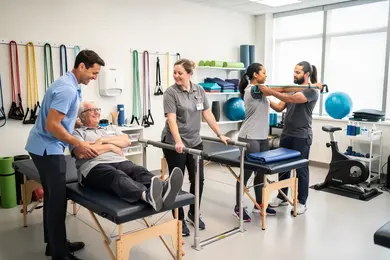
The direct answer is that several accredited or CAPTE-recognized hybrid Doctor of Physical Therapy programs do not require GRE scores, and GMAT scores are not normally part of physical therapy admissions. However, students should treat "online physical therapy degree" carefully: an entry-level DPT cannot be completed entirely online because clinical training, hands-on assessment, and supervised patient care are essential to licensure preparation.
The table below highlights examples of U.S. hybrid or substantially online physical therapy pathways that have advertised no-GRE admissions policies in recent admissions cycles. Always confirm the current catalog, PTCAS listing, and CAPTE status before applying because testing policies can change by cohort.
| Institution | Program type | Online format | GRE or GMAT policy | Best fit |
| Baylor University | Entry-level DPT | Hybrid coursework with in-person lab immersions and clinical placements | GRE not required; GMAT not applicable | Applicants seeking a structured hybrid DPT with intensive hands-on sessions |
| Tufts University School of Medicine | Entry-level DPT | Hybrid DPT model with online learning, campus-based lab experiences, and clinical education | GRE not required; GMAT not applicable | Students who want a medical-school environment and hybrid delivery |
| University of Southern California | Entry-level DPT | Hybrid DPT option with online coursework and required in-person experiences | GRE not required in recent admissions guidance; GMAT not applicable | Applicants prioritizing a long-established physical therapy brand and broad clinical network |
| University of St. Augustine for Health Sciences | DPT, including flexible formats at selected campuses | Blended online coursework, in-person labs, and clinical experiences | GRE not required; GMAT not applicable | Working adults who need multiple start dates or flexible scheduling options |
| Arcadia University | Hybrid DPT | Online coursework with required on-campus immersions and clinical rotations | GRE not required in recent admissions cycles; GMAT not applicable | Applicants comparing accelerated hybrid professional-health programs |
| South College | Hybrid DPT | Online learning paired with in-person lab sessions and clinical education | GRE not required; GMAT not applicable | Students who want hybrid delivery and multiple health-science pathways at one institution |
There are also post-professional online DPT programs for already licensed physical therapists who need a doctoral credential but are not seeking initial PT licensure. Those programs commonly do not require the GRE or GMAT, but they are not a substitute for an entry-level CAPTE-accredited DPT if you are not already eligible to become licensed.
Why Have Accredited Online Physical Therapy Degree Programs Eliminated GRE and GMAT Requirements?
Physical therapy programs have moved away from standardized tests for practical and equity-focused reasons. The GRE adds cost, preparation time, and scheduling barriers, while its usefulness in predicting clinical performance is limited compared with science coursework, patient-care exposure, interviews, and professional readiness. The GMAT is even less relevant because physical therapy is a clinical doctoral field, not a management degree pathway.
This shift also reflects a broader admissions trend in health professions education: programs are trying to identify students who can handle anatomy, physiology, biomechanics, clinical reasoning, professional communication, and supervised patient care. A high test score may help in some graduate fields, but it does not show whether an applicant can safely mobilize a patient, document treatment, interpret functional limitations, or collaborate with an interprofessional care team.
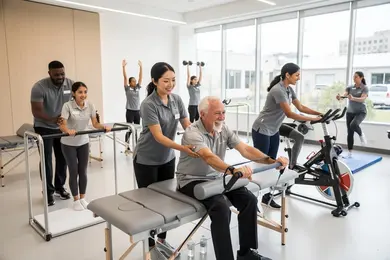
No-GRE policies are especially common in hybrid programs because these programs already screen for independent learning ability. Online DPT students must keep pace with asynchronous or synchronous coursework, prepare before lab immersions, travel for required experiences, and manage clinical placements. Admissions teams often look for evidence that the applicant can organize time, learn technical material quickly, and perform under observation.
What Admissions Criteria Matter Most Without GRE or GMAT Scores?
When standardized tests are removed, the rest of the application becomes more important. Applicants should expect a holistic review, but "holistic" does not mean casual; it means the program evaluates academic preparation, clinical exposure, professionalism, and fit together.
The most influential admissions factors usually include the following because they show whether you can succeed in a rigorous clinical doctorate:
- Prerequisite grades in anatomy, physiology, biology, chemistry, physics, psychology, and statistics, with particular attention to repeated courses or low science grades.
- Overall and prerequisite GPA, especially whether your most recent coursework shows academic improvement.
- Observation hours, physical therapy aide work, rehabilitation experience, athletic training exposure, or other patient-facing experience that proves you understand the profession.
- Letters of recommendation from physical therapists, science faculty, supervisors, or clinicians who can describe your judgment, work ethic, communication, and maturity.
- A focused personal statement that explains why physical therapy, why this format, and why your background prepares you for hybrid doctoral study.
- Interview performance, including ethical reasoning, communication style, resilience, and understanding of PT practice beyond sports injury stereotypes.
Applicants who are still building healthcare experience may also compare adjacent entry points such as medical assistant programs, especially if they need patient-contact experience before applying to a DPT program. That route does not replace DPT prerequisites, but it can strengthen a résumé and clarify whether clinical work is the right fit.
The table below shows how the admissions emphasis changes when the GRE is not required. Use it to decide where to spend your preparation time before submitting applications.
| Application area | Why it matters more without test scores | What a stronger applicant can show |
| Science prerequisites | They are the clearest academic signal for DPT-level coursework | Strong grades in anatomy, physiology, chemistry, physics, and biology |
| Recent academic trend | Programs want evidence of readiness now, not just cumulative history | Improvement in upper-level or repeated science courses |
| Clinical exposure | It demonstrates realistic understanding of PT practice | Experience across outpatient, inpatient, rehab, pediatric, or geriatric settings |
| Recommendations | They replace some of the external validation once attached to test scores | Specific examples of reliability, empathy, and clinical professionalism |
| Interview | Hybrid programs need students who can communicate clearly and self-manage | Thoughtful answers about patient care, ethics, workload, and online learning |
Are No-GRE or No-GMAT Online Physical Therapy Degree Programs Easier to Get Into?
No-GRE physical therapy programs are not automatically easier to get into. They are easier to apply to because you can avoid test registration, preparation costs, and score-report delays, but the academic and clinical expectations can remain highly competitive.
The practical difference is where the competition moves. Instead of separating applicants by standardized test scores, programs may compare prerequisite GPA, healthcare experience, interview readiness, essay quality, and the match between your goals and the program's hybrid format. A candidate with weak science grades will not necessarily benefit from a no-GRE policy unless the rest of the application shows clear readiness for doctoral-level health science coursework.
Applying without a GRE makes the most sense when your academic record and experience already tell a strong story. Taking or submitting scores may still make sense if a program is test-optional, your GPA is below the program's typical range, and your GRE score is genuinely strong enough to add evidence of readiness. If a program is test-free, however, it will not consider the score even if you send it.
Students should understand the difference between the three most common testing policies before building an application list.
| Policy type | What it means | Applicant strategy |
| Test-required | The GRE is mandatory for review | Take the test early enough to retake it if needed |
| Test-optional | You may submit scores, but they are not required | Submit only if the score strengthens your file |
| Test-free or no-GRE | The program does not use GRE scores in admissions | Invest effort in prerequisites, essays, references, and interviews instead |
Does Skipping the GRE or GMAT Affect Academic Quality or Accreditation?
Skipping the GRE or GMAT does not determine academic quality or accreditation. For an entry-level physical therapy degree, the key quality marker is accreditation by the Commission on Accreditation in Physical Therapy Education, commonly called CAPTE. CAPTE accreditation is the standard that connects DPT education to eligibility for the National Physical Therapy Examination in U.S. jurisdictions, although final licensure requirements are set by each state board.
Accreditation focuses on curriculum, faculty qualifications, clinical education, student outcomes, facilities, assessment, and institutional resources. It does not require programs to use the GRE. A no-GRE policy can coexist with demanding coursework, extensive clinical placements, high expectations for professionalism, and strict progression standards.
The more important question is whether the program publishes enough outcome information for you to evaluate risk. Look for graduation rates, NPTE pass rates, employment outcomes, clinical education structure, student support, remediation policies, and complaint history. If a program is vague about accreditation status or avoids direct answers about licensure eligibility, that is a red flag regardless of whether it requires a test.
Which Students Benefit Most From Online Physical Therapy Degree Programs Without GRE or GMAT Requirements?
No-GRE hybrid physical therapy programs are most helpful for applicants whose strengths are better shown through coursework, clinical exposure, and professional maturity than through standardized testing. They can also be valuable for career changers who need to reduce application friction while balancing work, caregiving, or prerequisite completion.
These applicants often benefit most from a no-test pathway because it lets them redirect time and money toward stronger evidence of readiness:
- Applicants with strong prerequisite grades who do not want the GRE to delay their application timeline.
- Working adults who can succeed in online coursework but need a hybrid format instead of relocating for a fully residential program.
- Career changers with patient-care experience who can explain a clear transition into rehabilitation, movement science, or musculoskeletal care.
- Students with test anxiety whose classroom performance, lab readiness, and recommendations are stronger indicators than standardized scores.
- Applicants comparing several health pathways and trying to keep application costs manageable.
Students who are still deciding between rehabilitation, exercise science, and broader movement-focused careers may want to review the best online kinesiology programs as an earlier academic step. Kinesiology can support preparation for PT prerequisites, but it does not by itself qualify someone to practice as a physical therapist.
A no-GRE hybrid DPT may be a poor fit if you need a fully online degree with no travel, cannot attend lab immersions, are not ready for full-time clinical rotations, or have not completed required science prerequisites. In those cases, delaying the application to strengthen prerequisites or choosing a different health program may produce a better outcome than rushing into a doctoral program.
How Do Tuition and Financial Aid Compare for No-GRE Online Physical Therapy Degree Programs?
No-GRE status does not reliably predict tuition. Some no-GRE hybrid DPT programs are private, some are connected to large universities, and some charge different rates by campus or term structure. The absence of a test requirement can save application-related costs, but it is usually small compared with total tuition, fees, travel for lab immersions, relocation for clinical rotations, and interest on graduate loans.
For federal graduate borrowing, the Direct Unsubsidized Loan annual limit is $20,500 for eligible graduate and professional students. That matters because many DPT programs cost more than this per year, so students may need institutional aid, savings, employer support, scholarships, or Grad PLUS loans to cover the full cost of attendance.
When comparing costs, do not stop at tuition per credit. Build a total-cost estimate that includes the following categories because hybrid formats can shift expenses from campus housing to travel and short-term lodging:
- Tuition, mandatory university fees, lab fees, technology fees, and clinical education fees.
- Travel, lodging, meals, and missed work during required lab immersions or campus intensives.
- Books, software, equipment, background checks, immunizations, drug screenings, and professional liability coverage.
- Clinical rotation costs, including relocation, transportation, parking, and temporary housing if placements are not local.
- Loan fees, interest accrual, and the monthly payment estimate after graduation.
Students comparing PT with other licensed healthcare routes may also look at nursing online options, especially if they want a patient-care career with multiple entry points. The right choice depends on scope of practice, licensure goals, time to completion, clinical requirements, and long-term debt comfort.
The table below summarizes the main cost trade-offs in no-GRE hybrid DPT programs. Use it to ask schools for itemized estimates rather than relying on a single advertised tuition number.
| Cost factor | Why it matters | Question to ask the school |
| Tuition structure | Programs may charge per credit, per term, or by cohort | What is the full tuition for the entire DPT program if I progress on time? |
| Lab immersion travel | Hybrid students may travel multiple times for hands-on training | How many required campus visits are there, and how long is each visit? |
| Clinical placement expenses | Rotations can require commuting or temporary relocation | Can I complete clinical experiences near my home area? |
| Scholarships and grants | Gift aid can reduce borrowing but may be limited | Are scholarships automatic, competitive, need-based, or renewable? |
| Loan repayment exposure | DPT is a graduate professional degree, so debt can be substantial | What is the average debt for recent graduates who borrowed? |
What Career Outcomes Can Graduates Expect From No-GRE Online Physical Therapy Degree Programs?
Employers and licensing boards generally care more about graduation from an accredited DPT program, licensure eligibility, clinical competence, communication, and patient-care performance than whether the program required the GRE. A no-GRE admissions policy is not printed on a license, and it is not normally a hiring screen.
The labor market is favorable but not automatic. The U.S. Bureau of Labor Statistics projects employment for physical therapists to grow 14% from 2023 to 2033, which is much faster than the average for all occupations. For applicants, that suggests strong demand driven by aging populations, chronic conditions, orthopedic needs, and rehabilitation after illness or injury, but local salary and hiring conditions still vary by setting and region.
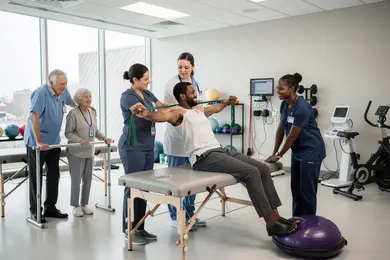
Common work settings for licensed physical therapists include outpatient orthopedic clinics, hospitals, inpatient rehabilitation facilities, skilled nursing facilities, home health, pediatrics, sports medicine, neurologic rehabilitation, and academic or administrative roles after additional experience. Hybrid DPT graduates should be ready to explain their clinical rotations, hands-on competencies, and licensure status rather than focusing on the online portion of coursework.
Some students comparing rehabilitation with other health and wellness careers may also consider an online masters in nutrition and dietetics, especially if they are more interested in food, metabolism, chronic disease counseling, or registered dietitian pathways than movement rehabilitation. The better option depends on the type of patient interaction and licensure scope you want.
What Common Application Mistakes Reduce Admission Chances to No-GRE Online Physical Therapy Degree Programs?
The biggest mistake is treating "no GRE" as the main reason to apply. Admissions committees still need proof that you can handle a demanding clinical doctorate and succeed in hybrid learning. A convenient testing policy should be one factor, not the whole strategy.
Applicants can improve their chances by avoiding these common errors before they submit:
- Applying without confirming CAPTE accreditation or current accreditation status for the exact campus or hybrid pathway.
- Assuming no-GRE means low selectivity, then submitting weak essays, generic recommendations, or incomplete observation documentation.
- Ignoring prerequisite expiration rules, minimum grades, lab requirements, or whether online science labs are accepted.
- Choosing only the cheapest or fastest program without checking NPTE pass rates, graduation rates, clinical placement support, and student services.
- Writing a personal statement that focuses on loving sports, fitness, or exercise but does not show understanding of disability, recovery, patient education, or clinical ethics.
- Failing to explain academic weaknesses, repeated courses, withdrawals, or career changes in a mature and evidence-based way.
- Missing deadlines for PTCAS verification, supplemental applications, interviews, deposits, immunizations, or background checks.
If your file has one weakness, do not try to hide it. A stronger approach is to show what changed: recent A grades in prerequisites, more varied PT observation, stronger faculty references, or a clear explanation of how you now manage time and workload.
How Should Students Compare Accredited Online Physical Therapy Degree Programs Without GRE or GMAT Requirements?
The best no-GRE physical therapy program is not simply the one with the easiest application. It is the accredited program that fits your academic record, location constraints, budget, learning style, clinical goals, and licensure plan with the least avoidable risk.
Use the following process to compare programs in a way that balances admissions flexibility with long-term value:
- Confirm the degree type first: choose an entry-level CAPTE-accredited DPT if you are not already a licensed physical therapist, or a post-professional online DPT only if you already meet the professional background requirements.
- Verify the current testing policy directly through the program's admissions page, catalog, or PTCAS profile because "no GRE" and "test optional" are not the same.
- Check whether the online format is synchronous, asynchronous, or blended, and compare it with your work schedule, time zone, and study habits.
- Map every in-person requirement, including lab immersions, practical exams, clinical rotations, orientation, and possible travel days.
- Compare total cost of attendance, not just tuition, and ask for a written estimate that includes fees, travel, clinical placement expenses, and expected borrowing.
- Review outcomes such as graduation rates, NPTE pass rates, employment outcomes, student support, and clinical placement assistance.
- Ask admissions staff how they evaluate applicants without GRE scores and what a competitive prerequisite GPA or experience profile looks like for recent cohorts.
- Speak with current students or alumni about workload, faculty responsiveness, clinical placement quality, and whether the hybrid model matched expectations.
Students who want a faster licensed healthcare entry point before deciding on a doctorate may also compare an LPN accelerated program. That pathway leads to a different scope of practice than physical therapy, but it can be relevant for applicants weighing time, cost, and direct patient-care options.
As a final decision rule, choose a no-GRE program only if you would still consider it strong if the test policy were removed from the marketing page. Accreditation, outcomes, cost transparency, clinical training, and licensure alignment matter more than skipping one exam.
Other Things You Should Know About Physical Therapy
PTAs usually cannot become physical therapists through a simple fully online bridge. Most must complete missing prerequisites, earn admission to an entry-level DPT program, complete required clinical education, and pass the NPTE for physical therapists.
Many entry-level DPT programs take about three years of full-time study, although some hybrid or accelerated formats may be shorter or structured differently. The exact timeline depends on the school, term calendar, and clinical rotation schedule.
Sometimes, but it is not guaranteed. Programs may try to place students near their preferred location, but placement availability, state authorization, site contracts, and clinical specialty needs can affect where rotations occur.
Some programs accept online prerequisites, but policies vary, especially for lab sciences. Before enrolling in anatomy, physiology, chemistry, physics, or biology courses online, confirm that each target DPT program will accept the course and lab format.
References
- NPTE Pass Rates By Program https://www.fsbpt.org/Free-Resources/NPTE-Pass-Rate-Reports/NPTE-Pass-Rates-By-Program/exam/PT
- Online Doctor of Physical Therapy (DPT) Programs | 2026 Guide https://onlinephysicaltherapyprograms.com/
- International Accelerated BS to DPT - University of Montana - Rehab Essentials https://umt-rehabessentials.com/track/international-accelerated-bs-to-dpt/
- Preparing the Next Generation of Physical Therapists https://www.pcom.edu/academics/programs-and-degrees/physical-therapy/news/preparing-the-next-generation-of-physical-therapists.html
- Doctor of Physical Therapy (D.P.T.) | Admissions https://www.nymc.edu/shsp/programs/physical-therapy/admissions/
- Online MHA Programs No GRE Required or That Offer a GRE Waiver https://www.onlineeducation.com/healthcare/faqs/gre-requirements-online-mha-programs
- Doctor of Physical Therapy | SCU https://www.scuhs.edu/doctoral-degrees/doctor-of-physical-therapy/
- How To Get Into Physical Therapy School: 10 Key Steps | USAHS https://www.usa.edu/blog/how-to-get-into-physical-therapy-school/
- Entry-level physical therapist curricula in geriatric care https://www.archivesofphysiotherapy.com/index.php/aop/article/download/3418/3993
- How Long Is PT School? A Guide for Future Physical Therapists https://www.pteverywhere.com/media/how-long-is-physical-therapy-school-guide-for-professionals