2027 Online Physical Therapy Degree Programs That Accept 60, 75, or 90 Transfer Credits

Co-Founder and Chief Data Scientist
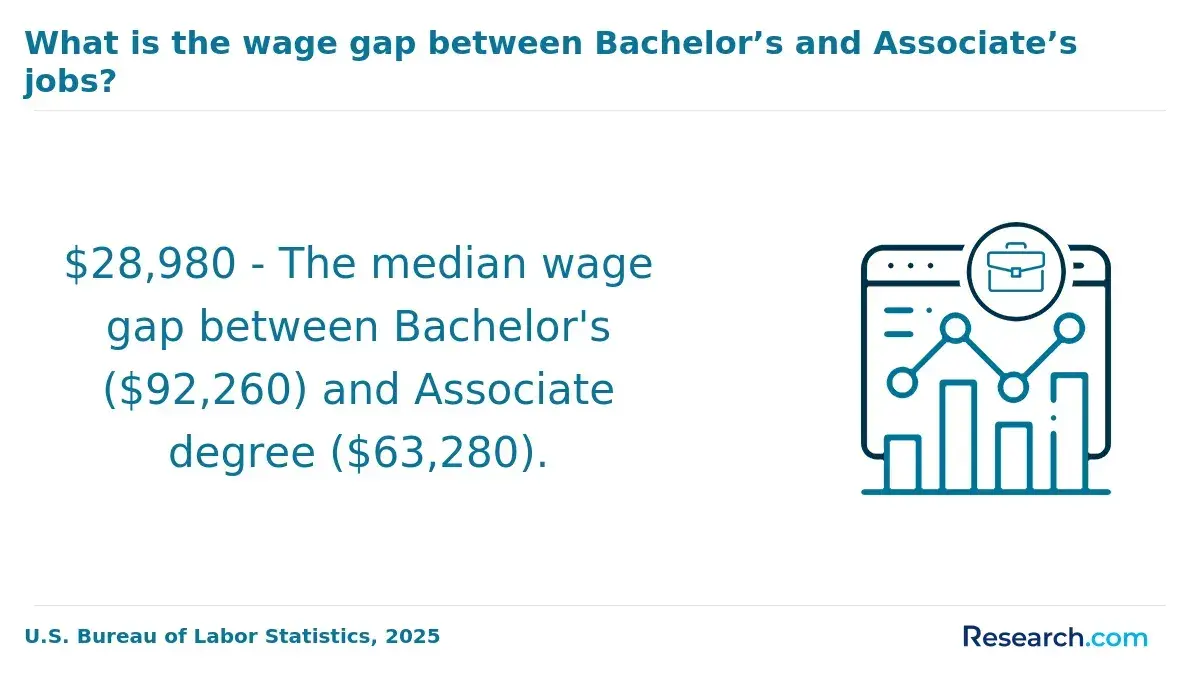
The biggest transfer-credit question is not whether an online physical therapy-related program accepts 60, 75, or 90 credits; it is whether those credits reduce the courses you still need. The National Student Clearinghouse Research Center reported in 2024 that transfer enrollment rose 5.3%, showing renewed demand for credit mobility.
This guide is for students with prior college work, associate degrees, or unfinished bachelor's credits who want a faster path toward pre-physical therapy, kinesiology, exercise science, health science, or degree-completion study while understanding cost, timeline, and remaining requirements.
Key Things You Should Know
- Most bachelor's programs related to physical therapy require about 120 credits, so applying 60, 75, or 90 transfer credits can leave roughly 60, 45, or 30 credits, but only if the credits satisfy general education, major, prerequisite, and elective requirements.
- A school may "accept" up to 90 transfer credits but still require at least 30 credits in residence, upper-division major coursework, labs, capstone work, or prerequisite courses that cannot be replaced by transfer credit.
- Before enrolling, request an official transfer evaluation, confirm CAPTE-related goals if you plan to pursue a DPT, and compare remaining credits rather than maximum accepted credits because the highest transfer allowance is not always the fastest or cheapest route.
How Many Transfer Credits Can You Apply Toward an Online Physical Therapy Degree?
For online physical therapy-related bachelor's programs, "accepting 60, 75, or 90 transfer credits" usually means the institution is willing to bring those credits onto your record. It does not automatically mean every credit will count toward graduation. The more important question is how many credits are applied to the exact degree plan you want.
Most transfer-friendly bachelor's degree-completion pathways in kinesiology, exercise science, health science, or pre-physical therapy are built around a 120-credit degree. The table below shows how the math usually works before school-specific rules, major requirements, and prerequisite sequencing are applied.
| Transfer-credit scenario | Approximate credits remaining in a 120-credit bachelor's degree | Best fit | Main caution |
| 60 transfer credits | About 60 credits remaining | Students with an associate degree, a strong general education base, or two years of prior college | You may still need most upper-division major courses and science prerequisites |
| 75 transfer credits | About 45 credits remaining | Students with extra electives, completed prerequisites, or credits beyond an associate degree | Extra elective credits may not reduce major requirements |
| 90 transfer credits | About 30 credits remaining | Degree-completion students who are close to finishing a bachelor's degree | Residency rules often require the final 30 credits at the new institution |
A key distinction is that physical therapy licensure in the U.S. requires a Doctor of Physical Therapy from a CAPTE-accredited program and state licensure. Online bachelor's programs can help you complete prerequisites, strengthen your academic record, or prepare for graduate admission, but they generally do not qualify you to practice as a physical therapist by themselves.
Which Online Physical Therapy Degree Programs Accept 60, 75, or 90 Transfer Credits?
The most transfer-friendly online options are usually not fully online entry-level physical therapy doctorates. They are bachelor's completion programs in physical therapy-adjacent fields, such as kinesiology, exercise science, health science, rehabilitation science, or pre-physical therapy tracks. Students comparing options can start with lists of the best online kinesiology programs, then verify each school's transfer maximum and degree-map fit.
The table below summarizes which program types commonly align with 60-, 75-, and 90-credit transfer goals. Use it to narrow your search before requesting official evaluations.
| Program type | Common transfer-credit fit | What it can support | What to verify |
| Online kinesiology bachelor's degree | Often suitable for 60 to 90 transfer credits, depending on school policy | Pre-DPT preparation, exercise science careers, wellness roles, graduate school prerequisites | Whether anatomy, physiology, biology, chemistry, physics, and statistics transfer as required prerequisites |
| Online exercise science bachelor's degree | Often suitable for 60 to 90 transfer credits | Strength and conditioning, fitness, rehabilitation support roles, DPT preparation | Whether upper-division exercise science courses must be completed at the new school |
| Online health science bachelor's degree | Often suitable for 75 to 90 transfer credits in degree-completion formats | Healthcare administration, graduate health pathways, prerequisite completion | Whether the program is too broad for your intended DPT prerequisite list |
| PTA-to-bachelor's or allied health completion program | Often suitable for students with 60 or more credits from an accredited associate program | Career advancement, bachelor's completion, possible graduate preparation | Whether technical PTA credits apply to the major, electives, or only general transfer credit |
| Pre-physical therapy bachelor's track | Usually suitable for 60 or 75 credits; 90 may apply if prerequisites match closely | Preparation for DPT applications | Whether the track includes all DPT prerequisite labs and recommended courses |
When comparing programs, prioritize the remaining degree audit over the headline transfer maximum. A program that accepts 90 credits but leaves you with missing lab sciences may take longer than a program that accepts 75 credits but applies them cleanly to your plan.
How Can You Tell Whether Transfer Credits Will Actually Apply Toward Your Physical Therapy Degree?
The safest way to compare programs is to separate accepted credits from applied credits. Accepted credits may appear on your transcript, while applied credits reduce specific requirements in your degree plan.
Use the following steps before committing to a school, especially if you are choosing between programs advertising generous transfer limits:
- Ask for an official or pre-enrollment transfer credit evaluation based on all prior transcripts, not an informal estimate based only on credit totals.
- Request a degree audit showing which credits apply to general education, major requirements, prerequisites, upper-division requirements, electives, and free electives.
- Confirm whether science courses with labs transfer as equivalent courses, because DPT prerequisites often require specific lab-based biology, anatomy, physiology, chemistry, or physics courses.
- Ask how many credits must still be completed at the institution and whether those credits must be upper-division courses.
- Compare the number of remaining required credits, not the number of accepted credits, across every school you are considering.
- Do not enroll until you understand whether any credits were accepted only as electives, because elective credit may not shorten your path if your major requirements remain unfinished.
Common red flags include admissions language that says "up to 90 credits accepted" without a sample degree audit, programs that will not review syllabi for science equivalencies, and advisors who discuss transfer totals but not remaining course sequences. If a school cannot show how your credits fit the degree map, treat the quoted transfer maximum as incomplete information.
What Types of Previous College Credits Can Transfer Into an Online Physical Therapy Degree?
Transferable credits can come from many sources, but physical therapy-related degrees tend to scrutinize science, math, and health courses more carefully than general electives. Students comparing physical therapy preparation with nursing online pathways should pay close attention to lab requirements, minimum grades, and accreditation because healthcare programs often evaluate prerequisites course by course.
The table below explains how common credit types are usually treated. Policies vary by institution, so use this as a planning guide rather than a guarantee.
| Previous credit type | How it may transfer | Physical therapy-related consideration |
| Community college courses | Often accepted for lower-division general education and introductory science requirements | May work well for 60-credit transfer students, especially with an associate degree |
| Four-year college courses | May apply to lower-division, upper-division, major, or elective requirements | Upper-division credits can be especially valuable if they match the new major |
| Lab sciences | May require direct equivalency review | Important for anatomy, physiology, chemistry, biology, and physics prerequisites |
| Statistics or math courses | Often transferable if content and level match | Frequently relevant for DPT prerequisites and health science degrees |
| Technical or vocational credits | May transfer as electives or through special articulation agreements | May not replace upper-division major coursework unless the program explicitly allows it |
| International credits | Usually require credential evaluation | Course-by-course evaluation may be needed for science equivalencies |
Minimum grade rules matter. Many schools require a C or better for transfer credit, while competitive graduate health pathways may expect stronger grades in prerequisite sciences even when the undergraduate institution accepts the course for credit.
How Do Residency and Upper-Division Requirements Affect Physical Therapy Transfer Students?
Residency requirements are one of the biggest reasons a 90-credit transfer does not always produce a one-year finish. A residency rule requires you to complete a minimum number of credits through the school awarding the degree, often including major, upper-division, or capstone courses.
The table below shows how these requirements can change the value of your transfer credits. It is especially important for students who already have 75 or 90 credits and want to avoid paying for repeated coursework.
| Requirement type | Typical effect on transfer students | Why it matters |
| Institutional residency | Requires a minimum number of credits at the new school | A 90-credit transfer into a 120-credit degree may still leave at least 30 credits to complete |
| Upper-division requirement | Requires a set number of junior- or senior-level credits | Lower-division community college credits may not satisfy advanced major coursework |
| Major residency | Requires key major courses to be completed through the degree-granting school | Transferred exercise science or health courses may become electives instead of major credits |
| Capstone requirement | Requires a final project, internship, seminar, or integrative course | Usually cannot be transferred because it must reflect the school's curriculum |
| Prerequisite sequencing | Requires courses to be completed in a specific order | Missing one science prerequisite can delay later courses even with many transfer credits |
The practical takeaway is simple: a school's maximum transfer-credit policy sets the ceiling, but residency and upper-division rules set the floor for how much work remains. Ask each school to identify the exact courses you must still complete and when they are offered.
How Does the Transfer Credit Evaluation Process Work for an Online Physical Therapy Degree?
The transfer credit evaluation process usually starts with admissions but should end with a degree-specific academic plan. For physical therapy-related fields, the evaluation should include both general education review and detailed prerequisite matching.
Follow this sequence to reduce surprises after enrollment and to make fair program-to-program comparisons:
- Collect official transcripts from every college attended, including community colleges, four-year universities, dual-enrollment providers, and prior online institutions.
- Gather syllabi for science, lab, statistics, anatomy, physiology, kinesiology, exercise physiology, and health-related courses that may need equivalency review.
- Submit transcripts early enough for the school to complete an official transfer evaluation before the enrollment deadline.
- Ask for a written degree audit that separates general education, major, prerequisite, elective, upper-division, and residency requirements.
- Request clarification for any course listed as elective credit when you expected it to satisfy a major or prerequisite requirement.
- Compare remaining credits, course availability, tuition, fees, and start dates across schools before making a deposit.
Keep a copy of every evaluation and advisor email. If your long-term goal is a DPT program, you may also need to confirm that transferred prerequisites will be accepted by the graduate programs where you plan to apply, not just by the bachelor's degree-completion school.
How Long Does It Take to Finish an Online Physical Therapy Degree With 60, 75, or 90 Transfer Credits?
Completion time depends on more than the number of credits transferred. Course sequencing, lab availability, part-time enrollment, financial aid limits, and whether you need missing prerequisites can all change the timeline.
The table below gives practical estimates for a 120-credit online bachelor's degree related to physical therapy. These are planning scenarios, not promises, because each school's calendar and course rotation can change the result.
| Applied transfer credits | Approximate credits remaining | Possible full-time timeline | Possible part-time timeline | Timeline risk |
| 60 | About 60 | About 2 academic years | About 3 to 4 years | Major prerequisites and upper-division courses may still be incomplete |
| 75 | About 45 | About 1.5 academic years | About 2.5 to 3 years | Elective-heavy transfer credits may not reduce the major sequence |
| 90 | About 30 | About 1 academic year | About 1.5 to 2 years | Residency, capstone, and course availability may prevent an immediate finish |
Some students also compare degree-completion timelines with shorter healthcare entry routes, such as medical assistant programs, while they complete prerequisites or decide whether to pursue graduate physical therapy education. That can be practical, but it is a different career path and should not be treated as a substitute for a DPT if your goal is to become a licensed physical therapist.
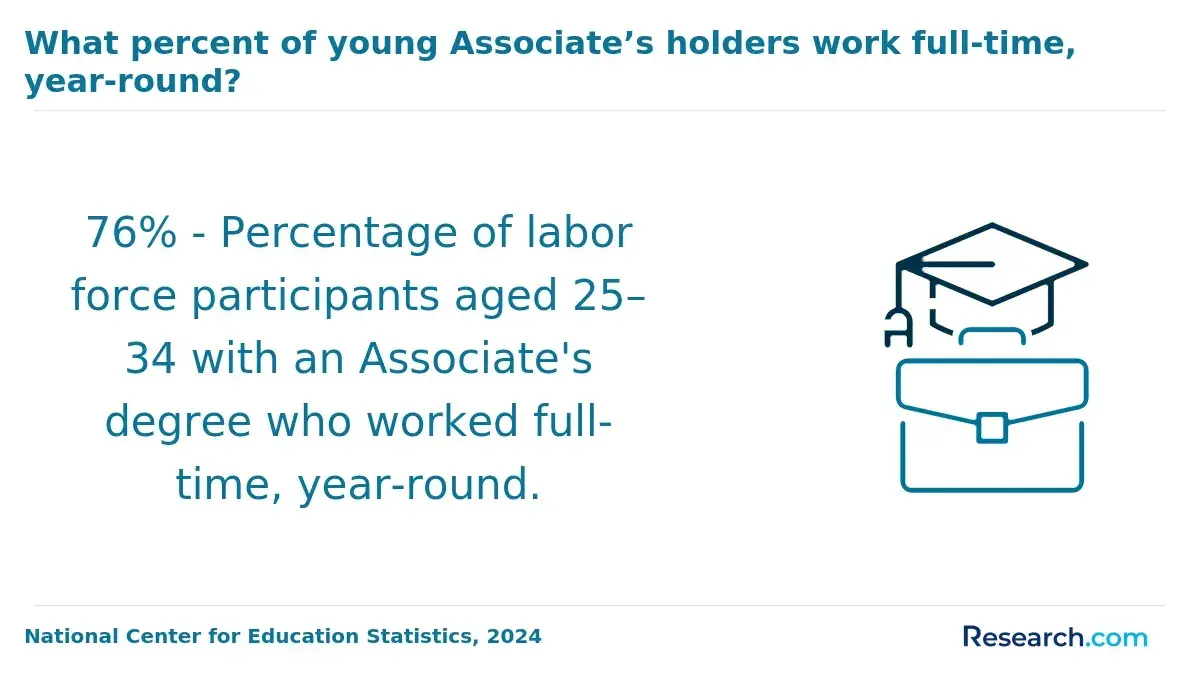
BLS wage data published for May 2024 places the median annual wage for physical therapists at $101,020, while BLS projections for the profession remain above the average for all occupations. For transfer students, that labor-market context can make efficient bachelor's completion valuable, but only if the degree plan aligns with graduate admission requirements and avoids unnecessary repeated credits.
How Much Can Transfer Credits Reduce the Cost of an Online Physical Therapy Degree?
Transfer credits can reduce cost by lowering the number of credits you must pay for at the new school. The savings are strongest when credits apply directly to required courses, not when they transfer as unused electives.
College Board's 2024 Trends in College Pricing reported average published tuition and fees of $11,610 for in-state public four-year students and $43,350 at private nonprofit four-year institutions. That gap shows why transfer students should compare both credit acceptance and per-credit pricing; a lower-cost school with fewer applied credits may still be cheaper than a higher-cost school that accepts more credits.
The table below shows how to estimate tuition impact without relying on generic averages that may not match your school. Replace "published per-credit tuition" with each program's actual rate.
| Applied transfer credits | Credits not paid at the new school | Basic tuition savings formula | Cost issue to check |
| 60 | 60 credits | 60 × published per-credit tuition | Whether remaining science and major courses carry lab or program fees |
| 75 | 75 credits | 75 × published per-credit tuition | Whether excess electives actually reduce required coursework |
| 90 | 90 credits | 90 × published per-credit tuition | Whether residency rules require a minimum final block of institutional credits |
Do not compare tuition only by advertised annual cost. For an online transfer student, the more useful calculation is total remaining credits multiplied by tuition, plus technology fees, course materials, lab fees, graduation fees, and any repeated prerequisite courses.
Can Prior Learning, Military Training, Exams, or Certifications Count Toward an Online Physical Therapy Degree?
Some online physical therapy-related programs award credit for prior learning, military training, standardized exams, workplace training, or healthcare certifications. These credits can be useful, but they usually apply more easily to electives than to lab sciences or upper-division major courses.
Ask each school which alternative credit sources it recognizes and where those credits can fit. This is especially important for working healthcare students who may also be comparing options such as an LPN accelerated program with longer bachelor's or pre-DPT pathways.
- Prior learning assessment may award credit for documented college-level learning, but schools often limit how much PLA can count toward the major.
- Military training may be evaluated through ACE recommendations, but the school decides whether credits apply to the degree plan.
- CLEP, AP, IB, DSST, and other exams may satisfy general education or introductory requirements if scores meet school policy.
- Healthcare certifications may count as electives or technical credit, but they rarely replace DPT prerequisite lab sciences unless an articulation agreement says so.
- Professional experience can strengthen admissions or advising conversations, but experience alone usually does not remove required academic prerequisites.
The main mistake is assuming alternative credit has the same value as direct course equivalency. A certification that gives you elective credit can still be worthwhile, but it may not reduce your time to degree if you still need anatomy, physiology, chemistry, physics, statistics, or upper-division kinesiology courses.
Do Older College Credits Expire When Transferring Into an Online Physical Therapy Degree?
Older credits do not always expire, but they may be treated differently depending on subject area. General education courses in writing, humanities, or social sciences are often more durable, while science, technology, and health courses may face recency expectations.
This matters for physical therapy-related students because DPT programs and undergraduate departments may want recent coursework in anatomy, physiology, biology, chemistry, physics, exercise science, or statistics. Similar recency concerns can also appear in other health pathways, including an online masters in nutrition and dietetics, where prerequisite currency may affect readiness for graduate-level work.
Before assuming older credits will save time, ask these questions in writing.
- Does the school have a formal expiration policy for science, math, health, or technology courses?
- Will older lab sciences transfer as direct equivalents, electives, or non-applicable credit?
- Do intended DPT programs require prerequisites to be completed within a certain recent period?
- Can you refresh an older course through a higher-level course instead of repeating the original class?
- Will repeating a prerequisite improve eligibility, or will it create financial aid or excess-credit issues?
If your credits are more than several years old, the best strategy is not to guess. Get both the undergraduate transfer decision and, when possible, guidance from the graduate physical therapy programs you may apply to later.
Other Things You Should Know About Physical Therapy
No. In the U.S., becoming a licensed physical therapist requires completing a CAPTE-accredited Doctor of Physical Therapy program and meeting state licensure requirements. An online bachelor's degree can help you complete prerequisites or prepare for DPT admission, but it is not the professional practice credential.
Not always. Transferring 90 credits is better only if those credits apply to required courses. If many credits transfer as electives and you still need upper-division major courses or science prerequisites, a 60-credit transfer with better course alignment may be more efficient.
It may cover many lower-division or general education requirements, especially if the schools have an articulation agreement. However, prerequisite sciences, lab courses, minimum grades, and major-specific requirements still need separate review.
Choose the school that leaves you with the best combination of fewer required credits, affordable remaining tuition, proper accreditation, needed prerequisites, and a realistic course schedule. The maximum transfer limit is useful, but the final degree audit is more important.
References
- Online Doctor of Physical Therapy (DPT) Programs | 2026 Guide https://onlinephysicaltherapyprograms.com/
- Guide to Physical Therapy Degrees Online - Find Top Doctorates https://www.edumed.org/online-schools/physical-therapy-dpt-programs/
- Directory of Programs https://www.capteonline.org/Programs/
- Best Online DPT Programs https://www.onlineu.com/degrees/physical-therapy