2027 Accredited Online Physical Therapy Degree Programs for Working Adults: Flexible, Part-Time, and Self-Paced Options

Co-Founder and Chief Data Scientist
Choosing an accredited online physical therapy degree is really a scheduling, licensure, and cost decision. Physical therapist employment is projected to grow 15% from 2022 to 2032, according to BLS data published in 2024, while the median annual wage was $99,710 in May 2023. This guide is for working adults comparing flexible, part-time, hybrid, and self-paced options. You'll learn how accreditation works, which formats fit full-time work, what costs to expect, and how to avoid choosing a program that does not support your long-term career goals.
Key Things You Should Know
- For licensed physical therapist roles, look for a CAPTE-accredited Doctor of Physical Therapy program; "online" usually means hybrid coursework because labs and clinical education must be completed in person.
- Part-time study can fit full-time work better than full-time cohorts, but 6 to 9 credits may still require roughly 18 to 27 hours weekly when class time, readings, assignments, and exam preparation are included.
- Cost and speed depend heavily on credits accepted: undergraduate transfer-friendly programs may accept 60 to 90 prior credits, while DPT professional coursework is usually less transferable; eligible undergraduates may receive up to $7,395 through the 2024-25 federal Pell Grant.
What Is an Accredited Online Physical Therapy Degree Program and Why Does Accreditation Matter?
An accredited online physical therapy degree program is a college program that delivers some or most academic coursework online while meeting recognized quality standards. In physical therapy, the word "online" needs careful attention because licensure-track programs still require hands-on labs, clinical placements, and supervised patient-care experiences.
For people who want to become licensed physical therapists, the main credential is the Doctor of Physical Therapy, commonly called the DPT. In the United States, graduates typically need to complete a Commission on Accreditation in Physical Therapy Education-accredited DPT program before they can sit for the National Physical Therapy Examination and pursue state licensure. For physical therapist assistant roles, students generally complete an accredited associate-level PTA program and meet state requirements.
Accreditation matters because it affects licensure eligibility, employer recognition, federal financial aid access, transferability, and the value of the degree. Institutional accreditation reviews the school as a whole. Programmatic accreditation reviews the specific physical therapy or physical therapist assistant program. Working adults should verify both before applying.
The table below separates common online-friendly degree paths so you can see which ones lead directly to licensure and which ones are better viewed as preparation for graduate study or adjacent health careers.
| Program type | Typical online format | Best fit | Licensure relevance |
| Hybrid DPT | Online lectures with required campus labs and clinical rotations | Students who already have a bachelor's degree and prerequisites | Required path for most aspiring licensed physical therapists when CAPTE-accredited |
| Online or hybrid PTA associate degree | Online general education and theory courses with in-person labs and clinicals | Adults seeking a faster support role in rehabilitation | Can support PTA licensure when programmatic and state requirements are met |
| Online kinesiology, exercise science, or pre-PT bachelor's degree | Often fully online or mostly online | Students building prerequisites for DPT admission | Does not by itself qualify someone to become a licensed physical therapist |
| Post-professional or transitional PT programs | Often online for licensed clinicians | Practicing PTs updating credentials | Usually intended for already licensed professionals, not first-time licensure seekers |
A common red flag is a school advertising a "fully online physical therapy degree" without explaining clinical requirements or CAPTE status. If your goal is licensure, do not rely on marketing language alone. Confirm the program's accreditation status, clinical placement model, state authorization, and licensure disclosures in writing.
Which Flexible Physical Therapy Degree Formats Are Best for Working Adults: Part-Time, Full-Time, or Self-Paced?
The best format depends on how many hours you can realistically study each week, how predictable your work schedule is, and whether you need a licensure-track program. Physical therapy is hands-on, so even the most flexible programs usually include fixed deadlines, proctored exams, lab intensives, or clinical rotations.
The comparison below explains how common formats affect working adults differently. Use it to match your schedule to the program design instead of choosing a school based only on the word "online."
| Format | How it usually works | Best for | Main trade-off |
| Full-time cohort | Students follow a fixed sequence with classmates | Learners who can reduce work hours or study as their main commitment | Faster progress but less scheduling control |
| Part-time online or hybrid | Students take fewer credits per term over a longer period | Working adults with steady employment or caregiving duties | Lower term-by-term workload but longer time to completion |
| Asynchronous online | Lectures and assignments can be completed within weekly deadlines | Adults with variable shifts who still need structure | Flexible access does not mean no deadlines |
| Synchronous online | Students attend live virtual classes at set times | Learners who benefit from real-time discussion and accountability | Harder for rotating shifts or evening work schedules |
| Self-paced or competency-based | Students move through content at variable speed within term or program limits | Highly independent learners with prior knowledge and strong study habits | Rare for licensure-track PT coursework and may still require fixed clinical dates |
Part-time is usually the safest flexible option for adults who work full time because it lowers weekly academic pressure while preserving faculty structure. Self-paced study can be useful for general education, prerequisite, or bachelor's-completion coursework, but it is less common in professional DPT and PTA clinical sequences.
Before choosing a flexible program, ask admissions staff to clarify the operational details that will affect your calendar. These questions are especially important if you work nights, weekends, rotating shifts, or have family responsibilities.
- Are lectures asynchronous, live, or a mix of both?
- How many campus visits, lab weekends, or residency sessions are required each term?
- Can students reduce credit load without delaying clinical placement eligibility?
- Are exams proctored at fixed times, or can students schedule testing windows?
- What is the maximum time allowed to finish the program?
- Are clinical rotations assigned locally, regionally, or only near the campus?
If you are still building a pre-PT academic foundation rather than entering a DPT program immediately, reviewing the best online kinesiology programs can help you compare online bachelor's options that may align with exercise science, anatomy, biomechanics, and graduate-school prerequisites.
What Are the Admission Requirements for Accredited Online Physical Therapy Degree Programs?
Admission requirements vary by degree level. A DPT program is a graduate professional program, while PTA associate programs and pre-PT bachelor's programs have different academic entry points. Working adults should compare requirements early because missing prerequisites can add semesters before the actual program begins.
Most licensure-track DPT programs expect applicants to show strong academic preparation in science and documented exposure to patient care or rehabilitation settings. Requirements vary, but the following items are common across many programs.
- Regionally accredited bachelor's degree before DPT enrollment
- Prerequisite courses such as anatomy, physiology, biology, chemistry, physics, psychology, and statistics
- Minimum overall and science GPA standards set by the school
- Observation, volunteer, or paid experience in physical therapy or related healthcare settings
- Letters of recommendation, often including a physical therapist or science faculty member
- Personal statement, interview, background check, immunizations, and technical standards review
PTA associate programs may require a high school diploma or equivalent, placement testing, prerequisite science courses, CPR certification, immunization records, and a background check before clinical placement. Online pre-PT bachelor's programs may be more transfer-friendly, but students must still confirm that online lab science courses meet future DPT prerequisites.
Adults changing careers should think strategically about clinical exposure. Short healthcare pathways, volunteer work, rehab aide roles, or related certificates can help you confirm that patient-facing care fits your strengths before committing to a long DPT route. Some learners explore medical assistant programs as a way to build healthcare familiarity, though those programs do not replace physical therapy prerequisites or PT observation requirements.
One mistake to avoid is applying before mapping every prerequisite to the target program. A course titled "human biology" at one school may not satisfy an anatomy and physiology requirement at another. Ask for a prerequisite review before you pay application fees, especially if your credits are older, earned online, or transferred from multiple institutions.
How Much Does an Online Physical Therapy Degree Cost, and What Financial Aid Options Are Available?
The cost of an online physical therapy degree depends on degree level, residency status, public versus private tuition, transfer credits, clinical travel, lab fees, and how long you remain enrolled. For working adults, the "cheapest" program is not always the best value if it delays licensure, lacks clinical placement support, or requires unpaid travel you cannot manage.
Because published tuition can be difficult to compare across schools, start by calculating total program cost rather than cost per credit alone. For eligible undergraduate students, the federal Pell Grant maximum is $7,395 for the 2024-25 award year, which can reduce out-of-pocket cost but usually will not cover the full price of a PTA or bachelor's pathway by itself.
When comparing schools, request a written estimate that separates direct tuition from costs that affect working adults' budgets. These common price categories should be included in your comparison.
- Tuition charged per credit, per term, or by cohort
- Online course fees, technology fees, lab fees, and simulation fees
- Books, anatomy resources, software, uniforms, and equipment
- Travel and lodging for campus labs, residencies, or practical exams
- Clinical placement expenses, including transportation, parking, background checks, drug screening, immunizations, and health insurance
- Lost wages if clinical rotations require weekday daytime availability
The table below summarizes cost factors that commonly change the real price of online and hybrid physical therapy pathways. It is useful because many working adults focus on tuition first and discover later that clinical logistics are the larger constraint.
| Cost factor | Why it matters | Question to ask |
| Transfer credits | Accepted credits can reduce tuition and time in undergraduate pathways | How many credits will be accepted before I enroll? |
| Clinical travel | Hybrid programs may require travel even if lectures are online | Can clinicals be completed near my home? |
| Program length | Longer enrollment can increase fees and living costs | What is the normal completion time for part-time students? |
| Employer benefits | Tuition assistance may lower borrowing needs | Does my employer reimburse accredited healthcare programs? |
| Licensure exam costs | Graduation is not the final expense for licensure-track students | Which exam, application, and state fees should I budget for? |
Financial aid may include federal grants, federal student loans, state grants, school scholarships, military benefits, employer tuition reimbursement, payment plans, and workforce development funding. Always confirm that the institution participates in federal aid programs and that your program is eligible, because not every certificate, continuing education pathway, or nondegree option qualifies.
A practical affordability test is to compare monthly loan payments against realistic entry-level earnings in your target role, not only median salaries. If you are pursuing PTA work, a lower-cost associate pathway may be more financially reasonable than borrowing heavily for a bachelor's degree that does not lead directly to PT licensure. If you are pursuing the DPT, focus on accredited programs with strong clinical placement support and transparent outcomes.
How Long Does It Take to Complete an Online Physical Therapy Degree, and Can Transfer Credits Help You Graduate Faster?
Completion time depends on your starting point. A first-time college student, a bachelor's degree holder missing prerequisites, a career changer with science credits, and a licensed clinician upgrading credentials will all have different timelines. Working adults should separate prerequisite time, degree time, clinical time, and licensure preparation time.
The following timeline estimates are general planning ranges, not promises. They help you understand why transfer credit and prerequisite planning can matter as much as online flexibility.
| Pathway | Typical academic length | Working-adult scheduling note |
| Online pre-PT bachelor's degree | About 4 years from the start, or less with transfer credits | Transfer-friendly programs may shorten the path substantially for adults with prior college credit |
| Hybrid PTA associate degree | Often about 2 years after prerequisites, depending on sequence | Clinical rotations may require daytime availability even when coursework is online |
| Hybrid DPT | Commonly about 3 years after bachelor's degree and prerequisites | Part-time DPT options are less common because clinical sequencing is tightly structured |
| Prerequisite-only coursework | One or more terms depending on missing courses | Science courses with labs may have fixed schedules or in-person requirements |
Transfer credits can help most at the undergraduate level. Bachelor's-completion programs may accept a block of prior general education or elective credits, and some associate programs may accept previously completed English, psychology, math, or biology courses. However, DPT professional coursework is usually sequenced, cohort-based, and less open to transfer because it must meet accreditation and clinical competency standards.
To avoid timeline surprises, working adults should complete a transfer and prerequisite audit before enrolling. A clear audit turns vague promises into a graduation plan.
- Request official transcripts from every college you attended.
- Ask the school for a written transfer-credit evaluation before committing to the program.
- Confirm whether older science courses expire for admission purposes.
- Identify which lab courses must be completed in person or through approved online lab formats.
- Ask whether part-time enrollment changes the order of clinical placements or delays graduation.
- Build a calendar that includes application deadlines, prerequisite terms, clinical rotations, licensure exams, and possible retakes.
If your main goal is to enter patient care quickly while you continue exploring rehabilitation careers, compare the timeline carefully with other licensed healthcare routes such as an LPN accelerated program. That pathway is different from physical therapy, but it may help some adults evaluate whether they need the fastest healthcare credential or a longer rehabilitation-specific route.
What Should You Look for When Comparing Accredited Online Physical Therapy Degree Programs?
Comparing accredited online physical therapy degree programs is not just a matter of tuition and convenience. The right program should fit your licensure goal, schedule, clinical needs, learning style, and financial risk tolerance. A flexible program that lacks the right accreditation or clinical support can become more expensive than a less flexible but better-structured option.
Use the following checklist when speaking with admissions advisors. It focuses on the details that most often affect working adults after enrollment begins.
- Verify institutional accreditation through recognized accrediting agencies and programmatic accreditation through CAPTE when the program is intended for PT or PTA licensure.
- Ask whether the program meets educational requirements in your state, especially if you live outside the school's home state.
- Request the exact number of campus visits, lab days, practical exams, and clinical weeks required.
- Compare asynchronous, synchronous, and hybrid requirements in writing rather than relying on the word "flexible."
- Ask how clinical placements are arranged and whether the school helps secure sites near working adults' homes.
- Review graduation rates, licensure exam pass-rate disclosures, student support, and job-placement information where available.
- Confirm transfer-credit limits, prerequisite expiration rules, and maximum time to complete the program.
- Ask current students or alumni how many hours per week they actually spend on coursework while employed.
Common mistakes include choosing a program before verifying CAPTE status, assuming self-paced means unlimited time, ignoring clinical travel costs, and overlooking state authorization. Another red flag is pressure to enroll before receiving written answers about accreditation, licensure, transfer credits, and clinical placements.
The comparison below highlights better alternatives to common enrollment mistakes. It is designed to help you replace risky assumptions with evidence-based questions.
| Risky assumption | Why it can hurt you | Better approach |
| "Online means I can study whenever I want." | Many courses have weekly deadlines, live sessions, exams, and lab dates | Ask for a sample weekly schedule and residency calendar |
| "Any PT degree will qualify me for licensure." | Licensure-track roles require specific accredited preparation | Verify CAPTE status and state licensure disclosures |
| "Lower tuition always means better value." | Fees, travel, delayed graduation, or weak support can raise total cost | Compare total cost of completion |
| "My credits will probably transfer." | Schools set their own transfer rules, and science prerequisites may expire | Get a written credit evaluation before enrollment |
Adults who are not yet ready for DPT admission may benefit from comparing related undergraduate fields first. Programs in exercise science, health science, or kinesiology can be useful stepping stones, but you should still check whether each course satisfies the prerequisites of your intended graduate programs.
What Career Opportunities and Salary Potential Can You Expect With a Physical Therapy Degree?
A physical therapy degree can lead to several rehabilitation and healthcare career paths, but the outcome depends on the credential. A DPT prepares graduates to pursue physical therapist licensure. A PTA associate degree prepares graduates for physical therapist assistant licensure. A kinesiology or pre-PT bachelor's degree may support roles in fitness, wellness, rehabilitation support, or graduate-school preparation, but it does not qualify someone to practice as a physical therapist.
BLS data published in 2024 projected 15% employment growth for physical therapists from 2022 to 2032, much faster than the average for all occupations. For working adults, that growth suggests ongoing demand, but it does not remove the need to evaluate local job markets, debt, licensure requirements, and clinical availability.
The table below summarizes common roles connected to physical therapy education. It distinguishes direct licensure paths from related careers so you can avoid overestimating what a non-DPT degree can do.
| Role | Typical education route | Common responsibilities | Salary context |
| Physical therapist | CAPTE-accredited DPT plus state licensure | Evaluate patients, create treatment plans, guide therapeutic exercise, document progress, coordinate care | BLS reported a median annual wage of $99,710 in May 2023 |
| Physical therapist assistant | Accredited PTA associate degree plus state requirements | Provide treatments under PT direction, track patient progress, assist with exercises and modalities | Pay varies by setting and state; compare local PTA wage data before enrolling |
| Rehabilitation aide or technician | High school diploma, certificate, or related coursework depending on employer | Prepare treatment areas, support therapists, clean equipment, help with patient flow | Often an entry-level support role rather than a licensed clinical role |
| Exercise specialist or wellness coordinator | Kinesiology, exercise science, or related bachelor's degree | Design fitness programs, support injury prevention, promote wellness and mobility | Compensation depends heavily on employer, certifications, and location |
Physical therapy may be a strong fit if you enjoy anatomy, movement, coaching, problem-solving, patient education, and long-term recovery planning. It may be less ideal if you need a fully remote career, cannot attend clinical rotations, or are uncomfortable with hands-on patient care.
Healthcare career changers should also compare adjacent fields before committing to a long rehabilitation pathway. For example, adults deciding between rehabilitation, direct nursing care, and broader patient-care roles may want to compare nursing online options with physical therapy pathways because the licensure steps, schedules, clinical expectations, and workplace duties differ significantly.
How Can Working Adults Balance a Physical Therapy Degree With Full-Time Work and Family Responsibilities?
Balancing a physical therapy degree with full-time work is possible for some adults, but it requires realistic planning. The hardest periods are usually science prerequisites with labs, intensive practical-skill courses, and clinical rotations that operate on healthcare-site schedules rather than student-preferred schedules.
A useful planning rule is to estimate total weekly workload before the term begins. Under the federal credit-hour model used by many colleges, one credit often reflects one hour of instruction plus outside work each week; a 9-credit term can therefore become a part-time job by itself once studying and assignments are included.
Working adults can improve their odds of persistence by treating school like a scheduled commitment instead of fitting it into leftover time. The steps below can help you test whether a program is manageable before you enroll.
- Build a weekly calendar that blocks work, commute time, sleep, caregiving, class sessions, study time, and one recovery period.
- Start with fewer credits in the first term if you have been away from college or are taking lab sciences.
- Ask your employer about predictable scheduling, tuition assistance, paid education days, or shift changes before clinical rotations begin.
- Create a backup plan for childcare, transportation, and internet access during exams or live class sessions.
- Tell family members the specific nights or weekends when you are unavailable for nonurgent tasks.
- Use school tutoring and faculty office hours early rather than waiting until you fail an exam.
The biggest mistake is underestimating clinical time. Even if coursework is asynchronous, clinical education usually requires set hours at approved sites. If you cannot take time off during weekday business or healthcare hours, ask whether the program has evening, weekend, or local placement options before you apply.
Self-paced courses require extra discipline. They can be helpful for motivated learners completing general education or prerequisite work, but they can also create procrastination risk. If you choose self-paced study, set internal deadlines that are earlier than the school's official deadlines and use calendar reminders for exams, lab submissions, and advising checkpoints.
What Student Support Services and Online Learning Resources Should You Expect From a Physical Therapy Degree Program?
Student support can determine whether an online physical therapy student stays on track. Working adults need more than a learning management system; they need advising, clinical coordination, technical help, tutoring, and clear communication from faculty.
Look for support services that match the intensity of health science coursework and the complexity of clinical education. The following services are especially important in online and hybrid programs.
- Dedicated academic advising for course sequencing, prerequisites, and part-time pacing
- Clinical placement coordination or clear guidance for securing approved sites
- Online tutoring for anatomy, physiology, biomechanics, statistics, and writing
- Accessible faculty office hours across time zones or evening schedules
- Library access to journals, anatomy tools, databases, and evidence-based practice resources
- Technology support during evenings or weekends when working adults often study
- Disability services and testing accommodations for online, lab, and clinical environments
- Career services that understand PT, PTA, rehabilitation, wellness, and graduate-school pathways
Strong programs should also provide orientation to online learning, clear rubrics, recorded lectures when possible, and early alerts when students fall behind. For health programs, student support should extend beyond coursework into professionalism, documentation, patient communication, and preparation for clinical expectations.
Career advising is also valuable if you are comparing physical therapy with other health and wellness paths. For example, some learners interested in rehabilitation, chronic disease prevention, or lifestyle counseling may also research an online masters in nutrition and dietetics, but that pathway leads to different credentials and job duties than PT or PTA education.
Before enrolling, ask whether online students receive the same support as campus students. If tutoring, advising, or faculty access is limited to weekday business hours, the program may be less workable for adults who study after work or on weekends.
Do Online Physical Therapy Degree Programs Include Internships, Practicums, or Other Hands-On Learning Requirements?
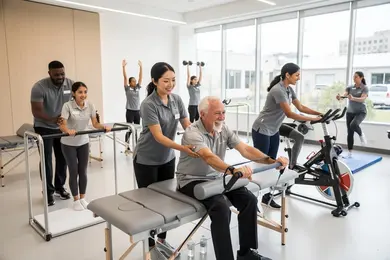
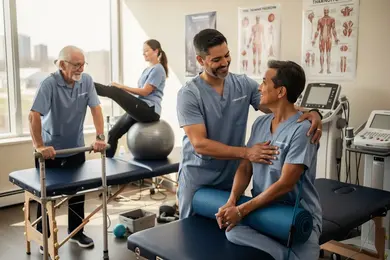
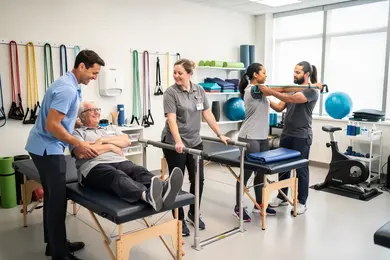
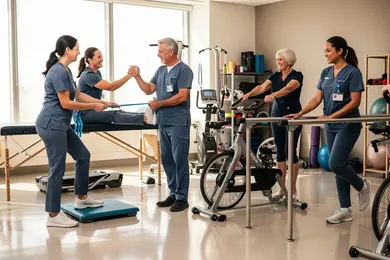
Yes, licensure-oriented online physical therapy programs include hands-on learning. In fact, this is the main reason most PT and PTA programs are hybrid rather than fully online. Students must demonstrate practical skills, patient safety, clinical reasoning, communication, and professional behavior in supervised settings.
Hands-on requirements vary by program, but they often include campus labs, simulation, practical exams, integrated clinical experiences, and full-time clinical rotations. These experiences are not optional add-ons; they are central to preparing for patient care and licensure requirements.
Working adults should clarify how hands-on learning is scheduled because this is where flexibility often narrows. The questions below can help you identify whether a program's clinical model fits your job and family responsibilities.
- How many in-person lab days or residency sessions are required each term?
- Are labs held on weekdays, evenings, weekends, or in intensive blocks?
- Does the school assign clinical sites, help students find sites, or require students to secure their own placements?
- Can clinical rotations be completed near my home, or must I relocate temporarily?
- Are clinical rotations full time, and if so, for how many weeks?
- What happens if a clinical site cancels, or if my work schedule conflicts with placement hours?
- Are there additional requirements such as CPR certification, immunizations, liability insurance, background checks, or drug screening?
Do not enroll in a program until you understand the clinical placement policy. A program may be academically flexible but clinically rigid, meaning lectures fit your evenings while rotations require daytime availability. If you cannot change work hours during clinical terms, ask whether deferral, part-time clinical sequencing, or local placement options exist.
The best programs are transparent about these requirements before admission. They explain not only what students must complete, but also how the school supports placement, what students must arrange independently, and how clinical performance is evaluated.
Other Things You Should Know About Physical Therapy
No. In the United States, becoming a licensed physical therapist typically requires completing a CAPTE-accredited Doctor of Physical Therapy program and meeting state licensure requirements. A bachelor's degree can help you complete prerequisites for DPT admission, but it is not enough for PT licensure.
Online physical therapy programs in 2027 typically include clinical components like supervised in-person internships or clinical practicums. Students must complete a set number of clinical hours, as mandated by governing bodies, to gain hands-on experience in various healthcare settings.
Yes, online physical therapy degree programs generally require a reliable computer, high-speed internet, and specific software tools for virtual classes and clinical simulations. Some programs may recommend particular platforms for accessing coursework and participating in interactive sessions throughout the 2027 academic year.
A physical therapist evaluates patients, diagnoses movement-related problems within the PT scope, and designs treatment plans. A physical therapist assistant provides selected treatments under PT direction. The education, licensure requirements, responsibility level, and career advancement options are different.
References
- Physical Therapy Internship Program Eligibility and ... https://help.medicalaid.org/en/articles/11059243-physical-therapy-internship-program-eligibility-and-application-process-faqs
- Physical therapy internships https://www.theraplatform.com/blog/1293/physical-therapy-internships
- Predictors of Physical Therapy Academic and NPTE Licensure Performance https://hpe.researchcommons.org/journal/vol5/iss3/13/
- Clinical Internship Program | PT Solutions https://www.joinptsolutions.com/us/en/clinical-internship-program
- Online Doctor of Physical Therapy (DPT) Programs | 2026 Guide https://onlinephysicaltherapyprograms.com/
- Doctor of Physical Therapy Student Performance on the ... https://digitalcommons.lmunet.edu/cgi/viewcontent.cgi
- Best Online Physical Therapy Degrees Of 2025 | AffordableCollegesOnline.org https://www.affordablecollegesonline.org/degrees/physical-therapy-schools/
- Best Online DPT Programs https://www.onlineu.com/degrees/physical-therapy
- All Care Therapies | 1-on-1 Therapy, Tailored to You https://allcaretherapies.com/en-us/careers/internships
- How to Pay for Physical Therapist (PT) School | SoFi https://www.sofi.com/learn/content/paying-for-pt-school/