
2027 Easiest PhD Degree Programs

Co-Founder and Chief Data Scientist
Choosing a doctoral program is not just a question of prestige. It is a question of time, money, research intensity, career fit, and whether the degree will actually help you reach your next professional goal. During the 2020-21 academic year, more than 194,000 students in the United States earned a doctoral degree, and by 2032, the number of doctoral degree holders in the U.S. is projected to increase to nearly 230,000. That growth reflects strong interest in advanced credentials, but it also makes program quality and fit more important than ever.
This guide explains what people usually mean when they search for the “easiest PhD degrees.” In most cases, they are not looking for a low-quality doctorate. They want a credible program with flexible scheduling, manageable research expectations, clear milestones, strong faculty support, and a practical path to completion. Below, you will find degree options, comparison tables, risks to avoid, funding ideas, and questions to ask before enrolling.
Quick Answer: What Is the Easiest PhD to Earn?
The easiest PhD is usually the one that best matches your academic background, work experience, research interests, schedule, and career goals. Professional doctorates and applied doctoral programs in fields such as education, public administration, organizational leadership, health administration, business, and some areas of public health may feel more manageable because they often use structured coursework, applied research, online delivery, or capstone-style projects. However, a doctorate should still be rigorous, accredited, and respected by employers in your field.
| Best fit | Consider these doctoral paths | Why they may feel more manageable |
| Working professionals | Education, organizational leadership, business administration, public administration | Often designed around applied projects, cohort models, and flexible online or hybrid formats |
| Healthcare professionals | Public health, health administration, nursing, occupational therapy | May connect research directly to current practice, policy, or clinical leadership |
| Students who prefer writing and analysis | History, literature, media studies, humanities fields | Less laboratory work, but heavy reading, writing, independent research, and dissertation expectations |
| Students seeking faster completion | Accelerated professional doctorates or structured online PhD programs | May offer condensed terms, transfer credit, and built-in dissertation or capstone support |
Affordable PhD Degree Programs With High Acceptance Rates
The programs below represent fields that often attract doctoral students seeking flexibility, applied learning, or career-focused advancement. “Easier” does not mean effortless. It means the structure may be more accessible for the right student, especially when the program is accredited, well-supported, and aligned with prior experience.
1. Nursing
Online nursing doctoral pathways can be a practical option for nurses who want to move into advanced practice, leadership, education, policy, or systems improvement without leaving the workforce. Coursework is commonly paired with clinical or practice-based requirements, so students should confirm licensure rules, on-site expectations, and state authorization before enrolling.
2. Online PhD Applied Behavior Analysis
An online PhD in applied behavior analysis focuses on behavioral assessment, intervention design, research methods, ethics, and evidence-based practice. It may suit professionals who already work in clinical, school, or community settings and want to deepen their expertise with individuals who have behavioral, developmental, or learning needs.
3. PhD in Counselor Education Supervision
A doctorate in counselor education and supervision is designed for licensed or experienced counselors who want to teach, supervise trainees, lead clinical programs, or contribute to counseling research. Students should review fieldwork, residency, internship, and licensure-related requirements carefully because counseling rules can vary by state and role.
4. Management
Doctoral management programs typically emphasize leadership, organizational behavior, strategy, decision-making, and applied research. They may be a better fit for professionals aiming for executive, consulting, teaching, or organizational development roles than for students seeking a traditional academic research career in a highly specialized discipline.
5. Accounting
Online doctoral programs in accounting or accounting-related business fields may cover auditing, taxation, financial reporting, analytics, governance, and research design. They can support careers in higher education, consulting, corporate leadership, or specialized finance roles, but students should compare accreditation, faculty expertise, and whether the degree supports CPA-related or teaching goals.
6. Online PhD in Pharmaceutical Sciences
A doctoral program in pharmaceutical sciences is research-oriented and may involve drug development, pharmacology, biotechnology, regulatory science, or translational research. It is not necessarily “easy,” but online or hybrid formats may make the program more accessible for professionals already working in healthcare, laboratories, industry, or regulatory environments.
7. Online Doctorate in Cybersecurity
A doctorate in cybersecurity can help experienced IT and security professionals build advanced knowledge in risk management, security governance, policy, cryptography, and ethical hacking. It may support leadership roles such as Chief Information Security Officer, but the workload can be technical and demanding, especially for students without a strong security or systems background.
8. Social Work
Online doctoral social work programs usually focus on advanced practice, leadership, policy, research, teaching, and community systems. Students should distinguish between research-oriented PhD programs and practice-focused doctorates, since the right choice depends on whether they want academic, administrative, clinical leadership, or policy roles.
9. Online Doctorate in Organizational Leadership
A doctorate in organizational leadership is often attractive to working adults because research projects can be tied to real workplace challenges. The curriculum commonly covers leadership theory, organizational change, strategic planning, ethics, and applied research, making it relevant to corporate, nonprofit, education, government, and consulting settings.
10. Special Education
Doctoral programs in special education can prepare educators for leadership, research, curriculum design, teacher preparation, policy, or advanced instructional roles. Online formats may improve access, but students should verify practicum, state certification, and leadership credential requirements before assuming the program meets local professional standards.
- Easiest PhD Degree Programs for 2027
- What Makes a PhD Degree Easier to Complete?
- Benefits of Choosing a More Manageable PhD Program
- Are Online PhD Programs Easier Than Campus Programs?
- How Long Does an Easier PhD Take?
- Accelerated PhD Programs: What to Know
- PhD Programs With Less Coursework
- Doctoral Programs Without a Traditional Dissertation
- Financial Aid for PhD Students
- How Flexible PhD Programs Help Working Adults
- Risks of Choosing an Easier PhD Program
- Financial Aid Options That Can Reduce Doctoral Costs
- Career Advancement With an Easier PhD
- How to Check Whether a PhD Program Is Credible
- Are Easier PhD Programs as Valuable as Traditional Programs?
- How to Find Accelerated PhD Programs That Match Your Goals
- Other Questions About the Easiest PhD Degree Programs for 2027
Easiest PhD Degree Programs for 2027
How the Programs Were Selected
This list was built from Research.com’s analysis of program characteristics that matter to doctoral students, including flexibility, online availability, completion expectations, field fit, and affordability indicators. Research.com uses a proprietary methodology and draws on reputable higher education data sources, including the IPEDS database from the National Center for Education Statistics, Peterson's database through its Distance Learning Licensed Data Set, the College Scorecard, and the National Center for Education Statistics. These sources help make the selection process more transparent and grounded in available institutional data.
1. PhD in Public Health
A PhD in Public Health may be more manageable for students who already have public health, healthcare, policy, or research experience because many programs connect doctoral work to real population health problems. Applicants are generally expected to hold a master’s degree in a related field and submit materials such as a statement of purpose, recommendation letters, and a resume showing relevant public health experience. Completion requirements differ by school and may include an essay, thesis, dissertation, or other final written product. Students comparing costs can also review affordable online public health degree options before committing to a doctoral path.
- Program duration: 4-5 years
- Tracks/concentrations: Community Health Education; Environmental and Occupational Health; Epidemiology
2. PhD in History
A PhD in History is demanding but may fit students who are strong readers, writers, and independent researchers. The program usually covers historiography, research methods, historical theory, archival work, and specialized periods or regions. The central requirement is original research that leads to a dissertation contributing to historical scholarship. Graduates may pursue work in academia, museums, archives, research organizations, publishing, or public history.
- Program duration: 6-9 years
- Tracks/concentrations: Ancient History; Asian History; European History; African History; Russian and Eastern European History; United States History; Global History; Military History; Women’s and Gender History
3. PhD in Literature
A PhD in Literature centers on advanced interpretation, literary theory, research, criticism, and scholarly writing. Students examine genres, authors, movements, periods, and cultural contexts while developing an original dissertation topic. This degree can support academic and research careers, but it may also be useful in publishing, communications, writing, editing, and other fields where analytical thinking and persuasive communication are valued.
- Program duration: 5-7 years
- Tracks/concentrations: Literature and Language; Literature and Culture; etc.
4. PhD in Public Administration
A PhD in Public Administration prepares students to study and improve public institutions, nonprofit systems, governance, budgeting, policy implementation, and administrative leadership. It may feel more accessible for professionals already working in public service because doctoral projects can often be connected to practical policy or management challenges. The dissertation typically addresses a significant issue in public administration or public policy.
- Program duration: 4-5 years
- Tracks/concentrations: Public Policy; Public Financial Management; Public Management; etc.
5. PhD in Economics
A PhD in Economics builds expertise in economic theory, econometrics, statistical modeling, data analysis, and applied research. It can lead to research and policy roles in universities, government, consulting, think tanks, and private industry. This degree is mathematically rigorous, so it is only “easy” for students with strong quantitative preparation and a clear research focus.
- Program duration: 4-5 years
- Tracks/concentrations: Applied Economics; Econometrics and Economic Statistics; Economics of Education; Economic Theory; Economic History; etc.
6. Doctor of Occupational Therapy
A Doctor of Occupational Therapy prepares students for advanced clinical reasoning, evidence-based practice, leadership, research use, and innovation in occupational therapy. Coursework often includes advanced therapeutic approaches, healthcare systems, applied research, and practice leadership. Graduates may work in clinical practice, healthcare administration, education, or specialized patient care areas.
- Program duration: 18+ months
- Tracks/concentrations: Pediatrics; Geriatrics; Rehabilitation; Hand Therapy; etc.
7. PhD in Psychology
A PhD in Psychology explores human behavior, cognition, development, social processes, mental health, statistics, and research methods. Students considering even the cheapest online PhD psychology programs should pay close attention to accreditation, licensure alignment, practicum requirements, and whether the program is designed for research, teaching, or clinical preparation. Additional supervised training may be required for clinical practice.
- Program duration: 4-7 years
- Tracks/concentrations: Clinical Psychology; Community Psychology; Developmental Psychology; etc.
8. PhD in Health Administration
A PhD in Health Administration is built for students interested in healthcare leadership, health policy, finance, quality improvement, health systems, strategy, and organizational performance. It can support roles in hospitals, public health agencies, healthcare consulting, policy research, and executive administration. Students should compare whether a PhD, DHA, DrPH, or other professional doctorate best matches their goals.
- Program duration: 4-5 years
- Tracks/concentrations: Health Policy and Administration; Health Services Research; Health Informatics; etc.
9. PhD in Media Studies
A PhD in Media Studies examines how media shapes culture, politics, identity, technology, communication, and public life. Coursework may include media theory, research design, digital culture, film and television studies, platform studies, and critical analysis. Graduates may pursue academic research, media analysis, cultural research, communications leadership, or policy-related roles.
- Program duration: 4-6 years
- Tracks/concentrations: Digital Media and Culture; Global Media Studies; Media Industries; etc.
10. PhD in Educational Leadership
A doctorate of education or PhD in Educational Leadership can prepare educators for school, district, higher education, nonprofit, policy, or administrative leadership. Courses commonly address education law, leadership theory, curriculum, policy analysis, organizational change, and research methods. Students should compare PhD and EdD formats because one may emphasize research while the other may focus more on applied practice.
- Program duration: 4-6 years
- Tracks/concentrations: P-12 or General Concentration; Higher Education
Key Findings
- In the 2020-21 academic year, the U.S. awarded the highest number of doctoral degrees, 85,581, in health professions and related programs.
- Professionals with PhDs earn 22% more weekly than those with master's degrees.
- The median time to complete a research doctorate is 5.7 years.
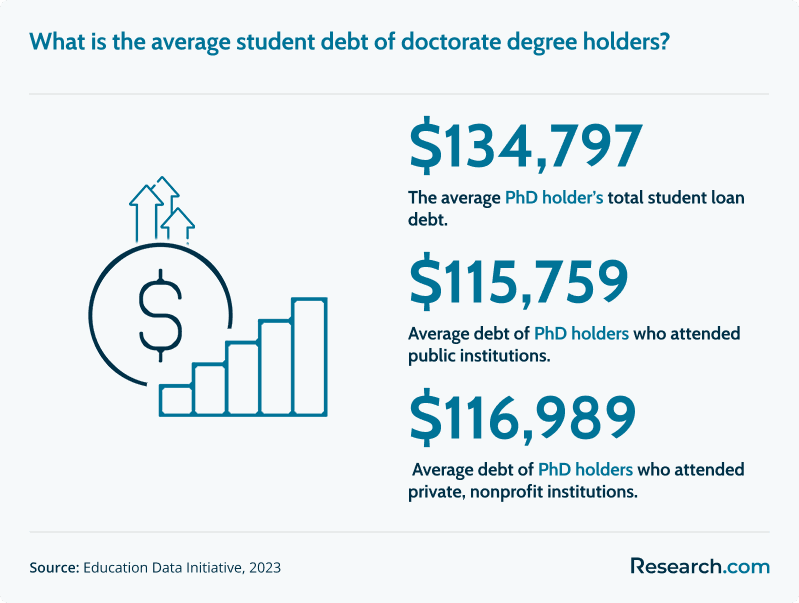
- The average debt among PhD holders is around $139,166.
- By 2032, the number of doctoral degree holders in the U.S. is projected to increase to nearly 230,000.
What Makes a PhD Degree Easier to Complete?
A doctoral program may feel easier when its structure fits the student well. The biggest factors are not only subject matter but also research expectations, dissertation support, course load, delivery format, faculty access, funding, transfer credit policies, and whether the student already has professional experience in the field.
| Factor | Why it matters | What to check before applying |
| Program format | Online, hybrid, evening, or cohort models can make doctoral study easier to manage. | Residency requirements, synchronous class times, technology expectations, and state authorization |
| Research model | Applied projects may be more manageable than open-ended theoretical dissertations for some students. | Whether the final requirement is a dissertation, capstone, portfolio, exams, or applied research project |
| Prior preparation | A field feels easier when it builds on your existing degree, career, and research skills. | Prerequisites, required statistics courses, writing expectations, and professional experience requirements |
| Faculty support | Strong advising can prevent delays during proposal, research, and dissertation stages. | Advisor assignment process, dissertation milestones, faculty availability, and student support services |
| Funding and workload | Financial pressure can make even a flexible program difficult to finish. | Assistantships, fellowships, employer benefits, tuition rates, fees, and loan requirements |
Programs commonly perceived as more manageable often fall into several categories:
- Interdisciplinary doctorates: Programs such as interdisciplinary studies or humanities doctorates may allow students to design research around multiple fields, which can help those with broad academic or professional interests.
- Online or distance-learning PhDs: Online doctoral programs can reduce relocation barriers and may support working professionals. Fields such as management and public health often have online options.
- Non-STEM fields: Programs in education, social work, humanities, and related fields may involve less laboratory or experimental work, although they can still require extensive reading, writing, data analysis, and dissertation research.
- Creative and performing arts doctorates: These may center on creative production, performance, criticism, or reflective scholarship, depending on the institution.
- Professional doctorates: Practice-oriented doctorates, including Doctor of Business Administration and Doctor of Education programs, may emphasize applied problem-solving rather than purely original academic research. Students exploring leadership-focused options can compare programs such as a PhD leadership pathway and related professional doctorates.
Benefits of Choosing a More Manageable PhD Program
A manageable doctoral program can be a smart choice when it helps you finish a credible degree without derailing your career, finances, health, or family responsibilities. The goal is not to avoid rigor. The goal is to choose a program whose rigor is relevant to your future.
- Better fit with work and family responsibilities: Flexible scheduling, online coursework, and part-time options can make doctoral study realistic for adults who cannot relocate or stop working.
- Clearer path to completion: Structured milestones, dissertation coaching, and applied research requirements can reduce uncertainty and help students keep momentum.
- More practical career alignment: Applied doctoral programs may let students research problems from their own workplace or profession, making the degree immediately relevant.
- Reduced burnout risk: A program with reasonable pacing and strong advising can help students avoid unnecessary delays, isolation, and stress.
- Continued income: Online or part-time formats may allow students to keep earning while studying, which can reduce reliance on loans.
The trade-off is important. A program that is too light on research, faculty mentorship, or field recognition may not prepare you for competitive academic, scientific, or research-heavy roles. Before choosing the easiest option, ask whether the program will still be respected by employers, licensing boards, universities, and professional associations in your target field.
Are Online PhD Programs Easier Than Campus Programs?
Online PhD programs are usually more flexible, not automatically easier. The academic expectations may be similar to campus-based programs, but the experience is different. Online students often gain schedule control and avoid relocation, while campus students may have stronger face-to-face access to labs, faculty, peer networks, and teaching opportunities.
| Format | Advantages | Limitations | Best for |
| Traditional campus PhD | Direct faculty contact, campus resources, research labs, teaching opportunities, stronger peer community | Less scheduling flexibility, relocation may be required, living expenses can increase total cost | Students seeking academic research careers, lab access, or close mentorship |
| Online PhD | Flexible scheduling, location independence, easier access for working professionals, possible savings on relocation and living costs | Less informal interaction, limited lab access in some fields, variable employer perception by discipline | Working adults, professionals with local obligations, and students in applied or non-lab fields |
| Hybrid PhD | Combines online study with residencies, networking, or intensive in-person sessions | Travel may still be required, residency costs can add up | Students who want flexibility but still value periodic in-person support |
Students seeking affordability should compare tuition, fees, residency costs, travel, and time away from work. Lists of the cheapest online PhD programs can be a useful starting point, but cost should never be the only factor.
How Long Does an Easier PhD Take?
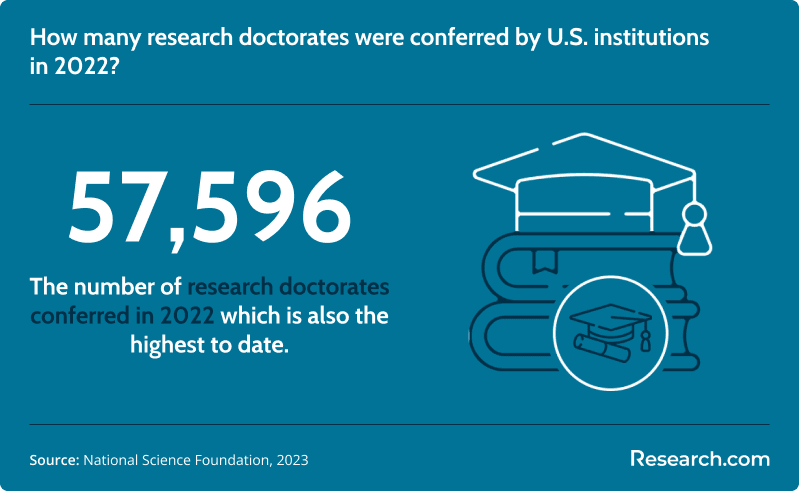
Doctoral timelines vary widely. In 2022, the median years to research doctorate is 5.7 years. Some accelerated or professionally oriented doctoral programs may be completed in as little as three years, while other PhD programs can take eight or more years if students experience delays with research, funding, advising, or personal responsibilities.
- Field of study: Humanities and social science doctorates may take 6-7 years, while some engineering or business programs may take 4-5 years.
- Enrollment status: Full-time students often finish faster than part-time students, though part-time study may be more realistic for working adults.
- Dissertation progress: Topic approval, data collection, committee feedback, and revisions can extend the timeline.
- Program design: Cohort models, accelerated terms, and structured dissertation milestones can shorten the path for prepared students.
- Student circumstances: Workload, family responsibilities, health, funding, and prior research experience all affect completion time.
| Doctoral path | Typical completion consideration | Who should consider it |
| Accelerated professional doctorate | May be completed in as little as three years when the student enters prepared and follows a structured plan | Experienced professionals with clear applied goals |
| Traditional research PhD | Often depends heavily on dissertation progress, funding, and faculty supervision | Students seeking academic, scholarly, or research-intensive careers |
| Part-time or online PhD | Can be more flexible but may take longer if students balance school with full-time work | Working adults who need schedule control |
Accelerated PhD Programs: What to Know
Accelerated PhD programs are designed for students who want to reduce time to degree, often through condensed coursework, year-round enrollment, transfer credit, or structured dissertation support. Many are aimed at working professionals with a master’s degree and relevant experience.
- Compressed coursework: Classes may be offered in shorter terms or heavier course loads, which can speed progress but increase weekly demands.
- Flexible delivery: Online and hybrid formats can make accelerated study possible without relocation.
- Dissertation or capstone structure: Some programs provide templates, research seminars, advisor check-ins, or applied project options to keep students moving.
- Entrance expectations: Applicants often need a master’s degree, professional background, and clear research or practice goals.
Acceleration has trade-offs. Finishing faster may reduce total tuition exposure and help students move into advanced roles sooner, but the pace can be intense. Students should be realistic about weekly study hours, writing ability, data access, faculty responsiveness, and whether a shorter program will still carry the credibility they need.
PhD Programs With Less Coursework
Programs with fewer formal courses are not necessarily easier. In many cases, less coursework means more independent research, more self-direction, and greater responsibility for managing the dissertation process. Students who prefer structure may actually find coursework-heavy programs easier to navigate.
- Professional doctorates: Programs such as the Ed.D or Doctor of Nursing Practice often emphasize applied knowledge, practice improvement, leadership, and projects rather than extensive theoretical coursework.
- Research-heavy PhD programs: Some traditional programs reduce coursework after the early stage and shift quickly into independent research. Fields such as physics, chemistry, or biology may not have long course sequences, but they can require intensive lab work and research production.
- Post-master’s doctoral programs: Students entering with a relevant master’s degree may be able to skip some foundational coursework, depending on transfer policies and curriculum design.
Doctoral Programs Without a Traditional Dissertation
Some doctoral programs do not require a traditional dissertation. Instead, they may use a capstone project, portfolio, comprehensive examination, applied research study, improvement project, or practice-based final product. These models are more common in professional fields such as education, business, healthcare, and leadership.
Dissertation alternatives can be useful for students who want to solve practical problems rather than produce a traditional scholarly monograph. Still, the final project should be rigorous, faculty-supervised, and clearly connected to the field. It is also important to remember that research doctorates remain popular: in 2022, the U.S. awarded the highest number of research doctoral degrees to date.
| Final requirement | What it usually involves | Best fit |
| Traditional dissertation | Original scholarly research, proposal defense, committee review, and final defense | Academic, research, and tenure-track goals |
| Applied dissertation | Research tied to a workplace, institution, policy problem, or professional practice issue | Practitioners and leaders seeking evidence-based solutions |
| Capstone project | Practice-focused project, implementation plan, evaluation, or portfolio | Students in professional doctorates or applied fields |
| Comprehensive exams | Written or oral exams that assess mastery of the field | Programs emphasizing broad disciplinary knowledge |
Financial Aid for PhD Students
Doctoral funding can make the difference between a realistic program and an unaffordable one. Students should compare the full package, not just tuition. Fees, residency travel, books, software, lost work time, health insurance, and dissertation expenses can all affect the final cost.
- Graduate assistantships: Teaching assistantships and research assistantships usually involve part-time university work in exchange for benefits that may include tuition remission, a stipend, and health insurance. Awards are often competitive and tied to department needs.
- Fellowships: Fellowships are commonly merit-based awards that support doctoral study without a required work assignment. They may cover tuition, living expenses, research, travel, or health insurance, depending on the award.
- Grants: Grants do not need to be repaid and may come from universities, government agencies, or private organizations. Eligibility can depend on financial need, research topic, field, or proposal quality.
- Scholarships: Scholarships may be awarded for academic performance, field of study, background, professional goals, or institutional criteria. Some cover only part of tuition, while others provide broader support.
- Student loans: Federal and private loans can help cover tuition and living costs, but borrowing should be approached carefully. Students should estimate repayment before enrolling, especially given that the average debt among PhD holders is around $139,166.
- Employer support: Some working professionals use tuition reimbursement or professional development benefits. Students should ask whether continued employment, grade minimums, or service commitments apply.
How Flexible PhD Programs Help Working Adults
Flexibility matters because many doctoral students are not full-time residential students. They may be parents, teachers, nurses, administrators, counselors, business leaders, or military-affiliated learners balancing a doctorate with existing obligations.
- Self-paced or structured pacing options: Some programs let students adjust course loads, while others use cohorts and fixed milestones to keep everyone on track.
- Work-life balance: Evening, weekend, asynchronous, online, or hybrid coursework can reduce scheduling conflict.
- Career continuity: Students can often keep working while applying course concepts and research to their current professional setting.
- Location independence: Online and hybrid programs may remove the need to relocate, which is especially helpful for students with family or job commitments.
- Customized research: Applied programs may let students choose research topics connected to their workplace, community, or professional goals.
- Financial control: Continuing to earn income can reduce pressure to borrow for living expenses.
Risks of Choosing an Easier PhD Program
A flexible doctoral program can be valuable, but convenience should not replace quality. Some programs marketed as easy may provide limited research training, weak faculty mentoring, poor career support, or insufficient recognition in the labor market. Students who want balance without sacrificing credibility may also compare part time PhD programs, which can offer a slower pace while preserving academic standards.
| Common risk | Why it matters | Better approach |
| Choosing based only on speed | A very short program may not provide enough research depth for academic or research roles. | Compare curriculum, faculty, dissertation expectations, and alumni outcomes. |
| Ignoring accreditation | Unaccredited or poorly recognized degrees may not be accepted by employers, universities, or licensing boards. | Verify institutional and, when relevant, programmatic accreditation before applying. |
| Assuming online means easier | Online doctoral study requires strong writing, time management, and self-discipline. | Ask about weekly workload, live sessions, advising, and dissertation support. |
| Focusing only on tuition | Fees, travel, residencies, books, and lost work time can increase total cost. | Build a full cost estimate before enrolling. |
| Overlooking career fit | A flexible doctorate may not support licensure, tenure-track hiring, or specialized research goals. | Match the degree type to the role you want after graduation. |
Financial Aid Options That Can Reduce Doctoral Costs
Affordability should be evaluated before enrollment, not after the first bill arrives. Students should ask each program for a written breakdown of tuition, fees, funding, assistantships, scholarships, payment plans, and expected out-of-pocket costs. Working adults can also compare flexible pathways such as accelerated online degree programs for working adults when speed and continued employment are important.
- Ask about guaranteed versus competitive funding: Some awards are offered at admission, while others require separate applications or annual renewal.
- Check assistantship workload: A tuition waiver may come with teaching or research obligations that affect time to degree.
- Review employer tuition policies: Confirm annual limits, eligible programs, reimbursement timing, grade requirements, and repayment obligations if you leave your job.
- Compare net cost: A lower tuition rate is useful, but a higher-cost program with strong funding may be cheaper overall.
- Limit borrowing when possible: Loans can be useful, but repayment should be weighed against realistic career outcomes.
Career Advancement With an Easier PhD
A manageable doctoral program can still support career growth if the degree is credible, relevant, and aligned with the student’s goals. The effect depends heavily on the field, employer expectations, program reputation, and whether the student uses the doctorate to build skills, networks, publications, leadership experience, or applied expertise.
- Specialized expertise: Doctoral study can help graduates become subject-matter experts in a defined area.
- Research and analytical ability: PhD students learn to evaluate evidence, design studies, interpret data, and communicate findings.
- Expanded career options: A doctorate may support roles in academia, research, administration, consulting, policy, healthcare leadership, or industry leadership.
- Professional networks: Faculty, peers, alumni, conferences, research groups, and professional associations can open collaboration and employment opportunities.
- Personal development: Doctoral work can strengthen resilience, writing, problem-solving, independent learning, and project management.
- Potential financial benefit: Professionals with PhDs earn 22% more weekly than those with master's degrees, although salary outcomes vary by field, role, employer, location, and experience.
A doctorate is not the right investment for everyone. If you are still exploring graduate or career-focused options, you may want to compare lower-cost and faster alternatives before committing to a long doctoral program:
- affordable finance degree options
- accessible healthcare degree programs
- fast RN degree pathways
- accelerated online business administration programs
How to Check Whether a PhD Program Is Credible
Credibility is the most important filter when comparing easier doctoral programs. A convenient program is not a good deal if employers, licensing boards, or academic institutions do not respect it.
- Verify accreditation: Start with institutional accreditation and then check whether the field requires programmatic accreditation. Many accredited online universities offer flexible doctoral options, but students should verify each school independently.
- Review faculty qualifications: Look for faculty with relevant doctorates, research output, industry experience, publications, grants, or leadership in the field.
- Ask for outcomes: Request information about completion rates, alumni roles, career services, dissertation completion support, and graduate employment patterns when available.
- Evaluate research expectations: Even practice-focused doctorates should include meaningful research, inquiry, evaluation, or evidence-based problem-solving.
- Read student feedback carefully: Reviews can be helpful, but look for consistent themes about advising, workload, responsiveness, dissertation support, and career relevance.
- Check licensure alignment: In fields such as psychology, counseling, nursing, education, and social work, confirm whether the program meets requirements in the state where you plan to work.
Are Easier PhD Programs as Valuable as Traditional Programs?
An easier PhD can be valuable when it is accredited, academically sound, respected in the field, and connected to the student’s career goals. It may be less valuable if it reduces rigor so much that students leave without strong research skills, professional credibility, or meaningful employer recognition.
The main distinction is not “easy versus hard.” It is “appropriate versus inappropriate.” A traditional research PhD is often the better choice for students who want tenure-track faculty roles, scholarly publication, advanced research careers, or laboratory-based work. A professional or applied doctorate may be better for experienced practitioners who want leadership, consulting, administration, or practice-improvement roles.
Students seeking affordability and flexibility can explore cheap accredited online colleges, but they should still compare accreditation, faculty, dissertation expectations, career outcomes, and employer reputation. A lower-cost online option can be a strong choice only when it maintains academic legitimacy.
| Choose a traditional PhD if... | Choose an applied or flexible doctorate if... |
| You want a research-intensive academic career. | You want to solve problems in your current profession. |
| Your field expects a dissertation and scholarly publications. | Your field values leadership, applied research, or professional expertise. |
| You need lab access, campus teaching, or close research mentorship. | You need online, hybrid, part-time, or accelerated scheduling. |
| You are prepared for a longer and more uncertain research timeline. | You need clearer milestones and a structured completion path. |
How to Find Accelerated PhD Programs That Match Your Goals
Accelerated doctoral programs can be useful for prepared students, but speed should never be the only selling point. A fast program should still have strong advising, appropriate research expectations, transparent costs, and a degree title that employers understand.
- Compare realistic timelines: Some accelerated programs are designed for completion in 3–4 years rather than the typical 5–7 years, often through condensed coursework or year-round study.
- Look for flexible delivery: Online and hybrid programs can help working professionals continue their careers. Researching accelerated school programs can help you identify institutions with streamlined formats.
- Examine dissertation support: Ask whether students receive structured proposal workshops, advisor meetings, research design support, writing support, and clear deadlines.
- Ask about transfer credit: Students with a relevant master’s degree may be able to reduce repeated coursework if the institution allows transfer credits.
- Check professional alignment: The curriculum should connect directly to the job, promotion, research area, or leadership role you want.
- Confirm accreditation and reputation: A faster doctorate is only useful if the credential is recognized by employers, professional bodies, and institutions in your field.
Common Mistakes to Avoid When Choosing an Easier PhD
- Assuming “easy” means low effort: Doctoral programs require advanced writing, research, reading, and independent work even when they are flexible.
- Choosing the shortest program without checking quality: Speed can be helpful, but weak faculty support or poor recognition can limit long-term value.
- Ignoring dissertation fit: Many students lose time because they choose a topic that is too broad, hard to research, or poorly matched with faculty expertise.
- Overlooking hidden costs: Residency travel, technology fees, books, statistical software, and dissertation expenses can change the true cost.
- Not asking about student support: Advising, writing centers, library access, methods support, and career services can affect completion.
- Assuming all online programs meet state requirements: Licensure-linked fields require extra caution because state rules may differ.
- Relying only on rankings: Rankings can help narrow choices, but the best program depends on your career goal, funding, format, faculty match, and research interests.
Questions to Ask Before Enrolling in an Easier PhD Program
| Question | Why it matters |
| Is the institution accredited, and is programmatic accreditation required in this field? | Accreditation affects credibility, transferability, licensing, and employer recognition. |
| What is the final doctoral requirement? | A dissertation, applied dissertation, capstone, portfolio, or exam can change the workload and timeline. |
| How are dissertation advisors assigned? | Advisor fit is one of the biggest factors in doctoral progress. |
| What support exists for research design, statistics, and writing? | Students often struggle most during proposal and dissertation stages. |
| Can I study part-time or pause if needed? | Flexibility can protect students with work, caregiving, or health obligations. |
| What is the full cost after aid? | Tuition alone does not show the real price of a doctorate. |
| What roles do graduates actually obtain? | Career outcomes help show whether the degree is respected in your target field. |
| Will this program support licensure, certification, or promotion requirements? | Some doctorates are useful for leadership but do not meet professional licensing rules. |
Other Questions About the Easiest PhD Degree Programs for 2027
What is the quickest PhD to get?
The quickest PhD options are often structured programs in fields such as education, business, leadership, or other professional areas where coursework is organized and dissertation alternatives may exist. Some programs may be completed in as little as three years, especially when students already have a relevant master’s degree, a focused research topic, and strong time management skills. Actual completion time depends on the school, field, transfer credits, dissertation progress, and student availability.
Do easier PhD degrees have lower GPA requirements?
Some less competitive doctoral programs may have more flexible GPA expectations, but this is not guaranteed. Admissions committees may also consider work experience, writing ability, research interests, professional licenses, recommendation letters, and fit with faculty expertise. This is true even in fields students may associate with the easiest business degree options, where doctoral admission can still be selective.
Are there accreditation concerns with easier PhD degrees?
Yes. Accreditation concerns are one of the biggest risks when evaluating easy, fast, or heavily online doctoral programs. Students should confirm that the institution is properly accredited and that the program meets any field-specific requirements. Without recognized accreditation, a doctoral degree may have limited value for employment, licensing, teaching, transfer credit, or further academic work.
Key Insights
- The easiest PhD is not the least rigorous doctorate; it is the program that best fits your background, schedule, research ability, and career goal.
- Online and accelerated programs can improve access, but they still require strong writing, independent work, and careful time management.
- Professional and applied doctorates may be more manageable for working adults because they often connect research to workplace problems.
- Accreditation, faculty support, dissertation structure, and career outcomes matter more than speed alone.
- The median time to complete a research doctorate is 5.7 years, so students should plan realistically for the time and financial commitment.
- Funding can substantially affect ROI. Compare assistantships, fellowships, grants, scholarships, employer support, loans, and total program cost.
- Before enrolling, ask whether the degree will be respected by employers, licensing boards, universities, and professional organizations in your target field.
References:
- Hanson, M. (2023, December 8). Average graduate student loan debt [2023]: For master's & PhD. Education Data Initiative. Retrieved July 10, 2024.
- Korhonen, V. (2024, July 5). U.S. higher education - number of doctoral degrees by gender 2032. Statista. Retrieved July 10, 2024.
- National Science Foundation. (2023, September 28). Doctorate Recipients from U.S. Universities: 2022. NSF - National Science Foundation. Retrieved July 10, 2024.
- Torpey, E. (2021, June). Education pays, 2020. U.S. Bureau of Labor Statistics. Retrieved July 10, 2024.
Other Things You Need to Know About the Easiest PhD Degree Programs for 2025
Yes, many PhD programs considered among the easiest in 2027 allow credit transfers. Typically, these programs accept around 12 to 30 credits from previous graduate coursework, subject to approval by the program's admissions committee and alignment with the program's requirements.
Yes. Most accredited PhD programs require a final dissertation defense before the degree is awarded. The defense is usually an oral examination before a faculty committee, and some universities also require submission of the final dissertation manuscript to the graduate school.


