
2027 How to Become a Board Certified Behavior Analyst (BCBA)

Co-Founder and Chief Data Scientist
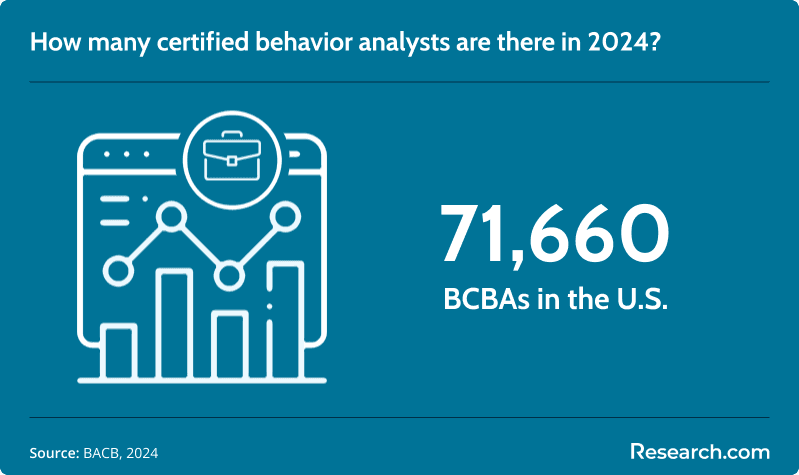
An aspiring student might wonder how to become a Board Certified Behavior Analyst (BCBA), uncertain about the steps involved, its career prospects, and how it differs from related roles. This confusion is understandable, given the growing demand for BCBAs nationwide. According to the Behavior Analyst Certification Board, demand for BCBA or BCBA-D professionals rose by 14% from 2022 to 2023, with California, Massachusetts, Texas, Florida, and Georgia driving 40% of this growth—California alone accounting for 18%.
Backed by over a decade of expertise in career planning and data drawn from trusted sources, this guide outlines every step to achieving BCBA certification. By the end, you'll understand the pathway to this rewarding profession and how it aligns with your career goals.
Key Things You Should Know About Becoming a BCBA
- Rising Demand for BCBAs: The annual demand for BCBAs has increased every year since 2010, with a 14% growth from 2022 to 2023. Five states accounted for 40% of this demand, with California alone contributing 18%.
- Cost of BCBA Certification: Tuition for BCBA programs ranges from $15,000 at public universities to $50,000 at Ivy League institutions. Additional expenses include $245 for the BCBA exam and supervised fieldwork costs, which vary widely.
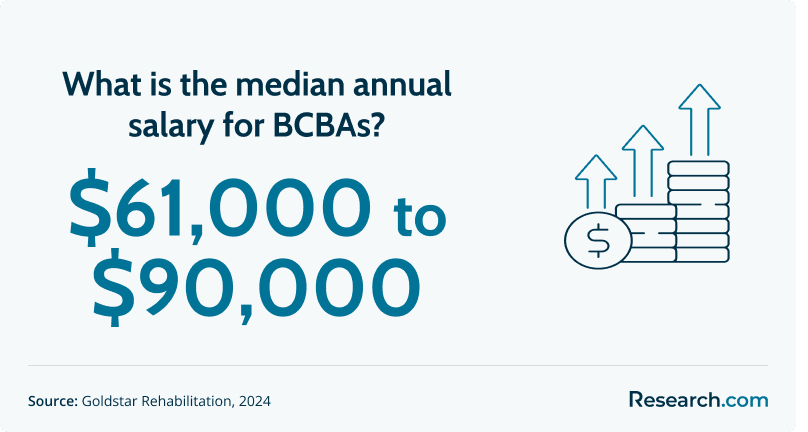
- Salary Insights for BCBAs: In 2024, the average BCBA salary was $77,000 annually. Salaries differ based on location, with states like California and Massachusetts offering some of the highest compensation.
- Fieldwork Requirements: To qualify for BCBA certification, candidates must complete 2,000 hours of supervised fieldwork. This includes hands-on activities like behavior assessments and intervention planning, which can sometimes be completed remotely.
- Continuing Education Obligations: BCBAs must complete 32 hours of continuing education every two years, including 4 hours focused on ethics, ensuring their skills and practices remain up-to-date with industry standards.
- What is a board certified behavior analyst (BCBA)? What Is BCBA
- What are the requirements to become a BCBA? BCBA Requirements
- How do you choose a BCBA program? How do you choose a BCBA program?
- What Is the BCBA certification process? Certification Process
- What is the BCBA exam like? BCBA Exam
- How much does it cost to become a BCBA? How much does it cost to become a BCBA?
- What are the career opportunities for BCBAs? Career Opportunities
- What are the opportunities for advanced education and specialization in behavior analysis? What are the opportunities for advanced education and specialization in behavior analysis?
- What opportunities does a master’s degree in applied behavior analysis open up? What opportunities does a master’s degree in applied behavior analysis open up?
- How can professional networking and mentorship advance my BCBA career? How can professional networking and mentorship advance my BCBA career?
- What is the salary for a BCBA? BCBA Salary
- What are the state licensure and regulatory requirements for BCBAs? What are the state licensure and regulatory requirements for BCBAs?
- What are the supervised fieldwork requirements? What are the supervised fieldwork requirements?
- How can technology enhance my BCBA practice? How can technology enhance my BCBA practice?
- How does the timeline for becoming a BCBA compare to becoming a therapist? How does the timeline for becoming a BCBA compare to becoming a therapist?
- Is an online PsyD program beneficial for my BCBA career? Is an online PsyD program beneficial for my BCBA career?
- Could supplementary studies in forensic psychology enhance my BCBA career? Could supplementary studies in forensic psychology enhance my BCBA career?
- Can Christian counseling training complement my BCBA practice? Can Christian counseling training complement my BCBA practice?
- Are there alternative paths to a career in behavior analysis? Are there alternative paths to a career in behavior analysis?
- Can an Accelerated Bachelor's Degree in Psychology Enhance My BCBA Preparation? Can an Accelerated Bachelor's Degree in Psychology Enhance My BCBA Preparation?
- What Are the Emerging Trends in BCBA Practice and Education? What Are the Emerging Trends in BCBA Practice and Education?
- How to Make Behavior Analysis Affordable for Career Changers How to Make Behavior Analysis Affordable for Career Changers
- Can previous counseling experience advance my BCBA career? Can previous counseling experience advance my BCBA career?
- How can advanced academic training propel my BCBA career? How can advanced academic training propel my BCBA career?
- How Can Interdisciplinary Collaboration Enhance My BCBA Career? How Can Interdisciplinary Collaboration Enhance My BCBA Career?
- Can Doctoral-Level Psychology Training Accelerate My BCBA Leadership and Research Opportunities? Can Doctoral-Level Psychology Training Accelerate My BCBA Leadership and Research Opportunities?
- Can Integrating Clinical Mental Health Counseling Enhance My BCBA Practice? Can Integrating Clinical Mental Health Counseling Enhance My BCBA Practice?
- Can a One-Year Graduate Program Accelerate My Path to BCBA Certification? Can a One-Year Graduate Program Accelerate My Path to BCBA Certification?
Becoming a Board Certified Behavior Analyst is a major decision because it usually requires graduate study, supervised fieldwork, an exam, and—in many states—licensure. The payoff can be meaningful: BCBAs use applied behavior analysis to help clients build communication, learning, social, daily living, and behavior-management skills across schools, clinics, homes, community agencies, and workplaces.
This guide explains what a BCBA does, how certification works, how to compare programs, what costs to expect, where BCBAs work, how salaries vary, and which alternatives may make more sense if you want to enter behavior analysis faster or with a lower upfront investment.
BCBA career guide: quick answer and role overview
A Board Certified Behavior Analyst (BCBA) is a graduate-level behavior analysis professional who assesses behavior, designs intervention plans, supervises implementation, tracks progress, and adjusts treatment based on data. BCBAs often support people with developmental disabilities, autism, behavioral health needs, learning challenges, or performance-related goals.
The fastest way to understand the role is this: BCBAs create and oversee behavior-change programs; direct-care staff usually implement those plans under supervision. If you are comparing credentials, the difference between an RBT and a BCBA is mainly scope and responsibility. Registered Behavior Technicians provide direct services under supervision, while BCBAs conduct assessments, write plans, supervise teams, and make clinical decisions.
BCBAs commonly work in healthcare, education, social services, home-based therapy, residential programs, and organizational settings. In schools, they may help students with individualized behavior supports. In clinics, they may oversee treatment teams. In business or organizational behavior management, they may apply behavior principles to training, safety, productivity, or performance improvement.
Many BCBAs work with children with autism, which affects about 1 in 36 children in the U.S. Others serve adults with developmental disabilities, families, caregivers, educators, direct-support professionals, or organizations trying to improve behavior systems.
Demand for BCBA roles has increased sharply over the past decade, as shown in the chart below:
BCBA requirements: education, fieldwork, exam, and eligibility
To become a BCBA, you must meet the Behavior Analyst Certification Board (BACB) requirements for graduate education, supervised fieldwork, and examination. A strong starting point is understanding how BCBA degree programs are structured, because not every graduate program automatically satisfies certification requirements.
Minimum education requirement
BCBA candidates need a master’s degree or higher in behavior analysis, education, psychology, or a related field. The graduate curriculum must include behavior-analytic coursework that aligns with BACB requirements, including assessment, measurement, ethics, intervention design, supervision, and behavior-change procedures. If you are still comparing schools, reviewing the best ABA programs in the United States can help you identify programs built around applied behavior analysis preparation.
Best undergraduate majors for future BCBAs
A bachelor’s degree in many fields can lead to a BCBA-eligible master’s program, but psychology, education, special education, human development, social work, and related behavioral science majors often provide a smoother transition. These majors introduce research methods, learning theory, child development, assessment, and ethics—topics that reappear in graduate ABA coursework.
Supervised fieldwork requirement
BCBA candidates must complete either 2,000 hours of supervised fieldwork or 1,500 hours of concentrated supervised fieldwork. These hours are where candidates learn to assess clients, analyze data, design interventions, train staff, write documentation, and make decisions under qualified supervision.
BCBA exam requirement
After meeting degree and fieldwork requirements, candidates apply to sit for the BCBA exam. The exam includes 160 multiple-choice questions. As of 2023, the first-time pass rate is approximately 60%, which means candidates should treat exam preparation as a serious part of the process rather than a final formality.
Admission prerequisites
Most BCBA-track graduate programs require a bachelor’s degree. Some may expect prior coursework or experience in psychology, education, behavior analysis, child development, statistics, or research methods. Applicants who lack these courses may need prerequisites before beginning the main graduate sequence.
If you are exploring other affordable graduate healthcare or human-services pathways, resources such as the cheapest RN to MSN online programs can also help you compare how professional degrees differ in cost, flexibility, and specialization requirements.
How to choose a BCBA program without wasting time or money
The best BCBA program is not simply the cheapest, fastest, or highest-ranked option. It is the program that fits your certification pathway, fieldwork needs, budget, schedule, and state requirements. Before enrolling, verify that the program’s coursework supports BACB eligibility and that you understand how supervised fieldwork will be arranged.
| Factor to compare | Why it matters | Questions to ask before enrolling |
| Certification alignment | Your coursework must support BCBA exam eligibility. | Does the program clearly explain how graduates meet BACB coursework requirements? |
| Fieldwork support | Fieldwork can be the hardest part to organize independently. | Does the school help students find supervisors or approved practicum placements? |
| Online, hybrid, or campus format | Format affects flexibility, networking, and access to supervision. | Can I complete coursework while working, and are any in-person requirements involved? |
| Exam preparation | The BCBA exam is challenging and requires applied knowledge. | Does the curriculum include mock exams, task-list review, and faculty feedback? |
| Total cost | Tuition is only one part of the expense. | What are the total costs for tuition, fees, supervision, books, exam fees, and travel? |
| State licensure fit | Some states have rules beyond national certification. | Will this program meet requirements in the state where I plan to practice? |
1. Confirm the program supports BCBA eligibility
Do not rely only on marketing language. Ask the admissions office for written details showing how the program’s coursework aligns with current BACB requirements. If a program cannot clearly explain the certification pathway, keep looking.
2. Compare online and in-person formats carefully
Online and campus-based BCBA programs can both be legitimate if they meet certification requirements. Online programs may be especially useful for working professionals, parents, and students who live far from campus. As of 2024, over 50% of students pursuing BCBA certification choose online programs.
3. Evaluate school reputation, but do not rely on reputation alone
Programs at the University of Cincinnati, Florida Institute of Technology, and Purdue University are widely recognized in 2024. Still, name recognition should not replace practical due diligence. A lesser-known program with strong supervision support, transparent costs, and solid exam preparation may be a better fit than a famous program that does not match your schedule or state requirements.
4. Look for part-time options if you are working
Many BCBA candidates work in schools, clinics, ABA agencies, or human-services roles while completing their degree and fieldwork. A part-time track can make the process more manageable, but it may extend your completion timeline.
5. Prioritize mentorship and supervision quality
Strong supervision can shape your clinical judgment, ethics, documentation habits, and exam readiness. Ask how supervisors are selected, how feedback is delivered, and whether students receive experience with assessment, intervention planning, data analysis, caregiver training, and staff supervision.
BCBA certification process: step-by-step timeline
The BCBA certification process usually takes two to four years, depending on whether you study full time or part time, how quickly you complete fieldwork, and how soon you pass the exam. The sequence is straightforward, but the workload can be demanding.
- Earn a qualifying master’s degree. Complete a graduate program in behavior analysis, education, psychology, or a related field with coursework that supports BACB eligibility.
- Complete supervised fieldwork. Accumulate 2,000 hours of supervised fieldwork or 1,500 hours of concentrated supervised fieldwork under an appropriate supervisor.
- Document your hours carefully. Keep accurate records of dates, activities, supervision meetings, and required forms. Poor documentation can delay eligibility.
- Apply for BCBA exam eligibility. Submit the required materials to the BACB, including proof of education and completed fieldwork.
- Pass the BCBA exam. Complete the 160-question exam and meet the passing standard.
- Check state licensure rules. If your state requires licensure, complete that process before practicing independently where required.
- Maintain certification. Follow BACB renewal, ethics, and continuing education requirements.
Can you work full time while becoming a BCBA?
Yes. Many candidates work while completing coursework and fieldwork, especially in online or part-time programs. The challenge is scheduling: fieldwork, supervision meetings, coursework, studying, and paid employment can overlap. Before enrolling, map out a realistic weekly schedule rather than assuming you can “fit it in later.”
What happens after you pass the exam?
After certification, you may apply for BCBA roles, pursue state licensure if required, and begin practicing within your legal and professional scope. Some new BCBAs start as case supervisors or behavior analysts in clinics, schools, or home-based service agencies before moving into leadership roles.
If you are interested in flexible health-related education but not necessarily behavior analysis, online nutrition programs are another example of programs designed for students balancing education with work or family responsibilities.
What to expect on the BCBA exam
The BCBA exam tests whether candidates can apply behavior-analytic concepts, not just memorize terms. It includes 160 multiple-choice questions and allows four hours for completion.
Major content areas
The exam covers assessment, measurement, intervention strategies, behavior-change procedures, ethics, supervision, data interpretation, and professional responsibilities. Questions are designed to reflect the BACB task list and real practice decisions.
How to prepare effectively
- Start with the BACB task list and identify weak areas before buying multiple study products.
- Use practice questions to test reasoning, not to memorize answer patterns.
- Create a study plan that includes ethics, measurement, experimental design, and intervention selection.
- Join a study group only if it stays structured and task-list focused.
- Ask a mentor to explain how concepts show up in real cases.
Many successful candidates recommend dedicating at least three months to focused study. Because the first-time pass rate is approximately 60%, candidates should avoid underestimating the exam.
Common reasons candidates struggle
Common problems include starting too late, relying only on flashcards, memorizing definitions without understanding application, ignoring ethics scenarios, and failing to review data-based decision-making. Candidates who connect concepts to fieldwork experiences often find the material easier to retain.
If cost is a major concern, comparing the cheapest online BCBA programs can help you identify lower-cost options while still checking certification alignment, supervision access, and exam preparation support.
How much does it cost to become a BCBA?
The total cost to become a BCBA can range from $15,000 to $50,000 on average, depending on tuition, program type, fieldwork supervision costs, fees, books, and exam expenses. Some programs cost more, especially private or elite universities.
| Cost category | Typical issue to review | Cost information provided |
| Graduate tuition | Tuition varies widely by school type and residency status. | A master’s program at an Ivy League school such as the University of Pennsylvania can cost around $60,000, while a public university program such as the University of North Texas may cost closer to $15,000 for in-state students. |
| BCBA exam | The exam fee is separate from tuition. | The BCBA exam costs $245 for first-time applicants. |
| Supervision | Some students pay separately for fieldwork supervision. | Supervised fieldwork can range from $20 to $100 per hour, depending on supervisor and location. |
| Books and materials | Study materials, textbooks, and exam prep can add costs. | Costs vary by program and study plan. |
| Licensure and renewal | State licensure, background checks, and continuing education may add expenses. | Requirements vary by jurisdiction. |
How to reduce BCBA education costs
- Compare public universities before committing to a private program.
- Ask whether supervision is included in tuition or billed separately.
- Use employer tuition assistance if you already work in education, healthcare, or ABA services.
- Consider part-time study if it allows you to keep earning income.
- Apply for scholarships, assistantships, and financial aid early.
- Check transfer credit and prerequisite policies before enrolling.
Is the lowest-cost program always the best choice?
No. A low-tuition program can become expensive if it lacks fieldwork support, delays graduation, has unclear certification alignment, or requires you to pay for supervision separately. Compare total cost, not tuition alone.
BCBA career opportunities and work settings
BCBAs can work in multiple settings, including healthcare organizations, schools, autism service providers, community agencies, residential programs, early intervention programs, universities, consulting firms, and businesses. Common job titles include behavior analyst, clinical supervisor, treatment coordinator, program manager, and behavior services director.
| Work setting | Typical responsibilities | Who this setting may fit |
| ABA clinic or autism services provider | Assess clients, design treatment plans, supervise RBTs, train caregivers, review progress data. | Professionals who want a structured clinical environment and frequent supervision responsibilities. |
| School or district | Support behavior intervention plans, collaborate with teachers, attend meetings, train staff. | BCBAs interested in education, special education, and student support systems. |
| Home-based services | Oversee programs delivered in family homes and coach caregivers in natural environments. | Professionals comfortable with travel, family collaboration, and flexible scheduling. |
| Residential or community programs | Support adults or youth with complex behavioral needs in daily living environments. | BCBAs interested in long-term support, staff training, and systems-based intervention. |
| Organizational behavior management | Apply behavior principles to workplace performance, training, safety, and productivity. | Professionals who want to use behavior analysis outside traditional clinical care. |
Can BCBAs work outside healthcare?
Yes. Behavior analysis is used in education, social services, staff training, human resources, safety programs, performance improvement, and organizational consulting. However, job availability and employer expectations vary by region and industry.
Job outlook
According to the U.S. Bureau of Labor Statistics, employment in behavior analysis is expected to increase by 22% from 2021 to 2031, much faster than the average for all occupations. Demand can still differ by state, payer environment, school district needs, and local availability of autism and developmental disability services.
Advanced roles
Experienced BCBAs may become clinical directors, regional supervisors, directors of behavior analysis services, consultants, faculty members, researchers, or specialists in organizational behavior management. Advancement usually depends on experience, supervision skill, ethical judgment, leadership ability, and sometimes doctoral training.
Advanced education and specialization options in behavior analysis
Advanced education can help BCBAs move into research, university teaching, leadership, specialty practice, or high-level consulting. A Ph.D. may be especially useful for professionals interested in publishing research, training future behavior analysts, directing programs, or specializing in complex areas of practice. If this path fits your goals, compare Ph.D. programs in applied behavior analysis by faculty expertise, research focus, funding, practicum opportunities, and career outcomes.
Common specialization areas include autism intervention, organizational behavior management, severe behavior, supervision and staff training, school consultation, developmental disabilities, and research methodology.
What a master’s in applied behavior analysis can lead to
A master’s degree in applied behavior analysis can prepare students for BCBA certification and for roles involving assessment, intervention design, program oversight, staff supervision, and data-based decision-making. Graduates may work in schools, clinics, home-based programs, residential services, research teams, or consulting roles. For a broader look at outcomes, see this guide on what you can do with a master’s in applied behavior analysis.
How networking and mentorship can strengthen a BCBA career
Mentorship matters in behavior analysis because early career BCBAs often face complex ethical, supervisory, and clinical decisions. Professional organizations, conferences, continuing education events, and peer consultation groups can help you stay current, avoid isolation, and learn from experienced practitioners.
Interdisciplinary training can also be useful when your clients have family-system, relationship, or behavioral health needs. For professionals exploring related counseling pathways, affordable online MFT programs show how marriage and family therapy training differs from BCBA preparation while still emphasizing client support and systems thinking.
BCBA salary: pay ranges, experience, and location factors
The average salary for a Board Certified Behavior Analyst in 2024 is approximately $68,000 per year, according to the latest data from the U.S. Bureau of Labor Statistics cited in the source material. Actual pay can vary by state, employer type, experience level, supervision responsibilities, caseload, and education. A BCBA doctorate salary is generally expected to be higher than compensation for professionals whose highest degree is a master’s.
| Salary factor | Reported figures | How to interpret it |
| Average salary | Approximately $68,000 per year in 2024 | Useful as a baseline, but local job postings may differ. |
| High-paying states listed | California: $90,000; New Jersey: $85,000; Texas: $80,000 | Higher pay may reflect demand, cost of living, employer type, or caseload expectations. |
| Entry-level salary | Around $55,000 | New BCBAs may start lower while building supervision and case-management experience. |
| Experienced salary | $75,000 to $85,000 | Pay may rise with leadership duties, specialization, and years of practice. |
| Private sector | $75,000 to $95,000 | Private roles may pay more but can involve productivity requirements or larger caseloads. |
| Public sector | $60,000 to $70,000 | Public roles may offer stable schedules, benefits, or school-year calendars depending on employer. |
Common benefits
- Health insurance
- Paid time off
- Retirement plans
- Professional development support
If you are comparing compensation across advanced healthcare roles, reviewing DNP salary by state can show how geography and credential level affect pay in other professional tracks.
State licensure and regulatory requirements for BCBAs
BCBA certification and state licensure are not always the same thing. Certification is granted through the BACB, while licensure is controlled by state law. Some states require behavior analysts to hold a state license before practicing independently or billing for services.
What to check in your state
- Whether BCBA certification is required for licensure
- Whether additional coursework or documentation is needed
- Background check requirements
- Scope-of-practice rules
- Continuing education and renewal requirements
- Telehealth and supervision rules
- Any restrictions on using the title “behavior analyst”
Do not assume an online program automatically qualifies you for practice in every state. If you are also comparing counseling programs with formal accreditation considerations, this list of CACREP-accredited online counseling programs can help illustrate why field-specific accreditation and licensure alignment matter.
Supervised fieldwork: what counts and how to manage it
Supervised fieldwork is where BCBA candidates develop practical competence. It is not simply a clock-hour requirement. Quality fieldwork should expose you to assessment, treatment planning, implementation oversight, ethical decision-making, caregiver or staff training, documentation, and data-based revision of intervention plans.
How to find a BCBA supervisor
You can search the BACB registry, ask your graduate program for recommendations, contact local ABA agencies, or seek supervision through your employer if you already work in a behavior-analysis setting. Before agreeing to supervision, ask about fees, meeting frequency, documentation procedures, remote supervision policies, and the types of cases you will observe or support.
Activities that may count toward fieldwork
- Conducting behavior assessments
- Designing behavior intervention plans
- Collecting, graphing, and interpreting data
- Training staff, caregivers, or clients
- Writing reports and treatment summaries
- Reviewing ethical scenarios with a supervisor
- Participating in case consultation and program evaluation
Can fieldwork be completed remotely?
Some activities may be completed remotely, such as data analysis, report writing, telehealth-based training, or virtual supervision meetings. However, the activity must still meet BACB requirements, and your supervisor must confirm that it is appropriate and properly documented.
Common fieldwork challenges
Candidates often struggle to find qualified supervisors, access varied cases, balance paid work with fieldwork, and maintain accurate records. If you want to move quickly, fast-track degree programs may help shorten the academic portion, but they do not eliminate the need for high-quality supervised experience.
How technology is changing BCBA practice
Technology now affects how many BCBAs collect data, supervise teams, coach caregivers, conduct telehealth sessions, and monitor progress. Digital platforms can make documentation faster and allow supervisors to review trends more efficiently. Telehealth can expand access for families or rural clients when it is clinically appropriate and permitted by rules.
Technology also creates responsibilities. BCBAs must protect client privacy, use secure tools, avoid overreliance on automated data summaries, and ensure that remote services remain ethical and effective. Professionals who want broader counseling knowledge may also compare options such as the cheapest online counseling degree, while remembering that counseling degrees and BCBA certification follow different preparation and practice standards.
BCBA vs. therapist: how the training timeline differs
BCBA preparation focuses on behavior analysis coursework, supervised fieldwork, and the BCBA exam. Counseling and therapy pathways usually involve mental health coursework, clinical practicum or internship, supervised post-degree practice, and state licensure exams. The timeline, scope of practice, and client needs can differ substantially.
If you are deciding between behavior analysis and counseling, compare the daily work rather than only the time required. BCBAs usually focus on observable behavior, environmental variables, skill acquisition, and data-based intervention. Therapists often focus on mental health diagnosis, psychotherapy, emotional processing, and counseling interventions. For a direct comparison of counseling timelines, review how long it takes to become a therapist.
Can an online PsyD help a BCBA career?
An online PsyD program may benefit a BCBA who wants deeper clinical psychology training, leadership opportunities, assessment knowledge, or interdisciplinary practice. It is not required for BCBA certification, and it may not be the most efficient path if your goal is simply to become a practicing behavior analyst. Consider a PsyD only if the curriculum, licensure outcomes, cost, and clinical training requirements match your long-term goals.
Can forensic psychology studies complement behavior analysis?
Forensic psychology coursework may be useful for BCBAs interested in correctional settings, court-involved populations, risk-related behavior, or legal-system collaboration. It should be viewed as a specialty supplement, not a replacement for ABA training or BCBA requirements. If this direction interests you, compare a low-cost online master’s in forensic psychology with your current credentials, state rules, and target job settings.
Can Christian counseling training support BCBA practice?
Christian counseling training may be relevant for BCBAs working in faith-based organizations or communities where clients want values-informed support. BCBAs must still practice within behavior-analytic ethics and avoid replacing evidence-based behavior intervention with religious counseling unless they are properly trained and working within the appropriate scope. Professionals interested in this intersection can review Christian counseling graduate programs to understand how that training differs from ABA preparation.
Alternative paths into behavior analysis
You do not always need to become a BCBA to work in behavior analysis or behavior support. The right credential depends on how much responsibility you want, how quickly you want to enter the field, and whether you plan to design programs independently.
| Path | Typical role | Best fit |
| RBT | Implements behavior plans under supervision. | Someone who wants a faster, lower-cost entry point into direct client work. |
| BCaBA | Supports behavior-analytic services under BCBA supervision. | Someone who wants more responsibility than an RBT but is not ready for BCBA-level practice. |
| BCBA | Assesses behavior, designs plans, supervises staff, and oversees services. | Someone who wants independent behavior-analytic responsibility and leadership options. |
| Related certifications | May focus on autism, trauma-informed care, or other specialty topics. | Professionals who want targeted supplemental training, not a replacement for BCBA certification. |
BCBA vs. BCaBA
The main difference is independence and scope. A BCBA can supervise and design behavior intervention plans at a higher level. A BCaBA supports behavior-analytic work but does not independently manage cases in the same way.
Other credentials
Additional credentials can include Certified Autism Specialist (CAS) or Certification in Trauma-Focused Cognitive Behavioral Therapy (TF-CBT). These may complement your work, but they do not automatically grant BCBA-level responsibilities.
Transferable behavior-analysis skills
Behavior analysis skills can be useful in education, human resources, training, therapy-adjacent roles, disability services, and performance improvement. However, employers may still require specific credentials, licensure, or supervised experience.
Can an accelerated psychology bachelor’s degree help BCBA preparation?
An accelerated psychology degree can help future BCBA candidates build a foundation in learning, development, research methods, and behavioral science before graduate study. It may be useful if you want to enter a master’s program faster, but you should still confirm admission requirements, transfer policies, and course rigor. Compare the best accelerated online bachelor’s degrees in psychology if you need an undergraduate pathway that balances speed with academic preparation.
Current trends in BCBA practice and education
BCBA training and practice are increasingly shaped by online learning, hybrid supervision models, telehealth, digital data collection, and stronger employer expectations for ethical supervision. Programs are also adapting to working adults who need flexible coursework without sacrificing fieldwork quality. Related undergraduate options, including accelerated psychology programs, may help some students build a faster foundation before graduate ABA study.
At the same time, technology does not replace clinical judgment. BCBAs still need strong assessment skills, ethical reasoning, culturally responsive communication, and the ability to train families and staff in real environments.
How career changers can make behavior analysis more affordable
Career changers should begin by identifying what they already have: a bachelor’s degree, human-services experience, school experience, counseling background, or direct-care experience. Then they should compare the shortest legitimate route to BCBA eligibility without choosing a program that lacks certification alignment or fieldwork support.
Cost-saving strategies for career changers
- Choose a public university or lower-cost online program with clear BCBA alignment.
- Ask employers about tuition assistance, paid practicum roles, or supervision support.
- Consider working as an RBT while completing graduate study to gain experience and income.
- Avoid paying separately for supervision until you understand whether your program or employer offers it.
- Apply for scholarships aimed at educators, social-service workers, or behavioral health professionals.
Some career changers also compare adjacent human-services degrees such as the cheapest online MSW. An MSW can be valuable in social work, but it is not the same as BCBA preparation. If your goal is BCBA certification, confirm that any degree path includes the required behavior-analytic coursework and fieldwork route.
Can counseling experience help a future BCBA?
Yes, counseling experience can support a transition into behavior analysis, especially when it involves rapport-building, documentation, crisis response, caregiver communication, and case coordination. Someone who has worked as an addiction counselor, for example, may already understand client motivation, family dynamics, and behavior patterns. However, counseling experience does not replace ABA coursework, supervised fieldwork, or the BCBA exam.
When advanced academic training is worth considering
Additional graduate study may be useful if you want to specialize, move into leadership, teach, conduct research, or work across disciplines. An online master’s in psychology may broaden your understanding of human behavior, assessment, and research, but it should be evaluated carefully against BCBA eligibility rules. Do not assume any psychology program automatically meets behavior-analysis certification requirements.
How interdisciplinary collaboration can improve BCBA practice
BCBAs often collaborate with psychologists, speech-language pathologists, occupational therapists, educators, physicians, social workers, and counselors. Collaboration can improve assessment, reduce fragmented care, and help teams design interventions that fit the client’s full environment. Doctoral psychology training through options such as APA-accredited PsyD programs may complement BCBA expertise for professionals pursuing broader clinical or leadership goals.
Can doctoral psychology training expand BCBA leadership and research options?
Doctoral-level psychology study may help BCBAs pursue research, teaching, program leadership, consultation, or interdisciplinary clinical work. It is a major investment, so the decision should depend on your target role, licensure goals, cost tolerance, and research interests. If affordability is central, compare a low-cost online doctor of psychology degree with program quality, accreditation, practicum expectations, and career outcomes.
Can clinical mental health counseling strengthen BCBA practice?
Clinical mental health counseling knowledge can help BCBAs better understand co-occurring emotional, family, or crisis-related concerns. However, BCBAs should not provide mental health counseling unless they are properly trained and licensed to do so. Programs such as clinical mental health counseling master’s programs may be relevant for professionals who want a separate counseling pathway alongside behavior analysis.
Can a one-year graduate program speed up the BCBA path?
A one-year graduate program may shorten the academic portion of your plan, but it does not remove fieldwork, exam, documentation, or licensure requirements. Accelerated programs can be demanding because coursework, supervision, and exam preparation may overlap. If speed is important, compare whether a one-year master’s in psychology supports your actual BCBA pathway before enrolling.
What BCBA graduates say about the career
- : "My BCBA work has been meaningful because I partner with schools and families to build practical strategies for children with autism. Watching students gain classroom skills makes the hard parts of the job worthwhile. Lena"
- : "As a BCBA, I get to supervise a team, review data, and design treatment plans. The role keeps me learning because every case requires thoughtful decision-making and strong communication. Marcus"
- : "Behavior analysis has allowed me to work with clinics and community organizations serving people who often need more support. The collaboration with families and providers has helped me grow professionally. Sofia"
Common mistakes to avoid when pursuing BCBA certification
- Choosing a program without checking certification alignment. Always verify that coursework supports BACB eligibility.
- Looking only at tuition. Add supervision, fees, books, exam costs, travel, licensure, and lost work time.
- Assuming online programs work in every state. State licensure rules may add requirements beyond national certification.
- Waiting too long to arrange fieldwork. Supervision availability can affect your timeline more than coursework does.
- Underestimating the exam. With a first-time pass rate of approximately 60%, preparation should be structured and sustained.
- Choosing speed over fit. Accelerated programs can help, but only if they maintain quality, supervision, and eligibility standards.
- Ignoring job setting differences. School, clinic, home-based, and organizational roles can feel very different day to day.
Questions to ask before becoming a BCBA
- Do I want to design and supervise behavior programs, or would I prefer direct client work?
- Can I realistically complete graduate coursework and 2,000 hours of supervised fieldwork or 1,500 hours of concentrated supervised fieldwork?
- Does my target state require licensure in addition to BCBA certification?
- Will my program help me secure supervision, or must I find and pay for it myself?
- What client population do I want to serve?
- Am I comfortable making data-based decisions and supervising other staff?
- What total cost can I afford without overborrowing?
- Which setting fits my work style: school, clinic, home-based, residential, community, or business?
References
- Adina ABA Therapy in Ohio: At-Home ABA therapy in Ohio. (n.d.). https://www.adinaaba.com/
- Behavior Analyst Certification Board. (2024). US employment demand for Behavior Analysts: 2010–2023. https://www.bacb.com/wp-content/uploads/2023/01/Lightcast2024_240305-a.pdf
- Occupational Outlook Handbook - Psychologists. (2024, August). U.S. Bureau of Labor Statistics. Retrieved December 6, 2024, from https://www.bls.gov/ooh/life-physical-and-social-science/psychologists.htm
- The rate of job growth for BCBAs. (n.d.). https://www.goldstarrehab.com/parent-resources/the-rate-of-job-growth-for-bcbas
Key Insights
- A BCBA is a graduate-level professional who assesses behavior, designs interventions, supervises implementation, and uses data to improve outcomes.
- The BCBA path requires a qualifying master’s degree or higher, 2,000 supervised fieldwork hours or 1,500 concentrated supervised fieldwork hours, and a 160-question certification exam.
- The process usually takes two to four years, depending on program format, fieldwork access, and study pace.
- Total costs commonly range from $15,000 to $50,000, but tuition, supervision, and state licensure expenses can change the final amount substantially.
- Program choice should be based on BACB alignment, fieldwork support, total cost, exam preparation, flexibility, and state licensure fit—not ranking alone.
- BCBAs work in clinics, schools, homes, residential programs, community agencies, and organizational settings, with advancement options in supervision, leadership, research, and consulting.
- Alternative credentials such as RBT or BCaBA can be better entry points if you want to start working in behavior analysis faster or with less upfront cost.
Other Things You Should Know About Becoming a BCBA
The Behavior Analyst Certification Board (BACB) issues BCBA certification. Candidates must meet BACB education, fieldwork, and exam requirements, then apply through the BACB’s certification system. The BACB also sets renewal rules, ethics standards, and continuing education requirements for maintaining the credential.
In 2027, aspiring BCBAs must complete 2,000 hours of supervised fieldwork split into specific categories: concentrated (150-200 hours/month) and standard fieldwork (no specified monthly minimum). These hours must be overseen by a qualified BCBA supervisor per BACB regulations.


