
2027 Best APA Accredited PsyD Programs

Co-Founder and Chief Data Scientist
The American Psychological Association (APA) sets the gold standard for psychology programs in the United States., ensuring they meet rigorous accreditation criteria. APA accredited PsyD programs ensure that the graduates are equipped with the skills to deliver ethical, evidence-based psychological services that enhance well-being.
But with more than a hundred options available, selecting the ideal program can feel overwhelming. To help, this article highlights 10 top APA accredited PsyD programs and what makes them stand out.
What are the benefits of getting an accredited PsyD degree?
- An accredited PsyD degree ensures your education meets established quality standards, making you a trusted professional in the field of psychology.
- Graduating from an accredited program is often a requirement for licensure, allowing you to practice as a licensed psychologist in most states.
- Accreditation signals a comprehensive education, opening doors to competitive positions in clinical practice, research, and academia.
What can I expect from APA accredited PsyD programs?
APA accredited PsyD programs are designed to provide rigorous training in clinical psychology, emphasizing both academic knowledge and practical experience. Students can expect coursework focused on psychological theories, ethical practices, and evidence-based interventions, along with hands-on training through supervised clinical practicums and internships. These programs often integrate research components, helping students develop skills to evaluate and apply scientific findings in their practice. Additionally, APA accreditation ensures that programs adhere to high standards, preparing graduates to meet licensure requirements and deliver competent psychological services. Graduates can anticipate gaining the expertise needed to work in diverse settings, including private practices, hospitals, schools, and community organizations.
Where can I work with an APA accredited PsyD degree?
APA accredited PsyD degree enables graduates to access diverse career opportunities in various professional settings. According to the U.S. Bureau of Labor Statistics, approximately 26% of psychologists in 2023 were self-employed, providing services as independent practitioners. Many others pursued careers in schools, supporting students' mental health, or in ambulatory healthcare facilities, offering therapy and mental health services. Additionally, psychologists with this degree often work in government agencies, addressing public health initiatives, or in hospitals, helping patients manage psychological and emotional challenges. This degree prepares professionals for both clinical and non-clinical roles across a range of environments.
How much can I make with an APA accredited PsyD degree?
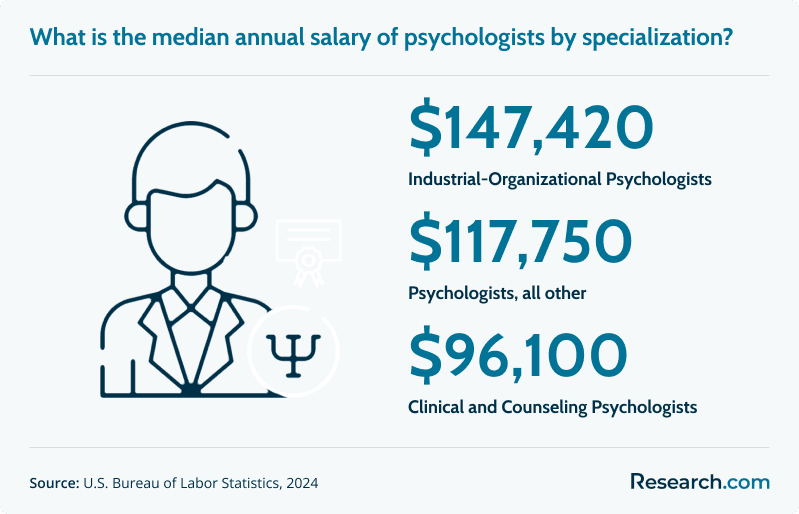
According to data, the median annual salary for psychologists is approximately $92,740. But even with an APA accredited PsyD degree, earning potential still varies based on specialization, industry, location, and other factors. For example, school psychologists typically earn around $84,940 per year, while industrial-organizational psychologists can exceed $147,000 annually. Furthermore, psychologists employed in government facilities often command higher salaries compared to those in schools, healthcare services, or academic institutions. Factors like geographic demand, level of experience, and specific credentials further influence earning potential, making this a flexible and lucrative career path.
- Best APA Accredited PsyD Programs for 2027 List of Programs
- How long does it take to complete an APA accredited PsyD program? How long does it take to complete an APA accredited PsyD program?
- How does an online APA accredited PsyD program compare to an on-campus program? Online vs. On-Campus
- What is the average cost of APA accredited PsyD programs? Cost
- What are the financial aid options for students enrolling in APA accredited PsyD programs? Financial Aid
- What are the prerequisites for enrolling in APA accredited PsyD programs? Requirements
- What courses are typically in APA accredited PsyD programs? What courses are typically in APA accredited PsyD programs?
- What emerging trends are impacting APA accredited PsyD programs? What emerging trends are impacting APA accredited PsyD programs?
- What are the licensure requirements after graduating from an APA accredited PsyD program? Licensure Process
- What distinguishes an APA accredited PsyD program from an online PhD psychology program? What distinguishes an APA accredited PsyD program from an online PhD psychology program?
- What are the potential challenges of APA accredited PsyD programs? What are the potential challenges of APA accredited PsyD programs?
- How can I find affordable APA accredited PsyD programs? How can I find affordable APA accredited PsyD programs?
- What types of specializations are available in APA accredited PsyD programs? Specializations
- Does APA accreditation enhance professional credibility? Does APA accreditation enhance professional credibility?
- How do you choose the best APA accredited PsyD program? How do you choose the best APA accredited PsyD program?
- What career paths are available for graduates of APA accredited PsyD programs? What career paths are available for graduates of APA accredited PsyD programs?
- What is the job market for graduates with an APA accredited PsyD degree? Job Outlook
- How can supplementary certifications enhance my APA accredited PsyD degree? How can supplementary certifications enhance my APA accredited PsyD degree?
- How do APA accredited PsyD programs address diversity and inclusion? How do APA accredited PsyD programs address diversity and inclusion?
- How do APA accredited PsyD programs foster mentorship and professional networking? How do APA accredited PsyD programs foster mentorship and professional networking?
- Should I Pursue Interdisciplinary Dual Degree Options with My APA Accredited PsyD Degree? Should I Pursue Interdisciplinary Dual Degree Options with My APA Accredited PsyD Degree?
- How do APA accredited PsyD programs support lifelong professional development? How do APA accredited PsyD programs support lifelong professional development?
Best APA Accredited PsyD Programs for 2027
Choosing an APA-accredited PsyD program is not just a school-selection decision. It can affect your eligibility for psychology licensure, the quality of your clinical training, your internship options, your debt load, and the type of patients or communities you are prepared to serve. Because PsyD programs are intensive, expensive, and highly practice-focused, applicants need more than a list of schools—they need a way to compare fit, cost, format, accreditation, specializations, and career outcomes.
This guide is for prospective doctoral psychology students who want a clinically focused path toward becoming licensed psychologists. It explains what APA accreditation means, how PsyD programs compare, what the featured programs offer, how long they take, what they cost, what admissions committees usually look for, and how to avoid common mistakes before applying.
Quick answer: What are APA-accredited PsyD programs?
APA-accredited PsyD programs are doctoral psychology programs reviewed by the American Psychological Association for educational quality, clinical training standards, faculty qualifications, student support, and outcomes. For students who want to become licensed psychologists, APA accreditation is often one of the most important factors to verify because many state licensing boards, internship sites, employers, and postdoctoral training programs give preference to graduates from accredited doctoral programs.
A PsyD is typically more practice-oriented than a research-heavy PhD in psychology. Most PsyD students complete advanced coursework, supervised clinical practica, an internship, and a dissertation or doctoral project before seeking licensure.
How do we rank schools?
A doctoral degree requires a major commitment of time, money, and clinical effort. To help students compare options more confidently, Research.com evaluates programs using transparent, data-informed criteria and publicly available education datasets.
Our analysis draws from trusted sources, including the IPEDS database, Peterson’s database, including the Distance Learning Licensed Data Set, the College Scorecard database, and the National Center for Education Statistics. You can review the full process in our Research.com methodology section.
APA-accredited PsyD programs at a glance
| School | Program length | Format or notable feature | Cost information | Accreditation |
| Pepperdine University | 4-5 years | Full-time, in-person practitioner-scholar program | $1,970 per unit | APA |
| Baylor University | 4-5 years | Practitioner-scientist model with no master’s degree required | All students accepted into the program have tuition paid. | APA |
| Liberty University | 4-5 years | Residential clinical psychology program with biblical ethics and values | $19,800 for the entire program (full-time); $1,100 per credit (part-time) | APA |
| Nova Southeastern University | 5 years | Seven concentration options and an MBA joint program opportunity | $1,352 | APA |
| George Washington University | 3-4 years | MPsy option after 53 credits and other requirements | $52,444 for the entire program | APA |
| Yeshiva University | 4-5 years | Specialized geropsychology training and a large training clinic | $2,135 | APA |
| Wright State University | 5-6 years | Competency-based curriculum with multiple tracks | $961 (in-state resident); $1,539 (out-of-state resident) | APA |
| Regent University | 5 years | On-campus program integrating Christian worldview and evidence-based practice | $945 | APA |
| Pacific University | 5 years | Four specialized tracks for practice, teaching, or research preparation | $42,985 per year | APA |
| Springfield College | 5 years | Counseling psychology program with generalist training | $1,212 | APA |
1. Pepperdine University
Pepperdine University offers a PsyD program at its West Los Angeles Graduate Campus for students who want full-time, face-to-face clinical training. The program uses a practitioner-scholar model, which means students build clinical skills while also learning to use research to guide assessment, diagnosis, and treatment. The curriculum includes three years of coursework and supervised clinical training, followed by a one-year internship and a clinical dissertation. The program is APA accredited through 2027 and is designed to help graduates pursue psychologist licensure in the U.S. and Canada after required postdoctoral clinical training.
- Program Length: 4-5 years
- Tracks/concentrations: N/A
- Cost per Credit: $1,970 per unit
- Required Credits to Graduate: 82 units
- Accreditation: APA
2. Baylor University
Baylor University structures its PsyD program around the practitioner-scientist model, giving students training in both clinical service and scientific thinking. Applicants can apply without a master’s degree, but the program does not accept transfer credits. A major funding distinction is that all admitted students receive tuition coverage, although students still pay annual student fees ranging from $3,000 to $4,000. The program has held APA accreditation since 1976.
- Program Length: 4-5 years
- Tracks/concentrations: N/A
- Cost per Credit: All students accepted into the program have tuition paid.
- Required Credits to Graduate: N/A
- Accreditation: APA
3. Liberty University
Liberty University offers a residential PsyD in Clinical Psychology for students who want doctoral clinical training within a faith-informed academic environment. The program integrates advanced psychology coursework with biblical ethics and values, while also emphasizing clinical application with diverse populations. Students may transfer up to 39 credit hours from an APA accredited program, which can matter for applicants who have already completed graduate-level psychology coursework.
- Program Length: 4-5 years
- Tracks/concentrations: N/A
- Cost per Credit: $19,800 for the entire program (full-time); $1,100 per credit (part-time)
- Required Credits to Graduate: 126
- Accreditation: APA
4. Nova Southeastern University
Nova Southeastern University offers a PsyD in Clinical Psychology with seven concentration choices, making it a strong option for students who already know the population or practice area they want to pursue. Students can also join an MBA joint program beginning in their second year. Applicants must have at least a baccalaureate degree from a regionally accredited institution. GRE scores are not required, but applicants may submit them if they believe the scores will strengthen their file.
- Program Length: 5 years
- Tracks/concentrations: Child, Adolescent and Family Psychology; Clinical Forensic Psychology; Clinical Health Psychology; Long-term Mental Illness; Clinical Neuropsychology; Psychodynamic Psychology; Multicultural Track
- Cost per Credit: $1,352
- Required Credits to Graduate: 119
- Accreditation: APA
5. George Washington University
George Washington University offers a PsyD in Clinical Psychology with an option to earn a Master of Psychology (MPsy) after completing 53 credits and meeting other program requirements. The program may allow up to 27 graduate transfer credits on a case-by-case basis. The GRE general test is optional, and applicants without a prior psychology degree may still be considered, which can help career changers or students from adjacent academic backgrounds.
- Program Length: 3-4 years
- Tracks/concentrations: Adult Track; Assessment Track; Child and Adolescent Track
- Cost per Credit: $52,444 for the entire program
- Required Credits to Graduate: 83
- Accreditation: APA
6. Yeshiva University
Yeshiva University offers a full-time, campus-based PsyD in Clinical Psychology with broad clinical preparation and several focused training options. One notable feature is its Geropsychology Minor and Concentration; the university describes the program as one of only 14 programs in the U.S. offering specialized training in geropsychology. Students also train through what the school describes as the fourth-largest training clinic in the country. The program was established in 1979, has been APA accredited since 1985, and requires GRE scores from all applicants.
- Program Length: 4-5 years
- Tracks/concentrations: Ferkauf Older Adult Program; Family and Couples Therapy; Clinical Neuropsychology; Trauma Studies; Clinical Health Psychology Minor; Geropsychology Minor; Research Methodology and Statistics Minor; Addictions Minor
- Cost per Credit: $2,135
- Required Credits to Graduate: N/A
- Accreditation: APA
7. Wright State University
Wright State University offers a PsyD program with a long history in practitioner-focused psychology training. Founded in 1978, it was among the first doctoral programs in the U.S. to build a practitioner model and award the PsyD degree. The program has maintained APA accreditation since 1982. Its competency-based curriculum and track options may appeal to students who want structured clinical development with room to focus on an area such as assessment, health, rehabilitation, neuropsychology, or forensic work.
- Program Length: 5-6 years
- Tracks/concentrations: Child Assessment; Health Psychology; Rehabilitation Psychology; Neuropsychology; Forensic Psychology
- Cost per Credit: $961 (in-state resident); $1,539 (out-of-state resident)
- Required Credits to Graduate: N/A
- Accreditation: APA
8. Regent University
Regent University offers a full-time, on-campus PsyD in Clinical Psychology that combines evidence-based clinical training with a Christian worldview and cultural awareness. Applicants need a bachelor's degree from a regionally accredited institution, and the program prefers applicants with backgrounds in counseling, psychology, or closely related human behavior fields. This program may fit students who want doctoral clinical preparation in an explicitly faith-integrated academic setting.
- Program Length: 5 years
- Tracks/concentrations: N/A
- Cost per Credit: $945
- Required Credits to Graduate: 116
- Accreditation: APA
9. Pacific University
Pacific University offers a PsyD in Clinical Psychology for students preparing for clinical practice, teaching, or research-informed professional roles. The program includes four track options, allowing students to focus their doctoral training around adult, child, neuropsychological, or health psychology practice. The program has been APA accredited since 1990.
- Program Length: 5 years
- Tracks/concentrations: Adult Track; Child Track; Neuropsychology Track; Health Psychology Track
- Cost per Credit: $42,985 per year
- Required Credits to Graduate: N/A
- Accreditation: APA
10. Springfield College
Springfield College offers a PsyD in Counseling Psychology with generalist training and a counseling psychology orientation. The program emphasizes empathy, social justice, holistic care, and preparation for work with diverse clients and communities. Courses are delivered on campus in Springfield, Massachusetts, which can benefit students who want consistent in-person interaction with faculty, supervisors, and peers.
- Program Length: 5 years
- Tracks/concentrations: N/A
- Cost per Credit: $1,212
- Required Credits to Graduate: 96
- Accreditation: APA
How long does it take to complete an APA accredited PsyD program?
Most full-time APA-accredited PsyD programs take about five years to complete. That timeline usually includes doctoral coursework, supervised practicum training, clinical assessment experience, dissertation or doctoral project requirements, and a full-time internship. Some students finish sooner, while others need six years or more because of part-time enrollment, remediation requirements, dissertation delays, internship match timing, or specialization requirements.
If your goal is a specialized role, such as child psychology, the total pathway may extend beyond the PsyD because postdoctoral supervised experience or focused training may be required. Students asking how long it takes to become a child psychologist should factor in the doctoral program, internship, postdoctoral clinical hours, and state licensure steps.
Some accelerated PsyD programs advertise shorter completion timelines, with some allowing completion in as little as three years. These options can be attractive for highly prepared students, but faster does not always mean easier. Applicants should confirm whether the program includes adequate practicum placements, internship preparation, dissertation support, and licensure alignment.
The broader psychology field continues to produce more doctoral graduates over time, and the number of doctorate degrees in psychology has steadily risen, according to the American Psychological Association.
| Stage | What usually happens | Why it matters |
| Coursework | Students study psychopathology, assessment, ethics, intervention, diversity, research methods, and clinical theory. | This builds the foundation for safe and evidence-informed practice. |
| Practicum | Students provide supervised services in clinics, hospitals, schools, community agencies, or related settings. | Licensure boards and internship sites often evaluate the quality and quantity of supervised experience. |
| Dissertation or doctoral project | Students complete a major scholarly or applied project, depending on program design. | Delays at this stage can extend the time to graduation. |
| Internship | Students complete an intensive supervised internship before graduation. | Internship placement is central to professional readiness and licensure planning. |
| Postdoctoral training and licensure | Graduates complete state-required supervised hours and exams. | Graduation alone does not automatically authorize independent practice. |
How does an online APA accredited PsyD program compare to an on-campus program?
Online and hybrid PsyD programs can make doctoral study more accessible, but students must evaluate them carefully. Clinical psychology training is not purely academic; it requires supervised client contact, assessment practice, professional identity development, and internship preparation. For that reason, even programs with online coursework may still require in-person residencies, local practicum placements, campus visits, or approved clinical training sites.
Both online or hybrid and campus-based programs must meet accreditation expectations if they are APA accredited. The key question is not only whether the coursework is convenient, but whether the program can provide the clinical supervision, internship support, and licensure preparation you need in your state.
| Factor | Online or hybrid PsyD | On-campus PsyD |
| Flexibility | May make it easier to continue working or remain near family responsibilities. | Usually requires relocation or regular commuting. |
| Clinical training | May depend heavily on approved local placements and remote coordination. | Often offers direct access to campus clinics, supervisors, and established regional training sites. |
| Peer and faculty interaction | Can include live online sessions, residencies, and virtual advising. | Provides more consistent face-to-face contact with faculty, peers, and supervisors. |
| Licensure planning | Students must confirm that placements and program structure satisfy their state board requirements. | Students still need to verify licensure alignment, especially if they plan to practice in another state. |
| Best fit | Students who need flexibility and can secure strong local clinical placements. | Students who want immersive campus-based training and direct access to institutional clinical resources. |
Advantages of online or hybrid programs
- Scheduling flexibility: Online coursework can help students manage school alongside work, caregiving, or relocation constraints.
- Geographic access: Students may be able to study without moving across the country, though clinical placement requirements still apply.
- Independent learning structure: Some courses may use asynchronous formats, allowing students to review lectures and complete assignments on a more flexible schedule.
Advantages of on-campus programs
- Direct professional interaction: Students usually have more regular in-person access to faculty, supervisors, classmates, and campus-based clinical teams.
- Embedded clinical resources: Campus clinics, assessment labs, and local partnerships can support hands-on training.
- Stronger campus immersion: Libraries, research events, advising offices, and professional workshops may be easier to access in person.
What is the average cost of APA accredited PsyD programs?
APA-accredited PsyD programs vary widely in cost. According to the College Board’s 2024 Trends in College Pricing and Student Aid report, the average cost of doctoral degrees at public four-year institutions is approximately $12,270, while private nonprofit four-year institutions charge around $51,940. These amounts do not include all possible expenses, such as required fees, housing, transportation, books, relocation, health insurance, internship travel, or lost income from reduced work hours.
When comparing PsyD costs, look beyond the published tuition line. A program with lower tuition may become expensive if it offers limited aid, requires relocation to a high-cost area, or extends beyond the expected timeline. A higher-tuition program may be more manageable if it provides scholarships, stipends, tuition support, or strong placement resources.
- Program Length: Additional years can raise the total cost through more tuition, fees, living expenses, and opportunity cost.
- Institution Type: Public universities often price programs differently from private institutions, especially for in-state and out-of-state students.
- Location: Urban campuses and high-cost regions may increase rent, transportation, and clinical placement expenses.
- Financial Aid: Scholarships, assistantships, tuition waivers, and stipends can materially change affordability.
- Delivery Format: Online or hybrid study may reduce relocation costs, but students should still budget for residencies, travel, technology, and local practicum requirements.
What are the financial aid options for students enrolling in APA accredited PsyD programs?
Financial aid can determine whether a PsyD program is sustainable. Students should ask each school for a full funding breakdown, including tuition, mandatory fees, assistantship availability, average debt information if available, and whether aid continues during internship years. Students still comparing earlier psychology pathways may also review a low-cost psychology degree online before committing to doctoral study.
- Federal Student Loans: Graduate students may use unsubsidized loans and Grad PLUS loans through the U.S. Department of Education.
- Scholarships and Grants: Universities, professional associations, and private funders may offer awards based on merit, financial need, service goals, or specialization area.
- Work-Study Programs: Eligible students may earn funds through approved part-time work on campus or with affiliated organizations.
- Institutional Aid: Some programs offer tuition waivers, stipends, or internal awards based on academic profile, need, or departmental funding.
- Teaching Assistantships: In 2021, 21% of doctorate recipients received financial support through teaching assistantships, which typically include a stipend and may reduce tuition costs. These roles can also help students build teaching experience.
Questions to ask about funding before enrolling
- Is funding guaranteed, competitive, renewable, or only available for certain years?
- Are assistantships compatible with practicum schedules?
- Does financial aid cover summer coursework, internship fees, or dissertation credits?
- What costs are not included in the tuition estimate?
- How often do students need more time than the advertised program length?
What are the prerequisites for enrolling in APA accredited PsyD programs?
Students often ask what they need to become a therapist, but the path to becoming a licensed psychologist through a PsyD is more advanced than many master’s-level counseling or therapy routes. PsyD admissions committees usually look for academic readiness, evidence of clinical or research exposure, strong writing, professional maturity, and a clear reason for pursuing doctoral-level practice.
If your academic record is not yet competitive, a more affordable online master’s in psychology or a campus-based master’s program may help you build a stronger foundation before applying. Students with social work backgrounds may also transition toward psychology training; if you are exploring what you can do with a social work degree, doctoral psychology can be one possible long-term route, though it requires additional graduate study and licensure planning.
- Bachelor’s Degree: Most programs require a bachelor’s degree from a regionally accredited institution, often with preparation in psychology, social work, or another behavioral science field.
- Undergraduate Coursework: Applicants may need foundational courses such as abnormal psychology, developmental psychology, statistics, and research methods.
- GPA Requirements: Many programs list a minimum GPA near 3.0 or higher, but competitive applicants often exceed the minimum.
- Letters of Recommendation: Strong letters should come from faculty, supervisors, or clinical professionals who can speak to your academic ability, judgment, ethics, and readiness for doctoral training.
- Statement of Purpose: The essay should explain your career goals, clinical interests, fit with the program, and reasons for choosing a PsyD instead of another psychology or counseling degree.
- GRE Scores: Some schools still require the GRE general test, while others make it optional.
- Clinical or Research Experience: Internships, volunteer roles, research assistantships, crisis-line work, behavioral health jobs, or related experience can strengthen an application.
What courses are typically in APA accredited PsyD programs?
APA-accredited PsyD curricula combine clinical theory, supervised practice, research literacy, assessment training, ethics, and cultural responsiveness. Exact course titles vary by school, but students should expect a demanding sequence that prepares them to evaluate clients, select evidence-based interventions, document care, and work within legal and ethical boundaries.
- Psychopathology: Covers the diagnosis, classification, and treatment of mental health disorders, often with attention to DSM criteria and evidence-supported care.
- Cognitive and Behavioral Therapy (CBT): Trains students in CBT concepts, treatment planning, and clinical techniques used across a range of conditions.
- Ethics and Professional Issues: Examines legal responsibilities, professional standards, confidentiality, informed consent, boundaries, and ethical decision-making.
- Assessment and Diagnostics: Teaches administration and interpretation of psychological tests, including cognitive, personality, and neuropsychological measures.
- Cultural and Diversity Issues in Psychology: Prepares students to provide respectful and effective care across cultural, socioeconomic, racial, ethnic, gender, disability, and community contexts.
- Research Methods and Statistics: Helps students evaluate research quality, interpret data, and apply scientific findings to clinical decisions.
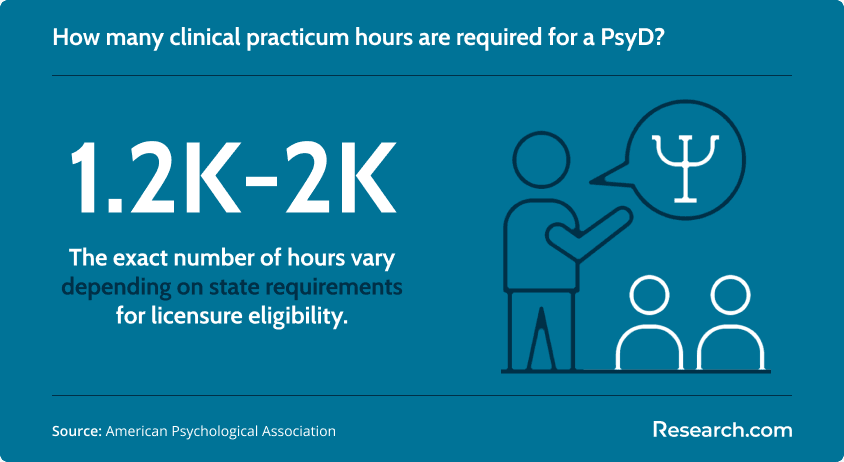
- Clinical Practicum: Places students in supervised service settings where they develop therapy, assessment, documentation, and consultation skills.
What emerging trends are impacting APA accredited PsyD programs?
APA-accredited PsyD programs are adapting to changes in mental health delivery, supervision, assessment, and workforce expectations. Telehealth is now a major part of clinical service delivery, so students increasingly need training in remote rapport-building, privacy practices, emergency protocols, and technology-supported care. Digital assessment tools and data-informed treatment planning are also influencing how psychologists evaluate progress and document outcomes.
Interdisciplinary care is another important shift. Psychologists often work with physicians, social workers, school teams, nurses, attorneys, and community organizations. Programs that expose students to team-based care can be especially useful for students interested in hospitals, integrated behavioral health, forensic settings, schools, or roles connected to health psychology careers and salary pathways.
What are the licensure requirements after graduating from an APA accredited PsyD program?
Graduating from an APA-accredited PsyD program is a major step toward becoming a licensed psychologist, but it is not the final step. Licensure is controlled by state, provincial, or territorial psychology boards, and requirements vary. Students should verify the rules in the state where they plan to practice before enrolling, not after graduation.
Common requirements include completing an accredited doctoral program, finishing required supervised clinical hours, passing the Examination for Professional Practice in Psychology (EPPP), and meeting any state-specific requirements such as jurisprudence exams, background checks, oral exams, or additional coursework. If you are comparing PsyD programs, ask each school where its graduates become licensed and whether the curriculum meets the educational requirements for your intended jurisdiction.
What distinguishes an APA accredited PsyD program from an online PhD psychology program?
The main difference is professional emphasis. An APA-accredited PsyD is usually built for students who want to provide psychological services, conduct assessments, and pursue licensure for clinical practice. Research still matters, but it is often taught as a tool for evidence-based care rather than as the primary career outcome.
Many online PhD psychology programs place greater emphasis on research, theory, teaching, and academic scholarship. Some PhD programs also lead to licensure if they include the required clinical training and accreditation, but applicants must examine each program individually. Do not assume that “doctorate in psychology” automatically means it qualifies you for psychologist licensure.
| Degree path | Best for | Common training focus | Decision caution |
| PsyD | Students seeking clinical practice and licensure-focused training | Assessment, therapy, practicum, internship, applied research | Cost and clinical placement quality vary widely. |
| PhD in psychology | Students interested in research, academia, or scientist-practitioner training | Research methods, statistics, theory, teaching, clinical work if applicable | Not every online PhD prepares students for licensure. |
| Master’s-level counseling or therapy degree | Students who want a shorter path to counseling or therapy licensure | Counseling skills, human development, ethics, practicum | Licensure title and scope of practice differ from psychologist licensure. |
What are the potential challenges of APA accredited PsyD programs?
APA-accredited PsyD programs can be rewarding, but they are demanding. Students should enter with realistic expectations about workload, cost, clinical intensity, and time to licensure. The strongest applicants are not only academically prepared; they also understand the personal and financial trade-offs.
- Heavy clinical schedule: Practicum, supervision, coursework, documentation, and assessment reports can create intense weekly demands.
- High total cost: Tuition, fees, living expenses, travel, and reduced work hours can increase debt risk.
- Competitive admissions: Strong programs often expect relevant experience, focused goals, and excellent recommendations.
- Limited fully online options: Clinical training requirements can make fully remote doctoral psychology education difficult to structure.
- Licensure complexity: Students must track state-specific rules, supervised hours, exams, and postdoctoral requirements.
- Alternative credentials may fit better: Students focused on behavior analysis, for example, may want to compare doctoral psychology with online BCBA programs.
How can I find affordable APA accredited PsyD programs?
Finding an affordable APA-accredited PsyD program requires comparing total cost, not just tuition. Start with accreditation status, then review cost per credit or annual tuition, required credits, fees, relocation costs, funding, assistantships, internship-year expenses, and expected time to degree. Students should also ask whether funding is guaranteed or competitive.
For a broader affordability comparison, review Research.com’s guide to affordable PsyD programs. Use cost rankings as a starting point, but do not choose a program solely because it is cheaper. A lower-cost program must still offer strong supervision, internship preparation, licensure alignment, and student support.
Common mistakes to avoid when comparing PsyD programs
| Mistake | Why it can hurt you | Better approach |
| Choosing without confirming APA accreditation | It may complicate licensure, internships, or employer recognition. | Verify accreditation directly through official program and accreditor information. |
| Looking only at tuition | Fees, living costs, travel, and extra years can change the real price. | Build a full cost-of-attendance estimate. |
| Assuming online means no in-person obligations | Clinical training may require residencies, local practica, or supervised placements. | Ask for all campus, residency, and practicum requirements in writing. |
| Ignoring internship outcomes | Poor internship preparation can delay graduation and licensure progress. | Ask about internship support, placement history, and advising. |
| Applying without a clear clinical focus | Generic applications are less persuasive in competitive admissions. | Connect your goals to faculty, training sites, and program strengths. |
What types of specializations are available in APA accredited PsyD programs?
Many APA-accredited PsyD programs offer tracks, minors, or concentrations that help students build deeper experience with a population, setting, or clinical problem area. Specializations can be useful, but they should not replace broad clinical competence. Choose a focus only after confirming that the program still prepares you for general licensure requirements.
- Clinical Psychology: Focuses on assessment, diagnosis, psychotherapy, and treatment planning for mental, emotional, and behavioral disorders. Students comparing timelines can review how long it takes to become a clinical psychologist.
- School Psychology: Prepares students to support children and adolescents in educational settings through assessment, counseling, consultation, and collaboration with educators and families.
- Forensic Psychology: Connects psychology with legal systems, including evaluation, consultation, expert testimony, and work with justice-involved populations.
- Neuropsychology: Emphasizes brain-behavior relationships, cognitive assessment, neurological conditions, traumatic brain injury, dementia, and rehabilitation-related concerns.
- Health Psychology: Examines how psychological factors affect physical health, chronic illness, stress, adherence to treatment, and health behavior change.
Does APA accreditation enhance professional credibility?
APA accreditation can strengthen professional credibility because it signals that a doctoral psychology program has been reviewed against recognized standards for curriculum, clinical training, faculty, supervision, student outcomes, and ethical preparation. It does not guarantee licensure, employment, or salary, but it can make the path smoother when applying for internships, postdoctoral training, licensure, and clinical roles.
It also helps clarify the difference between psychologists and other mental health professionals. Students comparing long-term practice options may want to review the distinction between a social worker and psychologist before committing to a PsyD.
How do you choose the best APA accredited PsyD program?
The best APA-accredited PsyD program is the one that fits your licensure goal, clinical interests, learning style, finances, and geographic constraints. Rankings can narrow the list, but your final decision should come from program-level evidence: accreditation status, clinical placements, faculty fit, funding, internship support, completion expectations, and state licensure alignment. Students still building toward doctoral study may also compare accelerated psychology programs at earlier degree levels.
- Accreditation Status: Confirm current APA accreditation before applying or enrolling.
- Specializations Offered: Look for tracks that match your goals, such as child, forensic, neuropsychology, health, or multicultural practice.
- Program Format: Decide whether campus-based, hybrid, or online-supported learning fits your schedule and clinical training needs.
- Cost and Financial Aid: Compare tuition, fees, assistantships, scholarships, grants, stipends, and expected borrowing.
- Faculty Expertise: Review faculty clinical interests, research areas, supervision experience, and availability.
- Clinical Training Opportunities: Ask where students complete practica and whether placements match your intended specialty.
- Program Reputation: Consider outcomes, student support, alumni feedback, internship preparation, and professional networks.
- Location: Think about relocation, cost of living, family obligations, internship access, and where you plan to seek licensure.
Questions to ask admissions advisors before applying
- Is the program currently APA accredited, and when is the next review?
- Where do students typically complete practicum and internship training?
- How does the program support students who do not match to internship on the first attempt?
- What percentage of students receive funding, and what does that funding include?
- Can the program confirm whether its curriculum meets the educational requirements in my intended state?
- How many students leave the program before completion, and why?
- What support is available for dissertation or doctoral project completion?
What career paths are available for graduates of APA accredited PsyD programs?
Graduates of APA-accredited PsyD programs commonly pursue clinical and applied psychology roles after completing licensure requirements. The PsyD is especially suited to students who want direct client care, psychological assessment, consultation, supervision, or specialized clinical practice. Salary and advancement can vary by setting, location, licensure status, specialization, and experience; students comparing doctorate types can review the relationship between PsyD and PhD psychology salary paths.
- Clinical Psychologist: Provides psychotherapy, conducts assessments, diagnoses mental health disorders, and develops treatment plans in settings such as private practices, hospitals, clinics, and community agencies. As of 2023, approximately 77,000 psychologists are employed as clinical or counseling psychologists.
- School Psychologist: Supports students’ emotional, behavioral, social, and academic development through evaluation, counseling, consultation, and collaboration with families and educators.
- Forensic Psychologist: Works at the intersection of psychology and law through evaluations, expert testimony, consultation, and assessment of justice-involved individuals.
- Health Psychologist: Helps patients manage chronic illness, stress, behavior change, treatment adherence, and the psychological aspects of physical health.
- Academic or Research Psychologist: Teaches, supervises, conducts research, or contributes to the evidence base that informs psychological practice.
What is the job market for graduates with an APA accredited PsyD degree?
The labor market for psychologists is expected to grow, though opportunities vary by specialty, location, licensure status, and employer type. According to the U.S. Bureau of Labor Statistics, psychologists are projected to see a 7% employment growth rate from 2023 to 2033, with approximately 14,000 job openings anticipated. Demand is connected to ongoing mental health needs and the use of psychologists in healthcare, education, government, community agencies, and private practice.
PsyD graduates may work in hospitals, outpatient clinics, schools, correctional settings, integrated care teams, nonprofit agencies, academic environments, or independent practice after meeting licensure requirements. Students focused on earnings should compare specialties and settings carefully rather than assuming one degree guarantees a certain income. Research.com’s guide to the highest paying psychology jobs can help you compare career directions.
How can supplementary certifications enhance my APA accredited PsyD degree?
Supplementary credentials can help licensed psychologists build deeper skills in a defined practice area, but they should support—not distract from—core licensure requirements. The best add-on training depends on your client population, setting, and long-term role. For example, students interested in behavior change, autism services, or interdisciplinary behavioral care may compare doctoral psychology training with an online master’s degree in applied behavior analysis.
Before pursuing an additional credential, ask whether it is recognized in your state, whether it requires supervised hours or an exam, whether it changes your scope of practice, and whether employers in your target setting value it.
How do APA accredited PsyD programs address diversity and inclusion?
Strong APA-accredited PsyD programs integrate diversity, equity, and culturally responsive practice across coursework, supervision, case consultation, assessment, and community engagement. Students should learn to work with clients whose identities, histories, languages, socioeconomic contexts, disabilities, and community experiences differ from their own.
This training matters because psychologists serve people across many systems, including hospitals, schools, courts, addiction treatment programs, community clinics, and private practices. Students interested in addiction-related counseling roles can also explore education paths connected to substance abuse counseling careers.
How do APA accredited PsyD programs foster mentorship and professional networking?
Mentorship can shape a PsyD student’s clinical identity, internship competitiveness, specialization choices, and early career direction. Many programs connect students with faculty advisors, clinical supervisors, alumni, practicum coordinators, and professional organizations. Useful networking opportunities may include case conferences, research teams, supervision groups, workshops, alumni panels, and regional clinical partnerships.
Students who want to broaden their understanding of therapy systems and family-based care may also compare PsyD training with related paths such as accredited online MFT programs.
Should I Pursue Interdisciplinary Dual Degree Options with My APA Accredited PsyD Degree?
A dual degree or interdisciplinary credential can be valuable when it clearly supports your career plan. For example, combining clinical psychology with business, public health, forensic studies, theology, education, or behavioral analysis may make sense for students who want leadership roles, forensic practice, integrated healthcare, program administration, or specialized consultation work.
However, additional degrees also add cost, time, and academic load. Before choosing a dual path, ask whether the extra credential will improve licensure eligibility, qualify you for a specific job, or meaningfully strengthen your clinical expertise. Students interested in legal and assessment-related work may want to compare PsyD options with a low-cost online master’s in forensic psychology as a supplemental route.
What do graduates have to say about their APA accredited PsyD degree?
- Caitlyn: "I was unsure whether an online learning format would feel connected enough, but the live discussions and interactive assignments helped me stay engaged. The program strengthened my clinical confidence while allowing me to manage family responsibilities."
- Henry: "My accredited online PsyD program gave me the flexibility to keep working while studying evidence-based practice in depth. Supportive faculty made the virtual environment feel personal rather than distant."
- Morgan: "The coursework was demanding, but it pushed me to think carefully about real clinical problems. Learning with classmates from different regions added perspective and helped prepare me for work with diverse communities."
How do APA accredited PsyD programs support lifelong professional development?
APA-accredited PsyD programs can support long-term professional growth by building habits of continuing education, ethical reflection, supervision, consultation, and evidence-based practice. After graduation, psychologists must continue learning as laws, technology, assessment tools, diagnostic standards, and clinical research evolve.
Many programs help students connect with professional associations, alumni networks, specialty workshops, conferences, clinical seminars, and postdoctoral opportunities. Graduates who later want supplemental counseling-related training may also compare options such as the most affordable online counseling degrees.
References
- APA. (2024). CWS data tool: Degrees in psychology. American Psychological Association. Retrieved January 22, 2025.
- Hanson, M. (2024, November 25). Average cost of a doctorate degree [2023]: Ph.D., Psy.D. & more. Education Data Initiative. Retrieved January 22, 2025.
- Korhonen, V. (2024, July 5). Number of doctoral degrees earned in the United States in 2020/21, by field of research. Statista. Retrieved January 22, 2025.
- U.S. BLS. (2024, August 29). Field of degree: Psychology. U.S. Bureau of Labor Statistics. Retrieved January 22, 2025.
- U.S. BLS. (2024, August 29). Occupational outlook handbook: Psychologists. U.S. Bureau of Labor Statistics. Retrieved January 22, 2025.
- U.S. BLS. (2024, August 29). Psychologists: Pay. U.S. Bureau of Labor Statistics. Retrieved January 22, 2025.
- U.S. BLS. (2024, August 29). Psychologists: Work environment. U.S. Bureau of Labor Statistics. Retrieved January 22, 2025.
Key Insights
- APA accreditation is one of the first things to verify because it can affect licensure planning, internship competitiveness, postdoctoral opportunities, and employer confidence.
- Most APA-accredited PsyD programs take about five years, but total time to independent practice also includes internship, postdoctoral requirements, supervised hours, and state exams.
- Cost varies widely. Compare full program cost, fees, funding, living expenses, and time to completion—not tuition alone.
- Online or hybrid formats may improve flexibility, but clinical psychology training still requires supervised practical experience and may include in-person obligations.
- A PsyD is usually best for students seeking clinical practice, assessment, and licensure-focused work. Students more interested in research or academia should compare PsyD programs with PhD psychology options.
- The best program is not always the highest-ranked or cheapest. The right choice is the one that aligns with your state licensure goals, clinical interests, finances, training needs, and professional support system.
Other Things You Should Know About APA Accredited PsyD Programs
In 2027, top APA-accredited PsyD programs typically require around 120 to 140 credit hours for completion. This includes a mix of coursework, practicums, and internships necessary to ensure comprehensive training in clinical psychology.
Yes. APA-accredited PsyD programs require a full-time, predoctoral internship of about 2,000 hours, completed in an APA-accredited or APPIC-member setting. Students must also finish supervised practica and dissertation work before internship placement.


