2027 How to Become a Child Psychologist

Co-Founder and Chief Data Scientist
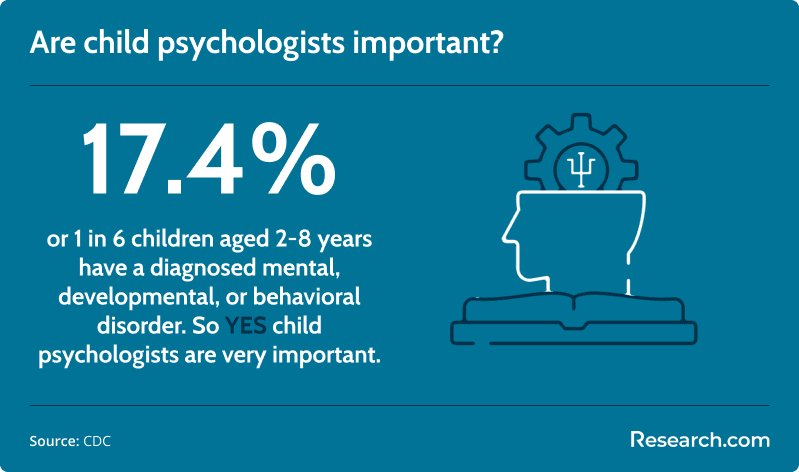
Becoming a child psychologist is a long, regulated career path, but it can lead to meaningful work with children, adolescents, families, schools, hospitals, and community agencies. The need is clear: according to the World Health Organization, 10% of children and adolescents worldwide experience a mental health disorder, yet many do not receive care or seek help. Suicide is also one of the leading causes of death among 15-19-year-olds. In the United States, 17.4%—or one in six—children aged 2-8 years had a diagnosed mental, developmental, or behavioral disorder.
This guide explains how to become a child psychologist in 2026, including the education path, licensing process, timeline, costs, skills, salary expectations, job outlook, specialization options, and practical ways to choose a program. It is written for students, career changers, and working professionals who want a realistic view of the training required before committing years of study and significant tuition costs.
Quick Answer: How Do You Become a Child Psychologist?
To become a licensed child psychologist, you generally need a bachelor’s degree, a doctoral degree in psychology such as a PhD or PsyD, supervised clinical training, passing scores on required licensing exams, and state licensure. A master’s degree may be useful or required depending on your academic background and program path, but a doctorate is typically necessary to practice independently as a psychologist.
- The usual timeline is 8 to 12 years, including undergraduate study, graduate training, internship or supervised experience, and licensure.
- The average salary for a child psychologist in the U.S. ranges from $60,000 to $100,000 per year, with earnings affected by location, experience, specialization, and work setting.
- Psychologists overall have a projected employment growth rate of 7% from 2023 to 2033, with about 13,000 projected job openings each year during that period.
- Total education costs vary widely. A bachelor's degree can range from $40,000 to $120,000 total, while a doctoral program may cost between $100,000 to $200,000 or more.
Key Things You Should Know About Becoming a Child Psychologist
- Licensure is the main gatekeeper. You may work in related mental health roles with a master’s degree, but independent practice as a psychologist usually requires a doctorate and a state license.
- The path is lengthy but structured. Most candidates complete a bachelor’s degree, doctoral training, supervised clinical experience, licensing exams, and continuing education.
- Program choice matters. Accreditation, supervised training placements, licensure alignment, faculty expertise, and total cost should carry more weight than school marketing claims.
- Child psychology overlaps with other fields. School psychology, pediatric psychology, behavior analysis, counseling, marriage and family therapy, and social work may offer related but distinct career routes.
- Steps to Become a Child Psychologist
- Clinical Child Psychology vs. Related Specializations
- Education Requirements for Child Psychologists
- Licensing and Certification Process
- How Long the Path Takes
- Cost of Becoming a Child Psychologist
- Skills Child Psychologists Need
- Why Supervised Experience Matters
- Child Psychologist Salary
- Job Market and Career Outlook
- Related Specializations to Consider
- How to Choose a Child Psychology Program
- Challenges in Child Psychology Practice
- Research Trends and Advanced Training
- Behavior Analysis and Child Psychology
- Accelerated Master’s Options
- Financial Aid Options
- Faster Pathways Into the Field
- Condensed Master’s ProgramsFast-track options
- Child Mental Health Careers Without a Psychology Degree
- Career Advancement Opportunities
- Online Psychology Doctorates and Innovation
- Substance Abuse Counseling TrainingDoctoral innovationAdvancement options
- Accreditation and Affordability Checks
- Forensic Psychology Insights
- Social Work as an Alternative Entry Point
- Evaluating Education ROI
- Collaboration With Other Professionals
- Dual Degree Programs
- Telehealth in Child Psychology
- Legal and Ethical ConsiderationsTelehealth accessDual degree optionsTeam-based practiceAdditional guidance
What are the steps to becoming a child psychologist?
The path to becoming a child psychologist is not a single degree choice; it is a sequence of education, clinical training, exams, and licensing decisions. The exact requirements vary by state, so students should check licensing rules early rather than waiting until graduation.
- Complete a bachelor’s degree. Most students begin with psychology, child development, education, sociology, or another related major. The goal at this stage is to build a foundation in human behavior, research methods, statistics, abnormal psychology, and developmental psychology.
- Build relevant experience before graduate school. Volunteer work, research assistant roles, crisis line work, tutoring, youth mentoring, and internships can strengthen graduate applications and help you confirm that child mental health work is the right fit.
- Apply to graduate programs aligned with licensure. Many aspiring child psychologists enter a doctoral program in clinical psychology, counseling psychology, school psychology, or a closely related psychology field with child and adolescent training. Some students complete a master’s degree first, while others move directly from a bachelor’s program into doctoral study.
- Complete doctoral coursework and research. A PhD or PsyD typically includes advanced assessment, diagnosis, therapy methods, ethics, child development, psychopathology, research, and clinical training.
- Finish practicum and internship requirements. Doctoral programs include supervised clinical training where students work with children, adolescents, and families under licensed supervision.
- Complete any required postdoctoral supervised experience. Some states require 1-2 years of supervised postdoctoral work before full independent licensure.
- Pass required licensing exams. Most states require the Examination for Professional Practice in Psychology, commonly called the EPPP. Some states also require ethics, jurisprudence, or state-specific exams.
- Apply for state licensure. You must document your degree, supervised hours, exam results, and any other state requirements before legally practicing as a psychologist.
- Consider optional board certification. Specialty certification through organizations such as the American Board of Clinical Child and Adolescent Psychology can demonstrate advanced competence, although it is not always required for employment.
- Maintain your license. Licensed psychologists must complete continuing education and follow ethical and legal standards throughout their careers.
| Stage | What You Do | Decision to Make |
| Bachelor’s degree | Study psychology, child development, research, and human behavior | Choose a major that prepares you for graduate admission |
| Graduate training | Complete a master’s degree, doctoral degree, or both | Compare PhD and PsyD paths based on research, cost, and career goals |
| Clinical experience | Work under supervision in practicum, internship, or postdoctoral settings | Look for child, adolescent, family, school, or pediatric placements |
| Licensure | Pass exams and meet state requirements | Verify requirements before enrolling in a program |
| Specialization | Pursue child-focused training, certification, or advanced practice areas | Select a niche such as trauma, autism, school-based practice, or pediatric psychology |
What is the difference between clinical child psychology and other specializations?
Clinical child psychology focuses on evaluating, diagnosing, and treating mental health disorders and emotional or behavioral difficulties in children and adolescents. Child psychologists may work with anxiety, depression, trauma, disruptive behavior, developmental concerns, family stress, adjustment issues, and other conditions that affect functioning at home, in school, or in the community.
Several related fields also serve children, but they differ in training, work setting, scope of practice, and licensing requirements.
| Specialization | Primary Focus | Common Work Settings | How It Differs From Clinical Child Psychology |
| Clinical child psychology | Assessment, diagnosis, and treatment of child and adolescent mental health conditions | Clinics, hospitals, private practices, community agencies, academic medical centers | Emphasizes psychological treatment and clinical assessment for mental health concerns |
| School psychology | Learning, behavior, school adjustment, academic supports, and student mental health | Public and private schools, districts, educational agencies | Often centers on educational systems, learning assessments, and school-based interventions |
| Developmental psychology | Cognitive, emotional, social, and behavioral development across childhood and adolescence | Universities, research organizations, policy groups, applied research settings | Frequently focuses on research and typical development rather than clinical treatment |
| Pediatric psychology | Psychological care for children with medical conditions, chronic illness, or treatment-related stress | Hospitals, children’s medical centers, specialty clinics | Connects mental health care with physical health, medical treatment, and family coping |
| Child life specialist | Helping children and families manage hospitalization, procedures, and medical stress | Hospitals and pediatric healthcare settings | Provides coping support and therapeutic play, but does not typically diagnose or treat mental health disorders as a psychologist |
If hospital-based support appeals to you but you do not want the full psychologist licensure pathway, you may want to review the role, training route, and child life specialist salary before deciding.
What are the educational requirements for becoming a child psychologist?
Child psychology requires advanced education because licensed psychologists are responsible for assessment, diagnosis, treatment planning, ethical decision-making, and often high-stakes work with minors and families. A doctorate is usually required for independent practice as a psychologist.
- Bachelor’s degree. A four-year undergraduate degree in psychology or a related field is the usual first step. Students may complete this at accredited campus-based institutions or through options such as nationally accredited online colleges, but accreditation and graduate-school acceptance should be checked carefully.
- Master’s degree. A master’s degree may help students strengthen their academic record, gain research or clinical exposure, or qualify for related counseling or human services roles. However, a master’s degree alone generally does not qualify someone to practice independently as a psychologist.
- Doctoral degree. Most child psychologists complete a PhD or PsyD in psychology with coursework and supervised training in child, adolescent, family, clinical, or school-based practice.
- Clinical training. Doctoral programs include practicum and internship experiences, and some states require postdoctoral supervised work before licensure.
| Degree Level | Typical Role in the Path | Important Consideration |
| Bachelor’s degree | Provides the academic foundation for graduate study | Take research methods, statistics, developmental psychology, and abnormal psychology when possible |
| Master’s degree | Can prepare students for doctoral admission or related mental health roles | May not be enough for independent psychologist licensure |
| PhD | Often combines research, clinical training, teaching, and practice | May be stronger for students interested in research or academia |
| PsyD | Typically emphasizes clinical practice and applied training | May be a better fit for students focused primarily on practice, but costs and funding should be compared carefully |
What is the certification and licensing process for child psychologists?
Licensure is what allows a psychologist to practice legally and independently. Because licensing rules are set by state boards, students should verify requirements in the state where they plan to work before choosing a doctoral program.
1. Earn the required doctoral degree
You generally need a PhD or PsyD in psychology from a program that satisfies state licensing standards. The program should include approved coursework, supervised clinical training, ethics preparation, and experience with psychological assessment and intervention.
2. Complete supervised clinical training
Doctoral students complete practicum and internship experiences, often including work with children and adolescents. Some states also require postdoctoral supervised hours, typically 1-2 years, before granting full licensure.
3. Pass the EPPP
Most states require candidates to pass the Examination for Professional Practice in Psychology. The EPPP is administered through the Association of State and Provincial Psychology Boards and evaluates broad knowledge of psychological science, ethics, assessment, intervention, and professional practice.
4. Satisfy state-specific requirements
State boards may require jurisprudence exams, ethics exams, background checks, specific supervised-hour documentation, or additional forms. Requirements can differ substantially, so do not assume one state’s rules apply everywhere.
5. Apply for psychologist licensure
After completing education, supervised training, exams, and state paperwork, candidates may receive a psychology license. This license permits professional practice within the scope defined by that state.
6. Consider optional specialty certification
Specialty board certification is not always mandatory, but it can signal advanced training. One option is certification through the American Board of Clinical Child and Adolescent Psychology, which is part of the American Board of Professional Psychology.
7. Keep the license active
Licensed psychologists must usually complete continuing education, follow ethics requirements, and renew their licenses according to state board rules.
How long does it take for one to become a licensed child psychologist?
Becoming a licensed child psychologist usually takes 8 to 12 years. The total timeline depends on whether you complete a master’s degree, how long your doctoral program takes, whether your state requires postdoctoral supervision, and how quickly you pass licensing exams.
| Training Step | Typical Time | What Can Affect the Timeline |
| Bachelor’s degree | 4 years | Full-time vs. part-time enrollment, transfer credits, accelerated study |
| Master’s degree | 2-3 years | Whether it is required, optional, or built into doctoral study |
| Doctoral degree | 4 to 6 years | PhD vs. PsyD structure, dissertation requirements, internship timing |
| Supervised postdoctoral experience | 1 to 2 years | State requirements and availability of supervised positions |
| Licensing process | A few months | Exam scheduling, state board review, documentation requirements |
The fastest realistic route is usually full-time study with a clear plan from undergraduate coursework through doctoral admission. However, “fast” should not mean skipping licensure alignment, weak clinical placements, or unaccredited programs. Child psychology is not typically among the easiest college majors, and the professional path requires persistence, emotional maturity, and careful planning.
How much does it cost to become a child psychologist?
The cost of becoming a child psychologist can be substantial because the path often includes undergraduate study, graduate coursework, clinical training, exam fees, and years of living expenses. Costs vary by institution, residency status, financial aid, program length, and whether the doctoral program provides funding.
| Cost Category | Estimated Cost Mentioned | What to Watch For |
| Bachelor’s degree | $40,000 to $120,000 over four years | Public vs. private tuition, in-state vs. out-of-state rates, transfer credits |
| Master’s degree | Average of $50,000 to $75,000 | Whether the degree is necessary for your path or duplicates doctoral coursework |
| Doctoral degree | $100,000 to $250,000 or more | Funding, assistantships, fellowships, stipends, internship costs, and program completion time |
| EPPP fee | $600-$800 | Retake policies, preparation materials, and scheduling expenses |
| State licensing fees | Typically $200-$500 | Application fees, background checks, jurisprudence exams, and renewals |
| Continuing education | Often a few hundred dollars annually | Required hours, approved providers, and renewal cycles |
| Total path estimate | Around $140,000 to $370,000 or more | Debt load, funding, salary expectations, and time out of the full-time workforce |
Doctoral funding can make a major difference. PhD programs may offer assistantships, fellowships, or stipends that reduce tuition costs, while PsyD programs tend to be more expensive and may offer fewer funding opportunities. Students comparing doctorate options can also review the cheapest online PsyD programs and broader lists of affordable online colleges for psychology.
When estimating return on investment, avoid comparing tuition alone. Include fees, relocation, unpaid or low-paid training periods, exam costs, lost income during full-time study, and the type of role you expect after licensure. Location, industry, and years of experience can strongly affect how quickly education costs are recovered.
What skills are necessary for child psychologists?
Child psychologists need clinical judgment, scientific training, emotional steadiness, and the ability to communicate with children and adults at the same time. Students who want a helping profession and are comparing psychology with other good majors should consider whether they enjoy both direct service and rigorous assessment.
- Assessment and evaluation. Child psychologists use interviews, observation, standardized measures, developmental history, school information, and caregiver input to understand a child’s functioning.
- Treatment planning. Effective care requires individualized goals, evidence-based interventions, family involvement when appropriate, and ongoing progress monitoring. These planning skills also matter in related paths such as how to become a family therapist.
- Child and adolescent communication. Children may not explain distress the way adults do. Psychologists must interpret play, behavior, mood, school performance, family context, and developmental stage.
- Family systems understanding. A child’s symptoms often connect to family stress, parenting patterns, trauma, school context, health conditions, or social pressures.
- Research literacy. Psychologists must evaluate evidence, interpret data, and apply current findings rather than relying only on intuition or outdated methods.
- Ethical decision-making. Working with minors requires careful handling of consent, confidentiality, mandatory reporting, custody issues, documentation, and professional boundaries.
- Collaboration. Many cases require coordination with pediatricians, teachers, social workers, psychiatrists, speech-language pathologists, and nurses, including professionals from expensive or affordable online PMHNP degree programs.
- Emotional resilience. Child psychologists may hear traumatic histories, manage family conflict, and handle urgent safety concerns. Burnout prevention is a professional necessity, not an afterthought.
How important is supervised experience before practicing as a licensed child psychologist?
Supervised experience is essential because it is where classroom knowledge becomes safe, ethical clinical practice. Trainees learn how to conduct assessments, write reports, provide therapy, speak with parents, coordinate with schools, document risk, and respond when a child’s situation changes unexpectedly.
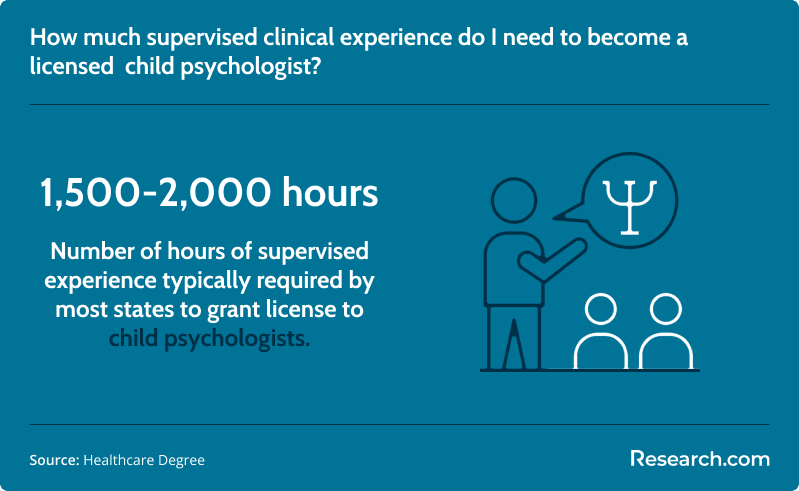
Most states require supervised experience before licensure, often including 1,500 to 2,000 hours before a candidate can receive licensure. Supervision also helps trainees identify blind spots, improve case conceptualization, practice ethical reasoning, and develop confidence before working independently.
When comparing graduate programs, ask where students complete practicums and internships, how many child-focused placements are available, whether supervisors are licensed psychologists, and whether the program has a strong record of placing students in appropriate clinical settings.
How much do child psychologists make?
According to the United States Bureau of Labor Statistics, psychologists overall earn an average of $101,170 annually, or $48.64 per hour. Child psychologist earnings vary by state, work setting, specialization, years of experience, and whether the psychologist works in a school, hospital, clinic, research setting, or private practice.
| Career or Experience Category | Salary Figure Mentioned | Context |
| Child psychologists overall | Around $60,000 to $120,000 annually | Varies by location, experience, specialization, and employer |
| Entry-level child psychologists | $50,000 to $70,000 per year | Typical early-career range |
| Experienced psychologists or private practice/high-demand areas | Upwards of $100,000 to $120,000 or more annually | More likely with advanced experience, strong referral networks, or specialized expertise |
| School psychologists | $60,000 to $90,000 depending on district and location | Related field with school-based focus |
| School psychologists average | $91,990 per year | Salary varies by industry and location |
School psychologist salaries can overlap with earnings in other child-focused professions, including some speech pathology jobs. Higher salaries are commonly associated with advanced clinical roles, hospitals, specialized clinics, private practice, and large metropolitan areas, but no salary outcome is guaranteed.
What is the job market like for child psychologists?
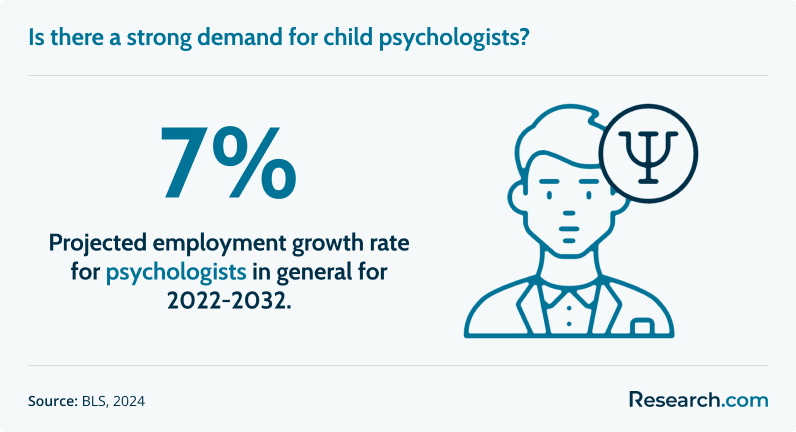
The job market for psychologists is supported by continued demand for mental health services in schools, healthcare, community clinics, and private practices. The U.S. Bureau of Labor Statistics projects 7% employment growth for psychologists from 2023 to 2033, with about 13,000 projected openings each year, on average, over the decade.
Child psychologists with training in autism spectrum disorders, anxiety, trauma, behavioral disorders, family systems, pediatric health, or school-based services may find their skills relevant across multiple settings. Employers increasingly value clinicians who can work with complex cases, collaborate across disciplines, use evidence-based interventions, and document outcomes clearly.
Job opportunities may vary by region. Rural areas, underserved communities, school districts, children’s hospitals, and integrated behavioral health settings may have different hiring needs than private practices in competitive metropolitan markets.
What other specializations can aspiring child psychologists consider?
Students interested in children’s mental health should compare adjacent fields before committing to the psychologist route. Related careers can involve shorter training timelines, different licensure rules, or a stronger focus on schools, families, health systems, or community care.
- Marriage and family therapy. This path emphasizes family relationships, communication, and relational patterns. Students who want to work with children in the context of family systems may compare affordable online MFT degrees.
- School psychology. This route is often best for people who want to work directly in educational settings and support students’ learning, behavior, and emotional needs.
- Behavior analysis. This specialization may appeal to students who want structured, measurable interventions for behavioral challenges.
- Social work or counseling. These fields may lead to child and family mental health roles, though they do not make someone a licensed psychologist.
How do I choose the right child psychology program?
The best child psychology program is not simply the cheapest, fastest, or most recognizable. It is the program that fits your licensure goal, offers strong supervised training with children, and has credible outcomes for graduates entering child psychology careers.
| Question to Ask | Why It Matters |
| Is the institution and program properly accredited? | Accreditation affects licensure, transferability, financial aid, and employer confidence |
| Does the curriculum include child and adolescent coursework? | General psychology training may not provide enough child-focused preparation |
| Where do students complete practicum and internship placements? | Clinical training quality is central to licensure readiness and employability |
| Do graduates meet state licensing requirements? | A degree that does not align with your state can delay or block licensure |
| What funding is available? | Assistantships, fellowships, and scholarships can change the true cost of attendance |
| What are alumni outcomes? | Licensure exam performance, placement rates, and career paths reveal program effectiveness |
What challenges do child psychologists face in practice?
Child psychologists often work with emotionally complex cases involving children, caregivers, schools, courts, healthcare providers, or social service systems. Common challenges include high caseloads, safety concerns, mandated reporting, family conflict, cultural and linguistic differences, and the emotional strain of trauma-related work.
Ongoing training is not optional in this field. Clinicians must stay current with treatment methods, assessment tools, legal standards, and research. Some professionals use graduate-level coursework or cheap psychology masters programs to strengthen knowledge before doctoral study or related mental health roles.
What are the latest research trends and advanced training opportunities in child psychology?
Current child psychology practice increasingly emphasizes evidence-based interventions, improved diagnostic methods, culturally responsive assessment, trauma-informed care, and treatments tailored to developmental stage. Advanced training can come through doctoral electives, internships, postdoctoral fellowships, specialty workshops, research labs, clinical trials, and professional conferences.
Students interested in intensive doctoral study may compare options such as accelerated psychology PhD programs, but they should confirm that any shortened pathway still supports licensure, quality supervision, and appropriate clinical depth.
How can integrating behavior analysis enhance child psychology practice?
Behavior analysis can strengthen child psychology practice by helping clinicians define behaviors clearly, measure change, and design structured interventions. This can be especially useful when working with disruptive behavior, skill-building goals, developmental disabilities, classroom behavior, and caregiver coaching.
Psychologists who want deeper training in this area may review board-certified behavior analyst programs online. Behavior analysis training can complement, but does not replace, psychologist licensure requirements.
Can an accelerated master's in psychology boost my career in child psychology?
An accelerated master’s degree can help some students move faster into graduate-level study, research experience, or related mental health work. It may also strengthen an application for doctoral programs if the student’s undergraduate record or major is not closely aligned with psychology.
However, an accelerated master’s degree is not a shortcut to independent psychologist licensure. Students considering an accelerated master's in psychology should verify whether the program includes research preparation, child development coursework, and a clear pathway into doctoral training or another licensed profession.
What are the financial aid options for aspiring child psychologists?
Because the child psychologist pathway can require many years of education, financial planning should begin before enrollment. Students comparing psychology, counseling, or even forensic psychology PhD programs online should evaluate funding at each degree level.
- Federal financial aid. Students may submit the Free Application for Federal Student Aid to access eligible federal grants and loans. Graduate students may qualify for Direct PLUS Loans.
- Scholarships and grants. Universities and outside organizations may offer awards based on merit, need, research interests, identity-based eligibility, or commitment to underserved communities.
- Assistantships and fellowships. Many PhD programs offer teaching or research assistantships that may include tuition remission and a stipend. Fellowships can also reduce borrowing.
- Loan forgiveness and repayment programs. Graduates working in public service settings may qualify for Public Service Loan Forgiveness. The National Health Service Corps also offers loan repayment programs for eligible professionals serving underserved communities.
- Lower-cost program formats. Students can compare public institutions, transfer-friendly pathways, funded doctoral programs, and affordable online degrees where appropriate.
Fast-Track Your Journey to a Rewarding Career
The traditional path to licensure commonly takes 8 to 12 years, but students may be able to reduce time in school through careful planning. The safest fast-track strategy is not to skip requirements; it is to avoid unnecessary detours.
Accelerated Bachelor’s Programs
Some students complete undergraduate study more quickly through accelerated terms, summer coursework, transfer credits, or heavier course loads. This can shorten the time before graduate applications, but students should still build research and applied experience.
Combined Bachelor’s and Master’s Degrees
Combined degree programs can reduce duplicate coursework and allow students to move into graduate-level study sooner. They may be useful for students who want a master’s credential before doctoral training.
Accelerated Doctoral Programs
Some doctoral pathways are designed for students who already have graduate preparation. Before enrolling, confirm clinical placement quality, licensure alignment, and whether the program’s pace is realistic for your life circumstances.
Online and Self-Paced Learning
Flexible formats can help working adults complete prerequisite or degree requirements. Students exploring accelerated psychology programs should confirm that online coursework, supervised experience, and residency requirements meet future licensing expectations.
Can a Condensed Master's Program Expedite My Career in Child Psychology?
A condensed master’s program can be useful if it provides rigorous psychology coursework, research preparation, and a bridge into doctoral study or a related licensed role. Programs such as a 1 year master's in psychology online may appeal to students who need speed and flexibility, but the main question is whether the curriculum supports your next credential.
Before choosing a short master’s program, ask whether credits transfer, whether faculty can provide doctoral recommendations, whether the program includes research methods and statistics, and whether it meets any state requirements for the career you want.
Can I Build a Child Psychology Career Without a Traditional Psychology Degree?
You can work in child and family mental health without becoming a psychologist, but job titles, scope of practice, and licensing rules will differ. Social work, counseling, marriage and family therapy, human services, education, and behavior analysis may all lead to child-focused roles.
If you do not have a psychology background, review paths such as how to become a therapist without a psychology degree. The key is to match your current education with the licensing route for the role you actually want, rather than assuming all mental health careers have the same requirements.
Career Advancement Opportunities in Child Psychology
Child psychologists can advance by specializing, supervising trainees, opening a private practice, moving into hospital leadership, conducting research, teaching, consulting with schools, or working in policy and program development. Specialized areas may include trauma, developmental disorders, pediatric psychology, neuropsychological assessment, school consultation, or family-based treatment.
Some professionals broaden their expertise through education-related graduate study. For example, a masters in early childhood education online may be useful for professionals who want stronger grounding in early learning, child development, program design, or educational leadership.
Advancement depends on more than degrees. Strong documentation, ethical practice, referral relationships, supervision skills, research literacy, and demonstrated outcomes can all shape long-term opportunities.
How Can an Online Psychology Doctorate Boost Professional Innovation?
An online doctorate may give working professionals access to advanced coursework, research training, and specialized psychological knowledge without requiring the same relocation demands as some campus programs. Students exploring online psychology doctorate programs should pay close attention to accreditation, in-person requirements, supervised training, and whether the degree supports licensure in their state.
Innovation in practice comes from applying evidence responsibly. A doctorate should help clinicians evaluate research, adapt interventions to children’s needs, collaborate across disciplines, and use technology without weakening ethics or care quality.
Should Child Psychologists Pursue Training in Substance Abuse Counseling?
Training in substance abuse counseling can be valuable for clinicians who work with adolescents, families affected by substance use, trauma, behavioral concerns, or co-occurring mental health issues. It can improve screening, referral, family education, and treatment coordination.
Programs such as a substance abuse counseling degree may be relevant for professionals seeking a more interdisciplinary skill set. Psychologists should still practice within their license, training, and competence.
How Can I Verify the Accreditation and Affordability of Online Child Psychology Programs?
Accreditation is one of the first things to verify when evaluating any online psychology-related program. Students should confirm institutional accreditation, programmatic requirements where applicable, state licensure alignment, clinical placement support, faculty credentials, and student outcomes.
Affordability should include tuition, fees, textbooks, technology costs, travel for residencies, internship requirements, and time away from paid work. Comparing a psychology program with a lower-cost related option, such as a cheap human services online degree, can help you understand trade-offs between cost, scope of practice, and career options.
How Can Forensic Psychology Insights Enhance Child Psychological Practice?
Forensic psychology knowledge can help child psychologists when cases involve custody disputes, abuse allegations, court testimony, child welfare systems, risk assessment, or legal documentation. These cases require careful boundaries, precise language, and awareness of the difference between therapy and forensic evaluation.
Additional study through options such as a cheap master's in forensic psychology online can strengthen understanding of legal systems and forensic methods. However, forensic work requires specific competence and should not be added casually to a clinical practice.
Can a Social Work Degree Provide a Viable Alternative Entry Point into Child Psychology Careers?
A social work degree can be a strong alternative for people who want to help children and families but do not want to complete the full psychologist pathway. Social work emphasizes community systems, case management, advocacy, direct services, and culturally responsive care.
Students who want a faster route into child and family services may compare accelerated MSW programs. This path can lead to meaningful clinical and community-based work, but it is distinct from becoming a licensed psychologist.
How Do I Evaluate the Return on Investment in Child Psychology Education?
To evaluate ROI, compare total education costs with realistic earnings, employment settings, funding opportunities, and the number of years required before independent practice. Include tuition, fees, living expenses, exam costs, supervision costs, interest on loans, and income you may forgo while studying full time.
Do not assume that the most expensive program leads to the best outcome. Compare accreditation, licensure alignment, internship placement, funding, completion rates, faculty fit, and local demand. Students weighing doctorate options should also examine how much does a PsyD cost in relation to PhD funding, career goals, and expected debt.
| ROI Factor | Why It Matters |
| Total cost | High tuition can delay financial stability after licensure |
| Funding | Assistantships and fellowships can reduce debt significantly |
| Licensure match | A program that does not meet state rules can create costly delays |
| Clinical placements | Strong child-focused training improves readiness for employment |
| Career setting | Schools, hospitals, clinics, research organizations, and private practice can offer different earnings and schedules |
How Do Child Psychologists Collaborate with Other Professionals?
Children’s needs often cross professional boundaries. A child psychologist may coordinate with parents, teachers, pediatricians, psychiatrists, social workers, occupational therapists, speech-language pathologists, nurses, school administrators, and legal or child welfare professionals.
Effective collaboration requires knowing what each professional is trained and licensed to do. For example, understanding the social worker vs psychologist distinction can clarify referral decisions, documentation, and team roles. Good collaboration improves continuity of care and helps families avoid conflicting recommendations.
How Can Dual Degree Programs Expand Career Opportunities in Child Psychology?
Dual degree programs can help students combine psychology with another discipline such as education, public health, law, social work, or business administration. This may be useful for careers in program leadership, policy, forensic work, school systems, research administration, or integrated healthcare.
Students considering dual degree programs in clinical psychology should determine whether the added degree justifies the extra cost and time. A dual degree is most valuable when it supports a specific career goal, not when it simply adds credentials.
How Can Telehealth Expand Access to Child Psychological Services?
Telehealth can make child psychological services more accessible for families facing transportation barriers, rural distance, scheduling limitations, or shortages of local providers. It can also support parent consultation, follow-up care, and continuity when in-person visits are difficult.
However, telehealth with children requires careful attention to privacy, emergency planning, consent, engagement, developmental appropriateness, and state practice rules. Professionals interested in virtual family-based care may find related training through an online MFT degree, but psychologists must still follow psychology licensure requirements and telehealth laws.
What Are the Legal and Ethical Considerations in Child Psychology Practice?
Child psychology involves heightened ethical responsibility because clients are minors and decisions often involve parents, guardians, schools, courts, or healthcare systems. Psychologists must manage confidentiality, informed consent, assent from minors when appropriate, mandatory reporting, documentation, custody concerns, boundaries, cultural competence, and risk of harm.
Ethical practice also means knowing when to consult, refer, or decline work outside one’s competence. Students comparing psychology with counseling routes, including cheapest online LPC programs, should understand that every licensed profession has its own scope, supervision requirements, and legal obligations.
Common Mistakes to Avoid
- Choosing a program before checking licensure rules. Always verify whether the degree meets requirements in the state where you plan to practice.
- Focusing only on tuition. A lower tuition price may not be a good value if the program has weak supervision, poor internship support, or limited licensure alignment.
- Assuming online automatically means easier. Online programs can be rigorous and may still require in-person clinical training, residencies, or supervised placements.
- Using rankings as the only decision tool. Rankings can provide a starting point, but accreditation, training quality, funding, and outcomes matter more.
- Ignoring debt and income timing. The psychologist path can require years before full licensure, so students should plan for income gaps and repayment.
- Confusing related careers. Counselors, social workers, school psychologists, child life specialists, behavior analysts, and licensed psychologists may all support children, but their training and legal scope differ.
Key Insights
- Becoming a licensed child psychologist usually requires a doctorate, supervised clinical experience, passing the EPPP, and meeting state licensing requirements.
- A master’s degree can support related mental health roles or strengthen doctoral preparation, but it generally does not replace the doctorate for independent psychologist licensure.
- The typical timeline is 8 to 12 years, including a bachelor’s degree, graduate training, supervised experience, and licensure steps.
- Education costs can be high, with total estimates ranging from around $140,000 to $370,000 or more depending on program type, aid, and length of study.
- Psychologists overall earn an average of $101,170 annually according to the United States Bureau of Labor Statistics, while child psychologist salaries commonly vary by experience, location, specialization, and setting.
- California is the highest-paying state for child psychologists, where they earn an average annual salary of $108,350.
- The top-paying industry for child psychologists is scientific research and development services, which pay an average salary of $97,650.
- The top 10% of child psychologists earn an average annual salary of more than $124,520.
- Entry-level child psychologists earn an average annual salary of $50,000. Those with 5-9 years of experience earn an average of $75,000 each year, while those with 10-19 years of experience earn around $80,000 per year.
- The strongest program choice is one that is accredited, licensure-aligned, clinically rigorous, financially realistic, and connected to the child-focused population you want to serve.
References:
- Hanson, M. (2024, May 28). Average Cost of College & Tuition. Education Data Initiative.
- Hanson, M. (2024, February 27). Average Cost of a Master’s Degree. Education Data Initiative.
- Hanson, M. (2024, February 22). Average Cost of a Doctorate Degree. Education Data Initiative.
- United States Bureau of Labor Statistics. (2024, April 3). Occupational Employment and Wages | 19-3034 School Psychologists. BLS.
- United States Bureau of Labor Statistics. (2024, August 29). Occupational Outlook Handbook | Psychologists. BLS.
- Lindner, J. (2024, August 6). Child Psychologist Salary Statistics: Varied Earnings Based on Location. WiFi Talents.
- U.S. Centers for Disease Control and Prevention. (2023, March 8). Data and Statistics on Children’s Mental Health. CDC.
Other Things You Should Know About Becoming a Child Psychologist
To become a licensed child psychologist in 2027, the Examination for Professional Practice in Psychology (EPPP) is required. This exam assesses your knowledge and competency in psychology practice and is administered by the Association of State and Provincial Psychology Boards (ASPPB).
Most U.S. licensing boards require 1,500 to 2,000 supervised predoctoral internship hours and about 1,500 postdoctoral supervised hours before full licensure. The exact total, settings, and supervision rules are set by each state board, and the hours must be documented and verified.