
2027 Fastest PsyD Degree Programs

Co-Founder and Chief Data Scientist
Earning a Doctor of Psychology (PsyD) degree is a key step toward becoming a licensed psychologist, but traditional programs can take years to complete, potentially delaying career advancement and the opportunity to help those in need. For those seeking a faster path, some accredited universities offer accelerated PsyD programs that shorten the time to graduation while maintaining academic and professional standards.
With the overall employment of psychologists projected to grow 7% from 2023 to 2033, completing a PsyD quickly can help professionals enter the field sooner and take advantage of rising job opportunities. Backed by over ten years of expertise in career planning, our team has reviewed only credible sources to identify the fastest PsyD programs. This guide will help readers find the best-accelerated options to achieve their career goals efficiently.
What are the benefits of getting the fastest PsyD degree program?
- A PsyD degree leads to diverse career paths in clinical psychology, including roles as school psychologists, therapists, behavior analysts, and forensic psychologists. These professionals play a vital role in supporting mental health in schools, hospitals, and private practices.
- PsyD graduates earn an average annual salary of about $154,056, with higher earnings based on experience and specialization.
- Earning a PsyD online offers flexibility, allowing students to balance work, family, and education. Many programs provide accelerated options, helping students complete their degrees faster while maintaining other commitments.
What can I expect from the fastest PsyD degree?
The fastest PsyD programs, typically completed in as little as three years, offer a streamlined path for students eager to enter the workforce quickly without compromising rigorous training. These programs prepare students for careers in clinical psychology by developing skills in psychotherapy, psychological assessment, and evidence-based therapeutic techniques.
The curriculum covers the following:
- Clinical diagnosis
- Ethical standards
- Research methods
- Therapeutic approaches
- Hands-on practicum
- Internship experiences
Many programs also provide flexibility through online or hybrid formats, helping students balance their education with personal and professional commitments.
Where can I work with the fastest PsyD degree?
Graduates of accelerated PsyD programs find employment in diverse settings that utilize their expertise in clinical psychology. Many work in healthcare facilities, such as hospitals and mental health clinics, where they provide therapy and psychological assessments for individuals facing mental health challenges.
Educational institutions also offer opportunities, with many graduates serving as school psychologists who support students' emotional and behavioral well-being. Others work in government agencies and non-profits, contributing to community mental health programs or policy development.
The private sector presents additional career options, including roles in industrial-organizational psychology, where professionals enhance workplace productivity and employee well-being. Many also work as consultants, advising organizations on mental health strategies and program development.
With its versatility, a PsyD opens doors across healthcare, education, corporate settings, and community services, providing graduates with a wide range of career opportunities.
How much can I make with the fastest PsyD degree?
Earning a PsyD, especially through an accelerated program, can lead to a competitive salary in the psychology field. As of early 2025, psychologists with a PsyD in the U.S. earn an average annual salary of about $154,056, or approximately $74.07 per hour. However, salaries vary based on factors such as location, experience, and specialization.
Top earners in the field can make up to $310,000 annually, while professionals in the 75th percentile earn around $223,000. The salary range for PsyD graduates typically starts at $87,500 and extends beyond $223,000 for experienced professionals.
- Fastest PsyD Degree Programs for 2025 Best Online Degrees
- How long does it take to complete the fastest PsyD degree program? Completion Time
- How does the fastest online PsyD degree program compare to an on-campus program? Online vs. On-Campus
- What are the financial aid options for students enrolling in the fastest PsyD degree program? Financial Aid
- What are the prerequisites for enrolling in the fastest PsyD degree program? Prerequisites
- What courses are typically in the fastest PsyD degree program? What courses are typically in the fastest PsyD degree program?
- What types of specializations are available in the fastest PsyD degree program? What types of specializations are available in the fastest PsyD degree program?
- Do Accelerated PsyD Programs Maintain Clinical Training Quality? Do Accelerated PsyD Programs Maintain Clinical Training Quality?
- How to Choose the Best PsyD Degree Program How to Choose the Best PsyD Degree Program
- How Can Complementary Certifications Elevate Your Clinical Practice? How Can Complementary Certifications Elevate Your Clinical Practice?
- How do industry partnerships enhance practical training in accelerated PsyD programs? How do industry partnerships enhance practical training in accelerated PsyD programs?
- What Are the Ethical and Legal Considerations in Accelerated PsyD Programs? What Are the Ethical and Legal Considerations in Accelerated PsyD Programs?
- What Support Resources Can Help You Thrive in an Accelerated PsyD Program? What Support Resources Can Help You Thrive in an Accelerated PsyD Program?
Fastest PsyD Degree Programs for 2027: Accelerated Paths to Doctoral Psychology Training
Choosing a fast PsyD program is not just about finishing sooner. For future clinical, counseling, school, or health service psychologists, the real question is whether an accelerated Doctor of Psychology program can help them complete doctoral training efficiently while still meeting clinical training, internship, accreditation, and state licensure expectations.
This guide is for prospective PsyD students who want a shorter route to doctoral-level psychology practice without overlooking quality, cost, clinical supervision, or career outcomes. You will find a ranked program list, a realistic timeline, online-versus-campus comparisons, admissions requirements, common specializations, funding options, licensure considerations, career paths, and practical questions to ask before applying.
Quick answer: What is the fastest PsyD program length?
The shortest PsyD programs listed here can be completed in about 2-3 years or 3 years, depending on the student’s prior education, transfer eligibility, internship timing, dissertation progress, and whether the program is designed for post-master’s or advanced professional students. Many PsyD programs still take four to six years, especially when they include full-time residency, practicum sequences, dissertation work, and a one-year internship.
How do we rank schools?
Because PsyD programs require a major investment of time, tuition, and supervised clinical training, rankings should be transparent and based on verifiable data. Research.com’s experts developed this list of the fastest PsyD degree programs for 2025 using information from the Integrated Postsecondary Education Data System (IPEDS), Peterson’s database, College Scorecard, and the National Center for Education Statistics. To understand how factors such as graduation indicators, program focus, and institutional data are reviewed, see our ranking methodology.
Fastest PsyD programs at a glance
| Rank | School | Program | Program Length | Required Credits | Accreditation Listed |
| 1 | George Washington University | PsyD in Clinical Psychology | 3-4 years | 83 | APA |
| 2 | The Chicago School | Psy.D. in Applied Clinical Psychology | 3 years | 66 | APA |
| 3 | University of Hartford | PsyD in Clinical Psychology | 3 years | 96 | APA |
| 4 | Walden University | PsyD in Behavioral Health Leadership | Varies per student but can be completed in 2-3 years | 83-98 quarter credits | APA |
| 5 | Western Carolina University | PsyD in Health Service Psychology | 3 years | 60 | APA |
| 6 | Wright Institute | PsyD in Clinical Psychology | 3 years | N/A | APA |
| 7 | University of St. Thomas | PsyD in Counseling Psychology | 4 years | 82 | APA |
| 8 | Biola University | PsyD in Clinical Psychology | 4 years | 123 | Commission on Accreditation of the American Psychological Association |
| 9 | Nova Southeastern University | Dual Admission Psychology pathway | 8 years | 118 | Commission on Accreditation of the American Psychological Association |
| 10 | James Madison University | PsyD in Clinical and School Psychology | 4 years | 62 | Commission on Accreditation of the American Psychological Association |
1. George Washington University
George Washington University offers a PsyD in Clinical Psychology through its Professional Psychology Program. The program is built around clinical assessment, diagnosis, treatment, research-informed practice, and supervised training. Students typically complete a three-year, full-time, nine-semester curriculum in residence at GW, followed by a one-year internship. Students may also earn a Master of Psychology degree while progressing toward the PsyD.
- Program Length: 3-4 years
- Tracks/concentrations: Adult Track; Assessment Track; Child and Adolescent Track
- Cost per Credit: $52,444 for the entire program
- Required Credits to Graduate: 83
- Accreditation: APA
2. The Chicago School
The Chicago School’s Psy.D. in Applied Clinical Psychology is designed for students who want practice-oriented doctoral preparation in mental health assessment, case formulation, and treatment planning. The program emphasizes applied clinical work with individuals experiencing mental illness and disabilities. With campus and online options, it may appeal to students who need more scheduling flexibility while still pursuing structured doctoral psychology training.
- Program Length: 3 years
- Tracks/concentrations: Applied Clinical Psychology
- Cost per Credit: $1,737
- Required Credits to Graduate: 66
- Accreditation: APA
3. University of Hartford
The University of Hartford offers a Doctor of Psychology in Clinical Psychology through the Graduate Institute of Professional Psychology in the College of Arts and Sciences. The program focuses on preparing clinically competent, reflective, and compassionate psychologists who can serve in multiple professional settings. Students receive training intended to support direct service, ethical practice, and readiness for varied psychology careers.
- Program Length: 3 years
- Tracks/concentrations: Child and Adolescent Proficiency
- Cost per Credit: $1,346
- Required Credits to Graduate: 96
- Accreditation: APA
4. Walden University
Walden University’s PsyD in Behavioral Health Leadership is aimed at professionals who want to move into leadership roles in behavioral health, mental health systems, teaching, public health, or related practice environments. The program includes six specialization options and is designed for professionals with an MBA or MHA. It can be completed in just two years by some students and uses a streamlined admissions process with no application fees or standardized test requirements.
- Program Length: Varies per student but can be completed in 2-3 years
- Tracks/concentrations: General Program; Health Psychology; Healthcare Management; Industrial and Organizational Psychology; International Practice; Public Health; Teaching
- Cost per Credit: $630 per quarter hour for coursework credits
- Required Credits to Graduate: 83-98 quarter credits
- Accreditation: APA
5. Western Carolina University
Western Carolina University’s PsyD in Health Service Psychology is a full-time, in-person, post-master’s program with a strong service orientation. Its training model emphasizes culturally responsive, evidence-based clinical practice, particularly for underserved rural communities in North Carolina. The curriculum follows a practitioner-scholar approach, combining coursework, supervised clinical placements, and research elements while giving priority to professional practice preparation.
- Program Length: 3 years
- Tracks/concentrations: Health Service Psychology
- Cost per Credit: $5,120.28 per semester (in-state students); $10,479.78 per semester (out-of-state students)
- Required Credits to Graduate: 60
- Accreditation: APA
6. Wright Institute
The Wright Institute’s PsyD in Clinical Psychology uses a full-time, in-person, fixed-course sequence intended to build clinical skill progressively. Students study research, psychological assessment, intervention, professional ethics, and clinical practice across a structured curriculum. The program includes three years of practicum placements at clinics and agencies, followed by dissertation work and internships in the fourth and fifth years. Its practitioner-scholar model is designed to support licensure preparation and professional clinical practice.
- Program Length: 3 years
- Tracks/concentrations: Clinical Psychology
- Cost per Credit: $42,350 for the entire program
- Required Credits to Graduate: N/A
- Accreditation: APA
7. The University of St. Thomas
The University of St. Thomas offers an in-person PsyD in Counseling Psychology for full-time students. The program is grounded in the practitioner-scholar model and integrates psychological science, ethical practice, cultural competence, and self-reflection. Students complete coursework while building applied experience through practicum placements in schools, hospitals, and community mental health clinics, followed by internship training.
- Program Length: 4 years
- Tracks/concentrations: Counseling
- Cost per Credit: $1,135
- Required Credits to Graduate: 82
- Accreditation: APA
8. Biola University
Biola University’s PsyD in Clinical Psychology integrates Christian theology with clinical psychology training. The program prepares students to serve both the broader public and Christian communities. After the first two years, students earn a Master of Arts in Clinical Psychology while continuing toward the doctorate. Coursework includes psychological theory, counseling methods, research preparation, and dissertation development.
- Program Length: 4 years
- Tracks/concentrations: Clinical Psychology
- Cost per Credit: $1,467
- Required Credits to Graduate: 123
- Accreditation: Commission on Accreditation of the American Psychological Association
9. Nova Southeastern University
Nova Southeastern University offers a Dual Admission program in Psychology with four specialized tracks. The pathway is designed for undergraduate students who want a structured route into a future Ph.D. or Psy.D. program in clinical or school psychology. By reserving a place in the doctoral pathway while students complete their undergraduate degree, the program may reduce some uncertainty around later graduate admission.
- Program Length: 8 years
- Tracks/concentrations: Clinical Psychology
- Cost per Credit: $1,352
- Required Credits to Graduate: 118
- Accreditation: Commission on Accreditation of the American Psychological Association
10. James Madison University
James Madison University’s PsyD in Clinical and School Psychology uses a combined integrated training model that blends clinical, counseling, and school psychology preparation. The full-time, campus-based program includes three years of residency and a one-year off-site clinical internship. Students receive training in diversity, interdisciplinary collaboration, self-reflective practice, and broad generalist psychology service.
Students benefit from full tuition waivers and assistantships while completing 4,000 hours of supervised residency experience. The program is structured to prepare graduates for work across schools, clinical settings, and other professional environments.
- Program Length: 4 years
- Tracks/concentrations: Clinical Psychology
- Cost per Credit: $561
- Required Credits to Graduate: 62
- Accreditation: Commission on Accreditation of the American Psychological Association
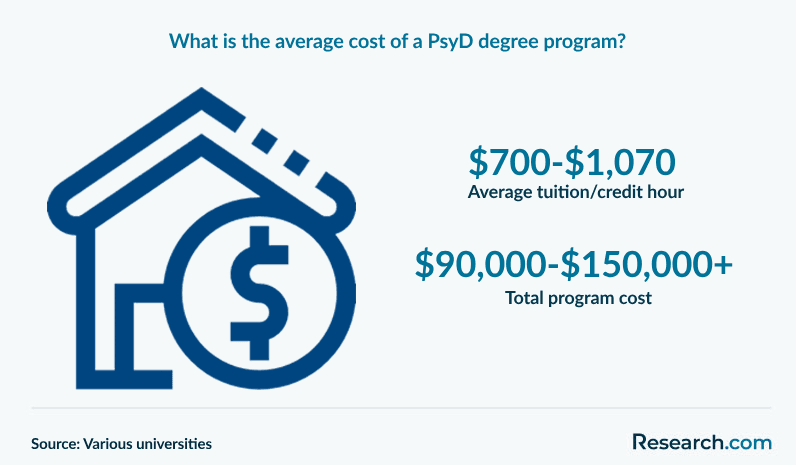
How long does it take to complete the fastest PsyD degree program?
Some PsyD programs are structured for completion in as little as three years, especially when students enter with prior graduate coursework or when the program is designed for post-master’s learners. These programs compress coursework, practicum preparation, and doctoral milestones into a shorter timeline, but they still require serious planning because clinical training and licensure preparation cannot be rushed without consequences.
Most PsyD programs take four to six years. The exact timeline depends on the program design, the student’s educational background, internship placement timing, dissertation progress, and state licensing requirements.
| Factor | How it can affect completion time | What applicants should ask |
| Program structure | Accelerated formats often use year-round enrollment, heavier course loads, and fewer long breaks. | Is the schedule realistic if I work, care for family, or need a practicum placement? |
| Prior education | A master’s degree may reduce required coursework if the program accepts transfer or advanced standing credits. | How many credits can transfer, and will they shorten the actual graduation date? |
| Career use of prior degree | Applicants with a master’s may already qualify for related roles before entering a PsyD. If you are comparing options, review what you can do with a master’s in psychology before committing to another doctoral program. | Do I need a PsyD for my goal, or would a master’s-level license or role be enough? |
| Clinical training | Practicum, supervised hours, and internship requirements can extend the timeline even when coursework is accelerated. | Who arranges placements, and are there enough approved sites near me? |
| Dissertation or doctoral project | Students who delay topic approval, data collection, writing, or defense may need extra terms. | What percentage of students finish the dissertation or project on schedule? |
How does the fastest online PsyD degree program compare to an on-campus program?
Accelerated psychology programs can be offered online, on campus, or in hybrid formats. The better choice depends on your location, learning style, clinical placement access, state licensure plans, and ability to manage an intensive doctoral workload.
| Comparison point | Accelerated online PsyD | On-campus PsyD | Best fit |
| Course delivery | Often uses asynchronous or scheduled online coursework, shorter terms, and year-round pacing. | Typically uses in-person classes, lab work, seminars, and campus-based professional development. | Online may fit working adults; campus may fit students who want structured daily interaction. |
| Flexibility | Students may access materials outside standard class hours, but deadlines remain demanding. | Class times and clinical meetings are less flexible but may provide stronger routine and peer support. | Online works only if you are highly organized and self-directed. |
| Clinical placements | Students may need to secure approved practicum sites locally or travel for residencies. | Programs may have established relationships with nearby hospitals, clinics, schools, and agencies. | Campus programs can be easier if you want built-in placement networks. |
| Professional networking | Networking may occur through virtual supervision, residencies, online cohorts, and local placements. | Students often build relationships through faculty labs, clinics, campus events, and regional employers. | Campus can be stronger for students who rely on face-to-face mentoring. |
| Accreditation and licensure | Not every online PsyD is accredited by the American Psychological Association (APA), and state rules may vary. | Many traditional programs are designed around state licensure expectations, but students still need to verify requirements. | Choose based on accreditation, supervised hours, internship eligibility, and the state where you plan to practice. |
What are the financial aid options for students enrolling in the fastest PsyD degree program?
Financial aid options for accelerated PsyD students can include assistantships, scholarships, fellowships, institutional aid, and loans. However, funding may be more limited in condensed or professional doctoral programs than in research-heavy PhD programs, so applicants should compare total cost, debt risk, and paid clinical opportunities before enrolling.
- Teaching assistantships: About 34.2% of psychology doctorate students receive support through teaching assistantships.
- Fellowships, scholarships, and dissertation grants: 24.6% of doctorate recipients receive funding from these sources.
- Research assistantships and traineeships: 35.0% of doctorate recipients are primarily funded through research assistantships or traineeships.
- Institutional aid: Schools may offer grants, tuition discounts, or program-level awards. For example, 66.4% of Asian professional doctoral students reported receiving institutional aid.
- Federal and private loans: Loans may be necessary for some students, but they should be used carefully. On average, research doctorate holders graduate with $84,540 in student debt.
Funding differs widely by school, and up to 85% of doctoral students receive some form of assistance. Before committing, ask each program whether aid continues during internship, whether assistantships are guaranteed, and how many students graduate with debt. The chart below shows average doctorate debt by race.
What are the prerequisites for enrolling in the fastest PsyD degree program?
Fast PsyD programs are selective because students must be ready for doctoral-level coursework and early clinical training. Requirements vary, but most applicants should expect to document academic preparation, psychology coursework, clinical exposure, references, and a clear professional goal.
Typical admissions checklist
| Requirement | Common expectation | Why it matters |
| Educational background | A bachelor’s degree from an accredited institution with a minimum grade point average (GPA) of 3.0; some programs require a master’s degree in psychology or a related field; bachelor’s-level applicants may need a psychology GPA of 3.5 or higher. | Accelerated doctoral work assumes strong academic readiness and a foundation in psychology. |
| Psychology coursework | At least 18 credit hours in psychology, commonly including General Psychology, Abnormal Psychology, Statistics, Research Methods or Design, Biopsychology (recommended), and Developmental Psychology. | These courses prepare students for assessment, diagnosis, research literacy, and clinical theory. |
| GRE scores | Some programs request graduate record examination (GRE) scores and may look for a combined verbal and quantitative score above 300. The Psychology Subject GRE may be required for applicants without a psychology background. | Standardized testing may help programs evaluate academic preparation, although requirements vary. |
| Clinical experience | Volunteer or work experience in mental health settings is strongly recommended. Examples include crisis line work, case management, assessments, or therapy experience. | Programs want evidence that applicants understand client-facing work and can handle clinical responsibility. |
| Letters of recommendation | Most programs request three letters from academic or professional references, and at least one should come from a doctoral-level psychologist. | References help confirm academic ability, maturity, ethics, and readiness for supervised practice. |
| Personal statement and resume | An autobiographical statement explaining personal background, professional experiences, and career goals, plus a current resume or CV. | The application should show fit with the program’s training model and patient populations. |
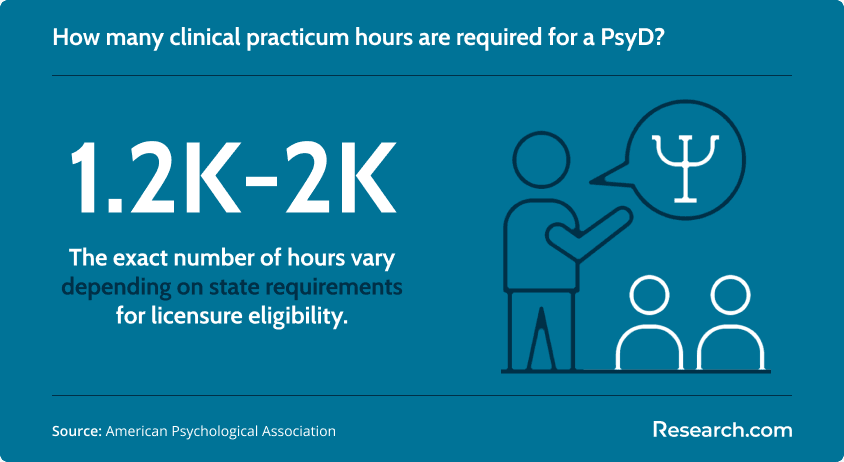
What courses are typically in the fastest PsyD degree program?
Accelerated PsyD programs usually cover the same core areas as traditional professional psychology programs, but the pacing is tighter. Students should expect courses that combine scientific foundations, clinical assessment, intervention, ethics, diversity, and supervised practice preparation.
- Psychopathology: Students study the classification, diagnosis, and conceptualization of mental disorders. Coursework may include DSM-5 and ICD-10 diagnostic criteria, symptom patterns, etiology, and treatment considerations.
- Ethics and Professional Standards in Psychology: This course examines confidentiality, informed consent, documentation, boundaries, legal obligations, mandated reporting, supervision, and professional conduct in mental health care.
- Research Methods and Statistics: Students learn research design, data analysis, statistical interpretation, and the use of quantitative and qualitative methods in applied psychological science.
- Assessment and diagnosis: Programs commonly include training in psychological testing, clinical interviewing, case formulation, and culturally responsive assessment.
- Evidence-based intervention: Students study treatment models, therapy planning, outcome measurement, and adaptation of interventions for different populations.
- Practicum seminar or supervision: These courses connect classroom learning with supervised clinical work and help students develop professional judgment.
What types of specializations are available in the fastest PsyD degree program?
Fast-track degrees in psychology may offer concentrations or electives that help students prepare for a specific client group, setting, or treatment area. Specializations should be chosen based on licensure goals, available practicum sites, faculty expertise, and the kind of work you want after graduation.
- Trauma Psychology: Focuses on assessment and treatment for people affected by adverse childhood experiences, historical trauma, racial trauma, and other traumatic events.
- Neuropsychology: Builds knowledge in neuropsychological assessment and neurorehabilitation for students interested in brain-behavior relationships.
- Integrated Healthcare: Prepares students to collaborate with medical professionals in settings that treat acute and chronic illness. Students interested in health systems leadership may also compare related options such as the cheapest online healthcare administration degree.
- Forensic Psychology: Applies psychological principles to courts, correctional settings, legal evaluations, family court, and social service systems.
- Child and Adolescent Psychology: Emphasizes developmental assessment, therapy, school collaboration, and treatment for children and teens.
- Military Psychology: Addresses the needs of service members, veterans, and military families, including trauma, post-traumatic stress disorder (PTSD), and resilience.
- Health Psychology: Studies the relationship between psychological processes, physical health, illness behavior, and treatment adherence.
- Sports Psychology: Applies psychological strategies to performance, motivation, recovery, and athlete well-being.
Do accelerated PsyD programs maintain clinical training quality?
Accelerated PsyD programs can maintain strong clinical training when they protect supervision quality, practicum sequencing, faculty mentorship, and internship readiness. The risk is not acceleration by itself; the risk is a compressed schedule that leaves too little time for reflection, feedback, case conceptualization, or skill development. Applicants should review practicum structures, supervisor qualifications, internship match support, licensure outcomes, and student feedback before choosing a shorter format. For more focused comparisons, review fast track PsyD programs.
How to choose the best PsyD degree program
The best PsyD program is the one that fits your licensure goal, clinical interests, finances, learning style, and geographic constraints. A faster program is valuable only if it still prepares you for competent practice and state requirements.
Key factors to compare before applying
| Factor | What to verify | Red flag |
| Accreditation | Confirm APA accreditation status and whether the program’s accreditation applies to your intended format or campus. | The school is vague about accreditation, candidacy, or licensure eligibility. |
| Licensure alignment | Ask whether the curriculum, practicum hours, internship model, and supervised experience meet requirements in your target state. | The program tells students to “check later” after enrollment. |
| Clinical training | Review when practicum begins, how placements are assigned, what populations are served, and who supervises students. | Students must find their own placements with little program support. |
| Faculty fit | Look for faculty with clinical expertise, research interests, and professional experience related to your goals. | Few faculty members match your intended specialization. |
| Cost and funding | Compare tuition, fees, residency costs, internship expenses, loan needs, and whether aid is renewable. | The advertised tuition excludes major required costs. |
| Completion and outcomes | Ask about graduation timelines, internship placement, licensure exam preparation, and graduate employment settings. | The program cannot provide clear outcome information. |
Questions to ask admissions advisors
- Is the program APA-accredited, and does that status apply to the specific campus or online format I am considering?
- How many students complete the program within the advertised accelerated timeline?
- What happens if I need more time for dissertation work, practicum hours, or internship placement?
- Who secures practicum sites, and what support exists for online or out-of-state students?
- Does the program meet educational requirements for licensure in the state where I plan to practice?
- What are the total estimated costs, including fees, residencies, travel, health insurance, books, and internship expenses?
- Are assistantships, fellowships, or scholarships guaranteed, competitive, or available only after the first year?
How can complementary certifications elevate your clinical practice?
Targeted credentials can help PsyD graduates expand their service areas, especially when a certification aligns with their client population or clinical setting. For example, students interested in behavior analysis may compare BCBA certification online options to understand how behavior-focused training can complement doctoral psychology preparation. Certifications should not distract from licensure requirements, but they can support specialized practice, interdisciplinary teamwork, and leadership opportunities when chosen strategically.
What career paths are available for graduates of the fastest PsyD degree program?
PsyD graduates commonly pursue practice-oriented roles in mental health care, education, health systems, assessment, consulting, and specialized clinical services. Career eligibility depends on state licensure, supervised experience, specialization, and employer requirements rather than program speed alone.
| Career path | Typical work focus | Common settings |
| Clinical Psychologist | Provides therapy, psychological assessment, diagnosis, and treatment planning. | Clinics, hospitals, private practices, mental health agencies. |
| Marriage and Family Therapist | Works with couples and families on relational patterns, conflict, and mental health concerns. | Community agencies, private practices, family service centers. |
| Child Psychologist | Assesses and treats children and adolescents using developmentally appropriate methods. | Schools, pediatric clinics, hospitals, youth programs. |
| Forensic Psychologist | Applies psychological expertise in legal and criminal justice contexts. | Courts, prisons, government agencies, forensic evaluation centers. |
| Sports Psychologist | Supports athlete performance, mental health, motivation, and recovery. | Sports organizations, clinics, universities, private practice. |
| Geropsychologist | Specializes in mental health care for older adults. | Senior living communities, hospitals, outpatient clinics. |
| Organizational Psychologist | Applies psychological principles to employee assessment and workplace effectiveness. | Businesses, consulting firms, human resources departments. |
| Consultant | Advises organizations on behavioral health, training, assessment, or program design. | Healthcare organizations, schools, businesses, nonprofits. |
| Clinical Psychology Professor | Teaches psychology students and mentors future practitioners. | Colleges, universities, graduate schools. |
| Researcher | Conducts studies that contribute to clinical psychology knowledge and practice. | Universities, research institutes, healthcare systems. |
| Community Mental Health Psychologist | Provides services for diverse populations, including low-income and underserved communities. | Community health centers, nonprofit clinics, public agencies. |
| Military Psychologist | Serves military personnel, veterans, and families. | Military health systems, veterans’ services, government agencies. |
| Health Psychologist | Helps patients manage illness, injury, health behavior, and emotional adjustment. | Hospitals, medical clinics, rehabilitation centers. |
| Neuropsychologist | Focuses on the relationship between brain function and behavior. | Hospitals, rehabilitation centers, specialty clinics. |
The chart below shows the top five best-paying related psychologists Psyd jobs in the U.S.
What is the job market for graduates with the fastest PsyD degree program?
The labor market for psychologists is supported by continued demand for mental health services, assessment, school-based support, and clinical care. According to the Bureau of Labor Statistics (BLS), employment for psychologists is projected to grow 7% from 2023 to 2033, faster than the average for all occupations. The BLS also projects approximately 13,000 job openings for psychologists each year over the decade, with openings arising from growth as well as workers retiring, changing occupations, or leaving the labor force.
For PsyD graduates, the strongest opportunities often depend on licensure status, supervised clinical experience, specialization, and willingness to work in healthcare, education, community mental health, or private practice. The chart below shows the percent change in employment for psychologists from 2023 to 2033.
What is the long-term return on investment for accelerated PsyD programs?
The ROI of an accelerated PsyD program depends on more than finishing faster. Students should compare tuition, fees, aid, lost income while studying, debt, licensure timeline, internship placement, and expected career setting. A shorter program may help some graduates enter the workforce sooner, but high borrowing or weak clinical placement support can reduce the financial benefit.
Before enrolling, compare the PsyD against lower-cost or earlier-entry psychology pathways. For example, students focused on youth services may want to review careers in child psychology with a bachelor's degree to understand what is possible before committing to doctoral debt. Students should also ask programs for employment outcomes, licensure preparation support, and typical completion timelines rather than relying only on advertised program length.
Can the fastest PsyD degree program fully prepare you for state licensure?
A fast PsyD program can support licensure preparation if it includes the coursework, practicum, internship, supervised experience, and professional training required by the state where you plan to practice. However, licensure is controlled by state boards, not by the school’s marketing materials. Requirements can differ by jurisdiction, especially for supervised hours, internship standards, exams, background checks, and postdoctoral experience.
Students should contact both the program and the relevant state licensing board before enrollment. Ask for written confirmation of how the curriculum maps to state requirements. If you are still deciding between roles, reviewing broader psychology career options can help clarify whether a PsyD is necessary for your target job.
How do industry partnerships enhance practical training in accelerated PsyD programs?
Strong partnerships with clinics, hospitals, schools, community agencies, research centers, and specialty practices can make an accelerated PsyD program more practical. These relationships may give students access to diverse client populations, supervised clinical experience, interdisciplinary teams, and mentorship from practicing professionals. Partnerships matter even more in shorter programs because students have less time to recover from delayed placements or weak supervision.
Programs that connect psychology training with related disciplines can also broaden clinical perspective. For example, students interested in behavioral intervention may compare masters in ABA programs to understand how applied behavior analysis training can complement psychological assessment and treatment planning.
What graduates say about accelerated PsyD programs
- Jess: "Completing an accelerated online PsyD gave me the flexibility to keep working while moving through doctoral training more quickly. The format was demanding, but the schedule helped me stay on track and reach licensure in my community."
- Daniel: "I did not think a PsyD would be possible while I had a full-time job. The fast-track online structure gave me clear deadlines, strong faculty guidance, and enough flexibility to keep progressing toward clinical practice."
- Melissa: "The accelerated PsyD format helped me build advanced clinical skills, connect with professors, and finish sooner than I expected. Online learning made the process more manageable, and I now work in private practice."
What are the potential challenges of enrolling in an accelerated PsyD program?
Accelerated PsyD programs can be effective, but they are not the easiest option. Students face compressed deadlines, heavy reading loads, clinical scheduling pressure, dissertation milestones, and limited recovery time between terms. The pace can be especially challenging for students who work full time, have caregiving responsibilities, or need to arrange local practicum placements.
| Common mistake | Why it can hurt you | Better approach |
| Choosing the fastest program without checking accreditation | Licensure eligibility and internship competitiveness may be affected. | Verify APA status and state board acceptance before applying. |
| Looking only at tuition | Fees, travel, residencies, books, insurance, and lost income can change total cost. | Request a full cost-of-attendance estimate. |
| Assuming online means flexible clinical training | Clinical hours must still occur in approved settings and may be hard to secure locally. | Ask who finds placements and what happens if sites are unavailable. |
| Underestimating dissertation time | Doctoral projects often delay graduation when students lack support or topic clarity. | Ask about dissertation advising, timelines, and completion data. |
| Ignoring cheaper alternatives | A PsyD may not be necessary for every psychology-related career goal. | Compare options such as the cheapest PsyD programs and master’s-level pathways before borrowing heavily. |
How do accelerated PsyD programs differ from PhD programs?
Accelerated PsyD programs are generally built around clinical practice, supervised experience, assessment, and intervention. PhD programs in psychology usually place more emphasis on research design, scholarship, teaching, and original contribution to the field. The right choice depends on whether you want to spend most of your career providing clinical services, conducting research, teaching, or combining these roles.
| Feature | Accelerated PsyD | Psychology PhD |
| Primary emphasis | Practice-oriented clinical training | Research, scholarship, and academic preparation |
| Typical career direction | Clinical practice, assessment, healthcare, schools, community mental health | Research, academia, clinical practice, policy, advanced scholarship |
| Training pace | Condensed timelines may be available | Often longer because of intensive research requirements |
| Funding considerations | Professional doctoral programs may require more out-of-pocket planning | Research-focused programs may offer different funding structures |
If you are comparing doctoral psychology routes, review PhD psychology online options alongside PsyD programs to understand differences in research expectations, delivery format, and career alignment.
What are the ethical and legal considerations in accelerated PsyD programs?
Accelerated PsyD students must meet the same ethical and legal expectations as students in traditional programs. Speed does not reduce responsibility for confidentiality, informed consent, proper documentation, client safety, cultural competence, boundaries, mandated reporting, and supervised practice. In fact, a compressed timeline can make ethical supervision even more important because students move quickly from coursework into applied settings.
Applicants should ask how each program teaches ethics, handles clinical documentation, monitors supervisory accountability, and responds to placement concerns. Students who want a broader view of mental health licensure and professional standards may also compare related graduate pathways such as online MFT programs accredited.
What support resources can help you thrive in an accelerated PsyD program?
Support services are not optional in an accelerated doctoral program. Students need advising, clinical placement guidance, writing support, mental health resources, library access, peer mentoring, technology help, and career services. The faster the program, the more important it is to have clear systems for solving problems quickly.
- Academic advising: Helps students sequence coursework, track milestones, and avoid delays.
- Clinical placement support: Assists with practicum approvals, site matching, documentation, and supervisor communication.
- Dissertation or doctoral project coaching: Keeps students moving through proposal, data collection, writing, and defense.
- Mental health and wellness services: Supports students managing stress, burnout risk, and intensive clinical exposure.
- Career and licensure advising: Helps students prepare for internship, supervised experience, licensure exams, and job applications.
- Peer mentoring: Connects newer students with advanced students who understand the program pace.
If you are still building your psychology foundation before applying to a PsyD, a lower-cost undergraduate option such as a cheap online bachelor's in psychology may be a practical first step.
How can complementary certifications enhance career outcomes?
Complementary credentials can strengthen a PsyD graduate’s profile when they match a clear practice goal. Training in behavior analysis, trauma treatment, assessment, health psychology, or family systems can help clinicians serve more specialized populations and collaborate with other professionals. Students considering behavior-focused work can compare masters in ABA programs while evaluating how additional credentials fit with PsyD coursework, supervised hours, and licensure obligations.
References
- Bureau of Labor Statistics, U.S. Department of Labor. (2025, January 11). Occupational outlook handbook: Psychologists. U.S. Bureau of Labor Statistics. https://www.bls.gov/ooh/life-physical-and-social-science/psychologists.htm
- Hanson, M. (2024, November 25). Average cost of a doctorate degree. EducationData.org. https://educationdata.org/average-cost-of-a-doctorate-degree
- ZipRecruiter. (2025, January 24). Psychologist PsyD salary. ZipRecruiter. https://www.ziprecruiter.com/Salaries/Psychologist-Psyd-Salary
Key Insights
- The fastest PsyD programs can shorten doctoral study, but clinical training, dissertation work, internship placement, and state licensure requirements still determine the real timeline.
- APA accreditation and state licensure alignment should be checked before cost, convenience, or speed. A program that does not support your target license may not be worth the time saved.
- Online accelerated PsyD programs can work well for disciplined students, but practicum placement support is critical. Ask who secures sites and whether approved supervisors are available where you live.
- Financial aid varies widely. Compare total cost, debt, assistantships, fellowships, institutional aid, and whether funding continues through internship or later doctoral stages.
- A PsyD is best for students who want practice-focused doctoral psychology training. If your goal is research-intensive academia, a PhD may fit better; if your goal is an entry-level helping role, a master’s or bachelor’s-level pathway may be enough.
- The strongest accelerated PsyD choice is not simply the shortest one. It is the program that combines reasonable speed with rigorous supervision, strong clinical placements, transparent outcomes, and realistic licensure preparation.
Other Things You Should Know About the Fastest PsyD Degree Programs
Prerequisites for the fastest PsyD programs in 2027 typically include a bachelor's degree in psychology or a related field, minimum GPA requirements, and completed coursework in specific foundational subjects such as statistics and research methods. Some programs may also require relevant work experience or GRE scores.
Yes. Most PsyD programs require a doctoral project, dissertation, or capstone before graduation, even in accelerated formats. APA-accredited programs also require substantial supervised clinical training, usually at least 1,500 internship hours, along with coursework in assessment, intervention, and ethics.


