
2027 Best Online Doctorate in Behavioral Health Leadership: PhD, PsyD, DBH Programs

Co-Founder and Chief Data Scientist
Choosing an online doctorate in behavioral health leadership is not just a question of convenience. It is a career decision about whether you want to lead mental health programs, improve care delivery, influence policy, manage interdisciplinary teams, or move into research and higher education. The stakes are higher now because behavioral health organizations are under pressure to expand access, manage workforce shortages, integrate technology, and serve increasingly complex patient populations.
This guide is for clinicians, counselors, social workers, healthcare administrators, public health professionals, and behavioral health specialists who are considering a doctoral-level leadership credential. You will learn what these programs cover, how long they take, what they may cost, how online study compares with campus-based study, what careers may be available, and how to evaluate whether the investment fits your goals.
Key Insights
- An online doctorate in behavioral health leadership is best suited for experienced professionals who want senior leadership, research, policy, teaching, consulting, or systems-improvement roles.
- Most programs are not designed as entry-level licensure pathways. Always verify state licensing requirements if your goal is clinical practice.
- Completion time commonly depends on enrollment pace, required credits, and dissertation or capstone progress; many programs take 3 to 4 years, but listed program timelines vary.
- Total cost can range from $20,000 to $60,000 or more, so compare full program cost rather than tuition alone.
- Accreditation, faculty fit, curriculum relevance, applied learning, student support, and career outcomes are more important than convenience alone.
- Behavioral health leaders increasingly need skills in technology, health informatics, workforce planning, equity, compliance, integrated care, and data-driven quality improvement.
- The strongest program choice is the one that connects clearly to your next career move and gives you practical tools to improve behavioral health systems.
Quick Answer: Is an Online Doctorate in Behavioral Health Leadership a Good Fit?
An online doctorate in behavioral health leadership can be a strong option if you already have graduate-level training or professional experience in behavioral health, healthcare, counseling, psychology, social work, public health, or administration and want to move into senior leadership, applied research, consulting, teaching, or systems-level program development. It is usually less appropriate for students whose main goal is initial clinical licensure, because many behavioral health leadership doctorates are designed for advanced leadership rather than entry-level practice preparation.
The best program for you depends on accreditation, curriculum, total cost, dissertation or capstone requirements, faculty expertise, specialization options, flexibility, and whether the degree aligns with your target role. Online delivery can make doctoral study more accessible, but it still requires sustained time management, research ability, and professional focus.
What are the benefits of getting an online Doctorate in Behavioral Health Leadership?
- Leadership mobility: Graduates may pursue senior roles in behavioral health systems, integrated care organizations, community agencies, hospitals, universities, consulting firms, or government programs.
- Systems-level impact: Doctoral training can help professionals design better programs, evaluate outcomes, lead quality improvement initiatives, and influence behavioral health policy.
- Flexible access: Online study can allow working professionals to continue employment while completing coursework, research, and applied projects.
- Broader professional network: Many online cohorts include clinicians, administrators, educators, and public health professionals from different regions and practice settings.
- Potential career advancement: A doctorate may strengthen qualifications for executive, academic, research, and consulting roles, although salary outcomes vary by employer, location, experience, and role.
What can I expect from an Online Doctorate in Behavioral Health Leadership?
An online doctorate in behavioral health leadership is an advanced degree focused on leading behavioral health organizations, programs, teams, and service systems. Students typically study healthcare leadership, behavioral health policy, research methods, ethics, program evaluation, integrated care, quality improvement, finance, organizational change, and technology-enabled care.
Most programs are designed for professionals who want to solve operational and strategic problems in mental health and substance use services. Depending on the degree type, the program may emphasize applied leadership, clinical systems, research, teaching, or psychology-based organizational leadership.
Where can I work with an online Doctorate in Behavioral Health Leadership?
Graduates may work in settings that need leaders who understand behavioral health delivery, care coordination, compliance, quality improvement, and patient-centered systems. Common employers include hospitals, community mental health centers, outpatient care centers, integrated primary care practices, nonprofit agencies, public health departments, correctional health programs, academic institutions, and consulting organizations.
Some graduates also move into roles with insurers, pharmaceutical companies, healthcare technology firms, policy organizations, and research groups. In these settings, behavioral health expertise can support program design, utilization management, workforce planning, digital health strategy, and population health initiatives.
How much can I make with an online Doctorate in Behavioral Health Leadership?
Earnings vary widely because this degree can lead to different types of work, including executive leadership, program management, teaching, consulting, public health administration, research, and policy analysis. Location, employer type, prior experience, licensure, specialization, and management responsibility all affect compensation.
Graduates who enter senior leadership roles such as chief behavioral health officer, director of behavioral health services, or executive director of a mental health organization may have stronger earning potential than those in entry-level or non-management roles. However, a doctorate does not guarantee a specific salary, promotion, or job title.
- How long does an online Doctorate in Behavioral Health Leadership take?
- Online vs. on-campus behavioral health leadership doctorates
- Typical cost of an online Doctorate in Behavioral Health Leadership
- Financial aid options for doctoral students
- Admissions requirements and prerequisites
- Common courses in behavioral health leadership doctorates
- Specializations and focus areas
- How to choose the right online doctorate program
- Alternative and complementary education paths
- Accreditation and quality standards
- Is the investment worthwhile?
- How programs build practical leadership skills
- Student support and professional development
- Applied behavior analysis in leadership training
- Career paths for graduates
- Networking and mentorship in career advancement
- Job market outlook and demand factors
- Diversity, equity, and inclusion in doctoral programs
- Ethical considerations for behavioral health leaders
- Technology integration in mental health care
- Core leadership skills
- Specialized accreditation and leadership outcomes
- Interdisciplinary collaboration
- Complementary certifications
- Emerging research trends
- Accelerated healthcare administration and leadership
- Regulatory and legal challenges
- Academic-industry partnerships
- Health informatics in behavioral health leadership
- Using behavioral health certifications with a doctorate
2027 Best Online Doctorate in Behavioral Health Leadership
How do we rank schools?
A doctorate requires a major investment of time, money, and professional energy. Research.com evaluates behavioral health leadership doctorate programs to help prospective students compare options using available education data and program-level information.
This ranking uses a transparent methodology and draws on sources such as the Integrated Postsecondary Education Data System (IPEDS), Peterson's databases including the Distance Learning Licensed Data Set, and the College Scorecard from the National Center for Education Statistics. These sources help compare schools across factors such as program structure, cost, institutional data, and distance-learning availability.
1. Arizona State University: Doctor of Behavioral Health-Clinical
The online Doctor of Behavioral Health with clinical concentration at Arizona State University is designed for professionals who want advanced preparation for integrated primary care environments. The clinical emphasis includes coursework in evidence-based behavioral interventions and supports students seeking leadership roles in modern integrated care settings. The program is delivered through ASU Online and awards the DBH degree with a clinical specialization.
- Program Length: 4 to 6 years
- Tracks/concentrations: Behavioral Health with Clinical Concentration
- Cost per Credit: $6956 (tuition per semester)
- Required Credits to Graduate: 60
- Accreditation: Higher Learning Commission
2. Cummings Graduate Institute: Doctor of Behavioral Health
The Doctor of Behavioral Health at Cummings Graduate Institute focuses on integrated behavioral healthcare. Students learn to support patient-centered care, work with interdisciplinary teams, apply evidence-based practice, use quality improvement methods, and incorporate informatics in primary care and medical settings. The program is built for healthcare professionals who want doctoral-level expertise in integrated care systems.
- Program Length: 3 to 5 years
- Tracks/concentrations: Integrated Behavioral Healthcare (IBH) and Trauma Informed Care (TIC)
- Cost per Credit: $400
- Required Credits to Graduate: 60
- Accreditation: Distance Education Accrediting Commission (DEAC)
3. Freed-Hardeman University: Doctor of Behavioral Health
The Doctor of Behavioral Health at Freed-Hardeman University prepares current and future healthcare providers to operate in a changing healthcare system. The curriculum includes live interaction with faculty and classmates, clinical rotations, streaming video consultations with field experts, and a capstone research project connected to the student’s professional setting or goals. The program is positioned as an applied alternative to more research-heavy doctoral study.
- Program Length: 3 to 4 years
- Tracks/concentrations: Behavioral Health
- Cost per Credit: $665
- Required Credits to Graduate: 60
- Accreditation: The Council for Accreditation of Counseling and Related Educational Programs (CACREP)
4. University of Colorado Denver: PhD in Health & Behavioral Sciences
The PhD in Health and Behavioral Sciences at the University of Colorado Denver prepares students for interdisciplinary work in population health. The program draws from social, behavioral, and health sciences to examine health behaviors, healthcare systems, and population-level outcomes. It is especially relevant for students seeking research, academic, government, or professional roles that require independent inquiry, strong writing, advanced methods, and theory-based analysis.
- Program Length: 4 to 6 years
- Tracks/concentrations: Health & Behavioral Sciences
- Cost per Credit: $920
- Required Credits to Graduate: 62
- Accreditation: Higher Learning Commission
5. University of Maryland School of Public Health: PhD in Behavioral and Community Health
The University of Maryland's PhD in Behavioral and Community Health trains professionals to understand community health needs and produce research that can inform public health programs and policy. Students develop research skills for contributing to behavioral and community health scholarship. The program is suited for professionals already working in community health as well as those seeking a transition into public health research and leadership.
- Program Length: 5 to 9 years
- Tracks/concentrations: Behavioral and Community Health
- Cost per Credit: $996
- Required Credits to Graduate: 45
- Accreditation: Council on Education for Public Health (CEPH)
6. Liberty University: PhD in Psychology – Behavioral Health Leadership
The PhD in Psychology - Behavioral Health Leadership at Liberty University is built for students interested in administrative and managerial work in mental and behavioral health organizations. The program combines advanced research methods with leadership training and uses a research-focused psychology framework for examining human behavior and organizational challenges.
- Program Length: 3 to 5 years
- Tracks/concentrations: Behavioral Health Leadership
- Cost per Credit: $595
- Required Credits to Graduate: 60
- Accreditation: Southern Association of Colleges and Schools Commission on Colleges (SACSCOC)
7. Walden University: PsyD in Behavioral Health Leadership
The non-licensure PsyD in Behavioral Health Leadership at Walden University is intended for professionals who want to lead and improve behavioral health and mental health service delivery. The program emphasizes interdisciplinary knowledge, management, financial operations, procurement, training, entrepreneurship, program assessment, and practical leadership skills for complex healthcare environments.
- Program Length: 3 to 8 years
- Tracks/concentrations: Behavioral Health Leadership
- Cost per Credit: $620
- Required Credits to Graduate: 58
- Accreditation: Higher Learning Commission
Here’s What Graduates Have to Say About Their Online Doctorate in Behavioral Health Leadership
-
: "
The online doctorate changed my career direction. I could keep working while completing advanced coursework, and the leadership training helped me grow into a more strategic healthcare executive. Samantha
"
-
: "
I expected convenience, but I was surprised by the depth of the online learning experience. The faculty engagement and interactive platform helped me apply doctoral concepts to behavioral health needs in my community. Duvall
"
-
: "
The online format connected me with professionals from many backgrounds. The leadership focus, peer discussions, and faculty support helped me build confidence for career advancement. Emily
"
Key Findings
- There were only 14 child and adolescent psychiatrists per 100,000 children in the U.S. in 2022.
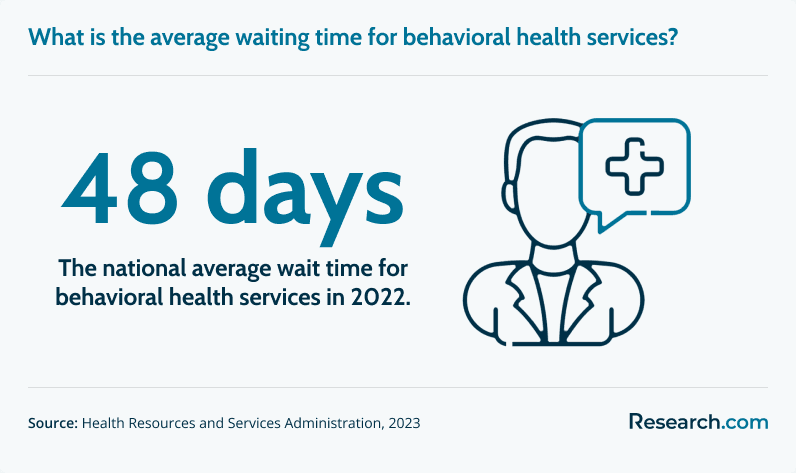
- 6 in 10 psychologists did not accept new patients in 2022, and the national average wait time for behavioral health services was 48 days.
- In 2022, approximately 59 million or 23% of U.S. adults had a mental illness and nearly half of them did not receive treatment.
- The treatment rate for major depressive episodes among adolescents increased from 41% in 2021 to 57% in 2022.
- Among behavioral health professionals, 65% reported increased client caseload in 2023.
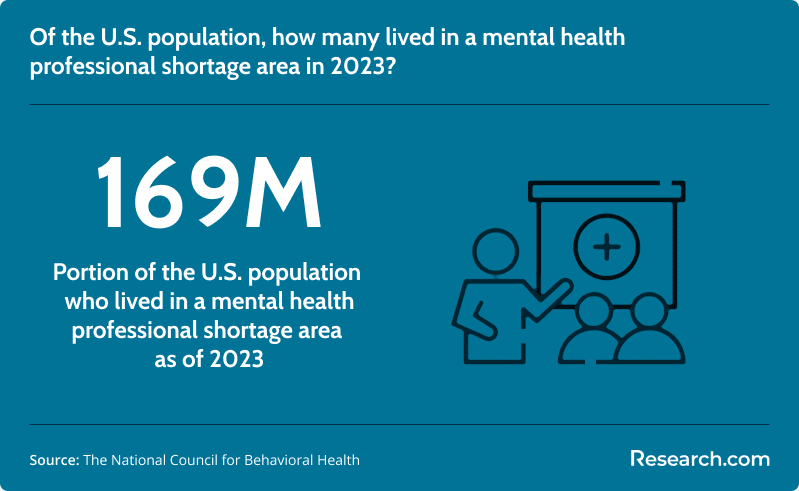
- As of 2023, more than 169 million of the U.S. population lived in a mental health professional shortage area.
How long does it take to complete an online Doctorate in Behavioral Health Leadership?
Most online doctorates in behavioral health leadership take 3 to 4 years, but completion time varies by program design, credit requirements, enrollment pace, transfer credit rules, and the scope of the dissertation or capstone. Some programs in the ranking list expected timelines as short as 3 to 5 years, while others may extend to 5 to 9 years.
The time commitment matters because many students are already employed in healthcare or behavioral health roles. As of 2023, more than 169 million of the U.S. population lived in a mental health professional shortage area, so many doctoral students must balance academic work with demanding professional responsibilities.
| Factor | How it affects completion time | What to ask before enrolling |
| Enrollment pace | Full-time enrollment may shorten the timeline, while part-time study can make the program more manageable for working adults. | Can I switch between full-time and part-time study? |
| Credits required | Programs requiring 45, 58, 60, or 62 credits can have different timelines even when course formats are similar. | How many total credits are required after transfer review? |
| Dissertation or capstone | Research and applied projects often determine how quickly students finish the final stage. | What percentage of students complete the dissertation or capstone on time? |
| Residency or practicum requirements | Some programs may require synchronous sessions, clinical rotations, fieldwork, or applied projects. | Are any in-person, live, or site-based activities required? |
How does an online Doctorate in Behavioral Health Leadership compare to an on-campus program?
Online and campus-based behavioral health leadership doctorates can lead to similar academic outcomes, but they fit different student needs. The right format depends on your schedule, location, learning preferences, networking goals, and whether you need access to campus-based research or clinical resources.
| Format | Best for | Advantages | Trade-offs |
| Online doctorate | Working professionals, caregivers, rural students, and those who cannot relocate | Greater schedule flexibility, broader geographic access, fewer relocation costs, and the ability to apply coursework at work | Requires self-direction, strong time management, comfort with online tools, and intentional networking |
| On-campus doctorate | Students who want immersive study, in-person faculty access, and campus research resources | Face-to-face collaboration, easier access to campus facilities, and more informal networking | Less flexible scheduling, possible relocation, commuting costs, and higher living expenses |
Online delivery is not automatically easier. Doctoral-level reading, research, writing, and applied leadership work can be demanding in any format. Before choosing, review synchronous class expectations, technology requirements, student support, faculty availability, and dissertation mentoring structure.
What is the average cost of an online Doctorate in Behavioral Health Leadership program?
The total cost of an online doctorate in behavioral health leadership can range from $20,000 to $60,000 or more. Your final cost depends on tuition, required credits, program fees, books, technology fees, residency costs, travel requirements, and how long you remain enrolled.
When comparing programs, do not look only at the advertised tuition rate. Similar to evaluating the master's in psychology online cost, you need to calculate the full price of completion, not just one course or one semester.
| Cost factor | Why it matters | How to compare programs |
| Tuition model | Programs may charge by credit, term, semester, or flat-rate enrollment. | Ask for a full program cost estimate based on your expected enrollment pace. |
| Required credits | A lower per-credit price may still cost more if the program requires more credits. | Multiply tuition by required credits and include fees. |
| Fees and materials | Technology, library, graduation, dissertation, assessment, and course material fees can add up. | Request a written list of mandatory fees. |
| Residencies or clinical activities | Even online programs may require travel, lodging, site supervision, or practicum-related costs. | Confirm whether any in-person requirements exist. |
| Time to completion | Extra semesters may increase tuition and delay career benefits. | Ask about average completion time and dissertation support. |
Cost also needs to be weighed against need in the field. Among behavioral health workers, 83% worry that workforce shortages in the mental health and substance use industry will negatively impact society as a whole. That does not mean every doctorate is financially worthwhile, but it underscores why leadership training may be valuable for professionals positioned to improve capacity and service delivery.
What are the financial aid options for students enrolling in an online Doctorate in Behavioral Health Leadership program?
Doctoral students should build a funding plan before enrolling. Among behavioral health professionals, 65% reported increased client caseload in 2023, so many prospective students are balancing heavy work demands with the financial realities of graduate school.
Common funding options
- Federal Student Loans: Graduate students commonly use federal loans after completing the Free Application for Federal Student Aid.
- Federal Grants: Need-based grants may help reduce costs when available to eligible students.
- Work-Study: Some students may qualify for part-time work opportunities through federal aid programs.
- Institutional scholarships: Universities may offer awards based on academic merit, need, professional background, or program-specific criteria.
- Graduate assistantships: Some programs offer teaching or research assistant roles that may include a stipend, tuition support, or both.
- Employer tuition reimbursement: Healthcare systems, government agencies, universities, and nonprofits may help employees pay for advanced education.
- Private loans: Private lending can fill funding gaps, but students should compare rates, repayment terms, and borrower protections carefully.
Questions to ask the financial aid office
- Is this online doctorate eligible for federal financial aid?
- What is the estimated total cost of attendance for the full program?
- Are scholarships available specifically for doctoral students or behavioral health professionals?
- Are assistantships available to online students?
- How often does tuition increase?
- What happens financially if I need to pause enrollment?
What are the prerequisites for enrolling in an online Doctorate in Behavioral Health Leadership program?
Admissions requirements vary by institution, but most online doctorates in behavioral health leadership are built for students who already have graduate education and relevant professional experience. In 2022, approximately 59 million or 23% of U.S. adults had a mental illness and nearly half of them did not receive treatment, which is one reason programs often look for applicants prepared to address real organizational and service-delivery challenges.
- Master's degree: Many programs require a master's degree in counseling, psychology, social work, nursing, public health, healthcare administration, or a related field.
- Minimum GPA: A graduate GPA around 3.0 or higher is commonly expected.
- Professional experience: Some programs prefer or require work history in behavioral health, healthcare, social services, education, public health, or administration.
- Letters of recommendation: Applicants usually submit recommendations from supervisors, faculty members, or professional colleagues.
- Statement of purpose: Programs often ask applicants to explain their leadership goals, research interests, and reasons for pursuing doctoral study.
- Standardized tests: Some schools may request GRE or other test scores, while others may not require them.
- Interview or writing sample: Competitive programs may evaluate communication skills, doctoral readiness, and fit with faculty expertise.
What courses are typically in an online Doctorate in Behavioral Health Leadership program?
Coursework usually combines leadership, behavioral science, healthcare systems, research, policy, ethics, finance, and applied program improvement. In 2022, 6 in 10 psychologists did not accept new patients, and the national average wait time for behavioral health services was 48 days. Doctoral training should therefore help leaders think beyond individual services and address access, quality, workforce, and system design.
The current shortage in behavioral health professionals also makes workforce planning and integrated care especially important topics in many programs.
Common core subjects
- Leadership and management: Strategic planning, organizational behavior, supervision, change management, and team leadership in healthcare settings.
- Research methodology: Quantitative methods, qualitative methods, data analysis, research ethics, and applied inquiry.
- Healthcare policy and finance: Behavioral health payment systems, policy development, budgeting, reimbursement, and financial management.
- Ethics and legal issues: Confidentiality, informed consent, compliance, professional boundaries, and ethical leadership.
- Behavioral health systems: Delivery models, integrated care, community-based services, crisis systems, and care coordination.
- Program evaluation and quality improvement: Outcome measurement, performance improvement, implementation science, and evidence-based decision-making.
- Crisis intervention and disaster response: Organizational response to behavioral health crises, emergencies, and community trauma.
- Cultural competence and diversity: Equitable service design, health disparities, culturally responsive care, and inclusive leadership.
Dissertation or capstone
Most doctoral programs end with a dissertation, applied research project, or capstone. A dissertation generally emphasizes original research, while a capstone often focuses on solving a practice-based organizational problem. Applicants should ask how students are matched with advisors and what support is available during the final project stage.
What types of specializations are available in online Doctorate in Behavioral Health Leadership programs?
Specializations help students connect doctoral study to a specific leadership direction. For example, child and adolescent mental health may appeal to professionals focused on youth services, especially because the treatment rate for major depressive episodes among adolescents increased from 41% in 2021 to 57% in 2022.
Some focus areas overlap with counseling, psychology, public health, and healthcare administration programs, including options seen in the cheapest CACREP accredited programs online.
- Healthcare management: Focuses on operations, finance, staffing, strategy, and performance improvement in behavioral health organizations.
- Health psychology: Examines health behavior, behavior change, chronic illness management, and the connection between psychological and physical health.
- Industrial and organizational psychology: Applies behavioral science to workplace culture, employee well-being, leadership, and organizational effectiveness.
- Public health: Emphasizes prevention, population health, health disparities, and community-level behavioral health strategy.
- Substance abuse treatment: Builds advanced knowledge in addiction services, treatment systems, prevention, and recovery support; students comparing earlier degree paths may also review an online substance abuse counseling degree.
- Child and adolescent mental health: Focuses on service systems, policy, intervention models, and leadership issues affecting children, adolescents, families, schools, and community agencies.
How do you choose the best online Doctorate in Behavioral Health Leadership program?
The best program is the one that fits your career objective, academic background, budget, learning style, and timeline. Do not choose based on ranking, tuition, or name recognition alone. Use the same disciplined comparison process you would use when evaluating a cheap project management degree online: define the outcome you want, compare requirements, verify quality, and calculate total cost.
| Selection factor | Why it matters | Red flag to watch for |
| Accreditation | Accreditation affects credibility, aid eligibility, transfer options, and sometimes licensure or employment pathways. | The school is vague about institutional or programmatic accreditation. |
| Degree type | DBH, PhD, and PsyD programs may have different goals, from applied leadership to research or psychology-focused training. | The program title does not match your intended career path. |
| Curriculum | Courses should support your target role in leadership, research, policy, integrated care, or administration. | The curriculum is too general or lacks behavioral health leadership depth. |
| Faculty fit | Faculty expertise matters for research supervision, mentorship, and professional networking. | No faculty have experience in your area of interest. |
| Applied learning | Case studies, field projects, capstones, consulting assignments, and practicums can build job-relevant skills. | The program has little connection to real behavioral health settings. |
| Flexibility | Working professionals need realistic pacing, course scheduling, and support. | The program advertises convenience but requires frequent synchronous attendance you cannot meet. |
| Total cost | Tuition, fees, travel, technology, and extended enrollment affect ROI. | The school cannot provide a clear full-program cost estimate. |
If your main priority is speed, be careful. Searching for quick and easy online degrees may be useful for understanding flexible education options, but doctoral study should be evaluated for rigor, support, completion outcomes, and professional relevance.
How Can Online Doctorates Leverage Behavioral Health Certifications?
Certifications can strengthen a doctoral student’s professional profile when they match the person’s role and scope of practice. For example, a Board Certified Behavior Analyst credential can be valuable for professionals leading autism services, behavioral intervention programs, school-based behavior teams, or community behavioral health initiatives. Students interested in this path can compare BCBA programs online to understand training options and credential requirements.
Other credentials may complement leadership roles in quality improvement, healthcare operations, project management, compliance, or clinical specialization. However, certifications should not be collected randomly. Choose them only when they support a defined career goal, employer requirement, licensure pathway, or service model.
What alternative educational paths can complement a Doctorate in Behavioral Health Leadership?
Not every professional needs a doctorate immediately. Some students may be better served by a focused master’s degree, graduate certificate, licensure-oriented program, or administrative credential before pursuing doctoral study. For example, an MS behavioral psychology can deepen behavioral science expertise and may be a more appropriate step for students who want specialized practice knowledge before moving into executive leadership.
Other related options include health science, counseling, public health, healthcare administration, applied behavior analysis, social work, psychology, and substance abuse counseling pathways. The right choice depends on whether your next goal is clinical practice, leadership, research, policy, teaching, or program administration.
Are online Doctorate programs in Behavioral Health Leadership accredited and how do quality standards impact your career?
Accreditation is one of the first items to verify. Institutional accreditation indicates that a school meets recognized standards for academic quality and administrative integrity. Programmatic accreditation, when available and relevant, may also matter for counseling, public health, psychology, or other specialized fields.
Accreditation can influence financial aid eligibility, employer recognition, transfer credit, academic credibility, and some licensure or certification pathways. Students comparing broader healthcare education options may also review an online master's degree in health science to understand how accreditation and curriculum structure differ across health-related programs.
Important caution: an online behavioral health leadership doctorate does not automatically meet clinical licensure requirements. If you want to become a licensed counselor, psychologist, therapist, or social worker, confirm requirements with the relevant state licensing board before enrolling. Students comparing licensure-focused paths may also review online MFT programs accredited to understand how accreditation can affect clinical training routes.
Is the Investment in an Online Doctorate in Behavioral Health Leadership Worthwhile?
The investment can be worthwhile if the degree clearly supports a career move you could not reasonably make without doctoral-level preparation. Examples include senior behavioral health administration, integrated care leadership, academic teaching, applied research, consulting, policy work, and large-scale program evaluation.
To evaluate ROI, compare total program cost, expected time to completion, your current income, realistic career targets, employer tuition support, lost time, and the likelihood that the credential will influence hiring or promotion decisions in your field. It can also help to compare related career benchmarks, such as those discussed in a substance abuse counselor salary resource, while remembering that salary data for one role does not predict earnings for all doctoral graduates.
How Do Online Doctorate Programs Translate Academic Knowledge into Practical Leadership Competencies?
Strong programs do more than assign readings and exams. They help students turn theory into leadership action through case studies, simulations, organizational assessments, applied research, program evaluation, quality improvement projects, and capstones tied to real behavioral health problems.
Practical leadership competencies may include developing budgets, evaluating service outcomes, using data dashboards, leading interdisciplinary teams, responding to crises, designing equitable programs, managing compliance, and communicating with boards, funders, regulators, and community partners.
How Do Online Doctorate Programs Enhance Student Support and Professional Development?
Because online doctoral students often study while working, support services can heavily influence persistence and completion. Look for programs with accessible faculty advisors, dissertation mentoring, writing support, library services, career coaching, peer communities, virtual events, and structured milestones.
Students entering counseling-adjacent or behavioral health roles may also benefit from understanding quality standards used in CACREP-accredited online programs, especially if their long-term plans involve counseling education, supervision, or clinical program leadership.
What career paths are available for graduates of online Doctorate in Behavioral Health Leadership programs?
In 2023, outpatient care centers had the highest concentration of employment in substance abuse, behavioral disorder, and mental health counselors with 85,380 practitioners. Doctoral graduates, however, are often preparing for leadership, research, policy, teaching, or consulting roles rather than standard entry-level counseling roles.
An online doctorate in behavioral health leadership may overlap with leadership-oriented pathways such as the cheapest PhD in organizational leadership, but it is more specialized for behavioral health and healthcare systems.
Potential leadership and management roles
- Executive Director of Behavioral Health Services: Oversees operations, staffing, budgets, compliance, partnerships, and service quality.
- Director of Mental Health Programs: Designs, implements, and evaluates programs across hospitals, clinics, community agencies, or health systems. Professionals interested in developmental needs may also compare top developmental psychology PhD programs.
- Chief Behavioral Health Officer: Leads behavioral health strategy within a health system, payer organization, nonprofit, or integrated care network.
Potential research and academic roles
- Research Scientist: Studies behavioral health services, interventions, access, outcomes, implementation, or population needs.
- University Professor: Teaches, mentors, publishes research, and contributes to academic program development.
- Grant Writer: Develops funding proposals for behavioral health research, community programs, and service innovations.
Potential consulting and policy roles
- Behavioral Health Consultant: Advises organizations on quality improvement, integrated care, compliance, service redesign, and program evaluation.
- Healthcare Policy Analyst: Examines laws, reimbursement models, access barriers, and policy proposals affecting mental health and substance use care.
- Program Evaluator: Measures whether behavioral health initiatives are effective, equitable, financially sustainable, and aligned with community needs.
How can networking and mentorship enhance career advancement in behavioral health leadership?
Networking and mentorship can be especially valuable in behavioral health leadership because many senior roles are shaped by reputation, interdisciplinary collaboration, policy awareness, and experience with complex systems. Online programs can support career development through alumni networks, virtual events, faculty mentoring, professional association connections, and applied projects with healthcare organizations.
Students still building clinical or counseling foundations may also explore the cheapest online masters in mental health counseling as a possible step before doctoral leadership training.
How Do Online Doctorate Programs Integrate Applied Behavior Analysis into Leadership Practices?
Applied behavior analysis can help behavioral health leaders design, evaluate, and improve interventions based on observable behavior and measurable outcomes. In doctoral programs, ABA concepts may appear in coursework on evidence-based interventions, program evaluation, staff training, behavior support systems, and quality improvement.
Professionals who want deeper ABA preparation can compare the best online applied behavior analysis programs to see whether a specialized master’s or certificate better supports their goals alongside or before doctoral study.
What is the job market for graduates with an online Doctorate in Behavioral Health Leadership?
Demand for behavioral health leadership is influenced by access problems, workforce shortages, technology adoption, integrated care models, and the growing need for mental health and substance use services. As of 2022, there were only 14 child and adolescent psychiatrists per 100,000 children in the country, and that figure does not include counselors, therapists, and social workers.
The complex challenges facing behavioral healthcare workforce have created opportunities for professionals who can lead systems, not just deliver services. Graduates may also compare related leadership routes, including organizational psychology PhD programs online or campus-based alternatives.
- Growing need for services: More organizations need leaders who can expand access, improve care coordination, and support underserved populations.
- Leadership shortages: Behavioral health systems need administrators who understand clinical realities, quality metrics, compliance, reimbursement, and workforce strain.
- Integrated care expansion: More healthcare settings are connecting mental and physical health services, creating leadership roles in interdisciplinary environments.
- Varied employment settings: Hospitals, clinics, outpatient centers, universities, public agencies, consulting firms, and nonprofits may all need behavioral health expertise.
Regional demand can differ significantly. Students should research local employers, state behavioral health priorities, public funding patterns, licensing rules, and workforce shortage designations before assuming a doctorate will lead to a specific role.
How do online Doctorate programs in Behavioral Health Leadership promote diversity, equity, and inclusion?
Effective behavioral health leadership requires the ability to serve diverse populations and address inequities in access, quality, outcomes, and trust. Online doctoral programs may include coursework on cultural responsiveness, implicit bias, health disparities, community engagement, inclusive policy design, and equitable supervision.
Programs can also promote inclusion through diverse faculty, accessible course design, mentorship networks, case studies involving underserved communities, and applied projects that examine structural barriers. Students seeking practical healthcare exposure may compare options such as a 6 week medical assistant program, but doctoral DEI training should focus on leadership, systems, ethics, and population-level impact.
What are the ethical considerations in online Doctorate in Behavioral Health Leadership programs?
Behavioral health leaders make decisions that affect privacy, access, safety, staffing, resource allocation, digital health use, community trust, and vulnerable populations. Doctoral programs should therefore address ethical decision-making in supervision, research, telehealth, data use, informed consent, crisis response, policy advocacy, and organizational governance.
Ethical preparation may differ by professional background. For example, the leadership perspective of a clinician, social worker, psychologist, public health professional, and administrator may vary. A comparison such as psychology vs social work degree can help students understand how disciplinary training shapes ethical practice and leadership priorities.
How does an online Doctorate in Behavioral Health Leadership program address the integration of technology in mental health care?
Technology is now central to behavioral health leadership because organizations use telehealth, electronic health records, analytics, mobile tools, digital interventions, and remote care platforms. Doctoral students should learn not only how these tools work, but also how to evaluate effectiveness, equity, privacy, compliance, cost, and patient safety.
- Telehealth and remote care delivery: Students examine virtual care models, confidentiality, access barriers, workflow redesign, and service quality in remote settings.
- Digital health records and data management: Leaders need to understand EHR systems, documentation, privacy, and compliance. Related training from accredited medical billing and coding schools can help professionals understand documentation and data governance from an administrative perspective.
- Behavioral health apps and wearables: Programs may explore how digital tools support patient engagement, symptom tracking, care coordination, and outcomes measurement.
- AI and machine learning in behavioral health: Students may study predictive analytics, decision support, risk identification, and ethical use of artificial intelligence. Professionals interested in the technical side may compare artificial intelligence degree programs.
- Ethics and legal issues in digital health: Leaders must address consent, privacy, algorithmic bias, cybersecurity, documentation, and regulatory obligations.
- Evaluation of digital interventions: Doctoral training should teach students how to assess whether technology improves access, engagement, quality, equity, and outcomes.
What are the key leadership skills for behavioral health leaders?
Behavioral health leaders need a mix of clinical understanding, administrative judgment, data literacy, communication skill, and ethical discipline. Doctoral programs should help students build leadership capacity that can be applied across hospitals, community agencies, academic settings, public health organizations, and policy environments.
- Strategic thinking: Leaders must connect organizational priorities with community needs, financial realities, workforce capacity, and measurable outcomes.
- Data-informed decision-making: Program evaluation, quality improvement, dashboards, and outcomes data help leaders choose interventions and allocate resources.
- Communication: Behavioral health leaders must explain complex issues to clinicians, executives, patients, policymakers, funders, and community partners.
- Team building: Interdisciplinary teams require trust, role clarity, conflict resolution, and shared accountability.
- Crisis management: Leaders must respond to workforce shortages, public health emergencies, budget pressures, patient safety issues, and service disruptions.
- Cultural competence: Effective leadership requires understanding how culture, identity, language, trauma, and structural barriers affect care.
- Ethical judgment: Leaders must protect patients, staff, data, and organizational integrity while making difficult trade-offs.
Professionals who want to broaden leadership training beyond healthcare may also review a PhD in Educational Leadership online, especially if their work involves training, academic administration, or education-based mental health initiatives.
How Does Specialized Accreditation Influence Leadership Training and Outcomes?
Specialized accreditation can indicate that a program meets discipline-specific expectations, but its importance depends on the degree type and career goal. For example, psychology, counseling, and public health programs may be evaluated differently from applied behavioral health leadership programs.
Students considering psychology-oriented doctoral routes should compare expectations for PsyD APA accredited programs, especially if licensure, supervised practice, or psychology-specific credentials are part of their long-term plan.
How Can Interdisciplinary Collaborations Enhance Behavioral Health Leadership?
Behavioral health rarely operates in isolation. Leaders often coordinate with primary care, nursing, pharmacy, social work, public health, education, criminal justice, and community organizations. Interdisciplinary collaboration can improve medication management, crisis response, care transitions, chronic disease management, and population health planning.
For example, collaboration with professionals trained through 3 year PharmD programs can support medication-related decision-making, integrated care protocols, and safer coordination for patients with complex behavioral and medical needs.
How Can Complementary Certifications Enhance Organizational Efficiency in Behavioral Health Leadership?
Complementary certifications can help behavioral health leaders manage operational areas that are not always covered deeply in clinical training. Credentials in quality improvement, project management, compliance, revenue cycle management, documentation, or healthcare data can support stronger administrative performance.
For leaders responsible for billing, compliance, documentation workflows, or cross-department coordination, a medical billing and coding certification online may provide useful administrative context. The key is to choose credentials that solve a real skill gap rather than adding unrelated letters after your name.
What emerging research trends are shaping online Doctorate in Behavioral Health Leadership programs?
Current behavioral health leadership programs are increasingly shaped by digital therapeutics, predictive analytics, integrated care, implementation science, workforce development, health equity, telehealth evaluation, and data-driven quality improvement. These topics reflect the need for leaders who can use evidence responsibly while managing real-world operational constraints.
Students interested in broader healthcare career comparisons may also explore the highest salary in medical field, but salary should not be the only reason to pursue a behavioral health leadership doctorate. Fit, mission, experience, and realistic job pathways matter just as much.
How Can Accelerated Healthcare Administration Programs Enhance Behavioral Health Leadership?
Behavioral health leaders often need administrative skills in budgeting, staffing, compliance, finance, policy, and operations. Accelerated healthcare administration programs can offer useful models for professionals who want faster exposure to management tools before or alongside doctoral study.
Students comparing administrative preparation may review the fastest healthcare administration degree programs online to understand how accelerated formats approach healthcare management, although a doctorate usually involves deeper research, leadership, and applied inquiry.
How can behavioral health leaders navigate regulatory and legal challenges?
Behavioral health leaders must monitor privacy laws, telehealth rules, payer requirements, documentation standards, mandatory reporting, licensure regulations, accreditation expectations, and organizational compliance obligations. Strong leaders build systems for audit readiness, staff training, risk management, and ethical escalation.
Professionals seeking a faster psychology foundation may consider a psychology accelerated degree, but doctoral-level leadership requires sustained attention to legal, ethical, operational, and policy complexity.
How Do Academic-Industry Partnerships Enhance Real-World Learning in Behavioral Health Leadership?
Academic-industry partnerships can make doctoral training more practical by connecting students with healthcare organizations, community agencies, advisory boards, policy groups, and applied research projects. These partnerships can help students test ideas, gather data, evaluate programs, and build professional networks.
Students who want an additional psychology credential before doctoral study may compare a one year psychology masters program, especially if they need a faster academic bridge into behavioral science or mental health-related roles.
The Role of Health Informatics in Behavioral Health Leadership
Health informatics helps behavioral health leaders use data to improve access, quality, coordination, compliance, and outcomes. Leaders who understand informatics can make better decisions about telehealth systems, patient registries, population health dashboards, quality measures, and care coordination tools.
Applications in Behavioral Health Leadership
- Telehealth services: Informatics supports virtual care by connecting patient information, documentation, scheduling, and care coordination across platforms.
- Population health management: Aggregated data can help leaders identify community needs, service gaps, disparities, and high-risk populations.
- Quality improvement: Data tools allow leaders to monitor program performance, evaluate outcomes, and adjust interventions using evidence.
Students interested in the data and systems side of healthcare leadership can review a health informatics degree online to understand how informatics training may complement behavioral health leadership.
Common Mistakes to Avoid When Choosing a Program
- Assuming every doctorate leads to licensure: Many behavioral health leadership doctorates are non-licensure programs. Verify requirements with your state board if clinical practice is your goal.
- Comparing only tuition: Include fees, required credits, travel, books, technology, dissertation expenses, and extra enrollment time.
- Ignoring accreditation: Confirm institutional accreditation and any relevant programmatic accreditation before applying.
- Choosing a program without faculty fit: Doctoral success often depends on mentorship, research supervision, and faculty expertise in your area.
- Underestimating the dissertation or capstone: The final project can become the longest part of the degree if support is weak or your topic is unfocused.
- Relying only on rankings: Rankings can help you start a search, but your decision should also reflect career goals, curriculum, cost, support, and outcomes.
- Overlooking employer expectations: Ask employers, mentors, and professional contacts which credentials are valued for your target role.
Questions to Ask Before Applying
- Is the program designed for applied leadership, research, clinical systems, psychology, public health, or administration?
- Does the degree support my specific career goal?
- Is the program accredited by a recognized accrediting body?
- Does the program meet any licensure, certification, or employer requirements I need?
- What is the total estimated cost from enrollment to graduation?
- How many students complete the program, and how long do they typically take?
- What dissertation or capstone support is available?
- Are online students eligible for scholarships, assistantships, or employer partnerships?
- How accessible are faculty, advisors, library services, writing support, and career services?
- What kinds of roles do graduates actually obtain?
References:
- Bipartisan Policy Center. (2023). Behavioral health integration: A comprehensive approach to improving care.
- Health Resources and Services Administration (HRSA), Bureau of Health Workforce. (2023). Behavioral health workforce brief.
- The National Council for Behavioral Health. (2023). New Study: Behavioral Health Workforce Shortage Will Negatively Impact Society.
- U.S. Bureau of Labor Statistics (BLS). (2024). Substance abuse, behavioral disorder, and mental health counselors.
Other Things You Should Know About Online Doctorate in Behavioral Health Leadership
Admission prerequisites often include a master's degree in a related field, a minimum GPA of 3.0, professional experience, and completion of certain prerequisite courses. Some programs may also require letters of recommendation and a personal statement outlining career goals.
The doctorate should come from a regionally accredited university, and the program should also hold specialized accreditation where applicable, such as CACREP for counselor education or COAMFTE for marriage and family therapy. Employers and licensure boards usually review both the institution’s accreditation and the specific program’s approval.
In 2027, a PhD in Behavioral Health Leadership focuses on research and theory, cultivating skills for academic and high-level policy roles. A DBH emphasizes applied clinical and leadership practices, equipping students for hands-on leadership roles in healthcare settings. Each serves different career paths in the field.


