
2027 Best Doctorate Degree in Psychology Programs: Costs & Job Opportunities

Co-Founder and Chief Data Scientist
Navigating the vast landscape of specializations during my college years left me grappling with uncertainty about the ideal path for my postgraduate studies. As an aspiring psychologist, you’re probably faced with a daunting array of choices, too, which can be overwhelming.
Drawing upon my extensive expertise in career planning amassed over ten years, I have meticulously researched data from credible sources to present you with a comprehensive guide on choosing a doctorate degree in psychology.
In this article, I offer a structured approach to simplifying the decision-making process, providing invaluable insights on the different job roles you can pursue, their job outlook, and a list of reputable programs.
What are the benefits of getting a doctorate degree in psychology?
- A psychology doctorate opens doors to diverse career paths, including clinical psychology, academia, corporate consulting, forensic psychology, and health psychology.
- The annual median pay for all psychologists is 85,330. earning potential is substantial, with salaries varying by specialization. Clinical psychologists in private practice may earn $80,000 to $120,000, while university professors can command salaries ranging from $60,000 to $120,000.
- The degree’s versatility empowers professionals to make meaningful contributions in various fields, from healthcare and government offices to business consulting, allowing you to shape a rewarding and impactful career.
What can I expect from a doctorate degree in psychology?
Embarking on a psychology doctorate promises a dynamic blend of theory and application. Core courses like Advanced Research Methods and Psychometric Testing lay the groundwork, complemented by comprehensive exams and collaborative research projects. Clinical placements offer hands-on experience in real-world settings. Expect a significant investment, with average program costs ranging from $30,000 to $50,000 per year. Most programs require 60 to 90 credit hours for graduation, varying by specialization. This investment of finances and effort emphasizes that your commitment to the program is necessary. Approach the program as a professional evolution, recognizing the challenges and envisioning the impactful contributions you will make in the field of psychology and in various communities.
Where can I work with a doctorate degree in psychology?
The versatility of a psychology doctorate empowers you to shape a career that aligns with your passion and makes a meaningful impact in your chosen field, meaning you can work in different settings like government offices and healthcare organizations. In 2025, the BLS found that 27% of psychologists are self-employed workers and a doctorate degree gives you the skills and qualifications necessary to set up your own practice. Elementary and secondary schools are also popular options, with 27% choosing to specialize in school psychology to build a career in these settings. Other specializations also include clinical and counseling, developmental, and forensic psychologists. You can also work as an analyst and specialist in businesses or take your doctorate degree to practice as a physician.
How much can I make with a doctorate degree in psychology?
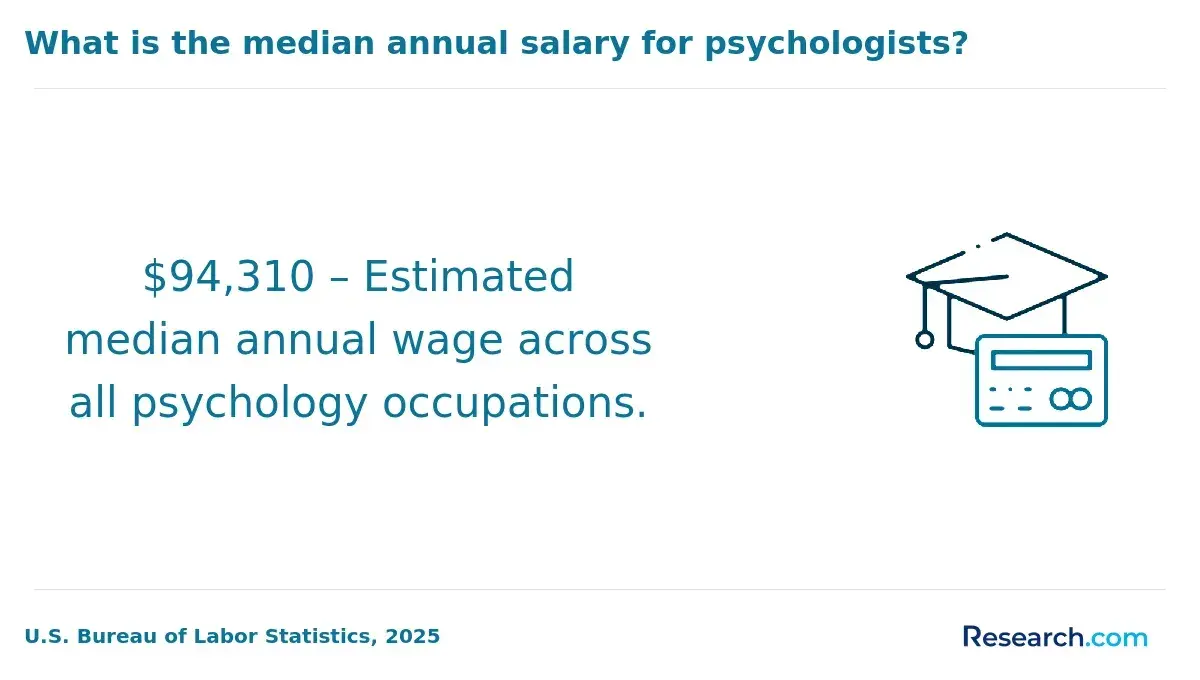
The annual median pay for all types of psychologists is $85,330. According to the BLS, the lowest 10% of psychologists earn $48,010 or less, while the highest 10% receive a pay of $141,910 and above. In planning your career, I would advise you to consider your specialization and research which states and industries pay the highest. For instance, clinical and counseling psychologists may want to consider living in New Jersey, which pays an annual mean wage of $164,110.
Healthcare and government organizations are more likely to offer a higher salary, though opportunities also abound in research and school settings. Consulting opportunities offer the potential for higher incomes. Ultimately, your earning potential aligns with your chosen career path, experience, and dedication to advancing the field of psychology.
- 2027 List of the best doctorate degrees in psychology programs Best Programs
- How long does it take to complete a doctorate degree in psychology? Completion Time
- How does an online doctorate in psychology program compare to an on-campus program? Online vs. Traditional
- What is the average cost of a doctorate degree in psychology? Cost
- What are the financial aid options for students enrolling in a doctorate degree in psychology program? Financial Aid
- What are the prerequisites for enrolling in a doctorate degree in psychology program? Prerequisites
- What courses are typically in a doctorate degree in psychology program? What courses are typically in a doctorate degree in psychology program?
- What types of specializations are available in a doctorate degree in psychology program? What types of specializations are available in a doctorate degree in psychology program?
- How to choose the best doctorate degree in psychology program? How to choose the best doctorate degree in psychology program?
- What to consider when choosing between a PhD in Psychology and a PsyD? What to consider when choosing between a PhD in Psychology and a PsyD?
- What Are the Options for Pursuing a Doctorate in Psychology Online? What Are the Options for Pursuing a Doctorate in Psychology Online?
- Can a short-duration master’s program streamline your path to a doctorate in psychology? Can a short-duration master’s program streamline your path to a doctorate in psychology?
- What future trends are shaping psychology doctoral programs? What future trends are shaping psychology doctoral programs?
- How do doctorate programs address evolving ethical standards and cultural competence? How do doctorate programs address evolving ethical standards and cultural competence?
- Is a Doctorate in Psychology Essential for Becoming a Licensed Therapist? Is a Doctorate in Psychology Essential for Becoming a Licensed Therapist?
- What are the challenges and potential drawbacks of pursuing a doctorate in psychology? What are the challenges and potential drawbacks of pursuing a doctorate in psychology?
- What career paths are available for graduates with a doctorate degree in psychology? Career Paths
- What is the job market for graduates with a doctoral degree in psychology? What is the job market for graduates with a doctoral degree in psychology?
- How can technology enhance learning and practice in psychology doctoral programs? How can technology enhance learning and practice in psychology doctoral programs?
- Impact of Health Psychology in Diverse Career Paths Impact of Health Psychology in Diverse Career Paths
- How does forensic psychology shape career trajectories for doctorate graduates? How does forensic psychology shape career trajectories for doctorate graduates?
Best Doctorate Degrees in Psychology Programs for 2027
Choosing a doctorate in psychology is not just a school-search decision. It affects your research direction, licensure options, funding, clinical training, professional network, and the number of years you will spend preparing for advanced work in psychology. The right program can position you for academic research, clinical practice, assessment, consulting, health psychology, forensic work, or organizational roles. The wrong fit can leave you with limited mentorship, unexpected costs, or a degree path that does not support your career goal.
This guide is designed for prospective doctoral students comparing PhD, PsyD, DPhil, online, hybrid, and campus-based psychology programs. You will find a ranked program list, a clear explanation of how long doctoral study usually takes, cost and financial aid considerations, admissions requirements, specialization options, online-versus-campus trade-offs, career paths, job market context, and practical questions to ask before applying.
Quick Answer: What Is the Best Doctorate in Psychology Program?
The best doctorate in psychology program depends on your goal. A research-focused PhD is usually the stronger fit for students who want academic, laboratory, faculty, or research-intensive careers. A PsyD is generally designed for students whose main goal is clinical practice. A DPhil, such as those offered in the U.K., is typically a research doctorate built around an original thesis. Before choosing, confirm the program’s accreditation, funding package, faculty match, clinical placement structure, licensure alignment, and dissertation or thesis expectations.
| Decision Point | Best Fit | What to Check Before Applying |
| You want to publish research or teach at a university | Research-based PhD or DPhil | Faculty publications, lab availability, funding, teaching requirements, dissertation expectations |
| You want to provide therapy or psychological assessment | Clinical psychology PhD or PsyD | APA or PCSAS status, supervised practicum placements, internship match support, state licensure requirements |
| You need flexibility because of work or family responsibilities | Online or hybrid doctorate, where available | Residency requirements, practicum rules, licensure eligibility, faculty access, research support |
| You are cost-sensitive | Funded PhD, assistantship-supported program, or lower-cost public institution | Total cost, fees, stipend, health insurance, time to completion, loan reliance |
How We Rank Psychology Doctoral Programs
Because doctoral education requires a major investment of time, money, and opportunity cost, our ranking process emphasizes transparency and decision-useful information. We use established data sources, including the IPEDS database, Peterson’s database, the College Scorecard database, and the National Center for Education Statistics, to evaluate program characteristics, institutional information, and student-facing outcomes where available.
Data alone does not tell the whole story for doctoral psychology education. Faculty mentorship, specialization depth, research productivity, clinical training access, funding, accreditation, and dissertation support also matter. Readers who want to understand how Research.com evaluates schools and programs can review the full process on our methodology page.
Top Doctorate Degrees in Psychology Programs
1. Stanford University
Stanford University offers a Ph.D. in Psychology built around advanced theoretical training, empirical research, independent analysis, and close faculty advising. Students complete coursework and seminars while developing research skills through lab work and practical study. Each student works with advisors to shape an individualized academic plan that supports their research goals. Doctoral students must also complete five quarters of teaching assistantship (TA) under faculty supervision. The department includes faculty recognized as Fellows of the Academy of Arts and Sciences and Fellows of the National Academy of Science, and students may connect their work with interdisciplinary programs across campus.
- Program length: 5 years
- Tracks/concentrations: Various; depends on electives and dissertation topic
- Cost: Quarterly Tuition unless otherwise specified
- 8-10 units: $12,240
- 11-18 units: $18,829
- Each Graduate unit above 18: $1,255 per unit
- 1-7 units, Summer only: $1,224 per unit
- Accreditation: The American Psychological Association (APA), USA
2. Harvard University
Harvard University offers a research-centered Psychology Ph.D. with four areas of study: Experimental Psychopathology & Clinical Science, Developmental, Social, and Cognition, Brain, and Behavior (CBB). These tracks support a wide range of dissertation topics and specialization routes. Incoming Ph.D. students receive full financial support for at least five years, including tuition, health insurance fees, and basic living expenses from multiple funding sources. The faculty includes scholars published in major peer-reviewed journals and recognized for expertise across psychology subfields.
- Program length: 5 years
- Tracks/concentrations: Clinical Science
- Tracks/concentrations: Social Psychology
- Tracks/concentrations: Developmental Psychology
- Tracks/concentrations: Cognition, Brain, and Behavior (CBB)
- Cost: Full Tuition- required first two years of study -$52,456
- Cost: Reduced Tuition required third and fourth years of study $13,638
- Cost: Facilities Fee required post-fourth year of study $3,470
- Cost: Active File Fee minimum charge for approved nonresident status $300
- Accreditation: Psychological Clinical Science Accreditation System (PCSAS), APA
3. University of California, Berkley
The University of California at Berkeley offers a research-based Ph.D. in Psychology with six major tracks and additional minor specializations. The available tracks are Behavioral and Systems Neuroscience, Clinical Science, Cognition, Cognitive Neuroscience, Developmental, and Social-Personality. The Clinical Science track is described as especially competitive. Students can pursue research across a broad faculty network, and funding may come from internal awards, the National Science Foundation, and other external or extramural fellowships.
- Program length: 5 years
- Tracks/concentrations: 6 major tracks with several other minor specializations per track
- Track: Behavioral and Systems Neuroscience
- Track: Clinical Science
- Track: Cognition
- Track: Cognitive Neuroscience
- Track: Developmental
- Track: Social-Personality
- Cost: Tuition fee: California residents $5,850
- Cost: Tuition fee: Non-residents- $5,850
- Accreditation: PCSAS, APA
4. The University of Oxford
The University of Oxford offers a DPhil in Experimental Psychology. This is a research doctorate in which students complete independent work within a research group or laboratory under the supervision of principal investigators. First-year students participate in courses, lectures, and seminars to develop specialized knowledge, and the Medical Science Division provides transferable-skills training in areas such as teaching and communicating scientific findings. In the second year, students complete an induction program that includes a poster and presentation based on their research. The final requirements include a thesis of up to 100,000 words and a viva, or oral examination.
- Program length: 4 years
- Tracks/concentrations: Depends on viva/ thesis topic
- Cost: Annual Course Fee £8,960
- Accreditation: The Privy Council, U.K.
5. University of Cambridge Ph.D. Department of Psychology
The University of Cambridge offers a Ph.D. in Psychology that is fully research-based. Students are encouraged to participate in the Postgraduate Education Programme and the Postgraduate School of Life Science’s Skills Training Programme. Thesis work is completed under the supervision of an academic staff member, and students receive formal feedback through regular meetings with supervisors and lab members. First-year training includes seminars and classes, including statistics and methods courses. Applicants generally need a prior degree in psychology, neuroscience, or a related subject to support advanced specialized research. The program concludes with a 60,000-word thesis and an oral examination.
- Program length: 3-4 years full-time / 5-7 years part-time
- Tracks/concentrations: Depends on viva/ thesis topic
- Cost: Annual full-time Home £27,055 / Overseas £53,341/ Refugee £27,055
- Accreditation: The Privy Council, U.K.
What Graduates Say About Earning a Doctorate in Psychology
- Ysa: "My doctoral program pushed me far beyond basic knowledge of behavior. It strengthened my research judgment, sharpened my critical thinking, and helped me approach complex psychological problems with more creativity and care. The process was demanding, but it expanded both my career options and my ability to understand people more deeply."
- Charles: "What stood out most was the interdisciplinary nature of the training. Working with scholars from different fields changed how I think about mental health, research design, and well-being. The practical research experience and supportive academic community made the difficult parts of doctoral study worthwhile."
- Siena: "Earning a doctorate helped me specialize while also learning how to communicate difficult ideas clearly. Research collaborations, conference presentations, and faculty mentorship expanded my professional network. The experience required persistence, but it gave me the tools to contribute with confidence."
Key Findings
- A doctorate in psychology usually requires a long-term commitment, often involving coursework, research, comprehensive exams, supervised experience, and a dissertation or thesis.
- PhD programs are usually stronger for research and academic careers, while PsyD programs generally emphasize clinical practice and applied training.
- Program fit depends heavily on faculty mentorship, funding, specialization, accreditation, clinical placement access, and licensure alignment.
- Online doctorate options can improve flexibility, but students must carefully verify residency, practicum, and licensure requirements.
- Published tuition is only part of the cost. Fees, living expenses, reduced work hours, travel, books, technology, and internship requirements can significantly affect affordability.
How Long Does It Take to Complete a Doctorate Degree in Psychology?
A doctorate degree in psychology typically takes around 5 to 7 years to complete, though actual timelines vary by degree type, specialization, dissertation progress, clinical training requirements, and whether the student enrolls full time or part time. Most programs include advanced coursework, research preparation, comprehensive or qualifying exams, supervised training where applicable, and a doctoral dissertation or thesis.
Students should plan for an intensive academic and professional commitment. Research complexity, access to data or participants, faculty availability, internship or clinical placement timing, and personal responsibilities can all affect completion time. Successful students usually build strong time-management habits early, maintain regular communication with advisors, and choose dissertation topics that are rigorous but feasible within the program timeline.
How Does an Online Doctorate in Psychology Compare With an On-Campus Program?
An online doctorate in psychology can be a strong option for students who need flexibility, live far from campus, or are balancing school with employment or caregiving. An on-campus program may be better for students who want daily access to faculty, labs, clinics, peer cohorts, and structured in-person learning. The best format depends on your specialization, licensure goal, research needs, and learning style.
| Factor | Online Doctorate in Psychology | On-Campus Doctorate in Psychology |
| Schedule flexibility | Often better for students balancing work, family, or location constraints | Usually follows a fixed schedule with in-person expectations |
| Learning style | Requires high self-discipline, independent study habits, and comfort with digital platforms | Provides more structured interaction, immediate feedback, and in-person discussion |
| Research access | May require proactive use of virtual resources, remote collaboration, or scheduled residencies | Often provides direct access to labs, libraries, research teams, and campus facilities |
| Networking | Can connect students from multiple regions and countries | Builds stronger local campus relationships and in-person professional networks |
| Clinical or practicum training | May require local placements and careful licensure verification | May have established relationships with nearby clinics, hospitals, and agencies |
When an Online Psychology Doctorate Makes Sense
- You need remote coursework because of location, employment, or caregiving responsibilities.
- Your program has clear practicum, internship, or residency policies.
- You can access faculty, library resources, research tools, and advising reliably online.
- You have confirmed that the program can support your state’s licensure requirements if you plan to practice.
When an On-Campus Psychology Doctorate May Be Better
- You want intensive lab involvement or daily interaction with a research team.
- Your specialization requires extensive in-person clinical or assessment training.
- You learn better through structured schedules and face-to-face accountability.
- You want to build a local professional network through campus-based placements and faculty connections.
What Is the Average Cost of a Doctorate Degree in Psychology?
Publicly available data in the United States showed that the published average graduate tuition and fees for public institutions are $11,554 per year, while private institutions average $20,015. Program expenses also commonly range from $500 to $1,500 per credit hour. These figures do not include every possible expense, such as housing, transportation, technology, textbooks, course materials, campus fees, health insurance, professional memberships, internship travel, or lost income from reducing work hours.
When comparing programs, focus on total cost of attendance rather than tuition alone. A higher-tuition program with strong funding, assistantships, health insurance, or a stipend may cost less out of pocket than a lower-tuition program with limited aid. Also consider time to completion: an extra year in a doctoral program can change the real cost significantly.
| Cost Category | Why It Matters | Question to Ask |
| Tuition and fees | This is the most visible cost, but not the only one | Is tuition charged by credit, term, year, or residency status? |
| Assistantships and stipends | Funding can reduce tuition burden and provide professional experience | How many years of funding are guaranteed, and what work is required? |
| Clinical or research placement costs | Travel, background checks, insurance, and relocation can add expenses | Are placements arranged by the program or by the student? |
| Time to degree | Longer enrollment can increase tuition, living costs, and opportunity cost | What is the typical completion timeline for students in my track? |
| Licensure preparation | Clinical students may face exam, application, and supervised-hours costs | Does the program disclose licensure outcomes or state eligibility information? |
What Financial Aid Options Are Available for Psychology Doctoral Students?
Students in psychology doctoral programs online and campus-based programs may qualify for several forms of funding. The strongest packages often combine tuition support with teaching or research responsibilities. Aid availability varies widely, so applicants should ask detailed questions before accepting admission.
- Graduate assistantships: Teaching, research, or administrative assistantships may include tuition waivers, stipends, or both. They also provide experience that can strengthen academic and professional preparation.
- Scholarships and grants: Psychology associations, universities, foundations, and professional organizations may offer awards for students whose research, specialization, or background matches funding priorities.
- Federal aid programs: Completing the Free Application for Federal Student Aid can help eligible students access federal loans, grants, or work-study options where available.
- Employer tuition assistance: Working professionals should ask whether their employer provides tuition reimbursement or education benefits for advanced study.
- Military aid: Eligible service members, veterans, and dependents may be able to use military education benefits toward approved programs.
- Private loans: Private borrowing may help fill funding gaps, but it should be approached carefully because interest rates, repayment protections, and deferment options can differ from federal loans.
Questions to Ask About Funding Before You Enroll
- Is funding guaranteed, competitive, or renewed annually?
- Does funding cover tuition only, or does it include a stipend and health insurance?
- What teaching, research, or service work is required?
- Can funding continue during dissertation, internship, or nonresident status?
- What percentage of students complete the program with loans?
What Are the Prerequisites for Enrolling in a Doctorate Degree in Psychology Program?
Admission to a psychology doctorate is competitive and usually requires evidence that the applicant can handle advanced research, theory, writing, statistics, and, for clinical programs, supervised practice. Requirements vary by institution and specialization, but most programs evaluate academic preparation, research fit, recommendations, writing ability, and readiness for doctoral-level work.
- Academic background: Programs may expect a minimum of a BS or MS in a science field, along with college and post-baccalaureate transcripts.
- Application materials: Applicants commonly submit 2-5 recommendation letters, a statement of purpose, and sometimes a writing sample. GRE/GMAT scores may be requested by some programs, and international applicants may need TOEFL/IELTS scores.
- Research experience: Independent research, conference presentations, lab experience, or published work can strengthen an application, especially for Ph.D. programs.
- Data analysis skills: Doctoral students need comfort with research design and statistical tools. Familiarity with software such as SPSS can be valuable.
- Psychology foundation: Applicants should understand major theories, methods, and applications in psychology, with deeper preparation expected in the intended specialization.
- Evaluation and assessment readiness: Clinical and applied programs may look for exposure to psychological assessment, mental health settings, or supervised helping roles.
- Interpersonal maturity: Students working with clients, research participants, faculty, and placement supervisors need professionalism, communication skills, and ethical judgment.
- Additional professional skills: Leadership, crisis response, program development, and teaching ability can be useful. Students considering academic careers may also compare preparation options such as an online teaching degree.
What Courses Are Typically Included in a Doctorate Degree in Psychology Program?
A doctorate degree in psychology usually combines advanced theory, research methods, statistics, specialization coursework, ethics, supervised training, and dissertation preparation. Exact course titles vary, but many programs include the following areas.
- Advanced research methods: Students study experimental design, research validity, measurement, sampling, and ethical research practices.
- Psychometric testing: Coursework may cover psychological assessment theory, test construction, reliability, validity, and interpretation.
- Advanced psychological theories: Students examine major theoretical frameworks and how they shape research and practice.
- Clinical interventions and therapies: Clinical tracks may include evidence-based approaches for assessment, diagnosis, treatment planning, and intervention.
- Cognitive neuroscience: Students explore links between brain systems, cognition, behavior, perception, memory, and psychological processes.
- Psychopathology and diagnosis: Coursework may focus on mental health disorders, diagnostic frameworks, and treatment implications.
- Ethics in psychology: Students learn how to navigate informed consent, confidentiality, research integrity, professional boundaries, and ethical decision-making.
- Teaching and supervision in psychology: Doctoral students preparing for academic or supervisory work may develop skills in instruction, mentoring, and feedback.
What Specializations Are Available in a Doctorate Degree in Psychology Program?
Specialization determines what you study, which faculty you work with, what practicum or research experiences you need, and which careers are realistic after graduation. Students should choose a specialization based on career goals, research interests, licensure needs, and available faculty mentorship.
| Specialization | Main Focus | Best For Students Interested In |
| Clinical Psychology | Assessment, diagnosis, treatment, and clinical research | Mental health practice, hospitals, clinics, academic clinical research |
| Counseling Psychology | Well-being, adjustment, relationships, and counseling interventions | Therapy, community practice, college counseling, applied mental health work |
| Behavioral Psychology | Behavior analysis, reinforcement, conditioning, and behavior change | Careers in behavioral psychology, applied behavior analysis, treatment planning |
| Health Psychology | Psychological factors in physical health, illness, stress, and behavior change | Healthcare settings, chronic illness support, prevention programs, wellness research |
| Neuropsychology | Brain-behavior relationships, assessment, rehabilitation, and neurological conditions | Clinical assessment, hospitals, rehabilitation, cognitive research |
| Developmental Psychology | Human development across the lifespan | Child development, aging, lifespan research, educational or family-focused work |
| Forensic Psychology | Psychology applied to legal systems and criminal justice | Risk assessment, legal consultation, correctional settings, expert testimony |
| Industrial-Organizational Psychology | Workplace behavior, leadership, assessment, and organizational systems | Consulting, human resources, organizational development, selection research |
| Social Psychology | Social influence, attitudes, group behavior, prejudice, and relationships | Research, policy, marketing insights, social behavior analysis |
| School Psychology | Student assessment, intervention, consultation, and educational support | K-12 settings, learning support, school-based mental health, educational assessment |
How Should You Choose the Best Doctorate Degree in Psychology Program?
The best psychology doctorate is the one that fits your intended career, research interests, financial limits, learning format, and licensure needs. A prestigious name alone is not enough. Doctoral success depends heavily on advisor fit, funding, research resources, clinical training access, and whether the program’s graduates move into the kinds of roles you want.
- Match the specialization to your career goal: Do not choose a program only because it is highly ranked. Choose one that has faculty, courses, placements, and research activity in your field of interest.
- Understand the PhD versus PsyD difference: Ph.D. candidates often focus more on research, while PsyD candidates usually focus more on clinical practice. Your long-term goal should guide the degree type.
- Review faculty research and publications: For research-oriented students, advisor fit may be the single most important factor. Look for faculty who publish in your area and whose methods, populations, and research questions align with your interests.
- Check partner institutions: Strong programs may connect students with hospitals, clinics, schools, research centers, military institutions, or government agencies for training and applied experience.
- Compare assistantship options: Teaching and research assistantships can reduce cost and help students build professional experience. Ask whether assistantships are guaranteed or competitive.
- Look for interdisciplinary opportunities: Psychology increasingly connects with neuroscience, law, public health, education, philosophy, data science, and artificial intelligence. Students interested in theory-heavy or ethics-focused work may also explore an online philosophy degree as a complementary academic path.
- Verify accreditation and licensure alignment: If you plan to become licensed, confirm that the program meets the requirements in the state or jurisdiction where you intend to practice.
Common Mistakes to Avoid When Comparing Psychology Doctoral Programs
- Choosing based only on reputation: A famous institution is not automatically the best fit for your research topic or clinical goal.
- Ignoring accreditation: Accreditation can affect licensure, internships, employer recognition, and professional credibility.
- Looking only at tuition: Total cost includes fees, living expenses, lost income, travel, internship costs, and time to completion.
- Assuming online programs meet licensure rules: State requirements vary, and online students may need approved local placements or residencies.
- Applying without a faculty match: In research doctorates, admission often depends on whether a faculty member can supervise your work.
- Underestimating dissertation demands: A dissertation or thesis is a multi-year project that requires planning, persistence, and advisor support.
What Should You Consider When Choosing Between a PhD in Psychology and a PsyD?
The choice between a PhD in Psychology and a PsyD should start with one question: do you want your doctoral training to center mainly on research or clinical practice? A PhD is typically the stronger choice for students who want to conduct research, publish scholarship, teach at the university level, or work in research-heavy roles. These programs often include advanced training in theory, experimental design, statistics, and dissertation research.
A PsyD is generally more practice-oriented. Students usually spend more of their training preparing for clinical service with individuals, families, groups, or healthcare teams. PsyD graduates often pursue licensure as psychologists, especially in clinical and counseling roles.
| Feature | PhD in Psychology | PsyD |
| Primary emphasis | Research, scholarship, teaching, and scientific contribution | Clinical practice and applied psychological services |
| Common career direction | Academia, research labs, clinical research, faculty roles, applied research | Therapy, assessment, clinical service, counseling, healthcare settings |
| Training style | Research-intensive with dissertation expectations | Practice-intensive with clinical training emphasis |
| Key question to ask | Which faculty member can supervise my research? | What clinical placements and licensure supports are available? |
Financial factors also matter because program structures, funding models, and timelines can differ. Students comparing degree outcomes may find it useful to review PhD psychology salary comparisons by career path and specialization.
What Are the Options for Pursuing a Doctorate in Psychology Online?
Online psychology doctoral programs can expand access for students who cannot relocate or attend campus full time. Some programs deliver coursework remotely while requiring in-person residencies, local practicum placements, or supervised internships. Others may be hybrid rather than fully online. Students who want a flexible starting point can also compare broader online degree in psychology options before committing to doctoral study.
Before enrolling online, ask whether the program provides the same faculty access, research support, library tools, advising, and career services available to campus students. For clinical or counseling paths, confirm whether the degree supports the licensure requirements in your state, including supervised hours and approved placements.
Can a Short-Duration Master’s Program Streamline Your Path to a Doctorate in Psychology?
A short master’s program can help some students become stronger doctoral applicants, especially if they need more research experience, stronger academic preparation, or a clearer specialization. It can also help career changers build a psychology foundation before applying to competitive doctoral programs. However, a master’s degree does not guarantee admission, shorten every doctorate, or replace doctoral research and clinical requirements.
Students who want a faster bridge into graduate-level psychology can compare 1 year masters in psychology online options. When reviewing these programs, check transferability, thesis or capstone requirements, faculty research access, and whether graduates have successfully entered doctoral programs.
What Future Trends Are Shaping Psychology Doctoral Programs?
Psychology doctoral programs are adapting to changes in healthcare, education, research technology, and workforce expectations. Artificial intelligence is influencing data analysis, literature review workflows, psychological measurement, and research design. Virtual simulations and telehealth tools are also affecting how students learn assessment, consultation, and clinical communication. At the same time, interdisciplinary work with neuroscience, public health, data science, education, law, and organizational research continues to expand.
Cost pressure is another important trend. Some candidates compare master’s-level options before committing to doctoral study, including programs focused on the cost of master's degree in psychology. This can be useful when a student needs preparation but is not yet ready for a 5 to 7 year doctoral commitment.
How Do Doctorate Programs Address Ethical Standards and Cultural Competence?
Doctoral psychology programs prepare students to make ethical decisions in research, assessment, teaching, supervision, and practice. Training commonly covers informed consent, confidentiality, professional boundaries, data integrity, responsible publication, mandated reporting, conflicts of interest, and culturally responsive practice. Supervised placements and faculty-led seminars help students apply these principles to real cases and research situations.
Cultural competence is especially important because psychologists work with clients, research participants, students, organizations, and communities with different identities, histories, and needs. Specialized programs, including neuropsychology PhD programs, may also address ethical issues specific to assessment, brain-behavior research, disability, and neurological conditions.
Is a Doctorate in Psychology Required to Become a Licensed Therapist?
A doctorate in psychology is not the only path to becoming a licensed therapist. Many states allow master’s-level professionals to pursue licensure in counseling, marriage and family therapy, social work, or related fields after completing required coursework, supervised clinical experience, and licensing exams. A doctorate is typically required for those seeking licensure as a psychologist, but therapist licensure rules vary by state and credential type.
If your primary goal is therapy rather than becoming a licensed psychologist, compare doctoral and master’s-level pathways carefully. A master’s route may take less time and cost less, while a doctorate may provide deeper assessment, research, supervision, and clinical psychology training. For a broader credential comparison, review guidance on what do you need to be a therapist.
What Are the Challenges and Potential Drawbacks of Pursuing a Doctorate in Psychology?
A psychology doctorate can create advanced opportunities, but it also comes with serious trade-offs. Students should evaluate the demands honestly before applying.
- Financial pressure: Even with aid, tuition, fees, living costs, internship expenses, and reduced work income can create financial strain.
- Long time commitment: Many students spend 5 to 7 years completing the degree, which can delay full-time career advancement.
- Emotional demands: Clinical work, trauma-related research, crisis training, and intense academic pressure can contribute to stress or burnout.
- Competitive job markets: Some academic roles, specialized clinical positions, and high-demand research appointments can be difficult to secure.
- Licensure steps after graduation: Graduates pursuing psychologist licensure may still need supervised hours, examinations, fees, and board approval after the degree.
- Advisor dependence: A weak advisor fit can slow research progress, reduce publication opportunities, and make dissertation completion harder.
What Career Paths Are Available With a Doctorate Degree in Psychology?
Doctoral psychology graduates may work in healthcare, research, education, private practice, government, consulting, assessment, public health, criminal justice, and organizational settings. Career eligibility depends on the degree type, specialization, supervised experience, licensure, and state regulations.
- Behavioral Analyst: Studies and addresses behavior patterns using observation, diagnostic reasoning, behavior analysis, and intervention planning.
- Clinical Psychologist: Assesses, diagnoses, and treats mental health concerns and may conduct clinical research in medical or community settings.
- Licensed Mental Health Counselor (LMHC): Provides counseling and therapeutic support, typically through a licensure pathway that may not require a psychology doctorate.
- Licensed Professional Counselor (LPC): Helps clients address mental health concerns, build coping strategies, and develop treatment plans.
- Neuropsychologist: Focuses on the connection between brain function and behavior through assessment, diagnosis, treatment planning, and research.
- Occupational Therapist: Helps patients improve or regain functioning after illness, injury, or disability through therapeutic planning and intervention.
- Psychiatric Nurse Practitioner (PMHNP): Diagnoses and treats mental health conditions as one of the licensed practitioners in the field, with training in pharmacology and mental health care.
- Psychoanalyst: Uses psychoanalytic theory and methods to understand and treat psychological concerns.
- Psychometrician: Develops, evaluates, and applies psychological measurement tools for assessment, diagnosis, education, or research.
- Psychopharmacologist: Works at the intersection of psychology and medication-based mental health treatment, depending on professional background and prescribing laws.
What Is the Job Market for Graduates With a Doctoral Degree in Psychology?
The BLS reports that psychologists will experience a growth of 7% in jobs from 2024 to 2034. Among the specializations, clinical and counseling psychologists take the lead in growth with a projected 7%, which means that 15,300 more openings will be available within the next decade. Industrial-organizational psychology is also more in demand at a 6% job outlook. Students comparing applied behavioral work can also review the forensic psychologist employment outlook resource linked through related psychology career coverage.
These projections suggest continued need for psychology expertise, but they do not guarantee individual employment or salary outcomes. Your results will depend on specialization, licensure, geographic location, supervised experience, publications, internship quality, and professional network.
How Can Technology Enhance Learning and Practice in Psychology Doctoral Programs?
Technology is reshaping how psychology doctoral students learn, conduct research, collaborate, and deliver services. The strongest programs teach students how to use technology responsibly while maintaining ethical standards, confidentiality, validity, and human-centered judgment.
Key Ways Technology Supports Psychology Doctoral Training
- Virtual reality for training and therapy: VR can help students practice structured scenarios and may support interventions related to phobias, PTSD, or anxiety disorders in controlled environments.
- Artificial intelligence in research: AI tools can assist with large datasets, pattern detection, coding, literature workflows, and predictive modeling, but students still need methodological and ethical oversight.
- Online learning platforms: Digital platforms support remote lectures, discussion boards, advising, and resource access. Related programs, including forensic psychology master's programs online, show how specialized psychology training can be delivered with greater flexibility.
- Telehealth integration: Telehealth platforms prepare students for modern service delivery and can support remote supervision, consultation, and clinical communication training.
- Neuroimaging and biometric tools: Technologies such as fMRI and EEG support research in neuropsychology, cognition, emotion, and brain-behavior relationships.
- Digital data collection and analysis: Surveys, apps, cloud platforms, SPSS, R, and Python can make research more efficient and support complex psychological analysis.
- Collaboration tools: Virtual meetings and cloud-based file systems allow students to work with faculty, peers, and external collaborators across locations.
Benefits and Risks of Technology Use
| Benefit | Risk to Manage |
| Greater flexibility for students with work or family responsibilities | Reduced in-person engagement if the program lacks strong advising structures |
| Expanded research capacity through data tools | Misinterpretation of automated outputs without statistical expertise |
| Preparation for telehealth and digital practice environments | Privacy, consent, and jurisdiction issues in clinical work |
| More collaboration across institutions | Data security and file-management concerns |
How Does Mentorship Shape Success During a Psychology Doctorate Program?
Mentorship is one of the strongest predictors of a productive doctoral experience. A good mentor helps students refine research questions, plan dissertations, publish, prepare conference presentations, identify funding, navigate setbacks, and make realistic career decisions. In clinical programs, mentorship can also shape practicum choices, internship preparation, assessment skill development, and professional identity.
Students should evaluate mentorship before enrolling, not after. Ask how often students meet with advisors, how conflicts are handled, whether co-mentorship is available, and how many students each faculty member supervises. Candidates interested in supplemental, career-aligned credentials may also compare flexible options such as the cheapest online BCBA programs.
How Does Accreditation Influence the Quality of Psychology Doctorate Programs?
Accreditation is a major quality signal in psychology education. It helps confirm that a program follows recognized standards for curriculum, faculty qualifications, student support, ethics, assessment, research, and professional preparation. For students pursuing clinical or counseling practice, accreditation may also affect internship eligibility, licensure review, employer recognition, and transferability of training.
Do not assume that every psychology doctorate leads to the same professional options. Verify institutional accreditation, programmatic accreditation, and state licensure compatibility before applying. Students comparing lower-cost pathways in a related field can also review the cheapest forensic psychology masters online.
How Health Psychology Can Shape Diverse Career Paths
Health psychology focuses on how psychological factors affect physical health, illness, treatment adherence, stress, prevention, and behavior change. A doctoral specialization in this area can lead to work in healthcare, public health, wellness, academia, research, and private practice, depending on training and licensure.
Healthcare Settings
Health psychologists may collaborate with physicians, nurses, rehabilitation specialists, and other providers in hospitals, clinics, and rehabilitation centers. Their work may involve helping patients manage chronic illness, adjust to diagnosis, follow treatment plans, and address psychological barriers to recovery.
Public Health and Policy Development
In government and nonprofit settings, health psychologists may help design, evaluate, or improve programs related to smoking prevention, mental health awareness, stress reduction, health behavior change, or community well-being.
Corporate Wellness Programs
Organizations may use health psychology expertise to build wellness programs, reduce stress, support employee well-being, and encourage healthier workplace behaviors.
Academia and Research
Health psychologists in academic roles may study topics such as pain management, obesity prevention, stress-related illness, chronic disease adjustment, or health behavior interventions. They may also teach and mentor future psychologists.
Counseling and Private Practice
Some health psychologists provide counseling related to chronic illness, lifestyle change, serious medical diagnoses, or coping with conditions such as diabetes, cancer, or heart disease. For a deeper look at this specialization, see our guide to health psychology careers.
How Does Forensic Psychology Shape Career Trajectories for Doctorate Graduates?
Forensic psychology connects psychological science with legal systems, criminal justice, risk assessment, public safety, rehabilitation, and expert consultation. Doctoral graduates in this field may work with courts, correctional systems, law enforcement agencies, attorneys, public agencies, research institutions, or universities.
This specialization requires strong training in assessment, ethics, legal standards, behavioral analysis, and report writing. Technology and data-driven tools are also affecting forensic research and decision-making, but professional judgment remains essential. Prospective students can explore broader trends in forensic psychology demand to understand how this field connects psychology, law, and public policy.
Key Insights
- The best psychology doctorate is not simply the most prestigious program; it is the program with the right faculty mentor, specialization, funding, accreditation, and career alignment.
- Plan for a long timeline. Many doctoral psychology paths take around 5 to 7 years and require coursework, research, exams, supervised training, and a dissertation or thesis.
- PhD programs generally favor students who want research, teaching, and academic careers. PsyD programs usually serve students focused on clinical practice.
- Online and hybrid programs can improve access, but clinical students must verify practicum, residency, internship, and state licensure rules before enrolling.
- Published tuition does not show the full cost. Compare assistantships, stipends, fees, living expenses, time to completion, and licensure-related costs.
- Accreditation matters. It can affect licensure, internships, employer confidence, and the long-term value of the degree.
- Before applying, contact potential advisors, review faculty publications, ask about funding guarantees, examine placement outcomes, and confirm whether graduates enter the careers you want.
References:
- College Factual. (2025). 2025 Psychology Degree Guide. https://www.collegefactual.com/majors/psychology/
- U.S. Bureau of Labor Statistics. (2024). Field of degree: Psychology. https://www.bls.gov/ooh/field-of-degree/psychology/psychology-field-of-degree.htm
- U.S. Bureau of Labor Statistics. (2025). Psychologists. https://www.bls.gov/ooh/life-physical-and-social-science/psychologists.htm
- U.S. Bureau of Labor Statistics. (2024, August 29). Industrial-Organizational Psychologists: Occupational Outlook Handbook. https://www.bls.gov/ooh/life-physical-and-social-science/industrial-organizational-psychologists.htm
Other Things You Should Know About Doctorate Degrees in Psychology
Most doctoral graduates must pass the Examination for Professional Practice in Psychology, or EPPP, to earn state licensure. The Association of State and Provincial Psychology Boards administers it, and many states also require supervised postdoctoral hours and an oral or jurisprudence exam.
In 2027, the cost of pursuing a Doctorate in Psychology varies widely, ranging from $20,000 to over $60,000 per year. Tuition depends on the institution, program length, and residency status. Financial aid, grants, and assistantships are often available to offset these costs.
Top psychology doctorate programs in 2027 require a bachelor's or master's degree in psychology or a related field, a minimum GPA of 3.0, GRE scores, letters of recommendation, and a statement of purpose. Some programs may also require relevant research or field experience.


