2027 Online Electrical Engineering Degrees With Engineering Design Coursework

Co-Founder and Chief Data Scientist
Choosing an online electrical engineering degree is really a decision about flexibility, accreditation, hands-on design practice, and career return. The stakes are high: the U.S. Bureau of Labor Statistics projects 9% employment growth for electrical and electronics engineers from 2024 to 2034, faster than the average for all occupations.
This guide is for working adults, transfer students, military learners, and first-time undergraduates comparing online options. You will learn what to look for, what to avoid, and how to judge whether an online program can support engineering design careers.
Key Things You Should Know
- For U.S. engineering roles, an online electrical engineering bachelor's degree is strongest when it has institutional accreditation and, ideally, ABET Engineering Accreditation Commission accreditation for licensure-sensitive or design-heavy career paths.
- Online electrical engineering programs usually take about four years for first-time bachelor's students, while transfer-friendly and part-time formats vary widely; published tuition should be compared with fees, lab kits, software, and residency costs.
- Electrical and electronics engineering employment is projected to grow 9% from 2024 to 2034, and design skills are especially relevant in power systems, embedded systems, semiconductor hardware, communications, controls, and renewable energy roles.
What is an online electrical engineering degree with engineering design coursework?
An online electrical engineering degree with engineering design coursework is a distance-delivered program that teaches students how to analyze, model, build, test, and improve electrical systems. It may be offered at the bachelor's or master's level, but the bachelor's degree is usually the entry point for engineering roles that require broad preparation in circuits, electronics, electromagnetics, signals, controls, power, computing, and engineering mathematics.
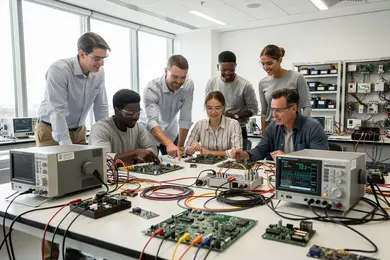
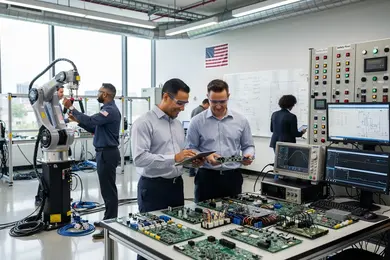
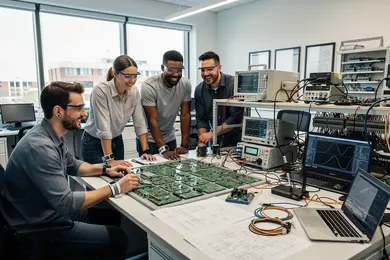
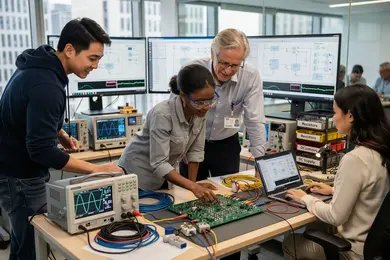
The phrase engineering design coursework matters because electrical engineering is not only about solving textbook problems. Design courses ask students to define constraints, compare alternatives, prototype a solution, test it against requirements, document results, and revise the design. In an online format, that work may happen through simulation software, remote labs, mailed lab kits, synchronous team meetings, and a senior capstone project.
The table below separates common online electrical engineering degree options so readers can match the credential to their goals instead of assuming every online program leads to the same outcome.
| Program type | Typical fit | Design coursework emphasis | Best use case |
| Bachelor of Science in Electrical Engineering | First-time students and transfer students seeking engineering roles. | High, especially if the curriculum includes labs and a senior design sequence. | Entry-level electrical engineering, embedded systems, power, controls, hardware, and graduate study. |
| Bachelor of Science in Electrical Engineering Technology | Students who prefer applied implementation and testing. | Moderate to high, often more application-focused than theory-heavy. | Engineering technologist, test engineering, field applications, manufacturing, and support roles. |
| Master's in Electrical Engineering | Engineers or STEM graduates seeking specialization. | Varies by concentration; project-based tracks may be design-intensive. | Advanced work in power, signal processing, RF, semiconductors, controls, or embedded systems. |
| Certificate or nondegree coursework | Professionals filling a skill gap. | Narrow and topic-specific. | Upskilling in PCB design, power electronics, FPGA development, or controls without completing a full degree. |
A bachelor's degree is usually the more comprehensive route if you want to qualify for jobs titled electrical engineer. A certificate can be valuable if you already have a technical degree and need a focused skill, but it usually does not replace an accredited engineering degree for positions that require formal engineering education.
How do online electrical engineering programs compare to campus-based options?
Online electrical engineering programs can be academically rigorous, but they differ from campus-based programs in how students complete labs, collaborate on projects, access faculty, and build professional networks. The best online programs are not simply recorded lectures; they include structured lab experiences, design reviews, office hours, and clear technical support.
The comparison below shows where online and campus options tend to differ most. Use it to decide whether flexibility is worth the trade-offs for your learning style and career goals.
| Decision factor | Online electrical engineering | Campus-based electrical engineering | What it means for the student |
| Schedule flexibility | Often stronger, especially for asynchronous courses. | Usually tied to class and lab schedules. | Online is better for working adults, caregivers, and military students, but self-discipline is essential. |
| Laboratory work | May use remote labs, simulation tools, home kits, or short residencies. | Usually uses on-campus lab facilities. | Ask exactly how circuits, electronics, instrumentation, and design labs are completed. |
| Team design projects | Often completed through virtual collaboration and scheduled milestones. | Often easier to coordinate in person. | Online students should look for capstone courses with documented teamwork, design reviews, and final deliverables. |
| Networking | Can be strong if the school offers online career services, project showcases, and industry mentoring. | Often includes easier access to student clubs, labs, and local employers. | Online students may need to be more intentional about internships, IEEE involvement, and portfolio building. |
| Learning environment | Best for independent learners comfortable with software tools. | Best for students who benefit from face-to-face instruction. | The right format depends less on prestige and more on how you learn complex technical material. |
Students comparing online STEM formats may notice similar trade-offs in fields such as online geology degrees, where lab access and fieldwork planning can shape program quality. For electrical engineering, the equivalent questions are about electronics labs, design projects, instrumentation, and access to industry-standard tools.
Online may be the better choice if you need to keep working, already have transfer credits, or live far from an engineering school. Campus may be better if you want daily access to physical labs, undergraduate research, robotics clubs, or in-person recruiting. Hybrid programs can offer a middle path, but travel requirements should be checked before enrollment.
What accreditation should online electrical engineering degrees have in the United States?
In the United States, accreditation is one of the most important quality checks for an online electrical engineering degree. At minimum, the institution should be accredited by an accreditor recognized by the U.S. Department of Education or the Council for Higher Education Accreditation. For engineering-specific credibility, students should also check whether the electrical engineering program itself is accredited by the Engineering Accreditation Commission of ABET.
ABET accreditation is especially important if you may pursue Fundamentals of Engineering examination eligibility, Professional Engineer licensure, federal engineering jobs, defense contractors, or employers that screen for accredited engineering degrees. Not every electrical engineering job requires PE licensure, but power systems, utilities, infrastructure, consulting, and public-facing engineering work are more likely to value or require it.
Before applying, verify accreditation directly rather than relying only on marketing language. A careful check should include the following steps:
- Confirm the school's institutional accreditation through a recognized accreditation database or the school's official accreditation page.
- Search for the exact program name in ABET's public program database, paying attention to whether it is electrical engineering, electrical engineering technology, or another related title.
- Check whether the online delivery format is covered under the same accredited program, especially if the school also offers a campus version.
- Ask the department whether graduates meet the educational requirements for FE exam eligibility in your state, if licensure is part of your plan.
- Save written confirmation from the school if admissions staff discuss licensure, transfer credit, or accreditation status.
A common mistake is assuming that a well-known university automatically has ABET accreditation for every engineering program it offers. Accreditation is program-specific, so the exact degree title matters. Another red flag is a school that uses vague wording such as "ABET-aligned" instead of confirming ABET accreditation.
What engineering design courses are typically included in online electrical engineering curricula?
Engineering design coursework in an online electrical engineering curriculum usually appears across multiple years, not just in one capstone class. Students first learn analysis tools and foundational theory, then apply them to increasingly open-ended problems involving cost, safety, performance, manufacturability, sustainability, and technical documentation.
The table below summarizes common design-related courses and how each one supports real engineering work. Course names vary by school, but the underlying competencies are broadly recognizable.
| Course area | Typical design activity | Why it matters |
| Circuit analysis and electronics labs | Design, simulate, build, and test analog or digital circuits. | Builds the foundation for troubleshooting, measurement, and component selection. |
| Digital systems and embedded systems | Create microcontroller, FPGA, or firmware-integrated hardware projects. | Supports work in automation, robotics, IoT devices, automotive systems, and consumer electronics. |
| Signals and systems | Model filters, communication channels, and signal processing workflows. | Connects mathematical theory to audio, wireless, radar, biomedical, and sensor applications. |
| Power systems and power electronics | Analyze distribution networks, converters, motors, or renewable integration problems. | Prepares students for utility, energy, transportation, and electrification projects. |
| Controls and automation | Design feedback systems for stability, speed, and accuracy. | Relevant to manufacturing, aerospace, robotics, energy systems, and autonomous technologies. |
| Senior design or capstone | Complete a team-based project from requirements through testing and presentation. | Creates portfolio evidence that employers can evaluate during interviews. |
Current engineering design work is also being shaped by AI-enabled simulation, model-based design, digital twins, and electronic design automation tools. These tools do not remove the need for engineering judgment. Instead, they raise the value of students who understand constraints, can validate results, and can explain why a design is safe, efficient, and reliable.
When comparing programs, look for evidence that design courses require more than software screenshots. Strong programs ask students to produce requirements documents, schematics, test plans, design trade-off analyses, code repositories, lab reports, and final presentations. Those artifacts can later become part of a job-search portfolio.
What admission requirements and prerequisites do online electrical engineering programs expect?
Admission requirements depend on the degree level and whether the applicant is a first-year student, transfer student, or graduate applicant. Electrical engineering is math-intensive, so schools usually look closely at readiness in calculus, physics, and prior technical coursework.
Prospective students reviewing electrical engineering degree online admissions requirements should compare both university-wide admission rules and engineering department prerequisites. A student can be admitted to a university but still need prerequisite courses before entering upper-division engineering work.
Most online electrical engineering bachelor's programs evaluate a combination of academic history and technical readiness. Typical expectations include:
- High school diploma, GED, or equivalent credential for first-year applicants.
- Prior coursework in algebra, trigonometry, precalculus, chemistry, and physics; calculus readiness is often important for direct progression.
- Official transcripts from all colleges attended for transfer applicants.
- Minimum GPA requirements that may be higher for engineering majors than for general admission.
- Placement testing or prerequisite review for calculus, physics, and programming.
- English proficiency documentation for applicants whose prior education was not in English.
Graduate electrical engineering programs usually expect a bachelor's degree in electrical engineering, computer engineering, or a closely related technical field. Applicants from physics, mathematics, mechanical engineering, or computer science may be considered, but they may need bridge coursework in circuits, signals, electromagnetics, or electronics.
A practical way to prepare is to audit your math sequence before applying. If you are missing calculus or calculus-based physics, taking those courses at a regionally accredited community college can reduce cost and help you enter the program with stronger momentum. Confirm transferability in writing before registering.

How long do online electrical engineering degrees take and what do they cost?
Online electrical engineering degree timelines vary most by transfer credit, math readiness, course load, and lab sequencing. A first-time bachelor's student commonly needs about four years of full-time study, while working adults often take longer because engineering courses can be time-consuming and must be taken in prerequisite order. Master's programs may take about one to three years depending on pace and thesis or project requirements.
The timeline comparison below helps clarify why two students in the same online program may finish at very different speeds.
| Student profile | Typical timeline pattern | Main factor affecting completion |
| First-time full-time bachelor's student | Often planned around an eight-semester sequence. | Calculus, physics, labs, and capstone prerequisites must be completed in order. |
| Transfer student with an associate degree | May shorten the path if math, science, and general education credits transfer cleanly. | Engineering-specific course equivalencies are stricter than general electives. |
| Working adult studying part time | Often extends completion to balance workload and course difficulty. | Limited course availability and prerequisite chains can slow progress. |
| Master's student | Often faster than a bachelor's program but more specialized. | Prerequisite gaps and thesis or project requirements can affect pace. |
Cost should be evaluated as total cost of attendance, not tuition alone. The College Board reported average published tuition and fees of $11,610 for in-state students at public four-year institutions and $43,350 at private nonprofit four-year institutions for 2024-25; online electrical engineering programs may fall above or below those benchmarks depending on residency rules, technology fees, and course materials.
- Tuition: Compare per-credit rates, flat-rate tuition, residency discounts, and whether online students pay in-state or separate online rates.
- Fees: Include technology fees, engineering course fees, proctoring charges, graduation fees, and any required campus residency costs.
- Lab materials: Budget for electronics kits, instruments, components, or shipping if the program uses at-home labs.
- Software and hardware: Ask whether licenses for MATLAB, SPICE tools, CAD software, FPGA tools, or cloud labs are included.
- Opportunity cost: Consider reduced work hours, delayed graduation from part-time pacing, and the value of employer tuition assistance.
Students who are comparing cost across fields can also look at benchmarks such as the average cost of MLIS degree us to see how pricing structures differ between professional programs. The comparison is not about choosing library science over engineering; it is a reminder that program price depends heavily on credit load, delivery model, institutional funding, and whether specialized equipment is required.
To reduce cost, start with a transfer plan, ask about credit for military or prior learning only when it applies to degree requirements, and avoid retaking courses because of missed prerequisites. The lowest tuition is not always the best value if the program lacks accreditation, has limited upper-division course availability, or delays graduation.
What electrical engineering career paths emphasize engineering design skills?
Electrical engineering design skills are useful in roles where professionals create, evaluate, or improve technical systems rather than only operate them. These jobs often involve balancing performance, reliability, cost, safety, manufacturability, and regulatory constraints.
The table below connects design-focused career paths with the kinds of projects students should try to complete during an online degree.
| Career path | Design-focused responsibilities | Helpful student project evidence |
| Power systems engineer | Analyze electrical distribution, protection, load flow, reliability, and grid modernization projects. | Power flow study, renewable integration model, relay coordination analysis, or microgrid design. |
| Embedded systems engineer | Integrate hardware, firmware, sensors, and communication interfaces. | Microcontroller project, PCB prototype, real-time control system, or sensor network. |
| Controls engineer | Design feedback systems for machinery, robotics, aerospace systems, or industrial automation. | PID controller, motor control project, robotics system, or simulation-to-hardware validation. |
| Electronics design engineer | Create analog, digital, or mixed-signal circuits and validate performance. | Schematic, PCB layout, test report, oscilloscope captures, and failure analysis notes. |
| RF or communications engineer | Work on antennas, wireless systems, signal transmission, and frequency-domain performance. | Antenna simulation, filter design, modulation project, or spectrum analysis report. |
| Semiconductor or hardware engineer | Support chip design, verification, testing, packaging, or hardware validation. | Digital logic project, HDL module, verification testbench, or electronics characterization report. |
Design-heavy roles usually reward students who can explain trade-offs clearly. For example, an interviewer may ask why you selected a component, how you tested a circuit, what failed, and what you changed. A polished portfolio with schematics, simulations, test data, and reflection notes can make an online graduate more credible because it shows hands-on thinking rather than only course completion.
Students who prefer implementation, troubleshooting, and applied fieldwork may also consider electrical engineering technology, mechatronics, automation, or instrumentation roles. Those paths can be excellent fits, but they may differ from traditional electrical engineering roles in licensure eligibility, theory depth, and advancement expectations.
What salary ranges can graduates of online electrical engineering programs expect?
Salary expectations for online electrical engineering graduates should be based on role, industry, location, degree level, experience, and security clearance requirements when relevant. The delivery format of the degree matters less than accreditation, technical competence, portfolio strength, internships, and employer recognition.
The U.S. Bureau of Labor Statistics reported a May 2024 median annual wage of $111,910 for electrical engineers. This median is a midpoint for the occupation, not a starting salary promise, so new graduates, career changers, and students entering lower-cost regions may see different offers.
The table below shows how salary context can vary by career direction without implying guaranteed outcomes for any specific graduate.
| Career direction | Salary context | What can influence pay |
| Entry-level electrical engineering | Often below the occupational median while graduates build experience. | Internships, ABET degree status, project portfolio, location, and industry. |
| Power and utilities | Can be stable and may value licensure over time. | PE pathway, grid modernization experience, field experience, and regional utility demand. |
| Embedded systems and electronics | Can vary widely by product sector and software-hardware skill mix. | C, C++, Python, PCB design, testing skills, and product development experience. |
| Semiconductors and hardware | Often tied to specialized skills and concentrated labor markets. | HDL, verification, device physics, cleanroom exposure, and location. |
| Graduate-level specialization | May support access to advanced roles, but outcomes depend on specialization and experience. | Research projects, thesis work, employer sponsorship, and technical depth. |
Students should evaluate return on investment by comparing realistic salary ranges in their target region against total program cost and time to completion. Avoid assuming that an online degree automatically produces the same outcome for every graduate. The smarter approach is to ask programs for career services data, internship participation, employer relationships, and examples of recent capstone projects.
What is the job outlook for electrical engineers with strong design experience?
The job outlook for electrical engineers with strong design experience is favorable because many U.S. industries are modernizing electrical infrastructure, automating equipment, expanding chip and hardware development, and integrating connected systems. The BLS projection of 9% growth for electrical and electronics engineers from 2024 to 2034 suggests demand above the economy-wide average, but openings will still vary by region and specialization.
Several trends make engineering design coursework more valuable. Electrification is increasing the need for power electronics, grid planning, charging infrastructure, and energy storage. Manufacturing automation requires controls, sensors, and industrial communication systems. AI-enabled tools are accelerating simulation and verification, but engineers still need to validate assumptions, handle edge cases, and make safety-critical decisions.
Students can strengthen their outlook by aligning coursework and projects with industries that are actively hiring. Practical steps include:
- Choose electives that match a target field, such as power systems, embedded systems, controls, communications, or semiconductor hardware.
- Build at least two portfolio projects that include design requirements, test evidence, and a short explanation of trade-offs.
- Pursue internships, co-ops, research assistantships, or employer-sponsored projects even if the degree is online.
- Learn industry tools used in job postings, such as circuit simulation, PCB design, MATLAB, Python, LabVIEW, HDL tools, or power system analysis software.
- Track whether target employers prefer ABET-accredited degrees, FE exam progress, security clearance eligibility, or specific lab experience.
A common mistake is choosing electives only because they seem easier or fit a convenient schedule. In electrical engineering, electives can signal career direction. A student aiming for power engineering should not graduate without power systems exposure, and a student aiming for embedded design should not rely only on general programming courses.
How can prospective students evaluate and choose reputable online electrical engineering programs?
Choosing a reputable online electrical engineering program requires more than reading rankings or comparing tuition. The best choice is the program that matches your career goal, offers credible accreditation, supports hands-on design work, fits your schedule, and gives you a realistic path to completion.
Use the following evaluation process before committing to a program. It is designed to reduce the risk of enrolling in a degree that looks convenient but does not support your long-term engineering goals.
- Define the target role first: Decide whether you want electrical engineer, engineering technologist, embedded systems developer, power engineer, controls engineer, or another role.
- Verify accreditation: Confirm institutional accreditation and check whether the exact engineering program has ABET accreditation when relevant to your goals.
- Map the curriculum: Look for calculus-based engineering science, labs, design projects, technical electives, and a senior capstone.
- Inspect lab delivery: Ask whether labs use physical kits, remote equipment, simulation only, short residencies, or a combination.
- Review transfer rules: Request a degree audit before enrolling if you have prior credits, and confirm which courses satisfy engineering requirements.
- Compare total cost: Include tuition, fees, equipment, software, travel, and the cost of extending your timeline.
- Ask about student support: Look for tutoring, faculty office hours, career services for online students, internship support, and technical help.
- Check outcomes carefully: Ask for examples of employers, capstone projects, graduate school placements, and licensure preparation without expecting guaranteed results.
Red flags include unclear accreditation claims, no meaningful lab plan, limited access to faculty, few upper-division electrical engineering electives, no capstone project, aggressive admissions pressure, or refusal to provide a written transfer evaluation. Students comparing other specialized online science programs, including online animal science programs, will see a similar pattern: the quality of remote learning depends heavily on how the program handles applied work, advising, and career preparation.
The best final step is to contact at least three programs with the same questions and compare the answers side by side. If one school gives vague responses while another provides a clear curriculum map, lab explanation, accreditation status, and transfer estimate, the decision becomes much easier.
Other Things You Should Know About Electrical Engineering
Yes. Online students can pursue internships and co-ops, but they may need to search more actively because they are not always near campus recruiting events. Ask the program whether online students receive the same career services, employer postings, and internship advising as campus students.
Most students need a reliable laptop or desktop that can run engineering software, video conferencing, simulation tools, and programming environments. Some programs provide cloud access to specialized software, so check hardware requirements before buying a new computer.
Yes. Many 2027 online electrical engineering programs use virtual labs in circuits, electronics, and control systems, and they often require 1 to 3 credit hours of lab work or a separate design lab. Some schools also require remote simulations before any capstone project is approved.
References
- Online Electrical Engineering Degrees - BSEE, MSEE https://www.onlineengineeringprograms.com/electrical
- Electrical Engineering Job Market: 2026 Outlook & Pay https://pathwise.io/electrical-engineering-job-market/
- Exploring Electrical Engineering: Pathways to Innovation and Careers https://www.amanengineering.com.sg/electrical-engineering-complete-guide-to-career-paths-and-specializations/
- 6 Best Online Electrical Engineering Degree Programs for Future Engineers https://www.myprivatetutor.com/blog/best-online-electrical-engineering-degree-programs
- Electrical Engineering Salaries: Knowing Fact from Myth https://floridapoly.edu/news/electrical-engineering-salaries-knowing-fact-from-myth/
- How to Evaluate If an Engineering Program Is a Good Fit - Your College-Bound Kid https://yourcollegeboundkid.com/2023/03/10/how-to-evaluate-if-an-engineering-program-is-a-good-fit/
- Inside the Best Online Bachelor's in Electrical Engineering Degrees https://www.onlinecolleges.me/engineering-degrees/bachelors/electrical-engineering/
- Find Programs - ABET https://www.abet.org/accreditation/find-programs/