2027 States Where Electrical Engineering Careers Have the Strongest Growth

Co-Founder and Chief Data Scientist
Choosing where to study or start an electrical engineering career can change your access to internships, employers, salaries, and licensing pathways. The field is expanding as utilities modernize grids, semiconductor plants grow, data centers demand power systems expertise, and manufacturers electrify products.
The U.S. Bureau of Labor Statistics reports that employment for electrical and electronics engineers is projected to grow 9% from 2023 to 2033, faster than the average for all occupations. This guide helps students, career changers, and new graduates compare growth states, degree options, accreditation, and practical next steps.
Key Things You Should Know
- Electrical and electronics engineering employment is projected to grow 9% from 2023 to 2033, with demand tied to semiconductors, power systems, automation, defense, transportation, and communications infrastructure.
- States with the strongest opportunity signals include Arizona, Texas, Florida, Colorado, North Carolina, Utah, Idaho, Nevada, California, Washington, and Massachusetts, but the best choice depends on whether you value growth rate, job volume, salary, or specialization.
- The strongest career setup is usually an ABET-accredited bachelor's degree, hands-on project work, internships or co-ops in a target industry, and early planning for FE/PE licensing if power, utilities, public infrastructure, or consulting work is a goal.
Which states currently show the fastest job growth for electrical engineers?
The fastest-growth states for electrical engineering careers are not always the same as the states with the most jobs. Large markets such as California and Texas offer more total openings, while smaller markets such as Arizona, Idaho, Utah, and Nevada can show faster momentum when new semiconductor, battery, aerospace, or data center projects create demand from a smaller employment base.
Because state-level projections are released on different schedules, the most reliable way to compare growth is to combine three signals: recent occupational projections, current employer concentration, and industry investment. The table below summarizes states that currently stand out for electrical engineering career growth and explains why each may matter to students and early-career engineers.
| State | Primary growth signal | Best-fit electrical engineering focus | Decision takeaway |
| Arizona | Semiconductor fabrication, advanced manufacturing, and power demand from industrial expansion | Microelectronics, controls, power distribution, manufacturing systems | Strong option for students who want chip-sector exposure without limiting themselves to coastal markets |
| Texas | Large engineering labor market, energy infrastructure, data centers, aerospace, defense, and electronics manufacturing | Power systems, embedded systems, grid modernization, RF, controls | Best for job volume and industry diversity, especially in metro areas with major technology and energy employers |
| Florida | Aerospace, defense, utilities, transportation infrastructure, and population-driven power demand | Avionics, power, communications, systems engineering | Useful for students interested in public-sector contractors, space-related work, or utility engineering |
| Colorado | Aerospace, defense, renewable integration, telecommunications, and federal labs | Signal processing, RF, controls, power electronics, space systems | Strong fit for students who want technical specialization and access to federal or contractor ecosystems |
| North Carolina | Advanced manufacturing, clean energy, research universities, and regional technology growth | Power electronics, automation, manufacturing, energy systems | Good balance of university pipelines, affordability considerations, and expanding engineering employers |
| Utah | Technology-sector growth, defense, aerospace, and data center activity | Embedded systems, communications, power, controls | Appealing for students who want a smaller but expanding engineering market |
| Idaho | Semiconductor manufacturing and technology hardware concentration | Microelectronics, process controls, manufacturing engineering | Can be attractive for students targeting semiconductor-related roles in a less crowded market |
| Nevada | Battery production, energy storage, mining technology, data centers, and regional manufacturing | Power electronics, automation, batteries, industrial controls | Best for students interested in electrification and energy-storage supply chains |
| California | Largest technology, aerospace, semiconductor, EV, energy, and electronics ecosystem | Semiconductors, robotics, communications, power electronics, hardware design | Highest opportunity density, but students should weigh salary against housing and total cost of living |
| Washington | Aerospace, cloud infrastructure, clean energy, and hardware-adjacent technology roles | Power systems, embedded hardware, avionics, data center electrical design | Strong for engineers who want to combine electrical systems with computing infrastructure |
| Massachusetts | Robotics, medical devices, defense, research labs, and high-tech manufacturing | Electronics, instrumentation, robotics, signal processing | Best for students who value research intensity and advanced technical roles |
Use this list as a decision screen, not a promise of hiring. A state can have strong growth but still be competitive if many graduates are chasing the same employers, and a slower-growth state can still be excellent if it has a strong university-employer pipeline in your specialization.
How does electrical engineering job outlook compare across different U.S. regions?
Regional outlook depends on the industries that buy electrical engineering talent. A power systems student may find excellent prospects in utility-heavy or fast-growing population states, while a microelectronics student may benefit more from semiconductor corridors and research hubs.
The U.S. Bureau of Labor Statistics reports that electrical and electronics engineers are projected to grow faster than the average occupation from 2023 to 2033. For readers, the important point is that growth is broad but uneven: the best region is the one where your target specialization has employers, labs, suppliers, and internship pipelines.
| Region | Opportunity pattern | Common hiring sectors | Best student strategy |
| West | High concentration of technology, aerospace, semiconductors, clean energy, and hardware design | Semiconductors, EVs, data centers, defense, robotics, power electronics | Build a portfolio around hardware, embedded systems, chip design, or energy systems and pursue internships early |
| South | Rapid population growth, manufacturing expansion, aerospace, utilities, and corporate relocations | Utilities, transportation, defense, manufacturing, data centers, construction engineering | Look for co-op programs and employers tied to infrastructure, grid reliability, and industrial automation |
| Midwest | Strong base in automotive, manufacturing, controls, industrial systems, and power equipment | Automotive, automation, robotics, power equipment, testing, manufacturing | Emphasize controls, PLCs, power electronics, mechatronics, and manufacturing systems experience |
| Northeast | Mature but high-skill market with research universities, medical devices, defense, and financial infrastructure | Defense, robotics, instrumentation, medical devices, research labs, consulting | Use research projects and graduate-level specialization to stand out in competitive technical roles |
| Mid-Atlantic | Stable demand from federal agencies, defense contractors, utilities, telecom, and public infrastructure | Defense, communications, power, transportation, cybersecurity-adjacent hardware | Consider security clearance readiness, systems engineering coursework, and public-sector contractor internships |
A common mistake is choosing a region only because it has a strong general tech reputation. Electrical engineering is more hardware- and infrastructure-dependent than many software roles, so students should check whether local employers hire for the specific skills they are building.

Which states offer the highest salaries for electrical engineers and new graduates?
Salary should be compared with cost of living, job specialization, and experience level. The national median annual wage for electrical and electronics engineers was $118,780 in May 2024, according to the Bureau of Labor Statistics, but entry-level offers may fall below the median because the median reflects workers across experience levels.
The highest-paying states tend to cluster around technology, defense, semiconductor, energy, and research-intensive economies. The table below explains how to think about salary opportunities rather than treating state pay as a guaranteed outcome.
| State or market type | Why salaries can be higher | What new graduates should check |
| California | Dense concentration of semiconductor, aerospace, robotics, EV, communications, and hardware employers | Compare offers against housing, commuting, taxes, and whether the role is design, test, field, or manufacturing support |
| Washington | Aerospace, data center infrastructure, clean energy, and technology-adjacent hardware roles | Ask whether the role is tied to electrical design, facilities power, embedded systems, or systems integration |
| Massachusetts | Research labs, robotics, medical devices, defense, and high-skill electronics employers | Consider whether graduate study is expected for the roles you want |
| Colorado | Aerospace, defense, federal labs, communications, and renewable energy integration | Check whether security clearance, RF coursework, or systems engineering experience improves competitiveness |
| Texas | Large employer base across energy, data centers, electronics, aerospace, and manufacturing | Compare metro-level offers because Austin, Dallas-Fort Worth, Houston, and San Antonio can differ substantially |
| New Mexico | Federal labs, defense, energy research, and specialized technical employers | Evaluate lab access, clearance requirements, and whether the work aligns with long-term specialization goals |
For new graduates, the best salary decision is rarely "pick the highest-pay state." A stronger approach is to compare total compensation, relocation costs, advancement path, employer training, licensure support, and whether the first role builds the technical experience needed for higher-paying design or leadership positions later.
What education and degree pathways lead to in-demand electrical engineering roles?
The standard path into electrical engineering is a bachelor's degree in electrical engineering, electrical and computer engineering, or a closely related engineering field. Employers in design, systems, utilities, semiconductors, aerospace, and consulting usually expect rigorous math, physics, circuits, electronics, and laboratory experience.
Students who are still comparing majors should separate genuine engineering interest from general interest in science or technology. If applied health and human systems are a better fit than calculus-heavy circuits and electronics, an online nutritionist degree may lead to a more aligned education path than forcing an engineering major.
The table below compares the main education pathways and when each makes sense for a student's career goal.
| Pathway | Typical purpose | Best fit | Limitations to consider |
| Associate degree in electronics, engineering technology, or related field | Prepares students for technician, test, maintenance, or transfer pathways | Students seeking a lower-cost start or hands-on technician work | May not qualify for many electrical engineer roles without a bachelor's degree |
| Bachelor's degree in electrical engineering | Primary entry route for electrical engineer positions | Students targeting design, power, electronics, controls, communications, or systems roles | Requires strong math preparation and significant lab/project work |
| Bachelor's degree in electrical engineering technology | Emphasizes applied implementation, testing, and operations | Students who prefer practical systems work over theory-heavy design | Some engineering design roles and PE pathways may prefer or require an engineering degree rather than technology degree |
| Master's degree in electrical engineering | Builds advanced specialization in areas such as power electronics, RF, controls, VLSI, robotics, or signal processing | Students seeking research-intensive, high-specialization, or advancement roles | Usually most valuable when tied to a clear career specialization |
| Graduate certificate | Adds focused skills in power systems, embedded systems, cybersecurity, semiconductors, or controls | Working engineers who need targeted upskilling | Does not replace a bachelor's degree for most entry-level engineering jobs |
| Bootcamp or short course | Supports specific tools such as PCB design software, Python, MATLAB, FPGA basics, or PLC programming | Students who already have or are pursuing a technical degree | Rarely sufficient by itself for electrical engineer roles |
A practical pathway for many students is to earn an ABET-accredited bachelor's degree, complete at least one internship or co-op, build a project portfolio, and then decide whether a master's degree is needed for the specific role they want.
How do online electrical engineering programs compare to campus-based options in growth states?
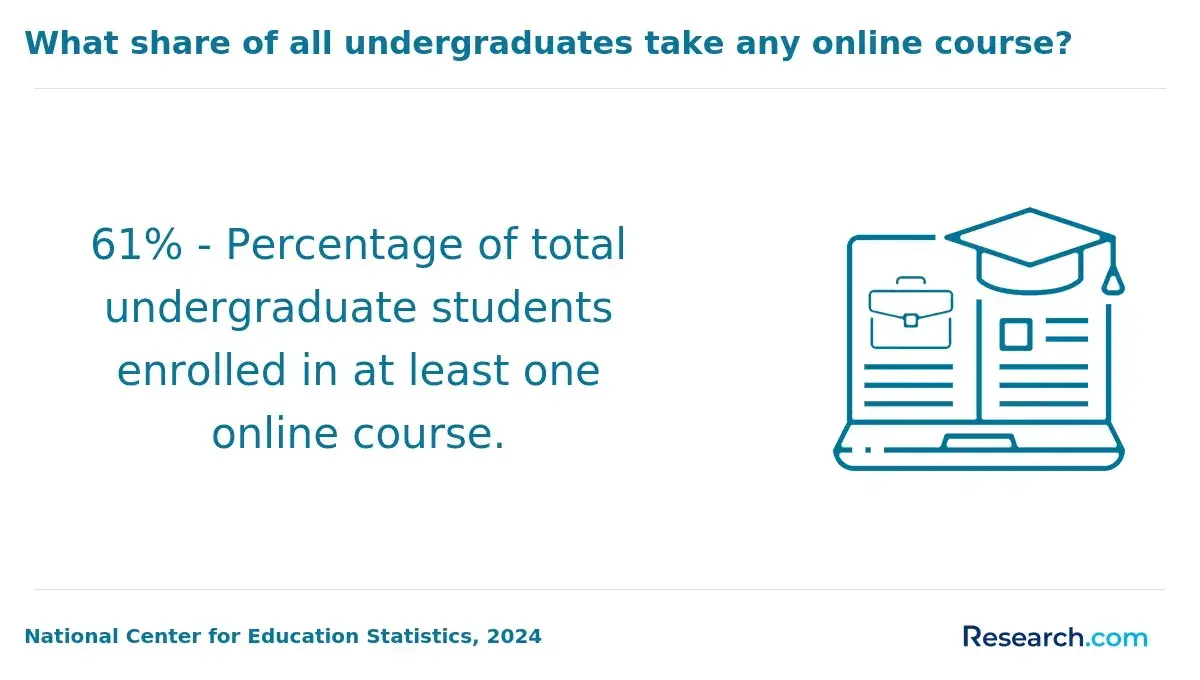
Online electrical engineering programs can work well for motivated students, especially adult learners, military students, transfer students, and working technicians moving toward engineering roles. The biggest challenge is not the lecture format; it is whether the program provides credible labs, proctored assessment, faculty access, design projects, employer connections, and accreditation.
Students asking can you get an engineering degree online should focus less on whether online study is accepted in general and more on whether a specific program meets employer, transfer, accreditation, and licensing expectations in the state where they plan to work.
The table below compares online and campus-based formats for students targeting high-growth electrical engineering states.
| Factor | Online electrical engineering program | Campus-based electrical engineering program | Best choice when |
| Flexibility | Often better for working adults and students outside major engineering hubs | Usually less flexible but more structured | Online is better if schedule flexibility is essential |
| Laboratory access | May use remote labs, lab kits, simulations, or required campus intensives | Usually provides direct access to physical labs and equipment | Campus is better if your target field depends heavily on hardware labs |
| Internships and recruiting | May require more self-directed networking in the student's local market | Often has stronger local employer pipelines and career fairs | Campus is better if you need structured recruiting access in a growth state |
| Cost control | Can reduce relocation and commuting costs, though tuition varies widely | May be cost-effective for in-state students near a public university | Compare total cost, not just tuition |
| Licensure planning | Requires careful verification of ABET status and state board acceptance | Often easier to verify when the program is established and ABET-accredited | Choose the format that clearly supports your PE pathway if licensing matters |
Online study is a strong option when the program is accredited, labs are credible, and the student can build local experience through internships or employer projects. Campus study may be better for traditional students who need hands-on lab access, peer design teams, faculty research, and direct recruiting from regional engineering employers.
What accreditation should electrical engineering programs have to support strong career prospects?
Accreditation is one of the most important quality checks for an electrical engineering degree. For engineering programs, the key programmatic credential is ABET accreditation through the Engineering Accreditation Commission for electrical engineering or a closely related engineering program.
Institutional accreditation also matters because it affects transfer credit, federal financial aid eligibility, graduate school admission, and employer recognition. ABET is especially important for students who may pursue the Fundamentals of Engineering exam, Engineer in Training status, or a Professional Engineer license.
Before enrolling, students should verify these accreditation details directly with the school and the accreditor because program names can be similar but lead to different outcomes:
- Confirm that the specific electrical engineering program is ABET-accredited, not just the university or a different engineering major.
- Check whether the accreditation applies to the delivery format you plan to use, especially if the program is online, hybrid, or offered at multiple locations.
- Review whether the program is engineering or engineering technology, because state licensing boards and employers may treat these pathways differently.
- Ask the program how graduates have performed on FE exam preparation, internships, senior design projects, and graduate school placement.
- Verify state authorization if you will complete an online program while living in a different state from the institution.
A major red flag is a school that highlights "engineering-style" coursework but does not clearly identify ABET status for the exact program. If PE licensure, utility work, consulting, public infrastructure, or regulated engineering practice may be part of your future, do not treat accreditation as optional.
Employer Confidence in Online vs. In-Person Degree Skills, Global 2024

What core courses and specializations best align with high-growth electrical engineering jobs?
High-growth electrical engineering jobs usually require both core fundamentals and specialization. Students should not skip the basics, because circuits, signals, electronics, electromagnetics, programming, controls, and power concepts appear across many industries even when job titles differ.
Students drawn to sustainability, energy policy, ecology, or conservation work may want to compare electrical engineering with an environmental science degree; both can connect to clean energy, but electrical engineering is more focused on technical design, power conversion, grids, electronics, and systems implementation.
The table below connects common electrical engineering specializations to growth-state industries so students can choose courses that match actual employer demand.
| Specialization | Relevant courses and skills | Industries where it matters | Growth-state fit |
| Power systems | Power analysis, protection, machines, smart grids, renewable integration | Utilities, data centers, consulting, infrastructure, renewable energy | Texas, Florida, North Carolina, Colorado, Nevada, Washington |
| Semiconductors and microelectronics | VLSI, device physics, fabrication, circuits, semiconductor manufacturing | Chip manufacturing, electronics, sensors, defense hardware | Arizona, California, Idaho, Texas, New Mexico |
| Embedded systems | C/C++, microcontrollers, real-time systems, digital logic, firmware | Automotive, robotics, aerospace, consumer electronics, medical devices | California, Texas, Massachusetts, Washington, Utah |
| Controls and automation | Control theory, PLCs, robotics, instrumentation, industrial networks | Manufacturing, automotive, logistics, energy, aerospace | Midwest states, Texas, North Carolina, Nevada, Arizona |
| RF and communications | Electromagnetics, antennas, signal processing, wireless systems | Defense, aerospace, telecom, satellites, connected devices | Colorado, California, Florida, Massachusetts, Virginia, Maryland |
| Power electronics | Converters, motor drives, battery systems, thermal design, EV systems | Electric vehicles, energy storage, renewable energy, industrial drives | Nevada, California, Texas, Michigan, North Carolina |
Students should also build tool fluency. MATLAB, Python, SPICE, CAD for circuits, PCB design tools, FPGA workflows, LabVIEW, and power-system analysis software can make coursework more employable when paired with real projects.
What are typical admission requirements and program lengths for electrical engineering degrees?
Electrical engineering programs are math-intensive, so admissions committees often look for evidence that students can handle calculus, physics, and analytical problem-solving. Requirements vary by institution, but competitive applicants usually show preparation in advanced math and lab science.
The table below summarizes typical requirements and timelines. Students should use it as a planning guide, then confirm exact policies with each school because transfer rules, prerequisites, and pacing can change the total time to completion.
| Program level | Common admission requirements | Typical length | Planning note |
| Associate degree or pre-engineering transfer pathway | High school diploma or equivalent, placement in math and English, possible prerequisite algebra or trigonometry | About 2 years full time | Confirm that credits transfer into the target bachelor's program before enrolling |
| Bachelor's degree in electrical engineering | High school diploma, strong math and science background, transcripts, possible test scores, essays, and selective engineering admission | About 4 years full time | Engineering sequences are structured, so missing calculus or physics early can delay graduation |
| Transfer bachelor's pathway | College transcripts, prerequisite calculus and physics, minimum GPA, and engineering course equivalencies | Often 2 to 3 years after transfer, depending on credits accepted | Use official articulation agreements when possible |
| Master's degree in electrical engineering | Bachelor's degree in engineering or related field, transcripts, recommendations, statement of purpose, and possible prerequisite coursework | About 1.5 to 2 years full time | Most valuable when aligned with a specialization such as power, RF, controls, or microelectronics |
| Graduate certificate | Bachelor's degree or technical background, depending on the program | Often less than 1 year to about 1.5 years | Works best for targeted upskilling rather than full career entry |
Cost can vary widely by residency, public or private institution, online fees, lab fees, equipment, housing, and time to graduation. The practical move is to compare net price after grants and scholarships, not just published tuition, and to ask whether engineering students commonly need an extra semester because of prerequisite sequencing.
How do licensing, certifications, and professional engineer status vary by state?
Not every electrical engineer needs a Professional Engineer license. PE status matters most for engineers who sign and seal plans, work in consulting, utilities, public infrastructure, building systems, power distribution, or roles where state-regulated engineering practice is involved. Hardware design, electronics, firmware, semiconductor, aerospace, and manufacturing roles may value experience and technical skills more than licensure, although licensing can still support advancement in some settings.
The general PE pathway is similar across states, but details are set by state engineering boards. Students and early-career engineers should plan early because degree type, ABET status, exam eligibility, and supervised experience can affect the timeline.
- Earn an appropriate engineering degree, preferably from an ABET-accredited engineering program if PE licensure may be part of your career path.
- Pass the Fundamentals of Engineering exam when eligible, often near graduation or soon after completing the degree.
- Gain qualifying engineering experience under appropriate supervision, with the required duration and documentation determined by the state board.
- Pass the Principles and Practice of Engineering exam in the relevant discipline, such as electrical and computer engineering, when state requirements are met.
- Maintain licensure through renewal, continuing education, ethics rules, and any state-specific practice requirements.
Certifications can also help, especially when tied to a specific job function. Examples include credentials or training in power systems, project management, safety, networking, automation platforms, cybersecurity, or vendor-specific tools. The mistake to avoid is collecting certificates without a target role; credentials are most valuable when they match employer requirements in your chosen state and industry.
How can students choose the best electrical engineering school in a high-growth state?
The best electrical engineering school is not always the highest-ranked school. A better choice is the program that connects your target specialization, budget, learning format, accreditation needs, internships, and geographic goals.
Students comparing graduate or professional study paths should also be honest about whether they want to design technical systems or organize information, research, and digital resources; someone leaning toward the latter may find an online library science masters more aligned than an engineering graduate program.
Use the following steps to compare schools in growth states without relying only on rankings:
- Start with accreditation by confirming ABET status for the exact electrical engineering program and format you plan to attend.
- Match the curriculum to your target field, such as power systems, semiconductors, embedded systems, controls, RF, or robotics.
- Review internship and co-op access with employers in the state, not just broad career-services claims.
- Ask about senior design projects, lab facilities, undergraduate research, design teams, and access to hardware tools.
- Compare total cost, including tuition, fees, housing, commuting, equipment, transfer-credit loss, and possible extra semesters.
- Check career outcomes carefully, including job titles, employer types, graduate school placement, and whether outcomes are reported for engineering students specifically.
- Consider location strategically by asking whether you want to stay in the state after graduation and whether local employers recruit from the program.
- Talk to current students or recent graduates about advising, course bottlenecks, lab access, workload, and internship support.
Common red flags include unclear accreditation, weak lab access, vague career outcomes, limited engineering advising, poor transfer-credit transparency, and programs that market flexibility but do not explain how students complete required labs. The right school should make the path from coursework to internship to entry-level role visible before you enroll.
Other Things You Should Know About Electrical Engineering Degrees
In 2027, states like Texas, California, and Florida are projected to have strong growth in electrical engineering careers due to their expanding tech industries and infrastructure projects. These states are investing heavily in technology advancements, renewable energy, and modernization of electrical grids, driving demand for skilled electrical engineers.
Some electrical engineering tasks can be remote, especially simulation, documentation, design review, coding for embedded systems, and analysis. Roles involving labs, testing, manufacturing, field work, utilities, or hardware troubleshooting often require at least some on-site work.
Common entry-level titles include electrical engineer, test engineer, controls engineer, power systems engineer, hardware engineer, applications engineer, field engineer, electronics engineer, validation engineer, and systems engineer. Students should search by skills as well as titles because employers use different naming conventions.
State licensing boards issue Professional Engineer licenses for electrical engineers. All 50 states use the NCEES Fundamentals of Engineering and Principles and Practice of Engineering exams, plus at least four years of qualifying work experience before PE licensure. Texas, California, and New York each have their own board rules and application processes.
References
- Applying for Multiple Engineering Licenses – Top Strategy https://www.pdh-pro.com/pe-resources/how-to-become-a-professional-engineer-in-multiple-states/
- Electrical Engineering Job Market: 2026 Outlook & Pay https://pathwise.io/electrical-engineering-job-market/
- Engineering Firm Licensing https://www.harborcompliance.com/engineering-firm-license-certificate-of-authorization
- Professional Engineering Licensure Around the World | SkyCiv Engineering https://skyciv.com/education/professional-engineering-licensure-around-the-world/
- Online Electrical Engineering Degrees - BSEE, MSEE https://www.onlineengineeringprograms.com/electrical
- Top Electrical Engineering Schools Ranked for 2025 - Delta Wye Electric https://deltawye.com/top-electrical-engineering-schools/