2027 Best Accredited Online Curriculum & Instruction Degree Programs: Compare Tuition, Admissions, and Career Outcomes

Co-Founder and Chief Data Scientist
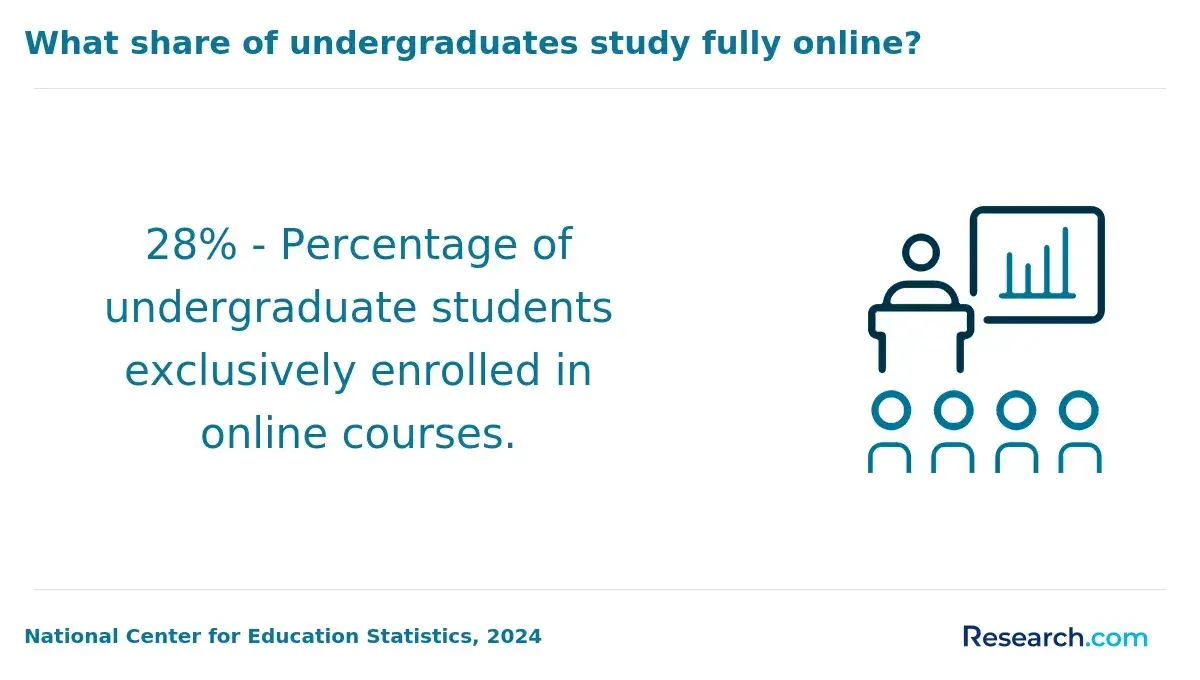
Choosing an online curriculum and instruction degree is a cost, time, and career decision, especially for teachers seeking leadership roles without leaving the classroom. Federal distance education data show that more than half of U.S. graduate students now take at least one online course, making program quality harder to judge from format alone.
This guide helps educators, career changers, and school leaders compare accredited programs by tuition, admissions, accreditation, flexibility, support, and likely career pathways so they can choose a degree that fits their goals and budget.
Key Things You Should Know
- Most online curriculum and instruction master's programs require about 30 to 36 credits, so total tuition often matters more than the advertised per-credit rate.
- The BLS reported a $74,720 median annual wage for instructional coordinators in May 2024, but outcomes vary by district, state licensure rules, experience, and employer type.
- Graduate students may borrow up to $20,500 per academic year in federal Direct Unsubsidized Loans, making total program cost and employer tuition support key ROI factors.
Which Accredited Online Curriculum & Instruction Degree Programs Offer the Best Overall Value?
The best overall value is usually not the cheapest program or the most selective program. For online curriculum and instruction degrees, value comes from a balanced mix of institutional accreditation, educator-focused coursework, reasonable tuition, flexible scheduling, strong faculty support, and career relevance for roles such as instructional coordinator, curriculum specialist, teacher leader, assessment specialist, or professional development coordinator.
Most students comparing these programs are already licensed educators, but not all programs are designed for the same goal. Some emphasize classroom practice and instructional design, while others prepare students for district-level curriculum leadership, educational technology, literacy, special education, or teacher leadership.
The table below summarizes common value profiles students should look for when comparing accredited online curriculum and instruction programs. Use it as a decision framework rather than a universal ranking, because tuition, state authorization, field requirements, and employer recognition can change.
| Program value profile | Best fit | What to compare carefully | Potential drawback |
| Low-cost public university online M.Ed. or M.S.Ed. | Licensed teachers seeking advancement with minimal debt | In-state versus out-of-state tuition, online fees, transfer credit, course rotation | May have fewer specialization options or cohort start dates |
| Accelerated online curriculum and instruction program | Working educators who want to finish quickly while staying employed | Weekly workload, session length, practicum expectations, academic calendar | Compressed courses can be demanding during the school year |
| CAEP-recognized education school program | Students who want stronger education-school quality signals | Specialized accreditation status, assessment data, field experience structure | May cost more than a comparable regionally accredited option |
| Program with instructional design or edtech concentration | Teachers interested in digital learning, corporate training, or LMS-based roles | Portfolio requirements, software exposure, project-based coursework | May be less aligned with state educator advancement rules |
| Research university online program | Educators considering doctoral study, policy work, or curriculum leadership | Faculty expertise, capstone or thesis options, alumni outcomes | Higher tuition may not pay off if the student only needs a salary-lane credential |
A good value program should make its total cost, accreditation, online schedule, and curriculum clear before you apply. Be cautious if a school highlights "online convenience" but makes it difficult to find credit requirements, tuition, state authorization disclosures, or whether the program leads to any licensure endorsement.
Students should avoid choosing by ranking alone. A nationally known university may be worth the premium if it provides a relevant concentration, strong mentoring, and better alignment with district leadership goals. However, a lower-cost accredited public program may produce stronger personal ROI if your main objective is a salary step, renewed professional expertise, or a curriculum role within your current school system.
What Accreditation Should Students Look for in an Online Curriculum & Instruction Degree Program?
Accreditation is the first quality screen for any online curriculum and instruction degree. At minimum, the institution should hold recognized institutional accreditation from an accreditor accepted by the U.S. Department of Education or the Council for Higher Education Accreditation. This matters for federal financial aid, transferability, employer recognition, and eligibility for some district pay scales.
Programmatic accreditation can add another layer of confidence. In education, the Council for the Accreditation of Educator Preparation, known as CAEP, is a common specialized accreditor. Not every strong curriculum and instruction master's program has CAEP accreditation, especially if it does not lead to initial teacher licensure, but CAEP recognition can be useful when comparing education schools.
Students should check these accreditation and approval items before applying, because they affect both academic quality and practical career use.
- Institutional accreditation: Confirm the university itself is accredited by a recognized institutional accreditor, not merely "approved" by a private organization.
- Education-school accreditation: Look for CAEP or another relevant education quality indicator if you want a program with external review of educator preparation standards.
- State authorization: Verify the school is authorized to enroll online students in your state, especially if you live outside the institution's home state.
- Licensure or endorsement alignment: Ask whether the degree leads to, supports, or does not affect teacher licensure, curriculum specialist endorsement, reading endorsement, or administrative credentials in your state.
- Employer recognition: If you want a salary lane change, ask your district whether the specific degree and institution qualify before enrolling.
A common mistake is assuming that "accredited" automatically means "meets my state's licensure rules." Many curriculum and instruction programs are advanced professional degrees, not initial teacher licensure programs. If your goal is to become a licensed teacher, school administrator, reading specialist, or instructional coach under a specific state credential, contact your state education agency and the university in writing before committing.
How Do Tuition Costs Compare Across Accredited Online Curriculum & Instruction Degree Programs?
Tuition varies widely because schools price online graduate education differently. Some charge a flat online rate for all students, while others use separate in-state and out-of-state tuition, program fees, technology fees, or per-course fees. Because most programs require around 30 to 36 credits, a small per-credit difference can become a large total-cost difference.
The table below shows how cost categories typically compare. It is designed to help you estimate total cost before you request financial aid, not to replace each school's official tuition page.
| Cost category | Typical pattern in online curriculum and instruction programs | What it means for students |
| Lower-cost public or educator-focused programs | Often marketed with total tuition below many private university options | Best for teachers seeking advancement with less borrowing, but check fees and course availability |
| Mid-range public university programs | May charge a consistent online rate or separate resident and nonresident tuition | Can offer a strong balance of reputation, faculty depth, and affordability |
| Private nonprofit university programs | Often higher tuition, though discounts, scholarships, or employer partnerships may reduce net price | Worth considering if the curriculum, concentration, support, or alumni network is clearly stronger for your goal |
| Accelerated cohort programs | May advertise predictable total tuition and multiple start dates | Helpful for planning, but the pace can limit your ability to work overtime or take extra school duties |
| Programs with required fieldwork or campus visits | May add travel, background check, testing, or placement costs | Important for students outside the university's state or commuting region |
To compare programs fairly, calculate the total degree cost instead of focusing only on tuition per credit. Include application fees, graduation fees, books, software, required assessments, background checks, travel for residencies, and the opportunity cost of reducing work hours.
Accelerated timelines can reduce indirect costs if they help you finish sooner. Students comparing education options may also find it useful to review how other compressed graduate models are structured, such as a 1-year master's degree, because the same trade-off applies: speed can improve convenience, but only if the workload is realistic.
The most affordable program is not always the best investment. If a slightly more expensive program offers stronger advising, better capstone support, a relevant specialization, or clearer alignment with your district's advancement rules, the extra cost may be justified. On the other hand, paying more for name recognition alone is risky if your employer treats all accredited graduate credits the same.
How Competitive Is Admission to Accredited Online Curriculum & Instruction Degree Programs?
Admission to online curriculum and instruction programs is usually moderately selective rather than highly competitive. Many programs are designed for working educators and evaluate applicants based on bachelor's degree completion, undergraduate GPA, teaching experience, professional goals, recommendations, and sometimes an active teaching license.
GRE requirements are less common than they once were in many professional master's programs, including education. However, test-optional admission does not mean the program lacks rigor. Schools may instead emphasize professional experience, writing samples, statements of purpose, and evidence that applicants can manage graduate-level work while employed.
The table below outlines common admissions expectations and how they affect different applicants.
| Admissions factor | Common expectation | Who should pay close attention |
| Bachelor's degree | Required from an accredited institution | Career changers and applicants with international or nontraditional credentials |
| Minimum GPA | Often around a 2.75 to 3.0 threshold, though policies vary | Applicants with lower undergraduate GPAs who may need conditional admission |
| Teaching license | Required for some programs, optional for others | Non-licensed instructional designers, trainers, or career changers |
| Professional experience | Frequently preferred or required for advanced educator programs | New graduates without classroom experience |
| Statement of purpose | Used to assess goals, writing ability, and fit | Applicants changing fields or seeking leadership roles |
| Recommendations | May come from principals, supervisors, faculty, or instructional leaders | Applicants who need to demonstrate readiness beyond GPA |
Before applying, ask admissions counselors whether the program is built for licensed teachers, aspiring teachers, or broader learning professionals. This single question can prevent a costly mismatch. A licensed teacher seeking curriculum leadership may not benefit from a program designed mainly for general instructional design, while a corporate trainer may not need a degree built around K-12 standards and classroom assessment.
Applicants who prefer flexible admissions policies may also compare how other online graduate fields handle test waivers, such as top MBA programs that don't require GMAT or GRE. The larger lesson is the same across fields: evaluate academic expectations, not just whether a standardized test is required.
Which Learning Formats Offer the Greatest Flexibility in Online Curriculum & Instruction Degree Programs?
The most flexible online curriculum and instruction programs are usually asynchronous, meaning students can complete weekly assignments without attending live classes at fixed times. This format works well for full-time teachers, parents, coaches, and administrators whose schedules change during the school year.
Flexibility, however, is not only about whether lectures are live. Students should also compare start dates, course length, practicum requirements, group projects, field-based assignments, and whether courses are offered every term. A program can be fully online but still difficult to complete if required courses are offered only once per year.
The table below compares common online formats and the students they fit best.
| Online format | How it works | Best fit | Main caution |
| Asynchronous online | Students complete weekly modules, readings, discussions, and assignments on their own schedule | Working teachers who need maximum scheduling control | Requires strong self-management and consistent weekly planning |
| Synchronous online | Students attend live virtual classes at set times | Learners who want real-time discussion and faculty interaction | May conflict with school events, family duties, or different time zones |
| Accelerated sessions | Courses run in shorter blocks, often 7 or 8 weeks | Students who want faster completion and can handle intensive coursework | Workload can spike during grading periods or standardized testing season |
| Cohort-based online | Students move through the program with the same peer group | Educators who value networking, accountability, and structured pacing | Less flexibility to pause, slow down, or change course order |
| Hybrid or low-residency | Most coursework is online, with limited campus or field-based requirements | Students who want some face-to-face connection or local school placements | Travel costs and scheduling may reduce convenience |
Students considering a fast program should test the workload before enrolling full time. Review syllabi, ask how many hours students spend per course each week, and confirm whether assignments can be completed in your current school or workplace. Similar acceleration trade-offs appear in other fields, including programs marketed as the fastest psychology degree, where speed is valuable only when the pace supports real learning.
A common red flag is a program that advertises "finish quickly" without explaining course sequencing, capstone expectations, or how many courses students usually take while working full time. The best format is the one you can complete consistently without sacrificing job performance, family obligations, or academic quality.
What Student Support Services Improve Success in Online Curriculum & Instruction Degree Programs?
Strong student support can be the difference between finishing on schedule and stopping out. Online graduate students often balance lesson planning, grading, family responsibilities, and professional development requirements, so they need responsive services that work outside normal campus hours.
Look for support that directly affects persistence, academic quality, and career usefulness. The following services are especially important for online curriculum and instruction students because the degree often includes applied projects, research assignments, and leadership-focused work.
- Dedicated academic advising: Advisors should help students map course sequences, understand transfer credit, and avoid delayed graduation due to missed prerequisites.
- Faculty access: Instructors should offer virtual office hours, timely feedback, and clear expectations for applied curriculum projects.
- Online library and research help: Graduate education courses often require evidence-based practice, literature reviews, and data-informed instructional decisions.
- Writing and citation support: This is especially valuable for students returning to school after several years in the workforce.
- Technology support: Reliable help with learning management systems, video tools, and digital portfolio platforms reduces avoidable frustration.
- Career and leadership coaching: Students pursuing instructional coach, curriculum specialist, or district-level roles should have access to resume, interview, and portfolio guidance.
- Field placement or workplace project guidance: If the program requires school-based assignments, staff should explain how those projects can be completed in the student's own setting.
Ask how quickly faculty and support teams respond to online students. A program may have excellent campus resources but limited evening or weekend availability. For working educators, service hours and response times are not small details; they affect whether problems get solved before assignment deadlines.
Another common mistake is ignoring peer connection. Cohorts, discussion groups, professional learning communities, and group projects can help students build networks beyond their own school district. This matters because many curriculum and instruction roles are filled through professional reputation, internal leadership experience, and demonstrated project work.
Which Financial Aid Options Are Available for Accredited Online Curriculum & Instruction Degree Students?
Accredited online curriculum and instruction students may qualify for the same major federal financial aid programs as campus-based graduate students, provided the school and program meet eligibility rules. The most common federal option is the Direct Unsubsidized Loan, which allows eligible graduate students to borrow up to $20,500 per academic year. Borrowing that amount is not automatically wise, but the limit helps students understand the scale of federal loan access.
Financial aid should be evaluated by net cost, not just the award amount. A larger aid package that relies heavily on loans may be less attractive than a smaller package with grants, scholarships, employer reimbursement, or district tuition assistance.
The table below summarizes common funding sources and the trade-offs students should consider.
| Financial aid option | How it may help | Key limitation |
| Federal Direct Unsubsidized Loans | Available to many eligible graduate students enrolled at qualifying institutions | Interest accrues, and repayment responsibility remains even if career plans change |
| Graduate PLUS Loans | Can help cover costs beyond unsubsidized loan limits | Requires credit review and can increase debt substantially |
| University scholarships | May reduce tuition for education students, online learners, or high-achieving applicants | Funding may be competitive, limited, or unavailable every term |
| Employer or district tuition assistance | Can significantly improve ROI for working educators | May require continued employment, grade minimums, or approved program lists |
| TEACH Grant | May support eligible students preparing for high-need teaching fields | Service obligations are strict, and grants can convert to loans if requirements are not met |
| Payment plans | Can spread tuition over a term without taking larger loans | Does not reduce total cost and may include enrollment fees |
Students should compare financial aid offers after calculating total program cost. Use the same assumptions for each school: credits required, fees, books, travel, expected scholarship renewal, employer reimbursement, and how many terms you will be enrolled.
Affordability research in other online degree areas can help students think more broadly about net price. For example, guides to the cheapest online business management degree show why comparing total cost, not sticker price alone, is essential across professional programs.
One red flag is borrowing the maximum available without linking the degree to a realistic advancement path. Before accepting loans, ask your district or target employer whether the degree affects salary, promotion eligibility, instructional coach opportunities, or leadership pathways.
Which Career Outcomes Are Associated With Accredited Online Curriculum & Instruction Degree Programs?
An accredited online curriculum and instruction degree is most commonly associated with advancement within education rather than entry into the profession. Many students are licensed teachers who want to move into curriculum design, instructional coaching, assessment, professional development, or school and district leadership support roles.
The clearest labor-market match is the instructional coordinator occupation. The BLS reported a $74,720 median annual wage for instructional coordinators in May 2024 and projected slower-than-average employment growth for the occupation. For students, this means the degree can be valuable, but competition and local district budgets matter. Experience, leadership projects, certification, and demonstrated curriculum results may carry as much weight as the degree itself.
The table below connects common career goals with the type of program features that may support them.
| Career goal | Relevant responsibilities | Program features to prioritize |
| Instructional coordinator | Evaluate curricula, support teachers, analyze instructional data, align materials with standards | Curriculum evaluation, assessment literacy, data-informed decision-making, school-based projects |
| Instructional coach | Mentor teachers, model instructional strategies, support professional learning | Adult learning, coaching methods, classroom observation, teacher leadership |
| Curriculum specialist | Develop or revise instructional materials across grades or subjects | Standards alignment, subject-area methods, equity-focused curriculum design |
| Education technology specialist | Support digital tools, online learning, LMS use, and technology-enhanced instruction | Instructional technology, digital assessment, universal design for learning |
| Professional development coordinator | Design training for teachers or staff, evaluate learning outcomes, lead workshops | Adult education, program evaluation, facilitation, applied capstone projects |
| Doctoral or leadership pathway candidate | Move toward research, policy, administration, or organizational leadership | Research methods, thesis or capstone depth, faculty mentoring, leadership coursework |
This degree may be worth it if your current or target employer rewards graduate education, if you want to specialize beyond classroom teaching, or if you can build a portfolio of applied curriculum work during the program. It may be less useful if your goal is immediate teacher licensure, school principal certification, counseling licensure, or a non-education corporate role that prefers business, HR, analytics, or instructional design credentials.
Educators considering long-term leadership or research paths may later compare doctoral options, including an online PhD organizational leadership. A master's in curriculum and instruction can be a stepping stone, but doctoral study is a separate investment that should match a clear leadership, research, or administrative goal.
How Do Online and Campus-Based Curriculum & Instruction Degree Programs Compare?
Online and campus-based curriculum and instruction programs can cover the same academic content, but the student experience differs. Online programs usually appeal to working educators who need scheduling flexibility, while campus-based programs may appeal to students who want face-to-face networking, local school partnerships, or easier access to in-person faculty relationships.
The table below compares the practical differences that usually matter most when choosing between formats.
| Factor | Online program | Campus-based program |
| Scheduling | Often asynchronous or evening-friendly, with more options for working teachers | May require fixed class times and commuting |
| Location | Can allow enrollment outside the local region if state authorization permits | Best for students near campus or local partner schools |
| Networking | Often includes peers from multiple districts or states | May provide stronger local professional connections |
| Applied projects | Often completed in the student's current school or workplace | May use local placements, labs, or campus-supported partnerships |
| Cost structure | May reduce commuting and relocation costs, though online fees can apply | May include commuting, parking, and schedule-related opportunity costs |
| Learning style fit | Best for self-directed students comfortable with digital communication | Best for students who learn better through in-person discussion and immediate interaction |
Online programs are not automatically easier. They often require more self-direction because students must manage readings, discussions, video lectures, and applied projects without the structure of weekly campus attendance. Campus programs are not automatically higher quality either; accreditation, faculty expertise, curriculum, support, and outcomes are better indicators than delivery format alone.
Choose online if you need to keep teaching full-time, live far from a university, or want access to a specialization not offered locally. Choose campus-based or hybrid study if you value in-person mentoring, need local field placements, or learn best through real-time classroom discussion.
How Should Students Choose the Best Accredited Online Curriculum & Instruction Degree Program?
The best accredited online curriculum and instruction program is the one that matches your professional goal, budget, schedule, and state or employer requirements. A strong choice should be affordable enough to avoid unnecessary debt, flexible enough to complete while working, and specific enough to support the role you want after graduation.
Use the following steps to compare programs in a practical order. This sequence helps you avoid the common mistake of falling in love with a brand name before verifying cost, fit, and career relevance.
- Define your main goal: salary advancement, instructional coaching, curriculum leadership, edtech, doctoral preparation, or professional renewal.
- Verify institutional accreditation and, when relevant, education-school accreditation or state approval.
- Ask your district, licensing board, or target employer whether the degree supports salary movement, endorsement, or promotion eligibility.
- Calculate total cost using required credits, tuition, fees, books, travel, and expected time to completion.
- Compare curriculum requirements, not just program names, because "curriculum and instruction" can mean very different things across schools.
- Review the online format, course rotation, start dates, synchronous requirements, and whether you can pause enrollment if needed.
- Ask about capstone, practicum, portfolio, or field-based projects and whether they can be completed in your current school or workplace.
- Evaluate support services, especially advising, faculty access, library help, writing support, and career coaching for online students.
- Compare financial aid offers by net cost and debt, not by the size of the award letter.
- Speak with current students or alumni if possible, and ask what surprised them about workload, faculty responsiveness, and career usefulness.
Students should also decide what not to prioritize. Admissions flexibility can be helpful for working adults, but it should not outweigh accreditation or curriculum fit. Low tuition is important, but it should not override poor support or unclear course sequencing. Prestige can matter in some leadership markets, but it may not justify a higher price if your district uses a standard salary schedule.
The strongest final shortlist usually includes three to five programs: one lowest-cost accredited option, one best-fit specialization, one strongest reputation option, and one most flexible schedule option. Compare them side by side, then choose the program that gives you the clearest path to your next professional step without taking on more cost or complexity than necessary.
Other Things You Should Know About Curriculum & Instruction
Students in a 2027 curriculum and instruction program can anticipate developing skills in lesson planning, educational assessment, and utilizing instructional technology. They will also gain expertise in creating inclusive learning environments and understanding diverse learning styles to improve educational outcomes.
In 2027, online curriculum and instruction degree programs typically offer financial aid through scholarships, grants, and federal student loans. Prospective students should check each program's website for specific financial aid opportunities and application deadlines to ensure eligibility and timely submission.
Yes, you can enroll in a 2027 curriculum and instruction degree program even if you are not a licensed teacher. Many programs are designed for individuals seeking to understand curriculum development and instructional strategies, regardless of whether they hold a teaching license, broadening entry opportunities.
References
- Links | ECLBS EU Council of Business Schools https://www.eclbs.eu/list
- Distance Learning | The International Education Accreditation ... https://www.ieaaedu.com/distance-learning/
- A Guide to Worldwide Recognized Accrediting Agencies https://www.qahe.org/article/a-guide-to-worldwide-recognized-accrediting-agencies/
- Accreditation Guide - Quality Online Schools | Sora Schools https://soraschools.com/blog/accreditation-a-parents-guide-to-quality-online-schools
- Accreditation of Online Courses | European Association for Higher Education Advancement https://www.eahea.org/international-online-course-accreditation.html
- Major Differences https://www.educationnext.org/major-differencecs-why-some-degrees-cost-colleges-more-than-others/
- Cost of Online College vs. In-Person | Touro University Worldwide https://www.tuw.edu/school-news/cost-of-online-college-vs-in-person/
- Why Employment Outcome Rates Matter | ACI Learning https://www.acitechacademy.com/blog/why-employment-outcome-rates-matter-a-guide-for-students-and-employers/
- Top 10 Online Master’s in Education Degrees https://www.topeducationdegrees.org/top-online-masters-in-education/