2027 Keiser University Online Degree Costs Compared: Which Programs Are Most Affordable?

Co-Founder and Chief Data Scientist
Prospective students face a confusing array of online tuition rates and fees when examining Keiser University's programs. Distinguishing between base tuition, digital platform fees, and supplemental costs proves critical. One report indicates that average national online tuition rose 4.2%, while fees related to technology and distance education added an extra 10% on average, complicating straightforward budget planning. For students aiming to avoid unexpected expenses, understanding these cost layers is essential in evaluating the true affordability of each program.
This article compares the full cost profiles of Keiser University's online degrees. It highlights which programs offer better financial value by accounting for hidden fees and net costs after typical aid. Readers will gain a clearer view on how to identify online degree options that balance cost efficiency and practical outcomes in their specific fields.
Key Points About Keiser University Online Degree Costs and Affordability
- Keiser University's total attendance fees average $45,701, exceeding base tuition of $54,232 due to additional costs like fees and supplies, highlighting the need to factor non-tuition expenses when assessing affordability.
- Books and supplies add around $4,000, which can significantly increase budget requirements for online students beyond tuition and fees.
- Tuition varies by program, with higher per-credit costs in business and healthcare compared to lower rates in liberal arts, affecting total costs and value based on chosen fields.
How Much Does an Online Degree Cost at Keiser University?
Online degree costs at Keiser University are mid-range within the private nonprofit sector but can surpass those at public institutions due to per-credit tuition rates around $430 for undergraduate programs and over $500 for graduate-level courses. These costs are steady regardless of residency, unlike many public alternatives where state residency drastically lowers expenses. Financial aid and scholarships help offset sticker prices, but net costs remain relatively high compared to online-focused public universities with generous transfer-credit policies and lower ancillary fees.
A cost-conscious learner seeking flexibility might weigh Keiser University's asynchronous model, which often commands premium tuition reflecting added tech and support services. For example, a working adult aiming for an associate degree could face higher total costs here than at public online options but gain value via employer-aligned curricula and accreditation recognized across multiple states. The rise in online tuition by roughly 3.6% annually noted in recent IPEDS data signals growing price pressure, especially for asynchronous delivery, urging students to balance upfront expense against long-term employment prospects.
Keiser University's pricing can be justified by reported student outcomes and practical return on investment where specialized programs align with labor market demand. However, prospective students must critically evaluate whether the added cost delivers tangible advantages over less expensive, equally accredited public or nonprofit online providers with broader transfer policies and more accessible academic resources.
Which Online Degree Programs at Keiser University Are the Most Affordable?
Associate degrees in Health Sciences and Business Administration are the most affordable online programs at Keiser University. Their typical 60-credit requirement, combined with an average per-credit cost of $415, offers a notably lower baseline expense than bachelor's degrees, which require twice the credits at a higher per-credit rate. This structure suits students seeking faster completion without sacrificing credential value.
Financial aid and institutional discounts further enhance affordability. Keiser applies a standard 15% discount for eligible online learners, easing the upfront financial burden. Targeted scholarships in select health fields reflect labor market demand, offering additional relief that can tip decision-making in favor of these associate pathways over more expensive options.
A 2024 UPCEA report highlights that online associate degrees in digital health fields remain among the cheapest nationally, with total tuition costs averaging $24,900. This alignment affirms Keiser University's competitive pricing in healthcare-related programs, reinforcing their appeal to students focused on cost-effectiveness without compromising career relevance.
Budget-conscious learners should weigh affordability against curriculum quality, employer recognition, and support services. While initial costs may be lower, program flexibility and credit transfer policies critically affect total completion time and employment outcomes. Selecting a program with employer-valued credentials and robust online support optimizes both financial investment and long-term occupational prospects.
How Do Online Bachelor's, Master's, and Doctoral Program Costs Compare at Keiser University?
Online program costs at Keiser University reveal a clear stratification by degree level that impacts student affordability and decision-making. Bachelor's degrees typically charge a lower tuition rate per credit hour, making them the most accessible option for those new to higher education. Master's programs demand higher per-credit tuition but often require fewer total credits, balancing overall expenses. Doctoral degrees incur the highest per-credit tuition plus additional costs such as residency requirements and professional fees, which raise total costs significantly. Recent IPEDS data shows graduate online programs nationally have a 20-30% tuition premium over undergraduate options, reflecting specialized instruction and resources. Below is a breakdown of key cost factors affecting affordability at Keiser University online.
- Bachelor's Tuition Rate: Keiser University's online bachelor's programs feature the lowest per-credit tuition, appealing to students seeking foundational credentials at a manageable cost. This upfront expense benefits those aiming to minimize debt while completing general education and major prerequisites.
- Master's Credit Requirements: Although charged at a higher tuition rate, these programs usually require fewer total credits than bachelor's degrees. This can shorten enrollment duration and reduce cumulative fees, especially for learners aiming to accelerate their studies.
- Doctoral Program Fees: In addition to the highest tuition per credit, doctoral students must budget for mandatory on-campus residencies and professional fees. These costs increase the total investment but are often necessary for those pursuing academic or research-intensive careers.
- Mandatory Program Fees: Bachelor's level fees remain modest compared to graduate tiers, which typically include technology and resource fees. These incremental costs can influence net affordability and should be factored into financial planning for all degree seekers.
- Financial Aid Impact: Availability varies widely by degree level, and strategic use of aid or employer tuition benefits significantly affects net cost. Students exploring the easiest masters degree to get online options may find this particularly relevant when assessing value against upfront pricing.
What Is the Cost Per Credit Hour for Online Programs at Keiser University?
Keiser University's online tuition rates present a consistent pricing model without residency discounts, which means out-of-state and in-state students pay the same per credit hour. This approach simplifies budgeting but positions Keiser's costs somewhat above private online averages, as the 2024 CHLOE report notes private institutions average $395 per credit hour. The steady tuition structure includes mandatory fees that raise the total per-credit cost, and the lack of tuition variation based on credit load can affect affordability depending on student course pace. Below are key cost points for various online programs and scenarios to consider.
- Undergraduate Online Courses: Tuition runs about $420 per credit hour, plus approximately $25 in fees. Students enrolling full-time or part-time should expect this uniform rate, making accelerated completion or steady enrollment crucial to managing total costs effectively.
- Graduate-Level Online Courses: Graduate tuition is higher at roughly $455 per credit hour with the same fee structure. This rate suits students pursuing master's degrees who can maintain regular enrollment without relying on per-credit discounts, which Keiser does not offer.
- Associate Degrees and Certificate Programs: These often represent the most affordable entry points, featuring the lowest per-credit charges within Keiser's online offerings. They appeal primarily to students aiming for shorter, targeted credentials at a reduced cumulative cost.
- Flat Tuition Caps for Selected Programs: Some programs have capped tuition, preventing unexpected increases over time. This benefits students planning longer-term enrollment, ensuring predictable expenses despite steady per-credit fees.
- Cost Compared to Competency-Based Education Models: Keiser's traditional pricing contrasts with CBE programs, which may charge flat fees regardless of credit completion time. Students requiring flexibility or accelerated pathways might find CBE formats financially advantageous versus Keiser's steady per-credit pricing model.
Prospective students concerned about the average net cost of attendance at Keiser University Florida must weigh these factors carefully, particularly since total costs combine tuition and fees uniformly across programs. For students exploring cost-effective degree choices aligned with workforce outcomes, comparing programs including those offering fun majors in college that pay well is a critical step toward maximizing return on investment.
What Additional Fees and Expenses Should Online Students Expect at Keiser University?
The actual affordability of an online degree at Keiser University stretches beyond listed tuition to include a variety of mandatory fees and incidental expenses. These can shift the real cost significantly, often catching students unprepared. For instance, a student enrolled in a hybrid health sciences program might face unexpected travel costs due to residency requirements, on top of standard fees, which complicates budgeting. Understanding these additional costs sheds light on true affordability challenges and strategic planning needs. The following key fees and expenses highlight what online learners at Keiser University should anticipate and consider in their financial planning.
- Technology Fee: This fee covers access to digital learning platforms, software licenses, and IT support essential for course completion. It typically applies every term and is one of the more predictable costs that students can factor into their budgets upfront.
- Program-Specific Fees: These charges vary widely depending on the discipline, such as specialized lab simulations for healthcare programs. These fees can be the highest additional cost, often unavoidable given the nature of hands-on training requirements.
- Books and Supplies: Estimated at roughly $4,000, this covers both physical and digital materials. Recent inflation trends show a 7% annual increase in digital textbook prices, making this an increasingly significant financial consideration for students reliant on virtual resources.
- Proctored Exam Fees: Some online courses require supervised assessments that come with separate charges, which students may not see upfront. These unexpected fees can add unpredictability to overall expenses if not anticipated early in the program.
- Residency-Related Travel and Accommodation: Certain hybrid programs enforce in-person attendance periods requiring travel, lodging, or meals. These costs are highly variable and may disrupt the affordability advantage typically associated with online study if not carefully planned for.
Does Keiser University Offer Financial Aid, Scholarships, and Tuition Discounts for Online Students?
Keiser University provides meaningful financial aid options for online students, including FAFSA-based grants, institutional scholarships, military benefits, employer tuition reimbursement, and transfer awards. These funding sources help reduce sticker prices, though online-specific tuition discounts are not broadly advertised and may be limited compared to on-campus reductions.
For instance, a full-time undergraduate completing FAFSA can expect average aid awards of $8,300, substantially lowering out-of-pocket costs. Part-time or nondegree learners face fewer aid opportunities, making their actual expenses closer to published tuition rates. Military-affiliated students or those with employers offering tuition support can access additional savings, often crucial for balancing work and study demands.
Pell Grant use among distance learners has increased to nearly 40%, reflecting broader federal support for online education affordability. This trend matters because it shows a growing acknowledgment that online students deserve financial assistance comparable to traditional students, which helps close gaps in educational access and cost burden.
Prospective students should verify aid eligibility by completing FAFSA early, checking scholarship deadlines, and reviewing renewal criteria. Comparing total net price after aid provides a practical snapshot of true expenses before enrollment, avoiding surprises from assumed tuition discounts that might not apply to every program.
One Keiser University graduate recalled, "I almost dropped out because the software licensing fee wasn't in the brochure. But after applying for the employer tuition reimbursement and a transfer scholarship, my costs dropped enough to keep going. Knowing the deadlines for FAFSA and institutional aid really saved me in crunch time."
Do In-State and Out-of-State Students Pay Different Online Tuition Rates at Keiser University?
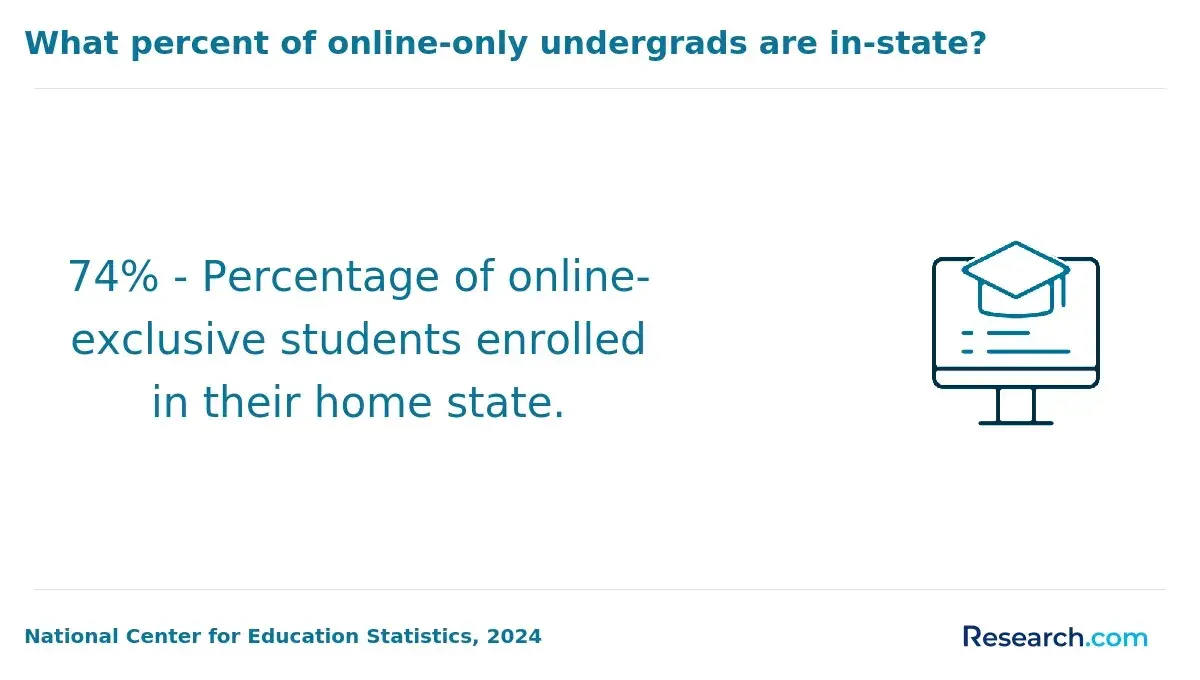
Keiser University charges the same online tuition rate for both in-state and out-of-state students, unlike many public institutions that impose higher non-resident fees. This flat-rate online tuition model, with a total cost of $54,232 for a complete degree, offers predictability but limits affordability options based on residency. The approach stands out as most institutions have adjusted pricing due to the State Authorization Reciprocity Agreement, with around 70% now waiving or lowering non-resident premiums for online learners. Keiser's uniform policy simplifies budgeting but lacks the cost advantages that some public or nonprofit programs offer to local students.
For military members, transfer students, or working adults, the fixed tuition may reduce confusion since eligibility for financial aid benefits 96% of Keiser's students, regardless of residency. Employer partnerships and military benefits can also help offset this upfront expense, making the overall investment less daunting. However, students should be cautious, as the absence of residency-based rates means some learners might pay more here than at institutions that discount tuition for in-state enrollees.
In practice, a non-resident considering a program at a public university with variable rates might save thousands compared to the flat cost at Keiser University. Transfer credits and mandatory fees also influence affordability and must be accounted for beyond the headline tuition. Compared to other options, Keiser's pricing policy simplifies fee structures but could result in a higher total cost for local residents who qualify for reduced rates elsewhere.
Before enrolling, prospective students should verify all aspects of the tuition structure, including potential hidden fees, transfer credit acceptance, and aid eligibility. Checking state residency rules is critical, especially for online learners. Those seeking the cheapest accredited online college experience should balance Keiser's uniform pricing against other programs that offer residency discounts or flexible cost options.
How Does Keiser University Compare to Other Universities for Online Degree Affordability?
Comparing Keiser University's online degree affordability against similar institutions reveals a nuanced cost-benefit picture where financial aid accessibility and program flexibility matter as much as sticker tuition. Unlike many public universities that differentiate sharply between in-state and out-of-state tuition, Keiser caters to non-traditional students such as military members and working adults with more consistent aid options, potentially lowering net costs despite initially higher base rates. Recent research by the National Center for Education Statistics shows online tuition rates can vary up to 35% between comparable schools. This highlights how institutional aid models and residency rules shape the real affordability landscape students face. The following points outline key factors driving Keiser's online degree value relative to public and private nonprofit peers:
- Financial Aid Reception Rate: Keiser's notably high 96% aid reception rate allows most students to significantly offset tuition, making net costs more manageable compared to peers with less flexible or less generous aid packages.
- Residency-Agnostic Tuition Policies: Unlike many public universities that charge reduced tuition based on residency, Keiser applies more uniform tuition discounts, which benefits out-of-state and transfer students who often encounter higher fees elsewhere.
- Program Specialization Impact: Total costs vary widely with the chosen specialization and credit load, so comparing programs within Keiser and against rivals requires understanding these individual factors rather than relying on base tuition alone.
- Non-Traditional Student Support: Keiser emphasizes aid strategies tailored to working adults and military students, offering flexibility that public and nonprofit competitors might lack, enhancing affordability for these groups.
- Outcome Focus Over Sticker Price: Given variable tuition and aid, students should weigh post-graduation employment relevance and earning potential alongside initial outlays to judge value properly.
- Institutional Aid Models Versus Market Position: Keiser's approach contrasts with private nonprofits that may offer upfront scholarships differently, altering true out-of-pocket expenses in ways that affect long-term ROI.
- Fluctuating Online Market Pricing: The wide 35% tuition variation nationally underscores the importance of personalizing one's cost analysis to include aid eligibility, discount availability, and career outcomes rather than simply comparing published rates.
One Keiser online graduate, juggling full-time work and family, shared how cost drove his choice: "I almost dropped out because the software licensing fee wasn't in the brochure, and that hit my budget tight. I'd looked at state schools, but out-of-state rates made that untenable. Keiser's aid made the final number workable, though it wasn't cheap upfront. After finishing, I landed a job that covered my loans this year, which took pressure off quickly. Without the flexible aid options they offered, I might have delayed starting altogether."
Which Online Degrees at Keiser University Offer the Best Value for Money?
When evaluating online degrees at Keiser University, programs in health-related fields such as Registered Nursing and Health Services/Allied Health stand out for delivering the strongest balance of affordability, academic quality, flexibility, and career payoff. Key factors shaping value include tuition rates, program lengths, transfer credit policies, and workforce salary outcomes. These elements combine to affect how quickly graduates can recoup education costs and build sustainable careers. Below are important considerations for prospective students assessing which online degrees provide the best value for Florida students seeking affordable tuition rates.
- Registered Nursing Alumni Salary: Graduates average $62,512 annually, reflecting high demand and a superior earnings-to-debt ratio compared to Keiser's overall average. This program suits students aiming for solid financial returns in healthcare.
- Transfer Credit Flexibility: Keiser generally accepts transfer credits, reducing time and total cost. Students with prior coursework benefit by accelerating completion and lowering expenses.
- Homeland Security and Dietetics Earnings: Alumni from these programs earn over $45,000 on average, offering appealing mid-tier income prospects for those pursuing specialized but less saturated fields.
- Biology and Psychology Salary Limitations: These degrees yield lower average salaries near $25,000-$29,000, which may challenge long-term ROI despite shorter credit requirements.
- Business Administration and Criminal Justice Mid-Tier Value: Both fields report earnings around $34,000, reflecting moderate growth potential. Students should weigh program length and tuition alongside career goals.
- Income-to-Debt Benchmark: College Scorecard data indicates effective online degrees can generate earnings-to-debt ratios up to 1.7x, a target some Keiser health programs approach, signaling strong financial efficiency.
- Program Length Impact: Students prioritizing affordability may explore the shortest master's degree programs online to further minimize costs and expedite workforce entry.
What Is the Return on Investment of an Online Degree From Keiser University?
The return on investment of an online degree from Keiser University varies by program and individual circumstances but generally provides modest financial improvements. Median graduate earnings reach $39,696, with an earnings-to-debt ratio of 1.52x, indicating income slightly surpasses debt incurred, but this leaves limited financial flexibility. Affordable online degree programs at Keiser University focus on balancing reasonable tuition with practical employability outcomes.
Many alumni experience steady but incremental wage growth rather than immediate salary jumps. For example, a healthcare worker using credits from prior certifications may extend their qualifications through Keiser's programs to access better roles without excessive debt. This reflects broader labor market trends where credential relevance strongly impacts lifetime earning potential, as shown in Georgetown CEW research highlighting varied net present value for distance learners.
Compared to traditional models and peer institutions, Keiser's online degrees tend to cost less upfront but offer moderate salary premiums. Programs aligned with high-demand sectors produce better returns, enhancing the earnings-to-debt ratio. Prospective students should weigh these figures carefully because the modest career mobility and debt burden affect long-term financial outcomes differently by discipline. Transfer credits and financial aid reduce costs, improving ROI.
Students targeting flexible career paths or seeking credentials linked to in-demand roles can benefit most. For more insight into relevant disciplines, explore degrees for work from home jobs, which reflect growing opportunities that intersect with Keiser's online offerings.
What Do Graduates Say About the Cost and Value of Keiser University Online Degrees?
- Jonathan: "When I compared the costs of different online degree programs at Keiser University, I quickly realized the advertised tuition rates didn't tell the whole story. Mandatory fees and the cost per credit varied significantly depending on the program, and I had to factor in transfer credit policies carefully since I had previously completed some courses elsewhere. Studying online allowed me to balance part-time enrollment with work, but the total degree cost was also influenced by the required textbooks and course sequencing. Ultimately, the flexibility and strong accreditation made the investment worthwhile as I transitioned smoothly into my new career."
- Wesley: "My approach to evaluating Keiser University's online programs was thorough-looking beyond just sticker price to include financial aid options and residency requirements that affected my eligibility. Although some programs were cheaper per credit, the total time to complete the degree extended my costs, so I leaned toward the program with a shorter length and reliable academic support. That decision helped manage my budget while securing a relevant online degree that opened doors in my field more quickly than I expected."
- Spencer: "While comparing online degrees at Keiser University, I found that transfer credits and hidden fees significantly impacted affordability, so I took a pragmatic view rather than choosing solely on tuition. It was clear that some programs allowed more transfer flexibility which reduced my overall costs, and that online study fit my schedule perfectly during a career shift. The experience taught me that cost comparisons are a useful starting point, but factors like program outcomes and personalized support shaped the true value of the degree I earned."
Other Things You Should Know About Keiser University Degrees
Keiser University online degrees are completed fully online, so most programs do not require campus residency. Some majors may still include proctored exams, labs, or practicum hours arranged with approved sites. Students should confirm any program-specific placement or attendance rules before enrolling.
Keiser University offers various financial aid options for online degree programs, including federal grants, scholarships, and student loans. In 2027, online students can also apply for Keiser-specific scholarships by completing the FAFSA and demonstrating financial need and academic merit.
Keiser University allows students in 2027 to transfer credits into their online programs, subject to approval. Transfer evaluations include course relevance and accreditation from previous institutions. This process can potentially reduce overall program costs and completion time for students.
References
- Online Degree Programs | Keiser University https://www.keiseronline.com/online-degree-programs/
- Cost of Attendance - Keiser University https://keiseruniversity.edu.ni/cost-of-attendance/
- Is College Worth it? | Return on Investment Analysis of College Degree https://educationdata.org/college-degree-roi
- Financial Aid - Keiser University Athletics https://kuseahawks.com/sports/2016/9/20/financial-aid.aspx
- Top 10 Online Colleges in Florida - GradLime https://gradlime.com/online-colleges-florida/
- Does College Pay Off? A Comprehensive Return On Investment Analysis - FREOPP https://freopp.org/whitepapers/does-college-pay-off-a-comprehensive-return-on-investment-analysis/
- Keiser University https://courses.flvc.org/College/Keiser-University
- Basics of In-State vs. Out-of-State Tuition – Nationwide https://www.nationwide.com/lc/resources/personal-finance/articles/in-state-out-state-tuition
- Keiser University, USA - Ranking, Reviews, Courses, Tuition Fees | Hotcourses India https://www.hotcoursesabroad.com/india/us-usa/school-college-university/keiser-university/144380/international.html
- Admission information https://kuv.edu.vn/admissions-info/