2027 History Careers: Guide to Career Paths, Options & Salary

Co-Founder and Chief Data Scientist
Choosing a history career in 2026 requires more than asking whether you enjoy studying the past. The more useful question is how you want to apply historical thinking: researching evidence, explaining change over time, preserving records and artifacts, teaching, advising organizations, creating public-facing content, or supporting policy, legal, cultural, or digital projects.
History graduates work in classrooms, museums, archives, libraries, government agencies, historical societies, media organizations, legal offices, tourism, consulting, nonprofit organizations, and digital research roles. This guide explains what those paths look like, how different degree levels affect your options, which skills employers value, what selected careers pay, and how to choose a history degree that fits your goals without taking on unnecessary cost.
Quick answer: Is a history career worth it in 2026?
A history career can be worth pursuing if you pair historical knowledge with job-ready skills such as research design, professional writing, digital archiving, GIS, data analysis, teaching, public communication, records management, or policy research. The traditional historian occupation is small: there were 3,400 historians in the U.S. as of 2024, with projected growth of 2.2% by 2034 and 300 new open positions yearly. However, history training can also lead to adjacent careers in education, museums, consulting, public policy, writing, legal support, marketing, and data-focused roles.
What makes a history career appealing?
- History careers allow professionals to investigate evidence, preserve records and artifacts, and help communities understand the forces that shaped their present.
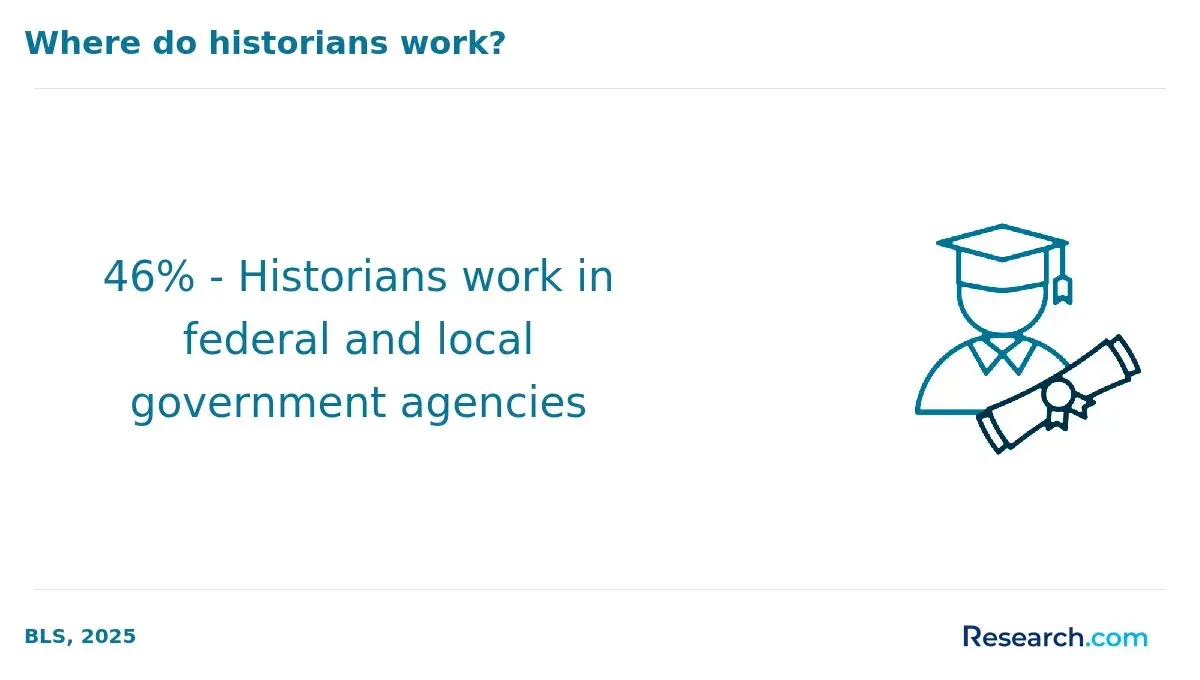
- Government is an important employer for historians, with 24% working in the federal government, while schools, museums, archives, nonprofits, and private organizations also offer history-related work.
- Historians can earn as much as $74,050 yearly, with compensation varying by sector, location, education, specialization, and experience.
- Why choose a career connected to history?
- What education do history careers require?
- What skills do history professionals need?
- What can you do with an associate degree in history?
- What can you do with a bachelor’s degree in history?
- What can you do with a master’s degree in history?
- What can you do with a doctorate in history?
- How do you build experience before applying for history jobs?
- What is the job market for history graduates?
- What alternative careers fit history majors?
- How are digital tools changing history careers?
- What online learning options are available in history?
- How does public history support communities and preservation?
- How can you pay for a history education?
- Which certifications can strengthen a history career?
- Can a history degree support long-term financial success?
- How do you balance quality and affordability?
- Can an accelerated online bachelor’s degree help?
- Which online bachelor’s programs prepare students for history careers?
- What trends are shaping the future of history careers?
- How do you choose the right history degree program?
- What challenges can slow career advancement?
- Key insights for future history professionals
Why choose a career connected to history?
People enter history-related fields because they want to work with evidence, interpret human experience, and explain how societies, institutions, conflicts, cultures, and ideas change over time. The field can lead to scholarly, educational, public-facing, administrative, technical, or consulting work, depending on how you develop your skills.
- You can help preserve stories that might otherwise disappear. Historians examine records, oral accounts, artifacts, images, maps, and institutional documents to identify missing perspectives and challenge oversimplified narratives. That work matters in museums, archives, classrooms, documentaries, community history projects, and policy research.
- You build broad analytical range. Studying history requires reading across political systems, cultures, economies, belief systems, social movements, geographic regions, and time periods. Digital access has expanded the amount of available material, but professionals still need strong judgment to determine reliability, context, and significance.
- You learn to identify patterns without treating history as a prediction machine. Historical records can show how people responded to war, migration, public health emergencies, economic disruption, political change, and social conflict. Historians are also documenting recent global events so future researchers can evaluate today’s decisions using stronger evidence.
- You engage with ethical and civic questions. Many debates about justice, citizenship, rights, inequality, migration, labor, identity, conflict, and cultural memory depend on historical interpretation. History professionals can help schools, agencies, cultural institutions, and communities discuss those issues with greater accuracy and depth.
What education do history careers require?
The right degree depends on the job you want. Some support roles may be accessible with an associate or bachelor’s degree, while professional historian, archivist, curator, postsecondary teaching, and advanced research positions often expect graduate education. According to Zippia, 76% of historians in the U.S. possess a bachelor’s degree while only 8% hold a master’s degree (Zippia, 2025).
A bachelor’s degree can support entry into museum assistance, education-related work, communications, administrative research, public-facing history, and early-career nonprofit or government roles. A graduate degree becomes more important if your target is professional historical research, archives, curatorial work, college teaching, consulting, or specialized public history. Students considering graduate school can compare master's level degrees to see how programs differ in focus, format, and career preparation.
U.S. BLS data shows that professionals with a master’s degree take home around $1,840 each week, while doctorate holders make $2,278 weekly. Those figures are not specific guarantees for history graduates, but they are useful when weighing whether advanced education may improve long-term career options.
| Education level | Best fit | Typical career direction | Decision point |
| Associate degree | Learners who want an affordable starting point or plan to transfer later | Library support, tourism, administrative support, or legal office support | Confirm transfer agreements before enrolling if your goal is to complete a bachelor’s degree. |
| Bachelor’s degree | Students seeking broad training in research, analysis, writing, and interpretation | Museum support, teaching pathways, communications, entry-level research, or public history assistance | Add internships, technical skills, and a focused minor because the major alone may not define your job path. |
| Master’s degree | Students aiming for archives, museums, historical consulting, public history, or advanced research roles | Historical consulting, writing, archaeology-related work, archives, cultural institutions, or research organizations | Prioritize programs with a relevant concentration, thesis, capstone, practicum, or portfolio-based project. |
| Doctorate | Students planning for advanced scholarship, university teaching, research leadership, or academic administration | Postsecondary education, research leadership, administration, policy-adjacent work, or specialized scholarship | Evaluate funding, completion time, and academic job-market competition before committing. |
What skills do history professionals need?
History careers require far more than memorizing events. As with technical pathways such as geology degree-related work, history graduates need a mix of analytical, communication, technical, and workplace skills that employers can recognize.
- Research planning and source evaluation. History professionals must locate primary and secondary sources, judge credibility, compare conflicting evidence, recognize bias, and turn broad topics into manageable research questions.
- Data collection and interpretation. Many roles now involve databases, digital collections, spreadsheets, metadata, mapping tools, transcription platforms, or qualitative and quantitative analysis.
- Language skills. Reading another language can give researchers access to original materials. Some specializations may also benefit from historical languages such as Greek or Latin.
- Clear professional writing. Historians write reports, exhibit labels, grant proposals, articles, books, lesson materials, scripts, and public-facing narratives. Learning how to write research proposals can also support graduate applications and funding requests.
- Records and administrative competence. Early roles may include cataloging, filing, scheduling, correspondence, database updates, document management, or collection tracking.
- Advanced reading and interpretation. History work often requires careful reading of dense texts, legal records, government documents, maps, images, letters, oral histories, and accounts that contradict one another.
- Public communication and collaboration. Historians interview sources, present findings, teach students, guide visitors, work with archivists or curators, and translate complex evidence for non-specialist audiences.
The chart below uses U.S. BLS data to show the highest-paying industries in which historians can apply these capabilities.
What jobs can I get with an associate degree in history?
An associate degree in history can be a useful first step for students who want a lower-cost entry point, plan to transfer, or want to qualify for support roles while developing research and communication skills. It usually is not enough for advanced historian roles, but it can help you begin building relevant experience.
- Library Technicians ($39,970). Library technicians help organize materials, process circulation, maintain records, update databases, and assist patrons with basic information requests.
- Tour and Travel Guides ($36,660). This option overlaps with some geography careers because it combines place-based knowledge, historical context, public speaking, customer service, and storytelling.
- Legal Secretaries ($54,140). Legal secretaries help attorneys by preparing documents, organizing files, managing schedules, arranging appointments, and supporting legal research tasks.
What jobs can I get with a bachelor’s degree in history?
A bachelor's degree in history is versatile, but students should not treat it as a single-track credential. Career outcomes improve when the major is paired with internships, a portfolio, relevant electives, and skills in areas such as education, communications, public administration, political science, museum studies, data analysis, or digital media.
- Museum Technicians and Conservators ($47,460). These workers help preserve, document, restore, store, and exhibit artifacts, records, artworks, and historical materials.
- Museum Curators ($61,770). Curators plan exhibitions, authenticate and interpret collections, oversee acquisitions or loans, manage digitization projects, and communicate historical meaning to the public.
- History High School Teachers ($64,580). Teachers design lessons, follow curriculum standards, lead classroom discussions, assess student work, and help students understand historical evidence and interpretation.
What jobs can I get with a master’s degree in history?
A master's degree in history can prepare students for more specialized roles, especially if the program includes archives, public history, digital humanities, museum practice, research methods, teaching preparation, or a thesis. It can also help working professionals move from general administrative or education roles into research, consulting, or cultural institutions.
- Archeologists ($64,910). Archeologists study artifacts, remains, sites, landscapes, and material evidence to interpret past human societies.
- Writers and Authors ($72,270). History graduates may produce biographies, textbooks, historical fiction, documentary scripts, museum content, long-form journalism, or research-based digital media.
- Historic Consultants ($84,742). Consultants may support agencies, filmmakers, attorneys, families, cultural groups, or organizations with historical research, genealogy, preservation issues, or background investigations.
What jobs can I get with a doctorate in history?
A doctorate degree in history is most useful for people who want to conduct original research, teach at the college level, lead academic or cultural programs, or develop deep expertise in a specialized field. It can be powerful, but students should weigh the time commitment, funding package, opportunity cost, and competitive academic labor market.
- Education Administrators ($103,960). Education administrators manage academic programs, support students and faculty, oversee departmental operations, and coordinate institutional initiatives.
- History Postsecondary Educators ($81,500). College and university history instructors teach courses, mentor students, publish scholarship, and participate in academic service.
- Political Scientists ($139,380). Political scientists study political institutions, laws, systems, theories, and policies. Historical training can strengthen their understanding of context, causation, and long-term institutional change.
| Degree level | Example jobs | Salary figures cited |
| Associate degree | Library Technicians; Tour and Travel Guides; Legal Secretaries | $39,970; $36,660; $54,140 |
| Bachelor’s degree | Museum Technicians and Conservators; Museum Curators; History High School Teachers | $47,460; $61,770; $64,580 |
| Master’s degree | Archeologists; Writers and Authors; Historic Consultants | $64,910; $72,270; $84,742 |
| Doctorate | Education Administrators; History Postsecondary Educators; Political Scientists | $103,960; $81,500; $139,380 |
How can I gain experience before applying for history jobs?
Employers usually want proof that you can use historical training outside the classroom. As you refine your career goals, choose activities that demonstrate research ability, writing quality, project ownership, public communication, and experience with records, collections, or historical interpretation.
- Turn coursework into portfolio material. Select papers and projects that help you formulate research questions, work with primary sources, and produce polished writing samples.
- Look for applied experience early. Pursue internships, paid student positions, volunteer projects, study-abroad experiences, field trips, or local history work through libraries, archives, museums, historical societies, government offices, and cultural nonprofits.
- Create a digital portfolio. When permitted, save research papers, exhibit text, archival finding aids, oral history projects, lesson plans, digital maps, public history websites, or multimedia work.
- Attend professional learning events. Workshops, conferences, seminars, and webinars can introduce you to methods in preservation, archives, public history, teaching, research, and digital humanities.
- Build relationships deliberately. Professors, curators, archivists, librarians, teachers, alumni, and supervisors can help you identify job leads, graduate programs, funding sources, and mentorship opportunities.
What is the job market for history graduates?
The market is strongest for history graduates who think beyond the job title “historian.” After completing relevant college degrees, students should evaluate both direct history roles and adjacent occupations that rely on research, writing, interpretation, education, public communication, or analysis.
The historian occupation itself is limited in size. As of 2024, there were only 3,400 historians in the U.S. By 2034, employment is projected to grow by 2.2%, with 300 new open positions yearly. Students who want that title should expect competition and should build a specialization, pursue applied experience, and consider graduate education.
At the same time, history majors can compete for roles outside the narrow historian category. Some related occupations are projected to increase by 10% or more than twice as fast as the average rate of all occupations.
What alternative careers fit history majors?
History majors should look for roles where evidence, context, writing, and interpretation matter. Alternative pathways may offer more openings, higher salary potential, or a better fit for students who do not want a traditional academic or museum career.
- Heritage Consultants ($103,425). Heritage consultants advise organizations on cultural preservation, historical assets, heritage planning, and responsible management of sites or collections.
- Data Analysts ($112,590). History graduates who add data skills can apply evidence evaluation, pattern recognition, and contextual explanation to analytical roles.
- Digital Marketing Specialists ($76,950). Students researching what is a communications major may see useful overlap with history, including audience research, persuasive writing, narrative structure, and content strategy.
| If you like... | Consider... | Why this path can fit history graduates |
| Checking facts and working with documents | Archives, legal support, policy research, consulting | These fields depend on accuracy, evidence, context, and careful documentation. |
| Helping audiences understand complex ideas | Teaching, museum education, tourism, public history | These roles reward clear explanation, storytelling, and audience awareness. |
| Building narratives from evidence | Publishing, documentaries, communications, content strategy | History students often know how to turn sources into coherent and persuasive stories. |
| Interpreting systems and long-term patterns | Data analysis, public policy, political science | Historical thinking can support contextual analysis and evidence-based decision-making. |
How are digital tools changing history careers?
Technology has changed how historical evidence is discovered, preserved, analyzed, taught, and shared. For many roles in archives, museums, public history, education, publishing, and research, digital fluency is now a competitive advantage.
Digital archiving and preservation
- Why it matters: Digitization can protect fragile photographs, documents, maps, recordings, and artifacts while making collections easier to search, organize, and share.
- Examples of tools: DSpace and Omeka are commonly used for digital collections, metadata, online exhibits, and long-term access to historical materials.
Data analysis and visualization
- Why it matters: Digital analysis can reveal patterns in migration records, land documents, demographic data, election results, trade routes, correspondence networks, and other sources that are difficult to interpret manually.
- Examples of tools: Tableau, Gephi, and ArcGIS can support charts, network diagrams, geospatial maps, and interactive public history projects.
Digital publishing and content creation
- Why it matters: Online platforms allow historians to reach audiences through essays, podcasts, videos, teaching materials, digital exhibits, and multimedia interpretation outside traditional academic publishing.
- Examples of tools: WordPress, Medium, and podcasting platforms can help professionals present historical interpretation in accessible formats.
Virtual reality and 3D modeling
- Why it matters: Immersive tools can reconstruct buildings, artifacts, landscapes, and learning environments for museums, classrooms, preservation work, and public engagement.
- Examples of tools: Unity and SketchUp can be used to develop 3D models and virtual reconstructions.
What online learning options are available in history?
Online history programs can work well for working adults, military learners, parents, and students who cannot relocate. Strong online programs provide more than recorded lectures; they include faculty access, research databases, library support, writing feedback, academic advising, and opportunities to produce portfolio-ready work.
If flexibility is a priority, compare online history degree options by accreditation, tuition, transfer policy, curriculum, faculty expertise, internship access, and career fit. Online coursework can be effective for research and writing-heavy study, but students interested in teaching licensure, archives, museum work, or archaeology should verify whether field placements, in-person experiences, or state-specific requirements apply.
How does public history support communities and preservation?
Public history applies historical research outside traditional academic settings. Public historians work with communities, museums, archives, agencies, cultural organizations, schools, and local institutions to preserve and interpret the past for broader audiences.
This work can include oral history, exhibits, walking tours, community archives, historical markers, documentary research, preservation planning, public programming, school partnerships, and digital collections. The purpose is not simply to store information; it is to make historical evidence accessible, useful, and meaningful.
Public history is especially valuable when communities face rapid development, demographic change, cultural loss, contested memory, or debates over identity and representation. Professionals may help document local experiences, protect heritage sites, interpret difficult histories, and support cultural continuity.
Common public history roles include museum curator, archivist, historical interpreter, outreach specialist, preservation staff member, and cultural resource management professional. Strong candidates combine research ability with public speaking, storytelling, project management, digital communication, and respectful community collaboration.
How can you pay for a history education?
The cost of studying history depends on the school, residency status, online or campus format, transfer credits, program length, fees, and graduate funding. Before enrolling, estimate the full cost of attendance rather than comparing tuition alone. Include books, technology, transportation, housing, required travel, fieldwork, and lost work time.
Scholarships and fellowships
Universities, colleges, history departments, professional associations, and cultural organizations may offer awards based on financial need, academic performance, research focus, or professional plans. Graduate students should also ask about assistantships, tuition waivers, stipends, and research travel support.
Research and project grants
Students completing theses, dissertations, archival research, preservation projects, or public history work may qualify for grants. Potential sources include universities, foundations, humanities councils, historical societies, cultural institutions, and organizations connected to your topic.
Work-study, internships, and paid experience
Work-study positions and internships can lower costs while strengthening your resume. Museums, libraries, archives, historical societies, nonprofits, and public agencies may offer paid or credit-bearing roles. Ask whether the position includes supervision, meaningful responsibilities, and work you can discuss in a portfolio or interview.
Loans and federal aid
Federal student aid can help cover education expenses, but borrowing should be compared against realistic career outcomes. Complete the FAFSA if you plan to use federal grants, loans, or work-study, and review repayment expectations before accepting debt.
Online programs and cost control
Online study may reduce relocation or commuting costs, but it is not automatically cheaper. Compare net price, fees, transfer credit acceptance, time to completion, and student support. Working adults looking for flexible, cost-conscious schools can review the most affordable online colleges for working adults.
Employer tuition support
If you already work in education, government, nonprofits, libraries, archives, media, or cultural organizations, ask whether your employer offers tuition reimbursement or professional development funding. Confirm which programs qualify, whether grades matter, annual limits, and whether you must repay funds if you leave.
Which certifications can strengthen a history career?
Certifications can make specific skills visible to employers, especially when your transcript does not show them clearly. Useful areas include archival management, records management, GIS, data analytics, digital humanities, museum studies, project management, grant writing, teaching technology, and digital preservation.
Students who want focused training without pursuing another degree can compare online courses with certificates. The most useful certificates teach recognized tools, align with job descriptions, or help you produce a portfolio item such as a digital exhibit, database, map, or research project.
Can a history degree support long-term financial success?
A history degree can support long-term financial success, but it usually requires intentional planning. Return on investment depends on tuition, debt, school quality, location, experience, graduate education, specialization, and whether you combine history with practical skills that employers request.
The strongest financial case often comes from applying history training to a defined career direction, such as teaching, government research, museum work, consulting, policy, communications, legal support, data analysis, digital media, or graduate-level specialization. Students who want faster or more career-specific alternatives may compare easy degrees to get online that pay well before choosing a history major.
How can you balance quality and affordability?
The cheapest program is not always the best value. A low-cost degree that does not accept transfer credits, lacks advising, offers weak career support, or delays graduation can become more expensive over time. A higher-priced program may make sense only if it provides strong funding, relevant internships, specialized faculty, or meaningful career advantages.
Compare accreditation, curriculum quality, faculty expertise, graduation support, transfer policies, internship access, financial aid, online services, and career advising. Students evaluating lower-cost online options can review What are the most affordable online bachelor's degree programs? while also checking whether each program’s history curriculum supports their goals.
Can an accelerated online bachelor’s degree help your history career?
An accelerated online bachelor’s program may help you finish sooner, qualify for graduate study earlier, or enter the workforce faster. This route is most practical for students with transfer credits, strong time management, and a clear plan for using the credential.
Speed should not come at the expense of academic depth. Confirm that the program still includes research methods, intensive writing, historical interpretation, faculty feedback, and access to support services. Students seeking a faster path can compare online accelerated bachelor degree programs while avoiding options that sacrifice rigor or advising.
Which online bachelor’s programs best prepare students for history careers?
The strongest online bachelor’s programs for future history professionals combine rigorous academic study with applied preparation. Look for coursework in historical methods, research writing, U.S. history, world history, public history, digital humanities, archives, teaching preparation, and a senior capstone or major research project.
When reviewing options, start with top accredited online bachelor degree programs and then narrow your choices to schools with history-specific strengths. Accreditation is essential if you plan to transfer credits, use financial aid, apply to graduate school, or pursue teaching-related pathways.
What trends are shaping the future of history careers?
History careers are changing because of digital tools, public interest in more inclusive narratives, interdisciplinary research, and the need to protect cultural materials in both physical and digital formats. Students who prepare for these shifts can compete for opportunities beyond traditional academic roles.
- Digital history is becoming more important. GIS, databases, digitized archives, text analysis, and AI-assisted transcription can help historians manage large bodies of evidence and present findings visually.
- Public history remains central to community engagement. Museums, cultural institutions, community organizations, and local governments need professionals who can make historical evidence understandable and relevant.
- Diversity and inclusion are influencing research priorities. Many institutions are expanding efforts to document underrepresented communities and broaden interpretation.
- Environmental and climate history are gaining attention. Scholars and organizations are increasingly studying how past societies interacted with ecosystems, resources, and environmental crises.
- Global heritage work creates cross-cultural opportunities. Preservation, education, and cultural policy projects may involve international collaboration, including work connected to UNESCO’s cultural heritage efforts.
Professionals seeking advanced study without a long campus commitment can compare a one year masters degree online, especially if the program includes digital tools, public history, global history, or another career-relevant specialization.
How do you choose the right history degree program?
Start with your career goal, not the school name alone. A future teacher, archivist, museum professional, policy researcher, doctoral student, public historian, and content strategist should evaluate programs using different priorities.
| Question to ask | Why it matters |
| Is the institution accredited? | Accreditation can affect transfer credits, financial aid, graduate admissions, and employer trust. |
| Does the curriculum fit my target role? | Programs focused on public history, archives, teaching, research, or digital humanities prepare students differently. |
| Who teaches the courses? | Faculty expertise influences mentorship, research opportunities, recommendations, and specialization. |
| Are internships, practicums, or field experiences available? | Applied experience in museums, schools, archives, agencies, or cultural organizations can be critical for entry-level hiring. |
| What support is available for online learners? | Online students need advising, library access, writing support, technical help, and career services. |
| What will I actually pay after aid? | Net price, fees, accepted transfer credits, and time to graduation matter more than advertised tuition. |
Students searching for lower-cost options can review the cheapest online history degree while still checking accreditation, curriculum strength, advising, and career preparation.
What challenges can slow career advancement?
History careers can be meaningful, but advancement may be competitive. Common barriers include a limited number of professional historian openings, intense competition for tenure-track roles, unstable funding for public history or research projects, and the need to keep up with changing digital methods.
Many professionals must also manage research, teaching, grant writing, public engagement, administration, publications, and project deadlines at the same time. To improve your odds, develop a clear specialization, document your work in a portfolio, learn grant or project-management skills, and continue building digital competence.
Graduate education can help in some paths, but it should be chosen carefully. Professionals considering doctoral study can compare PhD degrees online while evaluating credibility, faculty fit, funding, research support, and realistic career outcomes.
Common mistakes to avoid when planning a history career
| Mistake | Better approach |
| Picking a program only because it has the lowest tuition | Compare accreditation, total cost, transfer policies, faculty, internship access, advising, and career services. |
| Expecting a bachelor’s degree to automatically lead to a historian job | Gain applied experience, choose a specialization, and consider graduate study if you want professional historian roles. |
| Overlooking digital skills | Build competence in archives tools, GIS, databases, visualization, digital exhibits, or content production. |
| Waiting until senior year to get experience | Start internships, volunteer projects, research assistantships, or public history work while still enrolled. |
| Using rankings as the only decision tool | Treat rankings as one input, then verify curriculum, outcomes, affordability, support, and fit. |
| Assuming every online program meets every career requirement | Check accreditation, licensure implications, internship expectations, fieldwork needs, and graduate school requirements. |
Key Insights
- History careers are strongest when students combine historical knowledge with practical skills such as research design, writing, digital archiving, GIS, data analysis, teaching, public communication, or project management.
- The traditional historian occupation is small: there were 3,400 historians in the U.S. as of 2024, with projected growth of 2.2% by 2034 and 300 new open positions yearly.
- Government can be a financially important sector for historians; the government sector is cited as the highest-paying sector, with an annual wage of $116,650.
- Although 76% of historians hold a bachelor’s degree and only 8% hold a master’s degree, many professional historian, archival, curatorial, and advanced research roles commonly expect graduate-level preparation.
- Historians in the top percentile earn an annual wage of $128,500, but compensation depends heavily on role, employer, sector, location, education, specialization, and experience.
- A doctorate can support advanced roles such as political scientist, a career cited with an average salary of $139,380 per year, but doctoral study should be weighed against time, cost, funding, and job-market competition.
- The best history program is the one that fits your goal: accreditation, faculty expertise, internships, digital training, transfer policies, affordability, and career support all matter more than reputation alone.
References:
- National Student Clearinghouse Research Center. (2026, January 15). Final Fall Enrollment Trends. https://nscresearchcenter.org/final-fall-enrollment-trends
- Townsend, R. (2025). From Matriculation to Completion: How College Students Move Between Majors. American Academy of Arts & Sciences. https://www.amacad.org/bulletin/winter-2025/matriculation-completion-how-college-students-move-between-majors
- U.S. Bureau of Labor Statistics. (2025, August 28). Occupational projections, 2024–2034, and worker characteristics. Retrieved March 2026, from https://www.bls.gov/emp/tables/occupational-projections-and-characteristics.htm
- U.S. Bureau of Labor Statistics. Occupational Employment and Wage Statistics for historians. https://www.bls.gov/oes/current/oes193093.htm
- Zippia. (2025). Historian demographics and statistics in the US. Retrieved March 2026, from https://www.zippia.com/historian-jobs/demographics
Other Things You Should Know About Pursuing History Careers
No, archival certification is not required for most museum history jobs. Employers usually want a bachelor’s degree in history or a related field, plus experience with collections, research, or curation. Formal archival credentials are more common for archivist roles, not general museum positions.
A master's degree in history or a related field is typically required for a career in historical research in 2027. PhD credentials may be essential for higher-level research positions or academic roles. Specialized courses or certifications can enhance expertise and job prospects.