
2027 Best Careers to Pursue Wth a Graphics Design Masters Degree

Co-Founder and Chief Data Scientist
A graphic design master’s degree can help you move beyond production work into strategy, leadership, teaching, UX, branding, motion design, and independent consulting. The challenge is knowing which path actually fits your goals. Some roles reward advanced visual thinking and portfolio depth, while others require business judgment, research skills, software fluency, teaching experience, or the ability to connect design decisions to measurable results.
According to the U.S. Bureau of Labor Statistics, employment in graphic design is projected to grow by 2% from 2024 to 2034. That modest overall growth does not mean opportunity is limited. It means graduates need to be selective. Digital product design, brand strategy, motion graphics, marketing design, and UX-focused roles may offer stronger positioning than generalist entry-level design work. This guide explains the best career options for graphic design master’s graduates, how to compare them, where designers are being hired, how freelancing works, how AI is changing the field, and how to protect the value of your degree over time.
Quick answer: What can you do with a graphic design master’s degree?
With a graphic design master’s degree, you can pursue senior and specialized roles such as creative director, UX designer, art director, brand strategist, motion graphics designer, marketing designer, web designer, game designer, freelance designer, or graphic design instructor. The strongest path depends on whether you want to lead creative teams, design digital products, teach, build a freelance business, or specialize in a high-demand area such as UX/UI, branding, or motion graphics.
- Best leadership paths: creative director, art director, and brand strategist.
- Best digital product paths: UX designer, web designer, and UX/UI specialist.
- Best visual storytelling paths: motion graphics designer, game designer, and entertainment design roles.
- Best flexible path: freelance graphic designer, especially for graduates with a strong portfolio and client-acquisition plan.
- Best academic path: graphic design instructor, though some universities may prefer additional teaching experience, a terminal degree, or professional recognition.
What are the key things you should know about graphic design master’s careers for 2027?
- The degree is most valuable when paired with specialization. A master’s credential alone is rarely enough. Employers and clients usually want proof that you can solve advanced design problems, lead projects, use current tools, and explain the business value of your creative decisions.
- Digital roles often provide stronger growth signals. UX designer and web designer roles list median annual salaries of $122,000 and $92,750, respectively, with job outlook figures of 8% in this article’s source data.
- Leadership roles can pay more but require more than design talent. Creative directors and brand strategists need management, budgeting, presentation, research, and stakeholder skills in addition to excellent visual judgment.
- Freelancing can be viable but is not passive income. The average freelance graphic design salary cited here is $63,613, but independent designers must also handle pricing, contracts, marketing, taxes, revisions, and client relationships.
- AI is changing the workflow, not eliminating the need for designers. Designers who use AI for ideation, resizing, mockups, testing, and workflow support may become faster, but clients still need human judgment, strategy, taste, ethics, and brand understanding.
- Burnout prevention matters. Design careers often involve subjective feedback, deadline pressure, and repeated revisions. Boundaries, project variety, and sustainable client management are career skills, not luxuries.
- Best careers for graphic design master’s graduates
- Industries that hire graphic design master’s graduates
- How to build a freelance graphic design career
- Most in-demand graphic design specializations
- Graphic designers in digital marketing campaigns
- Teaching graphic design with a master’s degree
- How graphic designers can market their services
- How AI is changing graphic design work
- One-year master’s programs for graphic designers
- Best online portfolio platforms for designers
- Countries with strong demand for graphic designers
- Interdisciplinary education for design careers
- Mentorship and networking in graphic design
- ROI of a graphic design master’s degree
- How graphic designers can avoid burnout
- Soft skills that improve design careers
- Using data analytics in graphic design
- Alternative master’s programs and design career goals
- Accelerated doctoral programs for design professionals
- Whether to pursue a doctorate in graphic designData-informed design decisions
- Continuous learning and certifications
- Portfolio strategy for career growthOngoing skill developmentAnalytics skillsBurnout preventionCareer checklistDecision questions
Best Careers to Pursue With a Graphics Design Masters Degree for 2027
The best career after a graphic design master’s degree is the one that matches your strongest advantage: creative leadership, digital product design, visual storytelling, teaching, or independent business development. The table below compares common career options using the salary and job outlook figures provided in the source article.
| Career path | Median annual salary | Job outlook | Best fit for graduates who want to... |
| Creative Director | $149,727 | 5% | Lead creative teams, shape campaign direction, and manage brand-level visual decisions. |
| UX Designer | $122,000 | 8% | Improve digital products through research, usability testing, wireframes, and interface design. |
| Art Director | $106,500 | 8% | Guide the visual style of advertising, publishing, media, or production projects. |
| Graphic Design Instructor | $65,946 | 2% | Teach design principles, critique student work, and help learners build professional portfolios. |
| Brand Strategist | $163,788 | 8% | Connect market research, identity systems, messaging, and visual consistency across channels. |
| Freelance Graphic Designer | $63,613 | 2% | Control client selection, pricing, schedule, and creative niche. |
| Motion Graphics Designer | $99,060 | 4% | Create animated visual content for advertising, entertainment, social media, or digital platforms. |
| Marketing Designer | $83,000 | 2% | Build visual assets for campaigns, landing pages, email, paid ads, and brand communications. |
| Game Designer | $95,185 | 4% | Combine visual systems, storytelling, interaction, and player experience. |
| Web Designer | $92,750 | 8% | Design functional, accessible, visually coherent websites and digital experiences. |
1. Creative Director
Median Annual Salary: $149,727
Job Outlook: 5%
Creative directors are responsible for the overall creative direction of campaigns, brand systems, product launches, or media projects. They review concepts, guide designers and writers, present to stakeholders, and make sure creative work supports business goals. A master’s degree can help if it strengthens your design theory, critique, leadership, and strategic communication skills, but employers typically also expect substantial professional experience.
2. UX Designer
Median Annual Salary: $122,000
Job Outlook: 8%
UX designers focus on how people use websites, apps, platforms, and digital products. Their work may include user research, journey maps, wireframes, prototypes, usability tests, and collaboration with product managers and developers. Graphic design master’s graduates can be strong UX candidates when they add research methods, accessibility knowledge, information architecture, and product thinking to their visual design background.
3. Art Director
Median Annual Salary: $106,500
Job Outlook: 8%
Art directors set the visual tone for projects in advertising, publishing, entertainment, fashion, media, and production. They may select photographers, approve layouts, supervise design teams, and translate a creative brief into a consistent visual system. This path fits designers who enjoy concept development, team feedback, and high-level aesthetic decisions.
4. Graphic Design Instructor
Median Annual Salary: $65,946
Job Outlook: 2%
Graphic design instructors teach students how to use design principles, critique methods, typography, layout, digital tools, and portfolio practices. A master’s degree can qualify graduates for some teaching roles, especially at community colleges, private institutions, or adjunct positions, but requirements vary by school. Candidates with industry experience, a strong portfolio, and teaching samples are usually better positioned.
5. Brand Strategist
Median Annual Salary: $163,788
Job Outlook: 8%
Brand strategists define how an organization should look, sound, and position itself in the market. They may conduct audience research, audit competitors, build identity systems, guide naming or messaging, and ensure consistency across digital, print, packaging, and campaign assets. This is a strong path for designers who enjoy research, storytelling, client presentations, and business strategy.
6. Freelance Graphic Designer
Median Annual Salary: $63,613
Job Outlook: 2%
Freelance designers sell design services directly to clients or agencies. Projects may include logos, websites, social content, pitch decks, packaging, advertising assets, or brand systems. A graduate degree can help establish credibility, but freelance success depends heavily on portfolio quality, referrals, positioning, pricing, contracts, and repeat client relationships.
7. Motion Graphics Designer
Median Annual Salary: $99,060
Job Outlook: 4%
Motion graphics designers create animated visual communication for ads, film, television, social media, software interfaces, explainers, and branded content. This path is a strong match for designers who combine composition, timing, typography, storytelling, and animation software skills.
8. Marketing Designer
Median Annual Salary: $83,000
Job Outlook: 2%
Marketing designers produce campaign visuals that support lead generation, brand awareness, product launches, and customer engagement. Their work often includes paid ads, landing pages, email graphics, infographics, sales enablement assets, and social media creative. The strongest candidates understand both visual design and marketing performance metrics.
9. Game Designer
Median Annual Salary: $95,185
Job Outlook: 4%
Game designers help shape interactive experiences by combining visual design, narrative, mechanics, user feedback, and collaboration with programmers, writers, artists, and producers. Graphic design master’s graduates may enter this area through UI design, visual development, concept art direction, or interactive experience design.
10. Web Designer
Median Annual Salary: $92,750
Job Outlook: 8%
Web designers plan and produce websites that are visually appealing, usable, responsive, and aligned with a brand’s goals. Many roles now expect knowledge of accessibility, design systems, conversion-focused layouts, CMS tools, and collaboration with developers. Designers who also understand UX and basic front-end constraints are often more competitive.
If you are interested in using art in a helping profession rather than in commercial or digital design, art therapy is a separate career with different training expectations. Research.com explains that path in its guide to how long it takes to become an art therapist.
What industries hire graphic design master’s graduates?
Graphic design master’s graduates are hired anywhere organizations need visual communication, digital experiences, brand systems, educational media, or persuasive campaign assets. The strongest industries for you will depend on whether your portfolio emphasizes product design, motion, branding, marketing, publication design, or learning design.
| Industry | Common design work | When this industry may be a good fit |
| Technology | UX/UI design, app interfaces, SaaS dashboards, design systems, product visuals. | You like research, prototyping, testing, accessibility, and cross-functional collaboration. |
| Advertising and marketing | Campaign visuals, paid ads, branding, social assets, videos, motion graphics. | You enjoy fast-paced projects, measurable creative performance, and client-facing work. |
| Entertainment | Motion graphics, title sequences, visual effects elements, game assets, promotional creative. | You want to combine visual storytelling with production teams and media platforms. |
| Education | E-learning assets, instructional visuals, course graphics, interactive learning materials. | You are interested in learning experience design, teaching support, or academic media. |
| Publishing | Book covers, editorial layouts, illustrations, digital magazine design, online publication visuals. | You value typography, layout, narrative, and collaboration with writers and editors. |
- Technology: Tech companies need designers who can make digital products easier to understand and use. UX/UI work is especially relevant for graduates who can combine visual clarity with research, prototyping, and usability testing.
- Advertising and Marketing: Agencies and in-house marketing teams rely on designers to create campaign assets across digital channels. Media publishers and advertising agencies continue expanding digital engagement as consumer engagement with media devices is expected to exceed four hours daily.
- Entertainment: Film, television, streaming, gaming, and online video all depend on visual systems and motion-based storytelling. Designers may contribute to animated sequences, promotional graphics, visual effects support, or interactive experiences.
- Education: Online learning, digital courseware, and instructional platforms create opportunities for designers who can make complex information easier to absorb. This area rewards clarity, accessibility, and learner-centered design.
- Publishing: Designers in publishing shape the visual experience of books, magazines, digital articles, and online content. They often work closely with editors, illustrators, and writers. If you are drawn to the writing side of creative production, Research.com also covers career paths for creative writing master’s graduates.
Graphic design also overlaps with many other art and design careers, including roles in museums, retail environments, product packaging, nonprofit communications, and corporate brand teams.
How can graphic design master’s graduates build a freelance career?
A freelance career can give graphic design master’s graduates flexibility, client variety, and control over the type of work they accept. It also requires business discipline. Freelancers must find clients, price projects, manage revisions, protect their time, and maintain a steady pipeline of work.
- Choose a clear service niche. Instead of advertising yourself as a general designer for everyone, define what you do best: brand identity, pitch decks, web design, UX audits, packaging, social campaigns, motion graphics, or design systems.
- Build a portfolio that sells outcomes. Show the problem, your process, the final work, and the result or business context. A strong portfolio should make it easy for clients to understand what you can do for them.
- Set pricing based on scope, value, and time. Research comparable rates, but do not rely only on hourly pricing. Project-based pricing can be appropriate when the scope is clear and your work creates significant client value.
- Use contracts and written approvals. Clarify deliverables, timelines, payment terms, revision rounds, cancellation terms, file ownership, and usage rights before work begins.
- Create a repeatable marketing routine. Share case studies, post work samples, ask satisfied clients for referrals, maintain a personal website, and build relationships with agencies that may outsource design work.
- Improve your production workflow. If web design is part of your freelance offer, understanding how to select the right website design software can help you work faster and present better solutions to clients.
| Freelance decision | Better approach | Why it matters |
| Taking any client who asks | Define ideal client types and minimum project requirements. | Prevents underpaid work, scope creep, and portfolio dilution. |
| Showing only final images | Include brief, process, constraints, and results. | Clients want evidence that you solve problems, not just make visuals. |
| Charging without a scope | Write a proposal with deliverables and revision limits. | Reduces disputes and protects your schedule. |
| Relying only on social platforms | Maintain a searchable portfolio website and referral network. | Platform algorithms change; your own site gives you more control. |
What are the most in-demand specialized roles for graphic designers?
Specialization can help a graphic design master’s graduate stand out. General design skills are useful, but competitive roles often require a clear area of expertise supported by strong portfolio evidence.
- UX/UI Design: UX/UI designers improve digital interfaces by combining research, structure, interaction design, visual systems, and usability testing. This is a strong path for designers who enjoy solving user problems and collaborating with product teams.
- Motion Graphics: Motion designers create animated visuals for advertising, entertainment, explainer videos, product demos, social platforms, and digital campaigns. This specialization rewards timing, storytelling, typography, and software fluency.
- Brand Identity Design: Brand identity designers create logos, typography systems, color palettes, visual guidelines, and campaign consistency. Master’s-level work can be especially useful when it includes research, positioning, and brand architecture.
- Packaging Design: Packaging designers balance brand recognition, product information, physical constraints, shelf impact, user experience, and production requirements.
- Environmental Design: Environmental designers apply graphics to physical spaces such as exhibits, wayfinding systems, retail environments, public installations, and branded interiors.
When comparing graphic design career options, look closely at the tools, portfolio samples, and business context each specialization requires. A motion portfolio, for example, should not look like a UX portfolio. A brand strategy portfolio should explain research and positioning, not only logo concepts.
What role do graphic designers play in digital marketing campaigns?
Graphic designers help turn marketing strategy into visual communication that audiences can notice, understand, and act on. In digital marketing, design quality affects how ads, landing pages, emails, and social posts communicate a message quickly.
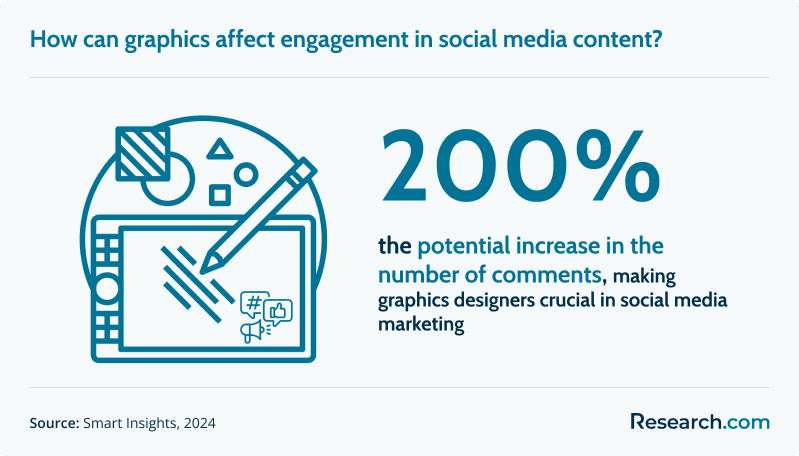
- Social Media Content: Designers create platform-specific visuals for channels such as Instagram, Facebook, and LinkedIn. Research cited by Smart Insights reports that images can double the comment rate, while videos generate five times more engagement.
- Email Campaigns: Designers build email layouts that support readability, brand consistency, calls to action, and mobile viewing. A well-designed email should make the next step obvious without overwhelming the reader.
- Landing Pages: Designers create landing page visuals and layouts that guide visitors toward a goal, such as registering, purchasing, downloading, or requesting information.
The best marketing designers understand both visual hierarchy and campaign performance. They know how to collaborate with copywriters, marketers, analysts, and web teams. If you are interested in the writing side of campaign development, Research.com has a guide to the best online creative writing master’s programs.
Can you teach graphic design at a university with a master’s degree?
Yes, a master’s degree can qualify you for some graphic design teaching roles, but requirements vary by institution, program level, and contract type. Community colleges, adjunct positions, private colleges, and applied design programs may consider candidates with a master’s degree and professional experience. Tenure-track university roles may prefer or require a terminal degree, a strong exhibition or publication record, teaching experience, or significant industry recognition.
- Teach design foundations and tools. Instructors may cover typography, layout, color, visual systems, critique methods, portfolio development, and industry software.
- Mentor students through portfolio building. A major part of design education is helping students select, revise, explain, and present their strongest work.
- Contribute to curriculum updates. Design programs must keep pace with AI tools, accessibility, UX practices, motion design, digital production, and changing employer expectations.
Teaching can be rewarding if you enjoy critique, mentorship, and curriculum design. For a broader look at academic and student-support roles, see Research.com’s guide to higher education careers.
How can graphic designers market their services effectively?
Marketing your design services is not only about posting attractive visuals. It is about helping clients understand what problem you solve, why your process is reliable, and what kind of results they can expect. A clear message can make a designer easier to hire.
- Define your positioning. State who you help, what you design, and what outcome you support. For example, “brand identity for early-stage wellness companies” is clearer than “graphic design services.”
- Publish useful case studies. Show the brief, constraints, concept development, design choices, and final deliverables. When possible, connect the work to measurable or observable outcomes without exaggerating results.
- Use social media intentionally. Share finished projects, process snapshots, before-and-after examples, and client feedback. Choose platforms where your target clients or hiring managers actually spend time.
- Optimize your portfolio website. Use clear service pages, descriptive project titles, concise copy, and contact information that is easy to find.
- Network with adjacent professionals. Writers, developers, marketers, photographers, consultants, and agencies can become referral partners.
How is AI changing the field of graphic design?
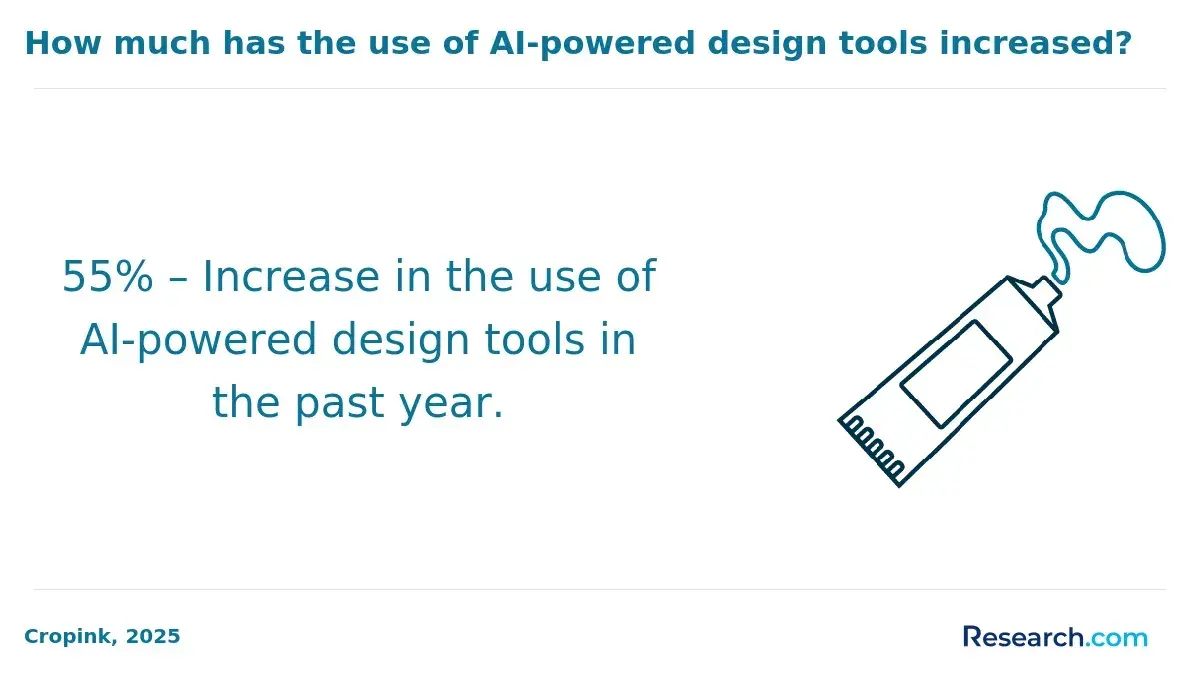
AI is reshaping graphic design by speeding up repetitive production tasks and expanding ideation workflows. It can help designers generate rough concepts, resize assets, create variations, organize layouts, remove backgrounds, draft mockups, and test directions faster. However, AI does not replace the need for strategy, ethics, taste, brand understanding, accessibility judgment, and client communication.
| AI use in design | What it can help with | What still requires human judgment |
| Production automation | Resizing, formatting, background removal, mockup generation, file preparation. | Knowing which version fits the brief, audience, and brand standards. |
| Idea generation | Rapid concept exploration, mood directions, layout variations, image prompts. | Selecting original, appropriate, legally safe, and strategically useful ideas. |
| Collaboration support | Faster drafts, shared assets, versioning, and workflow acceleration. | Managing feedback, resolving conflicting stakeholder preferences, and defending design choices. |
Designers should treat AI as a tool, not a substitute for professional responsibility. Before using AI-generated assets, check client policies, copyright and licensing terms, privacy rules, and whether the output could create brand or ethical risks.
Are one year masters programs a viable option for graphic designers?
One-year master’s programs can make sense for graphic designers who already have a strong foundation and want an intensive credential focused on advanced skills. The shorter timeline may be appealing, but it can also mean less time for exploration, portfolio development, internships, or career switching. Before enrolling, compare curriculum depth, faculty expertise, accreditation, portfolio outcomes, alumni work, career services, and whether the format fits your schedule. Research.com’s guide to one year masters programs can help you evaluate accelerated options more carefully.
What are the best platforms to showcase graphic design work online?
Your portfolio platform should match your career goal. A hiring manager may want concise case studies. A client may want proof that you understand business needs. A creative community may reward visual experimentation. Many designers use more than one platform, with a personal website serving as the central hub.
| Platform | Best use | Limitations to consider |
| Behance | Public creative portfolio, project discovery, community visibility. | Competitive environment; projects still need strong descriptions and context. |
| Dribbble | Short visual previews, networking, design inspiration, job discovery. | Can overemphasize polished shots instead of full problem-solving process. |
| Squarespace | Personal portfolio website, service pages, contact forms, brand control. | Requires you to write clear copy and organize projects strategically. |
- Use Behance when you want discoverability within a large creative community and have complete projects to present.
- Use Dribbble when you want to share polished snapshots, interface details, motion snippets, or visual explorations.
- Use Squarespace when you need a professional home base that presents your work, biography, services, and contact information in one place.
What countries have the highest demand for graphic design professionals?
Graphic design careers can be international, especially for designers with digital portfolios, remote collaboration experience, UX/UI skills, motion expertise, or brand strategy experience. Salary, visa rules, cost of living, language requirements, and portfolio expectations vary by country, so compare the full opportunity rather than salary alone.
- United States: The U.S. has major design markets in technology, entertainment, advertising, media, and corporate branding. New York, Los Angeles, and San Francisco are often associated with creative and digital work.
- Canada: Canada has opportunities in digital design, motion graphics, branding, and technology, especially in cities such as Toronto, Vancouver, and Montreal. As of 2024, the average annual salary for graphic designers in Canada is approximately CAD 50,187, with higher rates in metropolitan areas.
- Germany: Germany has a strong design culture and creative communities, with Berlin frequently recognized for visual and digital design activity. The average annual salary for graphic designers in Germany is around €40,000, and industrial design activity also supports demand for creative professionals.
- Australia: Australia offers opportunities in branding, advertising, and web design, particularly in Sydney and Melbourne. Graphic designers in Australia earn an average annual salary of AUD 75,000, with roles across multiple industries.
- Singapore: Singapore is a regional center for UX/UI, digital design, technology, and marketing. The average salary for graphic designers in Singapore is SGD 68,346 annually, with demand supported by the country’s focus on digital transformation.
If you are considering international work, research portfolio norms, work authorization, local salary expectations, taxes, and cost of living before making a move.
Can integrating interdisciplinary education drive your design career forward?
Graphic design increasingly overlaps with business, psychology, computer science, marketing, education, data analytics, and communication. Interdisciplinary study can help designers move into roles that require more than visual production, such as UX research, brand strategy, product design, learning experience design, or design management.
This does not mean every designer needs another degree. Some professionals can fill gaps through targeted courses, certificates, workshops, or employer-sponsored training. Others may benefit from broader academic study if they are changing fields or preparing for leadership. If you need a faster way to build complementary academic foundations, Research.com covers options such as an accelerated associates degree online.
How can mentorship and networking accelerate your graphic design career?
Mentorship and networking help designers learn how hiring decisions are made, what skills are emerging, how to price work, and how to navigate career transitions. A mentor can critique your portfolio, prepare you for interviews, recommend resources, and help you avoid common mistakes.
- Join design communities. Look for professional associations, online design groups, critique circles, product design communities, or local creative meetups.
- Ask for specific feedback. “How can I make this UX case study stronger?” is more useful than “What do you think of my portfolio?”
- Build peer relationships. Other designers can share job leads, freelance referrals, software tips, and honest market information.
- Use education strategically. Affordable learning options, including resources connected to cheap online colleges that accept FAFSA, may help some students expand skills while controlling costs.
What is the return on investment for a graphic design master’s degree?
The return on investment for a graphic design master’s degree depends on cost, time away from work, portfolio improvement, career goals, salary movement, networking access, and whether the program helps you qualify for roles you could not reach otherwise. A degree may be more valuable if it helps you move into UX, creative leadership, teaching, brand strategy, or a specialized practice. It may be less valuable if the curriculum repeats skills you already have or does not produce stronger portfolio outcomes.
| ROI factor | Questions to ask before enrolling |
| Program cost | What is the full cost, including fees, software, supplies, and lost work time? |
| Portfolio impact | Will the program produce case studies strong enough for the roles I want? |
| Career services | Does the school support internships, employer connections, portfolio reviews, or alumni networking? |
| Flexibility | Can I keep working while studying, or will I need to reduce income? |
| Alternative learning | Could a certificate, short course, or lower-cost program meet my goal instead? |
For some learners, especially those focused on ongoing enrichment rather than a full career pivot, flexible options such as online college courses for seniors may provide a lower-risk way to continue learning.
How can graphic designers avoid burnout?
Burnout is a serious risk in graphic design because creative work often combines tight deadlines, subjective feedback, revision cycles, screen fatigue, and pressure to constantly produce original ideas. Sustainable designers manage their workload as carefully as they manage their files.
- Set clear work boundaries. Define working hours, response times, revision windows, and rush fees. Boundaries are especially important for freelancers and remote workers.
- Protect recovery time. Breaks, exercise, sleep, non-screen hobbies, and time away from client feedback help preserve creative energy.
- Vary your projects when possible. Too much repetitive production work can drain motivation. Mixing strategic, technical, and exploratory projects can help maintain engagement.
- Improve your client intake process. Clear briefs, written scope, and approval checkpoints reduce confusion and prevent endless revisions.
- Know the realities of the field before entering it. If you are still exploring the profession, Research.com’s guide on how to become a graphic designer can help you understand the path more clearly.
Avoiding burnout is not only a wellness issue. It protects quality, client relationships, decision-making, and long-term career durability.
How can mastering soft skills elevate your graphic design career?
Soft skills often separate strong designers from strong design leaders. Technical ability may get your work noticed, but communication, collaboration, negotiation, and critical thinking help you win trust and lead projects.
- Communication: Explain design choices in language clients, executives, developers, or students can understand.
- Collaboration: Work effectively with writers, marketers, engineers, photographers, researchers, and project managers.
- Feedback management: Receive criticism without becoming defensive and guide stakeholders toward decisions that support the brief.
- Problem-solving: Move beyond personal taste and connect design choices to audience needs, constraints, and goals.
- Leadership: Mentor junior designers, organize creative workflows, and make decisions under pressure.
If you are still comparing educational directions, Research.com’s guide to what the best major in college may be can help you think through broader academic choices.
How can data analytics boost graphic design strategies?
Data analytics helps designers understand whether visual decisions are supporting user behavior, engagement, conversions, or comprehension. This is especially valuable in UX, marketing design, web design, and product design, where creative work is often tested and measured.
- In UX design, analytics can reveal where users drop off, hesitate, or fail to complete tasks.
- In marketing design, performance data can compare ad variations, landing page layouts, and email creative.
- In web design, analytics can help designers improve navigation, calls to action, content hierarchy, and mobile usability.
- In branding, audience research can clarify perception, recognition, and message consistency.
Designers do not need to become full-time analysts, but understanding basic metrics can make your recommendations more persuasive. For deeper quantitative preparation, Research.com reviews online data analytics degree options.
How do alternative master's programs compare in supporting your graphic design career?
A graphic design master’s degree is not the only graduate-level option for designers. Depending on your goal, a related master’s in UX, human-computer interaction, marketing, data analytics, digital media, education, business, or communication may be more useful. The right choice depends on the role you want next.
| Goal | Program type to consider | Why it may fit |
| Move into UX or product design | UX, HCI, interaction design, or digital product programs. | These may provide stronger research, prototyping, and usability training. |
| Lead brand or creative teams | Design management, marketing, communication, or business-focused programs. | Leadership roles require strategy, budgeting, and stakeholder management. |
| Teach or conduct research | Design education, visual communication, or research-oriented graduate programs. | Academic roles often value pedagogy, theory, and scholarly work. |
| Build targeted skills quickly | Shorter or more flexible master’s options. | Some learners may prioritize speed, convenience, or applied coursework. |
If your priority is a less intensive graduate route, Research.com’s overview of the easiest masters program options can help you compare flexibility, but always review accreditation, curriculum quality, and career relevance before choosing.
Can accelerated doctoral programs fast-track your graphic design career?
Accelerated doctoral programs may appeal to experienced designers who want to move into research, higher education leadership, consulting, or advanced design strategy. However, a doctorate is usually not necessary for most industry design roles. Before pursuing one, ask whether the credential is required for your target position or whether a stronger portfolio, management experience, or specialized certification would provide a better return.
If you are exploring the fastest doctoral routes, Research.com’s guide to a 1 year online doctorate can help you understand expedited options and compare them with your career goals.
Should I pursue a doctorate in graphic design?
A doctorate in graphic design or a related field is best suited for professionals interested in research, university teaching, theory development, policy, design education leadership, or high-level consulting. It is usually not the most direct path to becoming a better production designer, freelancer, or UX practitioner.
- Consider a doctorate if you want academic research, tenure-track teaching, scholarly publication, or institutional leadership.
- Consider a master’s or certificate instead if your goal is to improve software skills, build a better portfolio, move into UX, or increase freelance income.
- Compare total cost carefully because doctoral study can require substantial time, writing, research, and opportunity cost.
If cost is your main concern, Research.com’s list of the least expensive doctoral programs can help you begin comparing lower-cost options.
How can continuous learning and certifications enhance your graphic design career?
Graphic design changes quickly because tools, platforms, accessibility standards, AI workflows, and employer expectations evolve. Continuous learning helps master’s graduates keep their portfolios current and avoid being defined only by their degree date.
- Learn tools that match your specialization. UX designers, motion designers, brand strategists, and marketing designers use different workflows.
- Add credentials only when they support a clear goal. A certificate is most valuable when it fills a specific gap, such as UX research, accessibility, motion software, analytics, or project management.
- Keep redesigning your portfolio. Replace older school projects with stronger professional or self-directed case studies.
- Study adjacent areas. Marketing, data, business, writing, coding basics, and psychology can all improve design decision-making.
Some professionals also explore quick online degrees when they want a structured credential in a shorter format, but the best option depends on cost, accreditation, and career relevance.
How can an optimized portfolio accelerate your graphic design career?
Your portfolio is often more important than the degree title itself. Employers and clients use it to judge your taste, process, problem-solving ability, technical execution, and communication. A master’s graduate should not present a portfolio as a gallery of images only; it should function as evidence of professional judgment.
| Portfolio element | What to include | Why it matters |
| Project context | Client, brief, audience, constraints, and goal. | Shows that you understand design as problem-solving. |
| Process | Research, sketches, wireframes, iterations, critique, or testing. | Demonstrates how you think, not just what you made. |
| Final deliverables | Clear images, mockups, links, motion samples, or prototypes. | Lets reviewers quickly evaluate craft and execution. |
| Results or reflection | Outcomes, lessons learned, client feedback, or next-step improvements. | Connects the work to value while avoiding unsupported claims. |
If you need a lower-cost academic credential to support your design career, Research.com also reviews options for a cheap associates degree online.
Common mistakes graphic design master’s graduates should avoid
- Assuming the degree replaces the portfolio. Hiring managers and clients still need to see strong, relevant work.
- Choosing a program without checking accreditation and outcomes. Review institutional accreditation, curriculum, faculty, alumni work, and career support.
- Focusing only on tuition. Include software, equipment, fees, supplies, commute, time away from work, and loan costs when comparing programs.
- Using one generic portfolio for every role. A UX job, brand strategy job, teaching role, and freelance client pitch require different evidence.
- Ignoring AI and automation. Designers who refuse to learn new workflows may become less efficient, while those who rely on AI without judgment may produce weak or risky work.
- Underpricing freelance work. Low rates can attract difficult clients and make the business unsustainable.
- Neglecting soft skills. Poor communication, missed deadlines, or defensiveness during feedback can damage opportunities even when the visuals are strong.
- Assuming salary outcomes are guaranteed. Salaries vary by location, industry, experience, portfolio quality, employer, and negotiation.
Questions to ask before choosing a graphic design career path
- Do I want to lead people, design hands-on, teach, freelance, or conduct research?
- Which portfolio projects best prove I can do the role I want?
- Do I need stronger technical skills, business skills, research skills, or presentation skills?
- Which industries match my interests and tolerance for deadlines, ambiguity, and revision cycles?
- Am I willing to keep learning AI tools, UX methods, accessibility practices, analytics, or motion workflows?
- What salary range is realistic for my location, experience, and target role?
- Would another credential actually improve my prospects, or would experience and portfolio work matter more?
What Graphics Design Masters Graduates Have to Say About Their Degree
-
: "
"Earning my master’s in graphic design changed the way I approached my career. I became more confident leading projects, explaining design decisions, and collaborating with teams outside my local market. Online study also made it possible to keep working while I advanced my skills." - Rayna
"
-
: "
"My master’s program helped me focus on motion graphics, which had always been the area I wanted to enter. The online format made it easier to balance school with family responsibilities, and the portfolio work helped me move toward animation projects for advertising campaigns." - Terry
"
-
: "
"Studying graphic design online at the graduate level gave me flexibility and practical assignments I could connect to my UX/UI work. Being able to work while studying helped me apply what I was learning right away." - Lauren
"
Key Insights
- A graphic design master’s degree is most powerful when it supports a clear career direction. Creative leadership, UX, brand strategy, motion graphics, teaching, and freelancing all require different portfolios and skill sets.
- Digital and strategy-oriented roles may offer stronger positioning than generalist design work. UX designer, web designer, brand strategist, and art director roles in this guide show higher job outlook figures than the overall 2% graphic design growth projection from 2024 to 2034.
- Portfolio quality remains the main proof of readiness. A master’s degree can strengthen theory and credibility, but employers and clients still judge your process, outcomes, presentation, and fit for the role.
- AI is becoming part of the design workflow. Designers who combine AI-supported efficiency with human strategy, taste, ethics, and communication will be better prepared than those who ignore the change or rely on automation uncritically.
- Freelancing requires business systems. Pricing, contracts, marketing, referrals, and scope control are just as important as creative ability.
- ROI depends on cost, career change potential, and portfolio impact. Before enrolling in another degree, compare the program’s cost and outcomes with alternatives such as certificates, short courses, mentorship, or targeted portfolio development.
- Sustainable careers require boundaries. Burnout prevention, feedback management, and project selection are practical career skills for designers who want long-term creative growth.
References:
- Glassdoor. (2025, April 10). Ui Ux designer in United States. glassdoor.com
- Jess. (2024, August 20). AI-powered design magic transforming creativity in 2024. designmagazine.com.au Glassdoor salary source Creative Boom marketing source
- Salary.com. Creative director. salary.com
- Talent.com. (2026). Graphic designer average salary in Canada, 2026. ca.talent.com
- U.S. Bureau of Labor Statistics. (2025, Aug 28). Art directors. bls.gov
Other Things You Should Know About Careers With a Graphics Design Masters Degree
Emerging industries like virtual reality development and sustainable design are offering unique opportunities in 2027 for graphics design master's graduates. These sectors are seeking professionals with expertise in creating immersive experiences and eco-friendly designs, providing new career paths beyond traditional roles.
Adobe Certified Professional, Autodesk Maya certification, and Figma training strengthen applications for UX and motion design roles. Employers often look for proof of Adobe Creative Cloud skills, interface prototyping ability, and motion graphics workflow knowledge, especially for jobs requiring portfolio review and software tests.


