
2027 Best Online Master’s in Forensic Psychology Degree Programs

Co-Founder and Chief Data Scientist
A master’s degree in forensic psychology is an emerging field within the discipline. Out of the 38,896 master's degrees awarded, 1,587 were in forensic psychology. With the surging popularity of online education, aspiring forensic psychologists are now looking to have a more viable solution to pursue a master’s degree, especially working professionals who seek a life-work-study balance.
In this article, drawing upon my expertise as a career planning advisor, I will explore the realm of online master’s programs in forensic psychology, shedding light on their relevance, benefits, and considerations for prospective students.
What are the benefits of getting a master’s in forensic psychology degree?
- Pursuing a master’s degree in forensic psychology opens avenues for careers such as forensic psychologist, criminal profiler, or victim advocate.
- The average salary for individuals with a graduate degree in forensic psychology is $95,647, illustrating potential salary growth with further education.
- Online master’s degree in forensic psychology programs offer flexibility, enabling students to balance their studies with work or other commitments, without compromising the quality of education.
What can I expect from a master’s in forensic psychology degree program?
A master’s in forensic psychology degree program typically offers comprehensive coursework covering topics such as criminal behavior analysis, psychological assessment techniques, forensic evaluation methods, and legal issues in psychology. Students can expect to engage in hands-on training, research projects, and practical experiences that give them prepare them for careers in forensic settings.
Additionally, they may have opportunities to specialize in areas like juvenile justice, victimology, or forensic assessment, gaining valuable skills for addressing complex psychological issues within the legal system.
Where can I work with a master’s in forensic psychology degree?
A master’s in forensic psychology degree offers diverse career opportunities across the criminal justice system, mental health institutions, and related fields. While graduates may pursue positions that involve aspects of forensic psychology, such as supporting law enforcement or conducting research on criminal behavior, it’s important to highlight that full licensure as a forensic psychologist generally requires a doctoral degree. Nonetheless, individuals with a master’s degree can still contribute valuable expertise to various sectors within the criminal justice system and related fields. They may work as probation officers, crisis intervention specialists, research assistants, victim advocates, or academic instructors in psychology programs. The versatility of the degree allows graduates to make meaningful contributions to the legal and mental health systems, even if they are not fully licensed as forensic psychologists.
How much I can make with a master’s in forensic psychology degree?
The estimated average annual salary of forensic psychologists in the US is $95,647, based on available data. Salaries can go as low as $37,500 and as high as $163,500, according to ZipRecruiter. However, as mentioned, those with only a master’s degree in forensic psychology cannot be eligible for a full license. Typically, they work in different capacities within the field.
- 2027 Best Online Master’s Degree in Forensic Psychology Programs Best Programs
- How long does it take to complete an online master’s in forensic psychology degree program? Completion Time
- How does an online master’s in forensic psychology program compare to an on-campus program? How does an online master’s in forensic psychology program compare to an on-campus program?
- What is the average cost of an online master’s degree in forensic psychology program? Average Cost
- What are the financial aid options for students enrolling in an online master’s in forensic psychology program? Financial Aid
- What are the prerequisites for enrolling in an online master’s in forensic psychology degree program? Requirements
- What courses are typically in an online master’s in forensic psychology degree program? What courses are typically in an online master’s in forensic psychology degree program?
- What types of specializations are available in an online master’s in forensic psychology degree program? Specializations
- How to choose the best online master’s in forensic psychology degree program? How to choose the best online master’s in forensic psychology degree program?
- What career paths are available for graduates of online master’s in forensic psychology degree programs? What career paths are available for graduates of online master’s in forensic psychology degree programs?
- Is accreditation a critical factor for selecting an online forensic psychology program? Is accreditation a critical factor for selecting an online forensic psychology program?
- What are the licensing and certification requirements for forensic psychology graduates? What are the licensing and certification requirements for forensic psychology graduates?
- How do advanced technologies shape practical learning in online forensic psychology programs? How do advanced technologies shape practical learning in online forensic psychology programs?
- Is an online master’s in forensic psychology program as rigorous as its on-campus counterpart? Is an online master’s in forensic psychology program as rigorous as its on-campus counterpart?
- How Can Additional Certifications Elevate Your Forensic Psychology Career? How Can Additional Certifications Elevate Your Forensic Psychology Career?
- What are the steps to transition from a master’s to a doctorate in forensic psychology? What are the steps to transition from a master’s to a doctorate in forensic psychology?
- What is the job market for graduates with an online master’s in forensic psychology degree? Job Outlook
- What professional organizations support forensic psychology students and professionals? What professional organizations support forensic psychology students and professionals?
- Benefits of Accelerated Programs in Forensic Psychology and Related Fields Benefits of Accelerated Programs in Forensic Psychology and Related Fields
- How can I assess the quality and credibility of an online master’s in forensic psychology program? How can I assess the quality and credibility of an online master’s in forensic psychology program?
- Career Transition Opportunities with a Master’s in Forensic Psychology Career Transition Opportunities with a Master’s in Forensic Psychology
- What challenges do online forensic psychology students face? What challenges do online forensic psychology students face?
- Can clinical mental health counseling enhance my forensic psychology practice? Can clinical mental health counseling enhance my forensic psychology practice?
Key Insights
- An online master’s in forensic psychology is best for students who want graduate training in psychology, law, criminal behavior, trauma, corrections, advocacy, or justice-related systems.
- A master’s degree usually does not qualify graduates to become licensed forensic psychologists; doctoral study is typically required for that title and scope of practice.
- Program fit depends on the student’s goal: doctoral preparation, counseling licensure, victim advocacy, corrections, law enforcement support, research, or career advancement.
- Accreditation, licensure alignment, practicum support, faculty expertise, and total cost are more important than rankings alone.
- Online programs can be rigorous and flexible, but students must verify field placement rules, state requirements, and any in-person components before enrolling.
- Cost comparisons should include fees, credits required, travel, books, technology, placement costs, and time away from work—not just cost per credit.
- Students who want the strongest return on investment should compare local job postings before applying and choose a program that matches the credentials employers actually request.
2027 Best Online Master’s Degree in Forensic Psychology Programs
Choosing an online master’s in forensic psychology is not just a question of which school has the lowest tuition or the shortest completion time. The bigger decision is whether the degree fits your career goal: entering forensic-adjacent roles in corrections, victim services, law enforcement support, research, advocacy, or counseling-focused work—or preparing for a doctorate required for many licensed forensic psychologist positions.
This guide explains how online master’s programs in forensic psychology differ, what they cost, how long they take, what admissions teams usually expect, and which career paths may be realistic with a master’s degree. It also highlights licensure limitations, accreditation questions, online-versus-campus trade-offs, and practical steps for comparing programs before you apply.
Quick Answer: Is an Online Master’s in Forensic Psychology Worth It?
An online master’s in forensic psychology can be worthwhile if you want graduate-level training at the intersection of psychology, law, criminal behavior, trauma, corrections, and the legal system. It is especially useful for working professionals in criminal justice, social services, victim advocacy, law enforcement, or psychology-related roles who need flexible study options.
However, a master’s degree alone usually does not qualify someone to become a licensed forensic psychologist. Licensure as a forensic psychologist typically requires a doctoral degree, supervised experience, and state-specific credentials. Before enrolling, confirm whether the program is designed for career advancement, doctoral preparation, counseling licensure, research, or non-licensure forensic roles.
How We Reviewed Online Master’s in Forensic Psychology Programs
How do we rank schools?
Research.com evaluates online master’s in forensic psychology programs using institutional and program information from recognized education data sources. Our review process uses the IPEDS database from the National Center for Education Statistics, which provides national college and university data, as well as Peterson’s database, including distance learning program information.
We also consider education cost and outcome data available through the College Scorecard. These sources help create a more transparent comparison of online forensic psychology master’s programs. You can review Research.com’s broader methodology for more detail on how program data is assessed.
Online Master’s in Forensic Psychology Programs at a Glance
| School | Program | Length | Credits | Cost Information | Accreditation |
| Arizona State University | MS in Forensic Psychology | ~2 years | 33 | $718.00 per credit | Higher Learning Commission (HLC) |
| Northcentral University | MS in Forensic Psychology | ~2 years | 30 | $640 per credit | Western Association of Schools and Colleges (WASC) |
| The Chicago School of Professional Psychology at Los Angeles | MA in Forensic Psychology | 2 years | 37 | $1,368 per credit | Western Association of Schools and Colleges (WASC) |
| University of North Dakota | MA or MS in Forensic Psychology | 2 years | 30 | $588.65 per credit | Higher Learning Commission (HLC) |
| Touro University Worldwide | MS in Forensic Psychology | ~1 year | 36 | $500 per credit | Western Association of Schools and Colleges (WASC) |
| University of California-Irvine | Master of Legal and Forensic Psychology | 2 years | 52 | $12,264 in-state annual tuition; $15,102 out-of-state annual tuition | Western Association of Schools and Colleges (WASC) |
| Walden University | MS in Forensic Psychology | ~1.5 to 2 years | 48 | $555 per credit | Higher Learning Commission (HLC) |
| Capella University | MS in Clinical Psychology with Forensic Psychology Concentration | ~1.5 to 2 years | 53 | $495 per credit | Higher Learning Commission (HLC) |
| Purdue University Global | MS in Psychology with Forensics Psychology Concentration | ~ 2 years | 65 | $420 per credit | Higher Learning Commission (HLC) |
| University of Louisiana at Monroe | MS in Psychology with Forensic Psychology Concentration | 6 semesters | 48 | $367 per credit | Accreditation Commission for Education in Nursing (ACEN) |
1. Arizona State University MS in Forensic Psychology
Arizona State University offers an online MS in Forensic Psychology for students who want graduate training in legal psychology, research methods, and mental health topics connected to law and the justice system. The curriculum is positioned as a foundation for doctoral study, which is important because doctoral education is generally required for those who intend to become forensic psychologists.
- Program Length: ~2 years
- Required Credits to Graduate: 33
- Cost per Credit: $718.00
- Accreditation: Higher Learning Commission (HLC)
2. Northcentral University MS in Forensic Psychology
Northcentral University provides an online MS in Forensic Psychology focused on psychological principles used in justice-related environments. Students study topics such as policy and justice, threat and risk assessment, theories of criminal behavior, and offender evaluation and treatment. NU’s one-to-one learning model may appeal to students who want individualized faculty interaction while completing an online degree.
- Program Length: ~2 years
- Specialties/Concentrations: General Forensic Psychology; Threat Assessment and Management
- Required Credits to Graduate: 30
- Cost per Credit: $640
- Accreditation: Western Association of Schools and Colleges (WASC)
3. The Chicago School of Professional Psychology at Los Angeles MA in Forensic Psychology
The Chicago School of Professional Psychology at Los Angeles offers an MA in Forensic Psychology in online and in-person formats. The program is built around counseling preparation, diagnostic skills, therapeutic practice, consultation, multicultural awareness, and work with people involved in legal systems. It aligns with the National Board of Certified Counselors’ eight content areas and includes a Licensure Track requiring 700 hours of clinical training, along with a non-licensure path for students pursuing other professional goals.
- Program Length: 2 years
- Required Credits to Graduate: 37
- Cost per Credit: $1,368
- Accreditation: Western Association of Schools and Colleges (WASC)
4. University of North Dakota MA or MS in Forensic Psychology
The University of North Dakota offers an online MA or MS in Forensic Psychology for working professionals in settings such as law enforcement, the military, social service agencies, and hospitals. The program is 100% online, part-time, and usually completed in about two years. Coursework emphasizes how psychology is applied in courts, legal decision-making, assessment selection, trial preparation, focus groups, and program evaluation.
- Program Length: 2 years
- Required Credits to Graduate: 30
- Cost per Credit: $588.65
- Accreditation: Higher Learning Commission (HLC)
5. Touro University Worldwide MS in Forensic Psychology
Touro University Worldwide offers an online MS in Forensic Psychology for students interested in criminal justice, legal systems, social services, and research connected to litigation. The program includes concentrations in Community Criminal Issues and Sex Offender Issues. Because it is a non-licensure program, students should view it as preparation for forensic-adjacent professional roles or further education, including Ph.D. or Psy.D. study in Human and Organizational Psychology.
- Program Length: ~1 year
- Specialties/Concentrations: Community Criminal Issues; and Sex Offender Issues
- Required Credits to Graduate: 36
- Cost per Credit: $500
- Accreditation: Western Association of Schools and Colleges (WASC)
6. University of California-Irvine Master of Legal and Forensic Psychology (MLFP)
The University of California-Irvine offers an online Master of Legal and Forensic Psychology that combines psychology and legal studies. The program emphasizes how psychological research, theory, and methods can clarify legal processes and justice-system issues. Most coursework is online, but students must attend a required introductory course, “Introduction to Legal and Forensic Psychology,” on the UCI campus at the beginning of the program. This 5-day accelerated course introduces the foundations of the degree.
- Program Length: 2 years
- Required Credits to Graduate: 52
- Annual Tuition: $12,264 (in-state); $15,102 (out-of-state)
- Accreditation: Western Association of Schools and Colleges (WASC)
7. Walden University MS in Forensic Psychology
Walden University offers an online MS in Forensic Psychology for professionals seeking roles in environments where psychology intersects with legal and correctional systems, including jails, prisons, law enforcement agencies, and victim advocacy programs. The program is more appropriate for career advancement and applied forensic knowledge than for direct clinical forensic practice. Its social justice emphasis may appeal to students who want to improve services for justice-involved populations.
- Program Length: ~1.5 to 2 years
- Required Credits to Graduate: 48
- Cost per Credit: $555
- Accreditation: Higher Learning Commission (HLC)
8. Capella University MS in Clinical Psychology with Forensic Psychology Concentration
Capella University offers an online MS in Clinical Psychology with a Forensic Psychology Concentration. The program emphasizes research, evidence-based practice, cultural and social diversity, criminal law, legal institutions, and the psychological dimensions of criminal behavior. It is structured as a possible pathway toward doctoral study in forensic psychology.
- Program Length: ~1.5 to 2 years
- Required Credits to Graduate: 53
- Cost per Credit: $495
- Accreditation: Higher Learning Commission (HLC)
9. Purdue University Global MS in Psychology with Forensics Psychology Concentration
Purdue University Global offers an online MS in Psychology that includes a forensic psychology concentration. Students study human behavior, psychological theory, research, and contemporary applications of psychology. The forensic concentration introduces work in criminal and civil legal systems, including the theories, methods, responsibilities, ethical issues, and applied practices associated with forensic psychology.
- Program Length: ~ 2 years
- Specialties/Concentrations: Forensic Psychology
- Required Credits to Graduate: 65
- Cost per Credit: $420
- Accreditation: Higher Learning Commission (HLC)
10. University of Louisiana at Monroe MS in Psychology with Forensics Psychology Concentration
The University of Louisiana at Monroe offers an online MS in Psychology with a Forensic Psychology Concentration. The program is described as covering psychological principles used in forensic settings, including criminal behavior, psychological assessment, and legal issues. Students should verify all current program details directly with the university before applying, especially because the listed specialty and accreditation information below may require clarification for a forensic psychology pathway.
- Program Length: 6 semesters
- Specialties/Concentrations: Family Nurse Practitioner
- Required Credits to Graduate: 48
- Cost per Credit: $367
- Accreditation: Accreditation Commission for Education in Nursing (ACEN)
Key Findings
The best online forensic psychology master’s program for you depends on your end goal. A student preparing for a doctorate should prioritize research training, faculty expertise, and doctoral placement support. A student seeking counseling licensure should look for a licensure track, supervised clinical training, and state alignment. A professional in law enforcement, corrections, or victim services may value flexibility, applied coursework, and concentrations such as threat assessment or trauma response.
| Decision Factor | Why It Matters | What to Check Before Applying |
| Licensure alignment | Not every forensic psychology master’s degree leads to counseling licensure or psychologist licensure. | Ask whether the program is licensure-track, non-licensure, or designed mainly for doctoral preparation. |
| Accreditation | Accreditation can affect financial aid eligibility, transfer options, employer recognition, and licensure review. | Confirm institutional accreditation and any counseling-related accreditation expectations in your state. |
| Field experience | Applied roles may require practicum, internship, or supervised experience. | Ask where online students complete placements and whether the school helps secure them. |
| Total cost | Per-credit tuition does not show the full price of a degree. | Calculate tuition, fees, residency differences, technology costs, travel requirements, and books. |
| Career outcome | A master’s degree can support many forensic-adjacent roles but may not qualify you for every title you want. | Compare job postings in your state and ask the program for graduate outcome information. |
Here’s what graduates have to say about their master’s in forensic psychology degrees
- John: "As a budget-conscious student, I appreciated being able to complete graduate coursework online without adding commuting costs to my expenses. The format helped me keep working while building forensic psychology knowledge I could apply to my career goals."
- Sandra: "My work in criminal defense showed me how important psychological insight can be in legal cases. The master’s program helped me better understand behavior, decision-making, and client needs in ways that strengthened my work as a paralegal."
- Maria: "I wanted to support people affected by crime and abuse more effectively. Studying forensic psychology gave me a stronger understanding of trauma, victim advocacy, and evidence-based approaches for helping survivors navigate difficult systems."
How long does it take to complete an online master’s in forensic psychology degree program?
Most online master’s in forensic psychology programs take about two to three years to complete. The actual timeline depends on the number of required credits, whether you study full time or part time, whether courses are offered year-round, and whether the program includes practicum or clinical training.
Some accelerated options can be completed faster, while part-time formats may be better for students balancing graduate school with full-time work, caregiving, military service, or other responsibilities. Before choosing a program based on speed, review the weekly workload, course sequencing, and whether faster completion could limit your ability to gain field experience or prepare a strong doctoral application.
| Study Pace | Typical Fit | Main Trade-Off |
| Accelerated | Students who can handle intensive coursework and want to finish quickly. | Less schedule flexibility and a heavier weekly workload. |
| Full time | Students who can make graduate school their main commitment. | Faster progress but fewer hours available for work or field experience. |
| Part time | Working adults and students with major outside responsibilities. | More manageable pacing but a longer time to graduation. |
How does an online master’s in forensic psychology program compare to an on-campus program?
Online and campus-based forensic psychology master’s programs can cover similar academic material, but the learning experience is different. The better format depends on how you learn, where you live, whether you need clinical placement support, and how much in-person networking matters for your goals.
| Category | Online Program | On-Campus Program | Best Choice If... |
| Schedule | Often offers asynchronous or flexible coursework. | Usually follows set class meeting times. | Choose online if you work full time or need location flexibility. |
| Access | Can be completed from anywhere with reliable internet, though some programs include residency or campus visits. | Requires regular travel to campus. | Choose online if relocation or commuting is difficult. |
| Interaction | Uses video meetings, discussion boards, virtual office hours, and online collaboration. | Provides face-to-face discussion and informal networking. | Choose campus if you learn best through in-person engagement. |
| Practicum | May allow local placements, especially in licensure-track programs. | May have established relationships with nearby agencies and clinics. | Choose the program with stronger placement support, not just the preferred format. |
| Resources | Relies heavily on digital libraries, remote advising, and online support. | May provide easier access to labs, campus offices, and in-person faculty support. | Choose based on the resources you will actually use. |
If your long-term goal is learning how to become a forensic psychologist, focus less on delivery format and more on whether the degree prepares you for doctoral admission, supervised experience, and state licensing requirements. Students comparing adjacent psychology options may also want to review online master’s degrees in psychology and another overview of an online psychology master’s degree to understand broader paths.
Students interested in evidence handling, crime laboratories, and physical evidence analysis should also compare this degree with the study of forensic science. Those drawn to analytics-heavy roles outside psychology may find an online data science masters more aligned with their skills and job goals.
What is the average cost of an online master’s degree in forensic psychology program?
The cost of an online master’s in forensic psychology varies by school, credit load, residency policy, and fees. Based on the programs listed here, the average cost per credit is approximately $490 for both in-state and out-of-state students. The cost per credit ranges from $420 to $555, regardless of residency status.
For total tuition, the average is approximately $29,000 for both in-state and out-of-state students. The total tuition range runs from $26,200 to $36,000, regardless of residency status. Students looking for lower-cost psychology options can also compare affordable psychology graduate programs.
Do not compare programs by tuition alone. A program with a lower per-credit price can still cost more if it requires more credits, extra fees, travel, or additional clinical placement expenses. Ask for a full cost-of-attendance estimate before enrolling.
| Cost Item | Why Students Miss It | Question to Ask |
| Technology fees | Online students may assume tuition is the only recurring charge. | Are online course, platform, or technology fees charged each term? |
| Residency or campus visit costs | Some online programs still require brief in-person sessions. | Will I need to travel, and what expenses should I budget for? |
| Practicum expenses | Fieldwork can involve background checks, insurance, travel, or unpaid hours. | What costs are connected to placements or supervised training? |
| Books and assessments | Psychology courses may require specialized texts or testing materials. | What are the estimated book and materials costs per term? |
| Time away from work | Intensive programs may reduce work availability. | How many hours per week should I expect to spend on coursework? |
What are the financial aid options for students enrolling in an online master’s in forensic psychology program?
Graduate students in online forensic psychology programs may be able to use several types of financial aid, depending on eligibility, enrollment status, accreditation, and program participation in aid programs.
- Federal aid programs. Eligible students can complete the FAFSA to be considered for federal aid. Aid options may include grants, loans, and work-study opportunities. The Pell Grant is one federal grant program, while Federal Direct Loans and Federal Work-Study may also be available depending on eligibility and program rules.
- Scholarships and grants. Universities, private foundations, professional groups, and community organizations may offer funding for graduate students in psychology, counseling, criminal justice, victim services, or related fields.
- Employer tuition assistance. Students already working in corrections, law enforcement, social services, government, healthcare, or legal settings should ask whether their employer offers reimbursement or tuition assistance.
- Military education benefits. Active-duty service members, veterans, and eligible dependents may qualify for education benefits such as the GI Bill, Tuition Assistance, or the Yellow Ribbon Program.
- Private student loans. Private loans may help cover gaps after federal aid, but they often involve credit checks and different repayment protections than federal loans. Compare interest rates and repayment terms carefully.
- Assistantships and fellowships. Some graduate students may qualify for teaching, research, or administrative assistantships that provide stipends, tuition support, or other benefits.
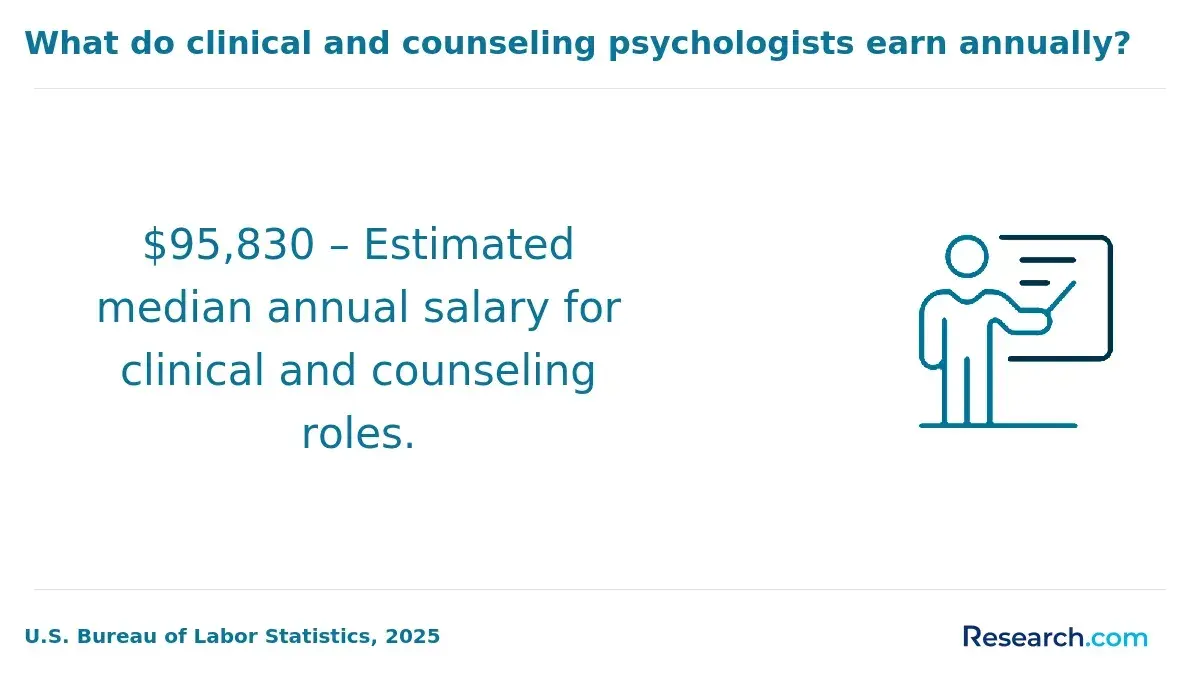
According to the APA, master’s in forensic psychology degrees made up 4% of all psychology degrees conferred in 2024. While this is a smaller share of psychology degrees, the field can still support meaningful roles for students with the right expectations. In comparison, clinical and counseling psychologists earn $95,830.
What are the prerequisites for enrolling in an online master’s in forensic psychology degree program?
Admission requirements vary by school, but most online master’s in forensic psychology programs expect applicants to show academic readiness for graduate-level psychology coursework. Some programs are designed for psychology majors, while others admit students from related fields if they have completed prerequisite coursework.
- Bachelor’s degree. Most programs require a bachelor’s degree from an accredited institution. Psychology is often the most direct preparation, but some programs consider related backgrounds. A student with an online biology degree, criminal justice background, sociology major, or social work experience may still be considered if prerequisite requirements are met. Students still exploring undergraduate options can compare the best major in college for their long-term goals.
- Minimum GPA. Many programs set a minimum GPA requirement, often between 2.5 and 3.0 on a 4.0 scale. Some schools review the GPA from the last 60 credits or major coursework separately.
- Official transcripts. Applicants typically submit transcripts from every college or university attended.
- Recommendation letters. Programs may request letters from professors, supervisors, or professionals who can speak to the applicant’s academic ability, judgment, communication skills, and readiness for graduate study.
- Statement of purpose. A personal statement usually explains why the applicant wants to study forensic psychology, what career goal they are pursuing, and how the program fits that goal.
- Resume or CV. Schools may ask for a resume showing education, employment, research, volunteer work, publications, certifications, and relevant skills.
- GRE scores. Some programs still require or accept GRE scores, particularly when an applicant’s GPA is below the usual threshold.
- Prerequisite courses. Common prerequisites may include psychology, statistics, research methods, abnormal psychology, or related coursework.
Before applying, review each program’s admissions page and contact an advisor if your background is outside psychology. A quick conversation can help you avoid paying application fees for programs that will require additional coursework before admission.
What courses are typically in an online master’s in forensic psychology degree program?
Online forensic psychology master’s programs usually combine psychology theory, research methods, legal-system knowledge, assessment concepts, ethics, and applied topics related to criminal justice and mental health. Course titles vary, but the following subjects are common.
- Psychology and law. Students examine how psychological science applies to legal processes, including forensic assessment, criminal behavior, eyewitness testimony, jury behavior, and decision-making in courts.
- Psychopathology and behavioral disorders. This course covers abnormal psychology and mental disorders that may appear in forensic settings, including assessment, diagnosis, treatment issues, and behavioral risk factors.
- Victimology and crisis intervention. Students study the effects of trauma and victimization, along with crisis response, advocacy, victim rights, and trauma-informed support.
- Forensic assessment and evaluation. Coursework may introduce psychological testing, risk assessment, competency issues, violence risk management, and evaluation methods used in legal contexts.
- Ethics and professional issues in forensic psychology. Students explore confidentiality, dual roles, cultural competence, informed consent, expert testimony, and ethical conflicts that can arise when psychology and law intersect.
These courses can support work in corrections, law enforcement support, victim services, mental health agencies, research, and legal-system consultation. Students seeking clinical practice should verify whether the curriculum includes the courses required for counseling licensure in their state.
What types of specializations are available in an online master’s in forensic psychology degree program?
Specializations help students align coursework with a specific professional direction. They do not guarantee a job or license, but they can make a program more relevant to your target role.
- Criminal profiling and investigative psychology. This track focuses on offender behavior patterns, investigative reasoning, and psychological concepts used to support criminal investigations.
- Juvenile forensic psychology. Students examine adolescent development, juvenile justice, delinquency prevention, intervention strategies, and the assessment or treatment of young offenders.
- Trauma and crisis response. This specialization emphasizes trauma-informed care, crisis intervention, victimization, and support for people affected by violence or abuse.
- Forensic mental health counseling. Students prepare for counseling-related work with justice-involved clients, often with attention to ethics, diagnosis, treatment planning, and legal-system involvement.
- Correctional psychology. Coursework focuses on assessment, rehabilitation, behavioral management, incarceration effects, and mental health concerns in jails, prisons, and reentry settings.
Specialization is only one factor in career outcomes. Location, licensure status, employer type, experience, and graduate education level also matter. Forensic psychologists earn about $95,647 per year on average, while the highest-paying states for forensic psychologists are Vermont ($301,428), Montana ($302,039), and New Mexico ($245,566). Across the board, male forensic psychologists ($79,827) are getting paid more than females ($75,539), though there are more female forensic psychologists working in the US.
How to choose the best online master’s in forensic psychology degree program?
If you are still asking, “What programs should I take?”, start with the career outcome you want. A program that is excellent for doctoral preparation may not be the right program for counseling licensure. A program built for working criminal justice professionals may not include the clinical hours you need for therapy-related roles.
- Check accreditation first. Look for recognized institutional accreditation. For counseling-oriented programs, also check whether the curriculum aligns with state licensure rules. APA accreditation generally applies to doctoral psychology programs, while CACREP is more relevant to counseling-focused master’s programs, including some online counseling degrees.
- Match the curriculum to your career goal. Review course descriptions, electives, and concentrations. If you are comparing psychology subfields, look at how forensic psychology differs from programs focused on behavior change, such as the best colleges for behavioral psychology programs.
- Evaluate faculty experience. Faculty with forensic, correctional, legal, clinical, or research backgrounds can strengthen mentorship and applied learning.
- Ask about practicum and placement support. If you need supervised experience, ask whether the school finds placements, approves student-arranged sites, or offers support in your state. This is especially important if you are weighing the counselor vs therapist route later.
- Review online flexibility honestly. Asynchronous courses can help working adults, but graduate psychology work still requires weekly reading, writing, research, discussion, and project time.
- Test the learning platform and support services. Ask whether online students receive library access, research database access, tutoring, writing support, advising, and technical help.
- Compare the full price, not only tuition. Add fees, books, travel, lost work hours, clinical placement costs, and any in-person requirements.
- Speak with students or alumni. Ask about workload, responsiveness of faculty, field placement quality, and whether the degree helped them reach their intended career step.
| Question to Ask | Why It Matters |
| Is this program licensure-track or non-licensure? | It determines whether the curriculum is designed for counseling credentials or other career goals. |
| Does the program meet requirements in my state? | Licensure rules vary, and online programs may not satisfy every state board. |
| What field placements are available to online students? | Hands-on experience can be essential for counseling, advocacy, and correctional roles. |
| How many graduates enter doctoral programs? | This matters if your goal is to become a licensed forensic psychologist. |
| What is the total cost to graduate? | Tuition per credit does not include every expense. |
What career paths are available for graduates of online master’s in forensic psychology degree programs?
Graduates can pursue roles that apply psychology knowledge to legal, correctional, advocacy, research, and mental health settings. The exact roles available depend on the program type, licensure eligibility, state rules, experience, and whether the graduate later earns a doctorate.
- Licensed Professional Clinical Counselor (LPCCs). These professionals provide counseling services to individuals, couples, families, and groups. They assess client needs, create treatment plans, and deliver interventions for concerns such as trauma, depression, anxiety, substance use, and relationship difficulties. In many states, including California, a person can become an LPCC with a master’s degree in counseling or a related field, but state rules may require additional supervised clinical experience, coursework, and examinations.
- Correctional counselor. Correctional counselors work in jails, prisons, probation departments, parole agencies, and reentry programs. They may support rehabilitation, mental health needs, substance abuse recovery, behavioral management, and transition planning.
- Victim advocate. Victim advocates assist people affected by crime or trauma. They provide emotional support, connect clients to resources, explain legal processes, and advocate for victim needs and rights.
- Law enforcement consultant. Some graduates support agencies through knowledge of criminal behavior, threat assessment, crisis response, profiling concepts, or interview-related psychology.
- Researcher or academic support professional. Graduates may work on studies involving criminal behavior, legal decision-making, risk assessment, correctional outcomes, or victimization.
- Other roles in criminal justice and mental health fields. Master’s-level forensic psychology training can support roles in case management, program evaluation, social services, behavioral health agencies, and nonprofit organizations.
Licensure as a forensic psychologist typically requires a doctoral degree, such as a PhD or PsyD in psychology. Licensed forensic psychologists may conduct evaluations for legal matters, provide expert testimony, and consult with courts or legal professionals. A master’s in forensic psychology can be a useful step toward that doctorate, but it should not be confused with the final credential needed for psychologist licensure.
Is accreditation a critical factor for selecting an online forensic psychology program?
Yes. Accreditation is one of the first items to verify when evaluating an online forensic psychology program. Institutional accreditation can affect access to federal financial aid, transferability of credits, employer recognition, and later admission to doctoral programs. For counseling-related programs, curriculum alignment with state licensing boards can be just as important as accreditation.
Students comparing lower-cost options should review forensic psychology masters programs online, but affordability should never replace accreditation checks. Confirm accreditation through the school, the accreditor, and any relevant state licensing board before enrolling.
What are the licensing and certification requirements for forensic psychology graduates?
A master’s in forensic psychology can support many professional roles, but becoming a licensed forensic psychologist usually requires education and supervised practice beyond the master’s level. Requirements vary by state and credentialing body, but students should expect to investigate the following:
- Completion of supervised clinical hours in forensic, counseling, correctional, or related settings.
- Passing required examinations that assess psychological knowledge and professional application.
- Meeting state-specific coursework, degree, and field experience rules.
- Maintaining continuing education after licensure or certification.
If your goal is counseling licensure, contact your state board before enrolling. If your goal is psychologist licensure, confirm whether the master’s program is designed to strengthen your doctoral application.
How do advanced technologies shape practical learning in online forensic psychology programs?
Online forensic psychology programs increasingly use digital tools to make applied learning more interactive. Students may work through virtual case studies, recorded interviews, simulations, discussion-based legal scenarios, online role-play exercises, and remote feedback from faculty. These tools can help students practice analysis, ethical reasoning, documentation, and decision-making in a structured environment.
Technology does not replace supervised field experience when field experience is required. It can, however, support case-based learning and help online students engage with realistic forensic problems. Students comparing program investment should also review How much is a master's degree in psychology? to understand broader cost considerations.
Is an online master’s in forensic psychology program as rigorous as its on-campus counterpart?
An online forensic psychology master’s program can be as rigorous as an on-campus program when it uses comparable faculty expectations, graduate-level assignments, research projects, case analysis, assessments, and academic standards. Rigor depends more on program design than delivery format.
Students should review writing requirements, research expectations, faculty credentials, fieldwork options, and student support services. Those planning advanced study should also compare doctoral pathways, including the best neuropsychology PhD programs, if their interests extend into clinical assessment, brain-behavior relationships, or specialized psychological research.
How Can Additional Certifications Elevate Your Forensic Psychology Career?
Targeted certifications can strengthen a forensic psychology graduate’s skill set, especially in interdisciplinary roles. Useful areas may include trauma-informed care, crisis intervention, threat assessment, victim advocacy, behavioral intervention, substance abuse support, and evidence-based therapeutic approaches.
Certifications should be chosen strategically. They are most valuable when they support a clear role, employer requirement, or licensure plan. Students considering therapy-adjacent paths should first understand whether do you have to be a psychologist to be a therapist, since counseling and therapy credentials vary by state and profession.
What are the steps to transition from a master’s to a doctorate in forensic psychology?
Students who want to become licensed forensic psychologists often use a master’s degree as preparation for doctoral study. The transition requires planning because doctoral admissions can be competitive and may weigh research experience, faculty fit, academic performance, clinical exposure, and writing ability.
- Clarify the doctoral credential you need. Decide whether a PhD, PsyD, or another doctoral pathway best fits your goals in research, clinical practice, assessment, academia, or legal consultation.
- Compare doctoral program formats. Students balancing work or family responsibilities may consider an online doctorate in psychology, while others may prefer campus programs with in-person labs, clinics, or assistantships.
- Complete prerequisite coursework. Some doctoral programs expect statistics, research methods, assessment, psychopathology, or specific psychology courses.
- Build research experience. Work with faculty, contribute to projects, present posters, or develop a focused research interest related to law and psychology.
- Gain relevant professional exposure. Roles in correctional counseling, victim services, crisis response, forensic mental health, or assessment support can strengthen your application.
- Secure strong recommendations. Ask faculty and supervisors who can describe your analytical ability, professionalism, writing skills, and readiness for doctoral work.
- Write a focused personal statement. Explain the forensic psychology questions you want to study or the populations you want to serve, and connect those goals to the faculty and training model of each doctoral program.
A doctorate can open doors to advanced assessment, expert testimony, independent practice, research leadership, and academic roles. The master’s degree is most useful when it helps you build the academic record, research base, and professional clarity needed for that next step.
What is the job market for graduates with an online master’s in forensic psychology degree?
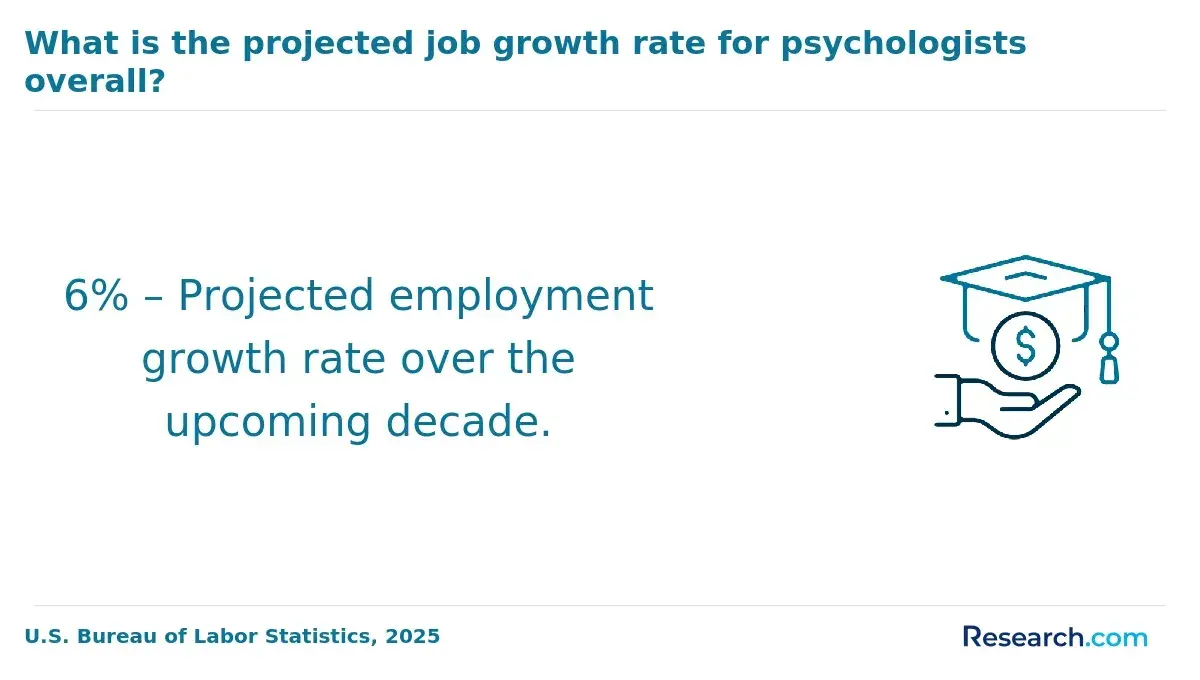
The job market for online master’s in forensic psychology graduates depends heavily on job title, state, licensure, experience, and employer type. According to available data, the job growth rate for psychologists, which includes forensic psychologists, is estimated to be 6% through 2034. That suggests steady demand for psychology professionals, but master’s-level graduates should not assume they qualify for licensed psychologist roles without further education.
Graduates may find opportunities in correctional counseling, victim advocacy, law enforcement consulting, research support, social services, behavioral health agencies, and nonprofit organizations. Demand is influenced by the growing need for mental health support in justice-related settings and by employer interest in trauma-informed, evidence-informed approaches.
Forensic psychologists earn around $95,647 on average, which is lower than the median industrial psychology salary of $109,840. The salary range is typically between $37,500 and $163,500. Because salary varies widely, students should review local job postings and state licensure rules before estimating return on investment.
What professional organizations support forensic psychology students and professionals?
Professional organizations can help students learn about the field, access research, attend conferences, find continuing education, and build networks. Membership can be especially useful for online students who need professional connection beyond the virtual classroom.
- American Psychological Association (APA). APA Division 41, the American Psychology-Law Society, supports students and professionals interested in law and psychology through publications, events, research, and networking.
- Association for Psychological Science (APS). APS emphasizes psychological science and research, including topics that can apply to forensic psychology, legal decision-making, and behavior.
- International Association for Correctional and Forensic Psychology (IACFP). IACFP supports professionals working in correctional and forensic environments and provides access to resources such as Criminal Justice and Behavior.
- Society for Police and Criminal Psychology (SPCP). SPCP serves professionals and students interested in law enforcement, criminal psychology, profiling, policing, and related career opportunities.
- American Academy of Forensic Psychology (AAFP). AAFP offers specialized training, continuing education, and professional development for those interested in forensic assessment and expert testimony.
- National Organization of Forensic Social Work (NOFSW). NOFSW supports interdisciplinary work across social work, mental health, law, and forensic practice, which may be useful for students focused on victim advocacy or crisis intervention.
Benefits of Accelerated Programs in Forensic Psychology and Related Fields
Accelerated online master’s programs can help students finish sooner, but speed is only useful when the program still supports the student’s career goal. A compressed format can be effective for organized students with strong writing skills, reliable time management, and the ability to handle intensive reading and research.
- Time efficiency. Most accelerated programs can be completed in 12 to 18 months, compared to the traditional two-year format.
- Potential cost savings. Finishing sooner may reduce some expenses, although total tuition still depends on credits, fees, and program structure.
- Faster career movement. Students may be able to pursue victim advocacy, forensic consulting, correctional counseling, or doctoral applications sooner.
Key Considerations for Accelerated Programs
- Workload. Condensed courses can require significant weekly reading, writing, discussion, and project work.
- Prerequisites. Some accelerated options may expect stronger academic preparation, a higher undergraduate GPA, or relevant work experience.
- Flexibility. Asynchronous courses can help working adults, but deadlines may still be frequent and demanding.
Exploring Related Accelerated Programs
Students interested in behavior change, assessment, and intervention may also consider Applied Behavior Analysis. ABA can complement forensic psychology in correctional, behavioral health, or human services settings. Review the fastest master’s in applied behavior analysis online to compare related accelerated pathways.
How can I assess the quality and credibility of an online master’s in forensic psychology program?
Program quality depends on more than brand recognition. A credible online forensic psychology master’s program should have recognized accreditation, clear admissions standards, a relevant curriculum, qualified faculty, reliable online support, transparent costs, and honest information about licensure and career outcomes.
Review alumni outcomes, doctoral placement information, fieldwork support, student reviews, and curriculum details. Rankings can be helpful, but they should not replace your own due diligence. For another comparison point, review our article on the fastest online master's in psychology accredited schools.
Career Transition Opportunities with a Master’s in Forensic Psychology
A master’s in forensic psychology can help professionals shift toward work involving justice systems, trauma, behavior, mental health, risk, and legal decision-making. The easiest transitions usually come from related fields such as psychology, counseling, law enforcement, criminal justice, social work, paralegal work, victim services, or human services.
Transitioning from Psychology or Counseling
Students with a psychology or counseling background can use forensic psychology to specialize in assessment concepts, offender rehabilitation, victim support, legal-system involvement, and correctional settings. If you are comparing broader psychology outcomes, review what you can do with a masters in psychology.
Moving from Law Enforcement or Criminal Justice
Professionals in law enforcement, probation, corrections, military justice, or criminal justice administration may use forensic psychology training to better understand behavior, threat assessment, crisis response, interviewing, victim needs, and offender rehabilitation.
Shifting from Social Work or Human Services
Social workers and human services professionals often work with people affected by trauma, violence, addiction, incarceration, poverty, and family disruption. Forensic psychology can add specialized knowledge for victim advocacy, offender assessment, court-connected services, and crisis support.
What challenges do online forensic psychology students face?
Online students need strong self-management. Common challenges include limited face-to-face interaction, difficulty finding local field placements, technology issues, isolation, and balancing graduate work with employment or family responsibilities.
Successful online students usually create a weekly study schedule, attend virtual office hours, participate actively in discussion forums, build peer networks, and use writing, advising, library, and career services early. Students who want additional applied behavior training may also compare the most affordable online BCBA degree as a complementary path.
| Common Mistake | Better Approach |
| Choosing the cheapest program without checking accreditation. | Verify accreditation before comparing cost. |
| Assuming every forensic psychology program leads to licensure. | Ask whether the program is licensure-track and state-aligned. |
| Ignoring practicum or field placement requirements. | Confirm placement expectations before enrollment. |
| Relying only on rankings. | Use rankings as one input, then compare curriculum, support, cost, and outcomes. |
| Assuming salary outcomes are guaranteed. | Research local job postings, required credentials, and salary ranges. |
Can clinical mental health counseling enhance my forensic psychology practice?
Clinical mental health counseling can strengthen forensic psychology work when a role involves assessment, treatment planning, trauma support, crisis intervention, substance use concerns, or client advocacy. Counseling training may be especially relevant for students who want to work directly with justice-involved clients, victims, families, or people affected by trauma.
Students should confirm whether a counseling program meets state licensure requirements. If speed matters, compare the fastest online master's programs in clinical mental health counseling, but prioritize licensure alignment over completion time.
References
- American Psychological Association. (2026). CWS Data Tool: Degrees in Psychology. Retrieved March 2026, from APA.
- College Factual. (2025). 2025 Psychology Degree Guide. College Factual.
- U.S. Bureau of Labor Statistics. (2025). Psychologists. BLS.
- Zippia. (2025). Forensic psychologist demographics and statistics in the US. Retrieved March 2026, from Zippia.
- ZipRecruiter. (2026). Forensic Psychologist Salary. Retrieved March 2026, from ZipRecruiter
Other Things You Should Know About Online Master’s in Forensic Psychology Degree Programs
Students should ensure they have reliable high-speed internet, a computer with updated operating systems, and access to required software like SPSS or other statistical tools recommended by their program to successfully participate in online forensic psychology courses in 2027.
Yes. Many online master’s programs in forensic psychology require either a thesis or a capstone, usually worth 3 to 6 credits. Thesis tracks emphasize original research, while capstones often involve applied case analysis, program evaluation, or a supervised project completed near the end of the degree.


